
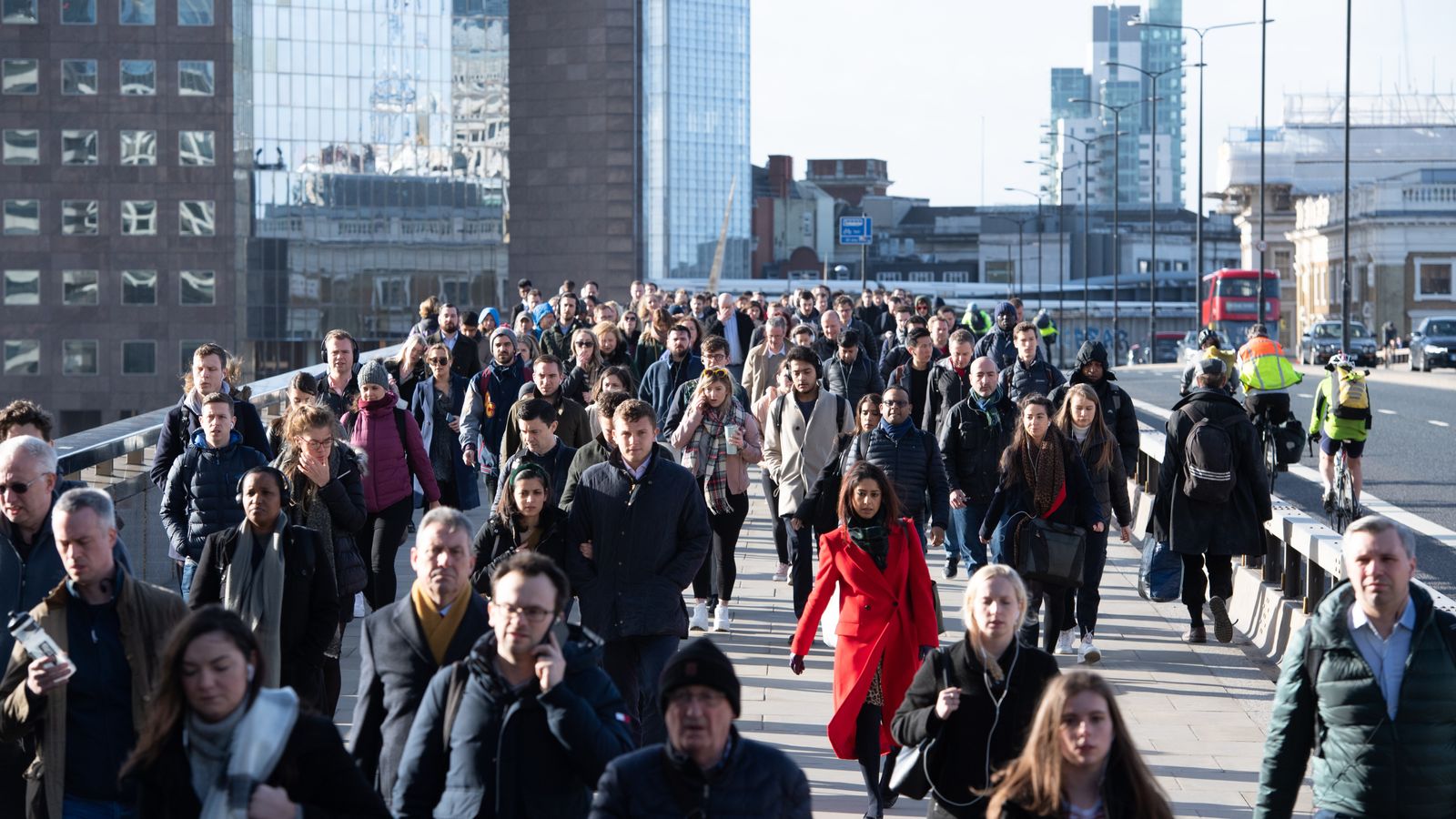
Labour launches plans for a new race equality act


A Labour government would give stronger legal protections for equal pay for black, Asian and minority ethnic workers, according to draft plans for a new race equality act seen by Sky News.
Radical plans enacting protections for those who face “dual discrimination” are also outlined as well as mandatory ethnic minority pay reporting, tackling health disparities and the introduction of a new Windrush commissioner.
But campaigners and some involved in drafting the plans are concerned that immigration is not substantially mentioned.
The taskforce had discussed repealing the Nationality and Borders Act to ensure that anybody who arrives in the UK as a child cannot be deported and to block the government’s ability to revoke citizenship. But this is understood to have been shelved and won’t be part of the plans.
A number of Labour frontbenchers, legal experts and community groups have been discussing ways to deliver a new race equality act since Labour first announced their intention in 2021 on the one-year anniversary of the death of George Floyd. They said they would make the eradication of structural racism a “defining cause for the next Labour government”.
A taskforce was created, led by Baroness Doreen Lawrence, and they consulted on these plans up until last July when subsequent meetings were either delayed or cancelled at the last minute.
Doreen Lawrence, Labour peer and mother of murdered black teenager Stephen Lawrence
Last week some stakeholders have had one-on-one meetings with the shadow equality minister Annalise Dodds in preparation for the launch today, but some are surprised Labour’s plans for the act have progressed without a meeting of the taskforce in over six months.
Some black MPs say they haven’t seen the plans yet including Labour’s first black female MP Diane Abbott, who told The Voice newspaper: “I haven’t actually seen the draft race equality act and no one has.”
Another MP told Sky News that not formally consulting the Black Parliamentary Labour Party had been a “bit of a p***take”.
Jacqueline McKenzie, a human rights lawyer who is on the taskforce, said Labour’s entire plan is at risk of failing without enforcement – and she’s yet to get any reassurance from the party that these plans have any teeth.
She added at the moment it seems as if the party is “just doing something for the sake of doing something”.
Sky News understands all recommendations in the Lammy review will be included as well as recommendations in Wendy Williams’ Windrush review including one the Home Office has currently tabled – to have a Migrant Tsar. Though Labour will rebrand this as a Windrush commissioner, in what some are seeing as a way for the party to distance itself from immigration issues.
Click to subscribe to Politics at Jack and Sam’s wherever you get your podcasts
More eye-catching proposals include race training for police staff, as well as creating a body to collect data to assess ethnic minority health outcomes.
There is also expected to be a drive to eradicate specific health disparities such as maternity deaths which are four times higher for black women than for white women.
Kate Osamor, who was the only black woman MP on the taskforce was suspended last week pending an investigation after saying Gaza should be remembered as genocide in a post about Holocaust Memorial Day. It is unclear whether she will be part of the plans this week.
Read more:
Labour deputy leader doubles down on workers’ rights after backtracking reports
‘I don’t go out’: Rayner reveals ‘constant threats’ aimed at her
Nels Abbey, a race equality campaigner, said Labour’s race equality announcements are very welcome. Though he remarked “the problem the Labour Party has is one of credibility”.
“As a result, the announcements risk being dismissed as ‘just words’, at best. And many ethnic minorities are struggling to hear the Labour Party’s words when they can see what they’re doing,” he said.
His thinktank Uppity hosted an event this week entitled “Is Labour working for ethnic minorities?” where he said it was made alarmingly clear that many ethnic minorities have developed a “discernible level of distrust and disdain for Keir Starmer‘s party”.
At the end of the debate roughly 85% of the room disagreed with the statement that “Labour is working for ethnic minorities”, while roughly 65% of the room believed it was time for ethnic minorities to ditch the Labour Party altogether.
Ms Dodds, shadow women and equalities secretary, said: “It has never been more important to deliver race equality. Inequality has soared under the Conservatives and too many black, Asian and ethnic minority families are working harder and harder for less and less. This is holding back their families and holding back the economy.”
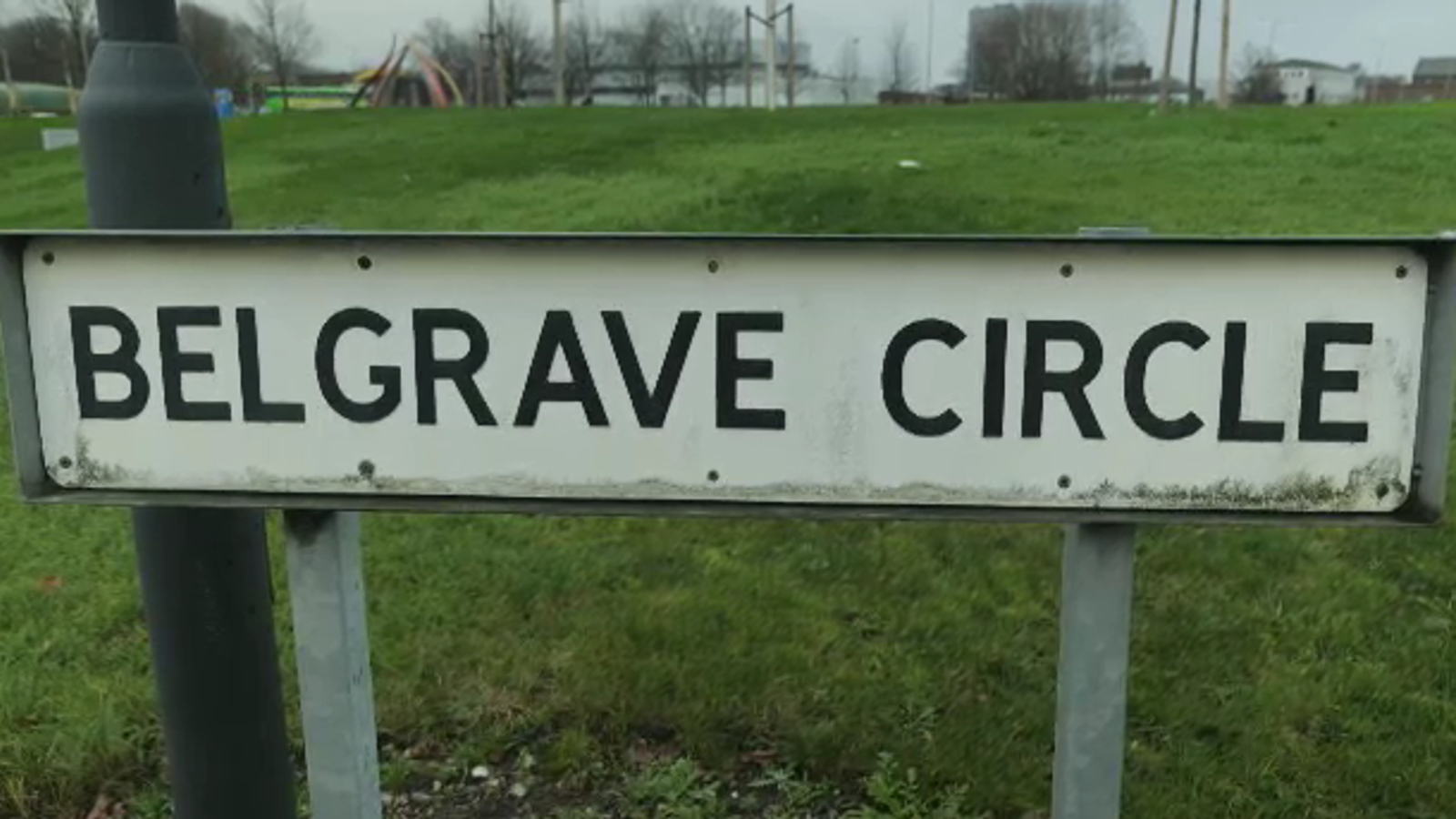
This is a story about a roundabout in Leicester.
It’s not a particularly special roundabout.
But it does tell us something about British politics.
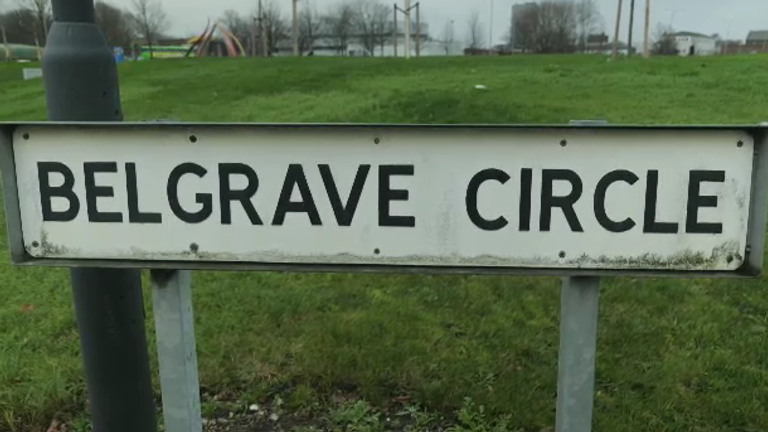
Belgrave Circle, in the north of the city, was opened in March 2015 on the site of an old railway station known locally as “The Gateway to Skegness”.
Later that year, Leicester – along with the rest of the country – went to the polls in the 2015 general election.
The vote saw David Cameron win a majority and Ed Miliband resign as Labour leader.
But around the Belgrave Circle, something different was going on.
Because this is the spot where Leicester‘s three parliamentary constituencies meet, and in 2015 they were all held by Labour MPs who saw their majorities increase.
It’s a different story now.
Stand in the middle of the roundabout and face towards Abbey Park and you’ll see the city’s only remaining Labour seat – that of cabinet minister Liz Kendall.
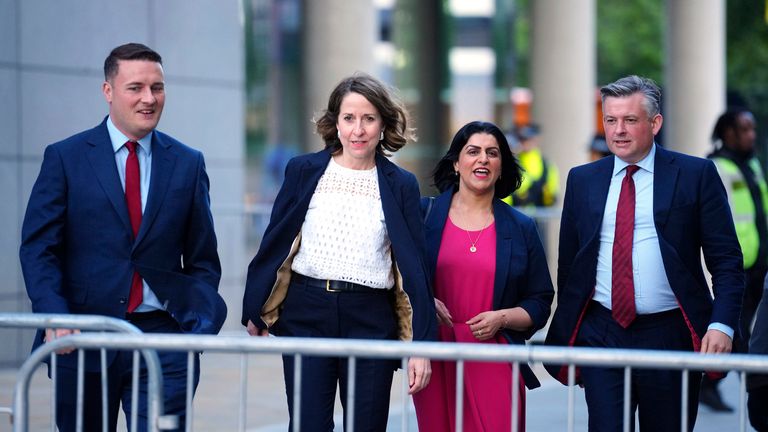
Liz Kendall (left) and Jonathan Ashworth’s (right) constituencies used to meet at Belgrave Circle roundabout until Ashworth lost his seat. Pic: AP
Turn around and face the B&M Home Store, and you’ll find the only place the Conservatives picked up at the last election.
This freak occurrence happened after the Labour vote was split by two independent candidates – both of whom also happened to be former MPs for the city.
Labour saw its vote share cut in half here, and then some.
The Tory vote dropped as well, but not by enough to stop the party coming through the middle and taking the seat by four thousand votes.
But walk to the south of this roundabout and you’ll get to where an independent candidate went one step further.
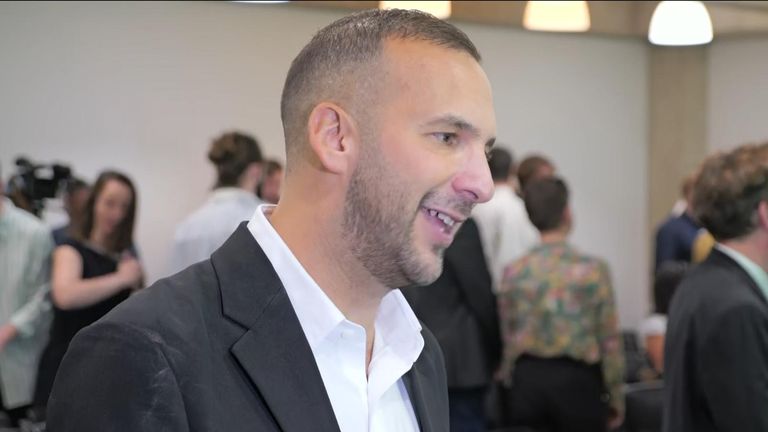
Local optician Shockat Adam won this seat last year, defeating frontbencher Jonathan Ashworth in a campaign focused mainly on Gaza and events in the Middle East.
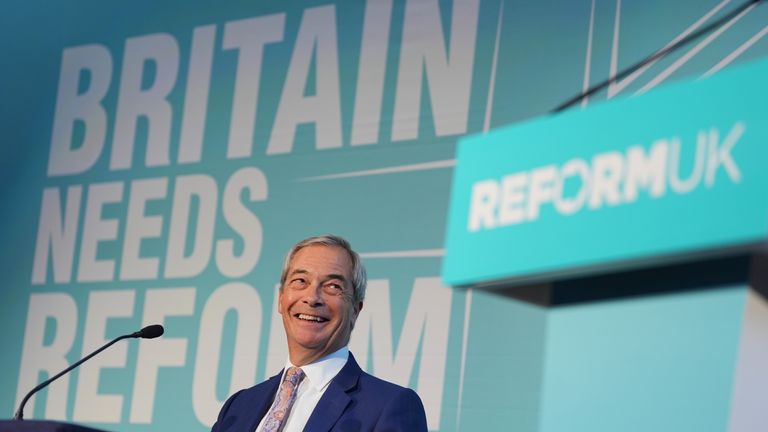
Labour have begun painting themselves as the “bulwark” to Nigel Farage. Pic: PA
What happened on this roundabout last July is no one-off. There’s plenty of evidence to suggest these phenomena could be on the rise around the country.
Since the election, Labour’s vote share has plunged, and its base has fractured as support for insurgent parties on the right and left surges.
A lot of the focus from this has been on Reform UK and how Labour can stop Nigel Farage in traditional ‘red wall’ seats in the midlands and the north.
And yes, Labour is leaking support to Reform on the right. But what’s often not talked about is the greater number of votes its losing on the left.
If the Greens do well, it could split the left wing vote, clearing the way for another party to win in a roundabout way
A rejuvenated Green Party under Zack Polanski is chasing Labour close in some polls, while Your Party is attempting to form a separate fighting force straddling ex-Corbynites, independent pro-Gaza candidates and those from the more hard-left tradition.
Come the next election, this could all have far-reaching consequences.
Sky News has ranked all 404 Labour seats according to how at risk they are to these new forces on the left. We created this ‘vulnerability index’ using factors like voting history, population and demographic data.
It shows several cabinet ministers in the top 25 most vulnerable, including Home Secretary Shabana Mahmood in fourth place, Sir Keir Starmer in thirteenth place and Deputy Prime Minister David Lammy in twenty-third place.
All three of these Labour big beasts have seen their majorities cut in the last election by a Green candidate, an independent candidate or a mix of the two.
In Birmingham Ladywood, the total number of votes won by independent and green candidates exceed the number won by the Home Secretary.
That could trigger trouble, given the Greens and Your Party have indicated they may be open to the idea of local “progressive pacts”.
But in the neighbouring constituency of Birmingham Hodge Hill and Solihull North, the result last year shows how an altogether different result could materialise.
Here, Labour’s vote was again split by a left-wing insurgent candidate – this time from George Galloway’s Workers Party.
But the conservative vote was also cut in half by Reform.
If Nigel Farage can unite the right in places like this, he could come through the middle – in much the same way the Tories did in Leicester.
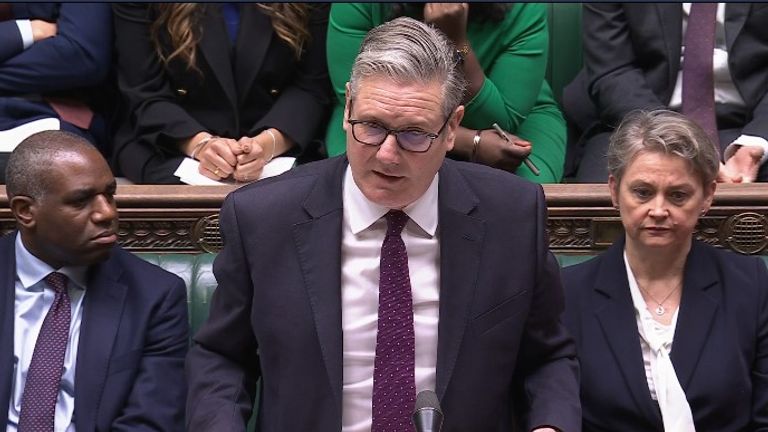
Keir Starmer’s constituency ranks thirteenth on Sky’s vunerability index. David Lammy’s is twenty third.
So how can the government fight back?
Part of the answer, according to senior figures, is attempting to tell a more appealing story about the more overly left-wing chunks of their policy platform – such as the workers rights reforms and rental overhaul.
The hope is these stories may be given more of a hearing in 2026 when (or perhaps more accurately, if) a corner starts to be turned on big domestic priorities like the economy, the NHS and migration.
If that doesn’t happen, the real saving grace for Labour could be tactical voting.
The Greens and Your Party have made it clear that they will plough on with their campaigns against the government, even if it ultimately benefits Reform.
Read more from Sky News:
Australia launches intelligence review
Engineer becomes first wheelchair user in space

If Kemi Badenoch and Nigel Farage split the right wing vote, it may allow Labour, the Liberal Democrats, or another party to come through the middle
What’s less clear is whether left-wingers across the country will.
If they are faced with the prospect of Nigel Farage in Downing Street, could they hold their nose and stick with Labour?
It all begs the question – who is their great enemy: the government or Reform?
Ministers are already trying to emphasise a binary choice when they talk about Labour being the one single “bulwark” to Nigel Farage.
Expect more attempts to mobilise this anti-Reform vote in the years ahead.
But that’s made more difficult by what happened around Leicester’s Belgrave Circle. The same political fracturing that’s dogged the right in years past now being replicated on the left.
Labour’s ability to pick up the electoral pieces may prove decisive in whether what took place on a shabby East Midlands roundabout in July 2024 is recreated across the country in a few years’ time.
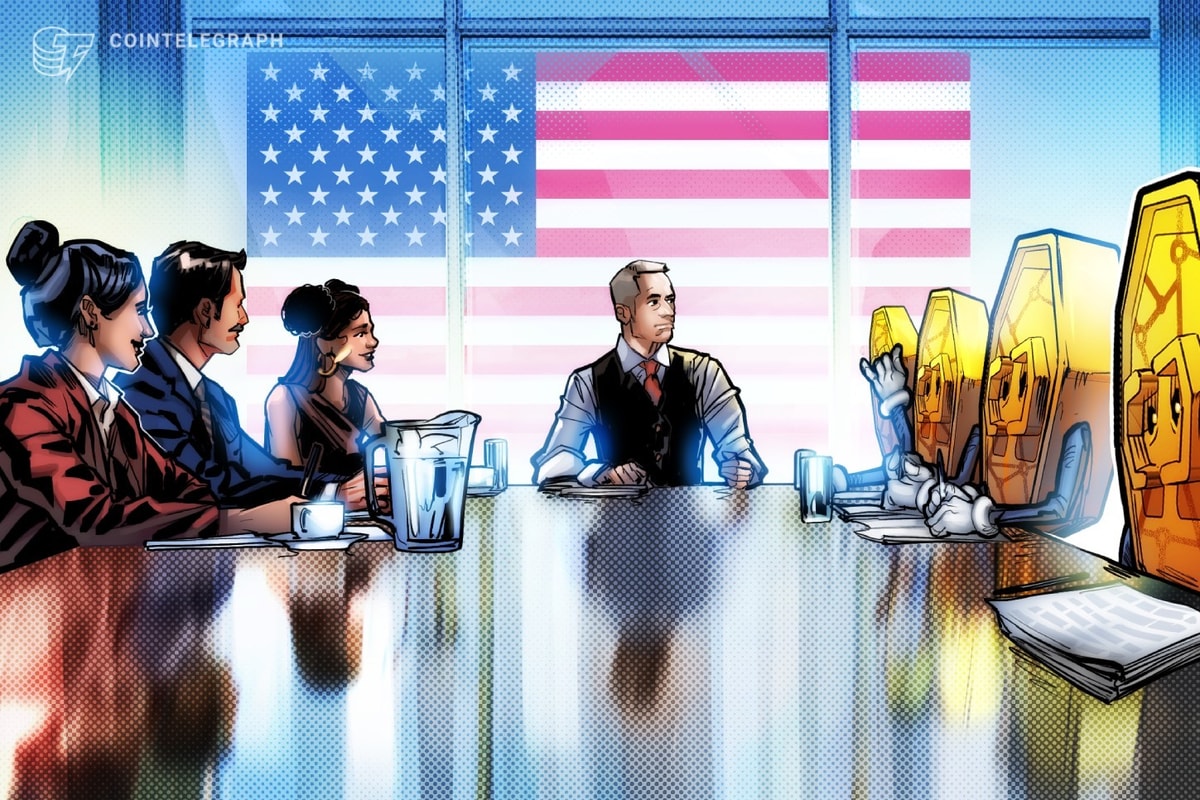

A group of 18 bipartisan US House lawmakers is pushing the country’s tax agency to review its rules on crypto staking taxes before the start of 2026.
In a letter sent to Internal Revenue Service acting commissioner Scott Bessent on Friday, the lawmakers, led by Republican Mike Carey, asked for a review and update guidance on “burdensome” crypto staking tax laws.
“This letter is simply requesting fair tax treatment for digital assets and ending the double taxation of staking rewards is a big step in the right direction,” Carey said.
The letter calls for taxes from staking rewards to be applied at the time of sale, so that “stakers are taxed based on a correct statement of their actual economic gain.”
The lawmakers argued that the current laws, which see stakers taxed upon receiving rewards and again when selling them, are hindering participation in the staking market, when the laws should be designed to support a fundamental part of certain blockchains.
Related: Crypto community ‘very sorry’ over Senator Lummis’ reelection decision
“Millions of Americans own tokens on these networks. Network security — and American leadership — requires those taxpayers to stake those tokens, but today the administrative burden and prospect of over taxation discourages that participation,” the lawmakers wrote.
The letter concludes by asking if there are any administrative barriers to updating the guidance before the end of the year, and asserts that they should be changed to support the current administration’s goal of “strengthening US leadership in digital asset innovation.”
Not the only push for changes to crypto tax rules
On Saturday, House representatives Max Miller and Steven Horsford also introduced a discussion draft aiming to ease the tax obligations on crypto users by exempting small stablecoin transactions from capital gains taxes and offering a deferral option for staking and mining rewards.
In terms of staking, the reps went a slightly different route by opting for a referral option as opposed to a complete change in the current laws.
The proposal outlines that taxpayers would be allowed to elect to defer income recognition on staking or mining rewards for up to five years, rather than being taxed immediately after receiving them.
Magazine: 11 critical moments in Ethereum’s history that made it the No.2 blockchain


The US Federal Reserve is requesting public input on its proposed “payment account,” dubbed a “skinny master account” which fintechs and crypto firms are drawn to as it would allow access to the central bank without needing the typical approvals.
“These new payment accounts would support innovation while keeping the payments system safe,” Fed Governor Christopher Waller said on Friday. In October, Waller recommended that the Fed explore the idea of implementing payment accounts to clear and settle certain transaction activities of eligible financial institutions.
Waller added the Fed is introducing the payment accounts feature to reflect the “rapid developments” in the payments industry that have led to “innovative approaches to banking” and new changes in business models.
“This tailoring could result in lower risk to the payment system and, as a result, requests for payment accounts could generally receive a streamlined review.”
Not all Fed officials agreed with the decision to seek public input, with Governor Michael Barr arguing that it could pose risks if safeguards against money laundering and terrorist financing are not clearly defined, especially for institutions the Fed does not directly supervise.
Several payment-focused crypto firms could be in the running to connect to the Fed’s banking rails, potentially strengthening the bridge between crypto and traditional banking. Among the largest US-based crypto payments companies are Circle, Coinbase, Kraken and Block, Inc.
Inclusion of crypto firms into the Fed’s banking system would mark a significant turnaround for the industry. Crypto companies last year claimed the Biden administration worked to deliberately cut them off from banking services to stifle the industry with what crypto backers have dubbed Operation Chokepoint 2.0.
Waller noted that the Fed has already been experimenting with blockchain-based payment technologies to modernize the US payment system.
Crypto wouldn’t get the same privileges
Payment platforms granted payment accounts, however, won’t receive the same privileges as big banks and Wall Street institutions that currently have master accounts.
Related: US Clarity Act unlikely to be ‘world-shaking’ for Bitcoin’s price: Brandt
Unlike master accounts, the proposed payment accounts would not earn interest, have access to Fed credit, and would be subject to balance caps, among other restrictions.
The comment period to give feedback on the payments account plan will close 45 days after publication in the Federal Register. Waller said last month that the payment account feature is expected to be operational in the fourth quarter of 2026.
Magazine: Bitcoin’s critical level is $82.5K, Ethereum ‘not done yet’: Trade Secrets
-
 Sports2 years ago
Story injured on diving stop, exits Red Sox game
-
 Sports3 years ago
‘Storybook stuff’: Inside the night Bryce Harper sent the Phillies to the World Series
-
 Sports2 years ago
Game 1 of WS least-watched in recorded history
-
 Sports3 years ago
Button battles heat exhaustion in NASCAR debut
-
 Sports3 years ago
MLB Rank 2023: Ranking baseball’s top 100 players
-
Sports4 years ago
Team Europe easily wins 4th straight Laver Cup
-
 Environment3 years ago
Japan and South Korea have a lot at stake in a free and open South China Sea
-
 Environment1 year ago
Here are the best electric bikes you can buy at every price level in October 2024