

Rivian R1T makes its way overseas in neon green to charge up MEVCO’s fleet

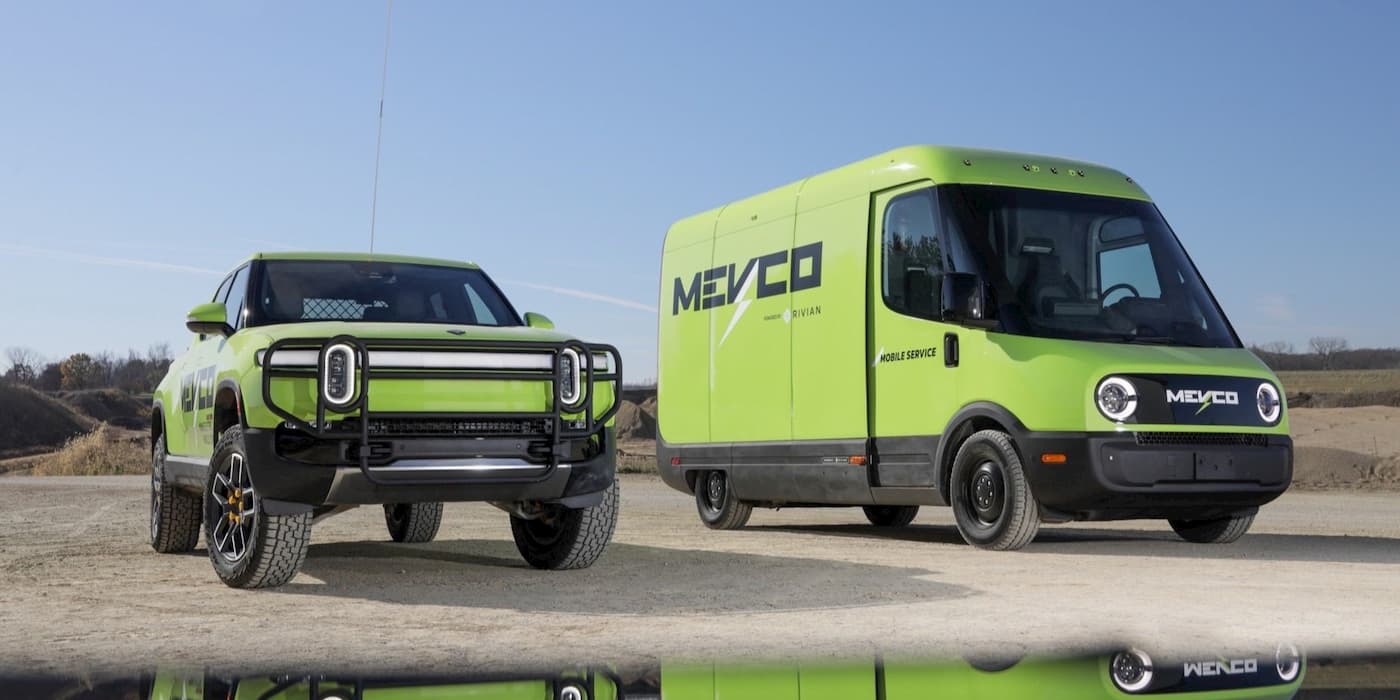
Rivian’s all-electric R1T pickup looks even better in neon green. The R1T is more than an electric truck. It’s an adventure vehicle built for “whatever you call a road.” Its latest venture will go where most wouldn’t dare, as the Rivian R1T will be used to charge up the mining industry.
Rivian R1T and electric commercial van for mining
The Rivian R1T can cruise through 3+ feet of water, rock crawl at a 100% grade, and tow up to 11,000 lbs, but can it be used for mining?
Australia’s EV mining company, MEVCO, is adding the R1T to its fleet to find out. The company announced on its social media that “2024 is going to be electric…” with a teaser of a neon green Rivian R1T.
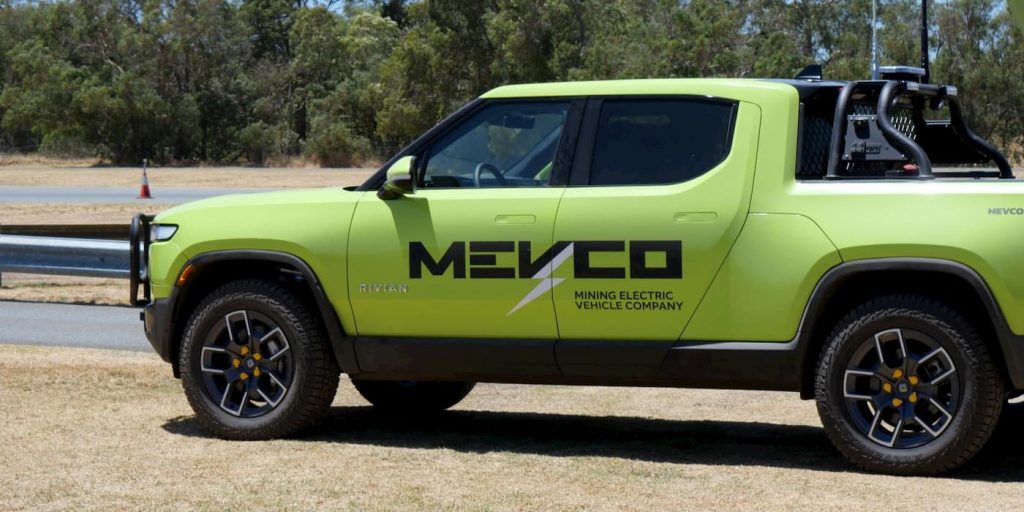
MEVCO said it has developed an electric vehicle “fully customised for the mining environment.” You can see from the images that the Rivian features MEVCO’s signature neon green paint, roll bars, a modified gear tunnel with two slide-out drawers, and more.
Last year, MEVCO announced a partnership with SEA Electric to bring 8,500 electric models to the mining industry. The EVs are converted Toyota Hilux and Land Cruisers with SEA’s electric power system.
They are offered in an 88 kWh battery option with 300 km (186 miles) range or a 60 kWh battery delivering up to 200 km (124 miles range).
Although MEVCO didn’t reveal the purchase details, it said, “And it isn’t just the mining spec vehicles – we’re delivering a cutting-edge solution that combines insights, enhanced capabilities, and ongoing support to help mines achieve broader net-zero targets.”
MEVCO’s CEO Matt Cahir said the company was previewing the R1T in rough terrain in Perth, offering those in the mining industry a chance to test drive the vehicle.
He also posted a picture of Rivian’s commercial electric van rocking MEVCO green, suggesting it will be part of the “cutting edge solutions” the company is teasing.
The news comes after Rivian ended its exclusivity agreement with Amazon in November, enabling it to sell its electric vans to other buyers. A month later, AT&T announced plans to add its R1 models like the R1T and R1S, and its electric commercial van to its fleet.
Rivian claims its R1T with its Max Pack battery is good for up to 410 miles EPA range, which would be a major upgrade over MEVCO’s current offerings. The Standard (270 miles) and Large (352 miles) also offer decent range options.
Source: MEVCO, CEO Matt Cahir
FTC: We use income earning auto affiliate links. More.

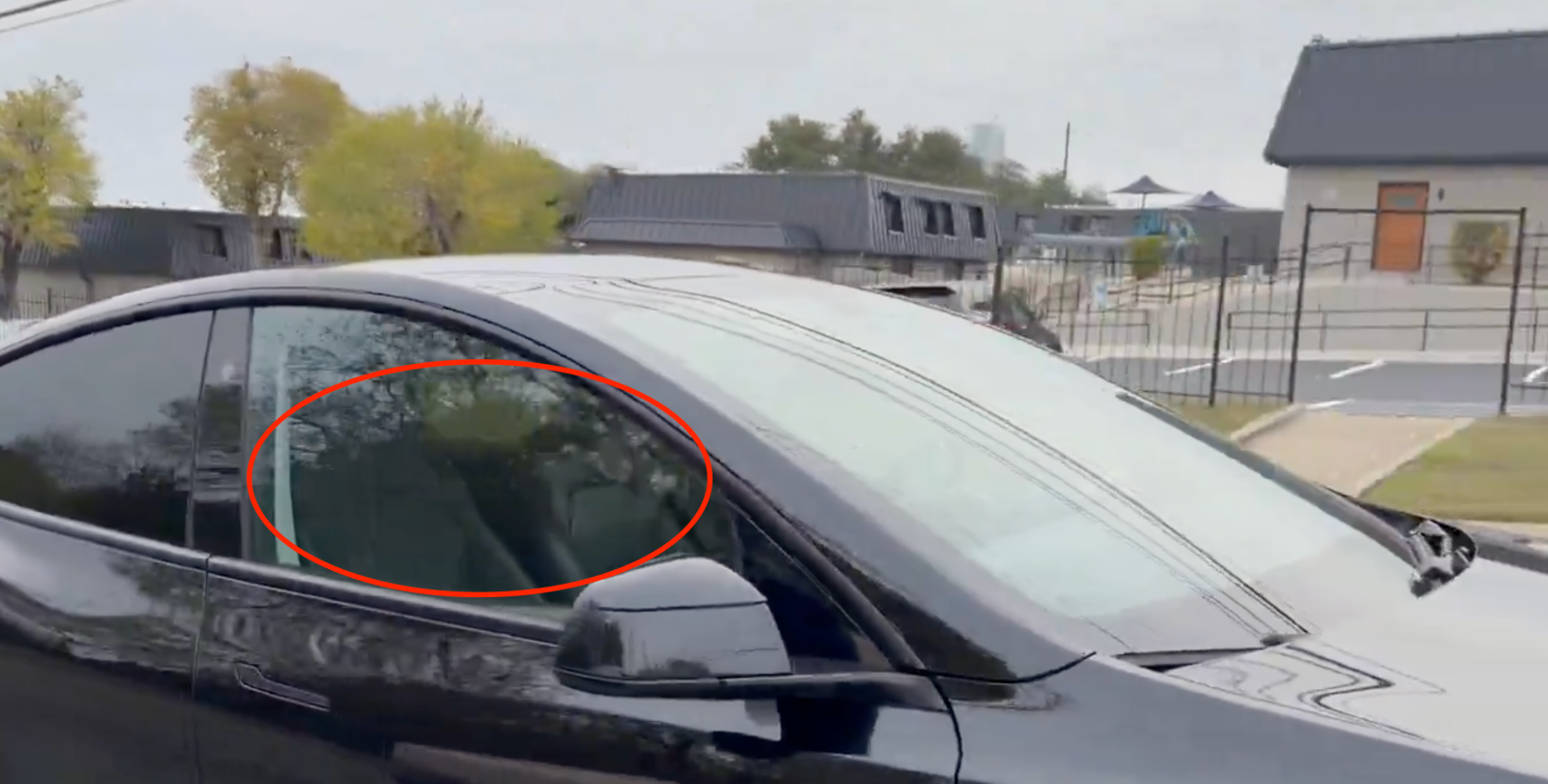
It’s finally happening. After years of promises, missed timelines dating back to the “Autonomy Day” in 2019, and endless iterations of “Full Self-Driving” (FSD), a Tesla vehicle has been spotted driving on public roads in Austin without anyone in the driver’s seat or a safety monitor in the passenger seat.
Elon Musk has confirmed that Robotaxi testing has officially commenced. This is undeniably a step forward for the company’s autonomy ambitions.
But it is also a terrifying leap of faith, given the complete lack of safety data proving the system is ready for this.
The sighting, captured over the weekend by locals in Austin, shows what appears to be a specially outfitted Model Y, presumably a testbed for the upcoming dedicated Robotaxi platform, navigating city streets. The steering wheel is turning, the car is moving, and the driver’s seat and front passenger seat are empty:
Following the online buzz surrounding the sighting, Elon Musk took to X to confirm the obvious:
“Testing is underway with no occupant in the car.”
In isolation, this is exciting news. It suggests Tesla has reached an internal confidence level in their latest FSD builds for Robotaxi (not in consumer vehicles) where they feel comfortable pulling the human monitor.
It’s the tangible progress toward the driverless future many Tesla owners bought into years ago.
However, there’s still a lot of room for concerns.
Tesla has, to date, never released comprehensive, verifiable data proving that its FSD system is safer than a human driver. We get anecdotal evidence, curated video clips, and high-level statistics about “miles driven,” but not the granular disengagement data that competitors like Waymo provide to regulators and the public.
In fact, the data we do have, based on incident reports submitted to the NHTSA under their Standing General Order regarding ADS and ADAS systems, paints a worrying picture.
The data pointed to Tesla’s Robotaxi pilot in Austin having a crash every ~62,000 miles, significantly higher than the human average, despite a safety monitor inside the car that should have prevented further crashes.
CEO Elon Musk said last week that he expects Tesla’s Robotaxi service in Austin will be without a safety monitor within three weeks.
Electrek’s Take
Think about that for a second. The current fleet requires human intervention to avoid crashes. We know this. If human interventions are currently preventing accidents, common sense dictates that removing the human without a massive, documented improvement in the system’s base capability will lead to more incidents.
Tesla seems to be skipping the “prove it’s safe” phase and jumping straight to the “deploy it” phase.
I want Tesla to succeed here. A functional, scalable Robotaxi network would be a civilization-level improvement in transport. Seeing a driverless Tesla on public roads might feel like a visceral milestone, proof that the technology is advancing.
But “advancing” is not the same as “safe.”
I have serious concerns about the fact that Tesla has consistently avoided releasing verifiable, valuable data on the safety of FSD or its Robotaxi pilot program.
We have to try ourselves to match Tesla’s sparse release of Robotaxi mileage to the limited crash data reported to NHTSA. And that doesn’t look very good for Tesla.
So far, and even with this sighting, the Robotaxi program in Austin seems more of a marketing effort than the true first step toward scaling a driverless ride-hailing service. It looks like an effort to manufacture a win while Waymo rapidly scales its commercial driverless system.


FTC: We use income earning auto affiliate links. More.

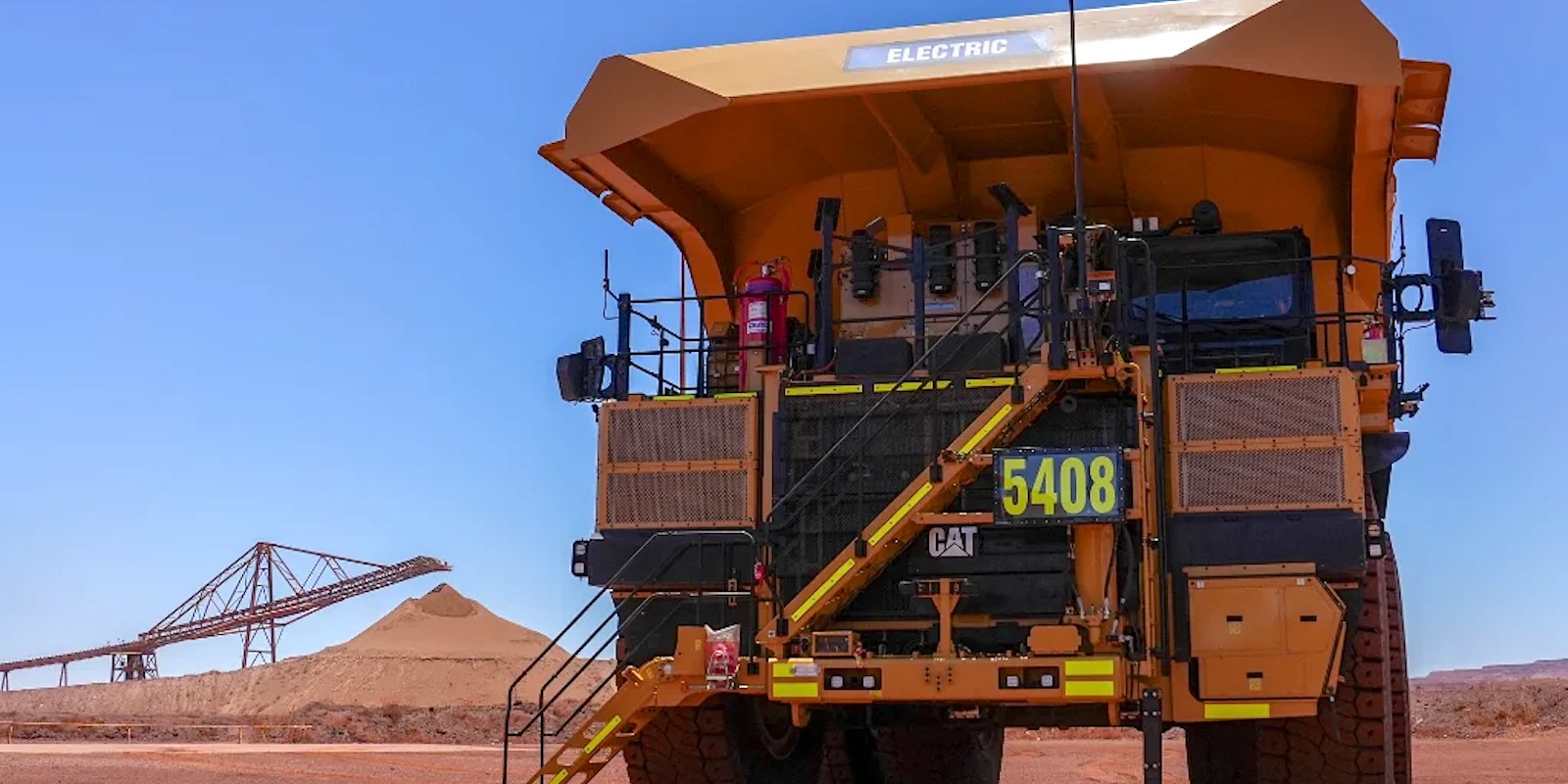
The Cat 793 XE Early Learner battery-electric haul trucks deliver all the performance of its diesel-powered siblings without the noise, vibrations, and harmful emissions – and now, they’re being put to the test at BHP’s iron ore mine in Australia.
Part of a collaborative effort between BHP and Rio Tinto to help decarbonize BHP’s Jimblebar iron ore mine in the Pilbara, these 240-ton Cat 793 XE Early Learner electric haul trucks represent a major step toward a more sustainable future in mining, designed to deliver zero exhaust emissions while maintaining productivity and performance.
“Powering up our first battery-electric haul trucks in the Pilbara is an important step forward on the mining industry’s road to decarbonization,” says BHP Western Australia Iron Ore Asset president, Tim Day. “Replacing diesel isn’t just about changing energy sources, it’s about reimagining how we operate and creating the technologies, infrastructure, and supply chains to transform mining operations. These trials will help us understand how all the pieces of the puzzle fit together: the battery technologies, generation and charging infrastructure, power management, as well as the supply chains to potentially deliver this at scale.”
Like the two trucks deployed at Newmont’s Cripple Creek and Victor mine in Teller County, CO last year, this phase of Caterpillar’s Early Learner program will see the company attempt to integrate multiple electrified trucks at a single site with remote operators, validating the integration of a battery electric fleet with CAT’s existing autonomous and fleet management systems.
Decarbonisation of Pilbara iron ore operations will rely on technology advancements and breakthroughs in research and development, which is why BHP and Rio Tinto are working closely with Caterpillar to accelerate their fleets’ transition to electric power.
That, and the fact that they’re watching global mining giants Fortescue slash hundreds of millions of dollars from their operating costs by switching to electric, and (presumably) want to get in on that action sooner than later.
Despite the urgency, however, they need to get it right or risk huge disruptions that will eat up any projected efficiency gains. “A significant shift like this demands a strong commitment to research and development, coupled with collaboration across the industry,” adds Day. “This is going to take time to get right, which is why trials like this one with Rio Tinto and Caterpillar are so critical.”
Caterpillar 793 XE Early Learner

The big Caterpillar haul truck is powered by a 564 kWh lithium iron phosphate (LFP) battery pack that sends electrons to a 480 kW (645 hp) electric motor that kicks out an undisclosed amount of torque – but which is more than capable of hauling 250 tons of truck and payload at the same 38 mph to speed as its 2,650 hp diesel-powered bretheren.
The best part: in the right conditions, a heavily-loaded haul truck can rely on regenerative braking to keep it topped off, enabling ’round-the-clock operation without the need to stop and charge – a trick diesel trucks absolutely cannot match.
SOURCE | IMAGES: Caterpillar, via Heavy Equipment Guide.

If you’re considering going solar, it’s always a good idea to get quotes from a few installers. To make sure you find a trusted, reliable solar installer near you that offers competitive pricing, check out EnergySage, a free service that makes it easy for you to go solar. It has hundreds of pre-vetted solar installers competing for your business, ensuring you get high-quality solutions and save 20-30% compared to going it alone. Plus, it’s free to use, and you won’t get sales calls until you select an installer and share your phone number with them.
Your personalized solar quotes are easy to compare online and you’ll get access to unbiased Energy Advisors to help you every step of the way. Get started here.
FTC: We use income earning auto affiliate links. More.

A few weeks ago, we talked about some real-world numbers shared by Redditors who added a rooftop solar system to their homes. Not to be outdone, Electrek readers took to the comments to share their own real-world solar numbers. Here are some of the best!
That original post, which you can read here, was inspired by a Reddit user going by DontBuyBitcoin who shared a screenshot on r/Solar indicating that their newly-installed ~11.5 kW system produced over 1,700 kWh of electricity in October. “Pretty surprised by the production of the system I got,” writes DontBuyBitcoin. “11.48KW. I cant wait to see what JUNE-AUGUST [2026] going to look like 😍 I wish SolarEdge will make their app better looking with more functionality.”
Other Redditors were quick to share in the enthusiasm, but our Electrek readers weren’t going to be outdone, and shared their own results in the comments section.
I’ve got a 49 panel, 16.5 kW system just outside Austin, TX, and while it’s expensive ($320/mo), I produce much more power than I use each month. But with 2 EVs, a hot tub, and air conditioning in a Texas summer, I’m not mad I have all this. On a current sunny day, I’m producing about 65 kWh. I top out around 107 kWh on a long but somehow not hot day.l in late spring or early fall (whatever that means in Texas).
Another reader, Craig Morrow, had a much smaller system at “just” 6.5 kW compared to David’s 16.5 kW deal, but still put up some highly respectable numbers.
My 6.5 kw PV generates from 16 kwh/day (winter) to 38 kwh/day (late spring). Between the efficiency of my house and my consumption habits, my usage averages 5-6 kwh per day. Went all-in on passive and active solar when I built the house ten years ago, an investment which has long since paid for itself with no heating or utility bills, plus having battery storage means no worries about power outages when the grid goes down. A great feeling to be energy independent!
Craig had the top comment with twenty upvotes, but he wasn’t the only reader to see some big efficiency gains with home solar. Several of you posted about the cost of your system, and when you’d begin to see an ROI with the savings you were seeing.
My ROI on a $42k system ($30k with the IRA tax credit) was calculated to be 15 years assuming a 4% yearly rate increase. Without the tax credit it would likely be 20+ years. It makes no sense financially. Interestingly, Europeans pay a lot less for similar size systems. Why is that?
Another commenter, Leonard Bates, was also seeing great returns – but took things a step further by doing some extra math to compare the cost of fueling up his car with gas vs. topping it off with electrons generated by his home solar system.
It is hard for the average Joe to understand electricity production numbers, so I have reduced our experience into dollars. We have a 8.8 kWh rooftop system and two EVs that (other than a few vacation trips a year) are charged at home. We are retired, so we can charge during the day. Bottom line, we saved over $4,000 by not buying gasoline last year (drove ~41,000 miles). Electric bills, with the load of the EVs, is basically a breakeven. The system cost us about $22,000, so a breakeven on the system of about six years and then free electricity for another 20, until the panels need to be replace. Plus we are “energy independent” for our cars. If there is turmoil in the Middle East, it doesn’t affect our pocket books.
Leonard’s math reminds me of landscaper Colin Ash, who has been operating Ash Landscaping for over 30 years and recently traded his diesel excavator in for an electric JCB mini excavator he powers exclusively with solar panels mounted on his carport. “I’m a long-time electric vehicle driver and run my cars on solar energy generated from solar panels on the roof of the car port at my home,” explains Ash. “Adding the new JCB 8008E CTS was a perfect next step and I can plug it in next to the car and charge both overnight.”
So, Ash is happy. It seems like you guys are pretty happy, too – even without the home solar tax credit that a lot of you didn’t even know existed in the first place. Here’s hoping a lot more people decide to share their results with home solar, too.
Or, as one of our commenters put it:
If more homeowners share data like this, it’ll help others make informed decisions rather than relying just on sales projections.
Original content from Electrek.
If you’re considering going solar, it’s always a good idea to get quotes from a few installers. To make sure you find a trusted, reliable solar installer near you that offers competitive pricing, check out EnergySage, a free service that makes it easy for you to go solar. It has hundreds of pre-vetted solar installers competing for your business, ensuring you get high-quality solutions and save 20-30% compared to going it alone. Plus, it’s free to use, and you won’t get sales calls until you select an installer and share your phone number with them.
Your personalized solar quotes are easy to compare online and you’ll get access to unbiased Energy Advisors to help you every step of the way. Get started here.
FTC: We use income earning auto affiliate links. More.
-
 Sports2 years ago
Story injured on diving stop, exits Red Sox game
-
 Sports3 years ago
‘Storybook stuff’: Inside the night Bryce Harper sent the Phillies to the World Series
-
 Sports2 years ago
Game 1 of WS least-watched in recorded history
-
 Sports3 years ago
Button battles heat exhaustion in NASCAR debut
-
 Sports3 years ago
MLB Rank 2023: Ranking baseball’s top 100 players
-
Sports4 years ago
Team Europe easily wins 4th straight Laver Cup
-
 Environment3 years ago
Japan and South Korea have a lot at stake in a free and open South China Sea
-
 Environment1 year ago
Here are the best electric bikes you can buy at every price level in October 2024