
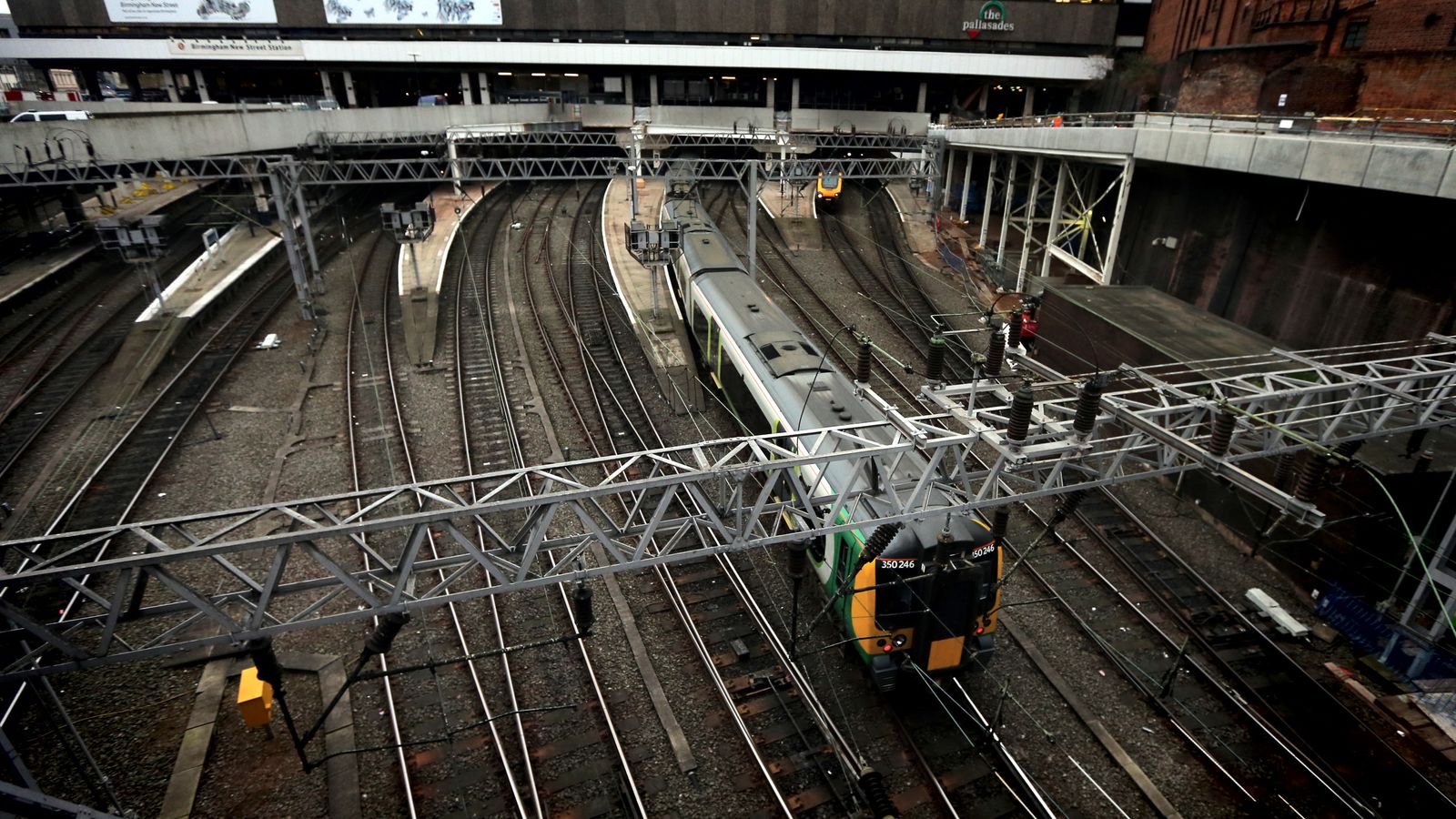
West Midlands and Greater Manchester mayors outline options to revive rail after axing of northern leg of HS2


Two of England’s mayors have outlined their proposals to revive rail in the Midlands and North post-HS2, insisting they “won’t accept a do-nothing scenario”.
Greater Manchester’s mayor, Andy Burnham, and his West Midlands counterpart, Andy Street, teamed up after the government axed the northern leg of the high speed rail project last year, and are trying to find an alternative to improve services between the cities with the help of the private sector.
Now the pair have offered up three options – from smaller upgrades through to a whole new line – they believe would provide “real benefits” to both their areas.
Politics live: Starmer meets with Brianna Ghey’s mother after Sunak’s ‘disgusting’ transgender jibe
Briefing journalists at an event in Birmingham, Mr Burnham said failing to increase capacity in the North West “would be damaging to economic growth in the regions and would mean the West Midlands and Greater Manchester would be set back”.
West Midlands mayor Andy Street (left) and Greater Manchester mayor Andy Burnham
He also said it would leave the UK “with quite a serious transport headache for the rest of this century”, with both the West Coast Main Line and the M6 already “at capacity”.
The mayor added: “Having been promised Northern Powerhouse Rail with HS2 at its heart… we won’t accept a do-nothing scenario.”
Mr Street outlined the alternatives on the table following the work they carried out with a private sector consortium – including engineers, construction firms and finance experts, led by former HS2 boss Sir David Higgins.

Politics Hub with Sophy Ridge
Sky News Monday to Thursday at 7pm.
Watch live on Sky channel 501, Freeview 233, Virgin 602, the Sky News website and app or YouTube.
The proposals are to either:
• Enhance the existing West Coast Main Line to “improve some of the most constrained parts” – though Mr Street warned it was the “minimal capital” option offering “minimum advantage”;
• Build major bypasses to the line at the southern end, as well as between Crewe and Stockport, alongside upgrades to the existing line;
• Construct a completely new and segregated line, but not built to the specification of the high-speed line in the south.
They could not commit to Sky News that there would be no need for public funding, but insisted it was “the less complicated part of the network” due to no need for tunnelling, and the transport benefits would be “huge”.
Mr Burnham also denied the ideas were “HS2 by the back door”, telling reporters they had “reluctantly” accepted the decision to scrap the second leg of the high speed project.
But Mr Street added: “We do believe there is a real benefit in one of those three or some blend between them,” added Mr Street.
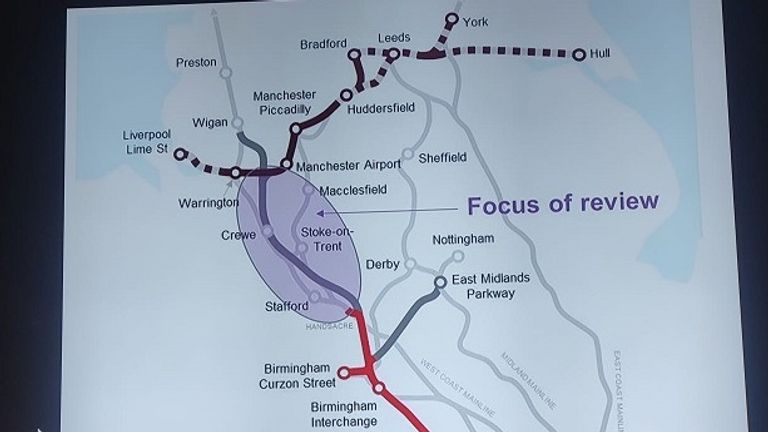
The mayors shared a map of where their proposals would be focused – between Birmingham and Manchester.
Both mayors also praised the approach of Transport Secretary Mark Harper to their work, saying they held a “constructive” meeting with him last week and planned further talks in March.
The minister had previously suggested he was “open-minded” to any proposals, though he remained “somewhat sceptical” about whether HS2 could be completed without public investment.
Asked by Sky News about doubts in Westminster over their project, Mr Burnham said there were schemes “around the world” that had been largely privately funded, such as the expansion of the TGV in France, showing it can work.
“Those sceptical MPs really should look up some of what’s been done in other parts of the world where infrastructure have been delivered successfully in a less costly way than the original HS2 [line] and where the private sector has played a considerable role in taking the risk off the public sector,” he said.
“This is not unrealistic or pie in the sky. There are plenty of examples.”
West Midlands mayor Andy Street also praised the approach of Mr Harper, telling Sky News: “It would have been very easy for the government to double down on the difficult decision they took at the Conservative Party conference.
“They have not done that.”
He adds: “The transport secretary has said it. He says he is ‘open-minded’ and described the meeting last week as ‘constructive’, so they are definitely willing to examine the outputs of this.”
But despite all the work with the private sector, would the final plan still need taxpayer cash?
“Not necessarily,” said Mr Burnham. “But that’s what [our] work will be looking at.”
Politics
Specialist teams and online investigators deployed across England and Wales to tackle ‘national emergency’ of violence against women and girls
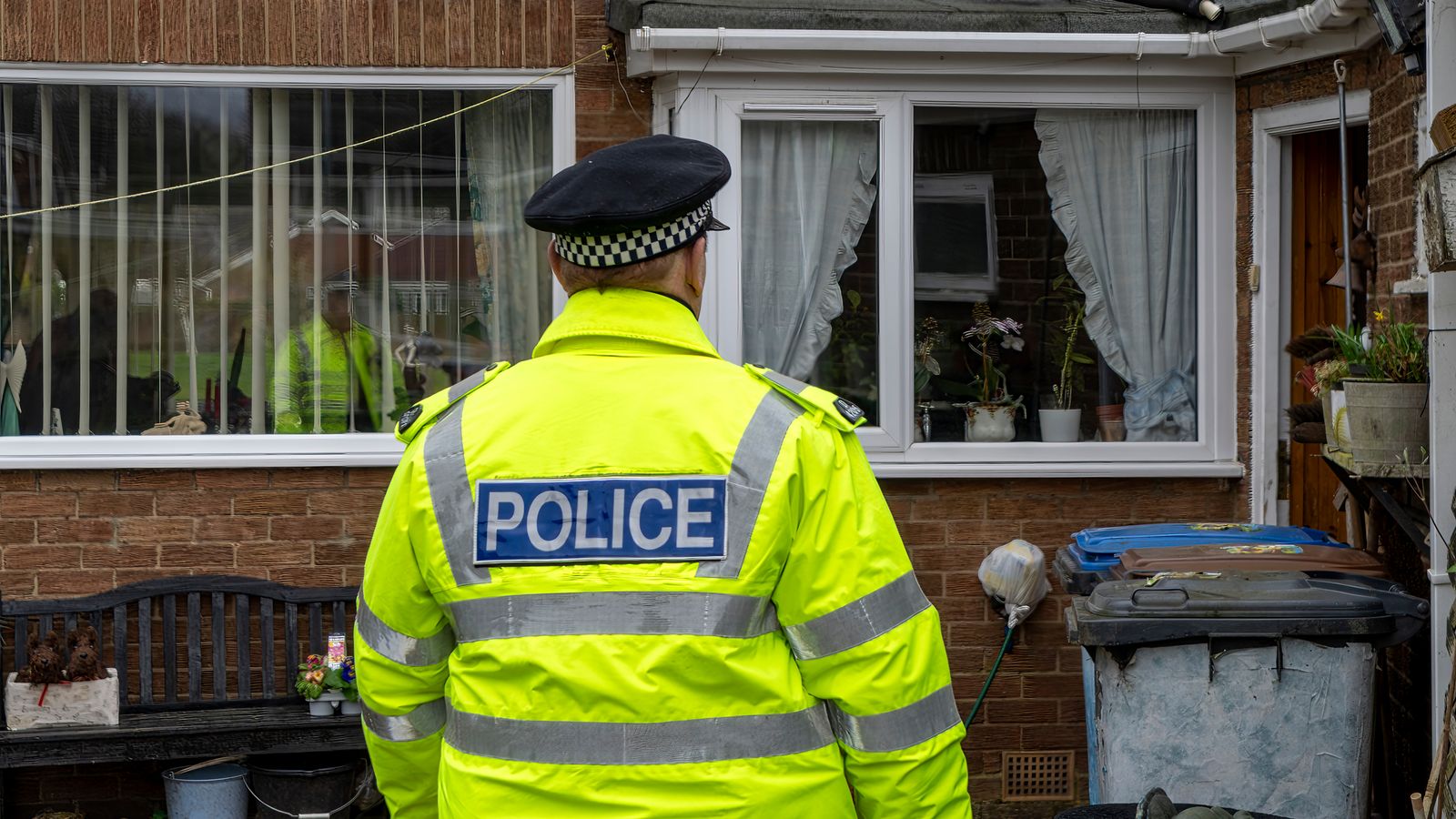
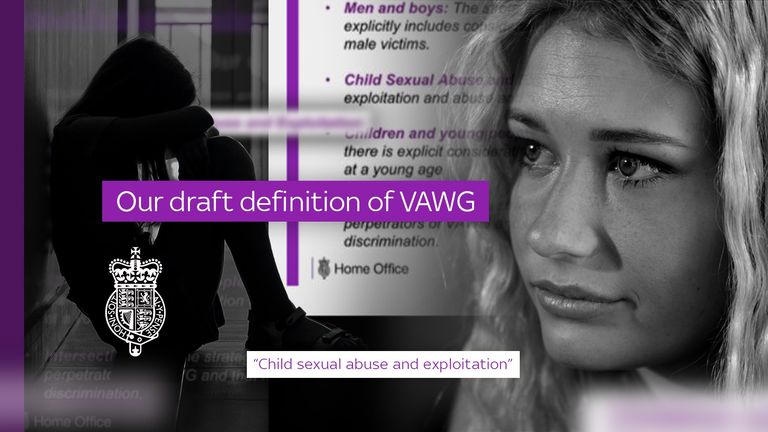
Specialist investigation teams for rape and sexual offences are to be created across England and Wales as the home secretary declares violence against women and girls a “national emergency”.
Shabana Mahmood said the dedicated units will be in place across every force by 2029 as part of Labour’s violence against women and girls (VAWG) strategy due to be launched later this week.
The use of Domestic Abuse Protection Orders (DAPOs), which had been trialled in several areas, will also be rolled out across England and Wales. They are designed to target abusers by imposing curfews, electronic tags and exclusion zones.
The orders cover all forms of domestic abuse, including economic abuse, coercive and controlling behaviour, stalking and ‘honour’-based abuse. Breaching the terms can carry a prison term of up to five years.
Govt ‘thinking again’ on abuse strategy
Nearly £2m will also be spent funding a network of officers to target offenders operating within the online space.
Teams will use covert and intelligence techniques to tackle violence against women and girls via apps and websites.
A similar undercover network funded by the Home Office to examine child sexual abuse has arrested over 1,700 perpetrators.
Abuse is ‘national emergency’
Ms Mahmood said in a statement: “This government has declared violence against women and girls a national emergency.
“For too long, these crimes have been considered a fact of life. That’s not good enough. We will halve it in a decade.
“Today, we announce a range of measures to bear down on abusers, stopping them in their tracks. Rapists, sex offenders and abusers will have nowhere to hide.”
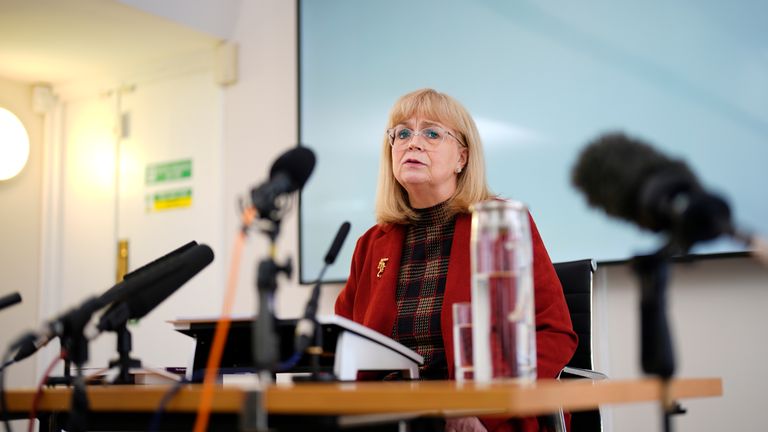
Angiolini Inquiry: Recommendations are ‘not difficult’
The target to halve violence against women and girls in a decade is a Labour manifesto pledge.
The government said the measures build on existing policy, including facial recognition technology to identify offenders, improving protections for stalking victims, making strangulation a criminal offence and establishing domestic abuse specialists in 999 control rooms.
Read more from Sky News:
Demands for violence and abuse reforms
Women still feel unsafe on streets
Minister ‘clarifies’ violence strategy
Labour has ‘failed women’
But the Conservatives said Labour had “failed women” and “broken its promises” by delaying the publication of the violence against women and girls strategy.
Shadow home secretary Chris Philp said that Labour “shrinks from uncomfortable truths, voting against tougher sentences and presiding over falling sex-offender convictions. At every turn, Labour has failed women”.
Home Secretary Shabana Mahmood will be on Sunday Morning with Trevor Phillips on Sky News this morning from 8.30am.


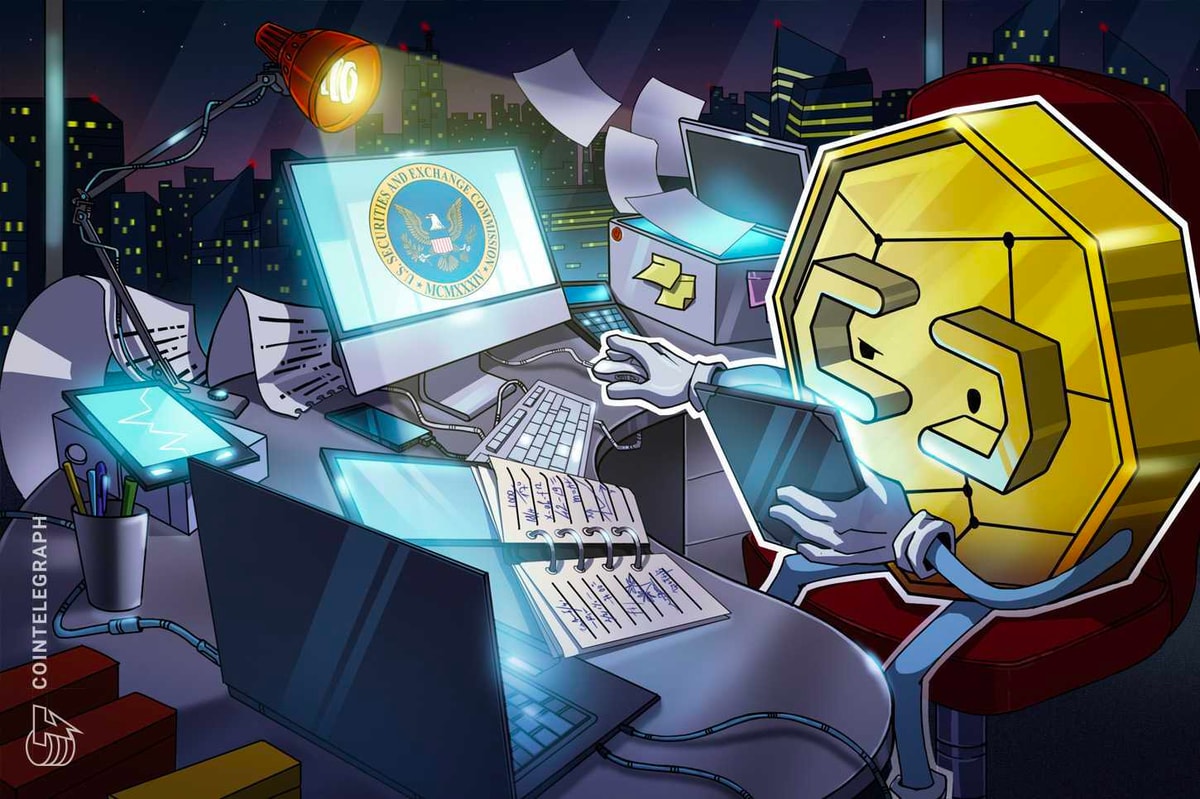
The United States Securities and Exchange Commission (SEC) published a crypto wallet and custody guide investor bulletin on Friday, outlining best practices and common risks of different forms of crypto storage for the investing public.
The SEC’s bulletin lists the benefits and risks of different methods of crypto custody, including self-custody versus allowing a third-party to hold digital assets on behalf of the investor.
If investors choose third-party custody, they should understand the custodian’s policies, including whether it “rehypothecates” the assets held in custody by lending them out or if the service provider is commingling client assets in a single pool instead of holding the crypto in segregated customer accounts.
Crypto wallet types were also outlined in the SEC guide, which broke down the pros and cons of hot wallets, which are connected to the internet, and offline storage in cold wallets.
Hot wallets carry the risk of hacking and other cybersecurity threats, according to the SEC, while cold wallets carry the risk of permanent loss if the offline storage fails, a storage device is stolen, or the private keys are compromised.
The SEC’s crypto custody guide highlights the sweeping regulatory change at the agency, which was hostile to digital assets and the crypto industry under former SEC Chairman Gary Gensler’s leadership.
Related: SEC sends warning letters to ETF issuers targeting untamed leverage
The crypto community celebrates the SEC guide as a transformational change in the agency
“The same agency that spent years trying to kill the industry is now teaching people how to use it,” Truth For the Commoner (TFTC) said in response to the SEC’s crypto custody guide.
The SEC is providing “huge value” to crypto investors by educating prospective crypto holders about custody and best practices, according to Jake Claver, the CEO of Digital Ascension Group, a company that provides services to family offices.

SEC regulators published the guide one day after SEC Chair Paul Atkins said that the legacy financial system is moving onchain.
On Thursday, the SEC gave the green light to the Depository Trust and Clearing Corporation (DTCC), a clearing and settlement company, to begin tokenizing financial assets, including equities, exchange-traded funds (ETFs) and government debt securities.
Magazine: Unstablecoins: Depegging, bank runs and other risks loom
-
 Sports2 years ago
Story injured on diving stop, exits Red Sox game
-
 Sports3 years ago
‘Storybook stuff’: Inside the night Bryce Harper sent the Phillies to the World Series
-
 Sports2 years ago
Game 1 of WS least-watched in recorded history
-
 Sports3 years ago
Button battles heat exhaustion in NASCAR debut
-
 Sports3 years ago
MLB Rank 2023: Ranking baseball’s top 100 players
-
Sports4 years ago
Team Europe easily wins 4th straight Laver Cup
-
 Environment3 years ago
Japan and South Korea have a lot at stake in a free and open South China Sea
-
 Environment1 year ago
Here are the best electric bikes you can buy at every price level in October 2024