
Business
Young people may lose benefits if they don’t engage with help from new £820m scheme, government warns



Young people could lose their right to universal credit if they refuse to engage with help from a new scheme without good reason, the government has warned.
Almost one million will gain from plans to get them off benefits and into the workforce, according to officials.
Latest updates from the Politics Hub
Pic: iStock
It comes as the number of young people not in employment, education or training (NEET) has risen by more than a quarter since the COVID pandemic, with around 940,000 16 to 24-year-olds considered as NEET as of September this year, said the Office for National Statistics.
That is an increase of 195,000 in the last two years, mainly driven by increasing sickness and disability rates.
The £820m package includes funding to create 350,000 new workplace opportunities, including training and work experience, which will be offered in industries including construction, hospitality and healthcare.
Around 900,000 people on universal credit will be given a “dedicated work support session”.
That will be followed by four weeks of “intensive support” to help them find work in one of up to six “pathways”, which are: work, work experience, apprenticeships, wider training, learning, or a workplace training programme with a guaranteed interview at the end.
However, Work and Pensions Secretary Pat McFadden has warned that young people could lose some of their benefits if they refuse to engage with the scheme without good reason.
“Doing nothing should not be an option,” he told Sky News’ Sunday Morning with Trevor Phillips.
“If someone just took that attitude, yes, they would then be subject to, you know, the obligations that are already part of the system.”
“What I want to see is young people in the habit of getting up in the morning, doing the right thing, going to work,” he added.
“That experience of that obligation, but also the sense of pride and purpose that comes with having a job.”

Some young people on benefits will be offered job opportunities in construction. Pic: iStock
Read more from Sky News:
Child poverty strategy unveiled – but not everyone’s happy
Universal credit claimants soar by over million in a year
The government says these pathways will be delivered in coordination with employers, while government-backed guaranteed jobs will be provided for up to 55,000 young people from spring 2026, but only in those areas with the highest need.
However, shadow work and pensions secretary Helen Whately, from the Conservatives, said the scheme is “an admission the government has no plan for growth, no plan to create real jobs, and no way of measuring whether any of this money delivers results”.
She told Sky News the proposals are a “classic Labour approach” for tackling youth unemployment.
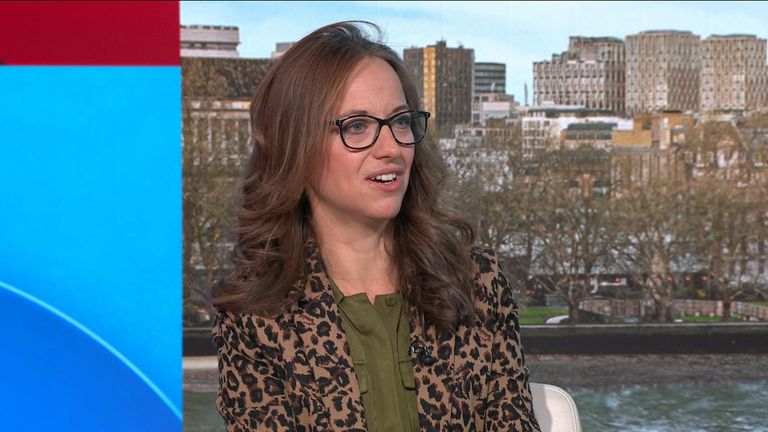
Youth jobs plan ‘the wrong answer’
“What we’ve seen today announced by the government is funding the best part of £1bn on work placements, and government-created jobs for young people. That sounds all very well,” she told Sunday Morning with Trevor Phillips.
“But the fact is, and that’s the absurdity of it is, just two weeks ago, we had a budget from the chancellor, which is expected to destroy 200,000 jobs.
“So the problem we have here is a government whose policies are destroying jobs, destroying opportunities for young people, now saying they’re going to spend taxpayers’ money on creating work placements. It’s just simply the wrong answer.”
Ms Whately also said the government needs to tackle people who are unmotivated to work at all, and agreed with Mr McFadden on taking away the right to universal credit if they refuse opportunities to work.
But she said the “main reason” young people are out of work is because “they’re moving on to sickness benefits”.
Ms Whately also pointed to the government’s diminished attempt to slash benefits earlier in the year, where planned welfare cuts were significantly scaled down after opposition from their own MPs.
The funding will also expand youth hubs to help provide advice on writing CVs or seeking training, and also provide housing and mental health support.
Some £34m from the funding will be used to launch a new “Risk of NEET indicator tool”, aimed at identifying those young people who need support before they leave education and become unemployed.
Monitoring of attendance in further education will be bolstered, and automatic enrolment in further education will also be piloted for young people without a place.

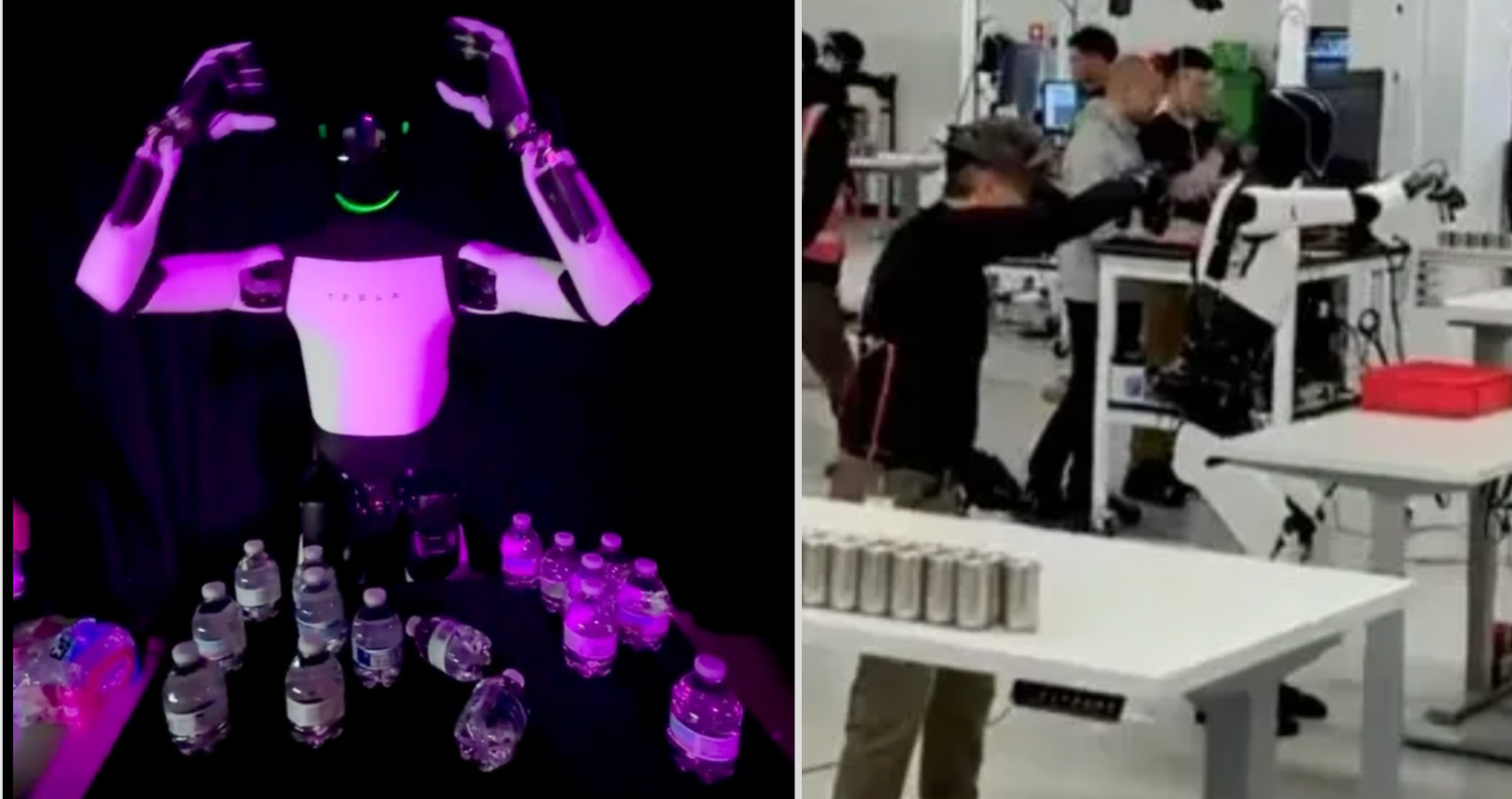
A new video surfacing from a Tesla demonstration in Miami this weekend shows the Optimus humanoid robot taking a nasty fall. But it’s not the fall itself that is raising eyebrows, it’s the specific hand movements the robot made on its way down, which strongly suggest it was mimicking a remote operator frantically removing a VR headset.
Humanoid robots are all the hype right now. Billions in investments are pouring in, and Elon Musk claims it will be a trillion-dollar product for Tesla, justifying its insane valuation.
The idea has been that with the advent of AI, robots in human form could use the new generalized artificial intelligence to replace humans in an increasingly larger number of tasks.
However, there are still many serious concerns about the effort, both at the ethical and technological levels.
Technologically, most humanoid robot demonstrations have relied on remote control by human operators – pointing to a remaining gap between the software and hardware.
We discussed how the robots at the “We, Robot” event were heavily teleoperated, despite Tesla not explicitly disclosing that fact to the public.
That was more than a year ago, and despite claims that Tesla has made “AI demos” of Optimus since, it appears the company still relies on teleoperation to control them during demonstrations.
The Tesla Optimus Miami Incident
This weekend, Tesla held an event called ‘Autonomy Visualized’ at its store in Miami. The goal was to showcase Tesla’s “Autopilot technology and Optimus.”
However, there was nothing “autonomous” at Tesla’s “autonomy” event.
Many Tesla fans were seen posting videos of a Tesla Optimus robot handing out bottles of water at the event. It was also seen posing for pictures and dancing.
On Reddit, someone posted a different video of the demonstration:
As you can see, Tesla Optimus moved its hands too quickly, causing some water bottles to drop to the ground. It then loses its balance and begins to fall backward.
But the most interesting part is that just before falling backward, both of its hands immediately shoot up to its “face” in a distinct grasping motion, as if pulling an object off its head.
The robot, of course, is not wearing anything on its head.
The motion is instantly recognizable to anyone who has used VR or watched teleoperation setups. It appears the human operator, likely located backstage or in a remote facility, removed their headset in the middle of operating the robot for unknown reasons.
Optimus faithfully replicated the motion of removing a non-existent headset as it crashed to the floor.
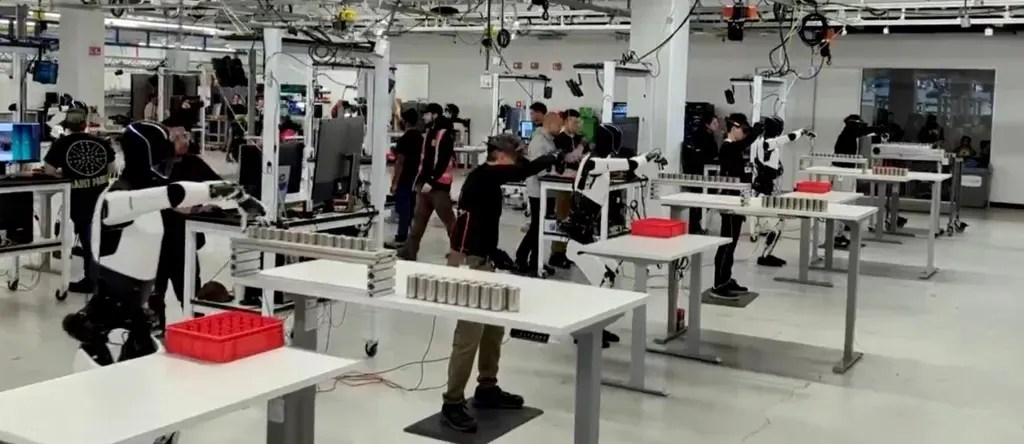
Here’s a look at how Tesla trained Pptimus with VR headsets in its lab:
Electrek’s Take
This is embarrassing, but not just because the robot fell. Robots fall; that’s part of the R&D process. Boston Dynamics blooper reels are legendary, and they never really eroded the company’s credibility.
The problem here is the “Wizard of Oz” moment.
The specific motion of removing the “phantom headset” destroys the illusion of autonomy Tesla tries so hard to curate.
Even recently, Musk fought back against the notion that Tesla relies on teleoperation for its Optimus demonstration. He specified that a new demo of Optimus doing kung-fu was “AI, not tele-operated”:
Musk said again during Tesla’s last earnings call in October:
“Optimus was at the Tron premiere doing kung fu, just up in the open, with Jared Leto. Nobody was controlling it. It was just doing kung fu with Jared Leto at the Tron Premier. You can see the videos online. The funny thing is, a lot of people walked past it thinking it was just a person.”
Musk keeps telling shareholders that Optimus will be the biggest product in history and that millions of units will be working in factories soon. But if they are still relying on 1:1 teleoperation to hand out water bottles right now, it feels like we are still far away from a useful generalized Optimus robot.


FTC: We use income earning auto affiliate links. More.


-
Bradford Doolittle
ORLANDO, Fla. — There were a number of ironies surrounding the results of the contemporary baseball era committee’s Hall of Fame ballot, announced Sunday night at MLB’s winter meetings.
Perhaps the most poignant is this: If not for Barry Bonds, Jeff Kent — the only one of the eight players under consideration selected Sunday — might not be bound for Cooperstown. While Kent is the all-time home run hitter among second basemen, he was on the same ballot as Bonds — who hit more homers than anyone, at any position.
During a post-announcement news conference, Kent recalled the way he and Bonds used to push, prod and sometimes annoy each other during their six seasons as teammates on the San Francisco Giants. Those were Kent’s best seasons, a fairly late-career peak that ran from 1997 to 2002, during which Kent posted 31.6 of his 55.4 career bWAR.
The crescendo was 2000, when Kent enjoyed his career season at age 32, hitting .334 with a 1.021 OPS, hammering 33 homers with 125 RBIs and compiling a career-best 7.2 bWAR. Hitting fourth behind Bonds and his .440 OBP, Kent hit .382 with runners on base and .449 with a runner on first base.
During Kent’s six years in San Francisco, he was one of five players in baseball to go to the plate with at least one runner on base at least 2,000 times, and the other four all played at least 48 more games than he did. Turns out, hitting behind Bonds is a pretty good career move.
To be clear, Kent was an outstanding player and the numbers he compiled were his, and his alone. When you see how the news of election impacts players, it’s a special thing. I am happy Jeff Kent is now a Hall of Famer.
But I am less happy with the Hall of Fame itself. While Kent’s overwhelming support — he was named on 14 of the 16 ballots, two more than the minimum needed for induction — caught me more than a little off guard, what didn’t surprise me was the overall voting results. In what amounted to fine print, there was this mention in the Hall’s official news release: “Barry Bonds, Roger Clemens, Gary Sheffield and Fernando Valenzuela each received less than five votes.”
By the new guidelines the Hall enacted for its ever-evolving era committee process — guidelines that went into effect with this ballot — Bonds, Clemens, Sheffield and Valenzuela aren’t eligible in 2028, the next time the contemporary era is considered. They can be nominated in 2031, and if they are, that’s probably it. If they don’t get onto at least five ballots then, they are done. And there is no reason to believe they will get more support the next time.
I thought that the makeup of this committee was stacked against the PED-associated players, but that’s a subjective assessment. And who knows what goes on in those deliberations. With so many players from the 1970s and 1980s in the group, it seemed to bode well for Don Mattingly and Dale Murphy. But they were both listed on just six ballots. Carlos Delgado had the second most support, at nine.
Why? Beats me. I’ve given up trying to interpret the veterans committee/era committee processes that have existed over the years. But the latest guidelines seem perfectly designed to ensure that for the next six years, there’s no reason to wail about Bonds and Clemens being excluded. Then in 2031, that’s it.
Meanwhile, the classic era will be up for consideration again in 2027, when Pete Rose can and likely will be nominated. Perhaps Shoeless Joe Jackson as well. What happens then is anybody’s guess, but by the second week of December 2031, we could be looking at a Hall of Fame roster that includes the long ineligible (but no more) Rose and maybe Jackson but permanently excludes the never-ineligible Bonds and Clemens — perhaps the best hitter and pitcher, respectively, who ever played.
If and when it happens, another kind of symbolic banishment will take place: The Hall will have consigned itself, with these revised guidelines, to always being less than it should be. And the considerable shadows of Bonds and Clemens will continue to loom, larger and larger over time, just as they happened with Rose and Jackson.
Ironic, isn’t it?
-
 Sports2 years ago
Story injured on diving stop, exits Red Sox game
-
 Sports3 years ago
‘Storybook stuff’: Inside the night Bryce Harper sent the Phillies to the World Series
-
 Sports2 years ago
Game 1 of WS least-watched in recorded history
-
 Sports3 years ago
Button battles heat exhaustion in NASCAR debut
-
 Sports3 years ago
MLB Rank 2023: Ranking baseball’s top 100 players
-
Sports4 years ago
Team Europe easily wins 4th straight Laver Cup
-
 Environment3 years ago
Japan and South Korea have a lot at stake in a free and open South China Sea
-
 Environment1 year ago
Here are the best electric bikes you can buy at every price level in October 2024