
Microsoft will bring four Xbox games to other companies’ consoles

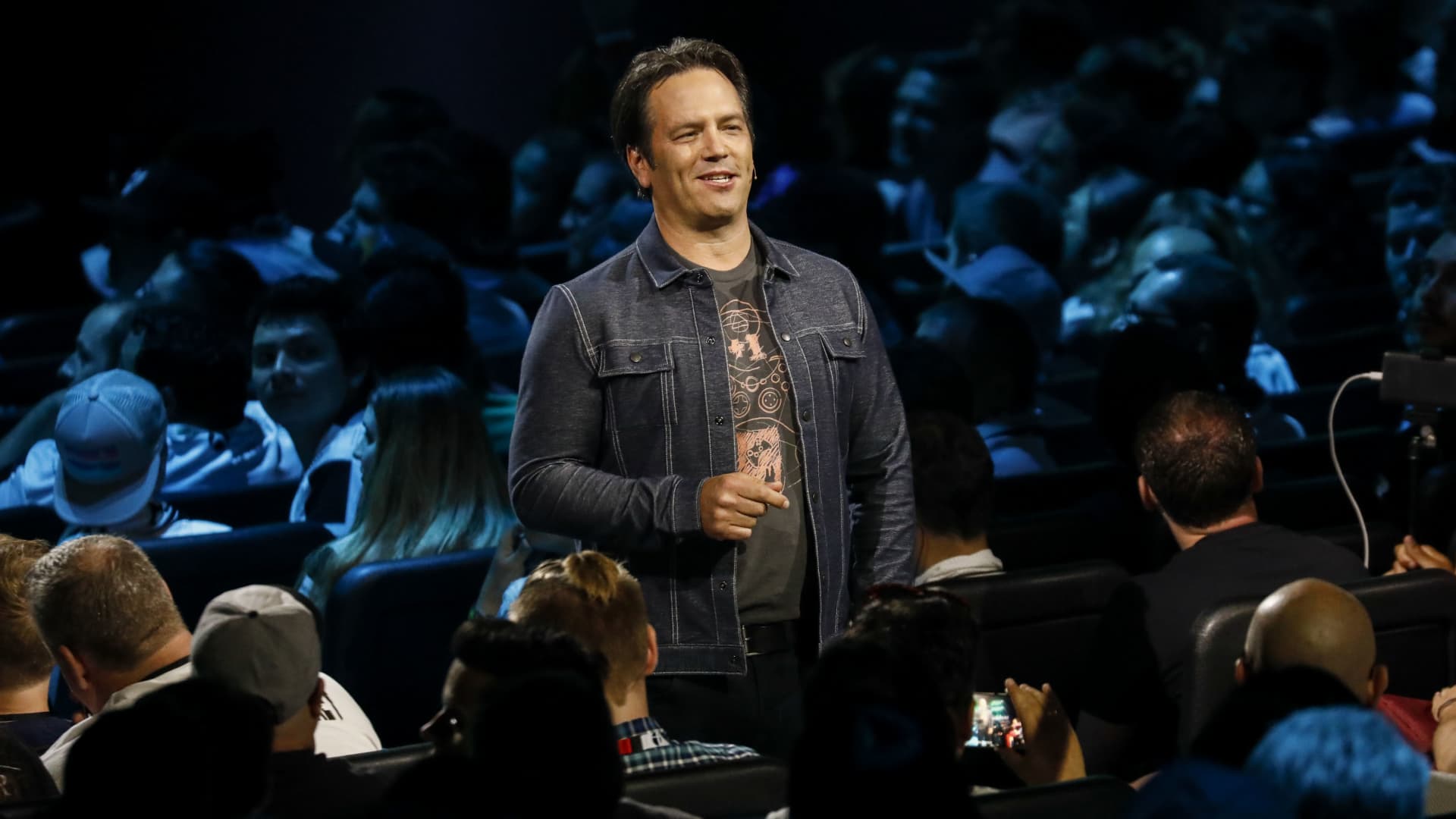
Phil Spencer, CEO of gaming at Microsoft, speaks during the company’s Xbox event ahead of the E3 Electronic Entertainment Expo in Los Angeles on June 10, 2018.
Patrick T. Fallon | Bloomberg | Getty Images
Microsoft said on Thursday that it will release four of its video games on competing consoles.
Phil Spencer, head of Microsoft’s gaming division, said in a company video that the decision is “not a change to our kind of fundamental exclusive strategy.”
Nevertheless, the shift signals a willingness to generate more revenue from content that previously could only be played on Microsoft’s own gaming hardware.
Microsoft completed the acquisition of prominent video game publisher Activision Blizzard for over $75 billion in October. In the fiscal second quarter, 11% of revenue flowing into Microsoft, the world’s most valuable public company, was tied to gaming. The Game Pass service that provides access to multiple games now has 34 million subscribers, up from 25 million two years ago, the company said. But the Xbox Series X and Series S consoles, which became available in 2020, have not proven as popular as the Sony PlayStation 5 or the Nintendo Switch.
“We think this is an interesting point in time for us to use what some of the other platforms have right now to help grow our franchises, so we’re going to do that,” Spencer said in the video.
Microsoft declined to identify the titles in question, but Spencer said they won’t be Starfield, a long-awaited game that came out in September, or the forthcoming Indiana Jones and the Great Circle.
Spencer did say two of the four are “community-driven games,” while the other two are smaller titles that weren’t meant to be exclusive to Microsoft’s own systems.
The Verge reported last week that Microsoft was looking into releasing the Indiana Jones game, previously announced for Xbox and Windows, on Sony’s PlayStation 5 in addition to Microsoft’s own console and PC operating system. The title will come from Bethesda Softworks, a subsidiary of ZeniMax Media, which Microsoft acquired for $8 billion in 2021.
Many Xbox fans expressed frustration on social media, speculating that Microsoft will give up trying to keep exclusive games on its console in the future. Without special content that can’t be played elsewhere, some argued, there would be less of a reason to keep investing in Xbox hardware and software.
One day after the Verge article was published, Spencer wrote in a post on X, “We’re listening and we hear you. We’ve been planning a business update event for next week, where we look forward to sharing more details with you about our vision for the future of Xbox. Stay tuned.”
Earlier this week, The Verge reported that games such as Hi-Fi Rush, Pentiment and Sea of Thieves would be coming to non-Microsoft consoles.
“I do have a fundamental belief that over the next five or 10 years, exclusive games, the games that are exclusive to one piece of hardware, are going to be a smaller and smaller part of the game industry,” Spencer said during the video appearance.
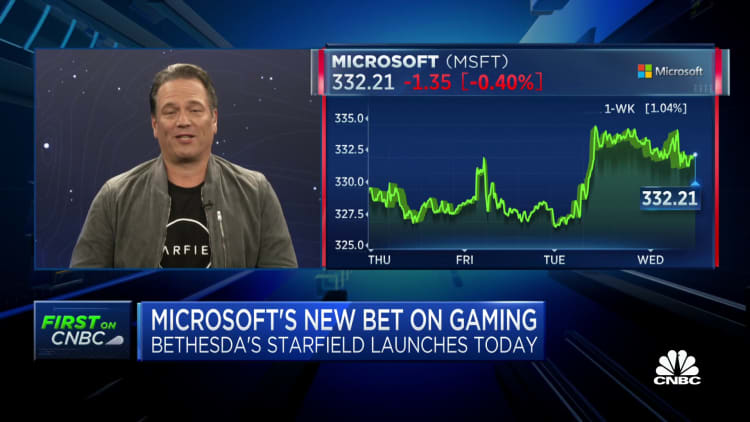
WATCH: Microsoft’s new bet on gaming: Bethesda’s Starfield launches today
Don’t miss these stories from CNBC PRO:


Park Dae-jun, CEO of South Korean online retail giant Coupang has resigned, three weeks after the company became aware of a massive data breach that affected nearly 34 million customers.
Coupang
The CEO of South Korean online retail giant Coupang Corp. resigned Wednesday, three weeks after the company became aware of a massive data breach that affected nearly 34 million customers.
Coupang said CEO Park Dae-jun resigned due to the data breach incident — which was revealed on Nov. 18 — according to a Google translation of the statement in Korean.
“I am deeply sorry for disappointing the public with the recent personal information incident,” Park said, adding, “I feel a deep sense of responsibility for the outbreak and the subsequent recovery process, and I have decided to step down from all positions.”
Following his resignation, parent company Coupang Inc. appointed Harold Rogers, the Chief Administrative Officer and General Counsel, as interim CEO.
Coupang said that Rogers plans to “focus on alleviating customer anxiety caused by the personal information leak” and to stabilize the organisation.
Park, who joined the company in 2012, became Coupang’s sole CEO in May, after the company transitioned away from a dual-CEO system.
According to Coupang, he was responsible for the company’s innovative new business and regional infrastructure development, and led projects to expand sales channels for small and medium enterprises, among others.
South Korean companies are known for being “very, very cost-efficient,” which may have led to neglecting areas like cybersecurity, Peter Kim, managing director at KB Securities, told CNBC’s “Squawk Box Asia” Wednesday.
“I think the core issue here is that we’ve had a number of other breaches, not just Coupang, but previously, telecom companies in Korea,” Kim added. “I understand some data companies consider Korea to be [the] top three or four most breached on a data, on an IT security basis in the world.”
South Korean companies have been hit by cybersecurity breaches before, including an April incident at mobile carrier SK Telecom that affected 23.24 million people. The country previously saw one of its largest cybersecurity incidents in 2011, when attackers stole over 35 million user details from internet platforms Nate and Cyworld.
Nate is one of the most popular search engines in South Korea, while Cyworld was one of the country’s largest social networking sites in the early 2000s.
Prime Minister Kim Min-seok reportedly said Wednesday that strict action would be taken against the company if violations of the law were found, according to South Korean media outlet Yonhap.
Police also raided the Coupang headquarters for a second day on Wednesday, continuing their investigation into the data breach.
Yonhap also reported, citing sources, that the police search warrant “specifies a Chinese national who formerly worked for Coupang as a suspect on charges of breaching the information and communications network and leaking confidential data.”
Last week, South Korean President Lee Jae Myung called for increased penalties on data breaches, saying that the Coupang data breach had served as a wake-up call.
— CNBC’s Chery Kang contributed to this report.

Technology
Amazon pledges a massive $35 billion worth of investments in India’s AI space through 2030

-
 Sports2 years ago
Story injured on diving stop, exits Red Sox game
-
 Sports3 years ago
‘Storybook stuff’: Inside the night Bryce Harper sent the Phillies to the World Series
-
 Sports2 years ago
Game 1 of WS least-watched in recorded history
-
 Sports3 years ago
Button battles heat exhaustion in NASCAR debut
-
 Sports3 years ago
MLB Rank 2023: Ranking baseball’s top 100 players
-
Sports4 years ago
Team Europe easily wins 4th straight Laver Cup
-
 Environment3 years ago
Japan and South Korea have a lot at stake in a free and open South China Sea
-
 Environment1 year ago
Here are the best electric bikes you can buy at every price level in October 2024