

Jeremy Hunt promises ‘permanent cuts in taxation’ before pre-election budget

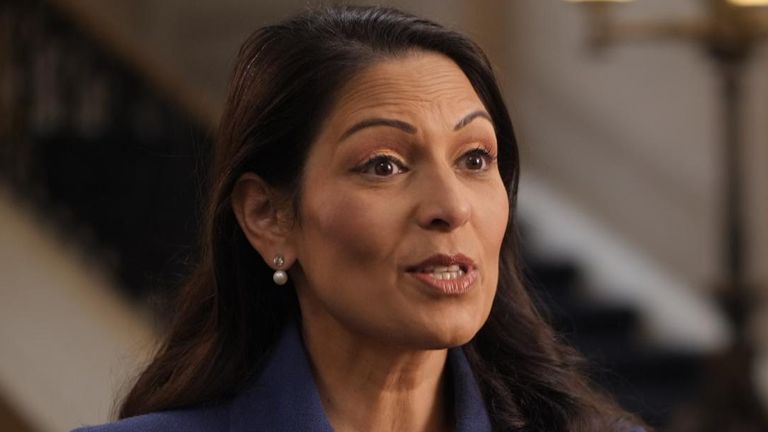
Jeremy Hunt has promised to help families with “permanent cuts” in tax on the eve of the budget on Wednesday.
The chancellor, who is expected to announce a 2p reduction to national insurance (NI) in what could be the last major fiscal event before the next election, said “lower tax means higher growth”.
While he did not confirm what taxes he plans to slash, Sky News understands that a cut to NI is on the cards and the 5p freeze on fuel duty will be extended.
Money:
What 2p cut to national insurance means for your pay
Mr Hunt is also said to be considering:
• A new levy on vaping products
• Help for first time buyers, such as 99% mortgages
• A tax on air passenger duty for business class travel
• Cutting back plans to increase departmental spending to save money
Labour said that whatever is announced, it won’t be enough to “undo the economic vandalism of the last decade” – and the tax burden is still set to rise to a record high.
With Sir Keir Starmer’s party ahead by around 20 points in the polls, some Tory MPs want Mr Hunt to go further and cut personal income tax with an election approaching.
This is seen as a more headline-grabbing measure that benefits more voters, including pensioners.
But the chancellor is said to have decided against this after forecasts from the UK’s fiscal watchdog, the Office for Budget Responsibility (OBR), gave him less fiscal headroom than hoped.
Patel: ‘Budget should back working people’
‘Conservatives know lower tax means higher growth’
A 2p cut to income tax would cost around £14bn, whereas the 2p cut to NI will cost around £10bn.
Combined with the 2p cut to NI announced in November, the move will save 27 million workers £900 on average.
In comments released by the Treasury on Tuesday night, Mr Hunt said: “Of course, interest rates remain high as we bring down inflation.
“But because of the progress we’ve made… delivering on the prime minister’s economic priorities, we can now help families with permanent cuts in taxation.
“We do this not just to give help where it is needed in challenging times. But because Conservatives know lower tax means higher growth. And higher growth means more opportunity and more prosperity.”
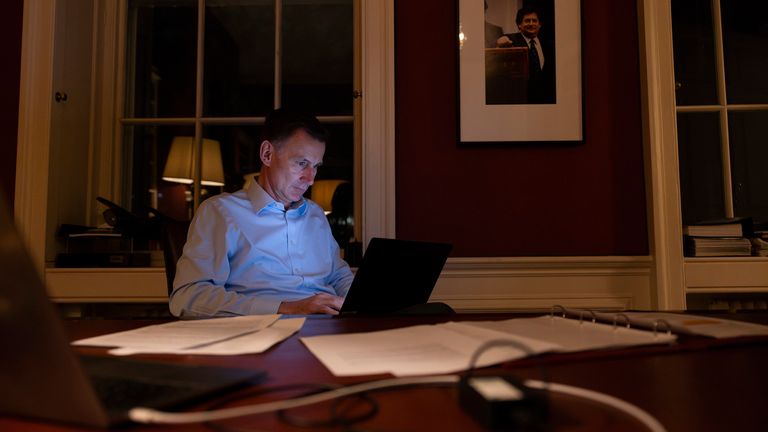
Jeremy Hunt prepares his budget. Pic: Flickr
Mr Hunt added that growth “cannot come from unlimited migration”, but “can only come by building a high-wage, high-skill economy”.
He also took aim at Labour, claiming a government under Sir Keir Starmer would “destroy jobs” and “risk family finances with new spending that pushes up tax”.
Politics latest:
Will another NI cut appeal to voters?
Tories ‘overseeing 14 years of economic failure’ – Labour
But shadow chancellor Rachel Reeves said Labour is “now the party of economic responsibility” as she accused the Tories of overseeing “14 years of economic failure” with the overall tax burden still rising.
She said: “The Conservatives promised to fix the nation’s roof, but instead they have smashed the windows, kicked the door in and are now burning the house down.
“Taxes are rising, prices are still going up in the shops and we have been hit by recession. Nothing the chancellor says or does can undo the economic vandalism of the Conservatives over the past decade.
“The country needs change, not another failed budget or the risk of five more years of Conservative chaos”.
Read more:
Hunt’s task is not just to get voters on side – but MPs too
What to expect in the budget – from tax cuts to fuel duty
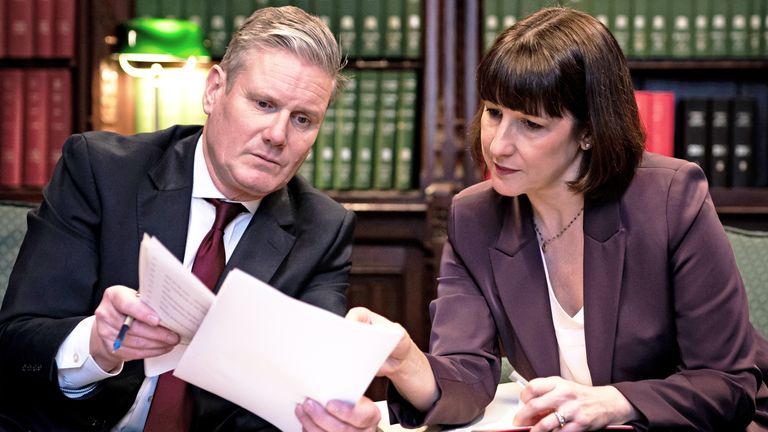
Sir Keir Starmer and Rachel Reeves preparing for Wednesday’s budget. Pic: PA
How will Hunt pay for Budget 2024 giveaway?
Experts have warned that a 2p national insurance cut would not be enough to stop the tax burden rising because of previously announced freezes to personal tax thresholds.
There are also questions about whether Mr Hunt can afford to pay for the measure.
He has said he will not pay for tax cuts with borrowing, meaning a combination of spending cuts and tax rises elsewhere will be necessary.
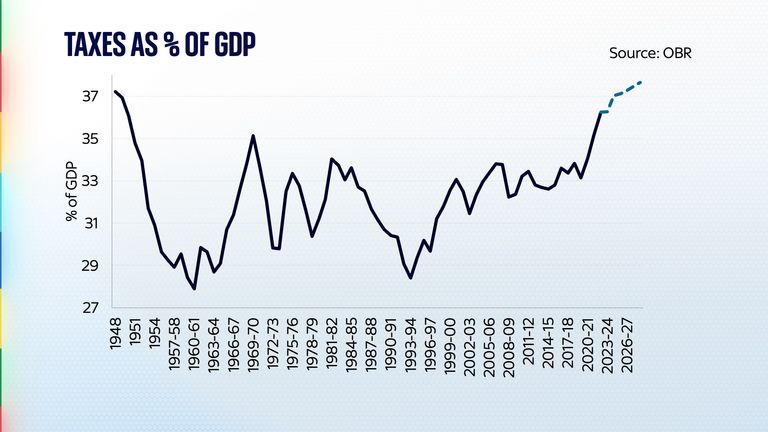
‘Tax at highest level since WWII’
Revenue-raisers Mr Hunt is said to be considering include reducing the scope of non-dom tax relief, which Labour has said it would scrap to fund services such as the NHS.
A new levy on vaping is on the cards, as is a tax on air passenger duty for business class travel and a tax crackdown on those who rent out second homes for holiday lets.
The chancellor is also considering cutting back plans to increase departmental spending by just 0.75% a year, instead of 2%, to raise around £5bn.
While this would create more scope for tax cuts, it would likely prove controversial given the pressure already on public services, with a spate of local councils going bankrupt in recent months.

Lib Dem leader Sir Ed Davey – who will be targeting Mr Hunt’s “Blue Wall” seat at the election – described the Conservatives as “the great tax swindlers” and said they should be prioritising the NHS.
He said: “Rishi Sunak has led the economy into a recession and forced families to pick up the tab. They have no shame.
“The Conservatives must put the NHS at the heart of the budget. It is no wonder the economy isn’t growing when millions of people are stuck on NHS waiting lists, unable to work.”
Watch Sky News’s coverage of the Budget live from 11am on Wednesday.
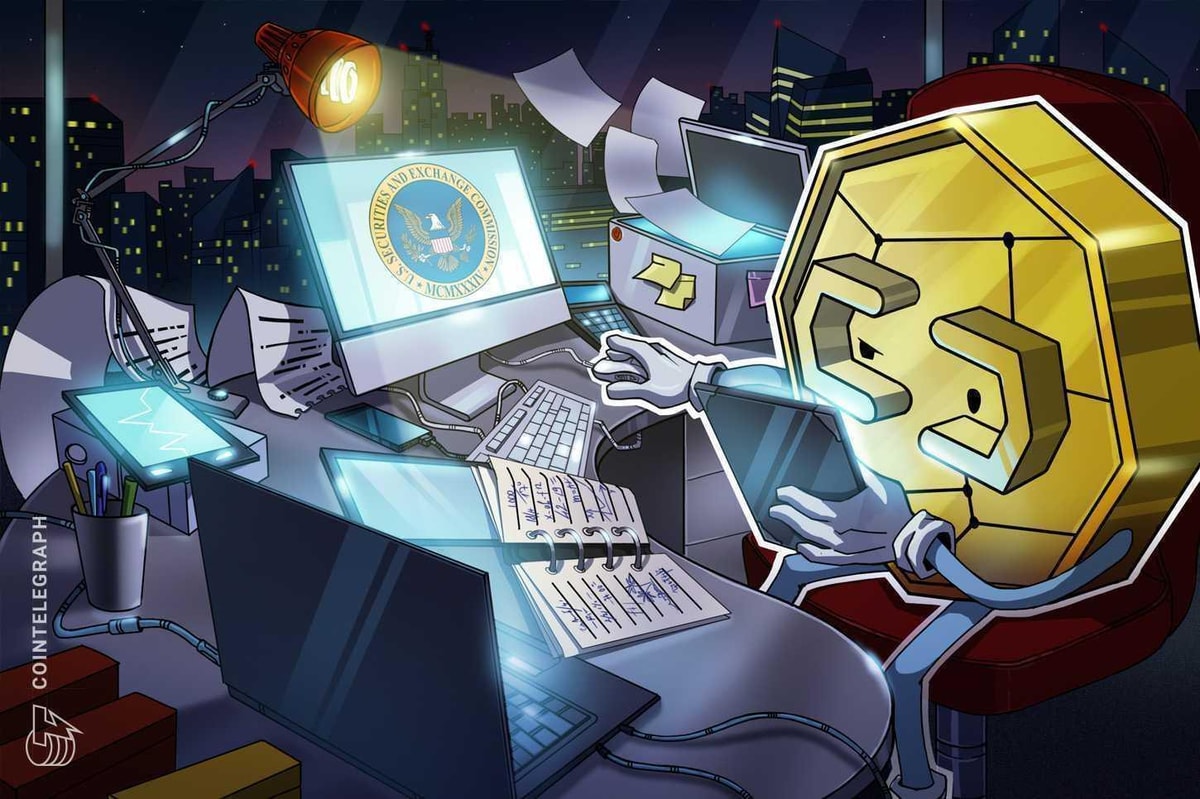
SEC Commissioner Caroline Crenshaw, expected to leave the agency in less than a month, used one of her final public speaking engagements to address the regulator’s response to digital assets.
Speaking at a Brookings Institution event on Thursday, Crenshaw said standards at the SEC had “eroded” in the last year, with “markets [starting] to look like casinos,” and “chaos” as the agency dismissed many years-long enforcement cases, reduced civil penalties and filed fewer actions overall.
The commissioner, expected to depart in January after her term officially ended in June 2024, also criticized many crypto users and the agency’s response to the markets.

“People invest in crypto because they see some others getting rich overnight,” said Crenshaw. “Less visible are the more common stories of people losing their shirts. One thing that consistently puzzles me about crypto is what are cryptocurrency prices based on? Many, but not all, crypto purchasers are not trading based on economic fundamentals.”
She added:
“I think it’s safe to say [crypto purchasers are] speculating, reacting to hysteria from promoters, feeding a desire to gamble, wash trading to push up prices, or, as one Nobel laureate has posited, ‘betting on the popularity of the politicians who support or stand to benefit from the success of crypto.’”
In contrast to Crenshaw’s remarks, SEC Chair Paul Atkins, Commissioner Hester Peirce and Commissioner Mark Uyeda have all publicly expressed their support for the agency’s approach to digital assets and the Trump administration’s direction of policy.
Peirce and Atkins spoke at a Blockchain Association Policy Summit this week to discuss crypto regulation and a path forward on market structure under consideration in the Senate.
Related: Crypto industry fears ‘vehemently anti crypto’ Caroline Crenshaw SEC vote
During the Thursday event’s question-and-answer session, Crenshaw expanded on her views of crypto, stating that it was a “tiny piece of the market,” and suggested that the SEC focus on other regulatory concerns. In addition, she expressed concern that the agency was heading toward giving crypto companies an exception from policies that applied to traditional finance.
“I do worry that as the crypto rules are perhaps implemented, or perhaps we just put out more guidance […] where we say they are not securities, where we loosen the basic fundamentals of the securities laws so that they can operate in our system, but without any of the guardrails that we have in place. I do worry that that can lead to more significant market contagion,” said Crenshaw.
The final throes of bipartisan financial regulators under Trump?
The departure of Crenshaw would leave the SEC with three Republican commissioners, two of whom were nominated by US President Donald Trump. As of Thursday, Trump had not made any announcements signaling that he ever planned to nominate another Democrat to the SEC, and Crenshaw said the agency’s staff had been reduced by about 20% in the last year.
The Commodity Futures Trading Commission also faces a dearth of leadership, with many commissioners leaving the agency in 2025. As of December, acting Chair Caroline Pham was the sole remaining CFTC commissioner and a Republican. However, the US Senate is soon expected to vote on Trump’s nominee, Michael Selig, to chair the agency after Pham.
Magazine: When privacy and AML laws conflict: Crypto projects’ impossible choice

The Belarusian Ministry of Information has blocked access to crypto exchanges Bybit, OKX, Bitget, Gate, Bingx and Weex, it said on Thursday.
According to a government announcement, the ministry has restricted access to the global domains of several crypto exchanges, citing “inappropriate advertising” under Article 511 of the Law on Mass Media.

Cointelegraph reached out to the blocked exchanges but had not received responses at the time of publication.
Belarus is a close ally of Russia on the world stage. The domain restriction comes on the same day that Vladimir Chistyukhin, first deputy chairman at the Central Bank of Russia, told state-backed outlet RIA Novosti that it “agreed to allow qualified investors” into the crypto market. The remarks build on recent reports that the institution was considering easing restrictions on cryptocurrencies in response to the sweeping sanctions imposed on the country.
Russia disclosed plans in late April to allow crypto access only to “super-qualified investors,” defined by wealth and income thresholds of over 100 million rubles ($1.2 million) or an annual income of at least 50 million rubles ($630,000), effectively limiting participation to high-net-worth individuals.
Related: EU sanctions Russian A7A5 stablecoin and crypto exchanges
Russia’s central bank sees crypto’s utility
Chistyukhin said a “crucial point that cannot be ignored” is that “cryptocurrencies are currently being used not only as an investment but also as a means of cross-border payments.” His comments echoed recent statements over allowing broader crypto access in Russia as a response to the international sanctions:
“We certainly want to protect Russian retail investors as much as possible from transactions with such a risky asset. On the other hand, we understand that, under the current circumstances, some international payments can only be made using cryptocurrency.“
Chistyukhin said there are currently about one million qualified investors able to access crypto assets in Russia, noting that investors would also be assessed on their knowledge of cryptocurrencies. He conceded that allowing non-qualified investors to access crypto is on the table, but said it would require extreme caution.
“Specifically, such investors could be granted access only to the most liquid instruments,” he said.
Chistyukhin highlighted the need for “establishing strict restrictions and prohibitions” and said “it’s expected that cryptocurrency transactions will be conducted primarily through existing market participants, under existing licenses,” adding that “anything outside this framework will be considered illegal.“
Magazine: When privacy and AML laws conflict: Crypto projects’ impossible choice
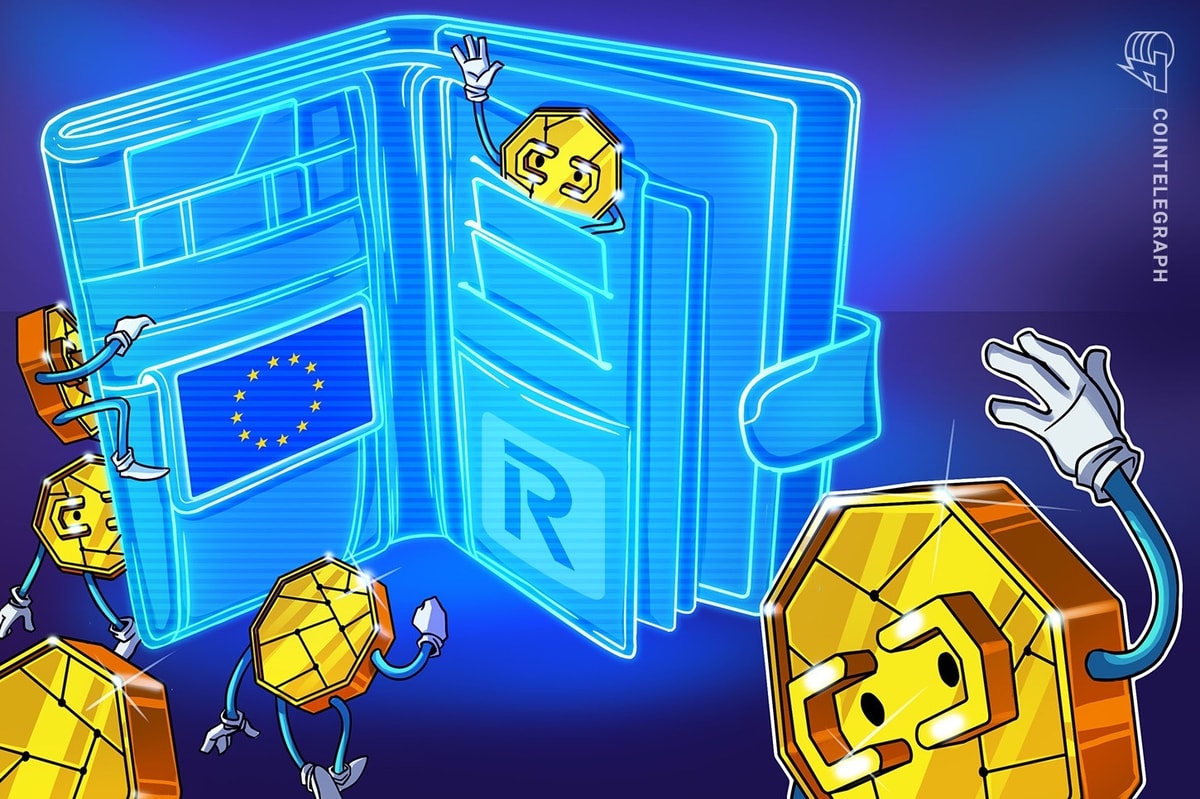
Trust Wallet, the self-custodial crypto wallet owned by Binance co-founder Changpeng “CZ” Zhao, has partnered with European fintech unicorn and digital banking giant Revolut to introduce a new way to purchase crypto assets on its platform.
Trust Wallet users can now buy Bitcoin (BTC), Ether (ETH) and Solana (SOL) with Revolut through a direct integration, the company announced on Thursday.
With a minimum purchase starting at 10 euros ($12) and capped at 23,000 euros ($26,950) daily and per transaction, Trust Wallet’s new buy option is expected to provide a faster and easier way to access crypto from Europe.
In October, Revolut scored regulatory approval from the Cyprus Securities and Exchange Commission to offer crypto services across 30 European Economic Area markets in compliance with the European Union’s Markets in Crypto-Assets Regulation (MiCA) framework.
Stablecoins like USDC not supported, for now
The integration will initially support only three crypto assets, but the companies said they expect to add stablecoins such as Circle’s USDC (USDC) at a later stage.
The feature enables zero-fee crypto purchases using multiple fiat currencies supported by Revolut, including the euro, the British pound, as well as the Czech koruna, Danish Krone, Polish Złoty and others.

While Revolut–Trust Wallet crypto purchases are offered with zero fees, adding money to a Revolut account is not free of charge in many cases, including via bank transfers, card top-ups and cash deposits. Cash deposits are subject to a 1.5% fee and are limited to $3,000 per calendar month, according to Revolut’s FAQs.
Related: Crypto self-custody is a fundamental right, says SEC’s Hester Peirce
The integration came shortly after Revolut secured a $75 billion company valuation after completing a private share sale in late November. “This makes us Europe’s most valuable private company and in the top 10 of the world’s most valuable private companies,” Revolut said in a post on X.
CZ-backed Trust Wallet has been actively tapping into trending market sectors, including prediction markets and real-world asset tokenization, expanding access to these offerings for self-custody users.
Cointelegraph contacted Revolut and Trust Wallet for comment on the integration, but had not received a response by publication.
-
 Sports2 years ago
Story injured on diving stop, exits Red Sox game
-
 Sports3 years ago
‘Storybook stuff’: Inside the night Bryce Harper sent the Phillies to the World Series
-
 Sports2 years ago
Game 1 of WS least-watched in recorded history
-
 Sports3 years ago
Button battles heat exhaustion in NASCAR debut
-
 Sports3 years ago
MLB Rank 2023: Ranking baseball’s top 100 players
-
Sports4 years ago
Team Europe easily wins 4th straight Laver Cup
-
 Environment3 years ago
Japan and South Korea have a lot at stake in a free and open South China Sea
-
 Environment1 year ago
Here are the best electric bikes you can buy at every price level in October 2024