

MLB Rank 2024: Ranking baseball’s top 100 players


Opening Day is almost here, which means it’s time to ask the question that’s on everyone’s mind: Who will be the best player of the 2024 MLB season?
To create our annual MLB Rank list of the top 100 players in the sport, we presented a panel of ESPN baseball experts with pairings upon pairings of the biggest names in the game and asked them which player will be better in 2024.
However, that raises the question of how to compare players who have vastly different but still important roles across the sport. How do you compare the top starting pitchers to the best sluggers in the game? What about players who don’t have much major league experience? And where do baseball’s best relievers land? It seems impossible to pit these stars against one another, but we did it — and one player came out on top.
Our list features Cy Young Award winners, MVPs, veterans building Hall of Fame résumés and young megastars who could dominate MLB for years to come. But who’s No. 1? And where does the best player on your team rank?
ESPN MLB experts Jeff Passan, Buster Olney, Alden Gonzalez, Dave Schoenfield, Jesse Rogers and Brad Doolittle broke down why each player is ranked where they are and what to expect from them in the upcoming season.
Jump to team’s top-ranked player:
American League
BAL | BOS | CHW | CLE | DET
HOU | KC | LAA | MIN | NYY
SEA | TB | TEX | TOR
(No top 100 players: OAK)
National League
ARI | ATL | CHC | CIN
LAD | MIA | MIL | NYM | PHI
PIT | SD | SF | STL
(No top 100 players: COL, WSH)
More: Snubs, surprises
Next top 100 player for every team | MLB players weigh in on top 100
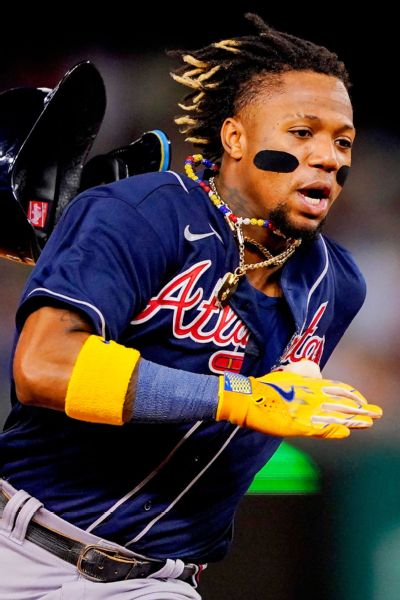
Stolen bases can take a significant toll on a player’s body, and 73 is a lot. Which begs the question: Would the Braves consider slightly reigning in Acuña, who’s oh-so-valuable everywhere else, in the wake of his knee scare this spring? “Nah,” Braves manager Brian Snitker said. At some point, Acuña will slow down on his own. But right now, Snitker said, “You’ve got to turn a kid like that loose.”
The Braves will do just that with Acuña, the reigning MVP after becoming the first 40-70 player in baseball history. The 2023 season saw Acuña pick up where he left off in 2019 — before the COVID-shortened season of 2020, the torn ACL of 2021 and the struggles coming off it in 2022 made us forget this might be the game’s most dynamic player. Except he did it while striking out less than half the time, triggering an absurd .337/.416/.596 slash line. He was just as athletic and far more refined than when he first burst onto the scene four years earlier — and he’s at a point in his life where he might still be getting better.
Season prediction: Another run at MVP, another season as a catalyst atop the Braves’ prolific offense and, dare we say, the first 50-50 season ever. — Gonzalez
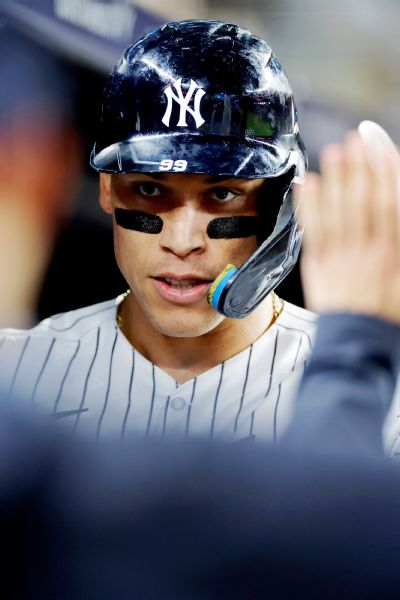
Everything we thought about Judge’s role in the Yankees’ success was reinforced in 2023. On the day he slammed his right foot into the bullpen gate in Dodger Stadium, the team’s record was 35-25. The rest of the season — with Judge missing extensive time — the Yankees were 47-55. The absence of one superstar is typically more meaningful in the NFL, with quarterbacks, or in the NBA. It isn’t supposed to happen in baseball. But it did with Judge, who has evolved into a staggering combination of power, on-base production, baserunning and defense. He played half his games on a bum big toe last season and finished with an adjusted OPS+ of 175.
Season prediction: An old saying is that the best lineup protection comes from in front of a hitter, because with runners on base, pitchers are more compelled to work in the strike zone. Now Judge has Juan Soto in front of him. He will have a monster year. — Olney
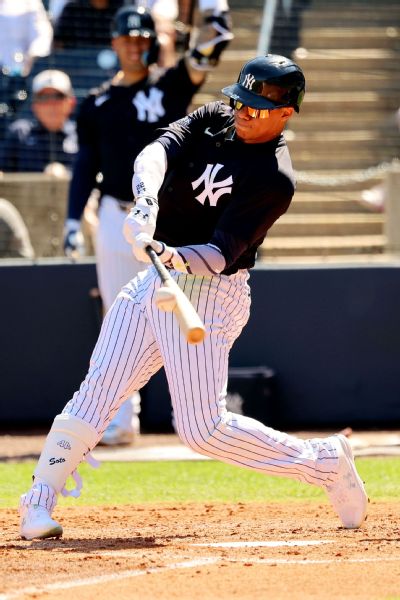
3. Juan Soto, RF, New York Yankees
Soto’s defense may prevent him from ever being considered the best player in the game, but he’s certainly in the running for best hitter. Indeed, since 2020 he ranks first in the majors in batting runs created, ahead of Judge and Freddie Freeman. He was sixth in the category last season after hitting .275/.410/.519 with 35 home runs and 132 walks for the Padres. Now, following the big trade to the Yankees, comes the pressures of performing in pinstripes and playing for a huge contract in free agency, which he’ll enter after this season. While he did struggle those first two months with the Padres in 2022, consider this: He hit .307/.422/.604 with 23 home runs on the road in 2023. Now he gets to play his home games at Yankee Stadium. His numbers may explode in 2024, putting an MVP trophy in his sights.
Season prediction: His first 40-homer season, the best OBP in the majors, the most runs scored in the majors (batting in front of Judge will help there) … and the American League MVP Award. — Schoenfield
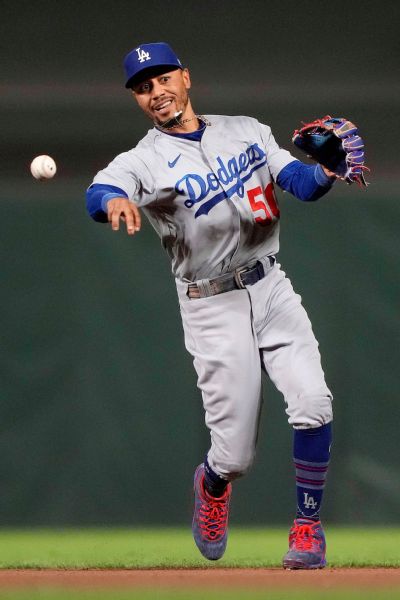
Over the last half-century, the list of players with more seasons of 8.0-plus wins above replacement than Betts is as follows: Barry Bonds, Alex Rodriguez, Albert Pujols, Mike Trout, Wade Boggs, Rickey Henderson, Mike Schmidt. That’s it.
The same seven are the only ones ahead of him in 6.0-plus WAR seasons, too. The company Betts keeps is simple: the elite of the elite — first-ballot Hall of Fame sorts.
At 31, Betts remains in his prime, and he was recently named the Dodgers’ shortstop — a move manager Dave Roberts called “permanent, for now” — after splitting time at second, shortstop and right field last year. He does everything right: hit for average (.307) and power (39 home runs), get on base (.408 OBP), run well (14 stolen bases) and play great defense. He is as solid and steady as they come, and while his OPS may not again approach 1.000, hitting in front of two other players in the top 10 of this list can’t hurt.
Season prediction: A .300/.400/.500 slash line — only five players booked one last year — and the most runs scored for a player since the Dodgers moved to Los Angeles. (The record: Freeman’s 132 last year.) — Passan
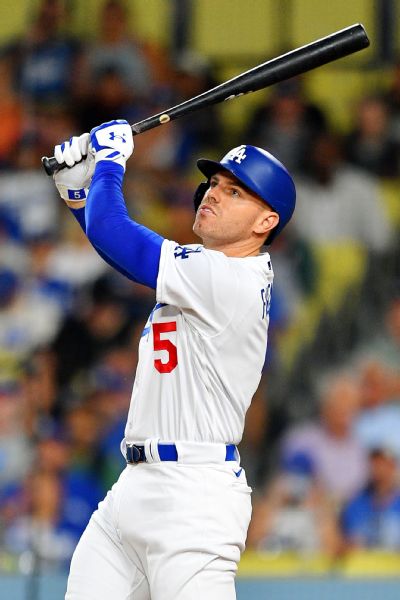
5. Freddie Freeman, 1B, Los Angeles Dodgers
Father Time is undefeated but at some point, even Freeman has to stop getting better. That point doesn’t seem to be looming any time soon, not after Freeman’s age-33 season was arguably his best campaign yet. Since 2016, there have been 35 instances in which a qualifying batter has put up a coveted .300/.400/.500 stat line. Only seven hitters have done it more than once. Five of the seven in that group have done it twice, while Mike Trout has done it three times. Freeman has done it five times.
A metronomic craftsman, Freeman is now 14 years into his journey to Cooperstown. His first seven seasons featured a .288/.373/.484 slash line with 949 hits, 138 homers and 19 steals. The past seven have seen a .313/.402/.541 line with 1,165 hits, 183 homers and 70 steals. How is that possible?
Season prediction: More of the same — .300/.400/.500 line, just to start, and another 190 to 200 hits off his countdown to 3,000. He’s demonstrated no reason to think that, at 34, he’s about to slow down. — Doolittle
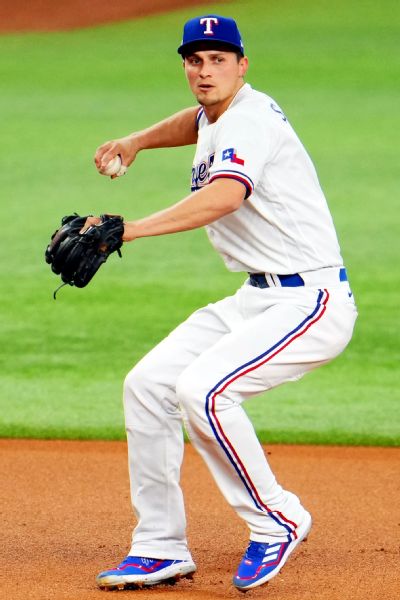
When healthy, Seager is as dangerous a hitter as they come. Just ask the Diamondbacks, who saw firsthand what the veteran is capable of in the World Series last year when he posted a 1.137 OPS in five games. The result was a championship for Texas and MVP honors for Seager. But injuries have been part and parcel of his career to this point, and his spring has been slowed down by his recovery from a hernia surgery he underwent in January. It may not impact his regular season but hitters are creatures of routine, so it might take him a bit to get going. When he does, watch out. The Rangers are looking for a repeat and have the right guy to lead them there — a now two-time World Series MVP.
Season prediction: Provided he’s healthy for most of the year, Seager will set a career mark in walks in 2024, reminding teams he’s not the person to pitch to in clutch situations. His previous high was just 67 in 2017. He’ll reach 70 this year. — Rogers
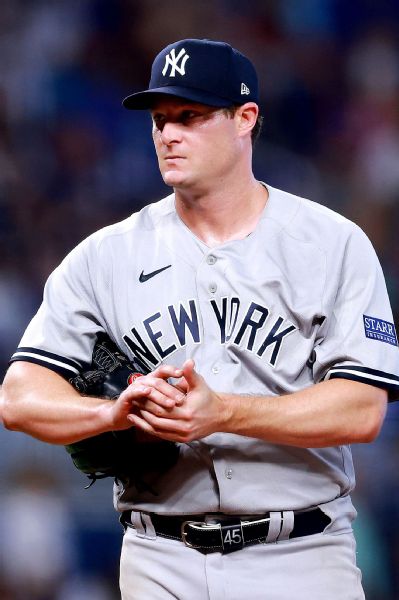
7. Gerrit Cole, SP, New York Yankees
Don’t blame Cole for the Yankees missing the postseason last year for the first time since 2016, as he went 15-4 with a 2.63 ERA, leading the AL in ERA, adjusted ERA, innings, pitching WAR (by more than two wins), WHIP and lowest batting average allowed. He was rewarded with his first Cy Young Award after twice previously finishing second. In his four seasons with the Yankees, only Zack Wheeler tops Cole in Baseball-Reference WAR (bWAR) among pitchers, so it’s been a sound investment in a pitcher who is on a Hall of Fame trajectory. His durability, elite velocity and excellent command make him the top pitcher on our board.
Season prediction: As good as he was in 2023, Cole did suffer a significant decline in whiff rate (from the 92nd percentile in 2022 to the 48th percentile in 2023). It didn’t hurt him last season, but let’s see about 2024. I wonder if his home runs spike back up a bit like they did in 2022. That means he could still be an ace — just maybe not a Cy Young winner. — Schoenfield
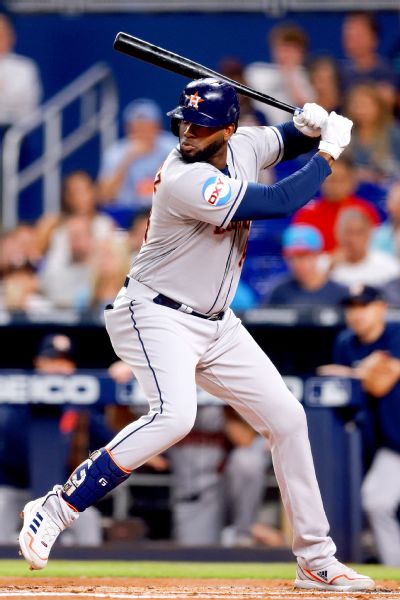
Since Alvarez entered the majors in 2019, only Trout and Judge have a higher OPS+ (169 for both; Alvarez is at 165). Over the past three seasons, Alvarez has averaged 42 homers, 123 RBIs and 109 runs per 162 games. He is the complete package at the dish. And he does it when the stakes are at their highest, as evidenced by his ridiculous 1.487 playoff OPS last October. The problem for Alvarez has been injuries that have seen his total games played over these past three stellar seasons drop from 144 to 135 to 114. That’s increasingly become the key category for him and the Astros because if he plays, he hits — and virtually no one does it better.
Season prediction: Alvarez is entering his age-27 season which, historically, has been the most common career campaign for a hitter. If Alvarez can get 140 or more games, he’ll make a run at 50 homers and fiercely contend for AL MVP honors. — Doolittle
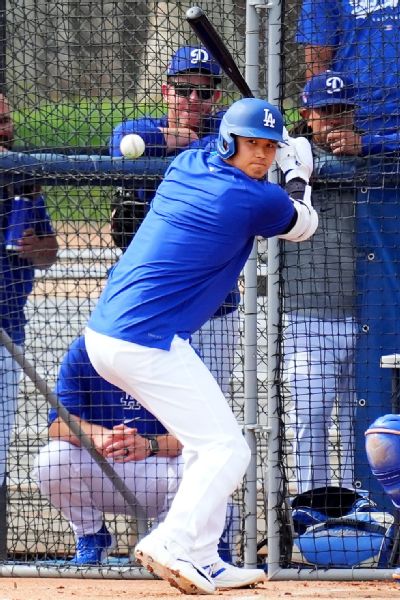
9. Shohei Ohtani, DH, Los Angeles Dodgers
Has a full-time, non-pitching DH ever won an MVP? Nope. Not yet, at least. But Ohtani, the unanimous AL MVP as a two-way player in 2021 and 2023, is somehow looking like the most dangerous version of himself offensively in the wake of right elbow surgery. It took only about a week of workouts for the Dodgers’ $700 million megastar to wow new teammates and coaches with both his power and his approach. And when the exhibition games began, all Ohtani seemed to do was meet the baseball with his barrel.
Ohtani’s OPS jumped 191 points from 2022 to 2023, all the way up to a major league-leading 1.066. He added 44 homers and drove in 95 runs for an Angels team that oftentimes gave him very little support. Now he’ll hit between Betts and Freeman, two perennial MVPs in their own right, and he won’t have to think about pitching until 2025. Is it possible for Ohtani to reach yet another level offensively? Yep.
Season prediction: Ohtani won’t win his third MVP, but he’ll run away with his third Silver Slugger while hitting over .300 for a second straight year and driving in a career-high 120 runs. He’ll flirt with 50 homers, too. — Gonzalez
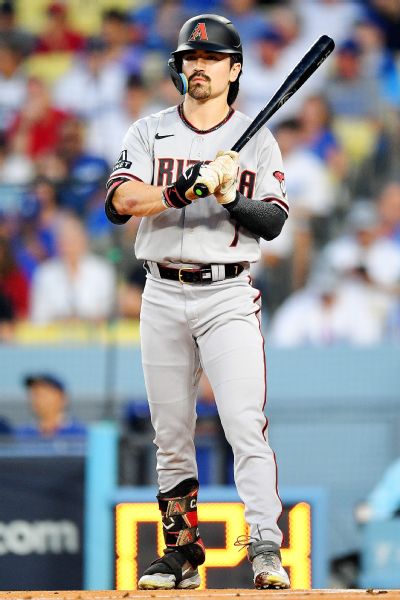
Carroll entered 2023 as the Rookie of the Year favorite in the National League and not only lived up to expectations but exceeded them, with a spectacular, exciting season that showcased blazing speed and surprising pop that will make him one of the top faces of the game over the next decade. He stole 54 bases in 59 attempts, the second-best percentage ever for a player with at least 50 steals. With 25 home runs, he became the ninth player to go 25/50 in the same season. He finished fifth in the MVP voting — all this at age 22, after playing just 142 games in the minors due to COVID-19 and an injury that wiped out his 2021 season. With more experience, he might add some power against left-handed pitchers and improve his plate discipline … and climb even higher on this ranking.
Season prediction: A 30/60 season is asking a lot, but that’s not far from what he did last year. How about 30/60/.300 with a second straight All-Star start and top-five MVP finish. — Schoenfield
3:18
Which player in the MLB Top 10 is most surprising?
Jeff Passan and Buster Olney evaluate ESPN’s Top 10 MLB player rankings for the 2024 season.
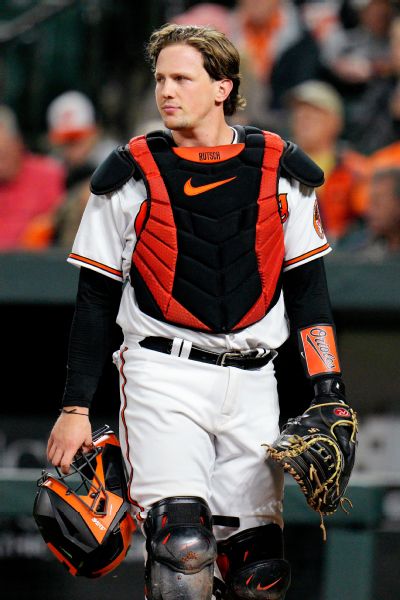
A running debate last season was whether it was possible that Rutschman had ascended to the league’s No. 1 catcher in his first year in the majors, surpassing someone so respected as J.T. Realmuto. But he put all that conversation to rest last year, as he led the Orioles pitching staff to the best record in the AL, while posting excellent numbers at the plate — 84 runs scored, 20 homers and a .374 on-base percentage in a staggering 588 at-bats, which is more at-bats than Yadier Molina had in any season in his career. Rutschman played 108 games at catcher and another 46 at DH in 2023.
Season prediction: Eleven of his 20 homers came in games in which he served as a DH — maybe a coincidence, or maybe a reflection of his devotion to pitchers on the days he was behind the plate. His offensive production will continue to grow. — Olney
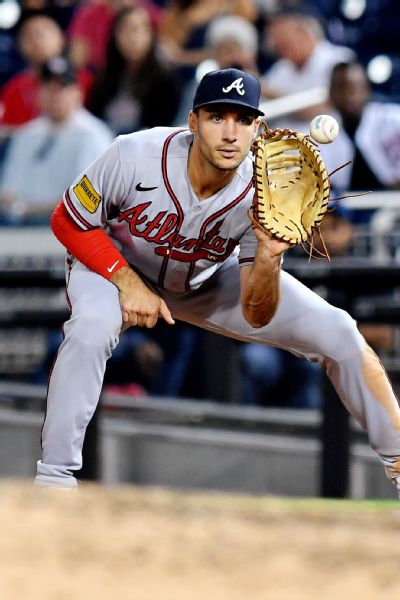
12. Matt Olson, 1B, Atlanta Braves
In some ways, Olson can’t win. Over two seasons with Atlanta, he’s played in all 324 games. He’s hit 88 homers, including a whopping 54 in 2023, and driven in 242. While he’s won over Braves fans and been a worthy successor to Freeman at first, he still managed to only finish fourth in the NL MVP balloting last year despite all those home runs and league-leading totals in RBIs (139) and slugging (.604). Among those he finished behind were Freeman and teammate Acuña. The voters were right, too, which means that Olson’s historic output didn’t even mark him as the best player on his own team. Sometimes life is all about timing. Nevertheless, the Olson era in Atlanta is going just fine.
Season prediction: Olson’s career has always been an every-other-year pattern, with tremendous peaks followed by moderate regressions. If the pattern keeps up, this is a regression year, but at the same time, Olson has become a more consistent, less pull-heavy hitter. What we do know is that he will show up — he’s missed just six games over the past four seasons, somehow defeating the load-management era in professional sports. — Doolittle
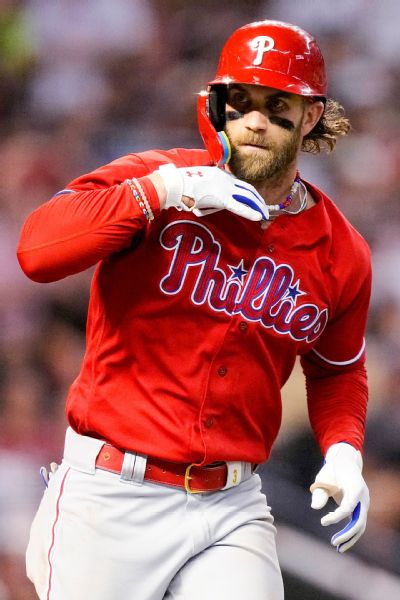
Bryce Harper 2.0 is proving to be just as good — if not better — than the original version. Now at first base and well removed from Tommy John surgery, Harper could be primed for another MVP season. Just as interesting is his connection to Philadelphia. With all due respect to the now retired Jason Kelce of the Eagles or Joel Embiid of the 76ers, Harper is arguably the face of Philadelphia sports. He embodies the city’s raucous fan base and undoubtedly helped anoint Citizens Bank Park as one of the toughest, if not the toughest, places to play for opponents in the major league. Harper has made the Phillies one of the elite and more interesting teams in baseball.
Season prediction: Harper will produce his third 1.000 OPS season, putting him in the running for MVP. He reached .900 last year while dealing with his elbow ailment. He’ll be even better this year and more comfortable at first base to boot. — Rogers
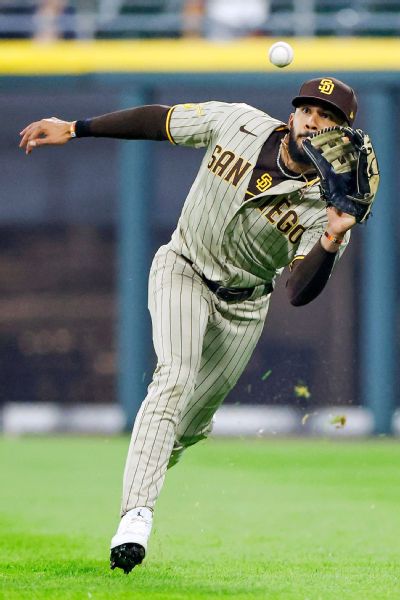
One of Tatis’ closest friends in the sport is Acuña. This offseason, Tatis followed the path Acuña laid out the year before en route to an MVP award: He trained under Fernando Tatis Sr. and played some winter ball in order to implement some offensive adjustments in game environments — “like a samurai getting ready for war,” as he put it. Tatis won a Platinum Glove while converting to right field on a full-time basis in 2023, an amazing feat unto itself. But he didn’t feel quite right offensively — understandable given that he sat out the entire 2022 season with a wrist injury and a PED suspension. Now, Tatis said, “My confidence is through the roof.” With Soto gone, the Padres need his performance to match that.
Season prediction: Tatis finished third in NL MVP voting while constantly dealing with a shoulder subluxation and playing in only 130 games in 2023. This year, while hitting leadoff full time, he’ll follow Acuña’s path all the way to the end and actually win it. — Gonzalez
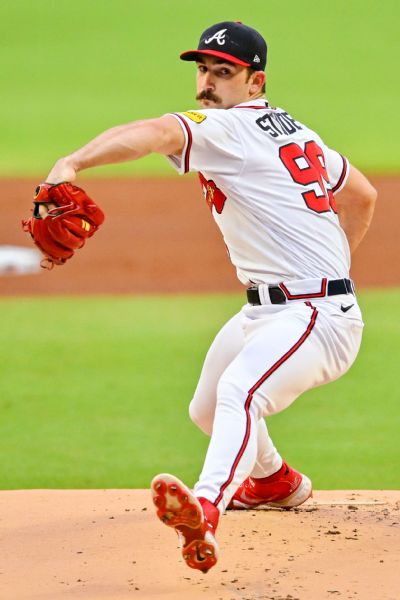
All Strider did in his first full season as a starter was win 20 games and post a higher single-season strikeout rate than Pedro Martinez, Randy Johnson, Chris Sale or Max Scherzer ever did. Strider’s stuff is otherworldly: a fastball that sits around 98 mph and arguably the best slider in the game. And lest you fear that two-pitch pitchers are meant for the bullpen, Strider has proved that his two (and the occasional changeup to left-handed hitters) are plenty enough to dominate.
Now comes the part where the 25-year-old trims his home runs allowed (22 in 186⅔ innings last year), gets a little luckier (he had a .316 average on balls in play) and evolves into the superstar everyone believes he’s bound to be.
Season prediction: 22-6, 2.41 ERA and the most strikeouts for an NL pitcher since Johnson punched out 334 in 2002. — Passan
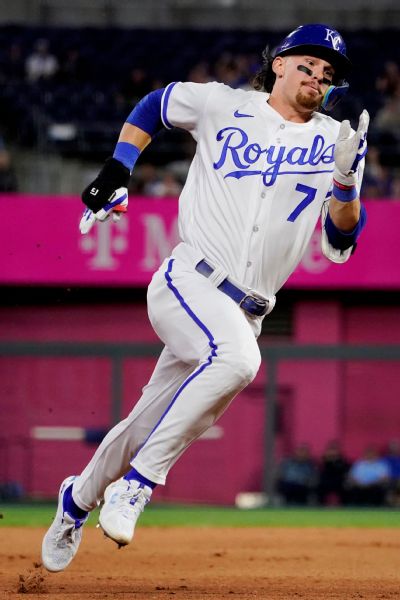
Witt’s first half in 2023 was … fine. It still left Royals fans wondering when their ballyhooed shortstop would morph into the superstar they had been told was coming. As it turns out, they only had to wait out the All-Star break, after which Witt was one of baseball’s best players. Beginning with a six-RBI outburst on July 28, Witt finished the season with a .967 OPS over his last 56 games. Extrapolating his production during that stretch to 162 games: 41 homers, 130 RBIs, 133 runs and 61 stolen bases. Over the winter, the Royals inked Witt to an 11-year extension. He needs plenty of help but the cornerstone of Kansas City baseball is in place.
Season prediction: In the minors, it took Witt some time to adapt to a new level, but when he conquered it, he did so in resounding fashion. He hasn’t yet mastered the major leagues — a 56-game sample is still just that — but expect a top-10 MVP finish in 2024. — Doolittle
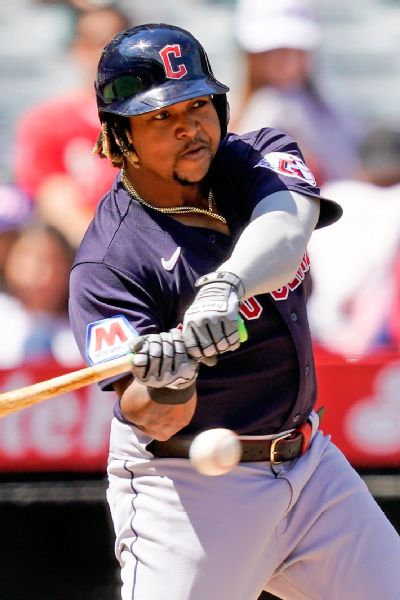
By some measures, 2023 was a typical year for Ramirez. He was still an All-Star and finished 10th in MVP voting, but his OPS+ dropped by 17 points from the previous season. It doesn’t help that he has little protection in a weak Guardians lineup; that’s undoubtedly part of the reason he’s led the league in intentional walks in each of the past two years.
But Ramirez isn’t one to lament what Cleveland doesn’t have. He just makes the most of his situation, usually attacking the one good pitch he does get per at-bat. And he continues to be a threat on the bases, stealing at least 20 in five of the past six seasons. An .800 OPS or better is a given for Ramirez — and should be again this year.
Season prediction: He won’t break Bonds’ record of 120 intentional walks in one season, achieved in 2004, but Ramirez will lead the league in them once again. And he’ll set another career high for himself after earning 22 IBB last year. — Rogers
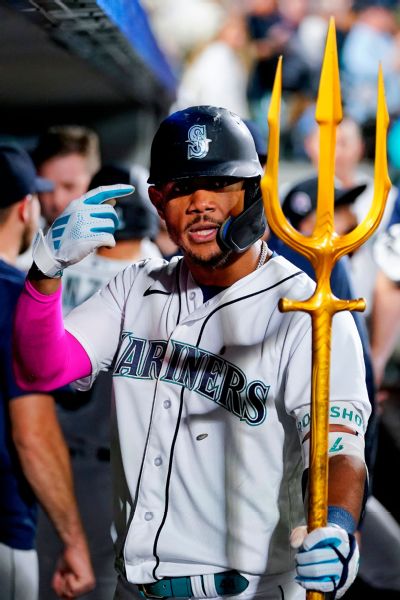
J-Rod had a 30-30 season in 2023 at age 22. He topped 100 runs and 100 RBIs in an offense that didn’t have much support around him. He’s an outstanding defender and plays with as much flair and energy as anybody in the game — and even finished fourth in the MVP voting. Yet, it’s fair to say — and Rodriguez himself would agree — that there’s the potential for more. It felt like much of his production came in one month, when he hit .429 in August and had a record-setting stretch of 17 hits in four games. In four other months, his OPS was below .800. He needs more consistency and to cut down on the strikeouts while improving his chase rate (eighth percentile). If that happens, watch out.
Season prediction: This ranking feels fair. Indeed, Rodriguez’s raw OPS fell 35 points from his rookie season as his chase rate worsened from 2022. The talent is immense and he’s obviously already a great player. Let’s predict that the experience kicks in and J-Rod goes 40-40 … which, in an Ohtani-less AL, makes him an MVP candidate. — Schoenfield
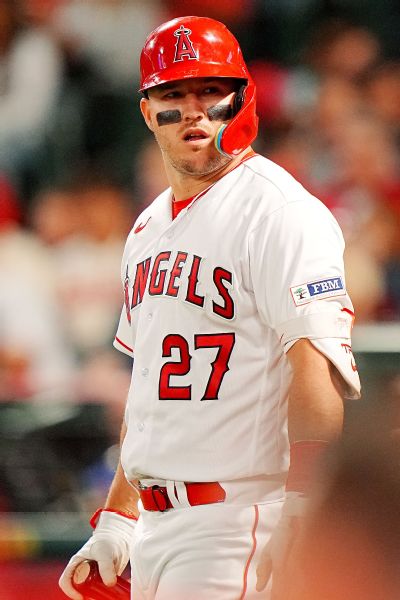
Trout got uncommonly emotional while addressing the media in September, in the wake of yet another injury-plagued season. It wasn’t long ago that he was on a path to becoming possibly the greatest player in baseball history. Then came the COVID-19-shortened season of 2020, which was followed by a three-year stretch in which he played in fewer than half of the Angels’ games while dealing with injuries to his calf, back and hand. Trout has confronted persistent trade rumors by continually pledging loyalty to the hapless Angels, but the reality is he’ll be 33 in August, is eight years removed from playing a full season and has nearly $250 million remaining on his contract. His market is quite limited. Trout, in short, needs to prove himself again. It’s amazing to even utter that sentence, but that’s the reality. Time can be cruel, even to those who once seemed superhuman.
Season prediction: One benefit of Ohtani being gone is that it frees up DH days for Trout. The Angels will take advantage of that. And with less demand on his body, Trout will prove once again that he is an offensive force. He’ll win his 10th Silver Slugger if Judge spends more time in an outfield corner. — Gonzalez
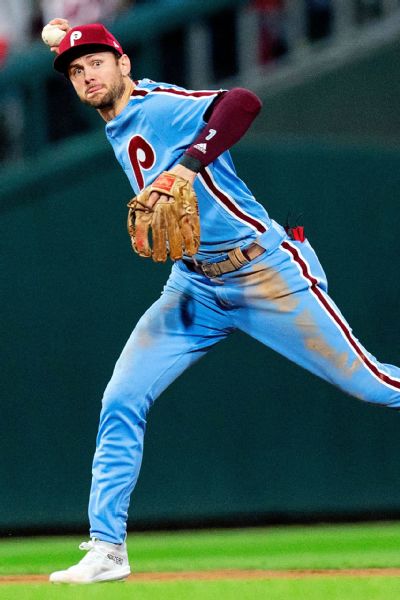
20. Trea Turner, SS, Philadelphia Phillies
Turner’s first year in Philadelphia was underwhelming until a standing ovation from the Philly faithful in early August seemingly picked up his spirits — and his game. No one can say for sure if that made the difference, but from that point on, he hit .339 with a 1.069 OPS and nine stolen bases. That was the version of Turner the Phillies signed for $300 million and is likely to show up again this year. His combination of speed and power is still a rarity in the game despite the increase in stolen bases around the league. And though much of the year wasn’t to his liking, he still managed 26 home runs and 30 stolen bases.
Season prediction: Turner was caught stealing during the playoffs but went the entire regular season without that happening, going 30-for-30 in stolen base attempts. He will do it again in 2024 — at least 30 steals without getting caught. He’s that good, and smart, on the base paths. — Rogers
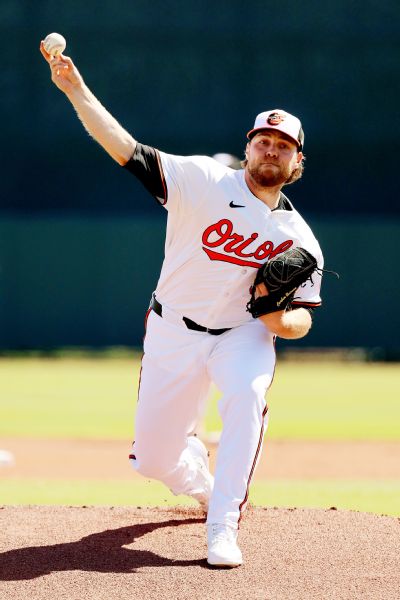
21. Corbin Burnes, SP, Baltimore Orioles
He’s No. 21 overall, but maybe more importantly, Burnes ranks No. 3 among pitchers — only Cole and Strider are ahead of him. The conditions seem to be perfect for him to contend for his second Cy Young Award and a huge payday in free agency next winter: After being traded by Milwaukee to Baltimore, he’ll be working with Rutschman – already regarded as a high-end catcher. He’ll be surrounded by an excellent cast of position players who will support him offensively and defensively. Plus, the shape of Camden Yards, with the space gashed into left field, should serve him well. Not that he needs a lot of help. Burnes held opponents to a .200 batting average last season and had a 3-to-1 strikeout to walk ratio.
Season prediction: He will have a strong season and be the greatest threat to Cy Young Award incumbent Cole for those honors. — Olney
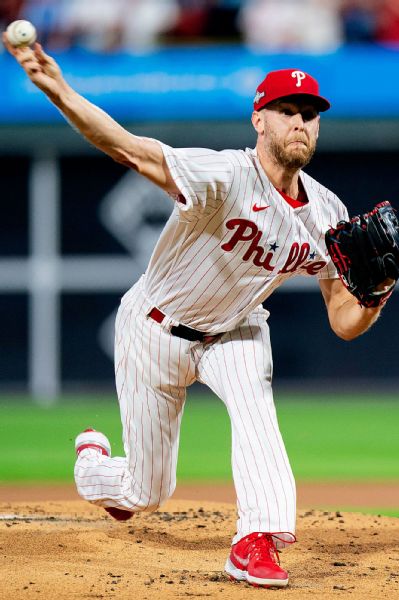
22. Zack Wheeler, SP, Philadelphia Phillies
Wheeler, who agreed to a new three-year, $126 extension that runs through 2027, leads all pitchers in bWAR and fWAR since 2020. That certainly gives him a strong case as the best starter in the game, even if he’s only fourth on our list — and especially if you want to give him extra credit for his excellent postseason performances during the past two years.
His ERA was a tad high last year at 3.61, although his peripheral stats were still excellent. His game starts with a 96-mph four-seamer that grades out as one of the best fastballs in the game, especially when he mixes it with a sinker that he throws almost exclusively to right-handed batters that runs in on their hands; he threw the two fastballs more than 60% of the time. Then he adds a cutter, sweeper and curveball, all thrown between 10% and 15% of the time. He turns 34 in May, so maybe there’s some age-related risk with the extension, but he’s been durable since he missed two full seasons earlier in his career with Tommy John surgery.
Season prediction: Strider may be the Cy Young favorite in the NL due to his more impressive strikeout rates, but the Braves may play it conservative in his innings. That opens the door for Wheeler, who will take home the trophy. — Schoenfield
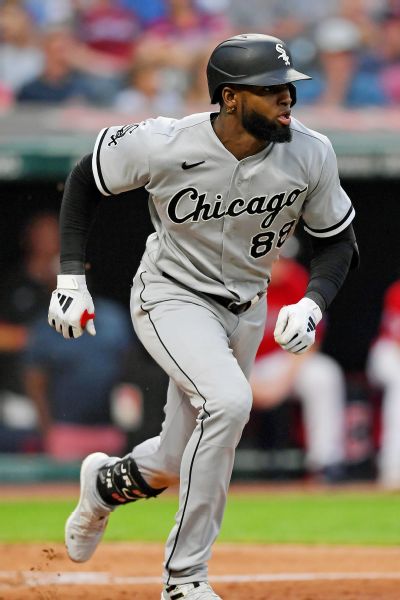
As the 2023 White Sox sank, Robert soared. His 5.0 bWAR wasn’t just the most on the team, it was more than five times higher than any other ChiSox hitter who finished the season with the club.
More than anything, Robert stayed on the field, logging 145 games, 47 more than his previous high. And he also does the big things — 38 homers, 20 steals and highlight-reel production in center field. Even as he broke out last year, his strikeouts spiked and his walk rate only eked forward. He turns 27 in August, so this is probably who he is, which isn’t a bad thing.
Season prediction: If Roberts can mostly avoid the IL as he did in 2023, he’ll lead the White Sox in bWAR again and top 30 homers. He’ll also be popular on the trade rumor mill. — Doolittle
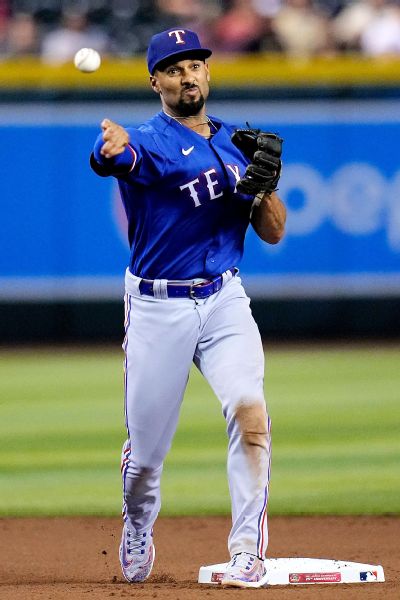
If the best ability is availability, there is no one in baseball more able than Semien. Over the past six seasons, he has played 859 of the 870 games his teams have played — tops in MLB with Freeman and 19 more than the third-highest total. These aren’t empty games, of course. Semien hits for power (25-plus home runs in each of his past four seasons), gets on base and is among the best defensive second basemen in baseball.
In two of the past three seasons, Semien has finished third in AL MVP voting. It’s easy to take for granted his consistency and across-the-board excellence, but with his being at the front of this devastating Rangers lineup, he’s primed to remain a top 25 player.
Season prediction: Semien becomes the first AL player to lead the league in runs outright for consecutive seasons since Trout went back-to-back-to-back from 2012 to 2014. He’ll surpass the 30-homer mark, too, joining four other teammates who do the same. — Passan
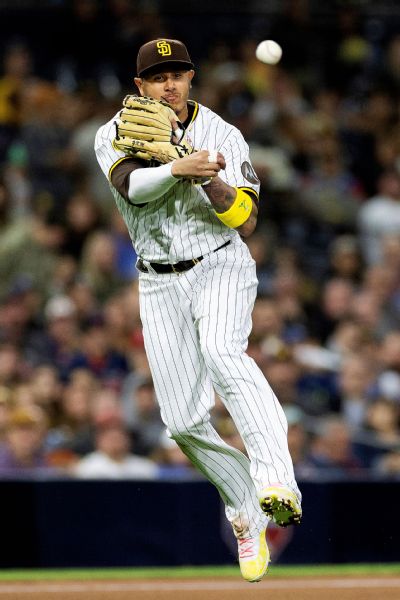
Machado was the MVP runner-up in 2022, and the Padres went all the way to the NLCS. His numbers dropped off in 2023, and the Padres flamed out spectacularly. And while it would be unfair to pin the blame squarely on Machado’s shoulders, it’s fairly obvious he sets the tone and will have to be elite again if the Padres hope to return to the postseason. Better health would certainly help. Machado, one of the sport’s most durable players, played through a balky right elbow in 2023 and underwent surgery in October to address it. He spent the ensuing offseason rehabbing with the Padres’ doctors in San Diego and seems on track to have as close to a normal season as one might reasonably expect.
Season prediction: Machado will get some DH days early, but eventually he’ll settle into what he always is — a Gold Glove-caliber third baseman who will hit about 30 home runs, drive in around 100, keep his OPS in the .800 range and play in 150-some-odd games. At 31, he’s still in his prime. — Gonzalez
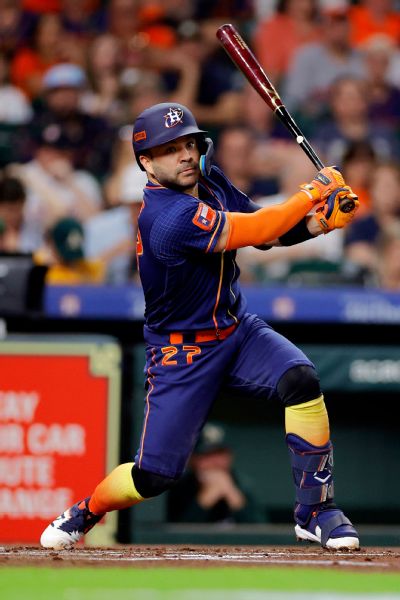
26. Jose Altuve, 2B, Houston Astros
The last holdover from the Astros’ days in the NL, the extension Altuve signed in February means he’s now destined to join Craig Biggio and Jeff Bagwell as one-team Houston Hall of Famers. At a position where players once tended to flame out early, Altuve’s skill set hasn’t tailed off. His 157 OPS+ over the past two seasons is at peak level and his .390 OBP during that time frame means he’s still among baseball’s top leadoff hitters. However, his defensive metrics have started to slide, and he needs to keep mashing to hold up his end of the value bargain. If he keeps up his per season pace of the last half-decade, Altuve could challenge the 3,000-hit barrier as he nears the end of his contract.
Season prediction: Altuve missed a career-high 72 games in 2023 but his injuries seem more random than chronic. If he can bounce back to his previous 140ish game level, expect him to challenge his career-best 31 homers and return to the All-Star game. — Doolittle
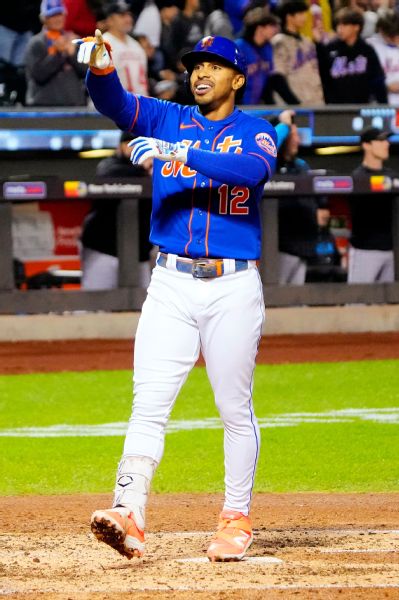
Lindor’s first season with the Mets in 2021 was a mess — an injury, a .230 batting average, the infamous thumbs-down gesture to the fans — but he’s rebounded with two exemplary seasons since. He’s played 160 and 161 games, respectively, and finished ninth in the MVP voting both years while averaging 28 home runs, 102 RBIs and 103 runs. His defense, while perhaps not quite what it was with Cleveland, remains above average. In part because he’s played nearly every game, he’s seventh among position players in WAR over those two seasons.
Now 30, Lindor is entering the legacy stage of his career. Through age 29, he ranks ninth among shortstops in career WAR; seven of those ahead of him are in the Hall of Fame, all except Alex Rodriguez (PEDs) and Jim Fregosi (back problems in his 30s). Lindor is on a Hall of Fame trajectory with a reasonable chance of finishing as one of the 10 greatest shortstops. I hope Mets fans appreciate what they have.
Season prediction: Mr. Smile has been Mr. Consistent the past two years, so I’ll go with more of the same: 30 home runs, 100 RBIs, 100 runs and a ninth-place finish in the MVP voting. — Schoenfield
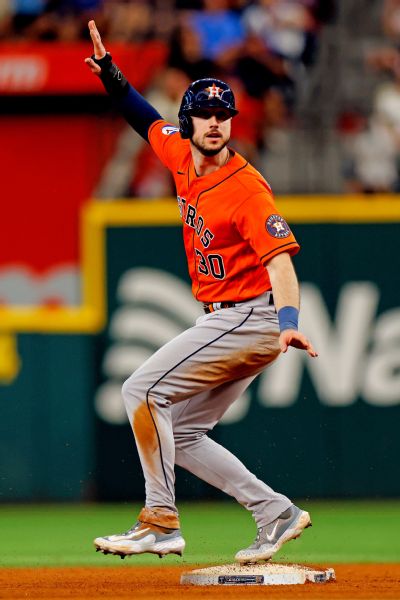
28. Kyle Tucker, RF, Houston Astros
Coming off another outstanding year, Tucker continues to move up the list of top players in MLB. And he seems to be doing it quietly, as teammates such as Alvarez and Altuve tend to get more of the attention. One of Tucker’s specialties is hitting left-handed pitching — he has a career .846 OPS against them, including a whopping .934 mark last season. He should be in line for a huge pay day as he moves through the arbitration system toward free agency in two years. The Astros are likely to lock him up before he hits the market, as there are no signs of him slowing down. He might be getting better, in fact.
Season prediction: After finishing 20th in MVP voting in 2021, Tucker moved up five spots the next season then 10 more last year, when he finished fifth. He’ll finish in the top five again in 2024 — and if he makes a similar leap as he has in past years, it could mean taking home top honors. Now that Ohtani is in the NL, Tucker could do it. — Rogers
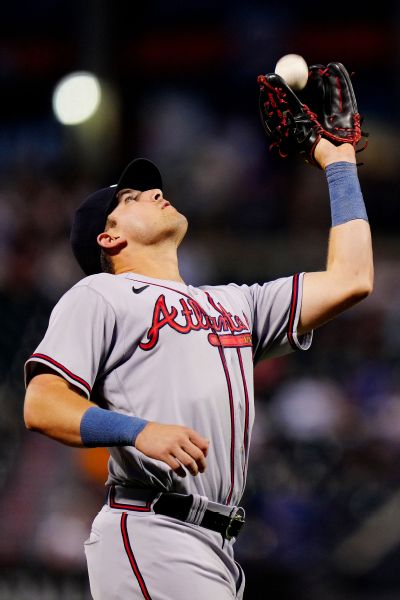
Riley, heading into his age-27 season, is quickly making a case as the game’s best third baseman. Among others at his position over the past three years, he ranks first in OPS (.878), first in home runs (108), second in weighted runs created plus (135) and second in FanGraphs WAR (15.6). His 2023 season offered examples of how he might still be getting better, specifically on defense (from minus-six outs above average in 2022 to neutral in 2023) and with his swing decisions (his chase rate finished at a career-low 27.4%). Riley was also one of the game’s best performers down the stretch last year, slashing .300/.368/.601 after the All-Star break. Maybe that’s just who he is now.
Season prediction: Riley has come close, but he has yet to finish within the top five in MVP voting. This is the year he does it. — Gonzalez
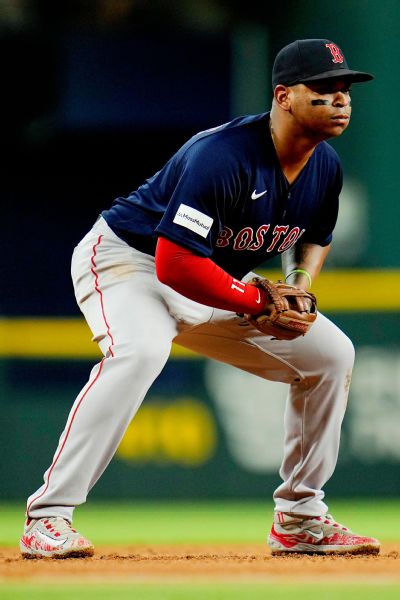
Since he broke out at age 22 in 2019, Devers has been a metronome of production over his four full seasons. That 2019 season looks a little better superficially, but that’s only because that was the year when offense was up across the league. His OPS+ figures, not including 2020, are 132, 134, 141 and 126, respectively.
His defense isn’t great, he’s slow and you’d like a few more walks or hits to boost his OBP, but he leads the majors in extra-base hits since 2019 — two more than Freeman. The 11-year extension he signed last year means he’ll continue to anchor the Boston lineup for the next decade.
Season prediction: Does Devers have another level? He hits the ball as consistently hard as anyone — 98th percentile in hard-hit rate — but his poor swing decisions also lead to too much weak contact. The tools are there for a .300, 40-homer season, but he’s pretty much established that this is who is: a very good hitter and, if not quite a superstar, a top-10 MVP type of player. — Schoenfield
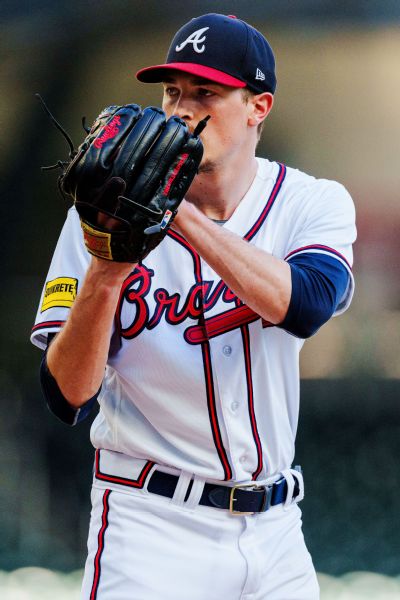
31. Max Fried, SP, Atlanta Braves
Looking at splits before and after the All-Star break can be arbitrary, but in Fried’s case his 2023 results in this subdivision reflect pre- and post-injury performance. The conclusion: He was just as good after his forearm strain as he was before it. But the forearm was just one malady that confronted Fried last season, including an ill-timed blister problem late in the campaign. Over the past four seasons, his 2.66 ERA ranks fourth among starters (minimum 100 innings). His career winning percentage (62-26, .705) ranks sixth in baseball history (minimum 80 decisions). In other words, Fried is almost a great pitcher. The only category holding him back is a year-by-year innings count that has been up and down, even as his pro rata performance is steady as a rock.
Season prediction: Now that Fried is 30 years old, it’s time for him to post one of those 190-to-200 inning campaigns. Given his perpetually low ERA and the strength of the team behind him, that probably would mean 20-plus wins and his first Cy Young award. — Doolittle
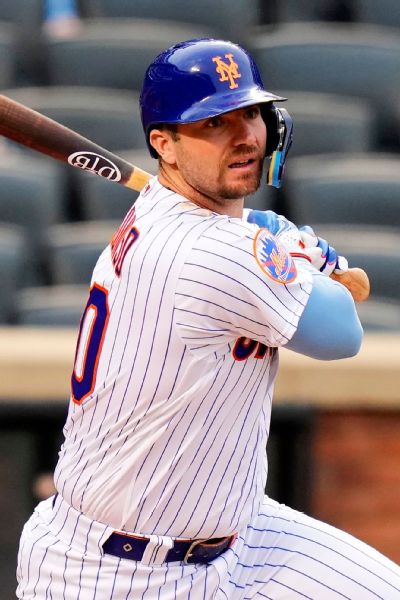
32. Pete Alonso, 1B, New York Mets
Rival evaluators have noted how tough Alonso can be on himself, and that when he’s in a rough patch, he seemingly beats himself up between pitches and plate appearances. This season will be a test of that, with his foray into free agency looming ahead. His negotiations with the Mets have been set aside and he needs a big year following a season in which he mashed 46 homers but also hit .217/.318/.504. He’s the Mets’ biggest power source, but he will play under a ton of pressure this year.
Season prediction: At every stage in his baseball life, Alonso has thrived in the face of doubts; he turns that internal intensity into fuel. He’ll have a big year, forcing the Mets’ leadership to make a big, expensive decision. — Olney
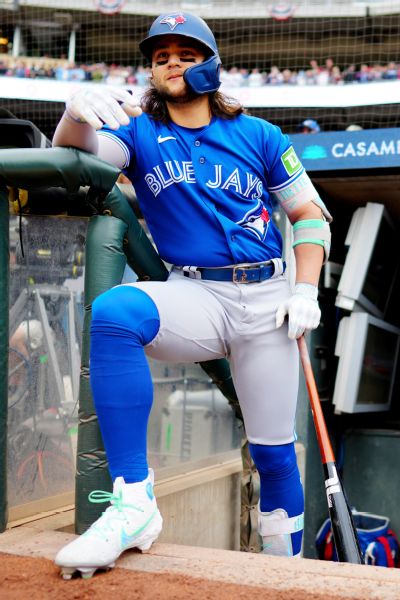
If the Blue Jays have high hopes for their season, they need Bichette (not to mention Vlad Guerrero Jr.) to be every bit the All-Star he was last season — or perhaps even better. It’s possible considering how he crushes fastballs. Last year was his best yet against heat — he reached base 33% of the time when he made contact off that pitch. He doesn’t always, as he struck out 115 times in 2023, but that was down from each of the previous two seasons. With two more years until free agency, the time is now for Bichette to lead Toronto deeper into the postseason. Getting there will be a challenge as well but the Jays shortstop has met many of them already in his young career.
Season prediction: If healthy, Bichette will have 200 hits for the first time. He’ll do it by reducing his strikeout total again this year, putting the ball in play just enough to reach that coveted number. — Rogers
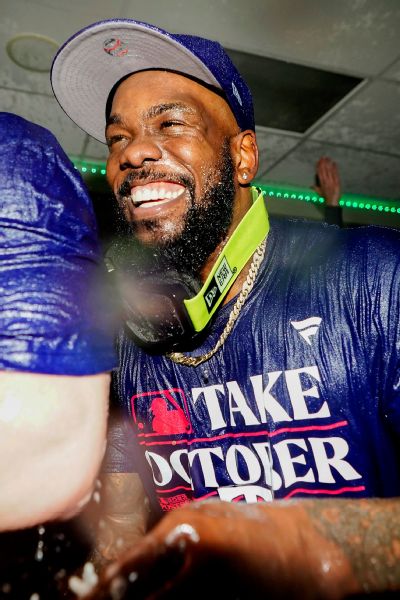
Perhaps this is a touch high for the 31-year-old, but the way he seared himself into people’s minds in October makes it difficult to argue. Garcia put on one of the great ALCS shows of all time, driving in 15 runs over seven games and punctuating the series with a pair of home runs and five RBIs in Texas’ Game 7 victory over Houston. Garcia isn’t a perfect player. He strikes out too much (175 times in 632 plate appearances last year) and his right-field defense can be inconsistent. But the thunder in his bat is very, very real, and very few players can conjure an October performance such as his when the stakes are at their highest.
4:06
Olney, Passan discuss what they would change on ESPN’s 2024 MLB Rank
Buster Olney and Jeff Passan break down the 2024 MLB Rank list and what changes they would make.
Season prediction: .244/.314/.485 with 33 home runs and 113 RBIs — in line with what he’s done over his three full seasons with the Rangers. — Passan
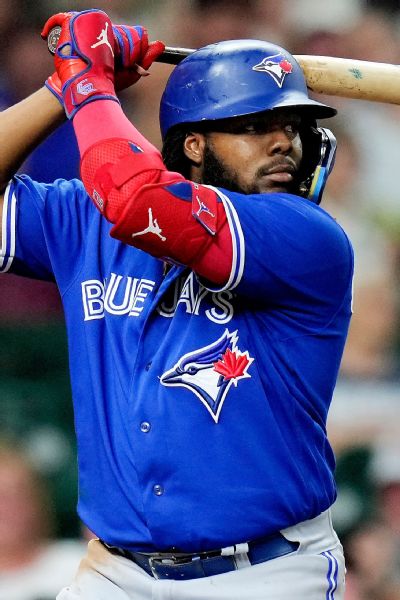
Guerrero graces the cover of MLB The Show this year, but he’s three years removed from putting up video-game numbers. He would’ve won the MVP in 2021 if not for some pitching-hitting phenomenon named Ohtani. Guerrero belted a major league-leading 48 home runs and slashed .311/.401/.601 that year. His slash line over the ensuing two seasons dropped to .269/.342/.462 — still really good, just not elite. Guerrero blamed at least some of last year’s struggles to playing through ailments in his right knee and left wrist. His underlying numbers in 2023 were actually pretty close to what they were in 2021. The biggest issue, it seems, was that he didn’t do enough damage on pitches within his sweet spot — the upper third of the strike zone.
Season prediction: Guerrero continues to make contact at a high level and ranks within the top 10% of the league in average exit velocity. Those are good signs, even for someone who doesn’t elevate pitches at an ideal rate. He’ll have an OPS in the .900s in 2024 — his penultimate season before free agency. — Gonzalez
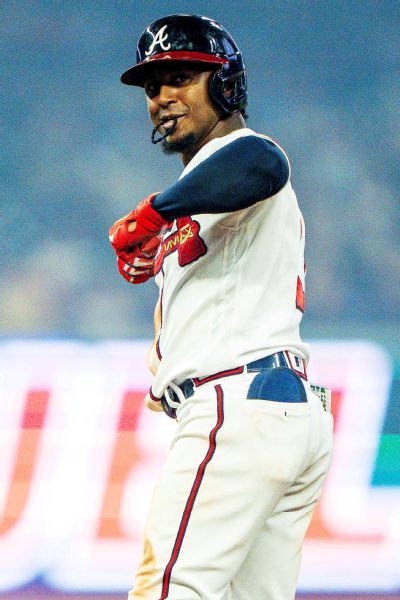
Albies comes in as our fourth-highest second baseman behind Betts, Semien and Altuve. Is he the 36th-best player in baseball? That might be stretching things a bit, but these lists tend to reward the bat-first players and Albies is coming off his best offensive season (124 OPS+) and is in his prime at 27 years old. During his four full seasons in the majors, he has averaged 28 home runs, 102 runs and 93 RBIs while reaching 30 home runs and 100 RBIs in 2021 and 2023 (sandwiched around an injury in 2022). There aren’t many second basemen now — or ever — putting up those kinds of power numbers.
Season prediction: Albies is a pretty remarkable hitter given his below-average hard-hit rates and an extremely high chase rate. That’s usually a bad combo, but he makes a lot of contact and barrels up enough baseballs at the perfect launch angle to get to 30 home runs. I don’t know if he’ll hit .280 again, but the power numbers should remain intact. — Schoenfield
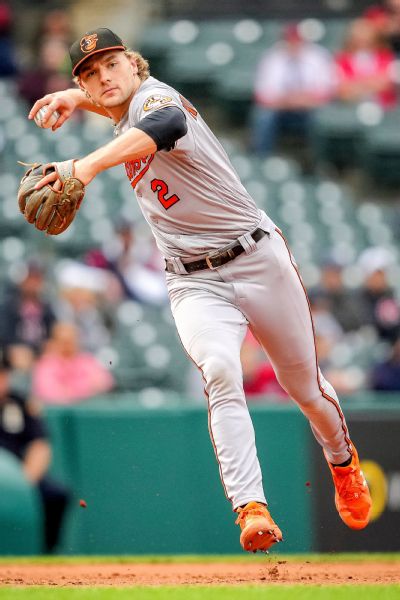
Isn’t it nice when someone actually lives up to the hype? Henderson proved to be everything the prospect gurus said he would be, posting a 6.2 bWAR while becoming a unanimous pick for AL Rookie of the Year in 2023. The scary part: He can be way better. He posted a .595 OPS against lefties, one obvious area for improvement. Also, he was too passive early in the season, then feasted when he developed an aggressive approach. He took a hit in OBP when he became more proactive, but when he figures out his ideal blend of patience and aggression, look out. The only question is at which position will Henderson deploy his plus glove? A young infielder who can hold down shortstop is a valuable commodity but the Orioles are rich in potentially elite young infielders. No worries: He will thrive at the hot corner, second base, shortstop, or a combination of all the above.
Season prediction: Henderson could ascend to the stratosphere at any point, but in the short term, he should focus on improving his numbers against lefties while honing his pitch recognition. Fewer chases, a little more contact, some platoon balancing and we’re talking about an MVP run sooner rather than later. — Doolittle
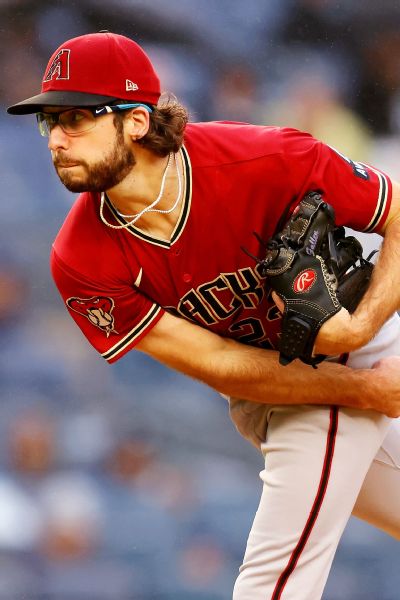
38. Zac Gallen, SP, Arizona Diamondbacks
The Diamondbacks will be weary of the long and strenuous 2023 campaign they endured last season and Gallen should be at the top of their list of players to watch after he threw a whopping 243 innings, including the playoffs. In doing so, he established himself as a true ace; a workhorse who can navigate an outing even without his best stuff. He proved that several times in October, particularly when it seemed like he was running out of gas. When he looks back at last season, he can point to an All-Star berth, a third-place finish in Cy Young voting and even tallying some MVP votes as high points. But none of those accolades compare to leading your team to the pennant. Gallen and teammate Merrill Kelly did that.
Season prediction: Gallen’s tallying numbers will come down a bit as Arizona has aspirations to play for seven months again. That means less innings and strikeouts but not necessarily less success. The 180-inning mark could be his sweet spot in 2024. It’s the number he attained in 2022 when he led the league in WHIP (0.913) and hits (5.9) per nine innings pitched. — Rogers
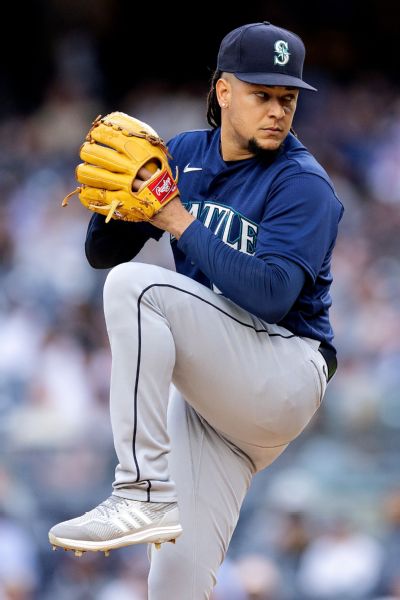
Castillo is coming off arguably his best season, one that saw him win 14 games, accumulate a career-high 197 innings, post a 3.34 ERA and finish within the top five in Cy Young voting for the first time in his career. But the ending will haunt him. Facing the division-rival Rangers on the final day of September, with the Mariners still clinging to faint playoff hopes, Castillo allowed four runs before completing the third inning. It eliminated the Mariners on the second-to-last day of their season, but it shouldn’t change the reality that Castillo — ninth among his peers in fWAR from 2018 to 2023 — is one of the finest pitchers in the world.
Season prediction: ZiPS (Fangraphs’ player projections system) has Castillo finishing the 2024 season with a 3.27 ERA, the lowest among those projected to qualify for the ERA title. It will mark the first such accomplishment of his career. — Gonzalez
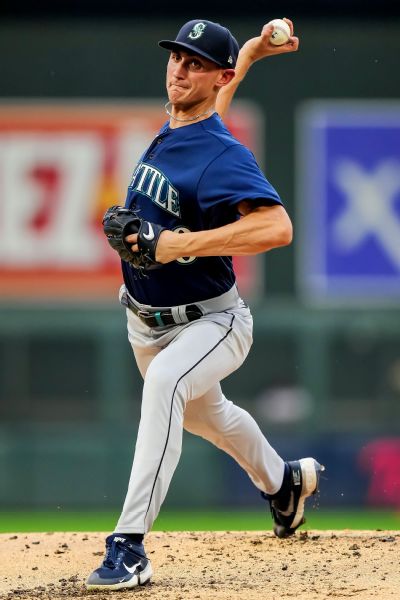
40. George Kirby, SP, Seattle Mariners
Pitching in its simplest form: Throw hard and throw it where you want. Kirby throws a 96-mph fastball at the top of the zone — whether it’s a four-seamer or sinker — and throws strikes. Like, all the time. He walked 19 batters in 31 starts and had 16 starts where he issued no free passes. His walk rate of 2.5% has been bettered just twice in the past two decades by a qualified starter (Phil Hughes in 2014 and Cliff Lee in 2010).
Kirby improved his slider last season, adding more sweep and vertical drop, and then started using a splitter more in the second half of 2023, improving his overall strikeout rate. In the final game of 2023, he unveiled a ridiculous knuckleball with 12 inches of arm-side run and 50 inches of vertical drop that Seager helplessly flailed at — not that we should expect to see it much in 2024. But it sure would be fun to see it every now and then.
Season prediction: This ranking suggests our voters are extremely high on Kirby performing even better given some of the starting pitchers he’s ranked above. Cole is the obvious Cy Young favorite in the AL while Kirby only ranks eighth in the current odds at +1500. Is this a good time to mention that Greg Maddux never had a 9.05-to-1 strikeout-to-walk ratio? — Schoenfield
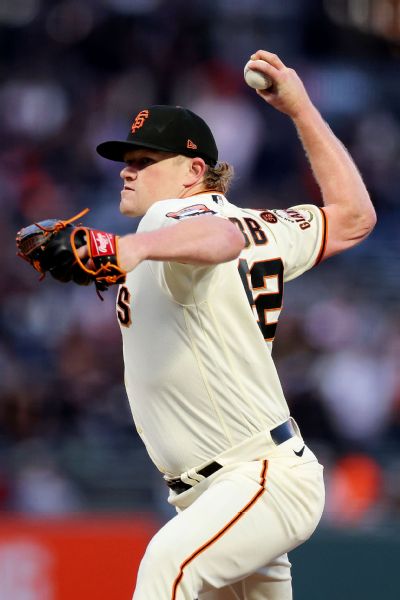
With Miami’s Sandy Alcantara out for the season, Webb will be baseball’s best example of an old-school starting pitcher in 2024. He doesn’t produce that much swing-and-miss, as his whiff rate ranked in just the 11th percentile. Instead, he gets hitters to chase (86th percentile), keeps the ball down (99th percentile groundball rate) and attacks the zone (99th percentile walk rate). This approach allowed the durable Webb to get deep into games and paved his path for an MLB-high 216 innings in 2023. Luckily, he wasn’t evaluated by old-school methods, as he finished second in the NL Cy Young balloting despite finishing with an 11-13 record. That was a Giants thing: Only Kansas City’s Zack Greinke received less run support than the 2.8 runs per 27 outs San Francisco put up for Webb.
Season prediction: Fewer innings, more wins. Webb doesn’t necessarily need to strike out more hitters but he could be a little less aggressive in the zone, which might allow him to give up less hard contact even if his pitch counts rise. With a 1.3 BB/9 rate in 2023, he’s got some buffer to work with. Even if none of that happens, he is due for better luck in the win/loss department. — Doolittle
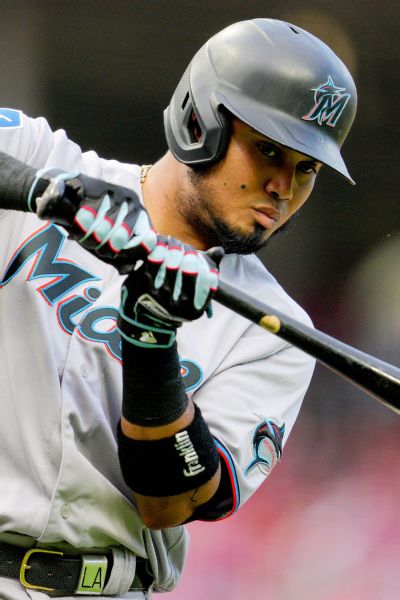
The high velocities and devastating movements of today’s pitches prompted an entire industry to change the way it teaches hitting, triggering the launch angle revolution that saw players chase slug and ignore whiff. Putting bat to ball has never been more difficult — so Arraez, then, is a wizard. In 2022, he won a batting title. In 2023, he carried a .400 batting average well into May and finished at a major-league-leading .354 clip. His .326 batting average since he debuted in 2019 is 11 points higher than the next hitter on that list, Freeman. Only three others even reached .300 in that stretch. Arraez might not hit for much power and definitely won’t impact games with his legs, but he is a throwback to a time when hitting didn’t look this easy.
Season prediction: Arraez isn’t a product of batted-ball luck — he is an elite hitter, one whose skill set is maximized in a big ballpark like the one his Marlins play out of. He’ll win his third consecutive batting title in 2024 — done in the NL most recently by a man named Tony Gwynn. — Gonzalez
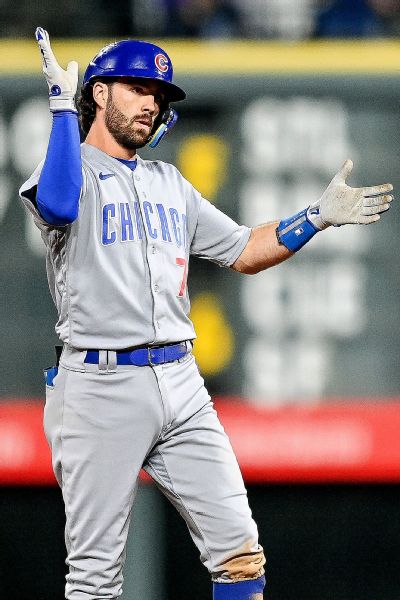
New manager Craig Counsell is already marveling at Swanson’s play at shortstop and we haven’t even reached the regular season yet. His offense has some volatile aspects to it, but the two-time Gold Glove winner is a pitcher’s best friend these days. Swanson can make the play from the hole on the left side of the infield as well as anyone in the game, and it’s not all because of his strong arm. He’s perfected the pop-up slide and throw — and he can do it lightning quick to nail even the fastest runners. Power that comes along with strikeouts is part of his DNA on offense, but his leadership for the upstart Cubs might be most important. An offensive season that’s a little more consistent could move him up the list.
Season prediction: It’s simple. Swanson will win his third consecutive Gold Glove award. — Rogers
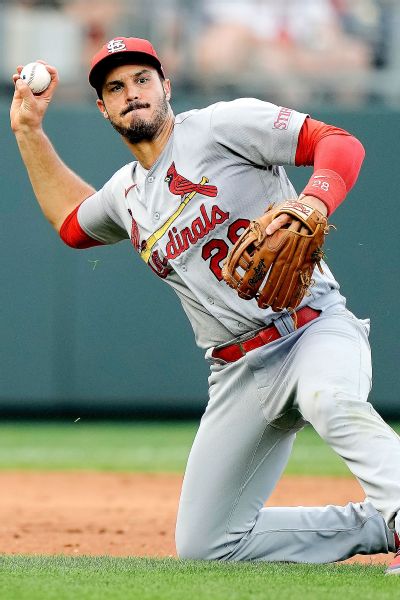
A fixture near the top of this list — Arenado was 10th last year — he dipped after the Cardinals’ disastrous 2023 season. Following a career-high WAR output of 7.9 in 2022, Arenado posted only 2.4 wins last year — a solid season for sure but nowhere near his expectations. That makes this something of a pivotal season for the eight-time All-Star. Arenado turns 33 in April. A strong push in his mid-30s would solidify his case for the Hall of Fame, which is strong already. More than that, it would help the Cardinals rescue themselves from the basement of the NL Central, a spot they’d never occupied since its creation in 1994.
Season prediction: Arenado is in line for a bounce-back season. He may not approach the numbers he put up during his 20s in Colorado, but 30 home runs and a return to Gold Glove form defensively are more than realistic. — Passan
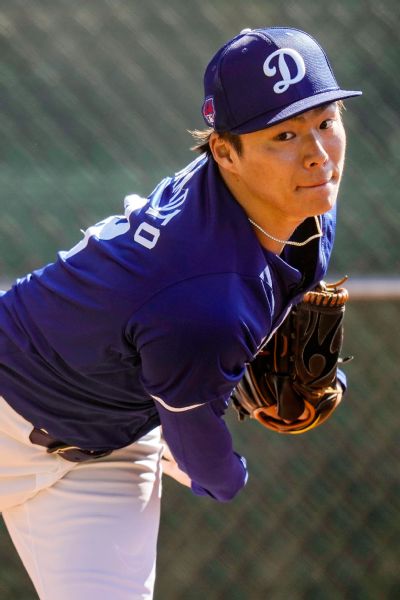
His new Dodgers teammates were initially intrigued by the javelin, then they were mesmerized by everything else — the quality of his stuff, the precision of his command, the efficiency of his delivery. With what amounts to a slide step, Yamamoto — 5-10, 176 pounds — fires off a highly deceptive, upper-90s four-seam fastball that can dot to all four quadrants of the strike zone. But his command of a rainbow curveball and a darting splitter are just as precise. The 25-year-old right-hander won three consecutive MVPs in Japan. During that time, he carried a 1.42 ERA and allowed just 15 home runs in 557 2/3 innings — including just two last season. There’s a reason for that.
Season prediction: Kodai Senga flourished in his first season in the majors, going 12-7 with a 2.98 ERA in 166 1/3 innings for the Mets in 2023. That’s probably a good comp for Yamamoto — except with three more wins and a slightly lower ERA. — Gonzalez
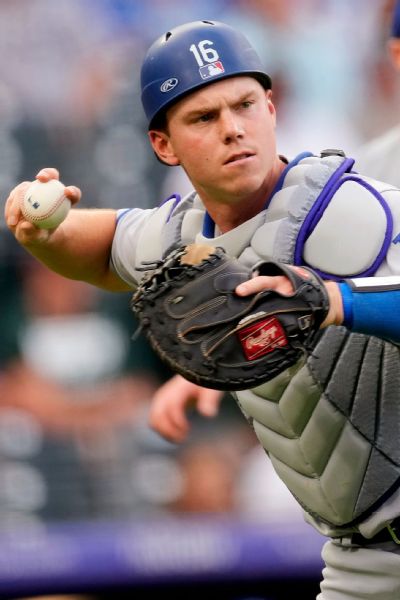
46. Will Smith, C, Los Angeles Dodgers
He kind of gets lost among all of the Dodgers’ stars, and that certainly isn’t going to change in 2024, but Smith remains a steady, reliable and underrated catcher. Over the past three seasons, he trails only J.T. Realmuto in WAR among catchers — and since Smith was better last season, it registers that he’s second only to Rutschman among backstops on this list. I’ve been waiting for a little more offense from Smith since he burst onto the scene in 2019-20, but even if that doesn’t happen, the Dodgers will happily take another .800 OPS season. With Ohtani locked into the DH role, a spot Smith started at 14 times last season, it will be interesting to see if he catches a few more games.
Season prediction: Smith projects as the regular cleanup hitter behind Betts, Ohtani and Freeman, which means he’s going to get a ton of RBI opportunities — at least when Ohtani hasn’t cleared the bases. He drove in 76 runs in 2023 and 87 in 2022, but let’s say he reaches 100 for the first time and earns his first All-Star start. — Schoenfield
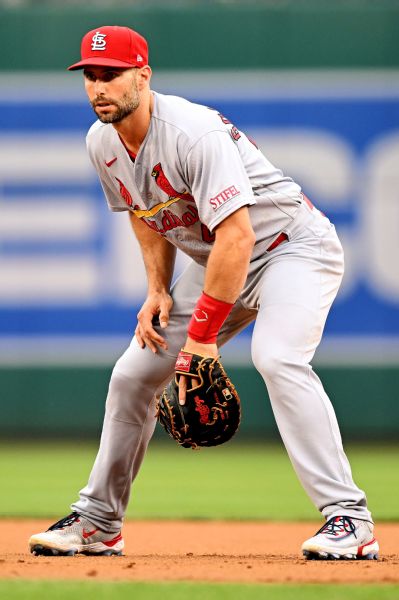
On one hand, it would be surprising if the good-but-not-great Goldschmidt we saw in 2023 is simply what he is now 13 years into a great career. That’s because he was at his best only one year before, leading the NL with a 177 OPS+ and winning his first MVP trophy. On the other hand, he turns 37 in September, and even for future Hall of Famers, which he may be, this is sometimes how it happens. While even the 2023 version of Goldschmidt helps a team win games, in order for the Cardinals to bounce back this summer, they really need him to show that last year was just a down season, not a new, late-career level of play. You probably shouldn’t bet against him.
Season prediction: Goldschmidt is getting on, there’s no way around that, but expect him to split the difference between his highly dissimilar last two performances. That player — say, .290/.380/.510, 30 homers, 100 RBIs, 100 runs — isn’t peak Goldy, but he’s an All-Star. — Doolittle
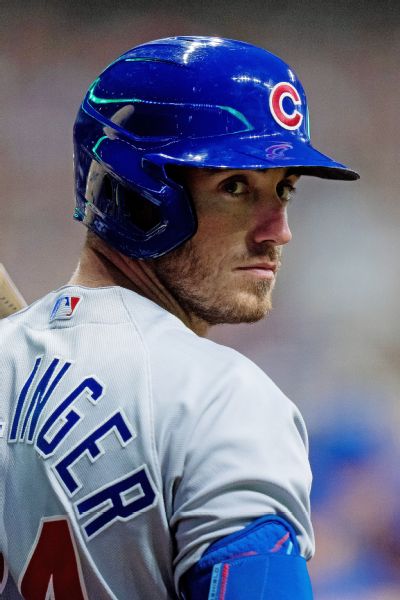
The comeback player of the year in 2023 was easily the Cubs most valuable as the team’s offense ran through him. Bellinger’s season was defined by his success against left-handed pitching — he was a beast, hitting .337 off southpaws. And he should be as motivated as ever, considering he had to take a shorter-term deal with opt outs in returning to the Cubs after the start of spring training. Another great season and Bellinger may very well cash in on that long-term, mega-contract. He’ll be several years removed from major injury and would have put up back-to-back productive seasons. He just has to do it now.
Season prediction: Bellinger might sacrifice some contact for power in 2024 as he cut down on his swing last season — and the team was better for it. The lefty hit 26 home runs last year. He’ll easily hit more than 30 this season. — Rogers
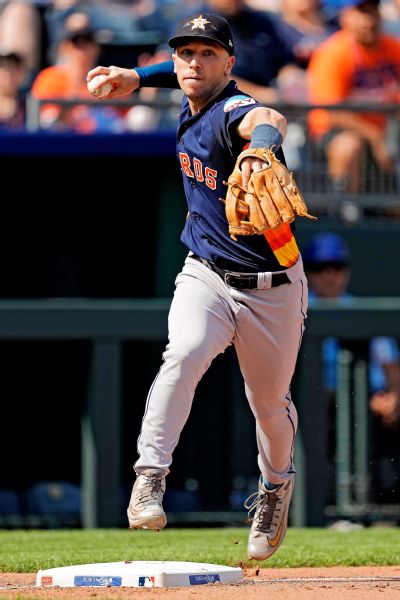
If you were to draw up a list of players who have the most money at stake in 2024, Bregman might be at the top. He turns 30 at the end of March and is set to become a free agent at season’s end, and another third baseman, Matt Chapman, was just slow-played into a three-year, $54 million deal. If Bregman puts up big numbers this season, he’ll get a whole lot more than that — and he spent the winter working with weighted bats in an effort to increase his bat speed and, in turn, the exit velocity of the ball he hits. If he’s able to do that, with his simple and efficient swing, he could have a monster year.
Season prediction: His best season was in 2019, when he mashed 41 homers and drew 119 walks, while batting .296. Those numbers would seem to be in play for him again, and he’ll benefit from having Altuve and Alvarez hitting in front of him and Tucker batting behind him. — Olney
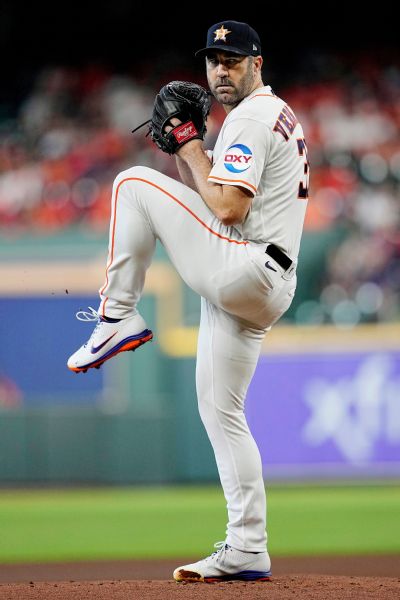
Verlander fell off slightly from his dominant Cy Young form of 2022 last year, going 13-8 with a 3.22 ERA in 162 1/3 innings for the Mets and Astros. This is the point when we should probably point out that he did this at age 40, with more than 3,000 innings under his belt.
Verlander is still going strong, but some drop-off is to be expected. He reported to camp with a shoulder issue that put him a couple weeks behind the other pitchers and will force him to begin the season on the injured list. And though the Astros don’t sound concerned, it’s certainly something to monitor. So is Verlander’s strikeout rate, which fell to 21.5% in 2023, his lowest in eight years. First-pitch strikes were particularly elusive.
Season prediction: Verlander needs 140 innings — and a clean bill of health — to trigger a $35 million option for 2025. It’s probably a safe bet that he’ll find a way to make that happen. His numbers might dip again in 2024, but not by much. Verlander, at 41, is still a force. — Gonzalez
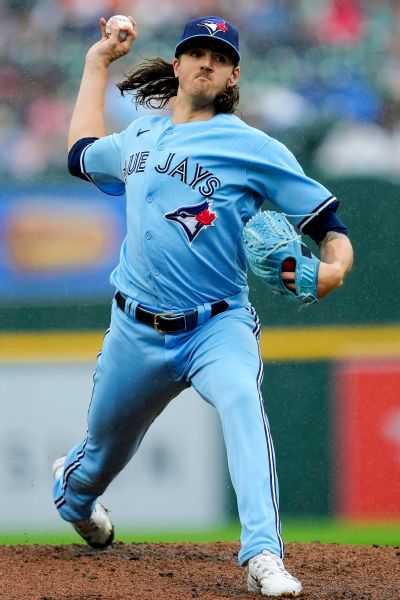
51. Kevin Gausman, SP, Toronto Blue Jays
During his 20s, Gausman’s career was marked by inconsistency. You really had no idea how he would do from one year to the next. Since he turned 30, he has flipped the script and become one of baseball’s most consistent aces. He’s on a three-year run of 31 or more starts, 184 innings per season, a 3.10 ERA underpinned by a 2.79 FIP and 132 ERA+. Last season, Gausman led the AL in strikeouts and strikeouts per nine innings. His command wasn’t quite as sharp as it was in 2022, but the extra whiffs accommodated for that and were at least in part due to improved metrics on his already vicious splitter.
Season prediction: As long as Gausman stays healthy — he went through a bout of shoulder fatigue in spring training — there’s no reason to think his run of success will end. Pencil in 31 starts, a 2.90 to 3.30 ERA, 180 innings, 200 whiffs and more than a few Cy Young votes. — Doolittle
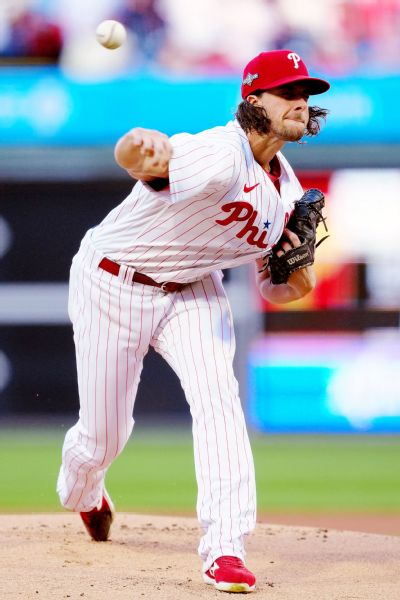
52. Aaron Nola, SP, Philadelphia Phillies
While Nola entered free agency last fall, it never felt like he was going to leave Philly, and he quickly signed a seven-year, $172 million contract. That’s a testament to his durability — he’s made at least 32 starts in every full season going back to 2018. In that span, he leads the majors in games started while ranking second to just Cole in innings. His ERAs have fluctuated, however, based on the number of home runs he has given up. He allowed 32 in 2023, helping to explain his mediocre 4.46 ERA despite a strong strikeout-to-walk ratio. There were also some declines in his swing-and-miss rate (from the 68th percentile to the 48th) and strikeout rate, but he still excels at getting hitters to chase his curveball or changeup just off the plate.
Season prediction: Oddly, Nola’s home run problems came on the road, where he had a 5.43 ERA, and not at cozy Citizens Bank Park. It will certainly be interesting to see how he ages over this contract given his below-average fastball velocity (batters slugged .503 against it in 2023), but in the short term, he should be fine, and I’d expect him to cut maybe a run off his ERA. — Schoenfield
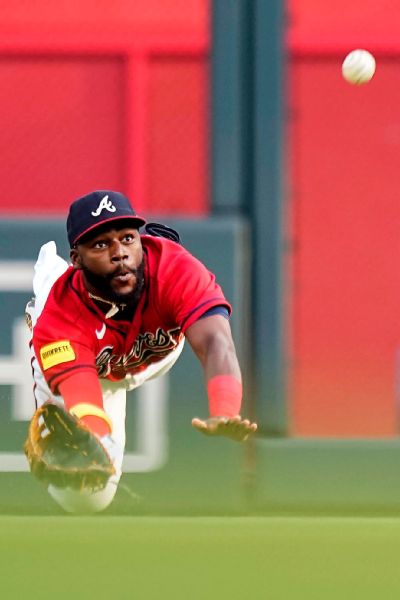
Is Harris just starting to reach his potential? If so, he’ll move into the top 50 in short order, as he has produced two .800 OPS seasons to begin his career after winning Rookie of the Year in 2022. And he’s only just recently turned 23. He fits right in with the dynamic Braves as a multi-tool player who has 37 home runs and 40 stolen bases in his first two seasons. Progress isn’t always linear in baseball, but sometimes players follow a predictable path to success when they enter the league with the kind of talent that Harris possesses. Another leap simply makes sense.
Season prediction: Expect a big season from Harris in a talented Braves lineup. A 20-20 season is the minimum — 20-30 or even 30-30 is a possibility if he can draw a few more walks. That’s the one area of concern, a 4-1 strikeout-to-walk ratio (what he had last season) might keep his on-base percentage down. But he can improve that. — Rogers
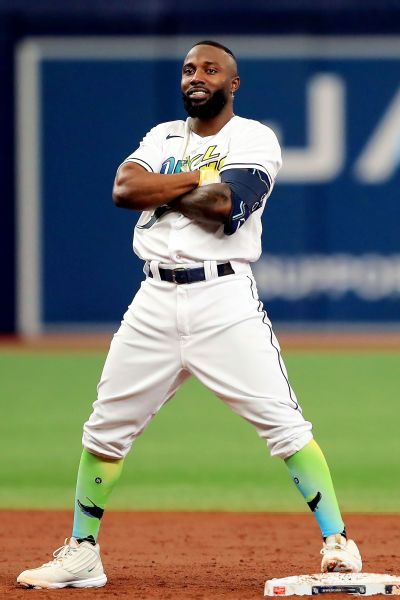
Arozarena’s unparalleled swag likely helped his ranking more than his numbers, which are very good but not necessarily befitting a near-top 50 spot. He’s not nearly the hitter that his teammate Yandy Diaz is, and if they were to switch places — Diaz is ranked 74th — neither would feel particularly out of place. Still, Arozarena is an electric presence in any lineup, capable of hitting home runs in bunches, stealing bases and making big catches in the outfield. He may not be the superstar who took over the 2020 postseason, but at 28, he’s square in his prime and one of the more reliable outfielders in MLB. There is plenty of substance to go along with the style.
Season prediction: Arozarena books his fourth consecutive 20-20 season, and while he may suffer a walk-rate regression – his 7.1% to 12.2% jump between 2022 and 2023 was among MLB’s highest — he’ll post an .800-plus OPS for the first time since 2021. — Passan
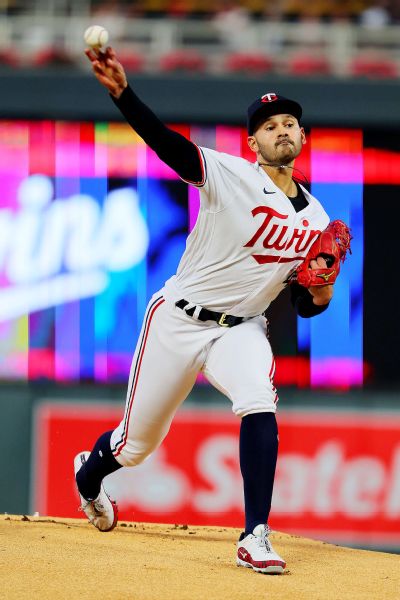
Lopez got to Minnesota, learned the sweeper and took his game to another level in 2023, posting a 3.66 ERA in 194 innings and accumulating 234 strikeouts, second most in the AL. Now, with Sonny Gray in St. Louis, he is the unquestioned Twins ace, all the more critical to their chances of repeating as AL Central champions. Lopez wants to be even better, and he had a very specific goal this spring: to have enough command of all five of his pitches that he can throw them in any count and, more importantly, against any type of hitter. He has been pretty consistent in using his curveball against lefties and his sinker against righties. Now he wants to be completely unpredictable.
Season prediction: At 28, Lopez can still get better. And given the overall weakness of the division in which he pitches, he’ll do better in AL Cy Young voting this season — from seventh in 2023 to within the top five for the first time in his career in 2024. — Gonzalez
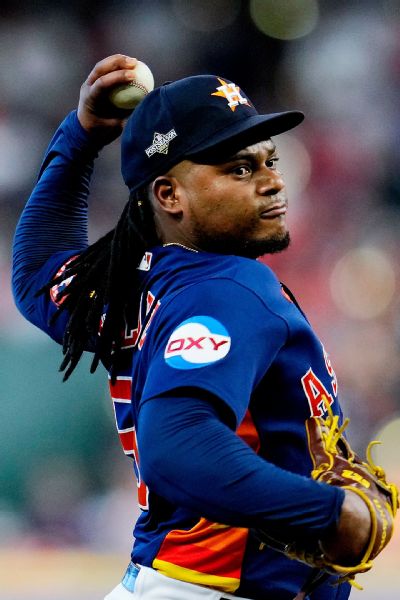
It will be a crossroad season for Valdez, who does not have a long-term deal with the Astros in place and is in line to reach free agency at the end of 2025. The question surrounding the 30-year-old is this: When he’s in position to get paid, will he have Clark Kent-type marketability, or will he be the Superman left-hander of the AL? That depends on whether he rediscovers his sinking fastball that largely abandoned him at the end of the 2023 campaign. In his three postseason starts last fall, he allowed 19 hits and 13 runs in 12 innings, with opponents hitting .359 and four homers against him. When his sinker is right, he’s a ground ball machine.
Season prediction: He might have to reinvent himself, finding weapons other than the turbo sinker, and he’ll have to do that without Martin Maldonado and instead team up with Yainer Diaz. He’s in for a summer of adjustments and some frustration, but also growth. — Olney
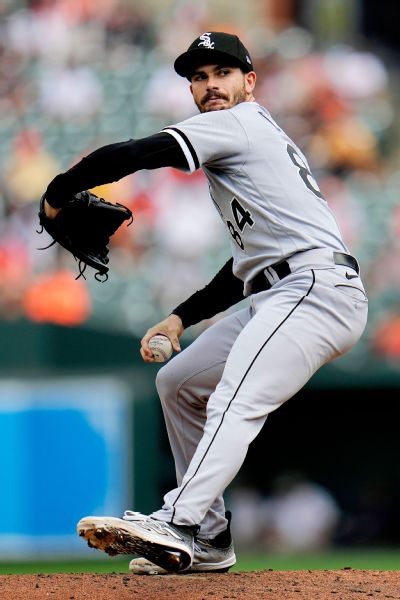
57. Dylan Cease, SP, Chicago White Sox
An offseason of trade speculation has given way to a spring training of speculation, but Cease is still in Chicago — at least for the moment — and was named the Opening Day starter back in January. Cease is the only proven starter on the team and said offseason treatment allowed him to come into camp healthier than ever. Usually, he deals with arm soreness during the winter, but he got ahead of it this year and is primed for a bounce-back after seeing his ERA jump from 2.20 in 2022 to 4.58 last season. Expect him to get off to a fast start — no matter what team he’s on.
Season prediction: He might start the season with the White Sox, but he won’t finish it with them. Cease will end up on a contending team. It’s anyone’s guess where he’ll be pitching come August. — Rogers
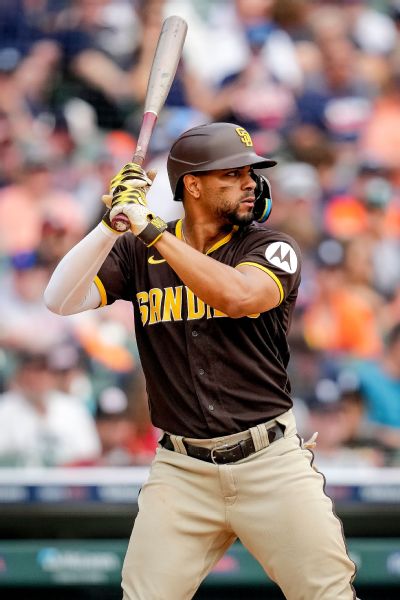
The 11-year, $280 million contract Bogaerts signed with the Padres before last season might have inflated expectations for his first campaign on the West Coast. He started slow, hampered by a sore wrist, and ended the season more or less as a facsimile to the All-Star player he was in Boston.
Still, this will be a key season for Bogaerts — and the Padres — with a whole lot of contract (and money) binding team and player together. He hit the ball on the ground too much last year, but that improved as the season went along, so you have to wonder how the wrist was playing into that at the start. Overall, he adapted to Petco Park well enough, though his home production wasn’t what he put up at Fenway. It was a solid, not spectacular, NL debut.
Season prediction: As he transitions to second base — a position at which his below-average shortstop arm becomes a plus — expect Bogaerts to remain on the 4-to-5 WAR level. He’s a middle infielder who posts a 120 OPS+ or better every season, and his glove should play well at the keystone. Forget the contract; value the player. — Doolittle
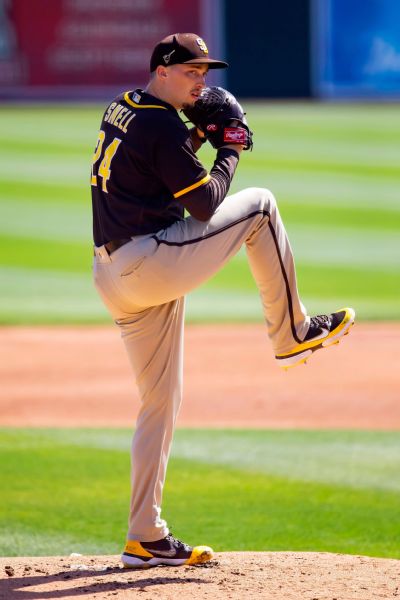
The reigning NL Cy Young winner became just the 22nd hurler to win the award at least twice after going 14-9 while leading the majors with a 2.29 ERA and .181 batting average against in 2023. There’s no denying Snell’s pure stuff is as unhittable as any southpaw starter’s in the game, starting with a fastball that sits at 95-96 mph and adding a curveball and slider that both generated whiff rates over 50%. It also comes with a high degree of wildness that didn’t hurt him last season, as he went 13-3 with a 1.20 ERA over his final 23 starts. He became the first pitcher to lead his league in ERA despite walking more than five batters per nine innings. Concerns over his wildness and durability — the two years he won the Cy Young, 2018 and 2023, are the only two times he’s pitched more than 130 innings — might be why he has remained unsigned in free agency.
Season prediction: We have to see where he signs, but does that dominant final four months mean Snell can crush it over an entire season? Unlikely. There’s just no recent track record of a pitcher walking that many batters and still pitching consistently at this level (in fact, his walk rate was the highest for a qualified pitcher since 1999), at least not since Nolan Ryan. In the end, let’s go with his career mark: a 3.20 ERA, which is still All-Star-level if Snell can stay healthy. — Schoenfield
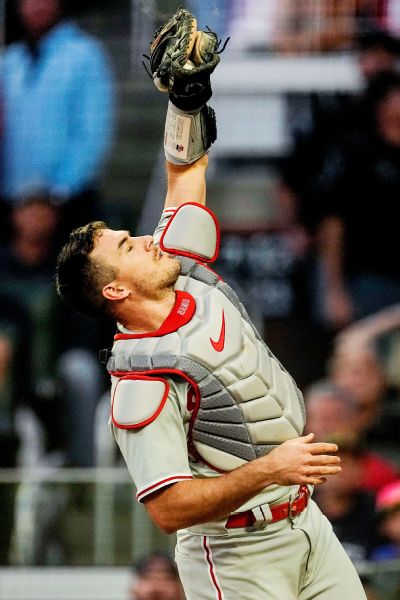
60. J.T. Realmuto, C, Philadelphia Phillies
Is Realmuto going through what basically every player does as they get deeper into their 30s while handling such a demanding position — or, as Phillies manager Rob Thomson joked at one point late into the 2023 season, is he simply bogged down by being the father of four children? Whatever the reason, Realmuto’s home-road splits last season were eye-opening. He slashed a mere .198/.257/.320 inside Philadelphia’s Citizens Bank Park, one of the most hitter-friendly sites in the majors, and .306/.364/.587 on the road. Those splits were ultimately the reason his adjusted OPS went from 130 to 106 from 2022 to 2023, and one of the biggest reasons why he produced five fewer fWAR. It’s probably why arguably the game’s best catcher is only 60th on our list.
Season prediction: Realmuto’s barrel rate in 2023 (11.3%) was nearly identical to where it was in 2022 (11.2%). He, like many others, has hit well at Citizens Bank Park before. He’ll bounce back offensively — and remain solid enough behind the plate to still be considered one of the best at his position. — Gonzalez
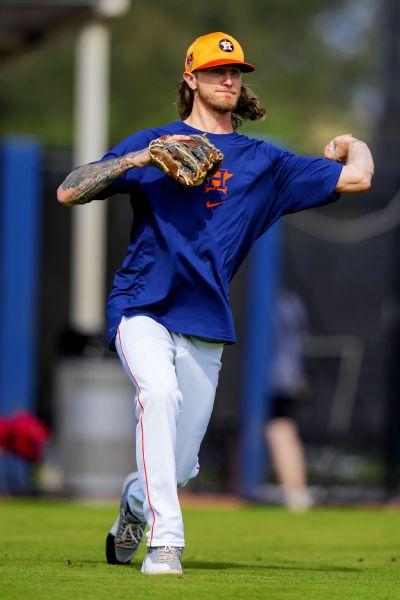
61. Josh Hader, RP, Houston Astros
Will any pitcher in baseball history make more money pitching fewer innings than Hader has? Last season, he once again averaged less than an inning pitched per appearance but he was as good as ever, leading to that $95 million deal with the Astros. There was a moment during his career in Milwaukee where perhaps he looked like he had been used too much — back then he averaged more than an inning per appearance — but he rebounded from that dip in fine fashion. His free agent year of 2023 was a doozy, as he compiled a 1.28 ERA for the Padres while striking out 85 in 56⅓ innings. Expect Hader’s usage to remain the same in Houston as Ryan Pressly can help cover late innings as well.
Season prediction: Hader will save 40 games for Houston this year, a career high. — Rogers
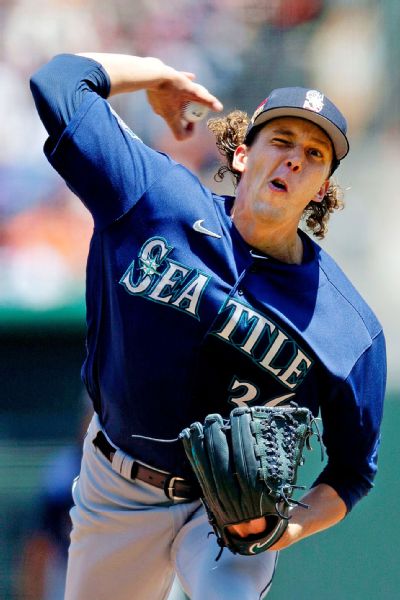
Gilbert has been a sturdy, reliable performer in his two-plus seasons with the Mariners, never missing a start and winning 26 games the past two seasons with a 3.47 ERA while averaging 188 innings. He’s 6-foot-6 and throws 96 mph, but his fastball is the least effective of his pitches. He introduced a splitter last season to go with his slider and curveball, and he’s a joy to watch as he mixes all four pitches and pounds the strike zone (just 1.7 walks per nine innings). It’s possible there’s another gear here, as well, if he can cut down on the home runs (29 in 2023, 14 off those off his fastball).
Season prediction: You’d think Gilbert’s fastball would play up better since he also has elite extension given his height and delivery (99th percentile), but it’s a low-spin four-seamer, so he gives up a lot of hard contact. Maybe that does limit his upside to not quite Cy Young-contending levels, but I could see 15 wins, a 3.20 ERA and maybe his first All-Star selection. — Schoenfield
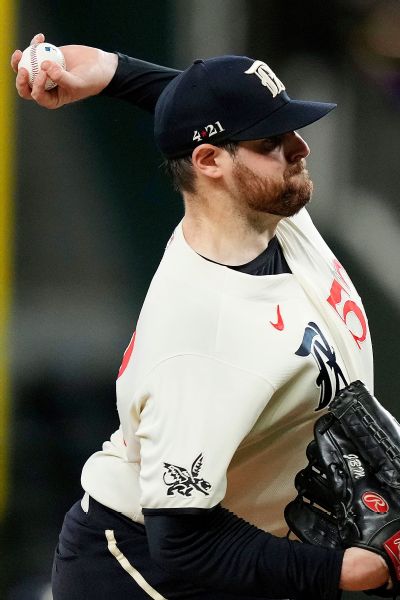
Doesn’t it seem like the better Montgomery gets, the harder it is for him to find a team that will keep him around? Surely, barring financial constraints, the Rangers would love to have Monty back after his essential contribution last season, a 6-3, 3.11 ERA second-half showing that helped save an injury-ravaged Texas rotation and punch a ticket to October. Over the past three seasons, Montgomery has averaged 175 innings with a 121 ERA+. He has big game experience, with a 2.63 over 37⅔ postseason innings. He’s done all this as a command pitcher who doesn’t rely on elite velocity. And yet he’s moved from the Yankees to the Cardinals to the Rangers over the past two years, followed by a way-too-long wait on the free agent market. Eventually, he will find a home — and the team that provides it will be very happy.
Season prediction: Montgomery will throw strikes, work the edges, provide bulk frames and end up with another sub-4.00 ERA. We just don’t know for whom he will be doing these things. — Doolittle
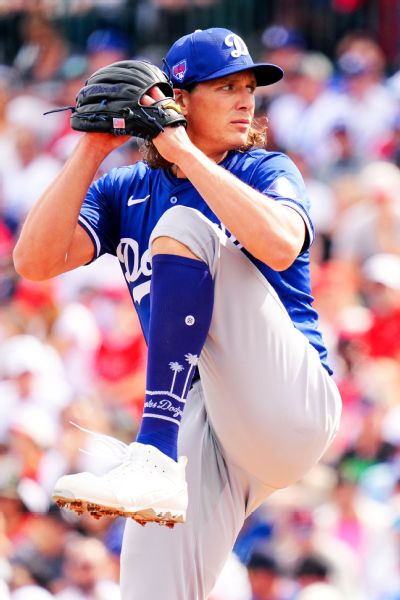
64. Tyler Glasnow, SP, Los Angeles Dodgers
So much attention has focused on Yamamoto, but Dodgers officials are bullish on Glasnow, who they signed to a five-year, $136.56 million contract immediately after acquiring him from the Rays. He is already 30, but the Dodgers believe he is just starting to tap into his potential as one of the sport’s upper-echelon pitchers. He flashed that in the lead-up to Tommy John surgery in 2021, posting a 2.66 ERA and striking out 123 batters in 88 innings. He ranks third among starting pitchers in strikeout percentage since 2019, behind only Strider and Jacob deGrom. But, alas, Glasnow also ranks 124th in innings.
Season prediction: Glasnow will thrive while backed by a potent offense, but the Dodgers will be careful with someone who hasn’t thrown more than 120 innings in a season. His innings will jump to 150, and he’ll keep his ERA under 3.00. — Gonzalez
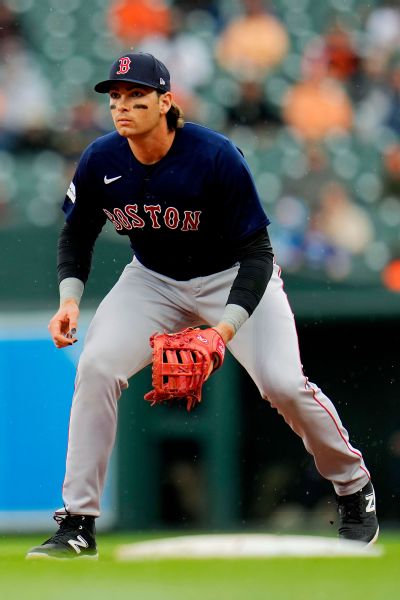
The first baseman mentioned casually this spring that he had turned down contract overtures with the Red Sox, and you can understand why — the path he took last season, when he hit .263/.367/.490 with 24 home runs and 65 RBIs and finished third in AL Rookie of the Year voting, is likely to take him to future superstardom. He has a rare combination of plate discipline and power, and like some Red Sox left-handed hitting legends of the past — Ted Williams, Carl Yastrzemski, Wade Boggs, David Ortiz — he is likely to have good habits reinforced by the presence of the Green Monster.
Season prediction: After the All-Star break last season, Casas hit .317 with a .417 on-base percentage and 15 homers. He seems fully capable of having a breakout year and finishing in the top 10 of the AL MVP race. — Olney
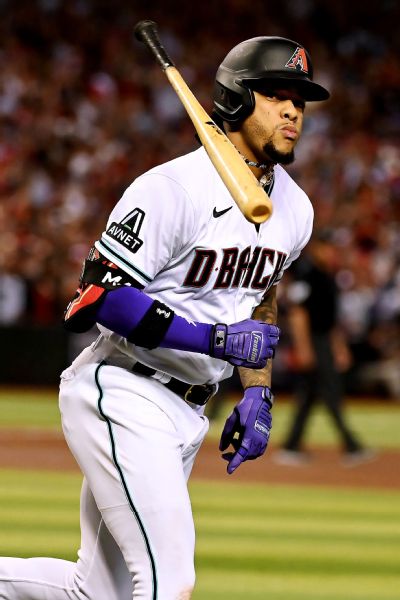
66. Ketel Marte, 2B, Arizona Diamondbacks
Marte’s postseason performance last year was something special. He delivered when the Diamondbacks needed it most in the NLCS, going 12-for-31 in the team’s upset of the Phillies. In 21 career playoff games, he has a .974 OPS, cementing him as the under-the-radar star to Caroll’s more headline-grabbing game. At just 29, but with nine years in the big leagues already, Marte might be getting better — and Arizona has him locked up through 2028. He’s simply a solid performer who belongs in the top 100 — though he may never break into the top 50.
Season prediction: Marte flashed power last season, hitting 25 home runs, but he might be at his best when he’s making contact and simply getting on base. He hit just 14 home runs in 2021 but his .909 OPS was the second-highest of his career. Expect a cutback on power, an increase in OBP and a reduced strikeout total for him in 2024. The D-backs added enough power this offseason that they may not need it from their second baseman. — Rogers
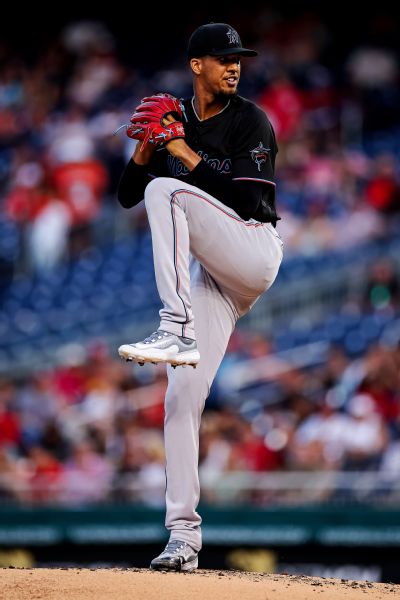
67. Eury Perez, SP, Miami Marlins
There may be no pitcher in baseball with greater upside than Perez, who, at 20, is the youngest player on this list. He is about as close to a create-a-player as there is on the mound: 6-foot-8, 220 pounds with exceptional body control, a fastball that sits at 98 mph and a plus slider, changeup and curveball.
While he was slightly homer-happy in his rookie season — his 25.4% groundball rate was the lowest of all pitchers in MLB with at least 90 innings — Perez flashed dominance more often than not in his 19 starts. This ranking may be a touch high because he’ll remain on an innings limit this season, but once he’s unleashed in 2025, he’s got a shot to reach a ceiling few have: the best pitcher in baseball.
Season prediction: The Marlins will monitor Perez’s output carefully this season, and he figures to finish somewhere in the 150- to 160-inning range. His home run rate will dip from around 1.5 per nine innings, and, accordingly, his ERA will do the same. He’ll wind up near the top of the NL leaderboard with a 2.71 ERA. — Passan
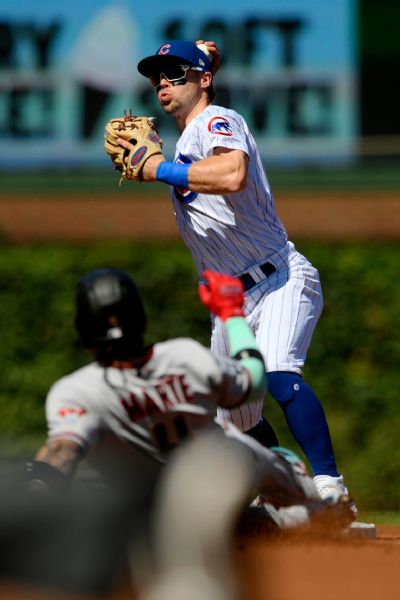
Every team needs a Hoerner, someone whose value has next to nothing to do with home runs but who does everything else well. It’s not that Hoerner can’t go deep — he’s rung up 19 dingers over the past two seasons — but the longballs are beside the point. He gets on base, steals and makes contact when you need someone to make contact. On the field, Hoerner slid over from shortstop to make room for Swanson, even though he was a very good defender at the six-hole. All he did was win a Gold Glove with metrics that supported that recognition. Add the package up and you have a four-to-five win player just entering the prime of his career.
Season prediction: As Hoerner hits his age-27 season, it’s time for him to make his first All-Star team. A .300 average, .360 OBP with the slightest uptick in slug will get him there, along with a pace on the bases that should get him over the 50-steal and 100-run barriers. — Doolittle
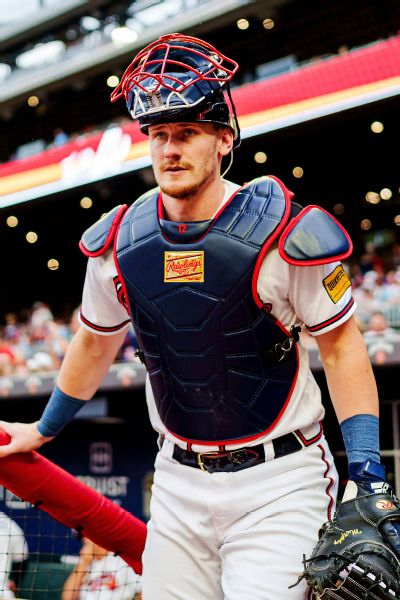
69. Sean Murphy, C, Atlanta Braves
Murphy struggled after the start of September last year, OPS’ing just .451. But his final numbers — a .251/.365/.478 slash line, 21 home runs, 4.2 fWAR — were still really, really good. And in some ways he was even better than that, with an expected weighted on-base average of .395, which would’ve landed him within the top 10 in weighted on-base average if he had enough plate appearances to qualify.
That’s another thing: Murphy, 29, started only 98 of the Braves’ 162 regular-season games behind the plate despite not landing on the IL. The Braves were careful with his workload. And Murphy, who spent his previous four years playing home games in Northern California, admitted that he struggled with the Atlanta heat in the summer months.
Season prediction: Murphy has long solidified himself as one of the game’s best catchers, and there’s no reason to expect much drop-off at this point. He’ll have a better second half in his second year in Atlanta and, given the potency of the lineup in which he resides, will have his best offensive season in 2024. — Gonzalez
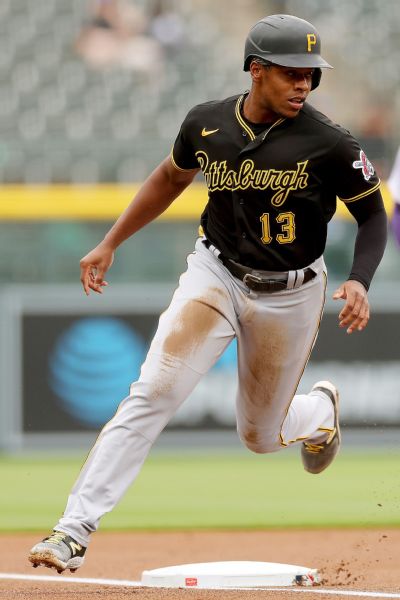
This ranking may look a little surprising given Hayes’ 15 home runs and 61 RBIs in 2023 were career highs, but it’s a testament to what our voters think about his defense — and the belief that he’s headed for a breakout season on offense. First the defense. Hayes ended Arenado’s 10-year run as the Gold Glove third baseman in the NL as his range factor of 3.11 plays per nine innings easily led all third basemen (the league average was 2.60, so he’s making an extra out every other game). He’s arguably the best defender now at any position. At the plate, he hit .299/.335/.539 with 10 home runs over his final 48 games. If he can do that over a full season, his 4.0 WAR from 2023 will climb much higher.
Season prediction: I’ll buy into the late-season power surge. How about 25 home runs, a Platinum Glove as the best overall defender in the NL and a 6.0 WAR season that places him in the top 10 of MVP voting? — Schoenfield
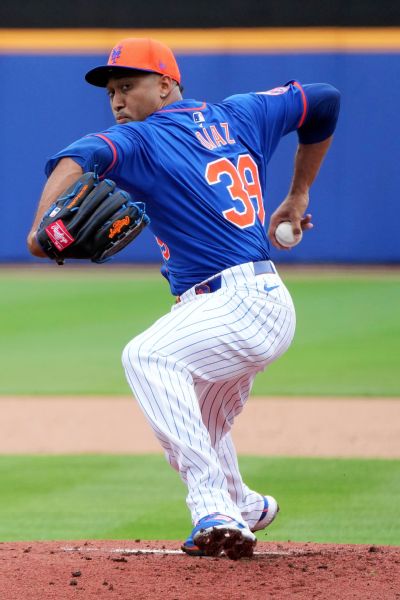
71. Edwin Diaz, RP, New York Mets
You can’t pin the Mets’ epically disappointing 2023 season on Diaz’s injury. At the same time, looking at it with a year’s hindsight, it sure feels like New York’s season started to go south as soon as Diaz’s knee gave way in the aftermath of a WBC victory for Puerto Rico. We love to point out every other year patterns in player careers and Diaz’s is a doozy. His ERAs going back to 2018: 1.96, 5.59, 1.75, 3.45, 1.31 and null. That last one, of course, reflects that he didn’t have an ERA in 2023 because of the injury. The good news for the Mets is that we’re back on an even year so we can probably expect a sub-2.00 ERA for Diaz. But in all seriousness, it wasn’t an arm injury, it’s been a year and he’s been fine in spring training. Diaz is back.
Season prediction: Diaz’s 2022 season wasn’t just dominant, it was one of the best reliever seasons of the century. Expecting a repeat of that is a bit rosy-eyed, but a 1.80 ERA, 15-plus strikeouts per nine and 30-plus saves seem like a safe bet. — Doolittle
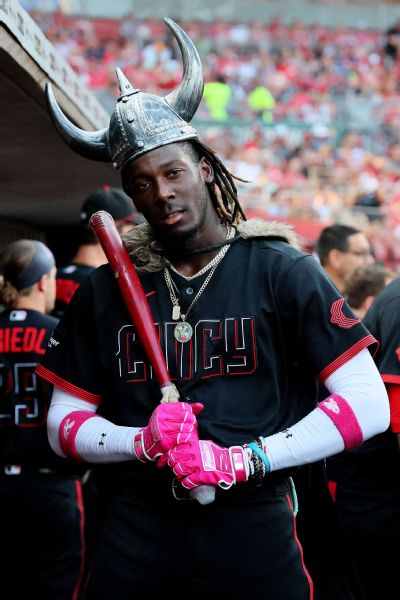
De La Cruz, at 22, is not only the youngest hitter this high on the list but may have the greatest upside of any hitter in baseball. Like Perez, De La Cruz is about as close to a create-a-player as there is at the plate and in the field: 6-foot-5, 200 pounds with a switch-hitting bat that launches balls upward of 500 feet, the fastest foot speed in MLB and the best infield arm in the game.
He was quite strikeout-happy in his rookie season — his 33.7% K rate was fifth among all hitters in MLB with at least 400 plate appearances — but he flashed brilliance with tape-measure home runs and daring baserunning. This ranking may be a bit too high because it’s in baseball writers’ DNA to bet on talent, but it also may be too low, because if De La Cruz puts everything together, he’s got a shot to be one of the best players in baseball.
Season prediction: While he’s the Reds’ starter at shortstop, he’ll play plenty of third base as well. He’ll steal at least 50 bases and more than double his home run total of 13 from last season. The strikeouts will remain the only thing that holds him back from edging closer to his near-limitless potential. — Passan
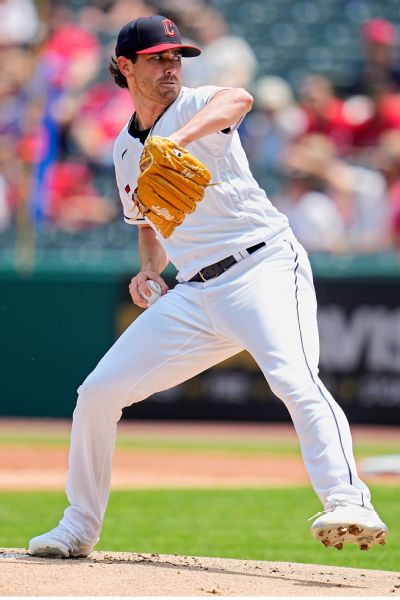
73. Shane Bieber, SP, Cleveland Guardians
Like Cease, Bieber was the subject of trade rumors all winter, but surprisingly, he’s still on the Guardians. Set to be a free agent after this season, a huge platform year could lead to a big payday for the righty. He’s not exactly the same guy who won the Cy Young Award in the shortened 2020 season, but he’s still an effective pitcher. He belongs in the backend of the top 100 right now, but at 28 years old, there’s always a chance Bieber finds himself in that elite category of pitchers again. He has the experience, the know-how and, when healthy, the stuff to help anyone’s rotation. Like Cease, he may not finish the season with the team he’s on now.
Season prediction: After an injury-plagued 2023 season, Bieber rebounds for a big walk year. Expect him to pitch at least 180 innings, showing teams he’s once again effective and durable. — Rogers
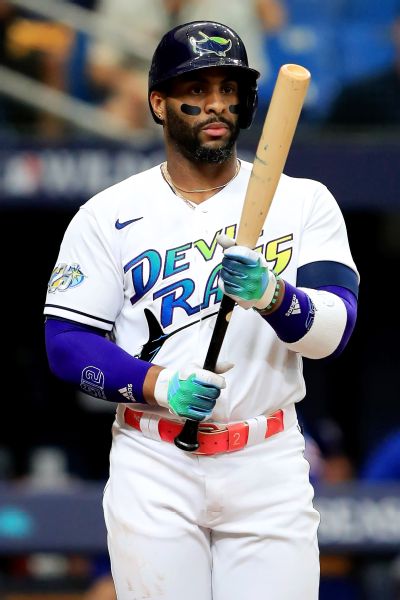
74. Yandy Diaz, INF, Tampa Bay Rays
Diaz took his offensive game to another level during his age-30 season in 2022, producing 42% above league average based on adjusted OPS. In 2023, he found yet another level, leading the AL in batting average (.330) while establishing career highs in home runs (22), OPS (.932), weighted runs created plus (164) and practically everything else. So, is this just who he is now? Based on this ranking, he might reside somewhere in the middle of what he was in 2022 and 2023, which the Rays would certainly take. ZiPS projects a 133 wRC+, tied with Guerrero Jr. and Tucker for 12th in the majors.
Season prediction: Diaz shed close to 10 pounds over the offseason in hopes of gaining more agility and endurance and playing in all 162 games this season. If he can play in at least 150, he’ll reach 30 home runs for the first time in his career. — Gonzalez
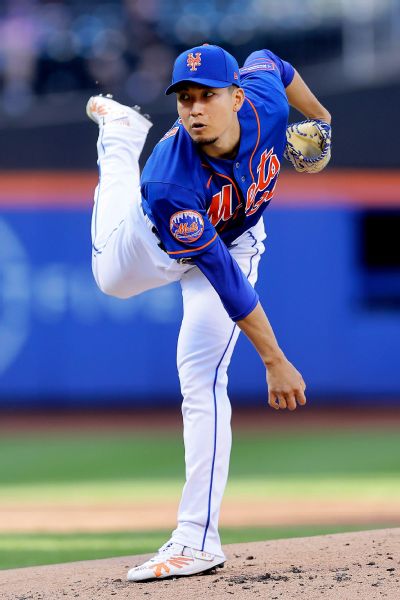
75. Kodai Senga, SP, New York Mets
Here’s how good Senga’s “ghost forkball” is: You can buy T-shirts with the slogan “Fear the Ghost Fork.” How many pitchers have a pitch worthy of its own T-shirt? And batters should fear it: In 188 plate appearances ending with that pitch, they hit .110 and struck out 110 times, making the ghost fork one of the supreme wipeout pitches in the majors. Senga rode that pitch and a 96-mph fastball to a superb first season with the Mets, going 12-7 with a 2.98 ERA and the sixth highest strikeout rate among qualified starters.
Season prediction: He’s currently sidelined with a shoulder strain and will begin the season on the IL, making any prediction impossible. It’s a disappointing start to the season given how carefully the Mets handled him in 2023 (making just three starts on four days of rest). — Schoenfield
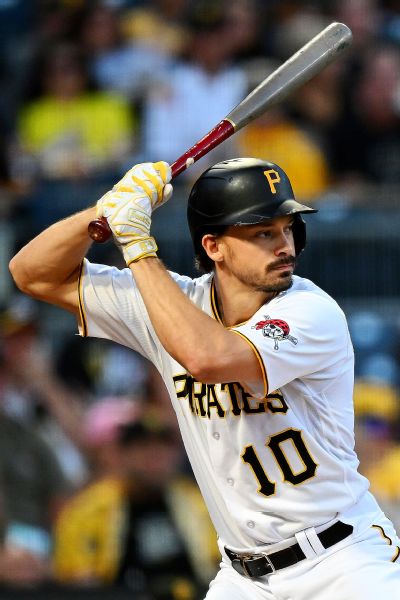
If the Pirates break out of their long sleep and ascend into competitive relevance in the next few years, then history will show that the turning point was their decision to invest an eight-year deal in Reynolds as a foundational player. He’s demonstrated that he’s a well-rounded star, as Andrew McCutchen was early in his career — in his first five seasons, Reynolds has an adjusted OPS+ of 124 while playing center field. Last year, he had 60 extra-base hits, 12 steals in 13 attempts, scored 85 runs and drove in 84.
Season prediction: The Pirates’ lineup around him is deepening, and as the likes of Hayes, Jack Suwinski and Cruz gain experience, Reynolds’ run production should improve. — Olney
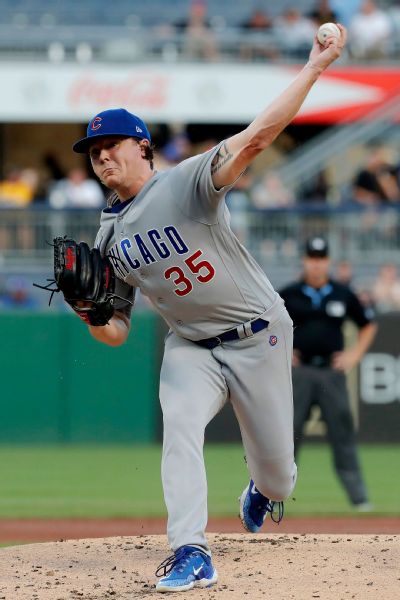
Steele has figured it out. After putting up a 1.49 ERA over his past 10 starts in 2022, he followed that up by going 16-5 with a 3.06 ERA over 173⅓ innings with a league-low 0.7 homers allowed per nine innings last season. His 2.69 ERA since that breakout in 2022 began is the seventh best in baseball. During that time frame, 96.5% of his offerings have either been a four-seamer or a slider. He gets lefties and righties alike with that two-pitch arsenal and there’s no reason to think he won’t continue to do so. Pitchers like Steele and Atlanta’s Strider have shown that if you have two elite pitches and the batter can’t tell which one is coming, you can do a lot of business as a starting pitcher. Steele did fade a bit down the stretch in 2023, so it’s important for him and the Cubs to figure out the root cause of that.
Season prediction: Steele’s rise has been fueled by the pinpoint command he has with his stripped-down arsenal. Until big league hitters start showing us otherwise, we can expect another 3.10-ish ERA over 170 to 180 innings. — Doolittle
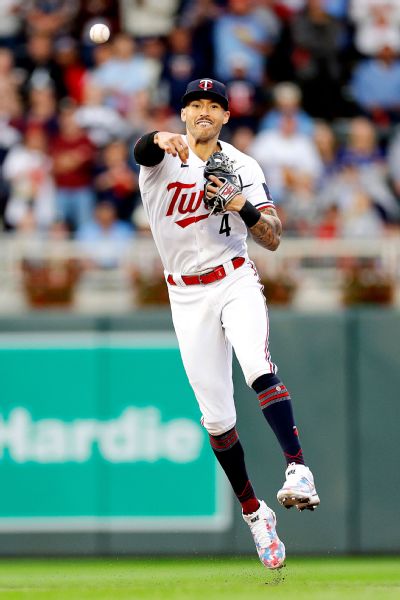
Correa simply isn’t going to play 153 or more games like he did for Houston in 2016. But even at 135 games or so, he’s a solid player that will likely be in the back half of the top 100 for the next few years. His batting average took a big dip in 2023 despite his average exit velocity hovering around his career numbers. He’ll always have decent power for a shortstop and at 28 years old, there’s still a chance for a huge year, but he’s mostly just a good player and a leader on a team that needs him to be.
Season prediction: You can bookmark Correa for a .250, 20-homer, 50-BB and 100-strikeout season as his hit total will go up in 2024, but his numbers won’t get him to his third All-Star Game. — Rogers
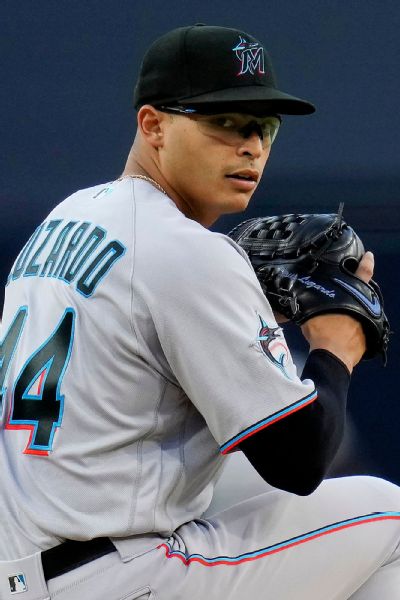
Parting with Starling Marte in the summer of 2021 might have been difficult, but Luzardo, the man the Marlins got back in a rare one-for-one trade, has been everything they could’ve expected. In 50 starts over the past two years, the 26-year-old left-hander has posted a 3.52 ERA while striking out 328 batters in 279 innings, further bolstering their deep crop of promising young starting pitchers. With Alcantara spending the 2024 season rehabbing from Tommy John surgery, Luzardo was recently named the Opening Day starter. It was the obvious choice — even with Perez and Edward Cabrera also in the rotation.
Season prediction: Luzardo reached 178⅔ innings last season, a career-high by a wide margin. But he held up just fine in September, allowing four runs in 18⅓ innings over his last three starts. This year, he might just vault himself into the Cy Young discussion. — Gonzalez
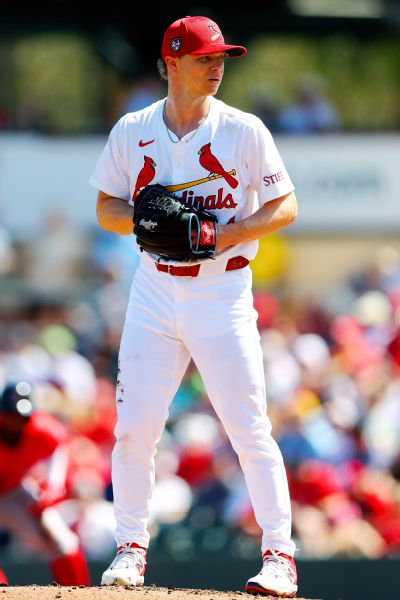
80. Sonny Gray, SP, St. Louis Cardinals
Gray is a throwback pitcher, outmaneuvering hitters with a wide arsenal of pitchers rather than simply blowing smoke past them. He threw six different pitches at least 6% of the time last season on his way to a second-place finish in the AL Cy Young voting.
He has a four-seamer and a two-seamer, although he uses the four-seamer more against lefties and the two-seamer against righties. Against right-handers he’s more likely to mix in a sweeper and cutter, while using a curveball and changeup against lefties. Since 2019, he ranks 10th in ERA among pitchers with at least 500 innings — yet, as this ranking suggests, he’s rarely thought of as a top-10 starter. He leaves the Twins and joins the Cardinals, although he might start the season on the IL with a hamstring strain.
Season prediction: Assuming the hamstring isn’t a lingering issue, Gray should remain a top starter. He’s always been exceptional at limiting home runs (eight in 184 innings in 2023) and he’s improved his walk rate the past two seasons. How about a career-high 15 wins and an ERA just a little north of 3.00? — Schoenfield
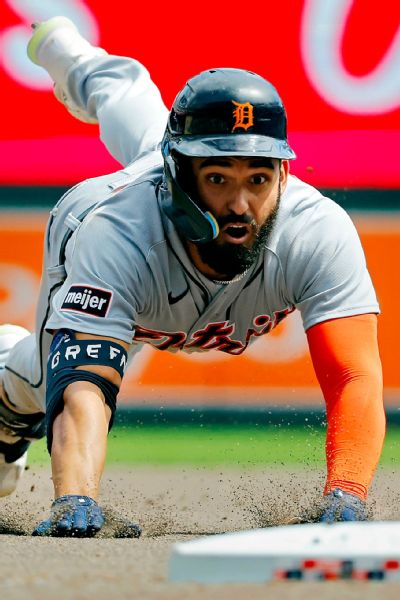
We’re still learning what kind of player Greene will turn out to be, but there is no doubt that his tools and skill set are impressive. His two big league seasons, during which he had virtually the same amount of plate appearances, have been very different. Last season, he turned a sky-high ground ball rate into a better mix that featured an encouraging increase in line drives. That fueled Greene’s improved .288 batting average, though the BABIP underlining that (.384) looks bloated. The bottom line is that Greene hits the ball hard, plays a premium position and, at 23, is still getting better. He’s a crucial part of the foundation for whatever the Tigers become.
Season prediction: Greene will put in his first season with 140-plus games while giving away a few points of average and upping his homer total into the 20s, staking his claim to become the face of the post-Miguel Cabrera Tigers. — Doolittle
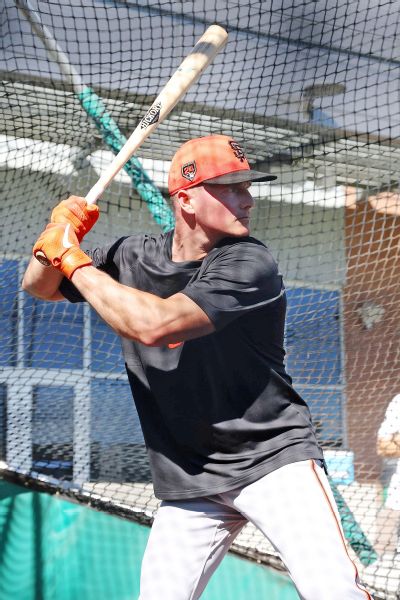
82. Matt Chapman, 3B, San Francisco Giants
The $54 million contract he signed with the Giants reflected both his past excellence — as a defender, particularly — and the doubts that evaluators still have about what kind of hitter he’ll be in the latter half of his career. Chapman, who turns 31 in April, has batted .226 over the past four seasons, with a high rate of strikeouts — including 165 in 140 games last season. He hit 17 homers in 581 plate appearances in 2023, but he also picked up his fourth Gold Glove — and it’s his defense that will always be the backbone of his value.
Season prediction: There is enough of a sample size in recent years to suggest that what you see is what you get — Chapman will hit 20-25 home runs and will have periods in which he’ll struggle to make contact. But his defense will help the Giants’ pitching staff, especially Logan Webb. — Olney
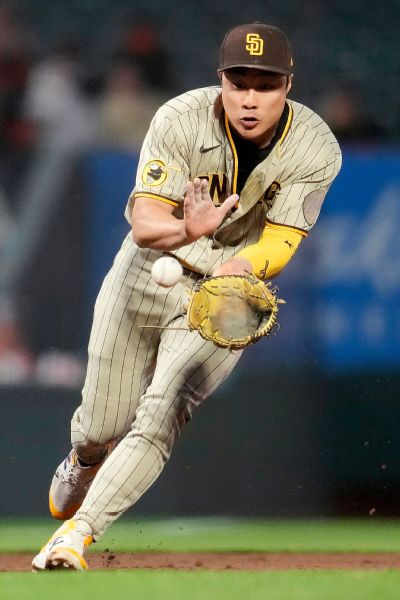
83. Ha-Seong Kim, 2B, San Diego Padres
It’s been a steady climb for Kim, who cracks our top 100 for the first time this year. His OPS+ has gone up in each of his first three seasons and now, with a higher floor, he has a chance to secure his first ever All-Star nod. Cutting down on strikeouts while still maintaining a high on-base percentage should be a goal of his for 2024. He had 75 free passes in 2023, a fairly high total for a non-slugger, and he also has 20 homer potential. Combine that with a .350 OBP and Kim could steadily move up the rankings a year from now.
Season prediction: Kim will slug .400 with an .800 OPS in 2024, continuing a trend of offensive improvement. — Rogers
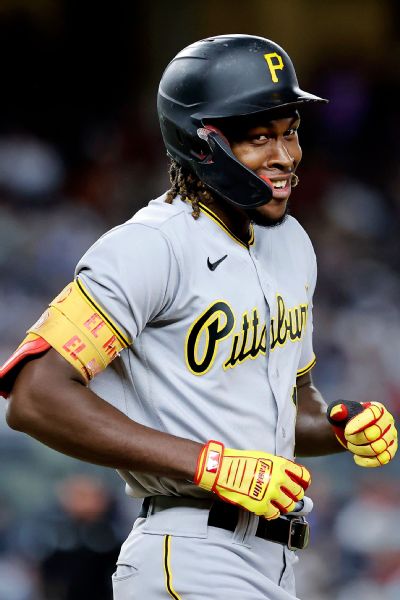
84. Oneil Cruz, SS, Pittsburgh Pirates
Cruz’s first full season in the major leagues ended after just nine games, the product of a fractured fibula suffered during a home plate collision that triggered a near brawl. He says he is fully recovered now, restriction-free, but trusting his legs and regaining his timing will be a process. Once that happens, we’re all in for a treat. Frankly, we’ve never seen a 6-foot-7 shortstop with the type of power, speed and arm strength he possesses. (Yeah, you can say the same about De La Cruz, but he’s two inches shorter!) Cruz still has a lot of developing to do as a hitter, as evidenced by his 126 strikeouts in 87 games as a rookie in 2022, but that should come as he matures. In the meantime, sheer talent will carry him a long way.
Season prediction: Cruz set out for a 30-30 season in 2023, then watched his season end in less than two weeks. This year, his only goal is to remain healthy. The rest, he said, “will come.” OK, we’ll say it for him — Cruz will flirt with a 30-30 season. And he’ll produce a lot of upper-90s throws from shortstop. — Gonzalez
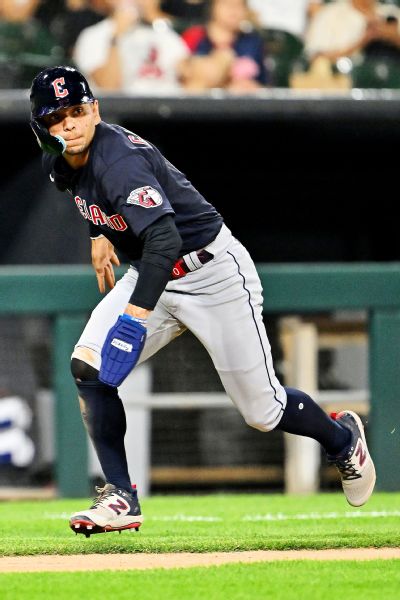
85. Andres Gimenez, 2B, Cleveland Guardians
Let’s throw this out there: Gimenez’s first two full seasons at second base — both ending with Gold Glove Awards — suggest he has a chance to become one of the best ever to play the position. He has outstanding range, both via the eye test and advanced metrics, outstanding hands (just six errors in 2023) and a strong arm (he came up as a shortstop). His offense is a work in progress, relying on a lot of hit by pitches to boost his on-base percentage, but he has managed to hit 32 home runs the past two seasons despite some of the lowest hard-hit rates in the game. He’s one of those guys the general public will overlook because of the offensive profile, but he’s a valuable player.
Season prediction: A third straight Gold Glove Award — the easy choice here — and perhaps a second straight Platinum Glove as the best overall defender in the AL as well. At the plate? Probably more like 2023 than 2022, when he hit .297 thanks to some good fortune on his balls in play. — Schoenfield
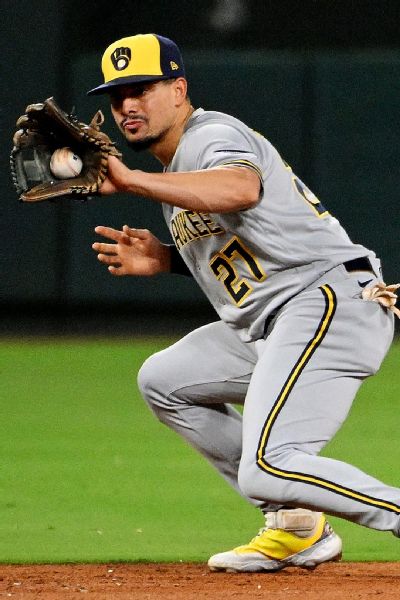
Longtime Brewers fans will get this reference: Adames is basically his generation’s version of Jose Valentin. Adames has gotten to his power earlier than Valentin and the latter didn’t have nearly as high of a strikeout rate, was a switch-hitter and so on. Still, they’re both good defensive shortstops with power and you don’t sweat their batting averages. Through their age-27 seasons, Valentine’s career slash was .245/.319/.429; Adames is at .247/.320/.439. (Yes, the league contexts are way different.) You’d like to see Adames, now 28, get back some of the average he had in Tampa but even if he stays on the Valentin path, he’ll continue to help teams. If the Brewers drop in the standings, Adames will be a popular name on the in-season trade market. He may be anyway after Milwaukee acquired infield prospect Joey Ortiz over the winter.
Season prediction: Adames has a lot to prove after his uneven 2023 showing at the plate. He’s also entering a walk year. Look for Adames to bounce back to the .250ish batting average range while once again threatening 30 homers. — Doolittle
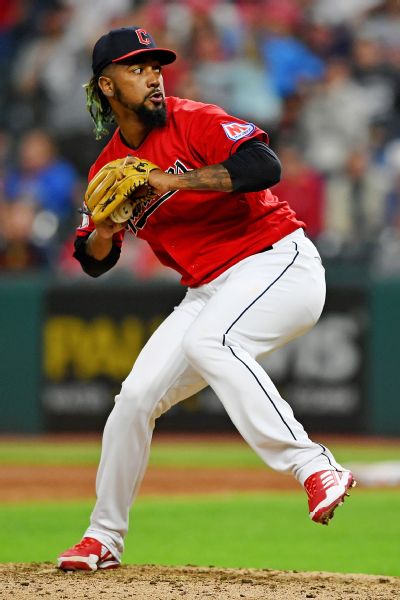
87. Emmanuel Clase, RP, Cleveland Guardians
Another player who could be traded midseason, Clase’s value may never be higher than it is right now. He’s coming off back-to-back 40-plus save seasons for the Guardians but may not be as valuable to them as he will be to a contending team. Still, he’s under team control for three years, so he could bring back a haul at the summer trade deadline. In that regard, no other position on the diamond changes value from December to July more than closers. Teams often believe they’ll make due with what they have in the first half of the season and then realize during the heat of a pennant race that a closer is the missing and final piece to their puzzle. Clase could be that guy this summer.
Season prediction: Clase won’t record a fourth straight 70-appearance season, a huge total for a closer. He gave up a bit more damage last season — 68 hits, up from 43 the year before in the same amount of innings pitched — so Cleveland may keep his trade value high by taking it easy on him. — Rogers
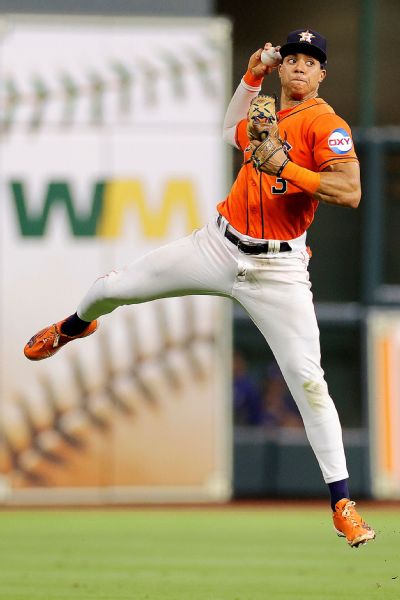
88. Jeremy Pena, SS, Houston Astros
Peña’s breakthrough season in 2022, which saw him contend for AL Rookie of the Year, win a Gold Glove and help lead the Astros to a championship, was followed by some steps forward and some steps backward. He made better swing decisions in 2023, increasing his on-base percentage by 35 points, but his power dropped significantly. His 22-home run season in 2022 was followed by just 10 in 2023, including zero over his last 73 games. This spring, Peña unveiled a much more subtle, controlled batting stance designed to make him more efficient and strike baseballs with more authority. The Astros have raved about it thus far. They don’t really need much more offense from him, but they’ll certainly take it.
Season prediction: Peña’s first two years have seen him produce a 98 OPS+, with 100 representing league average. But we’re buying the new stance and the offensive resurgence that will come with it. He’ll get back to hitting more home runs, finishing with a 110 OPS+ and, because of his solid defense, 5.0 fWAR. — Gonzalez
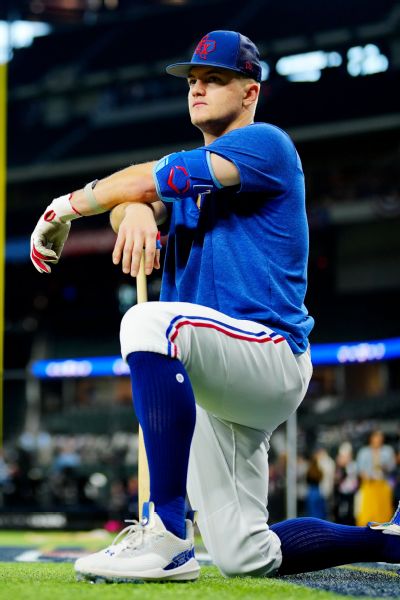
89. Josh Jung, 3B, Texas Rangers
Texas chose Jung with the eighth pick in the 2019 draft for his bat, a right-handed thunderstick that crushed the minor leagues before his 2022 debut. In his first full season last year, he was in the AL Rookie of the Year mix before a late-season injury sidelined him for six weeks. He returned in time for the postseason, where he hit .308/.329/.538 and, perhaps more surprisingly, played exceptional defense at third, where some evaluators had wondered if he would stick when he was drafted. At 26, Jung is now a no-doubt third baseman, and while he’s got plenty of room to work on his swing decisions — he struck out five times as much as he walked last year — he could make his second All-Star team in as many years.
Season prediction: A calf strain has sidelined Jung for most of spring training, and the Rangers will take it easy with him, with Ezequiel Duran a plenty capable fill-in. Thirty home runs isn’t out of the question for Jung, nor a .500-plus slugging percentage, and power plus glove makes up for the relative lack of on-base percentage. — Passan
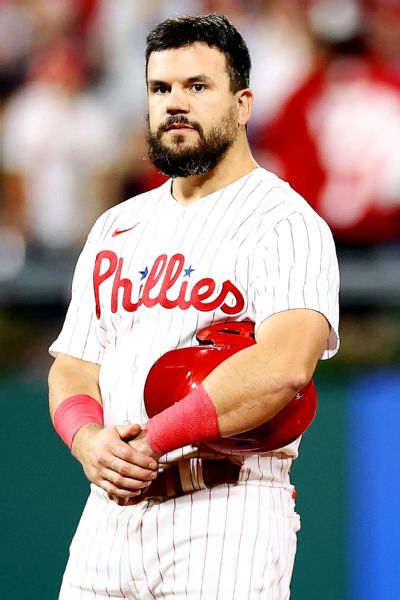
90. Kyle Schwarber, LF/DH, Philadelphia Phillies
Schwarber, if nothing else, is consistent. You can count on him for home runs and strikeouts, with some walks and the occasional single mixed in. It says a lot about his game that over the past two years, he finished 16th and 19th in MVP voting despite hitting .218 and .197, respectively, with a combined 415 strikeouts. But, oh, those home runs are almost always majestic and he seems to hit them when the team needs them most. His leadership has been well documented, as has his consistent appearance in the postseason — he’s been home during the playoffs just once in his career.
Season prediction: Schwarber hit a 483-foot home run last season, third longest in MLB. He’ll top that this year, reaching 500 feet for the first time in his career. — Rogers
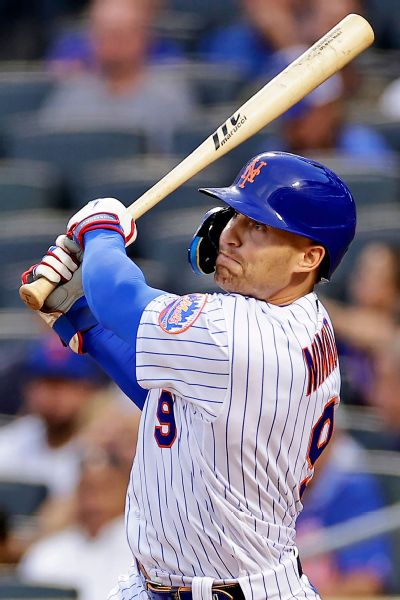
You can’t really call a player who signed a $162 million contract underrated — especially one who plays in New York — but Nimmo probably still flies under the radar even after a second straight excellent season. He had been injury-prone earlier in his career, missing significant time in 2017, 2019 and 2021, but has now had back-to-back 150-game seasons, justifying the Mets’ gamble — at least in the first year of that big contract. With a career .380 OBP, he’s one of the best in the game at getting on base and his career-high 24 home runs in 2023 came with an increased launch angle, which suggests the power surge was legit.
Season prediction: The “Happiest Man in Baseball” — nobody smiles more than Nimmo — will have his happiest season yet with 30 home runs and his first All-Star selection. — Schoenfield
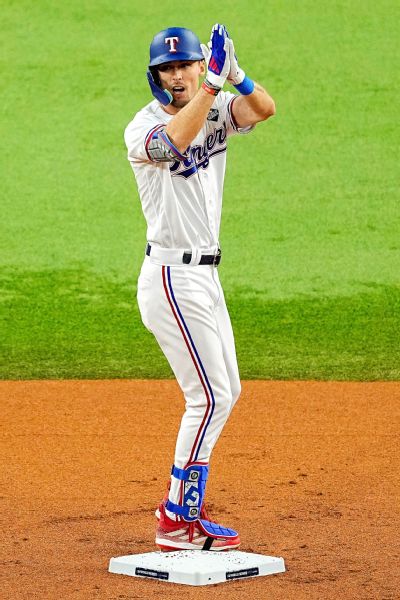
92. Evan Carter, LF, Texas Rangers
Let’s start with an entirely unfair leaderboard. Among players with at least 75 career plate appearances, here is your all-time top four in OPS+: 1. Babe Ruth, 206; 2. Ted Williams, 191; 3. (tie) Barry Bonds and Carter, 182. Carter followed that small-sample triumph during his late-season debut by putting up a .917 OPS in the postseason, helping the Rangers to a championship.
And now, the 21-year-old will be Texas’ starting left fielder on Opening Day. One thing we already know is that the moment will not be too big for him. One to-do item for Carter: He hasn’t hit lefties at all. After reaching MLB, he was 0-for-10 in the regular season, and in the minors, he had a .253 slug against southpaws, managing one double in 106 plate appearances.
Season prediction: Carter won’t remain a 182 OPS+ guy and may still have to sit against most lefties. But he’s so good in so many ways, he’ll challenge for AL Rookie of the Year honors, with teammate Wyatt Langford possibly being one of his chief competitors. — Doolittle
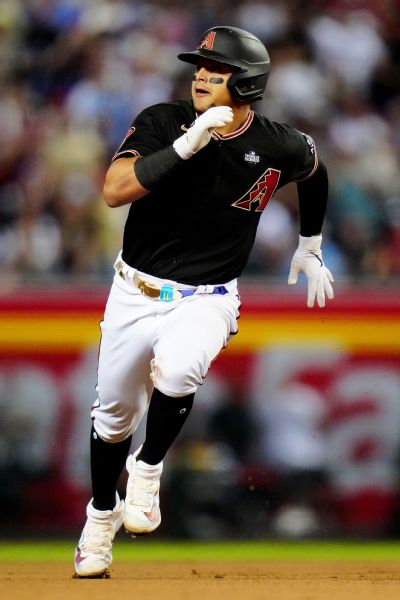
93. Gabriel Moreno, C, Arizona Diamondbacks
Of all the trades in recent years, the Diamondbacks’ pilfering of Moreno from the Blue Jays in December 2022 when he was a top prospect will be one of the most consequential. In his first full season last year, Moreno proved himself one of the best catchers in the big leagues — a game-changing defender behind the plate with a bat that’s plenty capable of holding its own. If it is more than that — if Moreno can hit more than seven home runs (his total in 2023) while maintaining a batting average that, at .292 on days he caught, was tops in the big leagues — we’re talking perennial MVP candidates. As is, Moreno’s floor is exceptionally high, and at just 24, he’s primed to be a force for the next decade.
Season prediction: Moreno, who showed up to camp this year in fantastic shape, takes a leap, batting .285, getting on base 35% of the time and slugging more than .450 with 18 home runs and 81 RBIs while moving up in the Diamondbacks’ much-improved lineup. — Passan
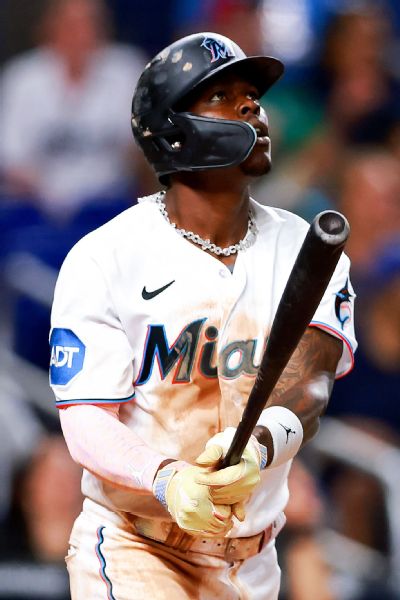
Some of the defensive metrics — particularly outs above average and Statcast’s outfield-jump measurement — graded Chisholm as an above-average center fielder in his transition from the middle infield last year. But once again, he couldn’t stay healthy. Bouts with turf toe and an oblique strain limited him to 97 games in 2023 — one year after a lower back strain and a partially torn meniscus kept him out for the regular season’s final three months. Chisholm, 26, is bursting with talent, evidenced by his 19 home runs and 22 stolen bases in limited action last year. But at some point we need to see it over a full season.
Season prediction: This one is more of a hope than a prediction: 150 games. We’re all pining to see a fully unlocked Chisholm. Let’s hope 2024 is the year we finally get it. — Gonzalez
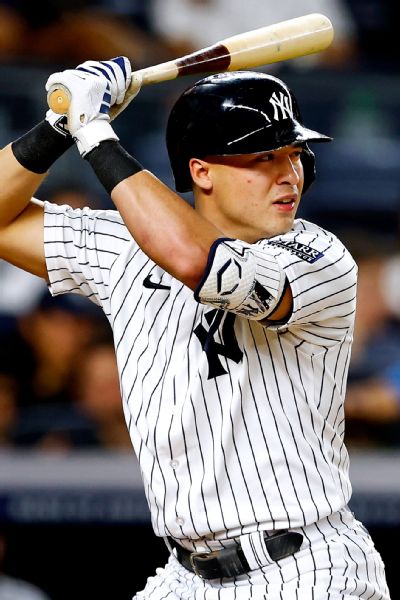
Volpe hit just .209 with a .283 OBP in his rookie year in New York, but there is potential here as he became the first Yankee ever with a 20-20 season and the first since Derek Jeter to win a Gold Glove at the all-important position on the diamond. The Yankees believe he can control the strike zone better in his second season, which should keep him squarely in the top 100 when you consider his other abilities as a baseball player. His floor is decent, but what is the ceiling? We should find out more about that in 2024.
Season prediction: Volpe will sacrifice some power for more contact and less strikeouts. He’ll raise his average 35 points, but won’t reach 20 home runs this season. — Rogers
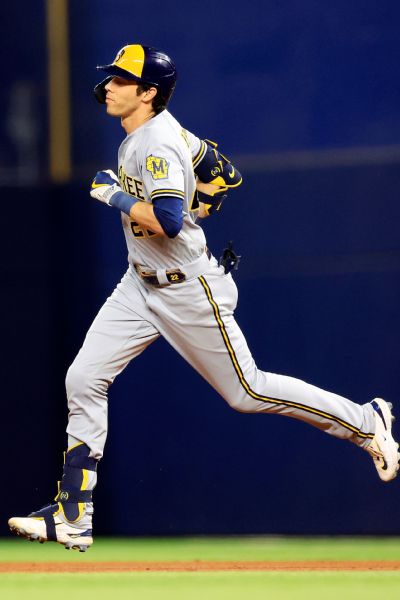
He’s not the player he was during his 2018-19 peak, when he won back-to-back batting titles while finishing first and then second in MVP voting, but Yelich did have his best season since 2019, hitting .278/.370/.447 with 19 home runs, 28 stolen bases, 106 runs and 3.6 WAR last year. Most importantly, he’s managed his back issues the past couple of years and played 144 games in 2023 (although he missed 12 in September when his back flared up). With a slew of speedy outfielders to choose from — especially if Jackson Chourio cracks the Opening Day roster — Yelich may see more DH time this year, but he should once again serve the Brewers as one of the top leadoff hitters in the game.
Season prediction: More of the same, assuming he stays healthy. At 32, there’s no reason to expect anything different, so let’s say 20 home runs, 25 stolen bases and a .265 average. — Schoenfield
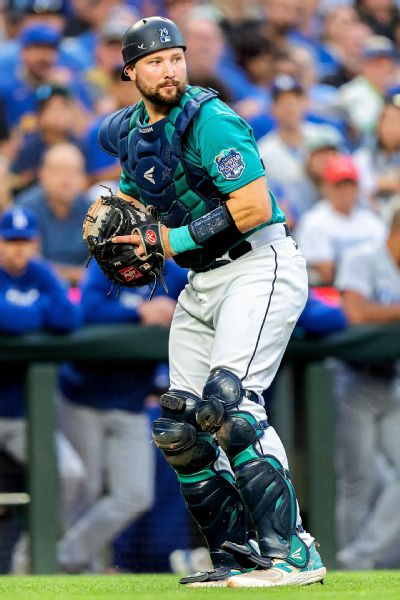
97. Cal Raleigh, C, Seattle Mariners
There just aren’t that many everyday catchers anymore. Last season, just nine backstops qualified for the batting title and Raleigh was one of them. Only Realmuto (535) had more plate appearances as a catcher in 2023 than Raleigh’s 494. No catcher hit more home runs than him, with 24 of his 30 dingers coming while he played behind the plate. (The rest were while he was DHing or pinch hitting.) Raleigh gets on the field so much because he’s a switch-hitter with power and not much of a platoon split. Just as important, he can defend. According to Fangraphs’ consensus defensive measure (Def), only two players in the majors offered more defensive value in 2023. Raleigh is still under the radar, but he’s emerged as one of baseball’s best catchers.
Season prediction: Let’s just say that you shouldn’t draft Seby Zavala, Raleigh’s backup, for your fantasy team. Raleigh will again rack up 140-plus games, threaten 30 homers and build a case for Gold Glove consideration. — Doolittle
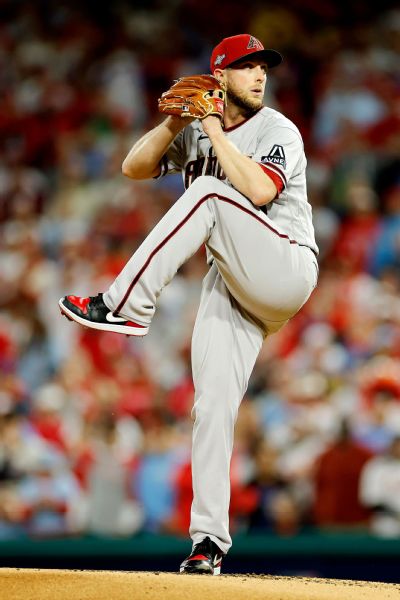
98. Merrill Kelly, SP, Arizona Diamondbacks
At age 35, he is the third-oldest player in the Top 100 — only Verlander and Goldschmidt are senior to him — and that seems to fit the narrative of his career as a late bloomer. He was pitching in Korea in his age 29-season, and since then, he has seemingly gotten better and better, using his repertoire and experience against hitters more and more effectively — to the degree that last October, he was standing on the mound in a World Series game.
Season prediction: His 3.29 ERA last season was the best full-season performance of his career, and there’s no reason to think he’s going to slow down. He is his generation’s Jamie Moyer, and he’ll have another solid year for the Diamondbacks. — Olney
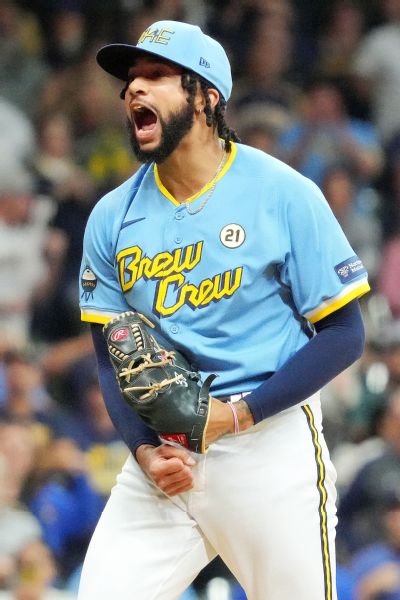
Williams’ first full season as closer was a dominant success: 36 saves, a 1.53 ERA, his second All-Star appearance and a ridiculous .129 batting average allowed that led the majors among pitchers with at least 50 innings and ranks as the eighth lowest ever. That was hardly a fluke given he allowed a .151 average in 2022. Williams lives off his changeup, a pitch so good it has its own nickname, “The Airbender.” He throws it more than 50% of the time, which makes his 94 mph fastball look 110 mph. Like Hader before him, Williams carried a light workload — just 58 innings in 2023 — so it will be interesting to see if new manager Pat Murphy pushes him a little harder.
Season prediction: Aroldis Chapman’s .119 average allowed in 2014 is the lowest ever for a pitcher with at least 50 innings. With three fewer hits, Williams would have broken that mark. So let’s go with a .117 average allowed. — Schoenfield
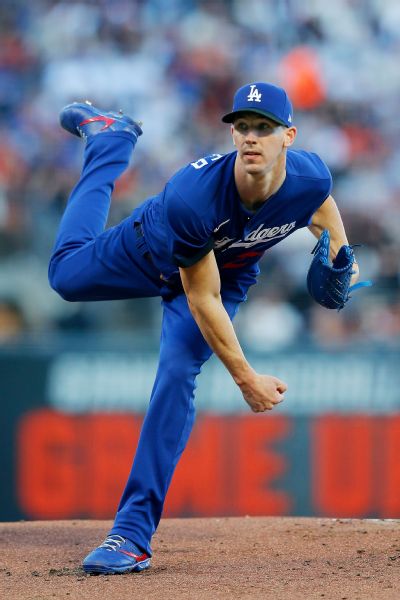
100. Walker Buehler, SP, Los Angeles Dodgers
Coming back from a second Tommy John surgery can be quite daunting, even for someone as talented and as confident as Buehler. The 29-year-old right-hander was racing to return in time to help the Dodgers in last year’s playoffs but had to shut it down after just one rehab start. Now, he’s being built back up slowly. He’ll begin the season on the IL, then be placed on an innings limit upon activation in 2024 — his final season before free agency. The last time we saw Buehler, he had established himself as one of the sport’s elite starting pitchers and also one of its best big-game performers. What he’ll be moving forward remains a mystery.
Season prediction: The 2024 season will in many ways function as a transition year for Buehler. The Dodgers will probably keep his innings to the low hundreds, hoping to preserve him mostly for October. But Buehler’s ability and competitiveness will nonetheless allow him to return as one of baseball’s most devastating starters. — Gonzalez


On Monday, the next installment of the Battle of Florida will be contested between the Tampa Bay Lightning and Florida Panthers, a rivalry that has certainly intensified in recent years.
The two teams entered the league one year apart. The Bolts in 1992 and the Cats a year later.
Although the Panthers miraculously made it to the Stanley Cup Final in their third season, the state of Florida wasn’t truly on the hockey map until the Lightning won the title in 2004.
But for most of the two teams’ existence, the rivalry was purely geographical, with the hockey world largely focusing on other feuds or thriving franchises. Despite achieving far less success in the 23 years after they made the Cup Final in 1996, the Panthers won the lion’s share of games against the Lightning. In that same 23-year span, the Cats had a sub-.500 record against the Lightning in only seven seasons, and the club’s all-time record against their in-state rival is 79-54-29.
But this truly became the “Battle” when both teams became great, and that has been in the past six seasons. The pair met in the playoffs for the first time in 2021, which is the perfect start of this era — Tampa Bay was coming off a Stanley Cup win in 2020 (in the bubble) and dispatched Florida in six games en route to their second straight Cup. The Lightning would sweep the Panthers the next season before bowing out to Colorado in the Cup Final, marking three straight trips to the Final.
Then it was Florida’s turn to do the exact same thing, making their three straight trips to the Cup Final (with the streak still active), and beating Tampa Bay 4-1 in back-to-back first rounds in 2024 and 2025 en route to Cup wins. Their playoff records against each other are identical: two series wins, 10-10 overall.
And this feud has turned ugly, bloody and downright nasty. Two preseason games (!) this October saw Lightning and Panthers players maul each other on the ice to the tune of a combined 508 penalty minutes and 26 misconducts. “It just got silly, got stupid,” lamented Panthers forward Evan Rodrigues, describing the chaos that some hockey fans absolutely relish. There were so many ejections that Florida’s Niko Mikkola got ejected, didn’t leave and then assisted on a goal, that had to be called back upon review.
It took a while to get there, but the Battle of Florida is now one of the most bitter rivalries in hockey and has no signs of slowing down. Both teams have thrown haymakers (literally and figuratively) at the other throughout the years. Although this might hurt many traditionalists to hear, the rivalry is an offshoot of both team’s playoff and championship success and that means — if you’re judging this purely on glory at the highest levels — Florida is cemented as the current “State of Hockey.” I don’t make the rules, people, I just bring them to light.
The Panthers and Lightning drop the puck on Monday in Tampa Bay. It’s without a doubt one of the biggest games of the week.
Jump ahead:
Games of the week
What I loved this weekend
Hart Trophy candidates
Social post of the week
Stick taps
Biggest games of the week
I have my eyes firmly on every game the Minnesota Wild, Pittsburgh Penguins and Edmonton Oilers play this week. Purely because I want to see the immediate impact the traded players will be making. And there’s some overlap!

The Quinn Hughes trade was a Friday night shocker. Minnesota! What a coup!
The Wild play the Washington Capitals on Tuesday (one of the teams rumored to be in on the Hughes trade talks), followed by the the Columbus Blue Jackets on Thursday, and the Colorado Avalanche on Sunday (a big test). Before the Avs, they’ll host the Oilers on Saturday … when I hope Tristan Jarry will be starting, and we get some sort of Hughes scoring chance on the new Oilers goalie.

Aside from the showdown in Minnesota, the Oilers have the Boston Bruins on Thursday and Vegas Golden Knights on Sunday (a big offensive test).
Jarry won his first game with the Oilers on Saturday, a 6-3 victory in Toronto.

The Penguins, with Stuart Skinner and Brett Kulak now in the mix, face the Ottawa Senators on Thursday, then have a home-and-home series against the Montreal Canadiens on Saturday and Sunday.
But I have a big red circle around Tuesday on my calendar, because the Oilers face the Penguins. Hockey trade bingo! It’s always awesome when traded players face their old teams right away. It’s like getting early and tangible “who won the trade?” argument fodder based on how the traded players perform. Let’s hope the coaches help out the narrative and start both Jarry and Skinner in this one.
Other key games this week
MONDAY


8 p.m. ET | ESPN+
TUESDAY


7 p.m. ET | ESPN+


7 p.m. ET | ESPN+


7 p.m. ET | ESPN+
WEDNESDAY

7 p.m. ET | ESPN+
THURSDAY

7 p.m. ET | ESPN+
FRIDAY

7 p.m. ET | ESPN+

10 p.m. ET | ESPN+
SATURDAY

12:30 p.m. ET | NHL Network
7 p.m. ET | ESPN+
SUNDAY
1 p.m. ET | NHL Network
What I loved this weekend
The San Jose Sharks are a lot of people’s second favorite team, and they made a whole bunch of fans happy — outside of Pittsburgh, of course — on Saturday. Down 5-1 with 12 minutes to play in the game, the Sharks scored four unanswered goals in the third period, then won the game in overtime. And no, this was not Stuart Skinner‘s debut — his immigration paperwork was held up, so it was Arturs Silovs in goal for the Penguins.
1:51
Sharks score 5 unanswered to rally for OT win vs. Penguins
The Sharks put five unanswered goals past the Penguins over the third period and overtime in a huge comeback win.
This marks only the 26th time in NHL history a team was down four goals in the third period and won the game.
This is where I tell Maple Leafs fans to look away. Because the ESPN Research team dug even deeper, and found that there were only two instances of teams that came back from five-goal deficits in the third period and won the game.
The two teams that pulled off this feat were the Calgary Flames in 1986-87 and the St. Louis Blues in 2000-01.
Their opponents on both occasions? Yes, the Toronto Maple Leafs.
Hart Trophy contenders if the season ended today
Nathan MacKinnon obviously gets a spot. He still leads the league in points and in goals, and has points in five straight games, with nine points total in that span.
Connor McDavid is second in scoring, back to his “I’ll score at will” video game mode, and is also on a five-game point streak, where he has a silly 15 points. Casual Connor, no big deal.
0:49
Connor McDavid lights the lamp for Oilers
Connor McDavid lights the lamp for Oilers
Finally, enough is enough; I’m putting Logan Thompson on my Hart Trophy list! I’m all for goalie Hart pushes. Deal with it.
The Caps are third in the Metro Division, and Thompson has an excellent .922 save percentage through 23 games. Scott Wedgewood will likely rotate into this spot on occasion given how much of an absolute wagon the Avs are this season. Aside from his last game where he let in five goals, Wedgewood has had a terrific stretch, including a shutout.
Social media post of the week
I said this last week, and I’m serious — the 6-7 trend is getting out of control! Now it’s on the back of warmup jerseys. STOP IT NOW!
On to my actual favorite social media from this week. As my fellow pro wrestling heads out there know, John Cena’s final WWE match took place on Saturday (and Cena’s submission to Gunther ignited a reaction from the WWE crowd more heinous than a lengthy offside review). A part of the homage this week was reflecting on the jerseys Cena wore over the years, including a few hockey ones. The Oilers, Kings, Jets and Canadiens were among the pro teams to share posts with Cena wearing their threads:
The funniest one was the Habs, because Cena mimics shooting a puck in his entrance. Which confirms in WWE retirement he will be signing with Montreal, adding bottom-six depth for a playoff push.
Stick taps
I’m going to give my ESPN colleague (and, of course, Stanley Cup champion) T.J. Oshie a lot of credit. He had a “welcome to TV” moment where, because he’s a retired NHL player-turned-citizen of hockey by being on national broadcasts, he received a Stadium Series jersey like the rest of us:
We revealed the #StadiumSeries jerseys! @espnSteveLevy @TJOshie77 @espn @NHL @NHLBruins @TBLightning https://t.co/3nlxP4pgFf pic.twitter.com/sCy6CJ0H5W
— ᴀʀᴅᴀ Öᴄᴀʟ (@Arda) December 12, 2025
The problem is, Oshie never played for the Lightning or the Bruins. But we egged him on and like the true good sport that he is, he put on the Boston jersey, explaining that it resembled his old Warroad team colors.
“I did put it on, somewhat against my will.” 😅@TJOshie77 and @Arda broke down the fine details on the Boston Bruins’ 2026 NHL Stadium Series jerseys 🐻 pic.twitter.com/XuCg9lTzCl
— SportsCenter (@SportsCenter) December 12, 2025
What a sight. I’m sure it was equally jarring to see “Oshie” on the back of the Boston jersey, and perhaps more jarring to see No. 77, Oshie’s number in the NHL that also happened to be Ray Bourque’s number — which the Bruins retired in 2001.
I will jump in here and say that I believe that the retired number rule applies only for active players on that team. Celebrities, analysts, media types, or really anyone that wants to customize a jersey … pick whatever number you want. You’re not suiting up for the team with that number. It’s fine. We can let that one go.
If you want to nominate someone for stick taps in a future column, reach out to me on social media.

-
Bill Connelly
The new era of college football features a larger College Football Playoff and a lower bar (and more forgiveness) for inclusion. Meanwhile, the transfer portal and increased freedom of movement for players have meant that today’s best teams can’t quite stockpile awesome backups as easily as they could in the past.
The idea of greatness has, therefore, also changed a bit. As we saw with Ohio State’s incredible national title run in 2024, it’s more about when you peak and less about how high and how long that peak might be.
It might be more difficult, then, for a team to rise to the top of this list, in other words.
It is once again time for me to rank every College Football Playoff team to date. Is it an awkward mix of 40 teams that cleared one bar during the four-team playoff era and 24 teams that cleared a lower bar in the new 12-team era? Absolutely. Is that stopping me from continuing this tradition? Absolutely not. As always, this list is derived through a combination of numbers and my own personal opinions. I start out using my SP+ ratings as a guide, then steer whichever way I want to steer with it. The rankings for 2025’s playoff participants will obviously shift in the future, once we’ve seen how this year’s four-round tournament plays out.
Jump to:
Top 10 CFP teams


64. 2025 Tulane (11-2)
CFP matchup: First round at Ole Miss
Jon Sumrall’s final Tulane team is adaptable and resilient and certainly clears a physicality bar that not every awesome Group of 5 team might. But the Green Wave’s two losses — 45-10 against first-round opponent Ole Miss, 48-26 at UTSA — were a sign that when things go awry, the ceiling is much, much lower than what we might expect from a playoff team.
 63. 2024 Clemson (10-4)
CFP result: Lost to Texas 38-24 in the first round
The first official bid thieves of the 12-team era, Dabo Swinney’s Tigers looked like their hopes were finished after an end-of-regular-season loss to South Carolina. But upsets elsewhere placed them in the ACC championship game, and they won the league with a last-second field goal. That gave them a shot at Texas in the CFP first round, and although they played well while behind, the game was never truly in doubt.
 62. 2024 SMU (11-3)
CFP result: Lost to Penn State 38-10 in the first round
Rhett Lashlee’s Mustangs made the absolute most of their first power conference campaign in three decades, going 8-0 in the regular season and falling just six points short of a 13-0 start. But they didn’t beat any teams that finished in the SP+ top 20, and they were utterly overwhelmed in the first round in State College, throwing two pick-sixes, suffering countless other miscues and trailing big most of the way.
 61. 2024 Boise State (12-2)
CFP result: Lost to Penn State 31-14 in the Fiesta Bowl quarterfinal
Behind Ashton Jeanty and his 2,601 rushing yards (not to mention a fierce pass rush), Boise State nearly took down Oregon in Week 2 and headed into the CFP having won 11 straight games. The Broncos couldn’t overcome a slow start in the Fiesta Bowl, however, trailing PSU 14-0 after about 11 minutes, clawing to within three points in the third quarter and eventually falling because of turnovers and red zone failures.

60. 2025 James Madison (12-1)
CFP matchup: First round at Oregon
Bob Chesney’s final JMU team faced only one power conference opponent and suffered offensive ups and downs early on, but the Dukes have risen to 24th in SP+ because of a dynamite homestretch. They’ve outscored their past seven opponents by an average of 28 points with aggressive defense and increasingly explosive offense. Do they have the upside to scare Oregon? Probably not, but they earned their spot.

59. 2015 Michigan State (12-2)
CFP result: Lost to Alabama 38-0
Mark Dantonio’s 2015 Spartans are proof that no matter what the committee said, it was picking the four “most deserving” teams rather than the four “best” — MSU was definitively the former and in no way the latter. And that’s fine! The Spartans finished 18th in FPI and 15th in SP+ but beat a dynamite Ohio State team and outlasted unbeaten Iowa to win the Big Ten. Then they did exactly what was expected of them against Alabama in the Cotton Bowl: They lost big.

58. 2025 Alabama (10-3)
CFP matchup: First round at Oklahoma
Alabama basically earned its playoff spot in October, beating Georgia, Vanderbilt, Missouri and Tennessee to craft a dynamite résumé. But due primarily to increasing numbers of offensive mistakes, the Tide’s form slipped dramatically. The committee did them a massive favor by completely ignoring poor late performances against Auburn (narrow win) and Georgia (blowout loss). Will Alabama reward the committee for its faith?

57. 2025 Oklahoma (10-2)
CFP matchup: First round vs. Alabama
The Sooners’ defense is playoff worthy by any definition, and the offense has mastered the art of opportunism — it doesn’t create nearly enough chances, but makes the most of what it creates. Tight November wins over Tennessee and Alabama drove some late résumé boosting, and a clutch, season-ending win over LSU kept Oklahoma in the field. But that offense sure looks like a fatal flaw.

56. 2019 Oklahoma (12-2)
CFP result: Lost to LSU 63-28
After three years at No. 1, Lincoln Riley’s 2019 Sooners slipped to third in offensive SP+, and the defense wasn’t good enough to make up for this smidgen of offensive mortality. They rolled to 7-0 but stumbled against Kansas State and had to survive four tight wins in their final five games. That was enough to earn the Sooners their fourth CFP appearance in five years, but they got destroyed in the Peach Bowl.

55. 2020 Notre Dame (10-2)
CFP result: Lost to Alabama 31-14
Brian Kelly’s Irish beat Trevor Lawrence-less Clemson in overtime, and behind consensus All-America offensive linemen Aaron Banks and Liam Eichenberg, they proved physical, mature and adaptable while starting the season 10-0. But in their final two games, against a full-strength Clemson team in the ACC championship game and Alabama in the Rose Bowl, the Irish were outscored 65-24.
 54. 2024 Indiana (11-2)
CFP result: Lost to Notre Dame 27-17 in the first round
Curt Cignetti’s first Hoosiers team benefited from a pretty easy Big Ten schedule but won seven games by at least 24 points and finished the regular season second in the country in points per drive and sixth in points allowed per drive. Unfortunately, quarterback Kurtis Rourke‘s season-long ACL injury finally caught up to him with a poor CFP performance, and the Hoosiers couldn’t overcome a slow start in South Bend.

53. 2025 Miami (10-2)
CFP matchup: First round at Texas A&M
The Hurricanes started and finished the season looking the part and overcame a midseason funk that included timid, turnover-plagued losses to Louisville and SMU. A smart, aggressive defense gives them the upside to compete with anyone, and the offense enjoys long runs of efficiency thanks to quarterback Carson Beck and receiver Malachi Toney. Do they have the close-game chops required to make a run? We’ll see.
 52. 2024 Arizona State (11-3)
CFP result: Lost to Texas 39-31 in the Peach Bowl quarterfinal
It’s tricky figuring out where to place a team that didn’t look the part until November, then very much looked the part. As late as Week 12 in 2024, ASU’s playoff odds were minuscule. But the Sun Devils won six straight down the stretch, and star Cam Skattebo almost took them even further. Behind his 242 yards from scrimmage against Texas, they were one play away from the semifinals but fell agonizingly short.
 51. 2024 Tennessee (10-3)
CFP result: Lost to Ohio State 42-17 in the first round
Despite Josh Heupel’s offensive tendencies, his Vols reached the CFP in 2024 by fielding their best defense since 1999. They ran the ball well, defended the run better than anyone and rode a home win over Alabama to a playoff berth. Unfortunately, their limitations were made clear in Columbus. They punted three straight times to start the game, found themselves quickly down 21-0 and couldn’t recover.

50. 2025 Texas A&M (11-1)
CFP matchup: First round vs. Miami
With bursts of spectacular upside countering frustrating funks — most vividly captured by a 27-point comeback against South Carolina — Mike Elko’s Aggies went 4-0 in one-score games; avoided Georgia, Alabama and Ole Miss in SEC play; and began the season 11-0. They have a speedy skill corps, a beautifully structured offense, a fierce pass rush and a first-round home game. But a playoff tends to punish funks.

49. 2014 Florida State (13-1)
CFP result: Lost to Oregon 59-20
The Seminoles returned lots of key figures from their 2013 national title romp, but they had to eke out tight win after tight win — seven one-score games in all. While the BCS would have given us a Bama-FSU title game that year, the CFP gave the Noles the No. 3 seed and sent them to the Rose Bowl, where a 34-0 Ducks run ended Florida State’s 29-game winning streak in stark fashion.
48. 2018 Notre Dame (12-1)
CFP result: Lost to Clemson 30-3
The Fighting Irish earned their spot in the playoff with increasingly dominant wins over quality Michigan, Stanford and Syracuse teams. The defense was solid and excellent (second in defensive SP+), but the offensive limitations were made crystal clear when the Irish had to face Clemson in the Cotton Bowl. The game was tied after one quarter, but it got much, much worse from there.

47. 2025 Ole Miss (11-1)
CFP matchup: First round vs. Tulane
The Rebels’ stay in the 2025 playoffs might forever be defined by who wasn’t there — Lane Kiffin left for LSU after the regular season — and they probably don’t have the same raw upside as the 2024 team that fell just short of a bid. But Ole Miss can both run through and pass over opponents, and the only test the Rebels haven’t passed this year is “Can you survive a rugged fourth quarter in Athens?” They’re capable of a run.

46. 2021 Cincinnati (13-1)
CFP result: Lost to Alabama 27-6
Even adjusting for strength of schedule, Luke Fickell’s CFP debutants finished sixth in SP+. The Bearcats physically dominated a strong Notre Dame squad and absolutely earned their playoff spot, and once there, they hemmed in Bryce Young and the Alabama passing attack. The problem: They got gashed by the Bama run game and, more importantly, couldn’t even slightly protect quarterback Desmond Ridder in a Cotton Bowl loss.
45. 2018 Oklahoma (12-2)
CFP result: Lost to Alabama 45-34
OU lost Baker Mayfield but somehow improved offensively. Kyler Murray threw for 4,361 yards and rushed for 1,001, but unfortunately, the defense was dreck. Lincoln Riley fired coordinator Mike Stoops six games in, but the Sooners allowed 44 points per game over their final six contests and gave up 31 first-half points to Alabama in the Orange Bowl. That was too much for even Murray to overcome.
44. 2015 Oklahoma (11-2)
CFP result: Lost to Clemson 37-17
Bob Stoops’ Sooners headed into 2015 with a new offensive coordinator (Lincoln Riley) and a transfer quarterback (Baker Mayfield), and after a disappointing 2014, OU reignited. The Sooners won a loaded Big 12 and were 3.5-point favorites against Clemson in the Orange Bowl. They took a 17-16 lead into halftime, but Clemson shifted into fifth gear in the second half and sent the Sooners home with a 20-point loss.

43. 2016 Ohio State (11-2)
CFP result: Lost to Clemson 31-0
After what might have been Urban Meyer’s most talented Ohio State team missed the CFP in 2015, the most offensively limited one made it the next year. The defense was strong enough to limit Deshaun Watson and Clemson to just two touchdowns in the Tigers’ first 10 drives in the semifinal, but the Buckeyes’ offense, which ranked 20th in offensive SP+ (terrible by their standards), got embarrassed.

42. 2017 Clemson (12-2)
CFP result: Lost to Alabama 24-6
You know your program is in great shape when “transition year” means “only making the CFP semis.” The Tigers boasted perhaps the best defense of the Dabo Swinney era, but Deshaun Watson was gone, and Trevor Lawrence wouldn’t arrive in town for another year. Clemson was too good for the rest of the ACC but gained just 188 yards against Alabama in the Sugar Bowl, bowing out slightly earlier than normal.

41. 2023 Alabama (12-2)
CFP result: Lost to Michigan 27-20
Nick Saban’s final team was maybe his worst since 2007 and ranked just eighth in the CFP rankings before an SEC championship upset of Georgia. The Tide mastered the art of surviving, advancing and saving their best performance for the most important games. And when they were given a lifeline by snagging a CFP spot over Florida State, they nearly made the most of it, leading eventual champ Michigan into the final two minutes before succumbing in overtime.

40. 2021 Michigan (12-2)
CFP result: Lost to Georgia 34-11
A loss to Michigan State set Jim Harbaugh’s Wolverines back early on, but they took down Ohio State for the first time in a decade, then stomped Iowa to win their first outright Big Ten title since 2003. This was an excellent team and the champion of an excellent conference, but the Wolverines ran into a slight problem in the Orange Bowl: They weren’t better than Georgia at a single thing. That will catch up to you.
 39. 2024 Penn State (13-3)
CFP result: Beat SMU 38-10; beat Boise State 31-14; lost to Notre Dame 27-24 in the Orange Bowl semifinal
James Franklin’s Penn State tenure was defined by an extreme ability to control the controllables and a failure to rise to the biggest occasions. The Nittany Lions beat SMU and Boise State as comfortable favorites to reach the 2024 semis and came achingly close to beating Notre Dame. But they came up short, and their attempt to keep the band together and go all-in in 2025 crumpled to the ground too.

38. 2023 Texas (12-2)
CFP result: Lost to Washington 37-31
Steve Sarkisian’s Longhorns gave Alabama its first double-digit home loss of the entire Nick Saban era. They beat seven other bowl-eligible teams by an average of 24 points and pummeled Oklahoma State by 28 in the Big 12 championship game. They returned to relevance in a major way, but they couldn’t slow Michael Penix Jr. and Washington in the Sugar Bowl. The Huskies quarterback threw for 430 yards and made Texas’ first playoff stay a one-gamer.

37. 2022 TCU (13-2)
CFP result: Defeated Michigan 51-45; lost to Georgia 65-7 in the national championship
Heisman runner-up Max Duggan and the Horned Frogs were close-game masters, winning five one-score games during a 12-0 start and losing only to a top-10 Kansas State team in the Big 12 championship. Their big-play ability and volatility were fully on display in the CFP, where they pulled off an upset of Michigan in maybe the best game of 2022, then got absolutely trounced by Georgia in the national title game.
 36. 2024 Texas (13-3)
CFP result: Beat Clemson 38-24; beat Arizona State 39-31; lost to Ohio State 28-14 in the Cotton Bowl semifinal
With a dynamite defense and an occasionally wobbly offense, Steve Sarkisian’s Longhorns went 13-0 against teams not named Georgia or Ohio State in 2024. They narrowly survived Arizona State in the quarterfinals thanks to clutch late play from quarterback Quinn Ewers, and they were driving to tie their semifinal late against Ohio State before a Jack Sawyer scoop-and-score touchdown sealed their fate.

35. 2016 Washington (12-2)
CFP result: Lost to Alabama 24-7
Chris Petersen’s Huskies sent a message by beating a top-20 Stanford squad by 28 points in September, then finished up by felling Colorado by 31 in the Pac-12 championship game. An outstanding defense led by Budda Baker and Greg Gaines mostly controlled Alabama in the Peach Bowl, too; Washington trailed just 10-7 late in the first half before a Ryan Anderson pick-six changed the game.
 34. 2024 Georgia (11-3)
CFP result: Lost to Notre Dame 23-10 in the Sugar Bowl quarterfinal
Georgia survived upset bids and a late-season injury to quarterback Carson Beck to still brawl its way to the SEC title despite lacking the elite-level talent that won it the 2021 and 2022 national titles. But the Bulldogs couldn’t do Gunner Stockton enough favors against Notre Dame, in his first career start, and allowing 17 points in 56 seconds in the middle of the game was too much to overcome.
33. 2025 Georgia (12-1)
CFP matchup: Sugar Bowl quarterfinal vs. Ole Miss or Tulane
The current version of the Dawgs scraped by early with nothing but guile and second-half adjustments, then kicked into gear late. An inexperienced defense established a high level in November, and Georgia avenged its lone loss, to Alabama, with an SEC championship game blowout. Do the Dawgs have the big-play capabilities for a playoff run? I’m not sure, but as always, you do not want to find yourself in a brawl with Georgia.

32. 2025 Oregon (11-1)
CFP matchup: First round vs. James Madison
Oregon’s 2025 outfit combines the offensive upside we’re used to seeing from the Ducks — especially from a run game featuring Noah Whittington, Jordon Davison and Dierre Hill Jr. — with a Big Ten-level defense capable of driving rock-fight wins. Dan Lanning’s team fell only to Indiana in the regular season, but of the teams that didn’t receive a first-round bye this year, the Ducks are the most likely to make a big run.
31. 2017 Oklahoma (12-2)
CFP result: Lost to Georgia 54-48
After a bumpy start, Lincoln Riley’s first Sooners squad found its top gear midway through 2017, winning its final six Big 12 games by an average of 23 points, earning Baker Mayfield the Heisman Trophy and surging to a 31-14 first-half lead over Georgia in the Rose Bowl. The Sooners couldn’t hold on, though. Georgia came back twice to force overtime and won what still is one of the best games of the CFP era.

30. 2025 Texas Tech (11-1)
CFP matchup: Orange Bowl quarterfinal vs. Oregon or James Madison
Tech has beaten the spread in 12 of 13 games this season, a sign that we continue to underestimate just how impressive the Red Raiders are. They might have the two best defensive players in the sport in Jacob Rodriguez and David Bailey, and despite multiple injuries to QB Behren Morton (who was hurt during their lone loss), they’ve scored fewer than 29 points just once. Each of their 12 wins has come by at least 22 points.
29. 2023 Washington (14-1)
CFP result: Beat Texas 37-31; lost to Michigan 34-13
The TCU of 2023, Washington boasted both an explosive passing game — Michael Penix Jr. threw for 4,903 yards, mostly to the incredible trio of Rome Odunze, Ja’Lynn Polk and Jalen McMillan — and exquisite timing: The Huskies won eight games by one score, including two wild wins over a dynamite Oregon team and a 37-31 thriller over Texas in the CFP semifinals. They couldn’t keep up with Michigan in the national title game, but that only dampened the run so much.
28. 2022 Ohio State (11-2)
CFP result: Lost to Georgia 42-41
After face-planting against Michigan for the second straight year, no team stood to gain more from a CFP bid than Ryan Day’s Buckeyes. And they almost gained everything. Thanks to an incredible performance from quarterback C.J. Stroud, Ohio State held a 38-24 Peach Bowl lead on the champs heading into the fourth quarter. And even when Georgia charged back, the Buckeyes had a field goal try at the buzzer to win it. But it missed badly.
27. 2020 Clemson (10-2)
CFP result: Lost to Ohio State 49-28
It’s hard to properly grade a team that was without its star quarterback for one of its two losses (Trevor Lawrence vs. Notre Dame). But while Lawrence threw for 3,153 yards in just 10 games and Travis Etienne was dangerous as both a receiver and a runner, the Tigers’ defense had a bit of a big-play issue at times. And in the semifinal at the Sugar Bowl, they got dominated in the trenches, which made the biggest difference in a 21-point loss to Ohio State.
26. 2022 Michigan (13-1)
CFP result: Lost to TCU 51-45
Jim Harbaugh’s Wolverines improved significantly after their brief stay in the 2021 CFP. They were even better at their go-to manball routine, and they proved to have more explosive offensive weapons as well. (Just ask Ohio State.) They were well-rounded and probably the second-best team of 2022, but they fell victim to an onslaught of TCU big plays and couldn’t pull off a last-minute comeback.
 25. 2024 Notre Dame (11-2)
CFP result: Beat Indiana 27-17; beat Georgia 23-10; beat Penn State 27-24; lost to Ohio State 34-23 in the national championship
With explosive running backs and dynamite defense, Marcus Freeman’s Fighting Irish overcame a baffling early loss to Northern Illinois — and a lack of high-level passing — to roll to a playoff berth. After comfortable wins over Indiana and Georgia, they overcame multiple deficits to beat Penn State and reach the championship game. Only the best team in the country was going to take them down at that point.

24. 2014 Oregon (13-2)
CFP result: Beat Florida State 59-20; lost to Ohio State 42-20
Marcus Mariota combined 4,454 passing yards with 770 rushing yards and 57 total touchdowns (and duly won the Heisman), and the Ducks ranked second in offensive SP+. They scored at least 42 points in nine straight games and put up 59 on defending national champion Florida State … but weren’t able score over the final 20 minutes of the national title game. An overwhelmed Ducks defense couldn’t hold Ohio State back.
23. 2024 Oregon (13-1)
CFP result: Lost to Ohio State 41-21 in the Rose Bowl quarterfinal
In their first Big Ten season, the Ducks won their first 13 games behind Dillon Gabriel‘s ruthlessly efficient passing, a 1,200-yard season from Jordan James and one of the best pass defenses in the country. They beat Ohio State and Penn State and earned the No. 1 seed in the CFP, but luck of the draw was not on their side: They were swarmed by a revenge-minded Buckeyes team in the Rose Bowl quarterfinal.

22. 2025 Ohio State (11-1)
CFP matchup: Cotton Bowl quarterfinal vs. Texas A&M or Miami
The Buckeyes began the regular season with a tight win over Texas, ended it with a tight loss to Indiana and won 11 straight in between by an average score of 39-8. They might have the most talented players in the country on both offense (Jeremiah Smith) and defense (Caleb Downs), and they head into the CFP knowing that peaking now is what matters. It would be a surprise if we didn’t see the Buckeyes’ best in December.
21. 2014 Alabama (12-2)
CFP result: Lost to Ohio State 42-35
The 2014 season saw both the dawn of the CFP era and the beginning of the Great Nick Saban Offensive Evolution. He hired Lane Kiffin to modernize a stale offense, and after an early loss to Ole Miss, the Tide won eight straight to earn the No. 1 seed in the first CFP. They jumped out to a 21-6 lead on Ohio State, but three turnovers and a famous Ezekiel Elliott touchdown run did them in.
20. 2015 Clemson (14-1)
CFP result: Beat Oklahoma 37-17; lost to Alabama 45-40
Eight years ago, Clemson was still an upstart. Quarterback Deshaun Watson was healthy and dominant, and the Tigers began to look the part of a contender. They outlasted Notre Dame in an October monsoon and blew most of a huge lead against North Carolina before surviving. In the CFP, the Tigers surged past Oklahoma in the second half and led Bama before succumbing in what might have been the greatest fourth quarter in CFP history.

19. 2017 Georgia (13-2)
CFP result: Beat Oklahoma 54-48; lost to Alabama 26-23
Kirby Smart’s second UGA team all but ended a 37-year national title drought. The Dawgs won at Notre Dame in September, destroyed all comers in the SEC East and avenged their lone loss with a dominant SEC championship game win over Auburn. They outlasted Oklahoma in the greatest game in CFP history and had Alabama all but beaten in the championship game … until Tua Tagovailoa came onto the field.
18. 2020 Ohio State (7-1)
CFP result: Beat Clemson 49-28; lost to Alabama 52-24
The Buckeyes played only eight games, but they won four by at least 21 points, including a 49-28 victory over Trevor Lawrence and Clemson in the semifinals. They lived up to most of their preseason hype and avenged their 2019 semifinal loss to the Tigers. They also lost the national title game by 28 points. Still, in a year of abbreviated schedules and limited two-deeps, Ohio State was a poster child of sorts, and the Buckeyes looked the part until the final act.
17. 2021 Alabama (13-2)
CFP result: Beat Cincinnati 27-6; lost to Georgia 33-18
Nick Saban’s Crimson Tide had maybe the best offensive (Bryce Young) and defensive (Will Anderson Jr.) players in the country but didn’t enjoy as much depth and experience as normal and were lucky to reach 11-1. But they walloped Georgia in the SEC championship game, then beat Cincinnati with pure physicality to reach the final. They led Georgia in the fourth quarter of the championship game, too, but the Dawgs scored the final 20 points.
16. 2025 Indiana (13-0)
CFP matchup: Rose Bowl quarterfinal vs. Oklahoma or Alabama
It’s hard to tentatively rank a team much higher than this, knowing that up to three more games will be needed to tell the entire tale. But the Hoosiers have the only unbeaten record this season, they just beat Ohio State in one of the more impressive proof-of-concept games in recent memory, and their quarterback just won the Heisman. With three more wins, they would end up well into the single digits here.
15. 2016 Alabama (14-1)
CFP result: Beat Washington 24-7; lost to Clemson 35-31
Freshman quarterback Jalen Hurts took over as Alabama’s starter. A rebuilding season in Tuscaloosa? Hardly. Hurts won SEC Offensive Player of the Year, and the Tide rolled to the CFP final unbeaten, with only one win by single digits. They couldn’t finish the job, though. With star running back Bo Scarbrough hurt, the Alabama offense couldn’t stay on the field, and an exhausted defense gave up three late scores to fall to Clemson.
14 and 13. 2019 Ohio State (13-1) and 2019 Clemson (14-1)
CFP result: Clemson beat Ohio State 29-23, then lost to LSU 42-25
It was overshadowed by LSU’s late-season brilliance, but both the Buckeyes and Tigers were unreal for most of 2019. They went a combined 26-0 in the regular season; 22 of the wins were by at least 24 points, and only one was by single digits. And in the Fiesta Bowl semifinal, they played one of the most even and compelling games in recent college football memory.
Ohio State dominated the early proceedings, going up 16-0 but settling for field goals; that offered Clemson a lifeline, and the Tigers charged back. The second half featured three scores and three lead changes, and after controversy and countless plot twists, Nolan Turner‘s interception of Justin Fields made the difference. If they’d played 100 times, each team would have won 50.
12. 2015 Alabama (14-1)
CFP result: Beat Michigan State 38-0; beat Clemson 45-40
The second Saban-Kiffin mashup showed plenty of early flaws. New starting quarterback Jake Coker was shaky early on and briefly got benched, and while the defense was mostly solid, it got torched by Ole Miss in an early loss. But the Tide manhandled No. 2 LSU in early November, and Coker caught fire down the stretch. Thanks in part to a classic surprise onside kick, Bama outlasted Clemson in a title-game thriller.
11. 2016 Clemson (14-1)
CFP result: Beat Ohio State 31-0; beat Alabama 35-31
Clemson nearly lost to Auburn, Troy and Lamar Jackson‘s Louisville teams early and did lose to Pitt in mid-November. But as would become a Dabo Swinney custom, the Tigers turned into Angry Clemson after their loss, humiliating South Carolina, keeping Virginia Tech mostly at arm’s reach and shutting out Ohio State. Trailing Bama by 10 in the final, the Tigers played a nearly perfect fourth quarter, exhausting the Tide’s defense and scoring the title-winning touchdown with one second remaining.
10. 2014 Ohio State (14-1)
CFP result: Beat Alabama 42-35; beat Oregon 42-20
The ultimate “peak when you most need to” team. Ranked 16th in the initial CFP rankings, Ohio State kept getting better and rising down the stretch. Needing a huge statement in the Big Ten championship game, the Buckeyes unleashed the hugest statement, beating Wisconsin 59-0 to eke out the No. 4 CFP seed. They then proceeded to beat Bama with a 28-0 run and take down Oregon with a late 21-0 run. Late-arriving? Nope, just in time.
9. 2024 Ohio State (10-2)
CFP result: Beat Tennessee 42-17; beat Oregon 41-21; beat Texas 28-14; beat Notre Dame 34-23 in the national championship
Apparently the trick is finishing with a loss. Guess it adds motivation. The 2022 Ohio State team lost to Michigan, then nearly beat an incredible Georgia team in the CFP. The 2024 team lost to Michigan, then ripped off a four-game run that will stand as the model moving forward: Four top-10 opponents stood in the way, and four fell by an average of 17 points.
Hmm … Ohio State finished the 2025 regular season with a loss, too. Huh …
8. 2018 Alabama (14-1)
CFP result: Beat Oklahoma 45-34; lost to Clemson 44-16
The 2018 Bama squad was just as good as the 2020 Tide on paper but couldn’t clear the final hurdle. The Tide destroyed their first 14 opponents by an average of 32 points, and only Georgia in the SEC championship game offered any resistance (though the Dawgs offered quite a bit). The Tide combined Nick Saban’s best offense yet with a top-10 defense … but they laid the ultimate egg in the CFP finale.
7. 2017 Alabama (13-1)
CFP result: Beat Clemson 24-6; beat Georgia 26-23
Bama went scorched earth during an 11-0 start, but the offense grew rickety late. The Tide barely eked out a CFP bid after a 26-14 loss to Auburn, and they trailed Georgia 13-0 at halftime in the championship game before freshman Tua Tagovailoa tagged in, led Bama on a 20-7 run and — after the Tide nearly won in regulation — threw a famous second-and-26 strike to DeVonta Smith to win Nick Saban his sixth national title.
6. 2021 Georgia (14-1)
CFP result: Beat Michigan 34-11; beat Alabama 33-18
Kirby Smart’s Bulldogs were far and away the best team of the season’s first three months, combining steady and efficient offense with college football’s most consistently dominant defense in years. Only Bama scored more than 17 points on the Dawgs, who lost to the Tide in the SEC championship game but rebounded to pen a happy ending and, with help from a game-clinching Kelee Ringo pick-six, win their first national title in 41 years.
5. 2018 Clemson (15-0)
CFP result: Beat Notre Dame 30-3; beat Alabama 44-16
Clemson barely survived September unbeaten, needing a 2-point-conversion stop to escape Texas A&M and a rousing comeback led by backup quarterback Chase Brice to beat Syracuse. But once Trevor Lawrence was healthy and established in the starting lineup, no one had any hope against the Tigers. They beat Florida State by 49, Wake Forest by 60 and Louisville by 61, and they won two CFP games by a combined 74-19. Goodness.
4. 2023 Michigan (15-0)
CFP result: Beat Alabama 27-20; beat Washington 34-13
The Wolverines beat Penn State and Ohio State without suspended head coach Jim Harbaugh, and even with off-the-field matters swirling in the background, they were rarely challenged on the field, winning 11 games by at least 21 points. They extended their Big Ten winning streak to 25 games, they handed Nick Saban a Rose Bowl loss in his final game as a head coach, and with the national title on the line, they put on a defensive clinic. They dominated a brilliant Washington offensive line, holding the prolific Huskies to just 301 total yards and rolling to their first national title in 26 years.
3. 2022 Georgia (15-0)
CFP result: Beat Ohio State 42-41; beat TCU 65-7
Only twice did the defending national champs find themselves in a down-to-the-wire game, and only once did they have to lean on the college football gods for help (with Ohio State’s last-second field goal miss in the semifinals). They scored at least 37 points in 11 games and allowed 14 or fewer in nine. They didn’t have quite the level of high-end talent their 2021 team boasted, but they were an even more dominant team.

2. 2019 LSU (15-0)
CFP result: Beat Oklahoma 63-28; beat Clemson 42-25
Plenty of coaches have attempted to modernize their offenses in the hopes of giving their programs a shot in the arm. Ed Orgeron’s 2019 team set the bar impossibly high for any future modernizers. With help from an elite skill corps, Joe Burrow threw for 5,671 yards and 60 touchdowns (!!!). Once LSU’s defense got healthy late in the year, the Tigers were untouchable, beating Alabama in Tuscaloosa, then winning their last six games by an average of 30 points.
1. 2020 Alabama (13-0)
CFP result: Beat Notre Dame 31-14; beat Ohio State 52-24
The Crimson Tide had the Nos. 1, 3 and 5 finishers in the Heisman voting. They played one game decided by fewer than 14 points. They bested an SEC-only schedule by an average of 30.2 points per game. Their defense struggled early but allowed only 15 points per game after mid-October. This was the best Nick Saban team ever and quite possibly the best of the 21st century.
Best team … from the best coach … with the best dynasty of the 21st century (at the very least)? Sounds like the best team of the CFP era.
-
 Sports2 years ago
Story injured on diving stop, exits Red Sox game
-
 Sports3 years ago
‘Storybook stuff’: Inside the night Bryce Harper sent the Phillies to the World Series
-
 Sports2 years ago
Game 1 of WS least-watched in recorded history
-
 Sports3 years ago
Button battles heat exhaustion in NASCAR debut
-
 Sports3 years ago
MLB Rank 2023: Ranking baseball’s top 100 players
-
Sports4 years ago
Team Europe easily wins 4th straight Laver Cup
-
 Environment3 years ago
Japan and South Korea have a lot at stake in a free and open South China Sea
-
 Environment1 year ago
Here are the best electric bikes you can buy at every price level in October 2024