
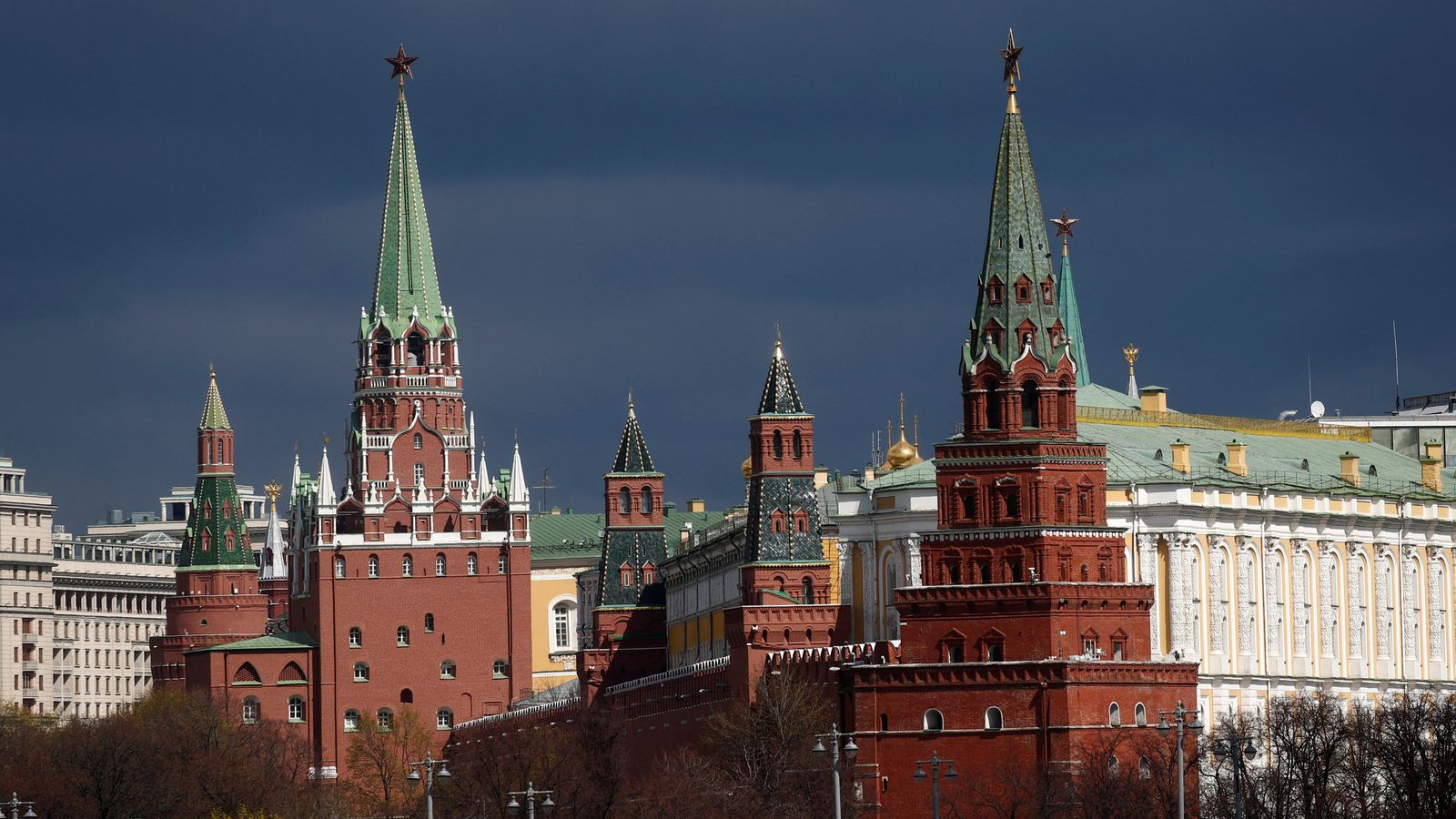
Vladimir Putin will predictably win the Russian election, but it still matters – here’s why

Russia embarks on three days of voting today to reconfirm the inevitable, which is another six-year presidential term for Vladimir Putin.
Given the fact this is simply a matter of going through the motions for Putin and for the public, why does it matter and why does his administration go to such lengths to try to secure a resounding so-called victory?
First, the war-time context.
If turnout and support flag in line with a generalised anxiety regarding how this war ever reaches a conclusion – particularly a war which is pitched as a never-ending conflict with the West – then it will look as though Putin has made a terrible mistake. This he cannot allow.
“It’s like Churchill saying that dictators ride on tigers they dare not dismount,” says David Kankia of the Russian electoral monitoring movement, Golos.
“We have a war crisis, a political crisis inside and outside the country. And if he gets less than he did six years ago, that will mean he doesn’t have the support of his people and that will crush his system.”
It is also a way of proving to those who might feel at the very least some disquiet about the course their country is taking, that they are in the minority.
And a warning, if ever they needed one after the death of Putin’s only real political rival Alexei Navalny, that those who might consider acting on those political reservations do so at huge personal risk.
Read more:
Everything you need to know about Russia’s presidential election
The Kremlin reportedly has a target for Putin in this election. Pic: Reuters
“It is a way of demonstrating that they are outcasts,” says Andrei Kolesnikov of the Carnegie Russia Eurasia Centre.
“You must be mainstream, otherwise we will treat you as traitors, as foreign agents, as pariahs in this society. It is better to be mute, to follow the rules.”
This was a message also driven home by the fact that Boris Nadezhdin, the only independent candidate campaigning on an anti-war ticket, was not even allowed to run.
The three alternative candidates on the ballot from Kremlin-supplicant parliamentary parties have all declared themselves supportive both of the president and of his war.
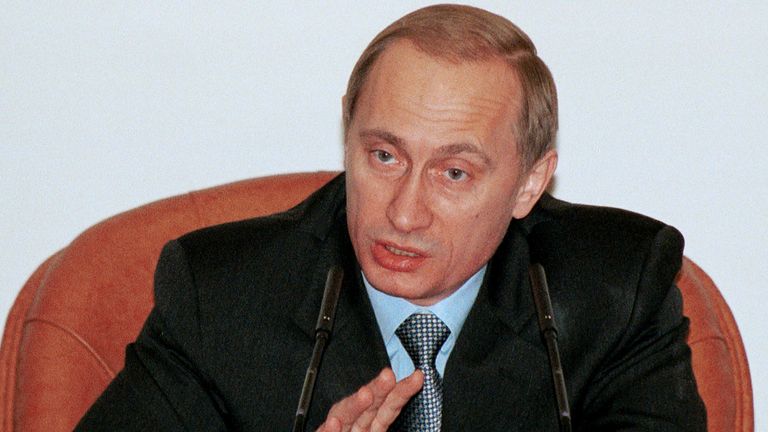
How has Putin been in power so long?
Click to subscribe to the Sky News Daily wherever you get your podcasts
They may secure some votes from those who cannot bring themselves to vote for Putin, but that vote will end up counting for little given the various ways and means by which both over-zealous electoral officials administering the polling stations and electronic voting can be massaged to fit the Kremlin’s requirements.
For the majority in Russia, it is easier to stay passive, to go along with the Kremlin’s voracious messaging, to tick the boxes on all things including at the ballot box and to hope that Putin’s shiny new economic promises filter down their way.
Money in this militarised economy is flooding into regions which haven’t traditionally seen much of it by way of army salaries and payouts to soldiers’ families.
Click to subscribe to the Sky News Daily wherever you get your podcasts
The military-industrial complex is working apace, bringing employment and salaries in its wake. Russia’s economy is robust and Putin mentions it at every chance he has.
Kolesnikov calls it Putin’s Barbieland, an imaginary, happy Russia flush with cash that is buying people’s silence.
“It is not just money as a factor of silencing,” he says.
“Fear is also significant. Not in every case, for sure. Some people can’t say that they are scared of persecution. But the atmosphere in the country is not pleasant.”
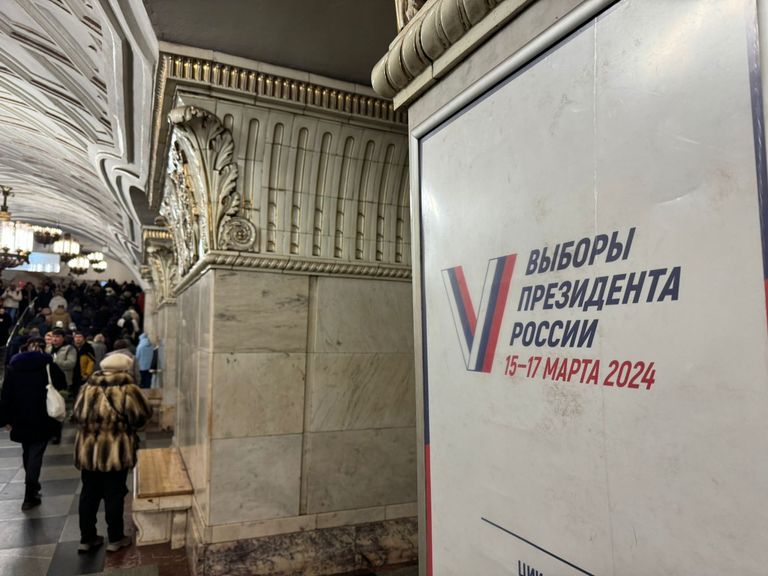
Adverts for the Russian election
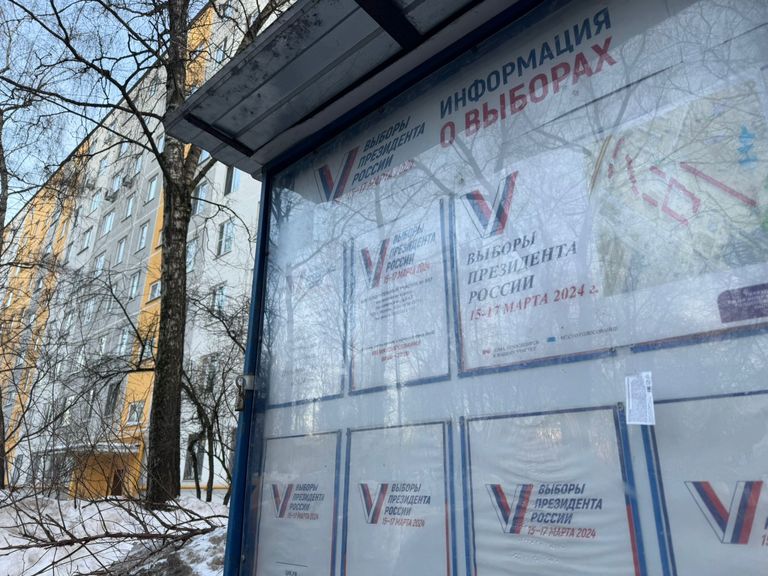
Remember that when you see the government’s turnout numbers, when you see polling for Putin at 80% which is reportedly the Kremlin’s target.
This is a country purporting to be normal, holding normal elections, crushing, imprisoning, even killing its opposition, waging war on its next-door neighbour in the name of “self-defence”.
But people know and feel that there is something wrong. The war is a disquieting factor. The atmosphere is not normal and it is not pleasant.
Read more:
Navalny ally attacked with hammer
Communists ask FSB to probe ‘West’s role’ in Stalin’s death

“We will no longer tolerate criticism of our democracy. Our democracy is the best,” Dmitry Peskov, the Kremlin spokesman, told a youth forum last week, as though democracy is anything the Kremlin wants it to be.
But it is not. Democracies allow for a free and fair vote, they do not encourage state workers to vote a certain way, knowing that their jobs hang in the balance if they do not.
Democracies do not change the constitution to allow the incumbent to stay in power into his third decade. Democracies allow for vibrant competition and here there is none.
Black is not white, whatever the Kremlin says.
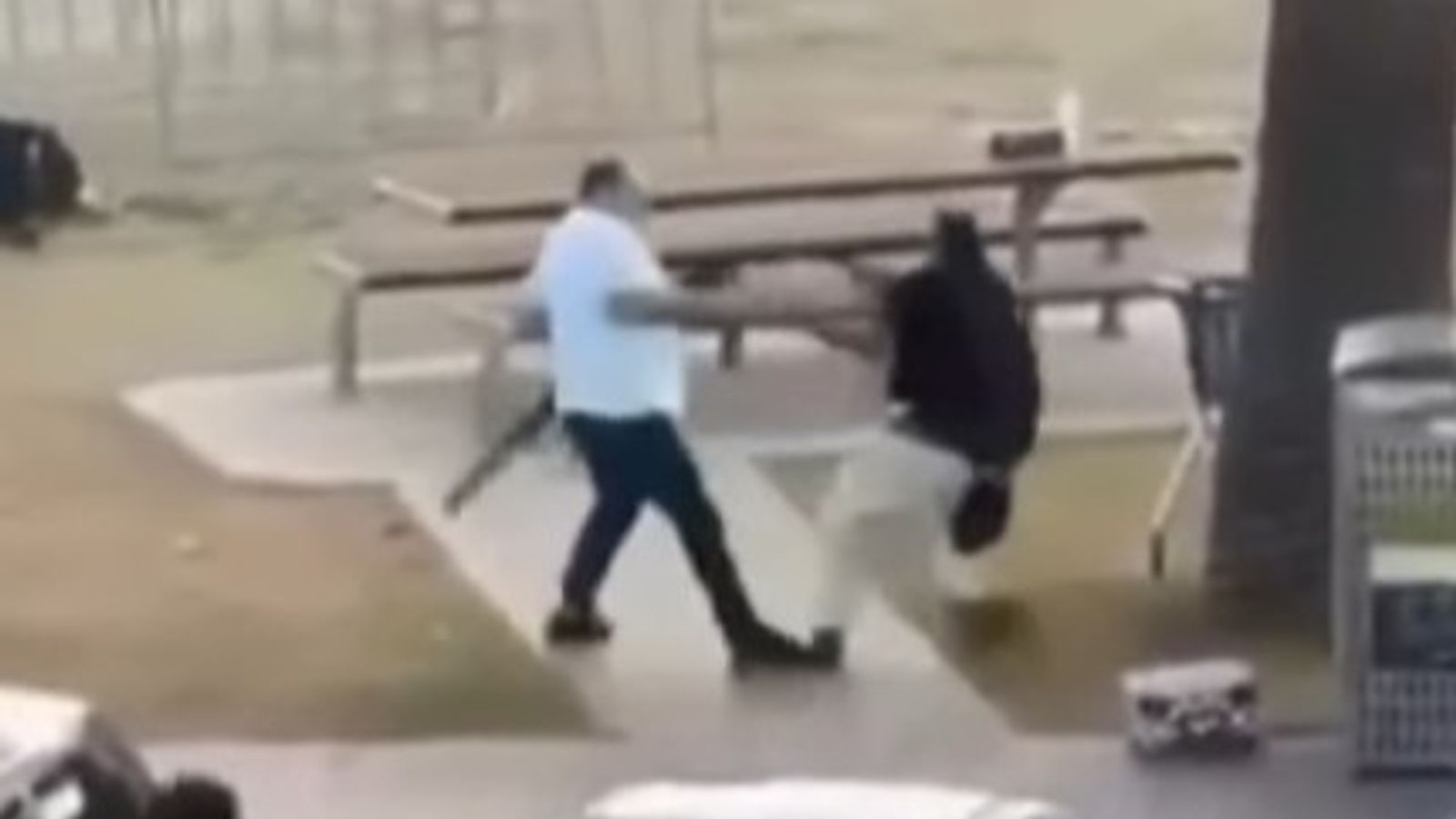
A bystander hailed a hero after he tackled and disarmed one of the gunmen in the Bondi Beach shooting is a shop owner.
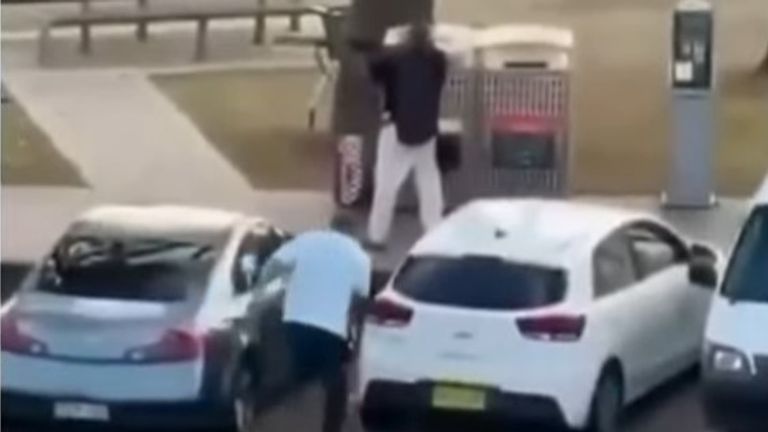
The man, named by a relative as 43-year-old Ahmed al Ahmed, was seen in a video running up to the attacker from behind and then grabbing the shotgun from his hands before pointing the weapon back at him.
The footage then showed the terrorist heading towards a bridge where another gunman was located, while the bystander placed the gun beside a tree.
Ahmed al Ahmed (in a white T-shirt) is seen in a video running up to a gunman from behind
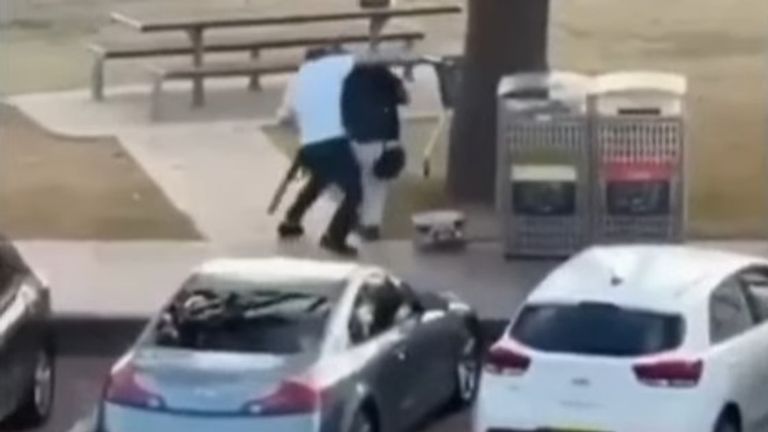
Mr Ahmed then wrestles with the attacker
Live updates on Sydney shooting
Mr Ahmed, who was wearing a white T-shirt, was shot twice in the incident and was due to have surgery, his cousin, Mustafa, has revealed.
In a video on 7News, Mr Ahmed appeared to have a bloodied arm and hand, and was helped by other people near the scene in the Australian city.
At least 11 people were killed and 29 others injured in the attack when two gunmen opened fire from a bridge on crowds at a Jewish event around 6pm local time on Sunday evening.
More than 1,000 people had been at the gathering which was celebrating the festival of Hanukkah.
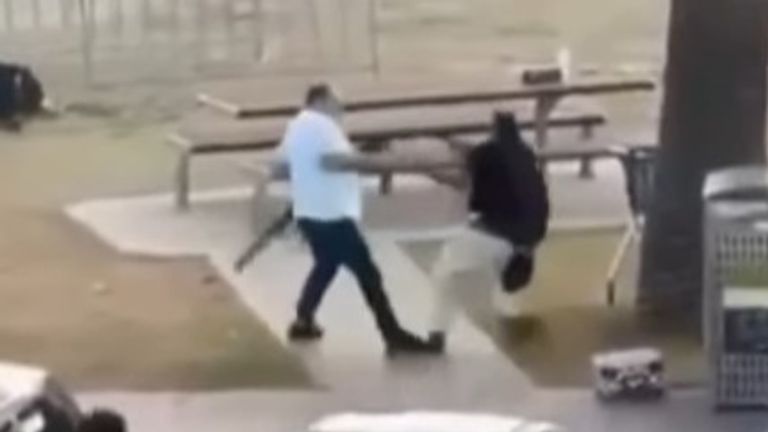
Mr Ahmed manages to get the gun off the terrorist
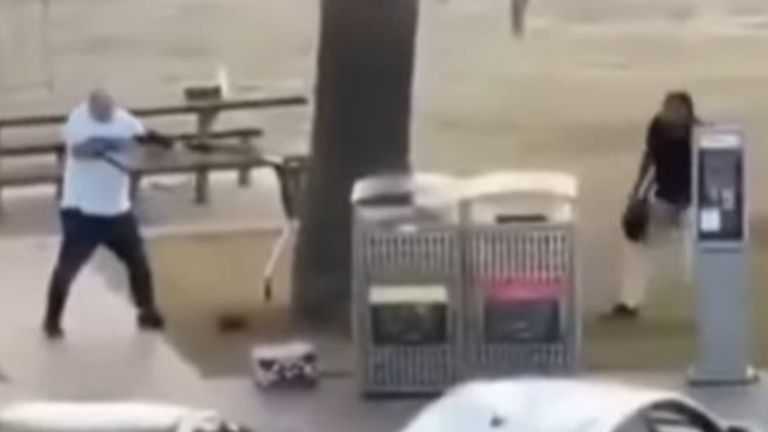
The bystander then points the weapon at the attacker who moves away towards a bridge
A gunman was killed and another was in a critical condition following the shooting.
One of the suspects was 24-year-old Naveed Akram.
His driver’s licence says he lives in Bonnyrigg, a suburb of Sydney. The identity of the other suspected attacker is not known.
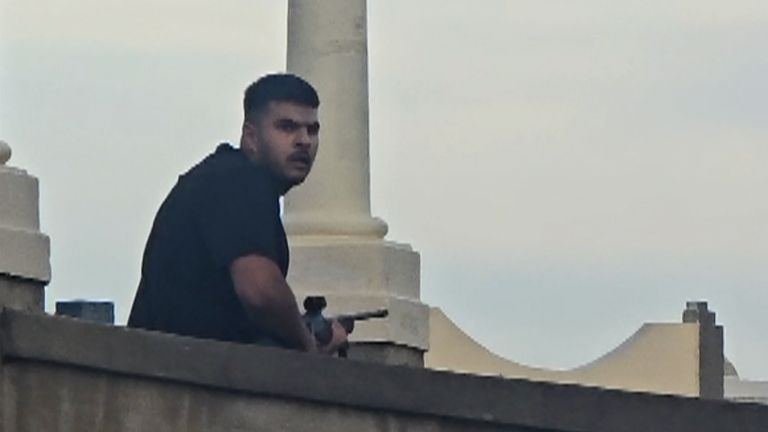
Naveed Akram, 24, was one of the suspects
Mustafa said father-of-two Mr Ahmed, who owns a fruit shop in the Sydney suburb of Sutherland, did not have any experience with guns but was just walking past when he decided to step in.
He told 7News: “He’s in hospital and we don’t know exactly what’s going on inside.
“We do hope he will be fine. He’s a hero, 100%.”
Read more:
What we know about mass shooting
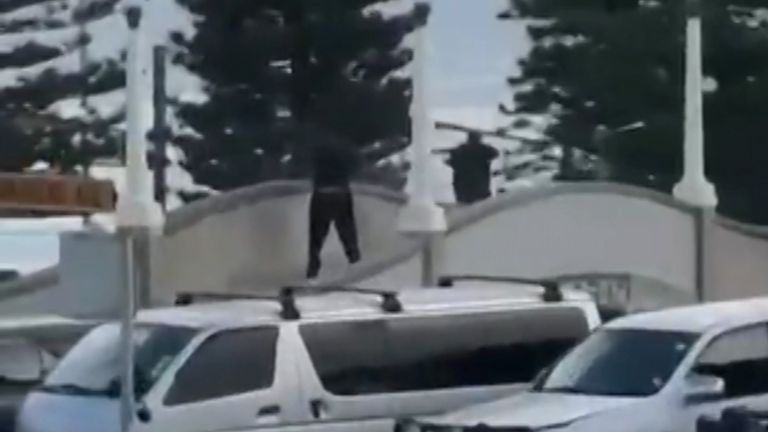
One of the suspected gunmen has been named as 24-year-old Naveed Akram.
The footage of the bystander’s actions spread quickly on social media as people praised the man for his bravery, saying his actions had potentially saved many lives.
“Australian hero (random civilian) wrestles gun off attacker and disarms him. Some people are brave and then some people are… whatever this is,” one person said on X, sharing the video.
“This Australian man saved countless lives by stripping the gun off one of the terrorists at Bondi beach. HERO,” another said.
Chris Minns, the premier of New South Wales state, where Sydney is located, said it was the “most unbelievable scene I’ve ever seen”.
“A man walking up to a gunman who had fired on the community and single-handedly disarming him, putting his own life at risk to save the lives of countless other people.”
“That man is a genuine hero, and I’ve got no doubt that there are many, many people alive tonight as a result of his bravery,” he added.
The country’s prime minister Anthony Albanese praised the actions of Australians who had “run towards danger in order to help others”.
“These Australians are heroes and their bravery has saved lives,” he told a news conference.
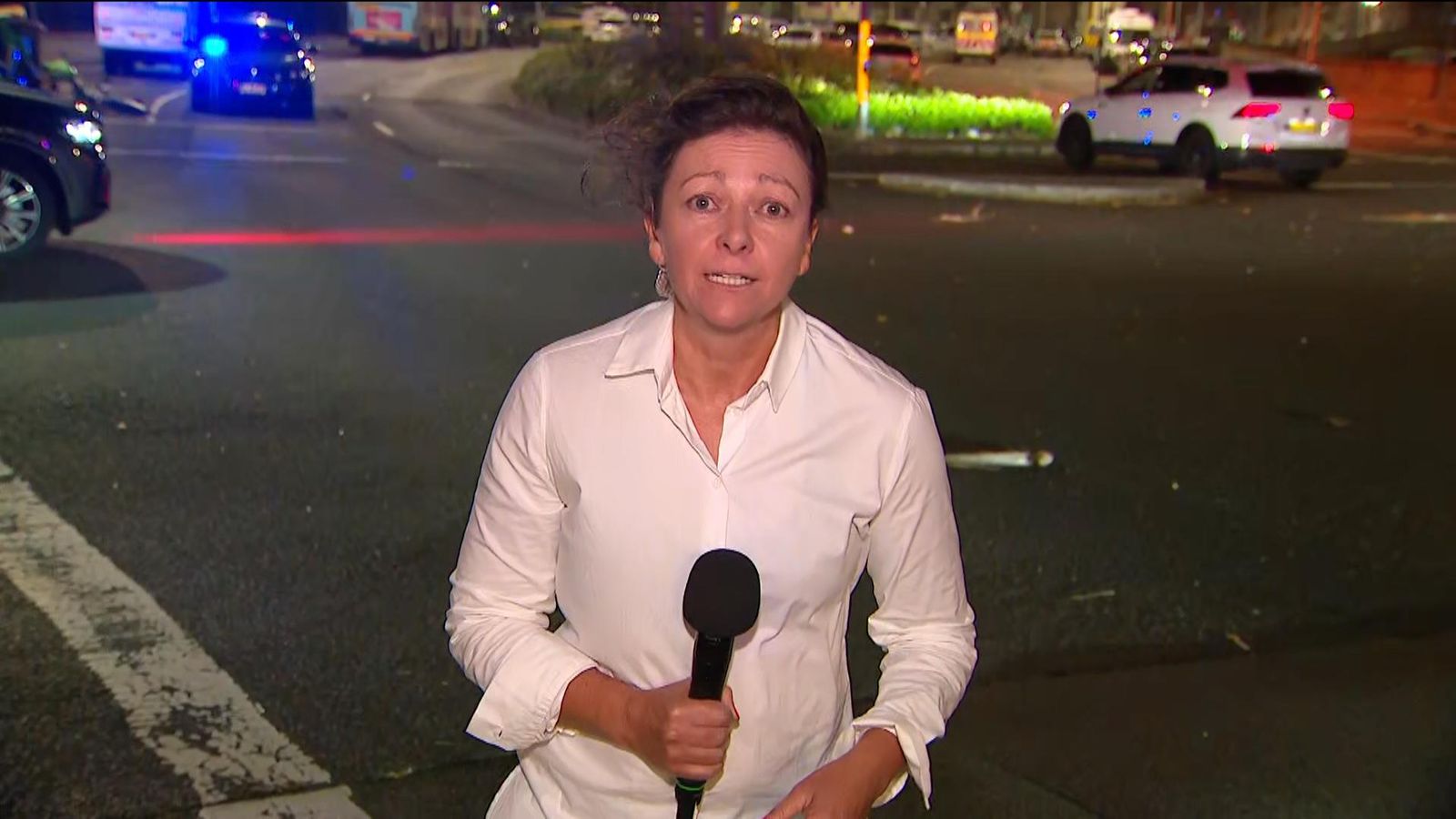
Messages were sweeping across Sydney within minutes of the attack at Bondi Beach.
Parents messaged their children and teenagers, who had been enjoying a late afternoon swim at Bondi.
Witnesses said police were on the scene quickly, and the streets of Sydney’s eastern suburbs were full of police cars and ambulances on their way to Bondi.
Follow live: 11 people killed at event celebrating Hanukkah
When we arrived, there were still dozens of people processing what had happened, and everywhere – shock.
Witnesses told us that when the gunfire started some people took cover in the North Bondi Surf Life Saving Club. Once the threat was over, lifeguards helped the injured and used surfboards to carry them out.
Witnesses tell Sky’s Nicole Johnston of Bondi ‘warzone’
Some people were clearly traumatised and provided graphic detail of witnessing the shooting and seeing people killed in front of them.
A photographer, Danny, was covering the Jewish holiday event.
Read more: What we know so far
He said he “locked eyes” with one of the gunmen, who then fired towards him. Danny said he was grazed by a bullet. He kept filming during the shooting, while taking cover.
Sam, from France, was working at Bondi. He went to the scene of the attack and saw almost a dozen people lying on the ground covered in blood. Sam described it as like a “war zone”.
Rabbi Lei Wolff, from Central Synagogue in Sydney, went to Bondi as soon as he heard about the mass shooting. A dear friend of his, Rabbi Eli Schlanger, was killed in the attack.
Rabbi Wolff has called on people around the world to stand with Australia’s Jewish community against terrorism.
World
Israel says Hamas commander – who was one of the architects of the 7 October 2023 attacks – killed in strike
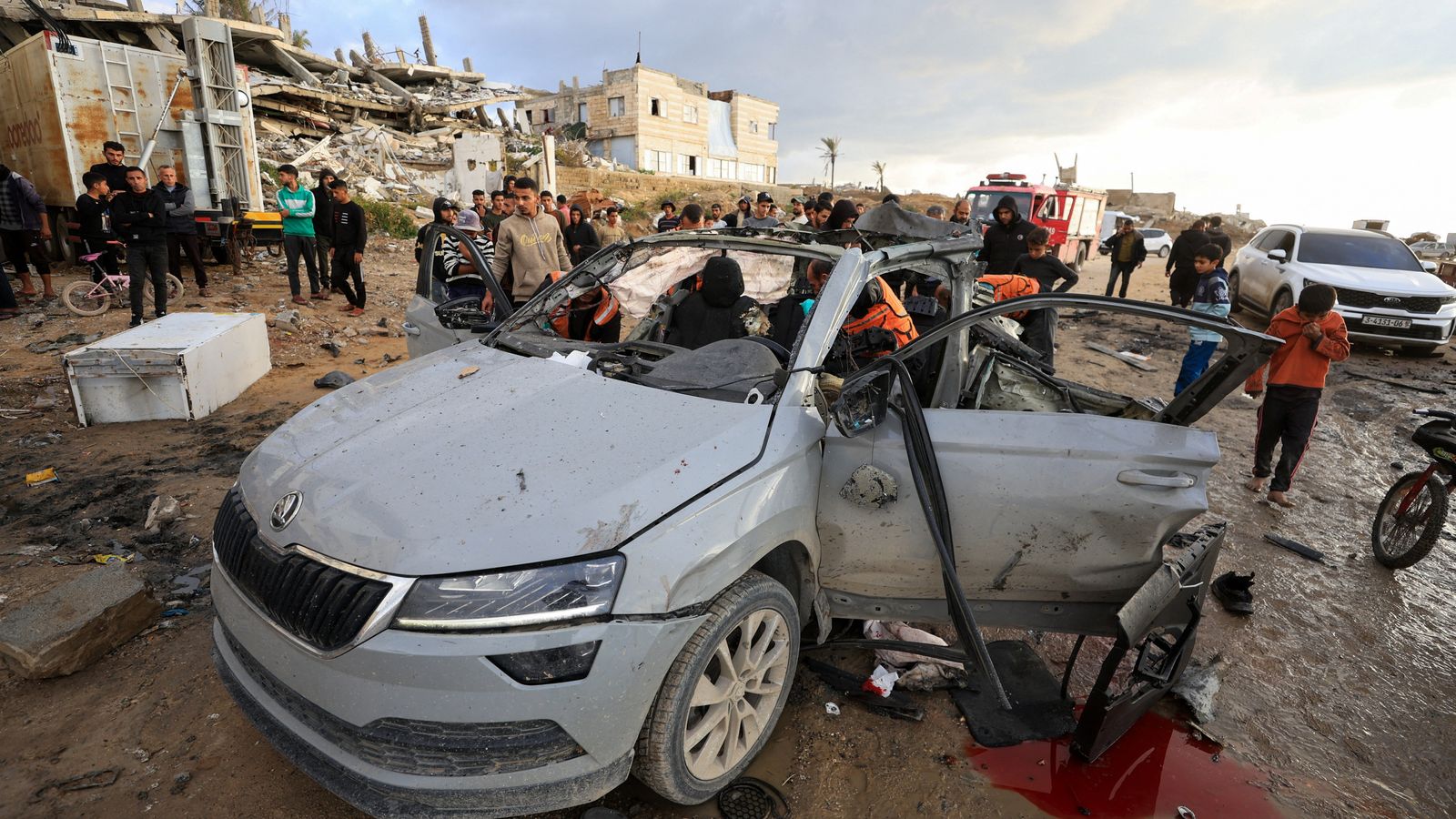
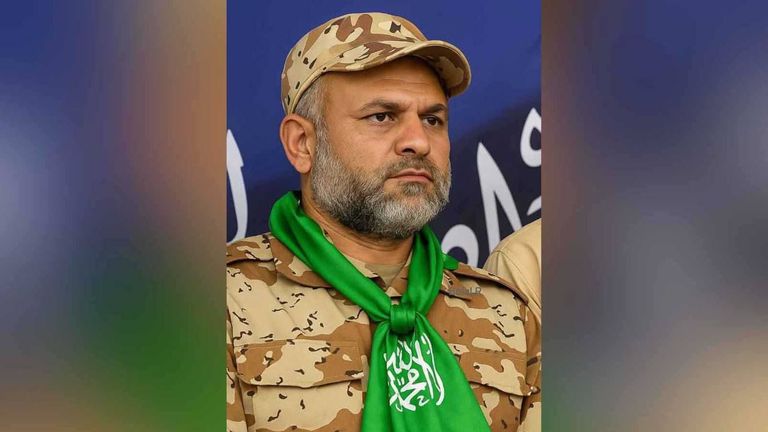
A senior Hamas commander who was one of the architects of the 7 October 2023 attacks on Israel has been killed in a strike on Gaza City, according to the country’s military.
Raed Saad was targeted in response to an attack by Hamas in which an explosive device injured two soldiers on Saturday, Israeli Prime Minister Benjamin Netanyahu and Defence Minister Israel Katz said in a joint statement.
It is the highest-profile killing of a senior Hamas figure since the Gaza ceasefire came into effect in October.
Gaza health authorities said the attack on a car in Gaza City killed five people and wounded at least 25 others, but there has been no confirmation from Hamas or medics that Saed was among the dead.
Raed Saed
Hamas condemned the attack in a statement as a violation of the ceasefire agreement but stopped short of threatening retaliation.
An Israeli military official described Saed as a high-ranked Hamas member who helped establish and advance the group’s weapons production network.
“In recent months, he operated to re-establish Hamas’ capabilities and weapons manufacturing, a blatant violation of the ceasefire,” the official said.
The 10 October ceasefire has enabled hundreds of thousands of Palestinians to return to Gaza City’s ruins after a war that began after Hamas-led militants killed 1,200 people, most of them civilians, and seized 251 hostages in an attack on southern Israel.
Israel’s retaliatory offensive has killed more than 70,700 Palestinians, most of them civilians, according to health officials in Gaza.
Israel has pulled troops back from city positions, and aid flows have increased, but violence has not completely stopped.
Palestinian health authorities say Israeli forces have killed at least 386 people in strikes in Gaza since the truce, while Israel says three of its soldiers have been killed.
-
 Sports2 years ago
Story injured on diving stop, exits Red Sox game
-
 Sports3 years ago
‘Storybook stuff’: Inside the night Bryce Harper sent the Phillies to the World Series
-
 Sports2 years ago
Game 1 of WS least-watched in recorded history
-
 Sports3 years ago
Button battles heat exhaustion in NASCAR debut
-
 Sports3 years ago
MLB Rank 2023: Ranking baseball’s top 100 players
-
Sports4 years ago
Team Europe easily wins 4th straight Laver Cup
-
 Environment3 years ago
Japan and South Korea have a lot at stake in a free and open South China Sea
-
 Environment1 year ago
Here are the best electric bikes you can buy at every price level in October 2024