
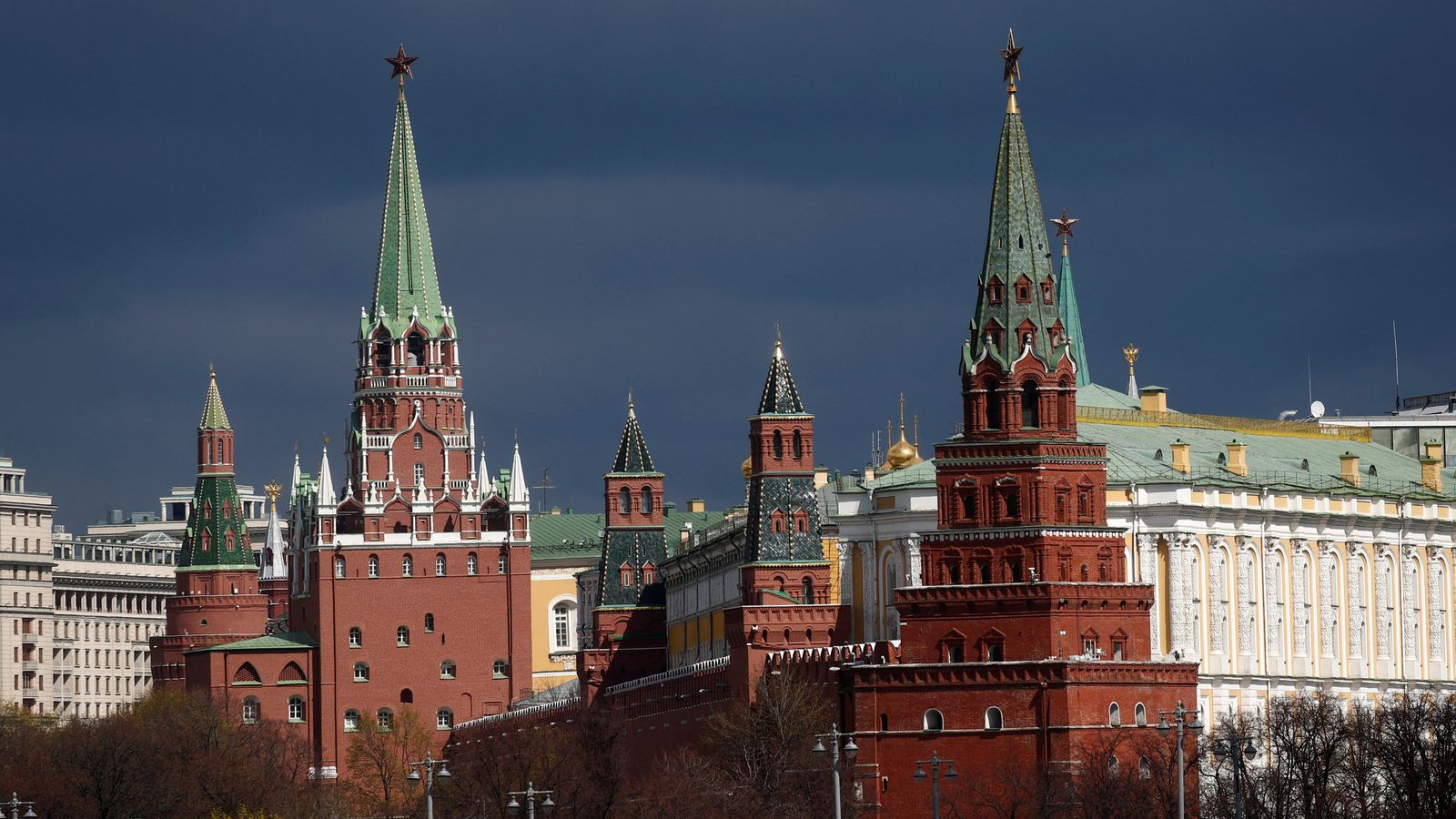
Vladimir Putin will predictably win the Russian election, but it still matters – here’s why

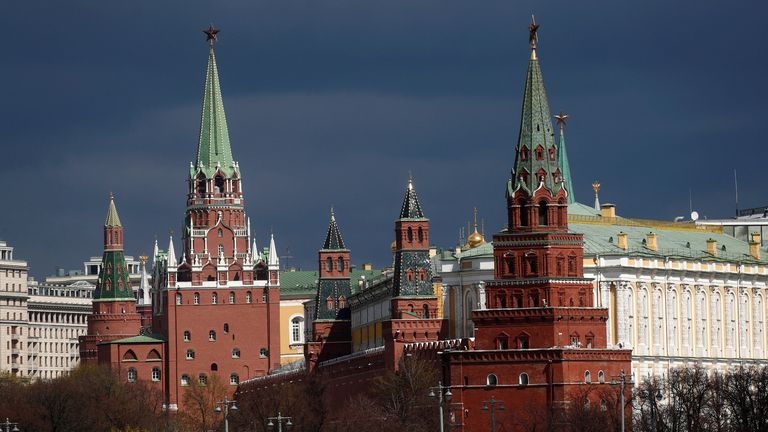
Russia embarks this Friday on three days of voting to reconfirm the inevitable, which is another six-year presidential term for Vladimir Putin.
Given the fact this is simply a matter of going through the motions for Putin and for the public, why does it matter and why does his administration go to such lengths to try to secure a resounding so-called victory?
First, the war-time context.
If turnout and support flag in line with a generalised anxiety regarding how this war ever reaches a conclusion – particularly a war which is pitched as a never-ending conflict with the West – then it will look as though Putin has made a terrible mistake. This he cannot allow.
“It’s like Churchill saying that dictators ride on tigers they dare not dismount,” says David Kankia of the Russian electoral monitoring movement, Golos.
“We have a war crisis, a political crisis inside and outside the country. And if he gets less than he did six years ago, that will mean he doesn’t have the support of his people and that will crush his system.”
It is also a way of proving to those who might feel at the very least some disquiet about the course their country is taking, that they are in the minority.
And a warning, if ever they needed one after the death of Putin’s only real political rival Alexei Navalny, that those who might consider acting on those political reservations do so at huge personal risk.
Read more:
Everything you need to know about Russia’s presidential election
The Kremlin reportedly has a target for Putin in this election. Pic: Reuters
“It is a way of demonstrating that they are outcasts,” says Andrei Kolesnikov of the Carnegie Russia Eurasia Centre.
“You must be mainstream, otherwise we will treat you as traitors, as foreign agents, as pariahs in this society. It is better to be mute, to follow the rules.”
This was a message also driven home by the fact that Boris Nadezhdin, the only independent candidate campaigning on an anti-war ticket, was not even allowed to run.
The three alternative candidates on the ballot from Kremlin-supplicant parliamentary parties have all declared themselves supportive both of the president and of his war.
They may secure some votes from those who cannot bring themselves to vote for Putin, but that vote will end up counting for little given the various ways and means by which both over-zealous electoral officials administering the polling stations and electronic voting can be massaged to fit the Kremlin’s requirements.
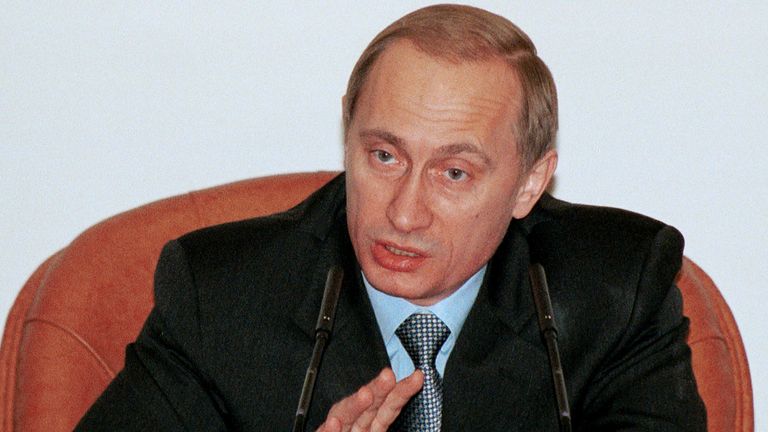
How has Putin been in power so long?
For the majority in Russia, it is easier to stay passive, to go along with the Kremlin’s voracious messaging, to tick the boxes on all things including at the ballot box and to hope that Putin’s shiny new economic promises filter down their way.
Money in this militarised economy is flooding into regions which haven’t traditionally seen much of it by way of army salaries and payouts to soldiers’ families.
The military-industrial complex is working apace, bringing employment and salaries in its wake. Russia’s economy is robust and Putin mentions it at every chance he has.
Kolesnikov calls it Putin’s Barbieland, an imaginary, happy Russia flush with cash that is buying people’s silence.
“It is not just money as a factor of silencing,” he says.
“Fear is also significant. Not in every case, for sure. Some people can’t say that they are scared of persecution. But the atmosphere in the country is not pleasant.”
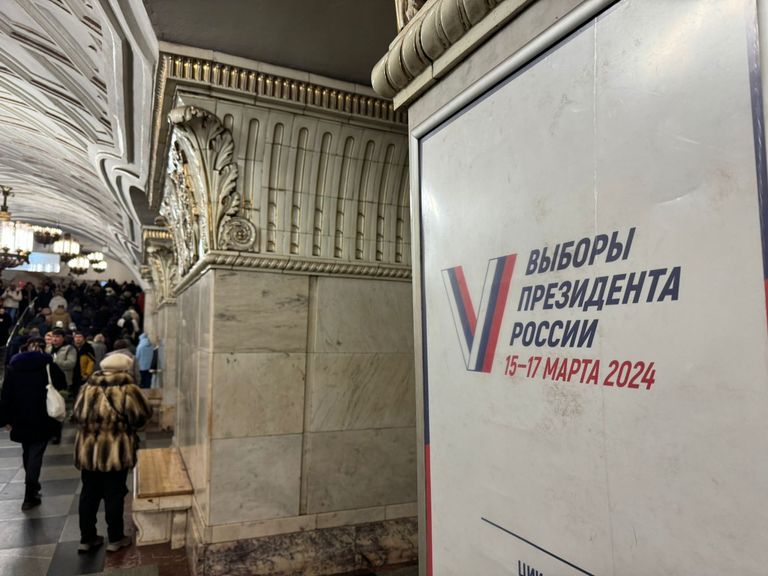
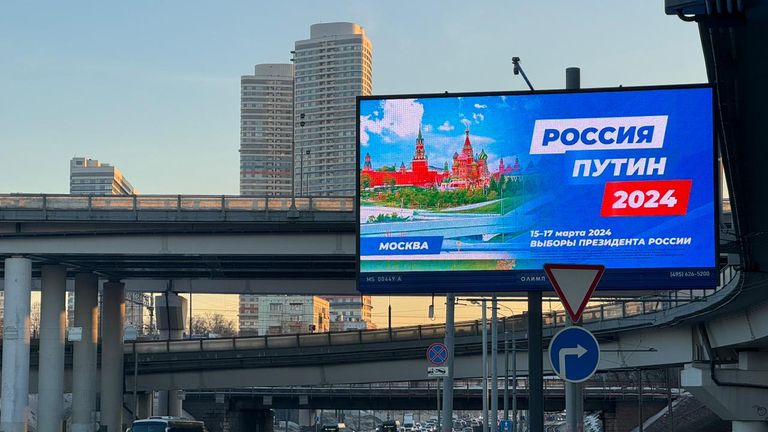
Adverts for the Russian election
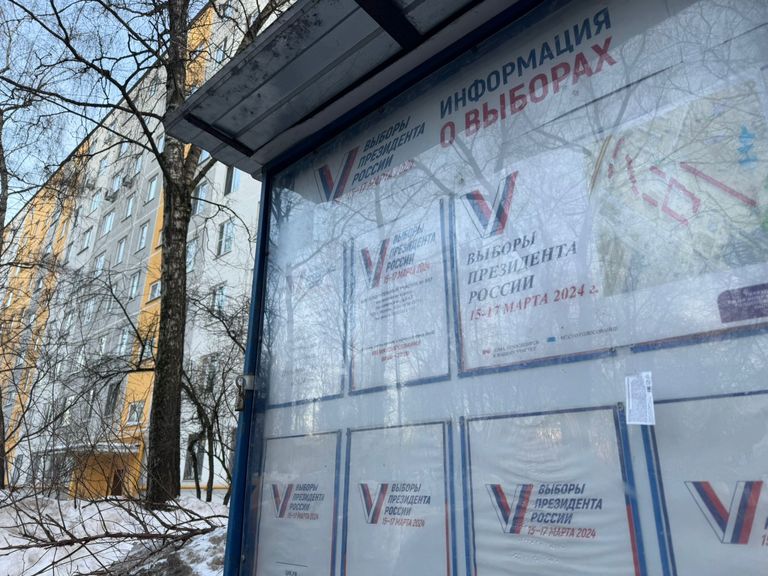
Remember that when you see the government’s turnout numbers, when you see polling for Putin at 80% which is reportedly the Kremlin’s target.
This is a country purporting to be normal, holding normal elections, crushing, imprisoning, even killing its opposition, waging war on its next-door neighbour in the name of “self-defence”.
But people know and feel that there is something wrong. The war is a disquieting factor. The atmosphere is not normal and it is not pleasant.
Read more:
Alexei Navalny ally Leonid Volkov attacked with hammer
Communists ask FSB to investigate West’s involvement in Stalin’s death
“We will no longer tolerate criticism of our democracy. Our democracy is the best,” Dmitry Peskov, the Kremlin spokesman, told a youth forum last week, as though democracy is anything the Kremlin wants it to be.
But it is not. Democracies allow for a free and fair vote, they do not encourage state workers to vote a certain way, knowing that their jobs hang in the balance if they do not.
Democracies do not change the constitution to allow the incumbent to stay in power into his third decade. Democracies allow for vibrant competition and here there is none.
Black is not white, whatever the Kremlin says.
World
Egypt and Iran complain to FIFA after World Cup match scheduled to coincide with Seattle Pride event
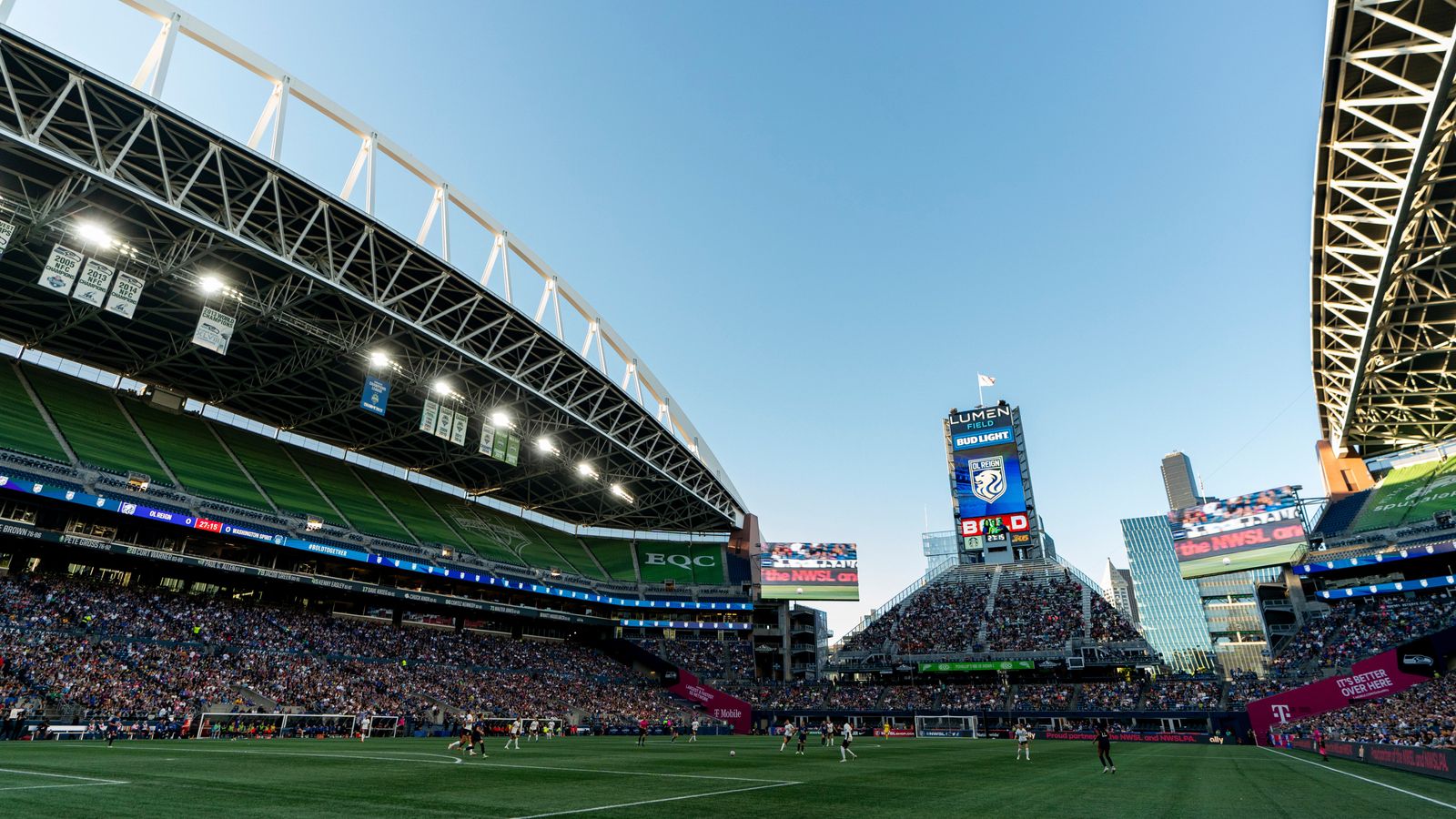
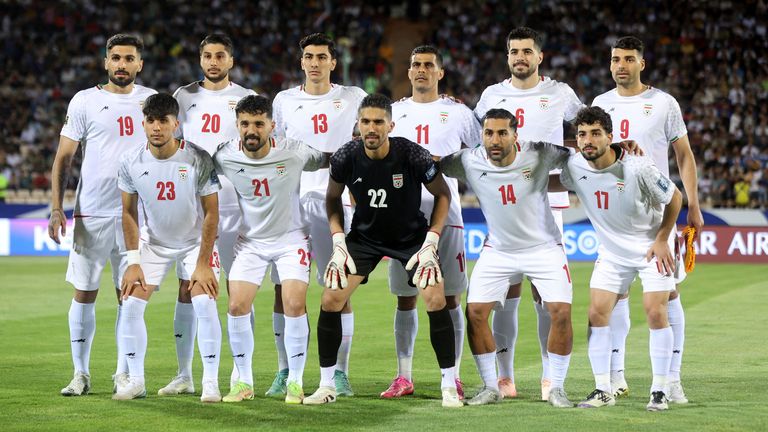
Iran and Egypt have complained after FIFA scheduled a World Cup match between the two nations in Seattle to coincide with the city’s LGBTQ+ Pride festival.
Seattle’s PrideFest 2026, which organisers say regularly sees more than 200,000 participants, takes place on 27 and 28 June – immediately following the match.
Local organisers have said the 26 June game at the Seattle Stadium will include a “once-in-a-lifetime moment to showcase and celebrate LGBTQIA+ communities in Washington”.
Iran players pose for a team group photo before a match against North Korea in June 2025. Pic: Reuters
In Iran, where gay couples can face the death penalty, the president of Iran’s Football Federation, Mehdi Taj, condemned the decision to use Seattle as a venue and the timing of the match.
Mr Taj told Iranian state TV: “Both Egypt and we have objected, because this is an unreasonable and illogical move that essentially signals support for a particular group, and we must definitely address this point.”
He said Iran would bring up the issue at a FIFA Council meeting in Qatar next week.
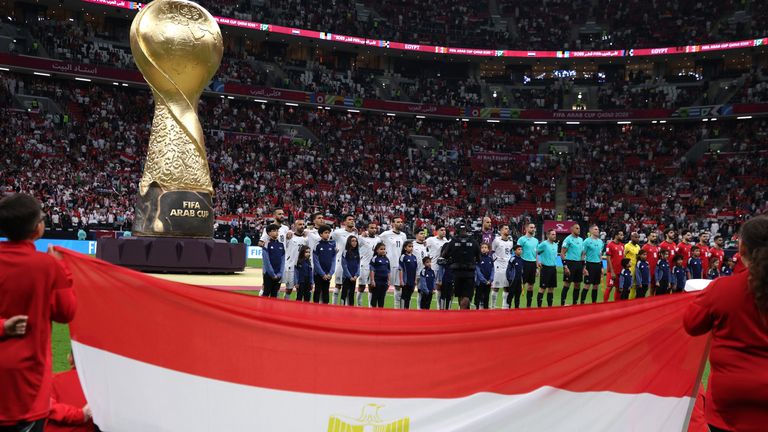
The Egypt players line up during the national anthems before the match against Jordan. Pic: Reuters
The football federation in Egypt, where Human Rights Watch says people from LGBTQ+ communities face persecution, said in a statement that it had written to FIFA “categorically rejecting any activities related to supporting homosexuality during the match between the Egyptian national team and Iran.”
The letter also stated: “Information had circulated indicating the local organising committee’s decision and plans to hold some activities related to supporting homosexuality during that match” and the federation “completely rejects such activities, which directly contradict the cultural, religious and social values in the region, especially in Arab and Islamic societies”.
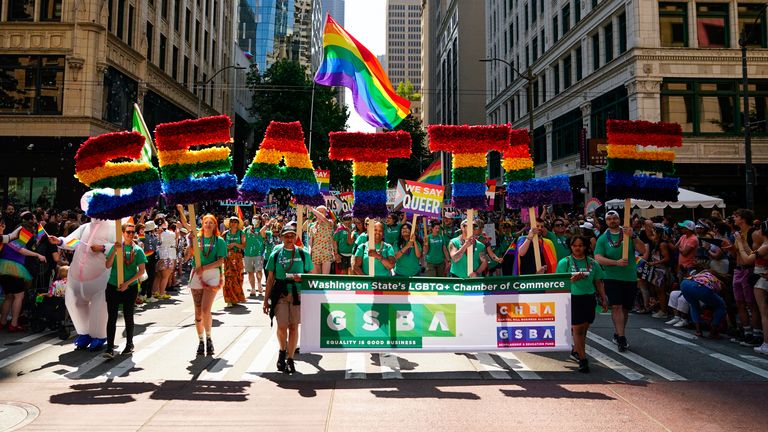
The Seattle Pride festival takes place in late June, attracting hundreds of thousands of people every year, like in 2023. File pic: AP
In Seattle, the local organising committee said it was “moving forward as planned with our community programming outside the stadium during Pride weekend and throughout the tournament,” having already promoted an art contest ahead of the match.
Read more:
Man charged with racially abusing Antoine Semenyo
Steven Hutton: Three men and one woman jailed over ‘frenzied’ Dundee murder
It added: “We get to show the world that in Seattle, everyone is welcome.”
Seattle PrideFest has been organised in the city since 2007 by a nonprofit group which designated the 26 June match for celebration before FIFA carried out the World Cup draw on Friday.
On Saturday, FIFA announced the Egypt-Iran game had been allocated to Seattle instead of Vancouver, where the teams’ group rivals Belgium and New Zealand will play at the same time.
FIFA has been asked for a comment.
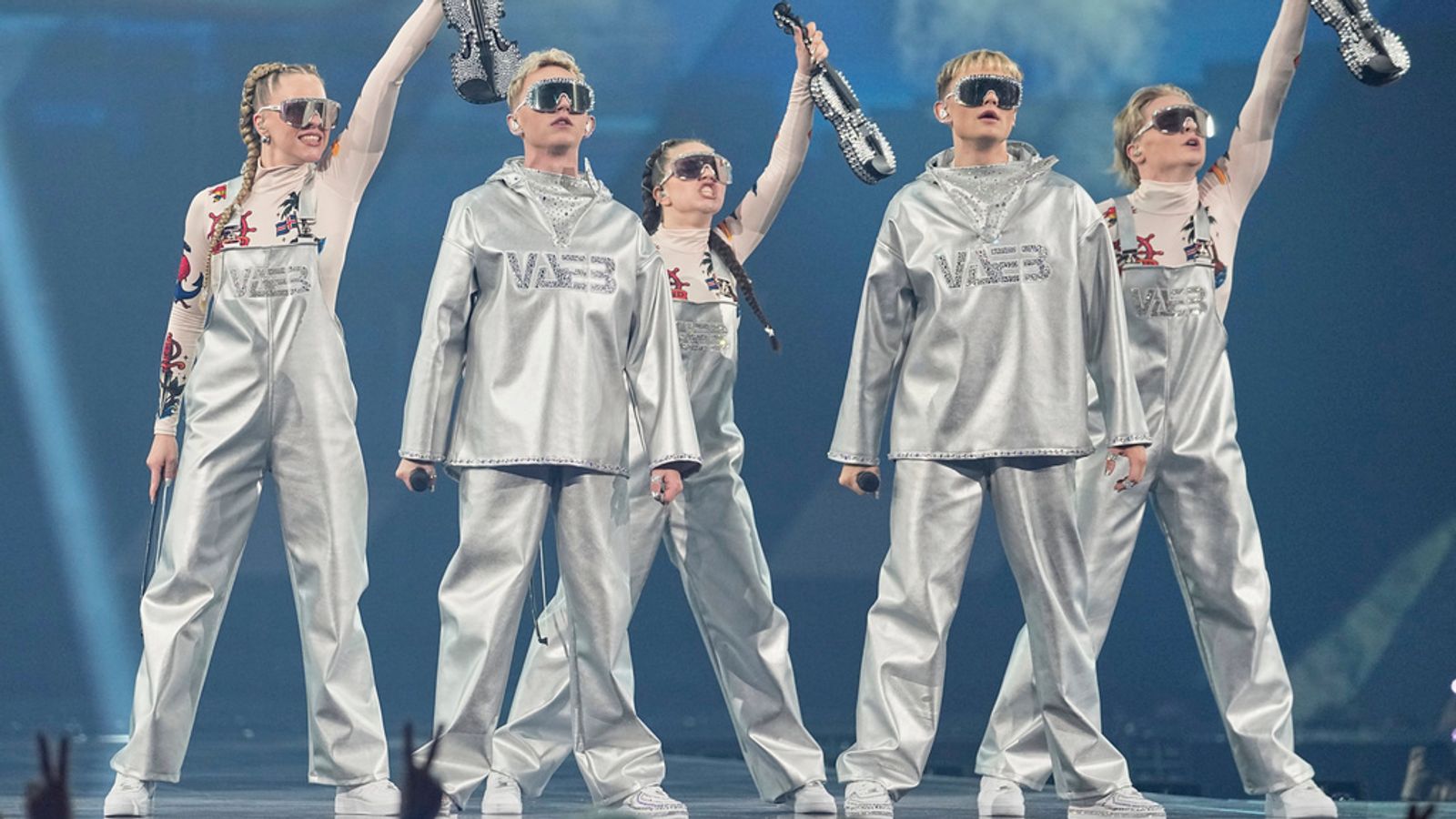
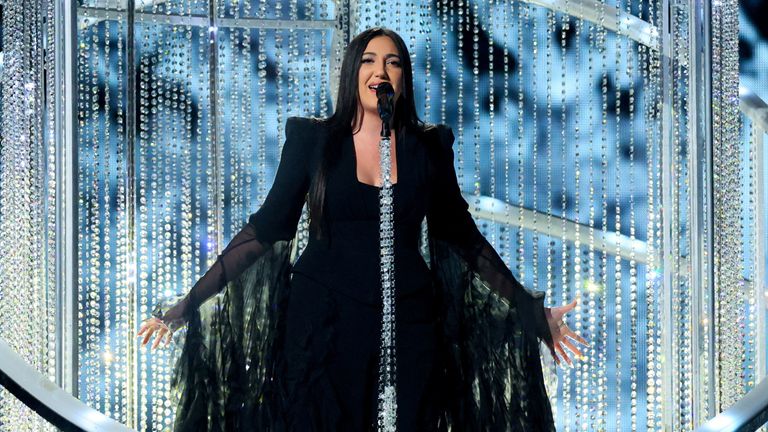
Iceland has announced it is boycotting next year’s Eurovision over Israel’s participation in the competition, saying taking part would “neither be a source of joy nor peace”.
The announcement from Iceland‘s RUV follows withdrawals by broadcasters from the Netherlands, Spain, Ireland and Slovenia.
In a statement, RUV said participation of Israeli national broadcaster KAN had “created disunity” among members of the European Broadcasting Union (EBU), which organises Eurovision, and the general public.
Israel‘s place in the contest was confirmed at the EBU’s general assembly last week.
Yuval Raphael represented Israel at this year’s competition in Switzerland. Pic: Reuters/ Denis Balibouse
The past two events have attracted protests and fan boycotts over Israel’s inclusion amid the country’s military action in Gaza. This year, there were also allegations that voting had been manipulated in favour of their contestant.
After growing criticism, members were asked to vote in a secret ballot last week, on whether they were happy with tougher new rules introduced in November, or whether they wanted a second vote on participation for 2026.
The majority agreed the changes were enough, although Sky News understands 11 countries were against accepting these without a further vote.
Dutch broadcaster AVROTROS, Spain’s RTVE, Ireland’s RTE and Slovenia’s RTV immediately issued statements announcing their withdrawal.
Becoming the fifth broadcaster to pull out, RUV made the announcement following a board meeting. It said that while the new rules address many of the concerns it has raised, it believes there are “still doubts” about whether the changes are enough.
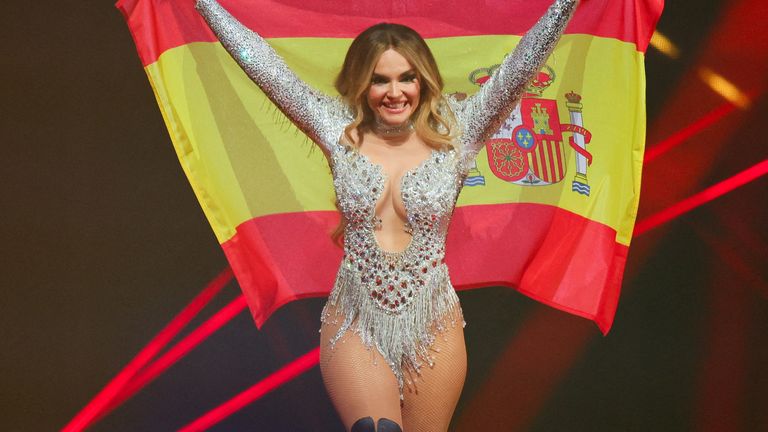
Spain, represented by Melody earlier this year, is among the countries boycotting the event. Pic: REUTERS/Denis Balibouse
“RUV has repeadly raised concerns that various Icelandic stakeholders, such as artist associations and the general public, were opposed to participation in the contest,” the statement said. “Furthermore, RUV had requested the EBU to exclude KAN from the contest in accordance to precedents.
“It is a complex matter which has already damaged the contest’s reputation and EBU, emphasising the necessity of a solution for all concerned parties.”
Austria, which will host next year’s show, last week said it was pleased to see Israel allowed to participate. Roland Weissmann, director-general for Austrian broadcaster ORF, said the contest was a “competition for broadcasters, not governments”.
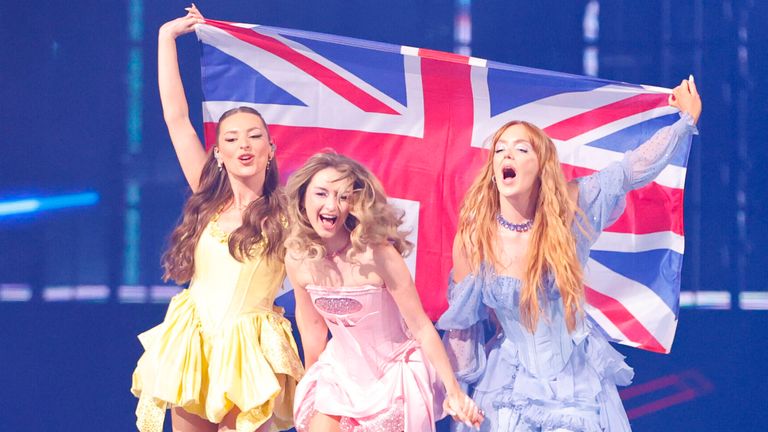
Remember Monday represented the UK in 2025. The BBC has said it supports the EBU vote decision. Pic: MANDOGA MEDIA/picture-alliance/dpa/AP
The BBC, which broadcasts Eurovision in the UK, also said it supported the decision.
Earlier on Wednesday, Poland’s TVP confirmed its participation.
In a statement, the broadcaster said it was aware of the scale of the tension surrounding the competition and understood the emotions and concerns raised.
“However, we believe that Eurovision still has a chance to once again become a space filled with music. And only music,” a TVP statetment said.
Despite some pressure from the cultural union in Belgium for a boycott, broadcaster RTBF also confirmed its participation last week.
But the walk-outs cast a shadow over what is meant to be a celebration of the unifying power of music.
Countries have pulled out or been banned in previous years – most notably Russia in 2022, just days after the invasion of Ukraine – but this is perhap’s Eurovision’s biggest political crisis.
Noa Kirel, who represented Israel in 2023, told Sky News in an interview in October that while the situation now is “very different” to when she took part in May of that year, she believes it should not be about politics and must “focus on the music”.
Wednesday marked the final day for national broadcasters to announce whether they plan to participate next year.
The EBU says a final list of competing nations will be published before Christmas.
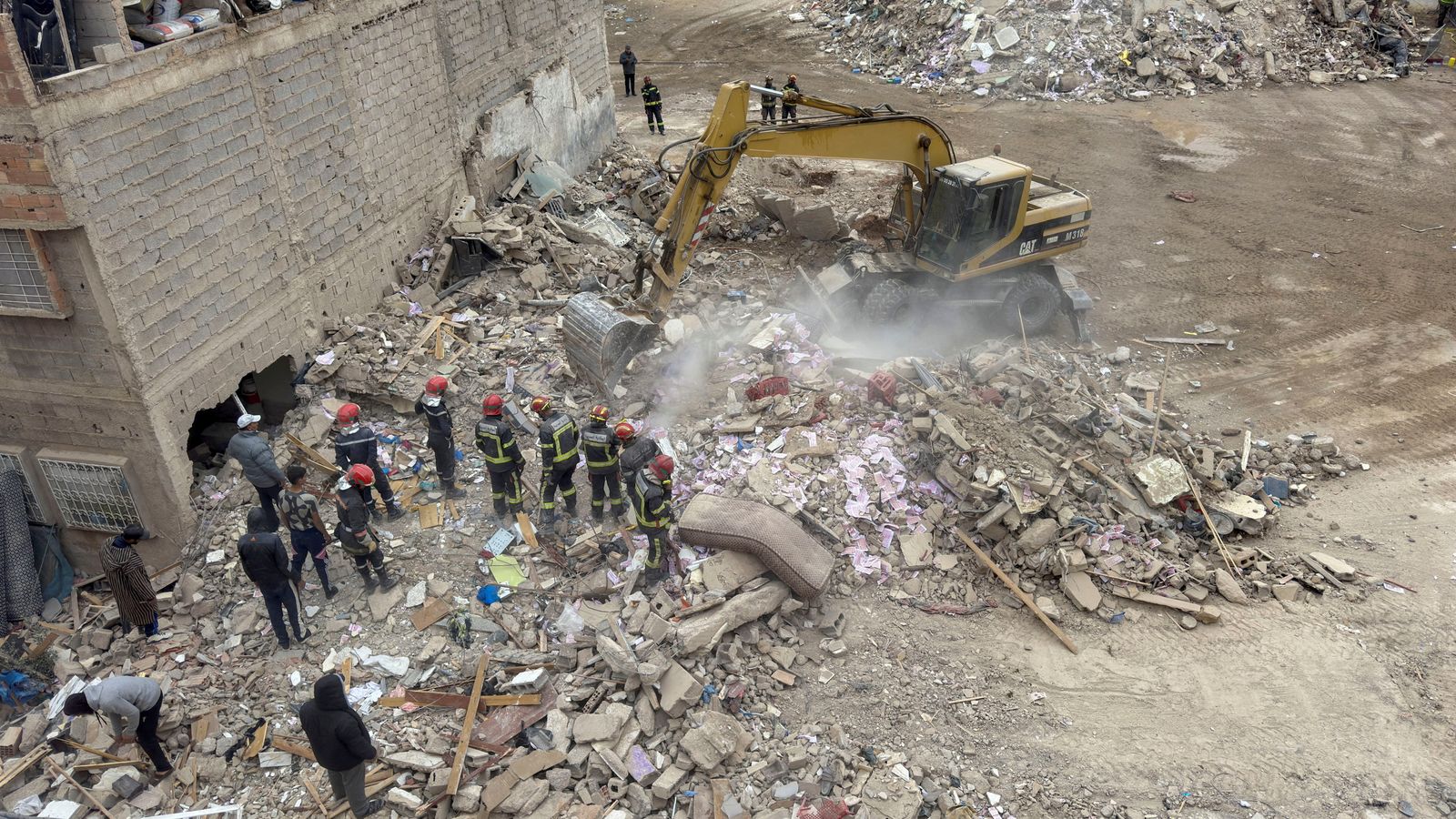
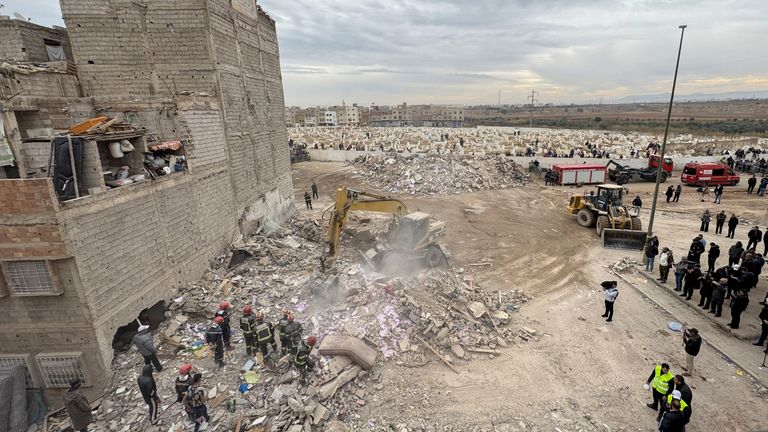
At least 22 people are dead and more than a dozen injured after a double building collapse in Morocco.
The disaster in Fez unfolded while one building was hosting an Aqiqah, a traditional Muslim celebration marking the birth of a child.
This building was home to eight families, the local authorities said, while the other was unoccupied.
Pic: Reuters
A survivor, who lost his wife and three children in the overnight collapse, told a local TV station that rescuers had only been able to retrieve one body.
Another survivor, interviewed by SNRT News, Morocco’s national broadcaster, said: “My son who lives upstairs told me the building is coming down.”
She added: “When we went out, we saw the building collapsing.”
Witnesses said the buildings had shown signs of cracking for some time, when interviewed at the scene by SRNT.
Both buildings, in the Al-Mustaqbal neighbourhood, were four-storeys high.
Announcing an investigation, the Fez prosecutor said 16 people had also been injured, citing preliminary figures.
Some 38,800 buildings across the country are classified as being at risk of collapse, according to Adib Ben Ibrahim, housing secretary of state.
The latest collapse is one of the worst in Morocco since a minaret fell in the historic northern city of Meknes, killing 41 people in 2010.
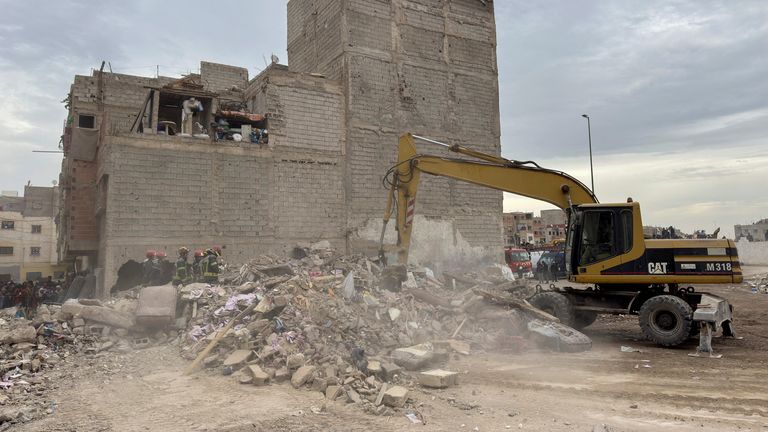
Pic: Reuters
Fez, a former Moroccan capital, is the country’s third most-populous city, as well as one of its oldest, dating back to the eighth century.
But deteriorating living conditions, and poor public services, sparked a wave of anti-government protests there, and in other cities, two months ago.
Read more:
Hundreds injured as Morocco youth protests turn violent
Miliband shuns £25bn UK-Morocco renewable energy project
The unrest, which was driven by younger Moroccans, revealed deep-seated anger over poverty and public services.
It comes at a time when the government is pushing ahead with ambitious infrastructure projects, including modern stadiums, ahead of the 2030 FIFA World Cup.
Fez, one of the host cities, has some of the country’s poorest neighbourhoods.
-
 Sports2 years ago
Story injured on diving stop, exits Red Sox game
-
 Sports3 years ago
‘Storybook stuff’: Inside the night Bryce Harper sent the Phillies to the World Series
-
 Sports2 years ago
Game 1 of WS least-watched in recorded history
-
 Sports3 years ago
Button battles heat exhaustion in NASCAR debut
-
 Sports3 years ago
MLB Rank 2023: Ranking baseball’s top 100 players
-
Sports4 years ago
Team Europe easily wins 4th straight Laver Cup
-
 Environment3 years ago
Japan and South Korea have a lot at stake in a free and open South China Sea
-
 Environment1 year ago
Here are the best electric bikes you can buy at every price level in October 2024