

Iran’s capital is counting down to “day zero” – the day the water runs out and the taps run dry.
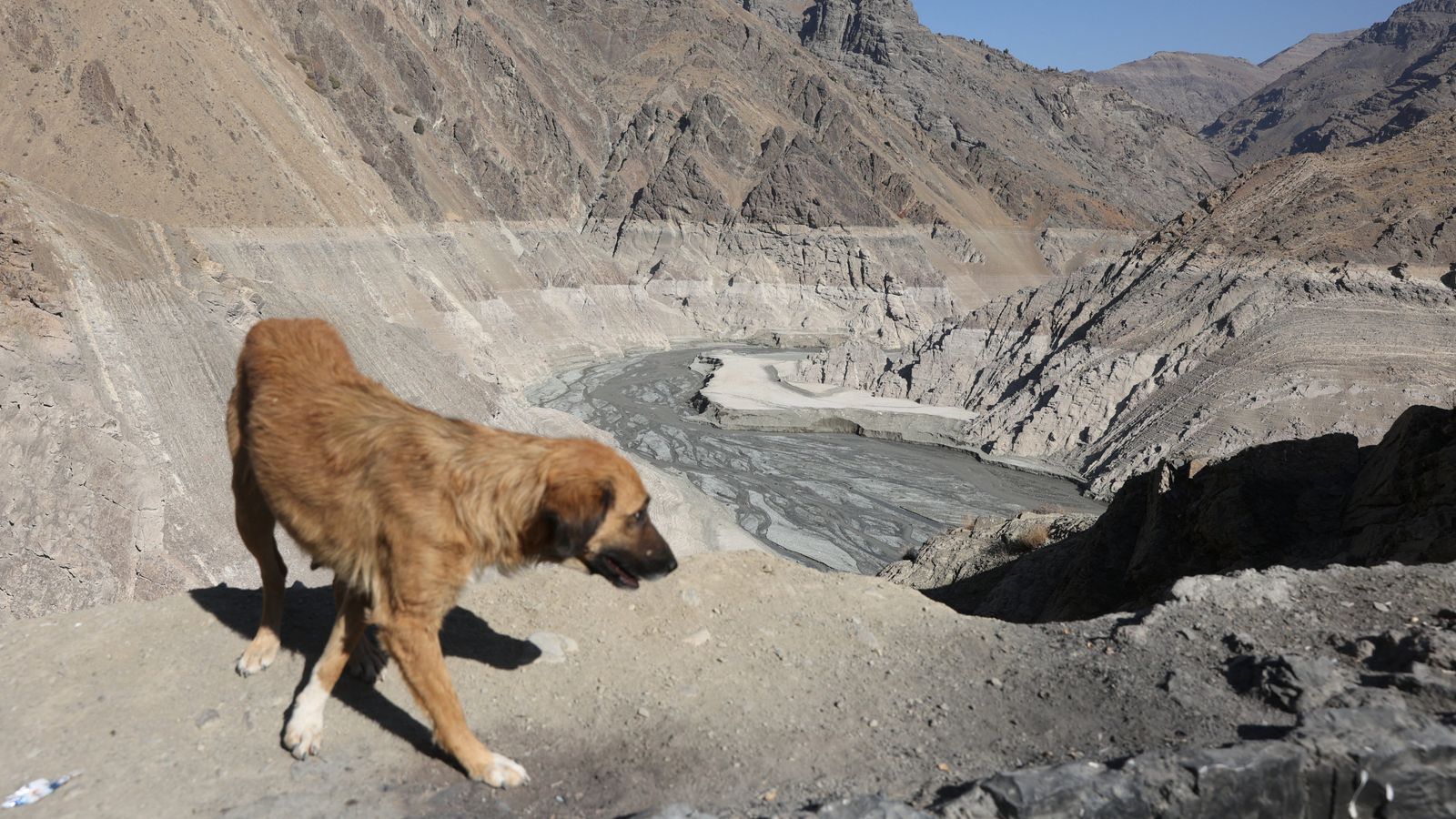
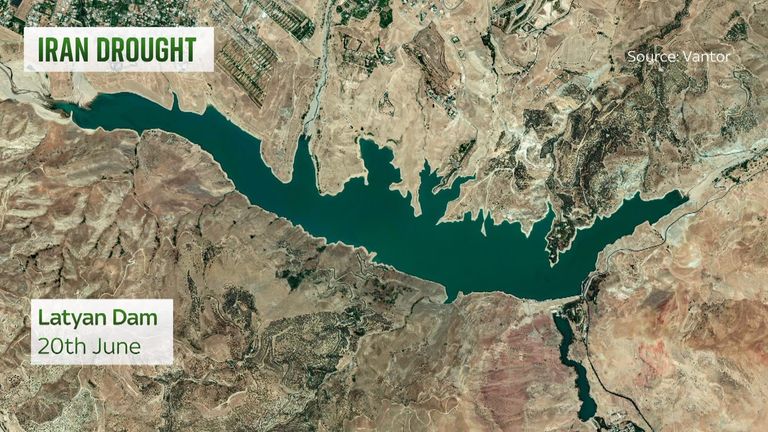
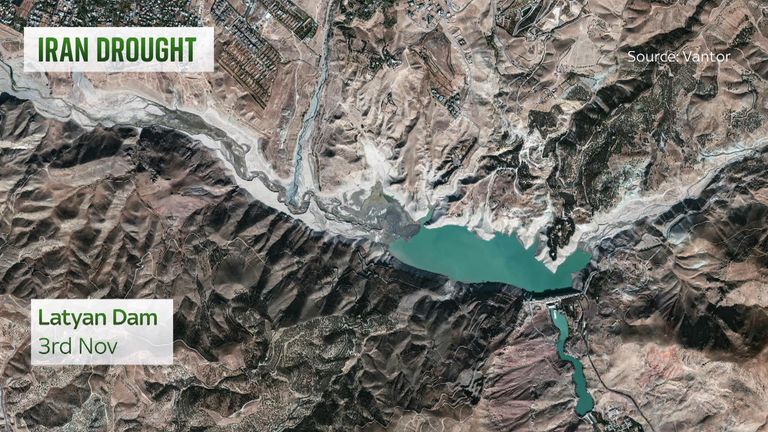
Reservoirs that supply Tehran’s 15 million residents are almost empty.
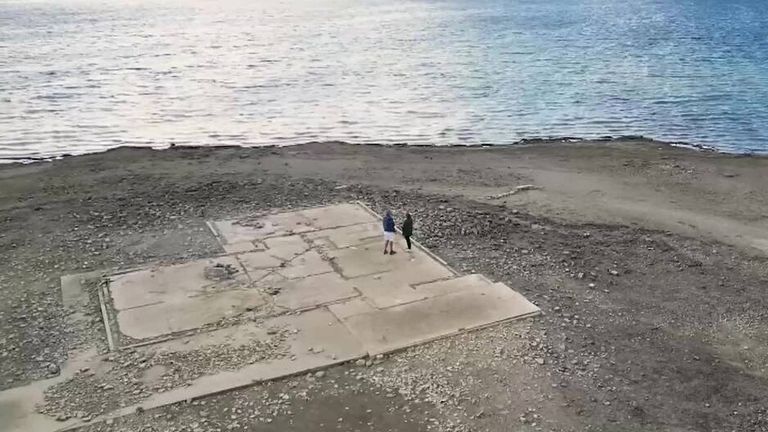
The Karaj dam, which supplies a quarter of the city’s drinking water, is just 8% full.
Water rationing has begun in some areas, with the flow from taps reduced or even stopped altogether overnight.
President Masoud Pezeshkian has urged people to use water sparingly – or the city, or at least parts of it, may even have to evacuate.
So what’s going on?
Rain should start falling in the autumn after Iran’s hot dry summer.
But according to the country’s National Weather Forecasting Centre, this has been the driest September to November period in half a century, with rainfall 89% below the long-term average.
The combination of low rainfall and high heat has lasted for more than five years, leaving the country parched.
But the weather – and the shadow of climate change – aren’t the only factors in Tehran’s water crisis.
According to the Centre for Strategic and International Studies, the population of the city has almost doubled from 4.9 million in 1979 to 9.7 million today.
But water consumption has risen even faster, quadrupling from 346 million cubic metres in 1976 to 1.2 billion cubic metres now. Increasing wealth has allowed more people to buy washing machines and dishwashers.
To supplement supplies from reservoirs, Tehran has had to turn to natural aquifers underground, which provide between 30% and 60% of its tap water in recent years.
But that puts the city in direct competition with farmers who draw on the water to irrigate crops.
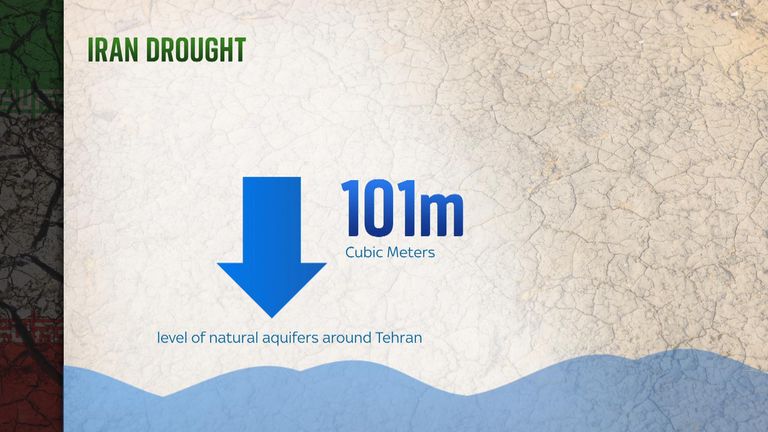
Levels are falling by 101 million cubic metres a year around Tehran, according to analysis in the journal Science Advances. That’s water that has accumulated from many decades of rain – and will take at least as long to replenish.
Read more from Sky News:
Could a volcanic eruption have spread the Black Death?
The words you have mispronounced all year – and how to say them
Professor Kaveh Madani, the former deputy head of Iran’s environment department and now director of the United Nations University Institute for Water, Environment and Health, said chronic mismanagement of natural resources has led to what he calls water bankruptcy.
He told Sky News: “These things were not created overnight.
“They’re the product of decades of bad management, lack of foresight, overreliance and false confidence in how much infrastructure and engineering projects can do in a country that is relatively water short.”
Government ministers blame the water shortage on climate change, water leaks from pipes and the 12-day war with Israel.
Whatever the reason, it underlines the threat of water scarcity to global cities. Tehran is not alone.
Water crisis: Will Britain’s taps run dry?
Cape Town in South Africa narrowly avoided taps running dry eight years ago after a city-wide effort to save water.
Even London, known for its rain, is at risk. Supplies haven’t kept up with population growth and booming demand.
As Tehran has found, droughts that are being made more likely and more severe with climate change can expose the fragility of water supply.
Israel will be allowed to compete in next year’s Eurovision Song Contest, organisers have said – with several broadcasters saying they will now boycott the event.
Dutch broadcaster AVROTROS, Spain’s RTVE, Ireland’s RTE and Slovenia’s RTV immediately issued statements saying they will not participate in the 2026 contest following the European Broadcasting Union’s general assembly meeting on Thursday.
Members from 37 countries were asked to vote in a secret ballot on whether they were happy with tougher new rules announced last month, without going ahead with a vote on participation next year.
It followed criticism from some broadcasters of Israel’s role in Eurovision amid the war in Gaza, and allegations that voting at this year’s contest had been manipulated in favour of their contestant.
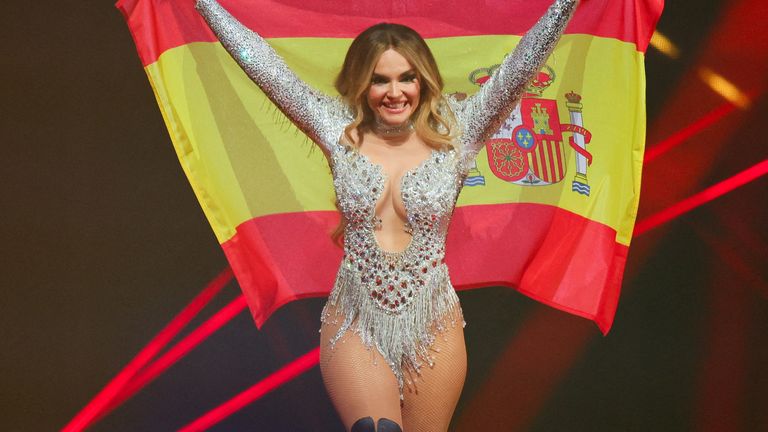
Spain, represented by Melody earlier this year, is one of the countries that has said it will not take part in 2026. Pic: Reuters
In a statement, the EBU, which organises Eurovision, said members had shown “clear support for reforms to reinforce trust and protect neutrality”. Sky News understands 11 countries voted against only accepting the rule changes.
Golan Yochpaz, chief executive of Israel’s public broadcaster KAN, said during the meeting that attempts to remove them from the contest could “only be understood as a cultural boycott”, according to a statement shared by the organisation.
Israel’s president Isaac Herzog posted on X following the announcement, saying: “Israel deserves to be represented on every stage around the world, a cause to which I am fully and actively committed… I hope that the competition will remain one that champions culture, music, friendship between nations, and cross-border cultural understanding.”
Boycott announcements – what have broadcasters said?
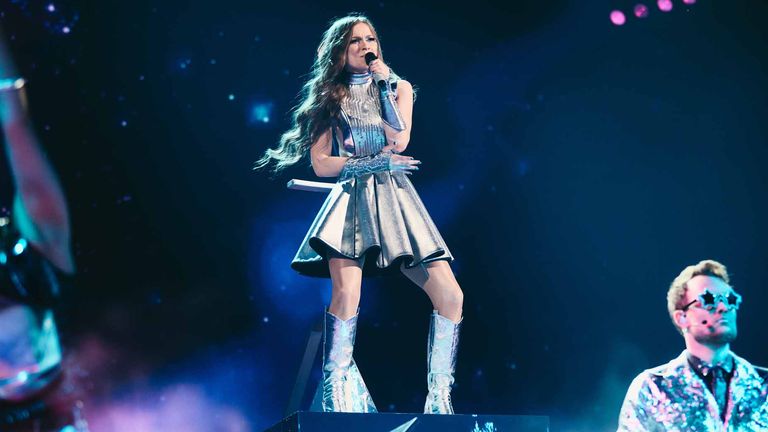
Ireland, represented by EMMY in Basel 2025, have also said they will not participate in 2026. Pic: EBU
The broadcasters from Spain, Ireland, Slovenia and the Netherlands had all said earlier in the year that they would not participate in 2026 should Israel be allowed to continue in the competition.
In a statement following the general assembly meeting, RTE confirmed Ireland‘s position.
“RTE feels that Ireland’s participation remains unconscionable given the appalling loss of lives in Gaza and the humanitarian crisis there which continues to put the lives of so many civilians at risk,” the broadcaster said.
AVROTROS, broadcaster for the Netherlands, said that “under the current circumstances, participation cannot be reconciled with the public values that are fundamental to our organisation”.
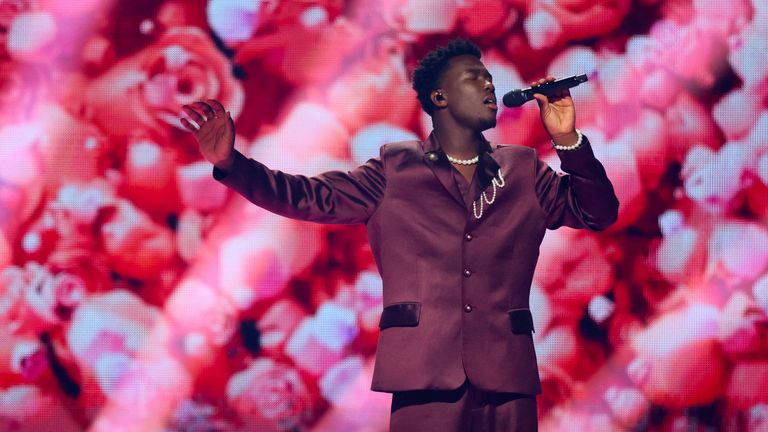
Claude singing C’est La Vie for The Netherlands at this year’s event. Pic: Reuters
General director Taco Zimmerman said it had not been an easy decision, adding: “Culture unites, but not at any price. What has happened over the past year has tested the limits of what we can uphold.”
Confirming its withdrawal, Spain‘s RTVE highlighted how its board of directors had agreed in September that the country would withdraw “if Israel was part of it”.
This is a big deal for Eurovision, as Spain is one of the “Big Five” broadcasters – a group which also includes France, Germany, Italy and the UK. While the host broadcaster – as last year’s winners, this is Austria this year – will often contribute the most towards the cost of staging the contest, the Big Five will also make up a significant amount.
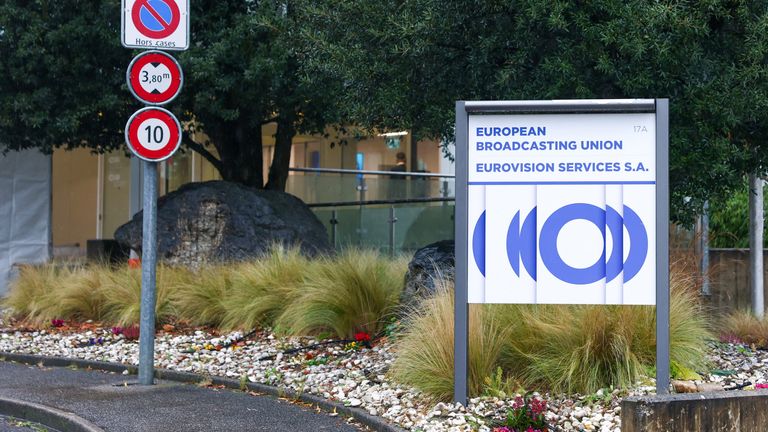
Members met at the European Broadcasting Union headquarters in Geneva, Switzerland. Pic: REUTERS/Denis Balibouse
Slovenian broadcaster RTV said it was pulling out of the competition “on behalf of the 20,000 children who died in Gaza”.
In her address to members before the decision, Natalija Gorscak, RTV Slovenia board chairwoman, said: “For the third year in a row, the public has demanded that we say no to the participation of any country that attacks another country. We must follow European standards for peace and understanding.
“Eurovision has been a place for joy and happiness from the very beginning, performers and audiences have been united by music, and it should remain that way.”
Eurovision ‘is for broadcasters, not governments’

This year’s Eurovision Song Contest was won by JJ from Austria, so they will host in 2026. Pic: AP
But Austria’s broadcaster ORF said it was happy with the decision and is looking forward to hosting next year.
Roland Weissman, ORF director-general, said the contest “is a competition for broadcasters, not governments”, and that he had personally advocated for Israel’s participation.
“In the spirit of fostering cultural dialogue and supporting and strengthening the democratic role of public broadcasters, it was important not to burn any bridges,” he said, adding that concerns raised by some members had been taken “very seriously”.
“Naturally, I would regret it if broadcasters were to decide against participating,” he added. “I see the Eurovision Song Contest in Vienna as an opportunity to emphasise what unites us rather than what divides us – United by Music.”
Politics has always played a part in Eurovision, despite the EBU’s insistence that it remains politically neutral.
Countries have pulled out or been banned in previous years – most notably Russia in 2022, just days after the invasion of Ukraine.
But this exodus could be Eurovision’s biggest political crisis yet, with suggestions that other broadcasters may follow suit.
Iceland’s broadcaster RUV said its board would discuss participation at a meeting next Wednesday, after previously agreeing to a motion to recommend Israel be expelled.

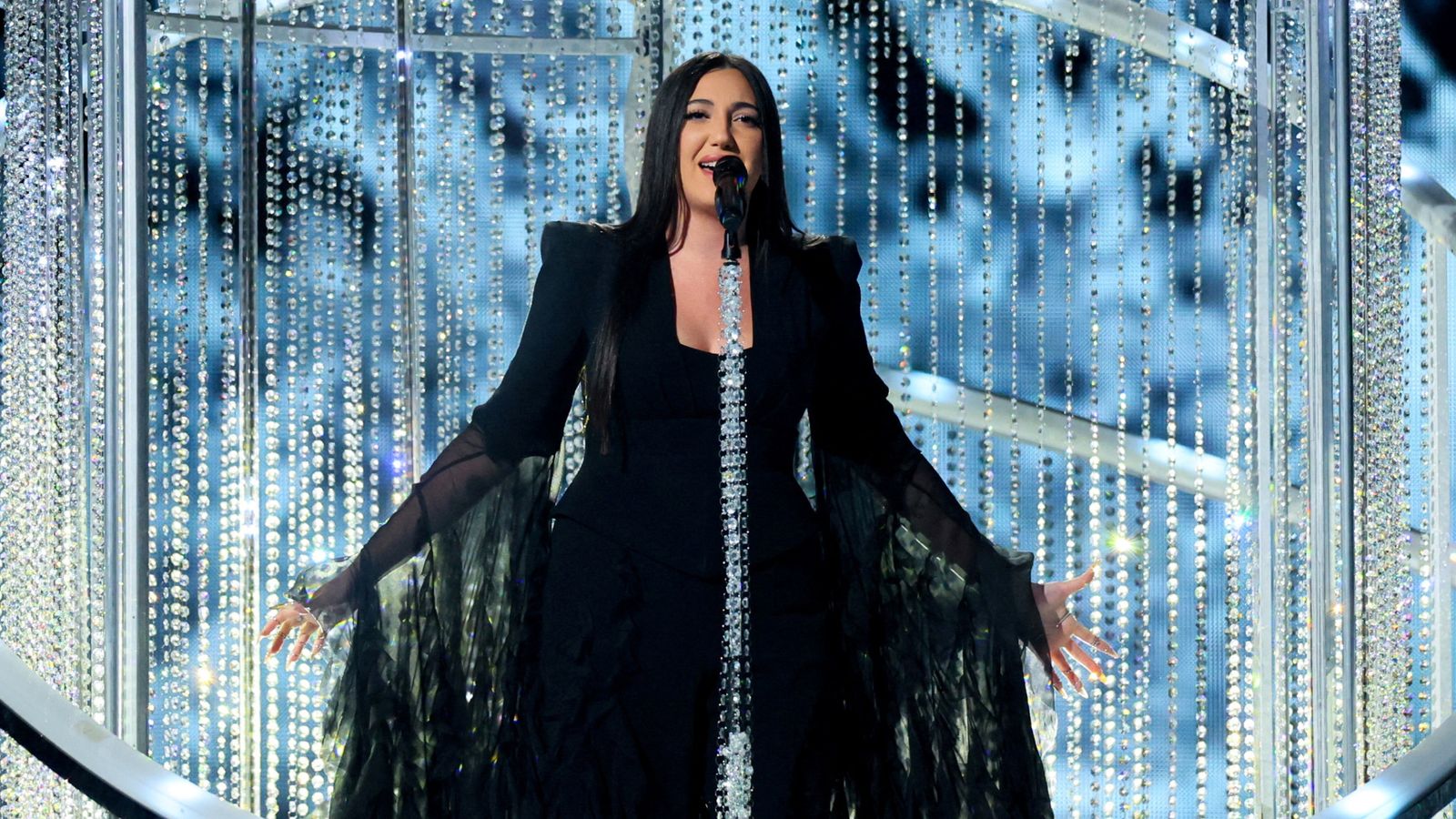
Remember Monday represented the UK at Eurovision in 2025. Pic: MANDOGA MEDIA/picture-alliance/dpa/AP
The BBC, which broadcasts the competition in the UK, said it supported the decision for Israel to be allowed to take part. “This is about enforcing the rules of the EBU and being inclusive,” it said in a statement.
Earlier this year, outgoing BBC director-general Tim Davie said the corporation was “aware of the concerns” raised, but the song contest had “never been about politics”.
Eurovision chaos has been brewing for some time – so what happens next?

With a slew of countries quitting Eurovision over Israel’s inclusion, the competition has been thrown into chaos.
This has been brewing for some time. A few months ago, the row had become such a point of contention that the EBU announced plans for an emergency vote. Crucially, that was called off when a Gaza ceasefire was announced.
So instead, at its big assembly meeting, countries were only allowed to vote on rule changes being introduced – another issue that allegedly involved Israel amid accusations of unfair voting practices.
If you read the EBU’s post-meeting statement, you’d think it had gone swimmingly. But while it made it sound like everyone was in agreement, Sky News understands 11 countries in fact voted against the changes.
Denied an actual vote on Israel’s participation, it triggered a domino effect of countries quitting – the Netherlands, Ireland, Spain and Slovenia.
Arguably, Spain pulling out could have the biggest effect. It’s one of the key financial backers of the contest – and that could potentially impact the ability to stage it in the grand way we’ve become to accustomed to.
So what happens next?
The contest prides itself on maintaining political and cultural neutrality, positioning itself as celebrating music and peace rather than politics.
But for now, the big question is: who will be left singing?
How have the rules changed?
In November, the EBU announced it was changing its voting system. This followed allegations of “interference” by Israel’s government earlier this year.
The rule changes announced in November came after Israeli singer Yuval Raphael received the largest number of votes from the public at the 2025 event, held in Basel, Switzerland, in May – ultimately finishing as runner-up to Austria’s entry after the jury votes were counted.
But a number of broadcasters raised concerns about Israel’s result.
Key changes to next year’s competition include:
• Clearer rules around promotion of artists and their songs
• Cap on audience voting halved
• The return of professional juries to semi-finals
• Enhanced security safeguards
It was these changes members were secretly balloted on at the general assembly. With a “large majority” voting that they were happy with these changes, the EBU said there was no need for a further vote on participation.
Speaking after the discussion, EBU president Delphine Ernotte Cunci said the result “demonstrates members’ shared commitment to protecting transparency and trust in the Eurovision Song Contest, the world’s largest live music event”.
Thanking members for their “thoughtful, respectful and constructive contributions” during the session and throughout the year, she said these discussions had led to “meaningful changes” to the rules, ensuring the contest “remains a place for unity and cultural exchange”.
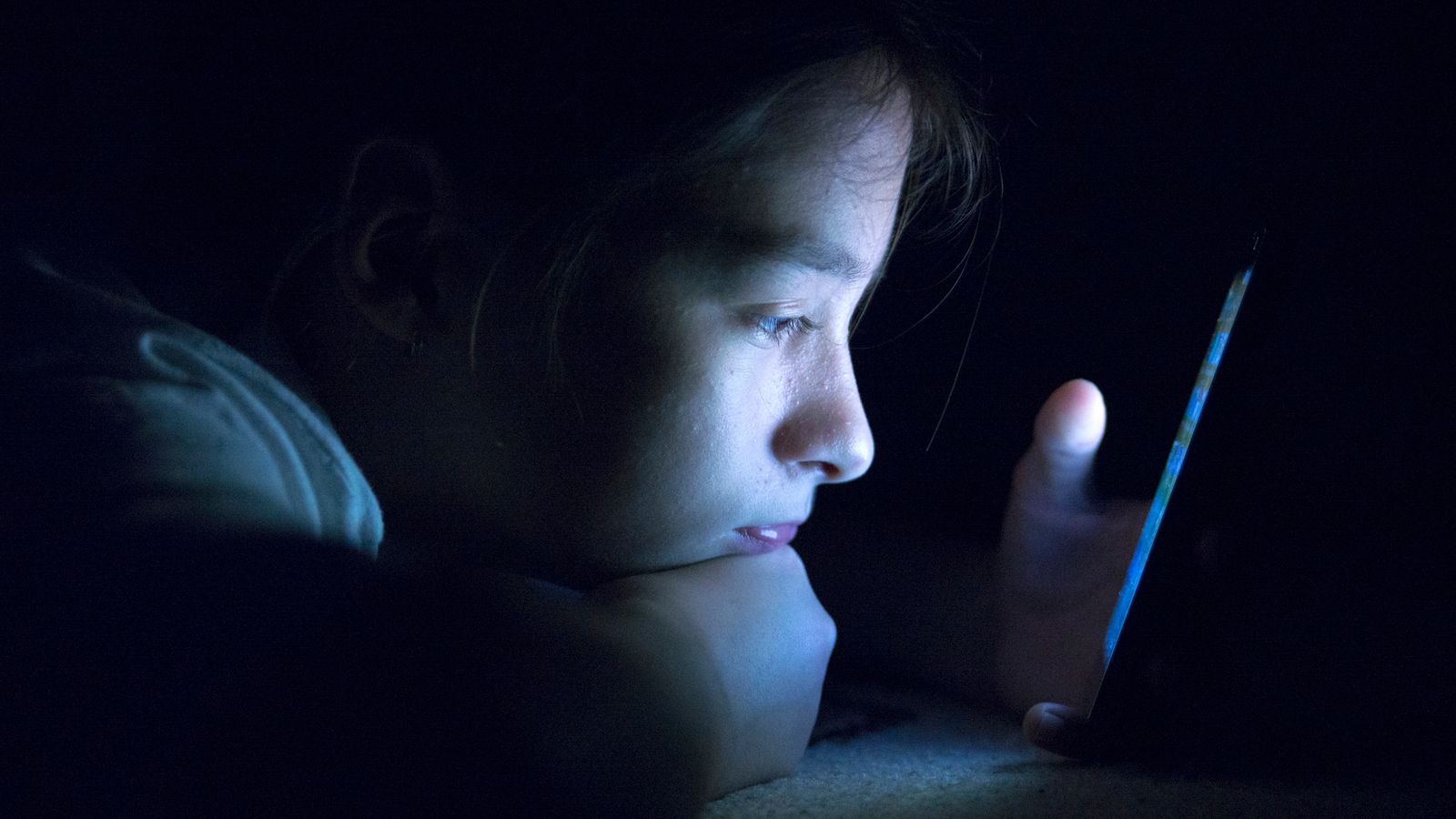
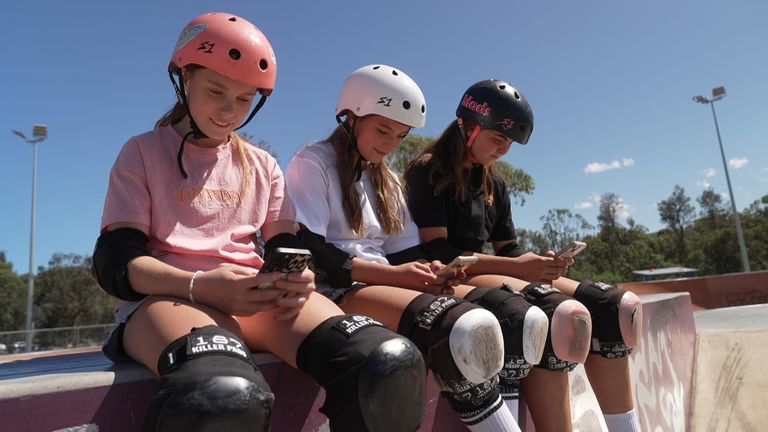
Australia will introduce one of the world’s toughest social media policies for children next week, with a ban that comes into effect on Wednesday.
Technology giant Meta has already started locking children under the age of 16 out of Instagram and Facebook, as it runs age checks on its users.
Other platforms have started contacting underage users – advising them to download their photos and contacts, and offering the choice of deleting their accounts or freezing them until they turn 16.
The age-restricted ban also includes TikTok, Snapchat, YouTube, Reddit, Twitch, Kick, Threads and X.
Skateboarders post photos and videos of their latest tricks
Impact on influencers
In the town of Umina on the New South Wales central coast, 14-year-old skateboarders Vespa Eding and Indy Conwell post photos and videos of their latest tricks in the skate bowl. Their accounts are managed by their mums.
The girls also coach young skaters and have corporate sponsors.
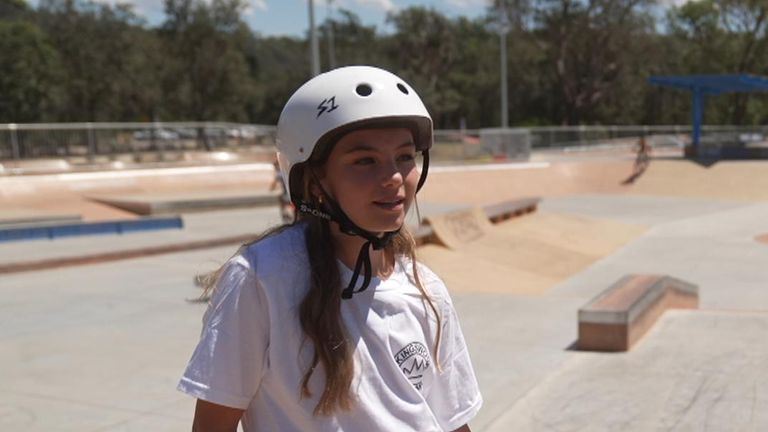
Indy Conwell
“I see both sides to it,” Indy explains. “It’s sad because I’m probably going to lose my account that I use to contact my sponsors and do my business.”
“But I think it’s a good idea [to ban it] for people getting bullied or if they’re getting addicted to it.”
Read more:
Teens launch legal challenge over ban on social media for children
How will ban work and could the UK bring in a similar law?
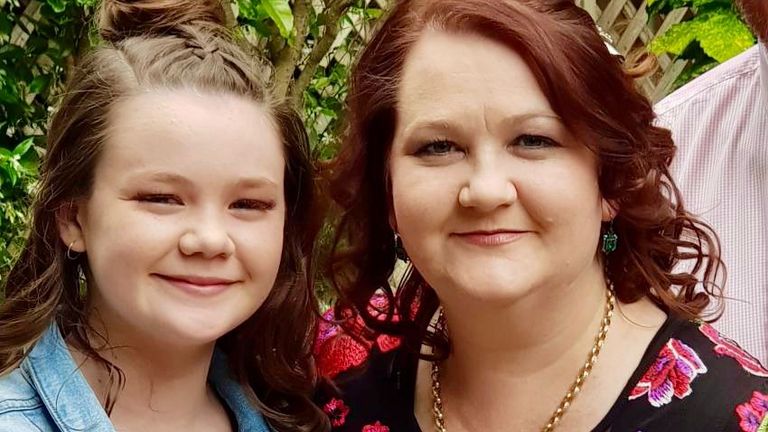
Emma Mason and her daughter Tilly
Mental health crises
Lawyer and mother Emma Mason knows how damaging social media can be.
Her daughter Matilda Rosewarne, who was called “Tilly”, suffered from years of online abuse as a teenager in the regional city of Bathurst.
Tilly took her own life on 16 February 2022. She was 15 years old.
“When Tilly was about 14, a fake nude was sent around by a friend of hers at school in Bathurst,” Ms Mason said.
“It spread to about 300 children, then it went to about 1,000 kids and by 6pm she had attempted suicide.”
Ms Mason has campaigned for Australia’s social media ban since she lost her daughter, and spoke at an event on the sidelines of the UN General Assembly in New York this year.
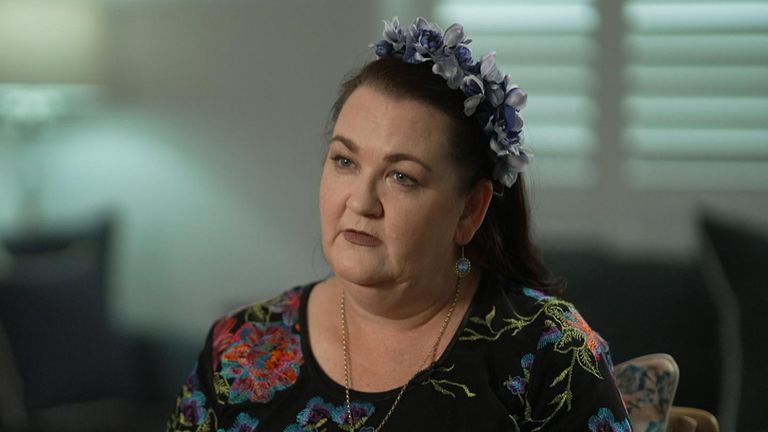
Emma Mason
Psychologist Danielle Einstein, co-author of the book Raising Anxiety, says there is clearly a link between anxiety, uncertainty and social media.
“Now is the time to get contact numbers and to see who your good friends are,” Dr Einstein said. “Who are the people you have fun with and who are the people you talk to when things aren’t going well.”
Under the ban, children will still be able to use messaging services.
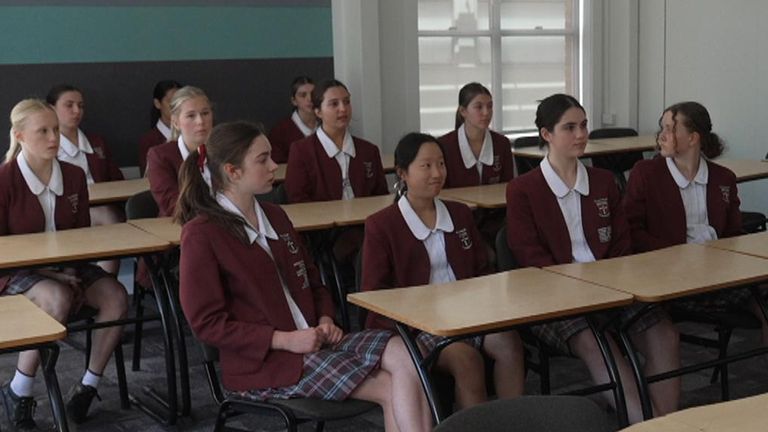
Students at Brigidine College in Sydney
Life off the apps
At Brigidine College in Sydney, students are preparing to get off the apps.
Teenager Sophia Benson says: “I’m on the fence about it. I think it’s good for kids’ mental health. But I also think it encourages the younger generation to find ways around it because obviously if you’re told you can’t do something, you want to do it more.”
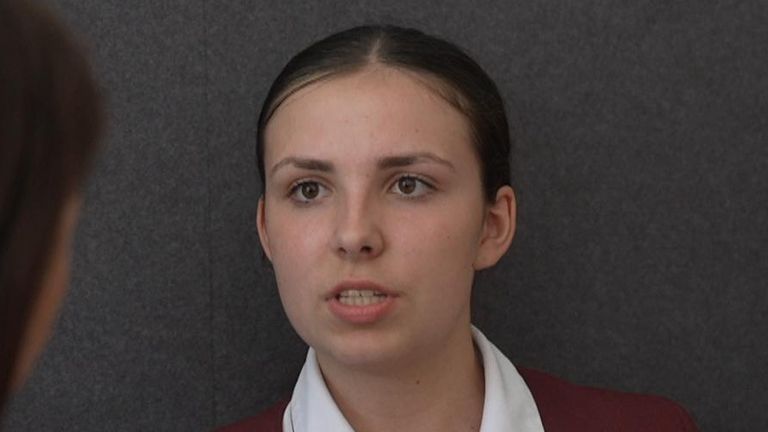
Sophia Benson
Elsie Ord is 15 years old and will spend the next seven months without social media access.
“I signed up at such a young age I was already using fake ages,” Elsie says. “I’m on social media around eight hours a day. I don’t know how I’m going to cope. I’m one of the people thinking how am I going to escape this, but it’s inevitable.”
Some 96% of Australia’s teenagers under 16 have social media accounts, according to Australia’s internet regulator.
The Australian government says the new social media laws are necessary to protect children from addiction and cyberbullying.
However, there is opposition as well.
Social media ‘whack a mole’
John Riddick is a member of the NSW Parliament and the Libertarian Party.
He’s also president of the Digital Freedom Project, which is backing a High Court challenge against the ban.
Mr Riddick says it should be up to parents to decide what is good for their children, not the government.
“Kids are tech savvy. You say ‘you can’t do this, and you can’t do that’ and you’re going to play whack-a-mole, the kids are going to get around it,” he argues.
The government has warned it may expand its list of banned apps.
Anyone feeling emotionally distressed or suicidal can call Samaritans for help on 116 123 or email jo@samaritans.org in the UK.
Alternatively, you can call Mind’s support line on 0300 102 1234, or NHS on 111.
-
 Sports2 years ago
Story injured on diving stop, exits Red Sox game
-
 Sports3 years ago
‘Storybook stuff’: Inside the night Bryce Harper sent the Phillies to the World Series
-
 Sports2 years ago
Game 1 of WS least-watched in recorded history
-
 Sports3 years ago
Button battles heat exhaustion in NASCAR debut
-
 Sports3 years ago
MLB Rank 2023: Ranking baseball’s top 100 players
-
Sports4 years ago
Team Europe easily wins 4th straight Laver Cup
-
 Environment3 years ago
Japan and South Korea have a lot at stake in a free and open South China Sea
-
 Environment1 year ago
Here are the best electric bikes you can buy at every price level in October 2024