
Big week for tech IPOs Reddit, Astera boosts Morgan Stanley after extended lull

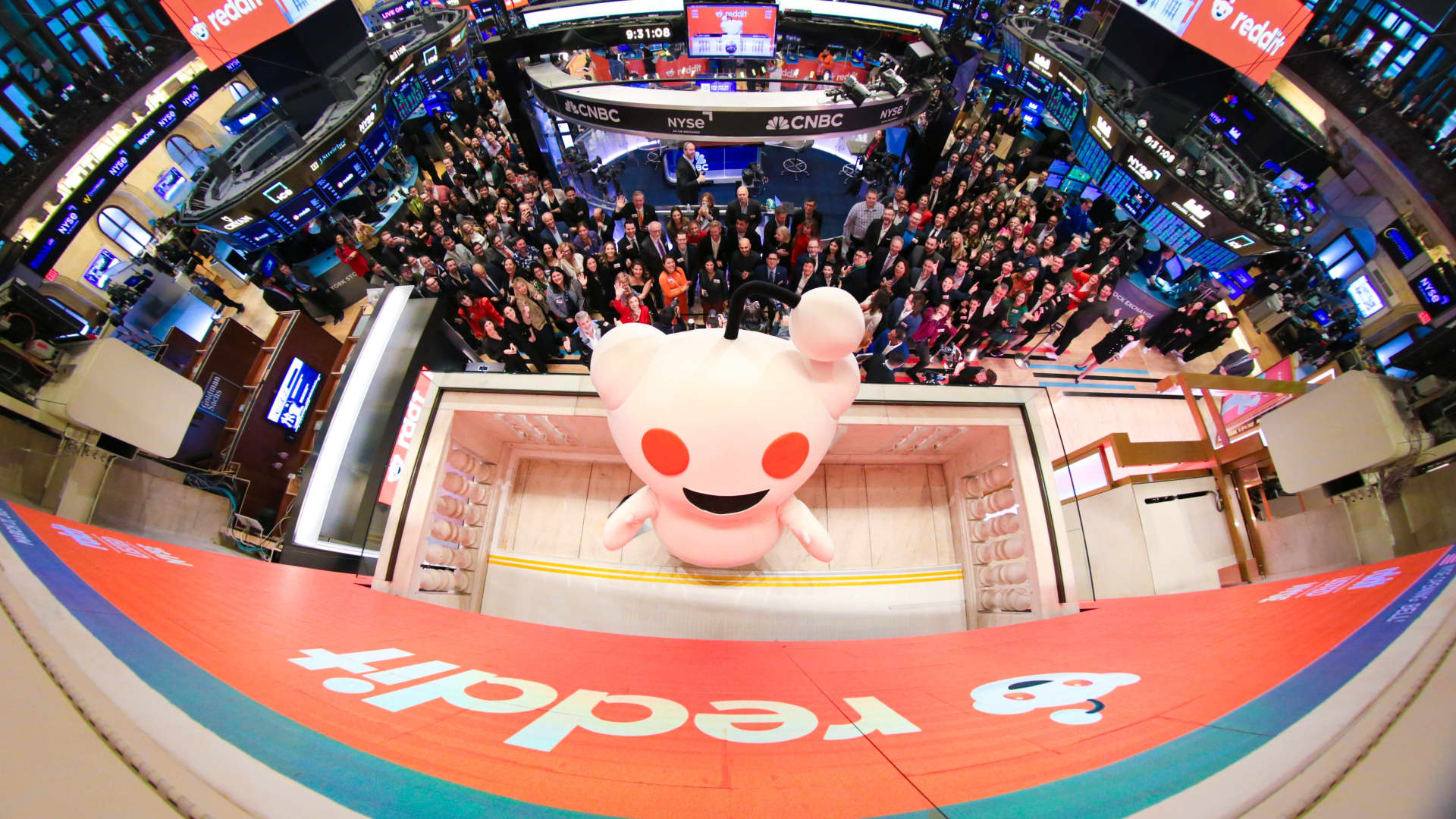
The New York Stock Exchange welcomes Reddit, Inc. (NYSE: RDDT) to celebrate its initial public offering. To honor the occasion, Snoo, rings the Opening Bell®.
NYSE
Wall Street’s tech IPO bankers may finally have a reason to break out the champagne after an extended drought was broken up this week with the market debuts of Reddit and Astera Labs.
While occupying very different corners of the technology market, Reddit and Astera were the first notable venture-backed tech companies to go public in the U.S. since Instacart and Klaviyo in September. Before that, there hadn’t been a significant deal since late 2021.
Morgan Stanley was the big winner among banks, having captured the coveted lead left spot on both IPOs. Goldman Sachs led last year’s only two big venture-backed offerings, meaning it had been a long dry spell for Morgan Stanley. The bank was lead left on IPOs for HashiCorp and Samsara in December 2021.
In the past two years, there have only been 15 tech IPOs total, according to research provided by University of Florida finance professor Jay Ritter. That came after a booming market in 2021, when 121 tech companies went public, the most since the dot-com bubble in 2000. Goldman Sachs and Morgan Stanley cut thousands of jobs last year in part due to the downturn in initial public offerings.
“The capital markets have been relatively quiet the past couple of years,” said Eric Juergens, a partner at law firm Debevoise and Plimpton who focuses on capital markets and private equity. Investment banks have “certainly been active in pitching clients on IPOs and other transactions and positioning themselves to be there when companies are finally ready,” he said.
Some market experts see the past week’s action as a sign of what’s to come. New York Stock Exchange President Lynn Martin told CNBC on Thursday, at the opening of Reddit trading, that a lot of companies are working toward going out in the second quarter.
That would be welcome news for Morgan Stanley. The bank collected around $37 million in total fees as the lead underwriter for the Astera and Reddit IPOs. It’s a drop in the bucket for the bank, which reported $12.9 billion in net revenue last quarter, largely from wealth management. But it could be a sign of life in the investment banking unit, which saw revenue drop by 46% over a two-year stretch from the fourth quarter of 2021 to the final three months of last year.
The 12 underwriters on Astera’s IPO this week collected $39.2 million in fees, with Morgan Stanley taking one-third of the total, or around $12.9 million. The overallotment, or greenshoe option, which allows underwriters to purchase an additional 15% of shares for clients, would add $5.9 million to the fees paid out.
Astera sells data center connectivity chips to cloud and artificial intelligence infrastructure companies. The stock soared 72% in its Nasdaq debut on Wednesday and continued rallying, gaining another 13% over the next two days, benefiting from investors’ seemingly insatiable appetite for all things AI.
‘Everyone was watching’
Reddit’s long-awaited IPO came Wednesday night, with shares hitting the open market Thursday. Morgan Stanley made $13 million in fees in the deal and stood to make up to $5.6 million from fees on the greenshoe option.
Shares of the 19-year-old social media company popped 48% in their first day of trading on the NYSE, before dropping 8.8% on Friday.
Lise Buyer, founder of IPO consultancy Class V Group, said the market is showing signs of thawing.
“A warm reception in the market for these IPOs surely will help open the floodgates,” Buyer said. “Everyone was watching these. Investors, boards of directors and management were encouraged by them.”
She added that the bankers who have been waiting for action, “have to be delighted by this.”
Goldman Sachs, Morgan Stanley’s biggest rival, had the No. 2 position on the Reddit IPO, capturing about 19% of the fee payout. The firm scored wins last year as the lead on the Instacart and Klaviyo IPOs, which brought in combined fee revenue of around $35 million. When SoftBank took semiconductor design company Arm Holdings public last year, Barclays led the deal, with participation from Goldman Sachs, and JP Morgan.
Arm Holdings CEO Rene Haas poses for a photo with members of leadership outside of the Nasdaq MarketSite on September 14, 2023 in New York City.
Michael M. Santiago | Getty Images
For Investment banks, the IPO is often viewed as just the beginning of the relationship with a company. The future could bring follow-on offerings, debt raises and acquisitions, which are all specialties of the top Wall Street firms.
Morgan Stanley is finding another way to bring in additional potential business. In both the Reddit and Astera IPOs, a portion of the equity was set aside for so-called directed-share programs (DSPs), giving high-valued customers, business partners or company insiders a chance to participate.
The model was previously employed by Airbnb, Rivian and Doximity, bringing power users or early customers into their IPOs. For Morgan Stanley, the DSPs have the potential to lure new individual customers into the bank for wealth management and other services.
In Reddit’s case, the company said tens of thousands of Redditors participated in its DSP.
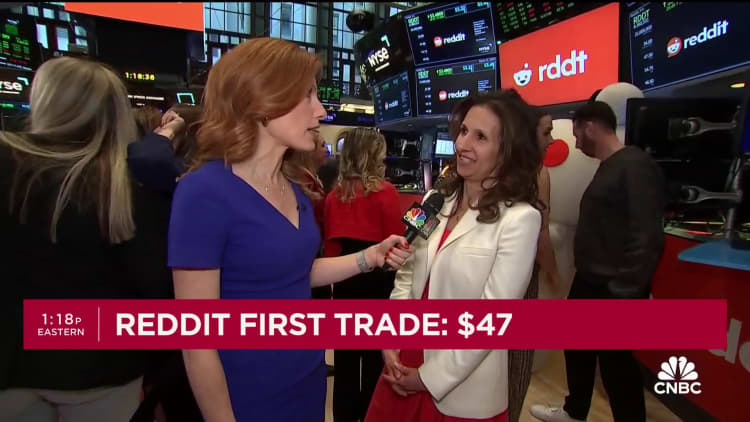
“The goal is just to get them in the deal,” Reddit CEO Steve Huffman told CNBC in an interview on Thursday. “Just like any professional investor.”
Technology
AI’s potential excites executives and investors, but general public remains skeptical, survey says


Several AI applications can be seen on a smartphone screen, including ChatGPT, Claude, Gemini, Perplexity, Microsoft Copilot, Meta AI, Grok and DeepSeek.
Philip Dulian | Picture Alliance | Getty Images
Corporate leaders and investors are brimming with optimism about the potential of artificial intelligence to boost worker productivity, profitability and shareholder returns.
The general public remains unconvinced.
That’s according to a report published Tuesday by nonprofit group Just Capital, examining how different groups are feeling about the potential risks and benefits of AI adoption. Between Sept. 27 and Nov. 14, Just Capital collected data from institutional investors and analysts, corporate executives and U.S. adults.
Roughly 93% of corporate leaders and 80% of investors said they believe AI will have a net positive impact on society within the next five years, according to the report. Only 58% of respondents from the public said they share that sentiment.
The survey lands three years after OpenAI kickstarted the generative AI rush with the launch of ChatGPT, sparking a flood of investments into AI infrastructure, startups and products. With some analysts forecasting that AI spending will reach into the trillions of dollars by the end of the decade, the boom is boosting excitement about economic advancement and the future of technology while simultaneously raising concerns about privacy, safety and job security.
The disparate views are particularly noticeable when looking at AI in the workplace.
Just 47% of the general public said they think AI will have a positive net impact on worker productivity, compared to 94% of investors and 98% of corporate leaders.
Meanwhile, nearly half of respondents from the general public said they expect AI to replace workers and eliminate jobs, the report said. Only 20% of corporate leaders agreed.
Conversely, 64% of executives said AI will help workers be more productive in their current jobs, while only 23% of the public agreed.
“The survey findings reveal widespread public concern that companies’ growing adoption of AI will have swift, direct consequences for workers through job cuts,” Just Capital said.
All three categories of respondents are concerned about safety and security risks that could stem from AI, but corporate leaders and investors are especially worried about disinformation and malicious use of the technology. In addition to those categories, the public is also fears loss of control and the environmental impact of AI.
More than 40% of corporate leaders said environmental issues are not being factored into their AI deployment strategy, according to the report.
Roughly 60% of investors and half of the public said companies should spend more than 5% of their total AI investment on safety, while 59% of corporate leaders said they should spend up to 5%.
Just Capital said it will continue to track sentiments around AI deployment every quarter.
WATCH: Gibbs: AI can boost profitability without massive infrastructure

Technology
U.S. uncovers scheme to reroute Nvidia GPUs worth $160 million to China despite export bans

-
 Sports2 years ago
Story injured on diving stop, exits Red Sox game
-
 Sports3 years ago
‘Storybook stuff’: Inside the night Bryce Harper sent the Phillies to the World Series
-
 Sports2 years ago
Game 1 of WS least-watched in recorded history
-
 Sports3 years ago
Button battles heat exhaustion in NASCAR debut
-
 Sports3 years ago
MLB Rank 2023: Ranking baseball’s top 100 players
-
Sports4 years ago
Team Europe easily wins 4th straight Laver Cup
-
 Environment3 years ago
Japan and South Korea have a lot at stake in a free and open South China Sea
-
 Environment1 year ago
Here are the best electric bikes you can buy at every price level in October 2024