
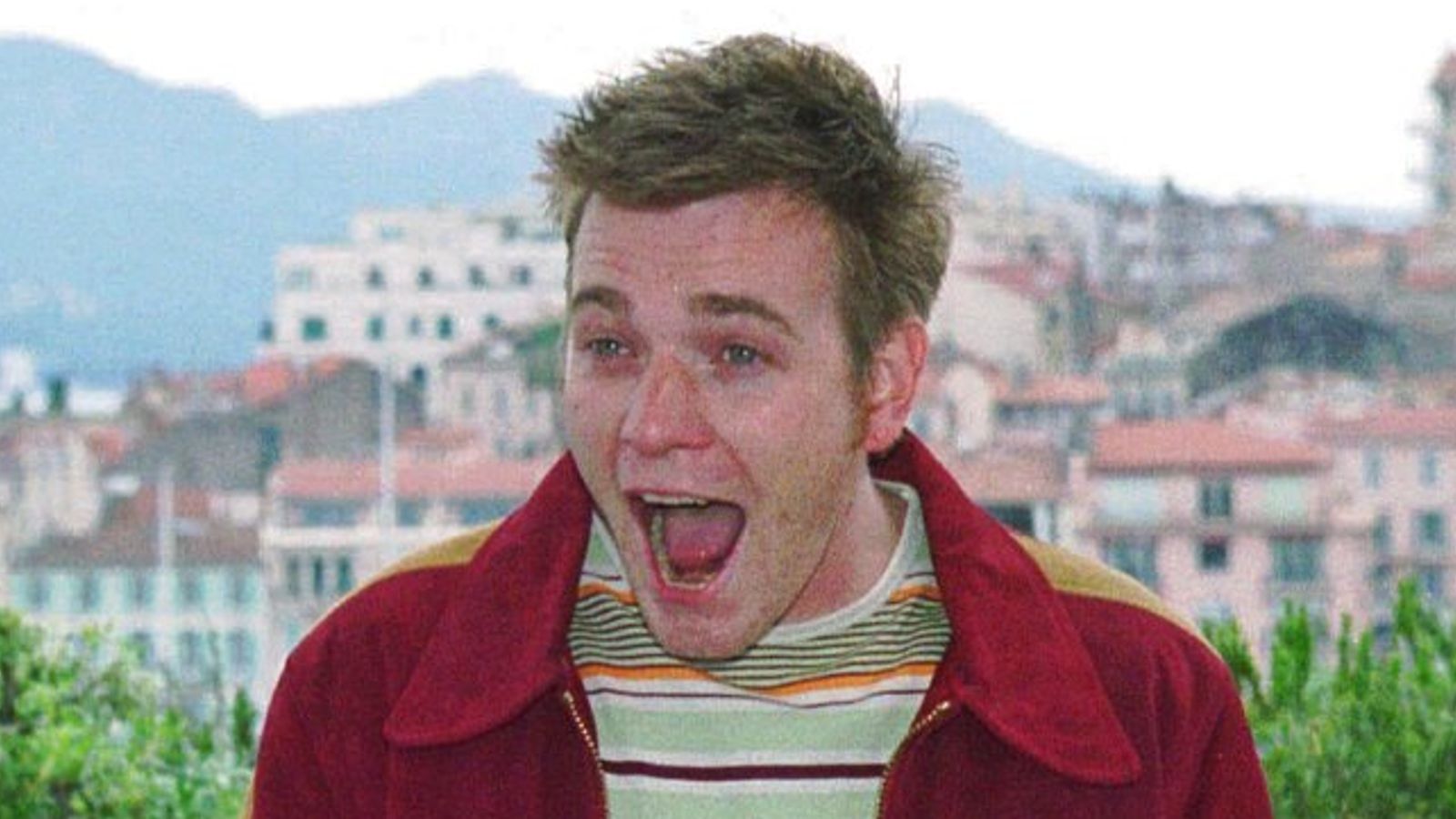
Ewan McGregor: ‘I was reduced to being the sober, naked actor’


Ewan McGregor says it’s “a great shame” when roles are reduced to surface level characteristics.
The Emmy and Golden Globe winner recalls how early on in his career he constantly faced questions about being naked on film – and rarely the deeper meaning behind his artistic choices.
In 1996, just after Trainspotting, the Scottish actor starred in The Pillow Book, which featured numerous intimate scenes.
“I was only ever asked questions about me being naked,” he tells Sky News.
In 2000, the line of questioning shifted slightly, but not in the way he had hoped.
“Once people knew I was sober, then it was a period where people only asked me questions about being sober, or being naked and sober and sort of being the sober, naked actor”.
He adds: “I was sort of reduced to those two things, which was slightly depressing”.
Similar to McGregor early in his career, recently for Saltburn star Barry Keoghan much of the media focus has been on one aspect of his career – his decision to strip off.
The Scottish actor, who is now 52, says that when the media focuses on the minor attributes of a character, it can feel like they didn’t get the point of the story the actors are trying to tell.
He says: “When you’re an actor, there’s this great meaning behind the things you do to serve that story and when it’s reductive like that, it’s sort of a little demeaning in a way for us.”
McGregor stars in A Gentleman In Moscow opposite his wife Mary Elizabeth Winstead. Pic: AP
McGregor’s most recent project is A Gentleman In Moscow, a mini-series based on Amor Towles’s best-selling novel of the same name.
‘Still and chill and quiet in each other’s company’
He plays Count Alexander Rostov in the Paramount+ series, an aristocrat who is stripped of his title and wealth and placed under indefinite house arrest at the Hotel Metropol.
He says, despite the show featuring themes of freedom, social classes and relationships, his media run in the US focused mainly on the fact that he grew his own moustache for the role.
Set in post-Revolutionary Russia, McGregor stars alongside his wife Mary Elizabeth Winstead.
The Fargo actress says it’s “such a relief” working together because they get to be “still and chill and quiet in each other’s company” in between takes.
She points out that they have a toddler so when they get home from a day of work “it’s pretty full-on energy”.

Pic: Ben Blackall/Paramount+ with Showtime
Winstead plays Russia’s “favourite actress” Ana Urbanova – an independent leading lady who has survived countless regimes in a country led by men.
‘My mind was kind of blown’
A fictional character, the Ahsoka star says she researched Russian actresses from the era of the series and grew particularly attached to Alla Nazimova.
“My mind was kind of blown by what she was doing and accomplishing and how brave she was and how full of passion and desire and the confidence to actually follow that passion regardless of what the kind of press or public was saying.”
The series shows Urbanova faced with the misogynistic truth of the time in the industry – ageing out of her career because she’s a woman.
Winstead says: “I do feel that there’s been that shift where things are only getting better and parts are only getting juicier.”
Ewan McGregor agrees and says Hollywood “feels healthier” now compared to when he was first starting out in the 90s which felt like a “boys club”.
He adds: “It’s not for me to say whether we’ve got there yet – probably not – but we’re definitely on the right track”.
An intimacy coordinator was used for the love scenes in the show.
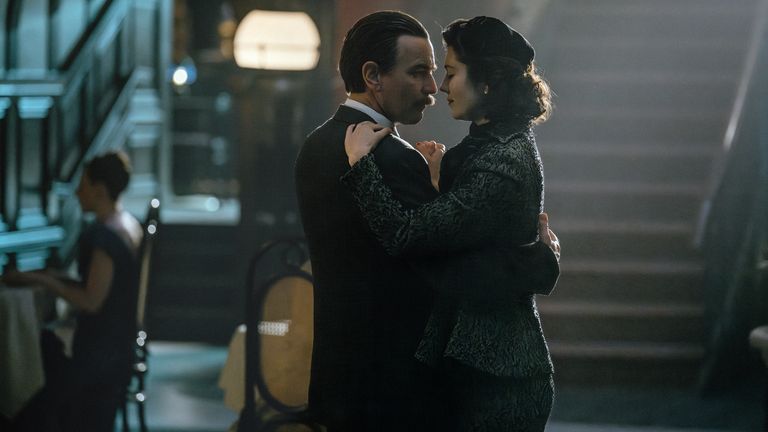
Pic: Ben Blackall/Paramount+ with Showtime
The role sees a person, separate from the director, who speaks privately with the cast about what they’re comfortable doing on camera.
‘Oh my God, I wish I hadn’t done that’
McGregor says they’re a brilliant and important addition to the industry.
“When I was younger, I didn’t have somebody to talk to about what I was happy to do or not do. I was speaking with the director”.
Conversations about intimate scenes now only happen between the cast and the coordinator.
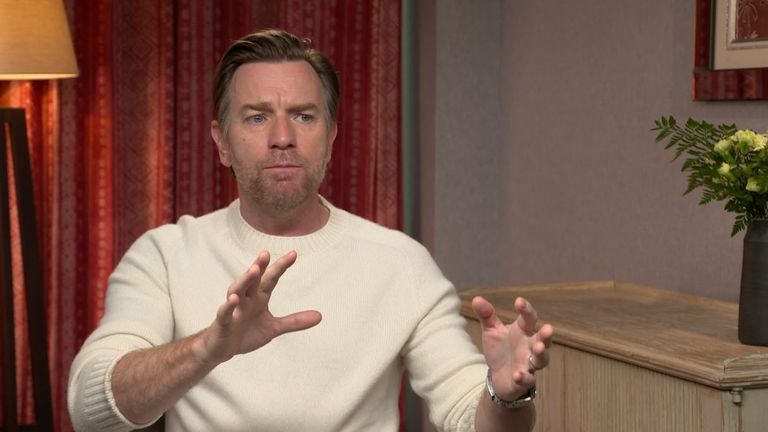
McGregor says intimacy coordinator are a great step forward
McGregor says it’s a safeguard that can help young actors voice their honest opinion about what’s being asked of them.
He explains: “If you’re a young female actor, 22 year old, working with an amazingly famous, say 65 year old director, and he wants you to do this in a sex scene or show this and do that, of course, as a young actor, you’re going to, because you want to do well in that role.
“And then a couple of years later, you might look back and go, ‘Oh my God, I wish I hadn’t done that, I don’t feel happy that I did that’.
“Now there’s somebody [there]… There’s a safeguard, and a very important one. It’s changed a lot.”
A Gentleman In Moscow is available to stream now on Paramount+.
UK
‘They’re invisible within society’: Whistleblower says asylum seekers disappear ‘daily’ from hotels
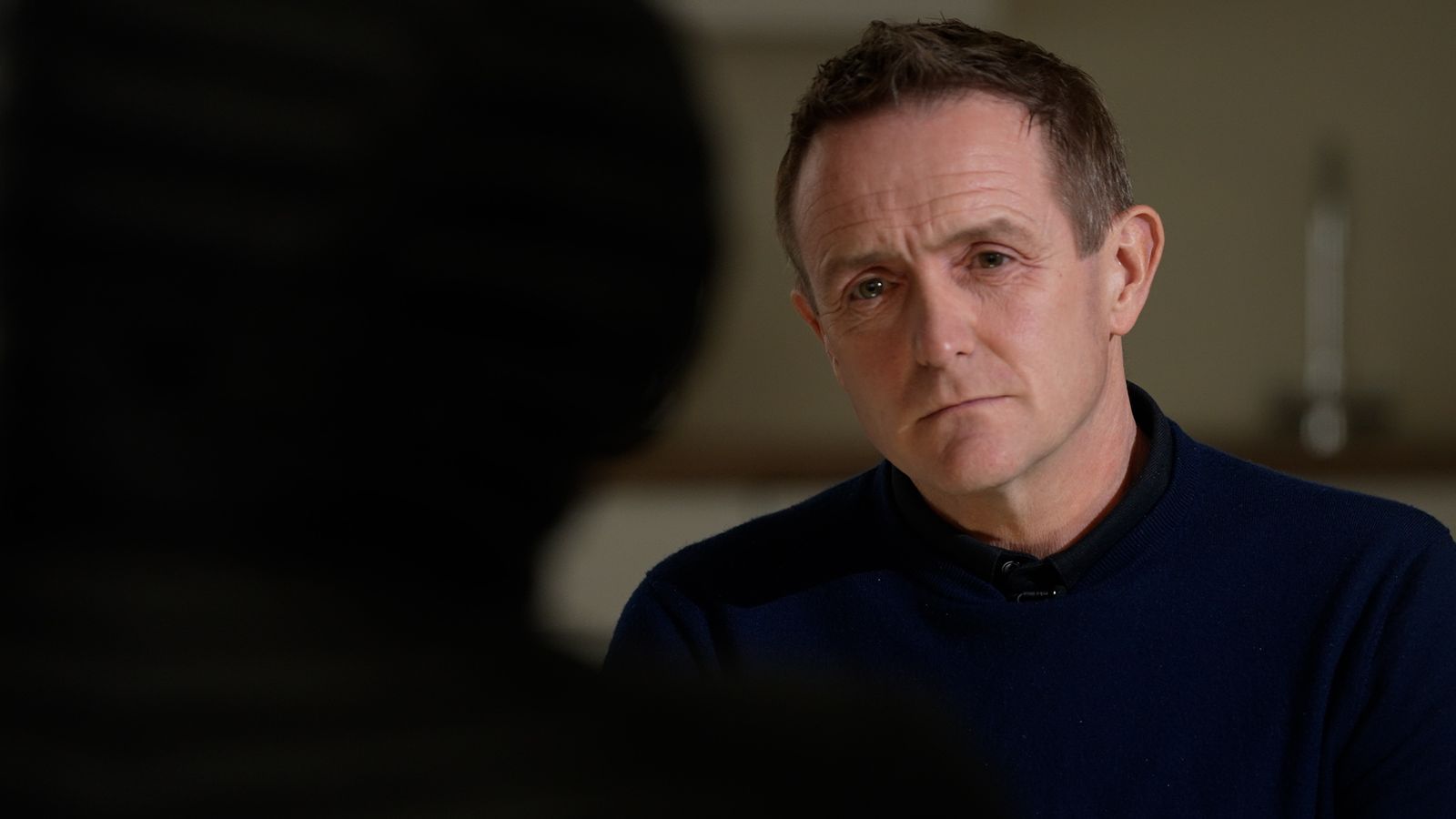
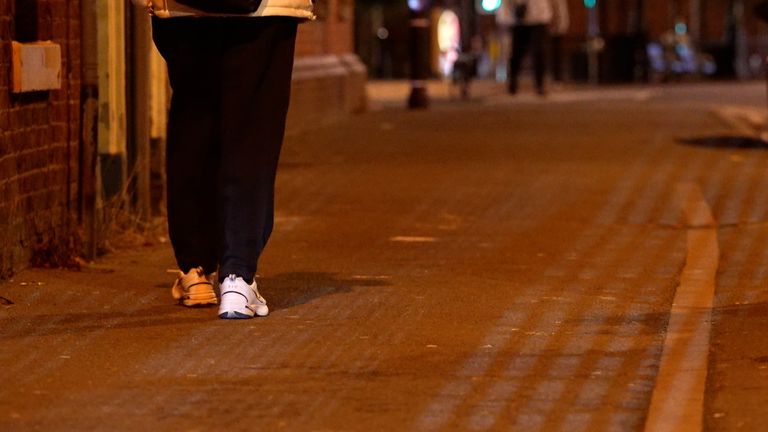
An insider has told Sky News people are still disappearing “daily” from asylum seeker hotels.
In an exclusive interview, the contractor described the chaos he sees within the system as “terrifying” because undocumented people are persistently absconding from hotels.
He spoke to us because he is deeply concerned about the ongoing lack of monitoring at a time when the government has promised to tighten the asylum system.
The man, who we are not naming, works across multiple asylum hotels in one region of England.
“When someone gets to about a week away from the hotel, they’re processed as an absconder,” he said.
“Nothing really happens there. They get marked as ‘left the hotel’ and a notification is sent to the Home Office.
“It’s at least weekly. Most of the time it can be daily.”
The government moved last month to reset its immigration policy by promising to toughen the process for asylum seekers.
The latest figures up to September this year show 36,272 asylum seekers living in hotels.
Failed asylum applicants are given a date to move out by, but they’re not actually picked up by the authorities, the insider says
Overall 110,000 people claimed asylum in the UK between September 2024 and September 2025 – higher than the previous recorded peak of 103,000 in 2002.
The hotel contractor also described to Sky News what he says happens when a resident’s claim for asylum is rejected.
“They get given a date that they need to move out by,” he said.
“You would expect immigration enforcement to go to the hotel to pick these people up. You would expect them to not even be told that they failed their asylum claim.
“You would expect them to just be collected from the hotel… that doesn’t happen.”
He told us that some residents just walk out of the door with no further checks or assistance.
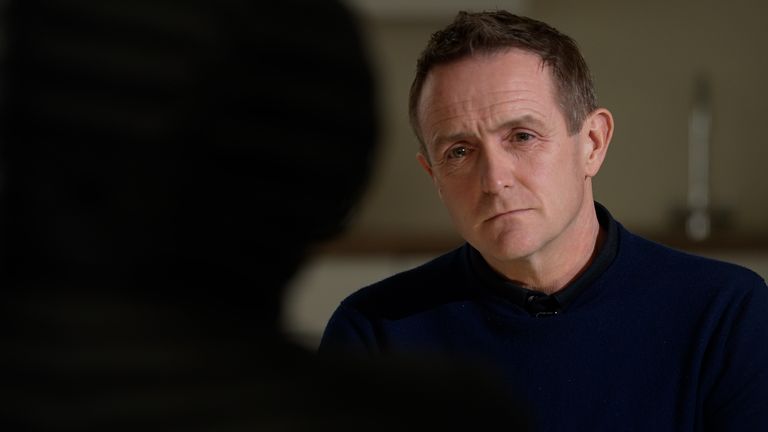
The whistleblower spoke to Sky News’ Tom Parmenter in the exclusive interview
“It must be terrifying for these people as well… ‘what do I do now? I don’t have an address’.
“So what do they do? How do they survive?
“Do they then get forced… to go into an underground world?
“They’re just completely invisible within society.
“For those people to freely be allowed, undetected and unchecked, on the streets of this country is terrifying.”
His account from within the system contrasts with the government’s promises to restore control over the asylum process.
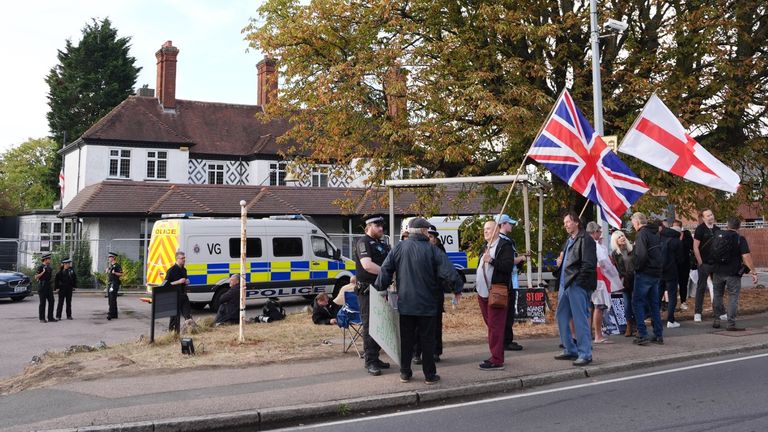
Police and protesters outside the Bell Hotel, Epping, where asylum seekers have been housed. Pic: PA
In response to the interview, a Home Office spokesperson said: “This government will end the use of hotels and have introduced major reforms to the asylum system, to scale up removals of people with no right to be here and address the factors drawing illegal migrants to the UK in the first place.
“Nearly 50,000 people with no right to be in our country have been removed and enforcement arrests to tackle illegal working are at the highest level in recent history.
“A dedicated team in the Home Office works with police, across government and commercial companies to trace absconders. Failure to return to a hotel can also lead to asylum claims and support being withdrawn.”
At a community kitchen in Greater Manchester, organisers told us they regularly see people who are living under the radar – surviving with “cash in hand” jobs.
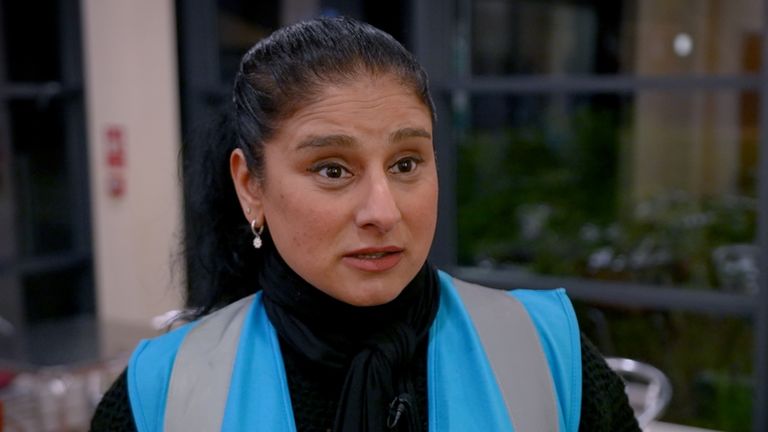
Volunteer Shabana Yunas says the situation is ‘getting worse’ and ‘it is dangerous’
Volunteer Shabana Yunas helps many hungry and desperate people. She also feels the tension it causes in her community.
“People don’t know who they are and I understand a lot of people are afraid… but if there’s those things in place where we can monitor who is around, then everybody can feel a lot safer.
“If people are coming into the UK and we don’t know who they are and they’re just disappearing, crime rates are going to go up, slavery is going to go higher, child exploitation is going to be more exposed.
“They are too afraid to go to the authorities because they are scared of being deported to a country where their lives could be at risk.
“It’s getting worse, it is dangerous and we do need to do something about this where we can support people.”
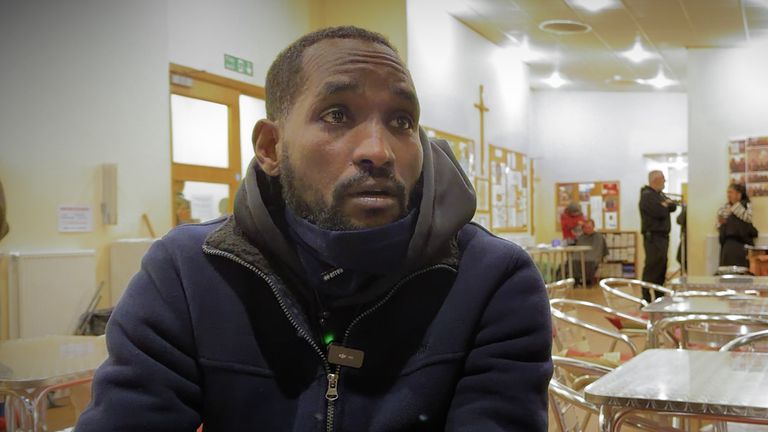
Kitchen volunteer Khalid, from Ethiopia, has had his application for asylum rejected four times
Another volunteer at the kitchen is Khalid.
He arrived in the UK in 2015 having travelled from Ethiopia – he hid on a lorry to get into England.
Read more:
The visa overstayers living under the radar
Stats show rise in asylum seekers being housed in hotels
Britain’s immigration system changes explained
He has applied for asylum and been rejected four times.
He has recently submitted another application and told us political violence at home meant he could not return.
Crucially, he knows plenty of people living off-grid.
“Yeah, they don’t care about what the government thinks, because they already destroyed their life,” he told us.
👉 Listen to Sky News Daily on your podcast app 👈
Although Khalid now has somewhere to stay, he has previously considered turning to crime to give himself the stability of life in prison.
“I was in depression. I was like, I wanna do some criminal and go jail, to stay in a prison.
“Once upon a time, I’d prefer that way.”
The visa overstayers in ‘soft’ Britain
Khalid is now volunteering to give his life more purpose as he waits for another decision from the Home Office.
He says he doesn’t blame people who think he should be deported back to Ethiopia.
When asked if he should have been, he said: “That is up to Home Office, like up to government.”
Stopping small boats, clearing backlogs, closing hotels, enforcing the rules and restoring faith in the system are all priorities for the Home Office – solving it all is one of the defining challenges for the Starmer government.
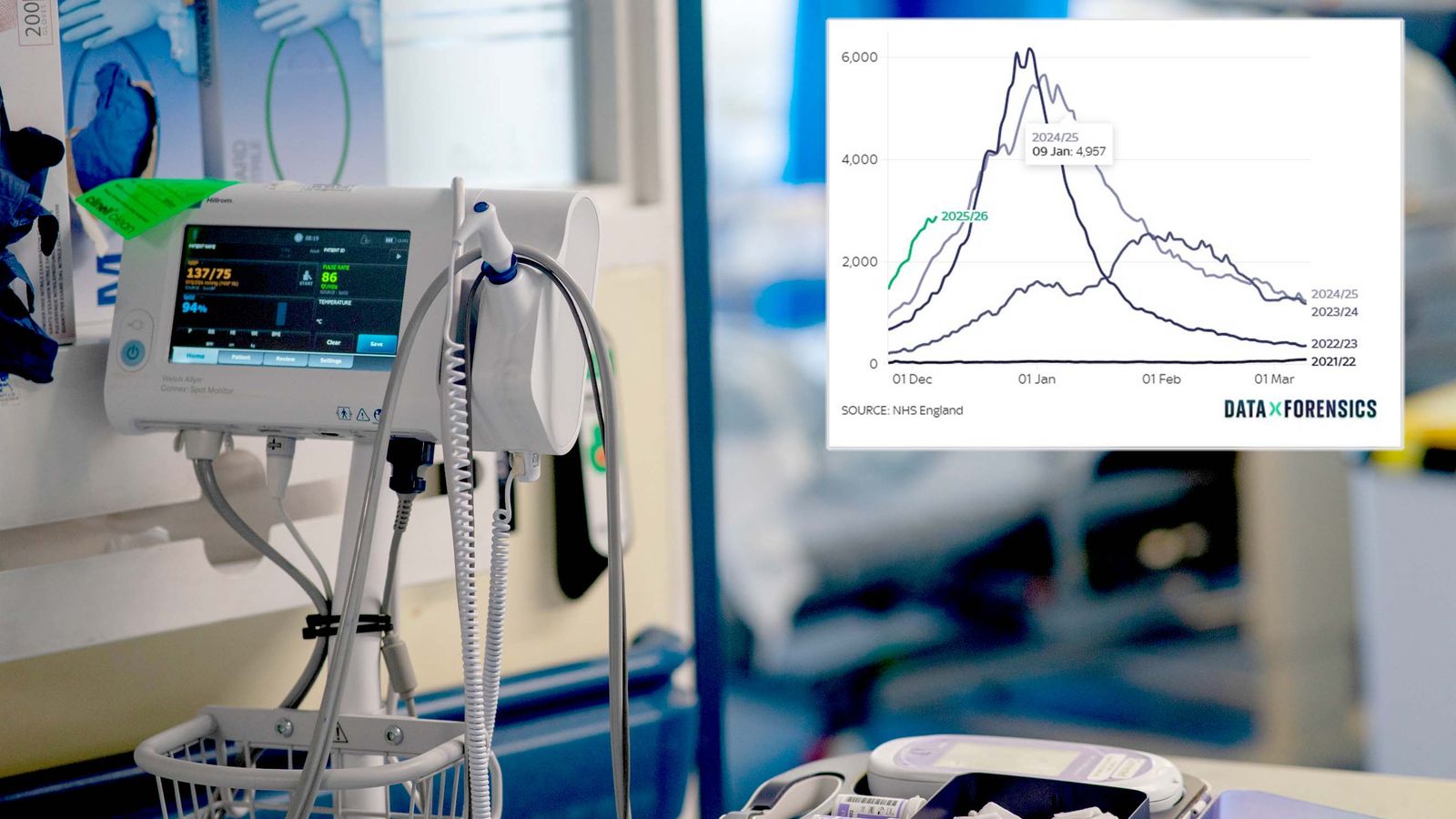
NHS England has warned the health service is facing a “worst case scenario” December with a surge of “super flu”.
The warning comes as new figures revealed the number of people in hospital with flu have increased by more than half in just one week.
Catch up as it happened: NHS warns of ‘worst-case scenario’ as ‘super flu’ surges
Latest figures show:
• An average of 2,660 patients were in hospital per day with flu last week
• This is the highest ever for this time of year and up 55% on last week
• At this point last year the number stood at 1,861 patients, while in 2023 it was just 402
Health service bosses are warning the number of flu patients in hospital has already increased sharply since the week covered by this data – with no peak in sight.
Read more: Why is flu season worse this year?
Virus outbreaks coincide with doctors’ strikes
Weekly flu numbers in England peaked at 5,408 patients last winter and reached 5,441 over the winter of 2022/23, the highest level since the pandemic.
Alongside rocketing flu, the number of norovirus patients in hospital has also risen by 35%.
The NHS is now warning winter viruses are starting to “engulf hospitals”.
Demand for A&Es and ambulance services is also soaring.
New monthly figures show A&E attendances were a record for November at 2.35 million – more than 30,000 higher than November 2024.
In addition, there were 48,814 more ambulance incidents (802,525) compared with last year (753,711).
Some hospitals across the country have asked staff, patients and visitors to wear face masks to cut the spread of flu, while others have gone in and out of critical incident status due to the high number of people attending A&E.
The record-breaking demand on the NHS coincides with a resident doctors’ strike from 17 to 22 December over pay and jobs – sparking fears of major disruption for patients in the run up to Christmas.
People are being advised to attend any planned appointments scheduled during the strikes unless they have been contacted to reschedule.
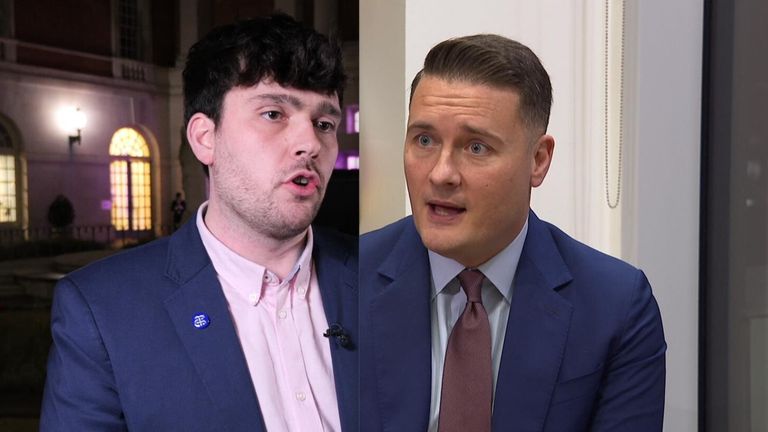
Will doctors accept late deal to avoid strikes?
Flu vaccinations on the up… who can get one?
The NHS is urging anyone eligible to get their flu vaccination to help prevent them getting seriously ill.
Latest figures show more than 17.4 million people have been vaccinated so far this year, more than 381,000 higher than last year.
You can get it if you:
• Are 65 or over in England, Scotland, Wales and Northern Ireland
• Are pregnant
• Live in a care home
• Are the main carer for an older or disabled person, or receive carer’s allowance
• Live with someone who has a weakened immune system
• Are a frontline health and social care worker
• Are of school age
• Have certain medical conditions (the NHS has a full list)
Wes Streeting, the health secretary, warned of a “tidal wave of flu tearing through our hospitals”.
“We are working with the NHS to make sure it is able to cope with this as best as possible,” he said.
Warning ‘extremely challenging few weeks ahead’
Professor Meghana Pandit, NHS national medical director, warned the health service faces “an extremely challenging few weeks ahead” with “staff being pushed to the limit”.
She said: “With record demand for A&E and ambulances and an impending resident doctors’ strike, this unprecedented wave of super flu is leaving the NHS facing a worst-case scenario for this time of year – with staff being pushed to the limit to keep providing the best possible care for patients.
“The numbers of patients in hospital with flu is extremely high for this time of year. Even worse, it continues to rise and the peak is not in sight yet, so the NHS faces an extremely challenging few weeks ahead.”
She added: “We have prepared earlier for winter than ever before, and stress-tested services to ensure people have a range of ways to get the help they need and avoid needing to go to A&E.
“For non-life-threatening care, people should call NHS 111 or use 111 online, which can direct you to the most appropriate place, and use A&E and 999 for life threatening conditions and serious injuries.”
Read more from Sky News:
US accused of ‘piracy’
Flights diverted in Moscow
Mr Streeting has offered the British Medical Association (BMA) a last-minute deal in the hope doctors will call off the walkout, which starts next Wednesday.
The doctors’ union has agreed to put the offer to members over the coming day, and is expected to announced a decision on Monday, just two days before the planned strike.
The offer includes a fast expansion of specialist training posts as well as covering out-of-pocket expenses such as exam fees, but does not include extra pay.
-
 Sports2 years ago
Story injured on diving stop, exits Red Sox game
-
 Sports3 years ago
‘Storybook stuff’: Inside the night Bryce Harper sent the Phillies to the World Series
-
 Sports2 years ago
Game 1 of WS least-watched in recorded history
-
 Sports3 years ago
Button battles heat exhaustion in NASCAR debut
-
 Sports3 years ago
MLB Rank 2023: Ranking baseball’s top 100 players
-
Sports4 years ago
Team Europe easily wins 4th straight Laver Cup
-
 Environment3 years ago
Japan and South Korea have a lot at stake in a free and open South China Sea
-
 Environment1 year ago
Here are the best electric bikes you can buy at every price level in October 2024