
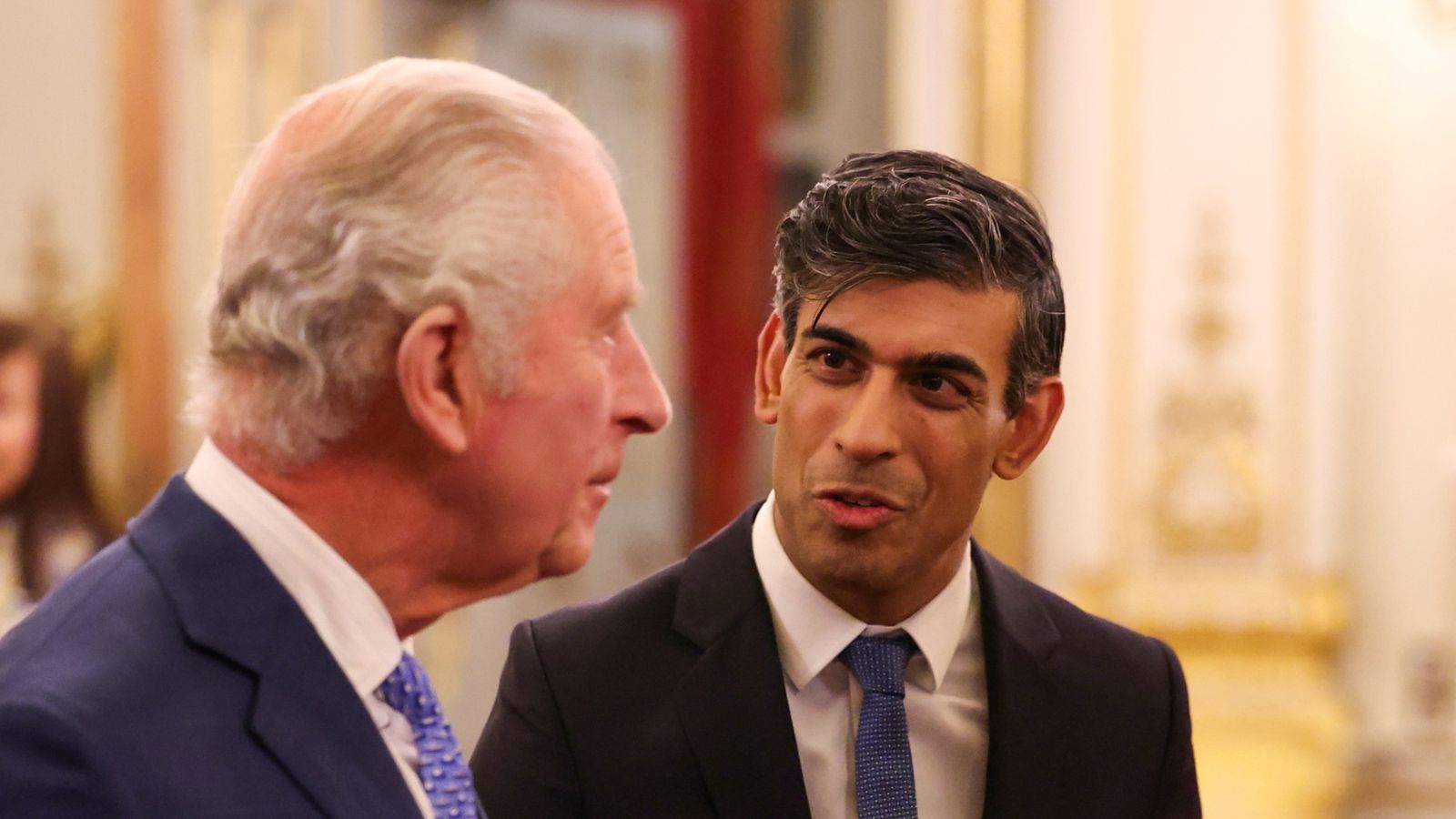
Rishi Sunak criticised for ‘surprise’ honours list including major Tory donor Mohamed Mansour

Rishi Sunak has been criticised for announcing a “surprise” round of honours – including a knighthood for a major donor to the Conservative Party.
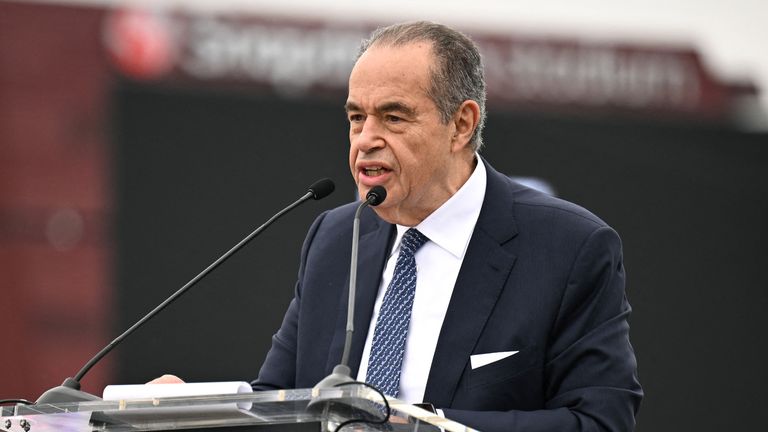
It was announced on the Thursday before the Easter bank holiday weekend that Mohamed Mansour was being knighted for business, charity and political service – he had given £5m to the Tories in 2023 and is a senior treasurer at the party.
A number of Conservative MPs were also made knights and dames.
Politics latest: Michael Gove predicts election date
Labour’s chair, Anneliese Dodds, said Mr Sunak‘s nominations were “either the arrogant act of an entitled man who’s stopped caring what the public thinks, or the demob-happy self-indulgence of someone who doesn’t expect to be prime minister much longer”.
Asked by Sky News if Labour would rule out giving donors honours if they were in government, Ms Dodds said giving money should not be an “automatic pass”.
Following the announcement, Mr Mansour said: “This award is the greatest honour of my life. I am thrilled and hugely grateful.
“This award would have meant so much to my father and mother. I wish they could have lived to see this day. This honour is for them, for the values they taught my siblings and I and for everything they did for us.”
Downing Street sources highlighted Mr Mansour’s work supporting charities – including financially backing a memorial to those who died due to COVID.
Speaking to Sky News, Conservative peer and polling expert Lord Robert Hayward said the public would be “unhappy” with the move.
While some non-political figures – like director Christopher Nolan – were also knighted, it’s the political acts that will draw attention.
Mohamed Mansour, who has been knighted by Rishi Sunak. Pic: Reuters
This will hardly strengthen confidence in the honours system

We’ve been here before.
Questions over who gets gongs stretch back decades.
The appointment of Tory donor and treasurer Mohamed Mansour inevitably relights the row.
Labour has accused Rishi Sunak of being “demob happy” and “self-indulgent”.
Sir Keir Starmer has vowed to clean up cronyism in the honours system.
What that means in practice is unclear, although he has said he wouldn’t have a resignation honours list if he became prime minister.
We will wait and see if knighthoods are dished out to major Labour donors if the party makes it into government.
In fact, it’s the timing of this announcement that is potentially more interesting than the contents.
There isn’t usually an “Easter Honours List”.
That’s fuelled speculation of attempts to square off supporters ahead of an early general election.
Government sources deny that and say the answer is purely administrative – appointments to the privy council from the devolved assemblies were required, and so the prime minister also wanted to take the opportunity to honour other individuals too.
It’s a somewhat curious explanation.
But whatever the truth, the sight of another honour being handed out to someone who’s very much in the fold of party politics will hardly strengthen confidence in the behind-the-scenes machinations of Westminster.
Lord Haywood said: “I think people don’t like it, there’s no question about that.
“The problem is that you’ve got people who are genuine philanthropists who also give money to a political party, and that’s where the line isn’t differentiated.”
He added that he was “really surprised” by the timing of the list – but it probably doesn’t say anything about the timing of a general election.
Normally, honours are granted at New Year’s on the monarch’s birthday, or after the resignation of a prime minister, although this is a convention not a rule.
The timing of the announcement, while parliament is in recess, has also raised eyebrows – although sources suggested the timing was linked to the need to make appointments to the Privy Council, including the new Welsh First Minister Vaughan Gething.
Tory MP Philip Davies was one of the Conservative MPs to be made knight. He is known for hosting a television show on GB News with his wife, fellow Conservative MP and minister Esther McVey.
Ex-sports minister Tracey Crouch will become a dame having run a review into reforming the UK football system, and farming minister Mark Spencer will also become a sir.
Treasury Select Committee chair Harriett Baldwin – a Conservative MP – will also become a dame.

Keep up with all the latest news from the UK and around the world by following Sky News
Away from politics, Mr Nolan and wife and producer Emma Thomas have been handed honours following the release of award-winning biopic Oppenheimer.
Dr Demis Hassabis, who co-founded Google’s DeepMind AI business, was also made a knight.
Politics
Young people may lose benefits if they don’t engage with help from new £820m scheme, government warns

Young people could lose their right to universal credit if they refuse to engage with help from a new scheme without good reason, the government has warned.
Almost one million will gain from plans to get them off benefits and into the workforce, according to officials.
Latest updates from the Politics Hub
Pic: iStock
It comes as the number of young people not in employment, education or training (NEET) has risen by more than a quarter since the COVID pandemic, with around 940,000 16 to 24-year-olds considered as NEET as of September this year, said the Office for National Statistics.
That is an increase of 195,000 in the last two years, mainly driven by increasing sickness and disability rates.
The £820m package includes funding to create 350,000 new workplace opportunities, including training and work experience, which will be offered in industries including construction, hospitality and healthcare.
Around 900,000 people on universal credit will be given a “dedicated work support session”.
That will be followed by four weeks of “intensive support” to help them find work in one of up to six “pathways”, which are: work, work experience, apprenticeships, wider training, learning, or a workplace training programme with a guaranteed interview at the end.
However, Work and Pensions Secretary Pat McFadden has warned that young people could lose some of their benefits if they refuse to engage with the scheme without good reason.
“Doing nothing should not be an option,” he told Sky News’ Sunday Morning with Trevor Phillips.
“If someone just took that attitude, yes, they would then be subject to, you know, the obligations that are already part of the system.”
“What I want to see is young people in the habit of getting up in the morning, doing the right thing, going to work,” he added.
“That experience of that obligation, but also the sense of pride and purpose that comes with having a job.”

Some young people on benefits will be offered job opportunities in construction. Pic: iStock
Read more from Sky News:
Child poverty strategy unveiled – but not everyone’s happy
Universal credit claimants soar by over million in a year
The government says these pathways will be delivered in coordination with employers, while government-backed guaranteed jobs will be provided for up to 55,000 young people from spring 2026, but only in those areas with the highest need.
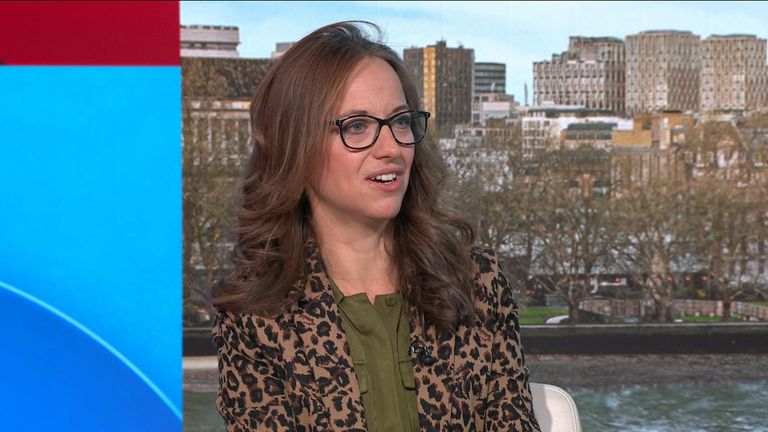
However, shadow work and pensions secretary Helen Whately, from the Conservatives, said the scheme is “an admission the government has no plan for growth, no plan to create real jobs, and no way of measuring whether any of this money delivers results”.
She told Sky News the proposals are a “classic Labour approach” for tackling youth unemployment.
Youth jobs plan ‘the wrong answer’
“What we’ve seen today announced by the government is funding the best part of £1bn on work placements, and government-created jobs for young people. That sounds all very well,” she told Sunday Morning with Trevor Phillips.
“But the fact is, and that’s the absurdity of it is, just two weeks ago, we had a budget from the chancellor, which is expected to destroy 200,000 jobs.
“So the problem we have here is a government whose policies are destroying jobs, destroying opportunities for young people, now saying they’re going to spend taxpayers’ money on creating work placements. It’s just simply the wrong answer.”
Ms Whately also said the government needs to tackle people who are unmotivated to work at all, and agreed with Mr McFadden on taking away the right to universal credit if they refuse opportunities to work.
But she said the “main reason” young people are out of work is because “they’re moving on to sickness benefits”.
Ms Whately also pointed to the government’s diminished attempt to slash benefits earlier in the year, where planned welfare cuts were significantly scaled down after opposition from their own MPs.
The funding will also expand youth hubs to help provide advice on writing CVs or seeking training, and also provide housing and mental health support.
Some £34m from the funding will be used to launch a new “Risk of NEET indicator tool”, aimed at identifying those young people who need support before they leave education and become unemployed.
Monitoring of attendance in further education will be bolstered, and automatic enrolment in further education will also be piloted for young people without a place.
-
 Sports2 years ago
Story injured on diving stop, exits Red Sox game
-
 Sports3 years ago
‘Storybook stuff’: Inside the night Bryce Harper sent the Phillies to the World Series
-
 Sports2 years ago
Game 1 of WS least-watched in recorded history
-
 Sports3 years ago
Button battles heat exhaustion in NASCAR debut
-
 Sports3 years ago
MLB Rank 2023: Ranking baseball’s top 100 players
-
Sports4 years ago
Team Europe easily wins 4th straight Laver Cup
-
 Environment3 years ago
Japan and South Korea have a lot at stake in a free and open South China Sea
-
 Environment1 year ago
Here are the best electric bikes you can buy at every price level in October 2024