



Someone is going to be upset — and it’s not just ACC champion Duke, which likely will be excluded from the playoff in favor of Sun Belt champion James Madison.
It might be the entire ACC that is fuming.
With Alabama losing to Georgia in the SEC championship game, the College Football Playoff selection committee’s biggest decision Saturday night will be how far to drop the Tide — and the result could mean the difference for Miami’s playoff hopes. The focus of the final ranking on Selection Day (Noon ET, ESPN) will be where it has been all season — on Notre Dame, Alabama and Miami.
Will the three-loss Tide earn the committee’s final at-large bid as the SEC runner-up? Or will Alabama’s poor performance against Georgia open the door for Notre Dame and Miami to finish in the top 10?
Here’s our prediction for what the committee might do in its sixth and final ranking on Selection Day.
Projecting the top 12

Why they could be here: The Big Ten champions are the only undefeated team left in the country, and they earned the best win of the season by defeating the committee’s No. 1 team, Ohio State. The Hoosiers entered Saturday ranked No. 1 in ESPN’s strength of record metric, No. 1 in total efficiency and No. 4 in game control — and that was before they beat Ohio State.
Why they could be lower: This isn’t a realistic scenario.
Need to know: Indiana won its first Big Ten title since 1967 (shared with Minnesota and Purdue) and its first outright Big Ten title since 1945.

Why they could be here: The Buckeyes have arguably the best loss of the season — to the committee’s No. 2 team — and it was a close game that went down to the wire. Ohio State still has two wins against CFP top-25 teams in Texas and Michigan, and the committee has been impressed all season with the Buckeyes’ talent and consistent dominance.
Why they could be lower: Without the win against the Hoosiers, Ohio State’s best win is a close home game against Texas — a team that Georgia hammered 35-10. Georgia and Texas Tech also have multiple wins against CFP top-25 opponents. Ohio State’s strength of schedule was ranked No. 46 entering Saturday, while Georgia was No. 25.
Need to know: Even if the committee drops Ohio State lower, it’s highly unlikely the Buckeyes fall out of the top four. They still have a strong case for a first-round bye as the Big Ten runner-up.

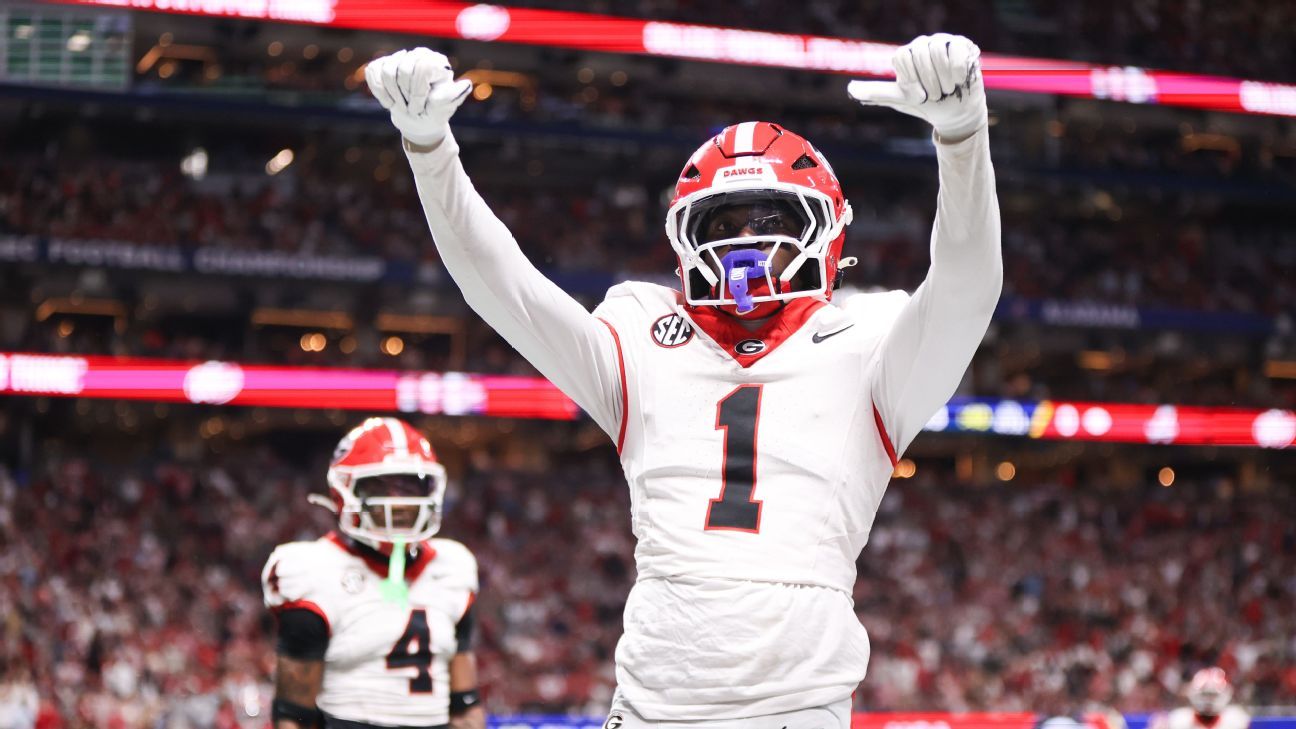
Why they could be here: The SEC champs avenged their regular-season loss to Alabama, and they did it in resounding fashion. The Bulldogs’ lone loss to the Tide is better than Texas Tech’s loss to Arizona, even though the committee knows the Red Raiders were without their starting quarterback in that game. Nobody has a better loss, though, than Ohio State, the Big Ten runner-up. Indiana and Ohio State entered Saturday ranked No. 1 and No. 2, respectively, in ESPN’s strength of record metric, and playing each other in the Big Ten title game will only boost that. Georgia also has a convincing victory against Texas, which should still be the committee’s No. 13 team. Wins against Tennessee, Ole Miss and Georgia Tech helped the Bulldogs to a top-five strength of record entering Saturday.
Why they could be higher: The committee might drop Ohio State to No. 3 because its strength of schedule is lower, and because of the common opponent in Texas. Georgia beat Texas 35-10, while Ohio State beat the Longhorns 14-7 in the season opener. Some committee members could believe Georgia has a stronger overall résumé.
Need to know: The Bulldogs’ 28-7 SEC title game win was Georgia’s largest margin of victory over Alabama since 1976 (won 21-0).

Why they could be here: The Red Raiders dominated BYU for a second time this season, clinching a top-four finish and a first-round bye as the Big 12 champs. The committee has been impressed by how consistently they’ve owned the margin of victory this season, ranking No. 2 in the country in points margin per game (31.5) and No. 1 in points margin (410) entering Saturday. The Red Raiders’ defense, particularly up front, has also separated Texas Tech from other one-loss contenders. The committee has considered all season that Texas Tech’s lone loss came Oct. 18 at Arizona State when Red Raiders starting quarterback Behren Morton was injured.
Why they could be higher: Texas Tech entered Saturday No. 3 in total efficiency — behind Indiana and Ohio State. Georgia was No. 11. Defensively, the Red Raiders are No. 1.
Need to know: Texas Tech entered Saturday with the worst schedule strength (59) of the top-four contenders, and the lowest strength of record (10th).

Why they could be here: With Georgia and Texas Tech winning their respective conference championship games, the No. 5 spot is likely the Ducks’ Selection Day ceiling. Oregon earned a respectable road win at Washington, a top-25 win against No. 16 USC, and the Nov. 8 victory at Iowa was ultimately against a CFP top-25 team, as the four-loss Hawkeyes came back into the ranking at No. 23 last week. Oregon has also impressed the committee with its top-five ranking in offensive and defensive efficiency. It also doesn’t hurt that the Ducks’ only loss is to the Big Ten champs, Indiana.
Why they could be higher: It’s unlikely that Ohio State drops behind Oregon. They both played the Hoosiers, and they both lost. The committee could compare their wins, but Ohio State’s victory against Texas trumps Oregon’s best win against USC.
Need to know: The No. 5 seed is one of the most desirable because Oregon gets home-field advantage and also plays the No. 12 seed, which this year will likely be James Madison, the Sun Belt champs.

Why they could be here: The selection committee rewarded Ole Miss in its last ranking for its regular-season win against rival Mississippi State, but also bumped up the Rebels because Texas A&M dropped after losing to Texas. The Rebels’ Oct. 18 loss at Georgia will keep them behind the Bulldogs, but the Oct. 25 win at Oklahoma gives Ole Miss an edge against the Sooners. The Rebels’ 45-10 victory Sept. 20 against Tulane is one of their best wins. The Green Wave won the American title and clinched a spot in the CFP.
Why they could be higher: Now that Tulane is the American champ, the committee could consider giving Ole Miss a boost above Oregon for beating the Green Wave. That’s the kind of result that could impact an idle team’s résumé.
Need to know: Even without former coach Lane Kiffin, the Rebels should still be a lock to host a first-round game.

Why they could be here: Because the Aggies didn’t play Alabama or Georgia this season, the SEC championship game didn’t impact their résumé while idle. The Aggies have only one win against a team in the CFP top 25, and that was the 41-40 victory at Notre Dame on Sept. 13. Still, the committee has a lot of respect for the Aggies’ four road wins.
Why they could be higher: It would be surprising to see Texas A&M move because Texas Tech won the Big 12 and won’t sink, and the loser of the Big Ten championship game is unlikely to drop outside of the top four.
Need to know: The Aggies should remain in position to host a first-round home game, and if they remain the No. 7 seed, they would face the No. 10 team, which is the committee’s toughest decision this week. Though the Aggies didn’t play Alabama during the regular season, it’s possible they could meet in the first round.

Why they could be here: The Sooners have earned their spot in the CFP thanks to an elite defense and their ability to continue to find ways to win — even when the offense has been average. The committee respects OU’s back-to-back road victories at Tennessee and Alabama. The Tide’s loss to Georgia doesn’t diminish the value of that win, especially because Alabama can still finish in the CFP field. The Sooners will still have the head-to-head tiebreaker, though, over Alabama. Oklahoma’s loss to Ole Miss will keep the Sooners behind the Rebels, but the committee has kept OU ahead of Texas despite the Sooners’ loss to the Longhorns because Texas has a third loss.
Why they could be higher: It’s unlikely the Sooners move up after being idle because Saturday’s results didn’t directly impact their place.
Need to know: With Alabama losing in the SEC championship game, the Sooners should still be safe as the last at-large team to host a first-round game.

Why they could be here: The Irish benefited from BYU losing to Texas Tech — preventing the Big 12 from having two teams in — and when Georgia beat Alabama soundly in the SEC title game. Arguably the biggest debate in the room all season has been between Notre Dame and Alabama, with the committee members seesawing between the two until Alabama’s Iron Bowl win tipped the scales last week for a few committee members who had been on the fence. With the loss to Georgia, though, the balance should swing back in Notre Dame’s favor, pushing Notre Dame safely into the bracket at No. 9.
Why they could be lower: If Alabama falls behind Miami, and the Canes are right next to Notre Dame, the committee could consider Miami’s head-to-head win over Notre Dame in the season opener and flip them. Even if that happened, though, both teams would still be in, and it would impact only seeding.
Need to know: Notre Dame has been in the committee’s top 10 in all five rankings this season. Last year, under the 12-team format, there were six teams that were ranked in the top 10 of every poll leading up to Selection Day; all six of them made the CFP (Oregon, Texas, Penn State, Indiana, Ohio State, Notre Dame), according to ESPN Research.

Why they could be here: Georgia beat Alabama soundly in the SEC championship game — with the selection members watching together. The group had called out Alabama’s inability to run the ball since the loss to Florida State, and it was exposed again against a relentless Georgia defense, finishing with minus-3 yards on the ground (with minus-28 of that coming from quarterback Ty Simpson). Alabama had the edge against that defense in a 24-21 win Sept. 27 in Athens. Georgia gave up 262 yards in the first half that day as Alabama scored on four of five possessions. The committee will consider Alabama’s win that day against the eventual SEC champs (along with victories against Vanderbilt, Missouri and Tennessee). Alabama’s win against Georgia is better than Miami’s victory against Notre Dame.
Why they could be lower: Alabama was outplayed Saturday and Simpson was off-target. And the Tide lost the season opener to Florida State. If the committee drops the Tide lower, it won’t be as a punishment for playing in the SEC title game — it will be because of how Alabama performed in it.
Need to know: Same as Notre Dame above, Alabama has been ranked in the selection committee’s top 10 every week.

Why they could be here: With Alabama and BYU losing, it’s possible Miami and Notre Dame get in, but for that to happen, Alabama has to drop behind Miami. The Canes are still on the outside in this projection because the committee has believed each week that Notre Dame is the better team, and they were both idle Saturday. The committee would not intentionally put Alabama between Miami and Notre Dame, so it doesn’t have to deal with the head-to-head — that’s not how the voting works — but the Tide could fall there because the committee recognized Alabama was put in a position where it had to beat the same team twice in an additional game. Miami finished the season with two losses to unranked opponents, while Alabama and Notre Dame had losses to top-10 teams.
Why they could be higher: Alabama lost to Florida State, which Miami beat. The selection committee could drop Alabama to No. 11 behind Miami because of its third loss — and poor play — in a lopsided game against Georgia. That would open the door for Miami and Notre Dame to earn the final two at-large spots, regardless of the order.
Need to know: This depends in part on whom the committee is comparing the Canes with — Alabama or Notre Dame. It has been well-documented how close Miami and Notre Dame are. But if the group is comparing Miami and Alabama side-by-side, the Tide could have the edge. Alabama entered Saturday ranked No. 8 in strength of record, while Miami was No. 14. The Canes were No. 44 in strength of schedule, while Bama was No. 11.

Why they could be here: At 11-2, BYU is lumped in the group of two-loss teams at the bottom of the top 12, so the committee will compare the Cougars against Notre Dame and Miami. BYU lost by double digits again, though, to Texas Tech, and that likely will cause the Cougars to drop behind the Canes. BYU has two CFP top-25 wins: in double overtime at current No. 18 Arizona, and 24-21 at current No. 15 Utah. Though BYU’s wins aren’t as impressive as what Texas accomplished against Texas A&M, Vanderbilt and Oklahoma, the committee could separate the two in part by their losses. The Longhorns’ defeat to Florida, along with their other losses, is holding back Texas in the committee meeting room.
Why they could be higher: BYU’s only two losses are to the Big 12 champions and a top-four team. Those two losses are better than Miami’s losses to SMU and Louisville. BYU also entered Saturday ranked No. 6 in ESPN’s strength of record metric, and it won’t be diminished by playing a top-four team. Miami was No. 14 and didn’t play. BYU also had a slight edge over Miami in strength of schedule.
Need to know: BYU will be excluded from the playoff for James Madison, which will earn the No. 12 seed as the Sun Belt champion.
Bracket
Based on the rankings above, the seeding would be:
First-round byes
No. 1 Indiana (Big Ten champ)
No. 2 Ohio State
No. 3 Georgia (SEC champ)
No. 4 Texas Tech (Big 12 champ)
First-round games
On campus, Dec. 19 and 20
No. 12 James Madison (Sun Belt champ) at No. 5 Oregon
No. 11 Tulane (American champ) at No. 6 Ole Miss
No. 10 Alabama at No. 7 Texas A&M
No. 9 Notre Dame at No. 8 Oklahoma
Quarterfinal games
At the Goodyear Cotton Bowl, Capital One Orange Bowl, Rose Bowl Presented by Prudential and Allstate Sugar Bowl on Dec. 31 and Jan. 1.
No. 12 James Madison/No. 5 Oregon winner vs. No. 4 Texas Tech
No. 11 Tulane/No. 6 Ole Miss winner vs. No. 3 Georgia
No. 10 Alabama/No. 7 Texas A&M winner vs. No. 2 Ohio State
No. 9 Notre Dame/No. 8 Oklahoma winner vs. No. 1 Indiana

-
Kyle Bonagura
Close
Kyle Bonagura
ESPN Staff Writer
- Covers college football.
- Joined ESPN in 2014.
- Attended Washington State University.
-
Mark Schlabach
Close
Mark Schlabach
ESPN Senior Writer
- Senior college football writer
- Author of seven books on college football
- Graduate of the University of Georgia
After a thrilling championship weekend, the games have all been played and it’s time to wait for the final College Football Playoff rankings and bowl assignments. Does Alabama make the playoff? What about Miami and Notre Dame? And what is the trickle-down effect of those decisions on bowl season?
We don’t need to wait for the official matchups.
ESPN bowl gurus Kyle Bonagura and Mark Schlabach are projecting every postseason matchup, including their breakdowns of how the playoff will play out.
Jump to a section:
Playoff picks | Quarterfinals
Semis, title game | Bowl season
College Football Playoff
First-round games (at campus sites)
All times Eastern
Friday, Dec. 19
8 p.m., ABC, ESPN
Saturday, Dec. 20
Noon, ABC, ESPN
3:30 p.m., TNT
7:30 p.m., TNT
Bonagura: No. 12 James Madison at No. 5 Oregon
Schlabach: No. 12 James Madison at No. 5 Oregon
Bonagura: No. 11 Tulane at No. 6 Ole Miss
Schlabach: No. 11 Tulane at No. 6 Ole Miss
Bonagura: No. 10 Alabama at No. 7 Texas A&M
Schlabach: No. 10 Alabama at No. 7 Texas A&M
Bonagura: No. 9 Notre Dame at No. 8 Oklahoma
Schlabach: No. 9 Notre Dame at No. 8 Oklahoma
CFP quarterfinals
Wednesday, Dec. 31
CFP Quarterfinal at the Goodyear Cotton Bowl Classic
AT&T Stadium (Arlington, Texas)
7:30 p.m., ESPN
Bonagura: No. 7 Texas A&M vs. No. 2 Ohio State
Schlabach: No. 5 Oregon vs. No. 4 Texas Tech
Thursday, Jan. 1
CFP Quarterfinal at the Capital One Orange Bowl
Hard Rock Stadium (Miami Gardens, Florida)
Noon, ESPN
Bonagura: No. 5 Oregon vs. No. 4 Texas Tech
Schlabach: No. 6 Ole Miss vs. No. 3 Ohio State
CFP Quarterfinal at the Rose Bowl Game presented by Prudential
Rose Bowl (Pasadena, California)
4 p.m., ESPN
Bonagura: No. 9 Notre Dame vs. No. 1 Indiana
Schlabach: No. 9 Notre Dame vs. No. 1 Indiana
CFP Quarterfinal at the Allstate Sugar Bowl
Caesars Superdome (New Orleans)
8 p.m., ESPN
Bonagura: No. 6 Ole Miss vs. No. 3 Georgia
Schlabach: No. 7 Texas A&M vs. No. 2 Georgia
CFP semifinals, national championship game
Thursday, Jan. 8
CFP Semifinal at the Vrbo Fiesta Bowl
State Farm Stadium (Glendale, Arizona)
7:30 p.m., ESPN
Bonagura: No. 4 Texas Tech vs. No. 1 Indiana
Schlabach: No. 3 Ohio State vs. No. 2 Georgia
Friday, Jan. 9
CFP Semifinal at the Chick-fil-A Peach Bowl
Mercedes-Benz Stadium (Atlanta)
7:30 p.m., ESPN
Bonagura: No. 3 Georgia vs. No. 2 Ohio State
Schlabach: No. 4 Texas Tech vs. No. 1 Indiana
Monday, Jan. 19
CFP National Championship Presented by AT&T
Hard Rock Stadium (Miami Gardens, Florida)
7:45 p.m., ESPN
Bonagura: No. 1 Indiana vs. No. 2 Ohio State
Schlabach: No. 1 Indiana vs. No. 3 Ohio State
Complete bowl season schedule
Matchups in bold have already been announced
Saturday, Dec. 13
Cricket Celebration Bowl
Mercedes-Benz Stadium (Atlanta)
Noon, ABC
South Carolina State vs. Prairie View A&M
Bucked Up LA Bowl
SoFi Stadium (Inglewood, California)
8 p.m., ABC
Bonagura: Washington vs. Boise State
Schlabach: Washington vs. Boise State
Tuesday, Dec. 16
IS4S Salute to Veterans Bowl
Cramton Bowl (Montgomery, Alabama)
9 p.m., ESPN
Bonagura: Miami (Ohio) vs. Texas State
Schlabach: Jacksonville State vs. Troy
Wednesday, Dec. 17
StaffDNA Cure Bowl
Camping World Stadium (Orlando, Florida)
5 p.m., ESPN
Old Dominion vs. South Florida
68 Ventures Bowl
Hancock Whitney Stadium (Mobile, Alabama)
8:30 p.m., ESPN
Louisiana vs. Delaware
Thursday, Dec. 18
Xbox Bowl
Ford Center at The Star (Frisco, Texas)
9 p.m., ESPN2
Missouri State vs. Arkansas State
Friday, Dec. 19
Myrtle Beach Bowl Presented by Engine
Brooks Stadium (Conway, South Carolina)
11 a.m., ESPN
Bonagura: Louisiana Tech vs. Georgia Southern
Schlabach: Western Michigan vs. Georgia Southern
Union Home Mortgage Gasparilla Bowl
Raymond James Stadium (Tampa, Florida)
2:30 p.m., ESPN
Bonagura: NC State vs. UConn
Schlabach: Wake Forest vs. UConn
Monday, Dec. 22
Famous Idaho Potato Bowl
Albertsons Stadium (Boise, Idaho)
2 p.m., ESPN
Bonagura: Washington State vs. Utah State
Schlabach: Ohio vs. San Diego State
Tuesday, Dec. 23
Bush’s Boca Raton Bowl
Flagler Credit Union Stadium (Boca Raton, Florida)
2 p.m., ESPN
Bonagura: Florida International vs. Central Michigan
Schlabach: Florida International vs. Miami (Ohio)
New Orleans Bowl
Caesars Superdome (New Orleans)
5:30 p.m., ESPN
Bonagura: Jacksonville State vs. Southern Miss
Schlabach: Kennesaw State vs. Southern Miss
Scooter’s Coffee Frisco Bowl
Ford Center at The Star (Frisco, Texas)
9 p.m., ESPN
Bonagura: Western Kentucky vs. San Diego State
Schlabach: Texas State vs. Louisiana Tech
Wednesday, Dec. 24
Sheraton Hawai’i Bowl
Clarence T.C. Ching Athletics Complex (Honolulu)
8 p.m., ESPN
California vs. Hawai’i
Friday, Dec. 26
GameAbove Sports Bowl
Ford Field (Detroit)
1 p.m., ESPN
Bonagura: Northwestern vs. Toledo
Schlabach: Northwestern vs. Central Michigan
Rate Bowl
Chase Field (Phoenix)
4:30 p.m., ESPN
Bonagura: Minnesota vs. Kansas State
Schlabach: Minnesota vs. Iowa State
SERVPRO First Responder Bowl
Gerald J. Ford Stadium (Dallas)
8 p.m., ESPN
Bonagura: UTSA vs. Coastal Carolina
Schlabach: UTSA vs. Utah State
Saturday, Dec. 27
Go Bowling Military Bowl
Navy-Marine Corps Memorial Stadium (Annapolis, Maryland)
11 a.m., ESPN
Bonagura: Louisville vs. North Texas
Schlabach: Louisville vs. East Carolina
Bad Boy Mowers Pinstripe Bowl
Yankee Stadium (Bronx, New York)
Noon, ABC
Bonagura: Penn State vs. Pitt
Schlabach: Penn State vs. Clemson
Wasabi Fenway Bowl
Fenway Park (Boston)
2:15 p.m., ESPN
Bonagura: Clemson vs. Army
Schlabach: NC State vs. Army
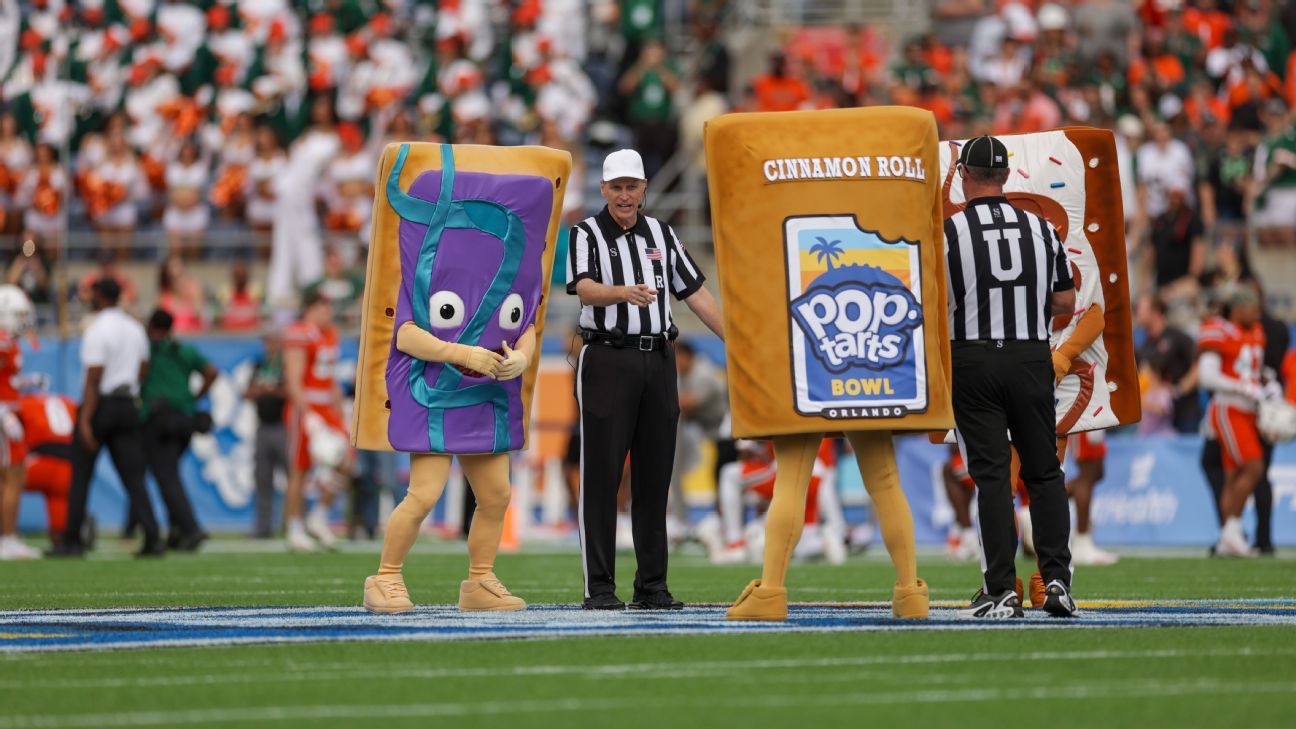
Pop-Tarts Bowl
Camping World Stadium (Orlando, Florida)
3:30 p.m., ABC
Bonagura: Virginia vs. TCU
Schlabach: Duke vs. TCU
Snoop Dogg Arizona Bowl
Arizona Stadium (Tucson, Arizona)
4:30 p.m., CW Network
Bonagura: Ohio vs. Fresno State
Schlabach: Toledo vs. Fresno State
Isleta New Mexico Bowl
University Stadium (Albuquerque, New Mexico)
5:45 p.m., ESPN
Bonagura: East Carolina vs. New Mexico
Schlabach: Washington State vs. New Mexico
TaxSlayer Gator Bowl
EverBank Stadium (Jacksonville, Florida)
7:30 p.m. ABC
Bonagura: Miami vs. Vanderbilt
Schlabach: Miami vs. Vanderbilt
Kinder’s Texas Bowl
NRG Stadium (Houston)
9:15 p.m., ESPN
Bonagura: Houston vs. Missouri
Schlabach: Houston vs. Missouri
Monday, Dec. 29
JLab Birmingham Bowl
Protective Stadium (Birmingham, Alabama)
2 p.m., ESPN
Bonagura: UNLV vs. Memphis
Schlabach: Coastal Carolina vs. Memphis
Tuesday, Dec. 30
Radiance Technologies Independence Bowl
Independence Stadium (Shreveport, Louisiana)
2 p.m., ESPN
Bonagura: Cincinnati vs. Western Michigan
Schlabach: UNLV vs. Western Kentucky
Liberty Mutual Music City Bowl
Nissan Stadium (Nashville, Tennessee)
5:30 p.m., ESPN
Bonagura: Illinois vs. LSU
Schlabach: Illinois vs. LSU
Valero Alamo Bowl
Alamodome (San Antonio)
9 p.m., ESPN
Bonagura: BYU vs. USC
Schlabach: BYU vs. USC
Wednesday, Dec. 31
ReliaQuest Bowl
Raymond James Stadium (Tampa, Florida)
Noon, ESPN
Bonagura: Iowa vs. Tennessee
Schlabach: Iowa vs. Tennessee
Tony the Tiger Sun Bowl
Sun Bowl Stadium (El Paso, Texas)
2 p.m., CBS
Bonagura: Wake Forest vs. Arizona State
Schlabach: Pitt vs. Arizona State
Cheez-It Citrus Bowl
Camping World Stadium (Orlando, Florida)
3 p.m., ABC
Bonagura: Michigan vs. Texas
Schlabach: Michigan vs. Texas
SRS Distribution Las Vegas Bowl
Allegiant Stadium (Las Vegas)
3:30 p.m., ESPN
Bonagura: Nebraska vs. Utah
Schlabach: Nebraska vs. Utah
Friday, Jan. 2
Lockheed Martin Armed Forces Bowl
Amon G. Carter Stadium (Fort Worth, Texas)
1 p.m., ESPN
Bonagura: Duke vs. Kennesaw State
Schlabach: Kansas State vs. North Texas
AutoZone Liberty Bowl
Simmons Bank Liberty Stadium (Memphis, Tennessee)
4:30 p.m., ESPN
Bonagura: Iowa State vs. Navy
Schlabach: Cincinnati vs. Navy
Duke’s Mayo Bowl
Bank of America Stadium (Charlotte, North Carolina)
8 p.m., ESPN
Bonagura: Georgia Tech vs. Troy
Schlabach: Georgia Tech vs. Virginia
Holiday Bowl
Snapdragon Stadium (San Diego)
8 p.m., Fox
Bonagura: SMU vs. Arizona
Schlabach: SMU vs. Arizona
-
 Sports2 years ago
Story injured on diving stop, exits Red Sox game
-
 Sports3 years ago
‘Storybook stuff’: Inside the night Bryce Harper sent the Phillies to the World Series
-
 Sports2 years ago
Game 1 of WS least-watched in recorded history
-
 Sports3 years ago
Button battles heat exhaustion in NASCAR debut
-
 Sports3 years ago
MLB Rank 2023: Ranking baseball’s top 100 players
-
Sports4 years ago
Team Europe easily wins 4th straight Laver Cup
-
 Environment3 years ago
Japan and South Korea have a lot at stake in a free and open South China Sea
-
 Environment1 year ago
Here are the best electric bikes you can buy at every price level in October 2024