
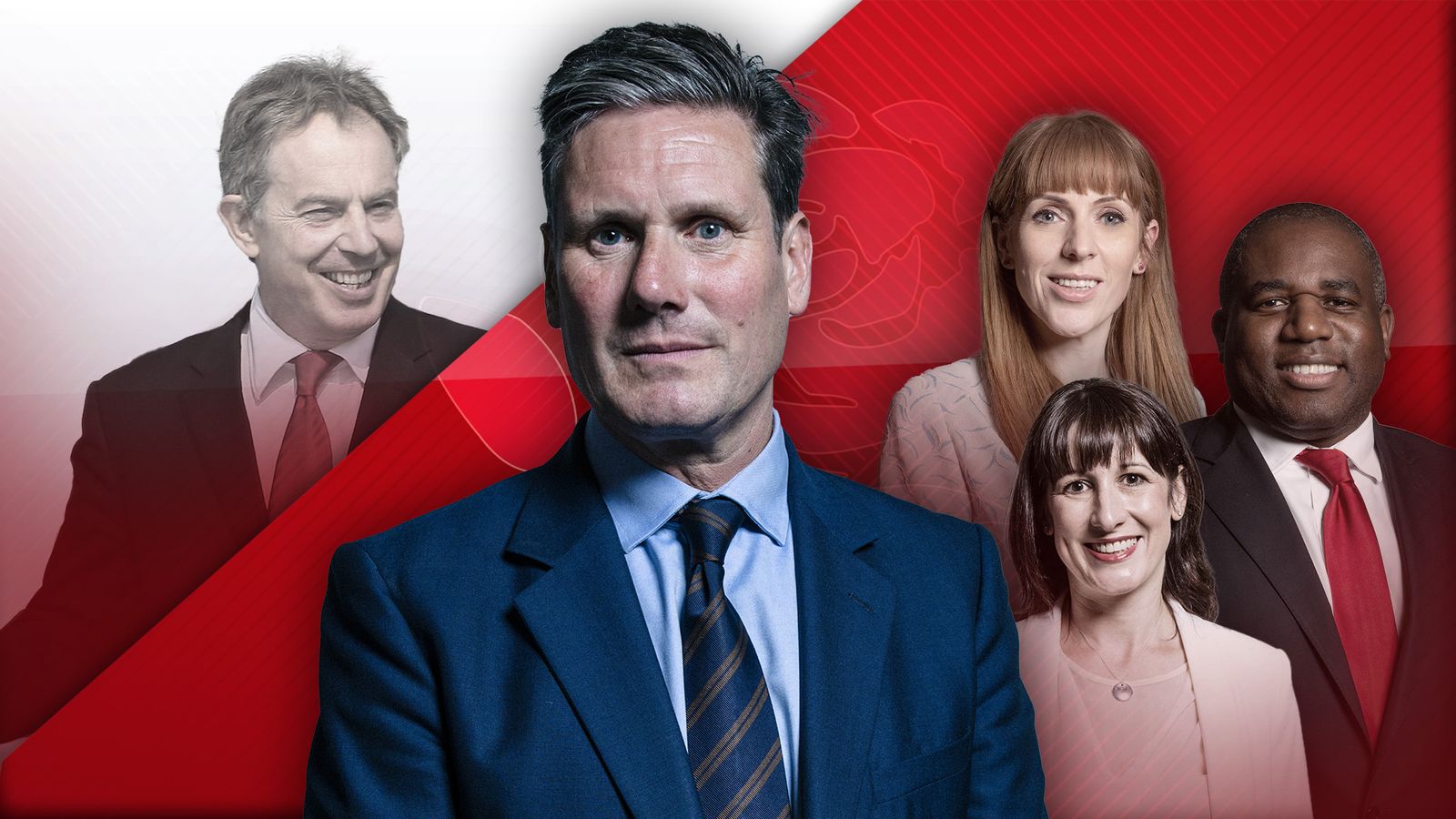
Adam Boulton: Keir Starmer should expect to come under vicious assault from day one if Labour wins landslide


No complacency.
The dictat from Labour high command is that nothing can be taken for granted – certainly not the 99% likelihood which Sir John Curtice places on Labour forming the next government, after the general election.
Victory, even a smashing one, is a possibility however – at least according to stubbornly consistent opinion polls.
The latest major survey, by YouGov, gives Sir Keir Starmer a landslide victory of a scale just short of Tony Blair’s landslide in 1997 when Labour won a 179-seat majority.
It gives Labour 403 MPs, the Conservatives 155, Liberal Democrats 49 and the SNP 23 – amounting to a 154 Labour overall majority.
Another recent large survey, by Survation using the same MRP technique of big samples analysed by region, is more apocalyptic for the Conservatives. It pushes the Tories down to around only 100 MPs and would give Sir Keir a record-breaking 256 majority.
Keir Starmer faces the possibility of winning a majority akin to that seen by Tony Blair. Pic: PA
Labour’s current representation in the Commons would double while the Conservatives would be more than halved.
The Reform Party would have no MPs.
In both these MRP polls and in the numerous national opinion polls over the last couple of years, prominent Conservative MPs and ministers are on course to lose their seats.
Those at risk include Iain Duncan Smith, Jacob Rees Mogg, Penny Mordaunt, Jeremy Hunt, Grant Shapps and James Cleverly.
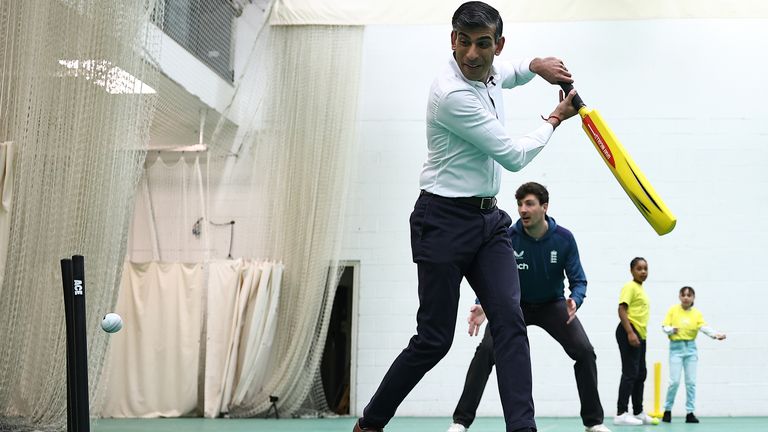
Rishi Sunak is seemingly facing defeat at the next election according to recent polls. Pic: PA
Public opinion seems remarkably settled. Many Conservative MPs feel nobody is listening to them anymore.
Who would be in a landslide Labour government?
Just suppose the polls are right for once and the gap between the parties does not narrow in the run-up to voting, the nation, if not the ever-cautious Labour leadership, needs to start thinking what a landslide Labour government would look like.
There is nothing like the enthusiasm there was for the charismatic Tony Blair in 1997 – Keir Starmer has negative personal ratings, only much better than Rishi Sunak.
Voters are more disillusioned by politicians of any kind than they were then but a landslide would be a landslide and there are some comparisons to be drawn.
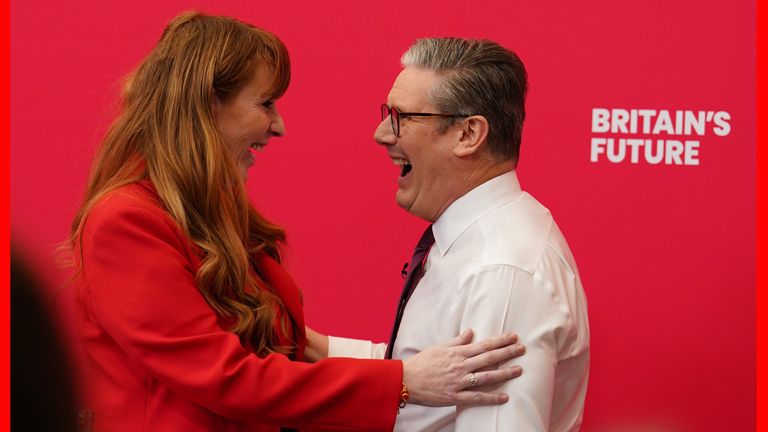
The polls paint a rosy picture for Labour. Pic: PA
When a team wins comfortably it is difficult to change the line-up. It must be assumed that Prime Minister Starmer will flank himself with the same shadow cabinet in the same jobs.
In the great offices of state, neither David Lammy at the Foreign Office nor Chancellor Rachel Reeves would arrive with anything like the authority and reputation enjoyed by Robin Cook and Gordon Brown.
They would also be coming in at more difficult times economically and internationally.

Keep up with all the latest news from the UK and around the world by following Sky News
At the Home Office, the veteran Yvette Cooper is a match for Jack Straw. She will need to deal credibly with immigration, currently the most inflamed topic of public concern.
Fresh creative thinking is more likely to come from less senior ministers such as Wes Streeting at health and deputy leader Angela Rayner.
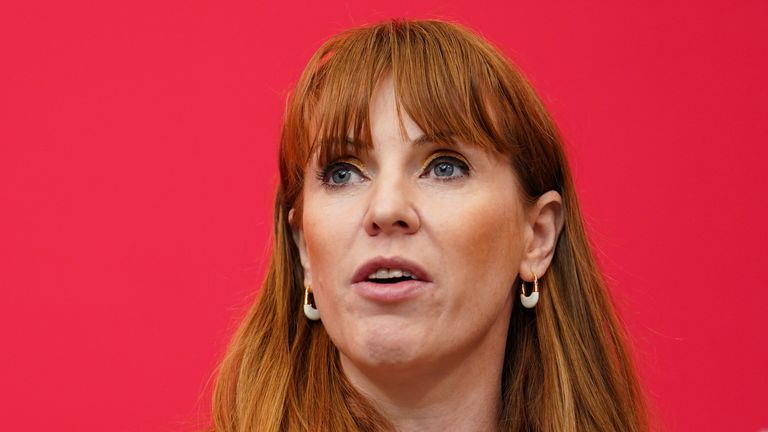
Angela Rayner
Starmer plans to keep control by building up an executive government consisting of himself, Reeves, Rayner and Pat McFadden. Reeves and McFadden are primarily enforcers of economic discipline. Tensions may soon emerge even in this top group as Starmer and Reeves come under internal pressure to deliver tangible improvements in public services.
Labour will lack excuses if the polls are accurate
An overwhelming majority would deprive Labour of excuses not to deliver on what it has promised.
In its first 100 days, the new Labour government will have to enact what little it has trailed including VAT on private schools and a new deal for workers and trade unions.
It would be able get anything through parliament. This, along with trying not to put up unnecessary targets for the Conservatives, may explain the lack of specificity about the five missions which Starmer has set himself.
It may be that something similar to Blair’s pledge card, which set up modest achievable goals in the main areas of public concern, emerges during the campaign.
At present there are little more than warm words from Labour on improving growth, the NHS, green energy, education and childcare. Similarly Reeves is promising reorganisation and new quangos which only relate remotely to the high growth economy Labour says it needs.
In a landslide, more than half of Labour’s MPs will be first-timers at Westminster. There has been an effort to select “Starmtroopers” in winnable seats, but the leadership will not know them all.
? Listen above then tap here to follow Electoral Dysfunction wherever you get your podcasts ?
The new Labour parliamentary party will be younger. Millennial concerns such as housing and the cost of universities will be higher up the agenda.
The backfiring of Brexit on the Conservatives and gender self-ID on the Scottish government is likely to discourage bids to force the pace on divisive issues.
Neither his MPs nor the party conference gave Blair much trouble during his first term. Starmer would likely benefit as well from a mix of inexperience and gratitude.
Read more:
Which MPs are standing down at the general election?
Labour forecast to win landslide of over 400 seats – poll
With the new prime minister simultaneously committed to executive government and “powering up” the regions, challenge from within Labour is likely to come from the mayors in Manchester, Liverpool and London, assuming they are re-elected in their own right this year.
Her Majesty’s Opposition cannot be expected to put up much actual opposition if crushed in a landslide.
The Conservatives would be impotent in parliament and, if 1997-2005 is anything to go by, more interested in their own internal battles over party leadership.
The Liberal Democrats would relish their restoration as the UK’s official third force at the expense of the SNP. Little beyond virtue signalling can be expected from either of those parties.

Keep up with all the latest news from the UK and around the world by following Sky News
The shadow of Tony Blair’s New Labour
For much of Blair’s time in office, constructive scrutiny of the government was led by the mainstream media, courted and cajoled by Peter Mandelson and Alastair Campbell.
There will be no repeat of this. The print and broadcast landscape has fragmented with many outlets more committed to campaigning than reporting fairly.
Like Barack Obama and Joe Biden in the US, Starmer should expect to come under vicious assault from day one. There will be no honeymoon.
After what will have been a “time for a change” election, the electorate may be inclined to give the new government the benefit of the doubt for a long period – but how long?

The Labour leader says there wasn’t much ’emotional space’ for him growing up.
Starmer has repeatedly signalled that his government will need two terms to deliver real change. A landslide victory would provide the best basis on which to build.
In hindsight, Tony Blair has repeatedly bemoaned that his government got off to a slow start and failed to deliver as much as it could have done in its first term.
Far from planning for a landslide, his campaign team before his first victory were preoccupied with preparations for coalition with Paddy Ashdown’s Liberal Democrats.
Caution is one thing, making the best of your opportunities is another. The many voters telling the pollsters that they want a Labour victory must hope that someone, somewhere in Starmer’s rigid hierarchy is thinking hard about what they would do with a big win.

SEC Commissioner Caroline Crenshaw, expected to leave the agency in less than a month, used one of her final public speaking engagements to address the regulator’s response to digital assets.
Speaking at a Brookings Institution event on Thursday, Crenshaw said standards at the SEC had “eroded” in the last year, with “markets [starting] to look like casinos,” and “chaos” as the agency dismissed many years-long enforcement cases, reduced civil penalties and filed fewer actions overall.
The commissioner, expected to depart in January after her term officially ended in June 2024, also criticized many crypto users and the agency’s response to the markets.

“People invest in crypto because they see some others getting rich overnight,” said Crenshaw. “Less visible are the more common stories of people losing their shirts. One thing that consistently puzzles me about crypto is what are cryptocurrency prices based on? Many, but not all, crypto purchasers are not trading based on economic fundamentals.”
She added:
“I think it’s safe to say [crypto purchasers are] speculating, reacting to hysteria from promoters, feeding a desire to gamble, wash trading to push up prices, or, as one Nobel laureate has posited, ‘betting on the popularity of the politicians who support or stand to benefit from the success of crypto.’”
In contrast to Crenshaw’s remarks, SEC Chair Paul Atkins, Commissioner Hester Peirce and Commissioner Mark Uyeda have all publicly expressed their support for the agency’s approach to digital assets and the Trump administration’s direction of policy.
Peirce and Atkins spoke at a Blockchain Association Policy Summit this week to discuss crypto regulation and a path forward on market structure under consideration in the Senate.
Related: Crypto industry fears ‘vehemently anti crypto’ Caroline Crenshaw SEC vote
During the Thursday event’s question-and-answer session, Crenshaw expanded on her views of crypto, stating that it was a “tiny piece of the market,” and suggested that the SEC focus on other regulatory concerns. In addition, she expressed concern that the agency was heading toward giving crypto companies an exception from policies that applied to traditional finance.
“I do worry that as the crypto rules are perhaps implemented, or perhaps we just put out more guidance […] where we say they are not securities, where we loosen the basic fundamentals of the securities laws so that they can operate in our system, but without any of the guardrails that we have in place. I do worry that that can lead to more significant market contagion,” said Crenshaw.
The final throes of bipartisan financial regulators under Trump?
The departure of Crenshaw would leave the SEC with three Republican commissioners, two of whom were nominated by US President Donald Trump. As of Thursday, Trump had not made any announcements signaling that he ever planned to nominate another Democrat to the SEC, and Crenshaw said the agency’s staff had been reduced by about 20% in the last year.
The Commodity Futures Trading Commission also faces a dearth of leadership, with many commissioners leaving the agency in 2025. As of December, acting Chair Caroline Pham was the sole remaining CFTC commissioner and a Republican. However, the US Senate is soon expected to vote on Trump’s nominee, Michael Selig, to chair the agency after Pham.
Magazine: When privacy and AML laws conflict: Crypto projects’ impossible choice

The Belarusian Ministry of Information has blocked access to crypto exchanges Bybit, OKX, Bitget, Gate, Bingx and Weex, it said on Thursday.
According to a government announcement, the ministry has restricted access to the global domains of several crypto exchanges, citing “inappropriate advertising” under Article 511 of the Law on Mass Media.

Cointelegraph reached out to the blocked exchanges but had not received responses at the time of publication.
Belarus is a close ally of Russia on the world stage. The domain restriction comes on the same day that Vladimir Chistyukhin, first deputy chairman at the Central Bank of Russia, told state-backed outlet RIA Novosti that it “agreed to allow qualified investors” into the crypto market. The remarks build on recent reports that the institution was considering easing restrictions on cryptocurrencies in response to the sweeping sanctions imposed on the country.
Russia disclosed plans in late April to allow crypto access only to “super-qualified investors,” defined by wealth and income thresholds of over 100 million rubles ($1.2 million) or an annual income of at least 50 million rubles ($630,000), effectively limiting participation to high-net-worth individuals.
Related: EU sanctions Russian A7A5 stablecoin and crypto exchanges
Russia’s central bank sees crypto’s utility
Chistyukhin said a “crucial point that cannot be ignored” is that “cryptocurrencies are currently being used not only as an investment but also as a means of cross-border payments.” His comments echoed recent statements over allowing broader crypto access in Russia as a response to the international sanctions:
“We certainly want to protect Russian retail investors as much as possible from transactions with such a risky asset. On the other hand, we understand that, under the current circumstances, some international payments can only be made using cryptocurrency.“
Chistyukhin said there are currently about one million qualified investors able to access crypto assets in Russia, noting that investors would also be assessed on their knowledge of cryptocurrencies. He conceded that allowing non-qualified investors to access crypto is on the table, but said it would require extreme caution.
“Specifically, such investors could be granted access only to the most liquid instruments,” he said.
Chistyukhin highlighted the need for “establishing strict restrictions and prohibitions” and said “it’s expected that cryptocurrency transactions will be conducted primarily through existing market participants, under existing licenses,” adding that “anything outside this framework will be considered illegal.“
Magazine: When privacy and AML laws conflict: Crypto projects’ impossible choice
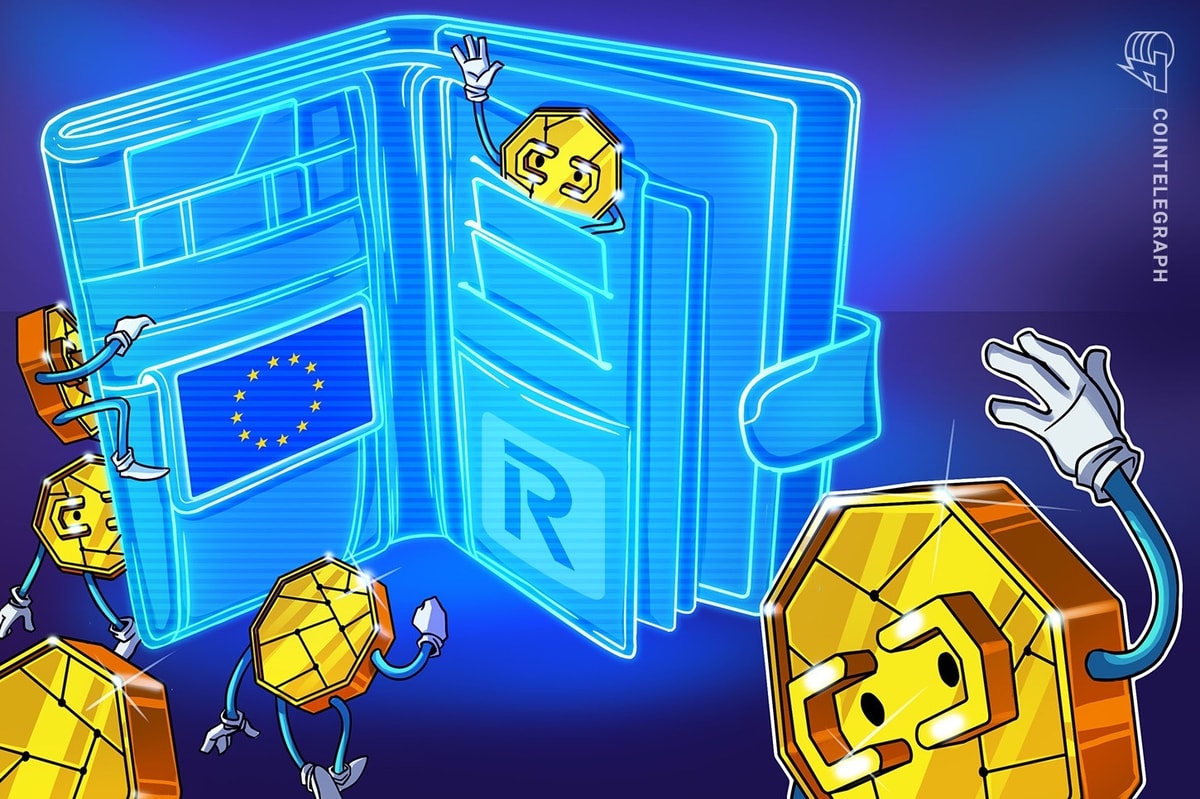
Trust Wallet, the self-custodial crypto wallet owned by Binance co-founder Changpeng “CZ” Zhao, has partnered with European fintech unicorn and digital banking giant Revolut to introduce a new way to purchase crypto assets on its platform.
Trust Wallet users can now buy Bitcoin (BTC), Ether (ETH) and Solana (SOL) with Revolut through a direct integration, the company announced on Thursday.
With a minimum purchase starting at 10 euros ($12) and capped at 23,000 euros ($26,950) daily and per transaction, Trust Wallet’s new buy option is expected to provide a faster and easier way to access crypto from Europe.
In October, Revolut scored regulatory approval from the Cyprus Securities and Exchange Commission to offer crypto services across 30 European Economic Area markets in compliance with the European Union’s Markets in Crypto-Assets Regulation (MiCA) framework.
Stablecoins like USDC not supported, for now
The integration will initially support only three crypto assets, but the companies said they expect to add stablecoins such as Circle’s USDC (USDC) at a later stage.
The feature enables zero-fee crypto purchases using multiple fiat currencies supported by Revolut, including the euro, the British pound, as well as the Czech koruna, Danish Krone, Polish Złoty and others.

While Revolut–Trust Wallet crypto purchases are offered with zero fees, adding money to a Revolut account is not free of charge in many cases, including via bank transfers, card top-ups and cash deposits. Cash deposits are subject to a 1.5% fee and are limited to $3,000 per calendar month, according to Revolut’s FAQs.
Related: Crypto self-custody is a fundamental right, says SEC’s Hester Peirce
The integration came shortly after Revolut secured a $75 billion company valuation after completing a private share sale in late November. “This makes us Europe’s most valuable private company and in the top 10 of the world’s most valuable private companies,” Revolut said in a post on X.
CZ-backed Trust Wallet has been actively tapping into trending market sectors, including prediction markets and real-world asset tokenization, expanding access to these offerings for self-custody users.
Cointelegraph contacted Revolut and Trust Wallet for comment on the integration, but had not received a response by publication.
-
 Sports2 years ago
Story injured on diving stop, exits Red Sox game
-
 Sports3 years ago
‘Storybook stuff’: Inside the night Bryce Harper sent the Phillies to the World Series
-
 Sports2 years ago
Game 1 of WS least-watched in recorded history
-
 Sports3 years ago
Button battles heat exhaustion in NASCAR debut
-
 Sports3 years ago
MLB Rank 2023: Ranking baseball’s top 100 players
-
Sports4 years ago
Team Europe easily wins 4th straight Laver Cup
-
 Environment3 years ago
Japan and South Korea have a lot at stake in a free and open South China Sea
-
 Environment1 year ago
Here are the best electric bikes you can buy at every price level in October 2024