

Elon Musk talks Tesla Secret Plan Part 2, how it is going 8 years later


Elon Musk is back referencing his ‘Tesla Secret Master Plan Part 2’. Let’s take a look at how the execution is going 8 years later.
As a sort of public business plan, Musk has been releasing ‘Tesla Secret Plan’ blog posts to describe the automaker’s product plans.
The first was released back in 2006 and to Tesla’s credit, the company accomplished pretty much everything in that plan.
In 2016, Musk released ‘Tesla Secret Master Plan Part 2‘.
Musk republished it this weekend. It has been 8 years, how is it going?
Integrate Energy Generation and Storage
The first point/product in the plan was “a smoothly integrated and beautiful solar-roof-with-battery product”:
Create a smoothly integrated and beautiful solar-roof-with-battery product that just works, empowering the individual as their own utility, and then scale that throughout the world. One ordering experience, one installation, one service contact, one phone app.
This was at a time Musk was trying to sell the merger of Tesla with SolarCity.
Tesla did build the solar roof, but it hasn’t been the success it thought it would be—at least for now.
At one point, Tesla talked about producing 1,000 solar roofs per week. Tesla never released specific data about the solar roof rollout, but we obtained some data at some point showing that the company had installed only a small fraction of that.
Tesla’s overall solar deployment, which also includes rooftop solar, has been falling over the last year as Tesla focuses on supplying its energy ecosystem to third-party installers.
Expand to Cover the Major Forms of Terrestrial Transport
The second point is about having EV models in all segments of transportation:
Today, Tesla addresses two relatively small segments of premium sedans and SUVs. With the Model 3, a future compact SUV and a new kind of pickup truck, we plan to address most of the consumer market. A lower cost vehicle than the Model 3 is unlikely to be necessary, because of the third part of the plan described below.
“A future compact SUV”. Tesla launched the Model Y, which became the best-selling vehicle in the world last year – an incredible feat.
“A new kind of pickup truck”. Tesla launched the Cybertruck recently – to mixed reviews, but it is still early in the rollout and certainly too early to say if the program is going to be a success or failure.
As for a cheaper vehicle than Model 3 being “unlikely to be necessary,” that was plain wrong. Tesla badly needs cheaper vehicles, and recently, It has invested in its next-generation vehicle platform, which is expected to support a “$25,000 car.” Although, a recent report claimed that Tesla canceled the program, which Musk denied.
Along with these vehicles, the “Master Plan Part 2” mentioned two commercial electric vehicles:
In addition to consumer vehicles, there are two other types of electric vehicle needed: heavy-duty trucks and high passenger-density urban transport. Both are in the early stages of development at Tesla and should be ready for unveiling next year. We believe the Tesla Semi will deliver a substantial reduction in the cost of cargo transport, while increasing safety and making it really fun to operate.
Tesla Semis are on the road today, but the program has also had its issues. It was delayed several years and to this day, Tesla only deployed a few electric trucks to its own fleet and a single client, PepsiCo.
The program has not been a success yet, but Tesla is not giving up on it. The automaker is currently building an expansion at its Gigafactory in Nevada to build the electric in high volume.
As for the “high passenger-density urban transport”, Tesla has never publicly commented on it 8 years later, but a video allegedly of a Tesla prototype for a people-mover for The Boring Company did leak last year.
Develop a self-driving capability that is 10X safer than manual via massive fleet learning
The last two points, autonomy and sharing, are linked together and dependant on Tesla developing self-driving technology.
This has obviously yet to happen.
Musk has often made predictions about Tesla delivering self-driving and they were all wrong. In that blog post, Musk was way more careful about talking about a timeline:
As the technology matures, all Tesla vehicles will have the hardware necessary to be fully self-driving with fail-operational capability, meaning that any given system in the car could break and your car will still drive itself safely. It is important to emphasize that refinement and validation of the software will take much longer than putting in place the cameras, radar, sonar and computing hardware.
The hardware has changed a lot over the last 8 years, and the “refinement and validation” are still ongoing.
With the recent release of FSD v12, there has been hope that Tesla could finally deliver on its promise, but there’s still significant doubt.
As for the sharing part, it is completely dependent on Tesla achieving self-driving.
Electrek’s Take
I credit Elon’s first master plan blog post for greatly influencing my interest in electric vehicles.
What Tesla has accomplished since is truly incredible.
As for the second part, the fact that the Model Y came out of it is amazing by itself.
However, there was a clear emphasis on autonomy in the plan and that hasn’t been going as well. To be fair, it’s an incredibly difficult problem to solve. But there’s an argument to be made about Tesla’s putting too many eggs in the same basket on that front.
FTC: We use income earning auto affiliate links. More.

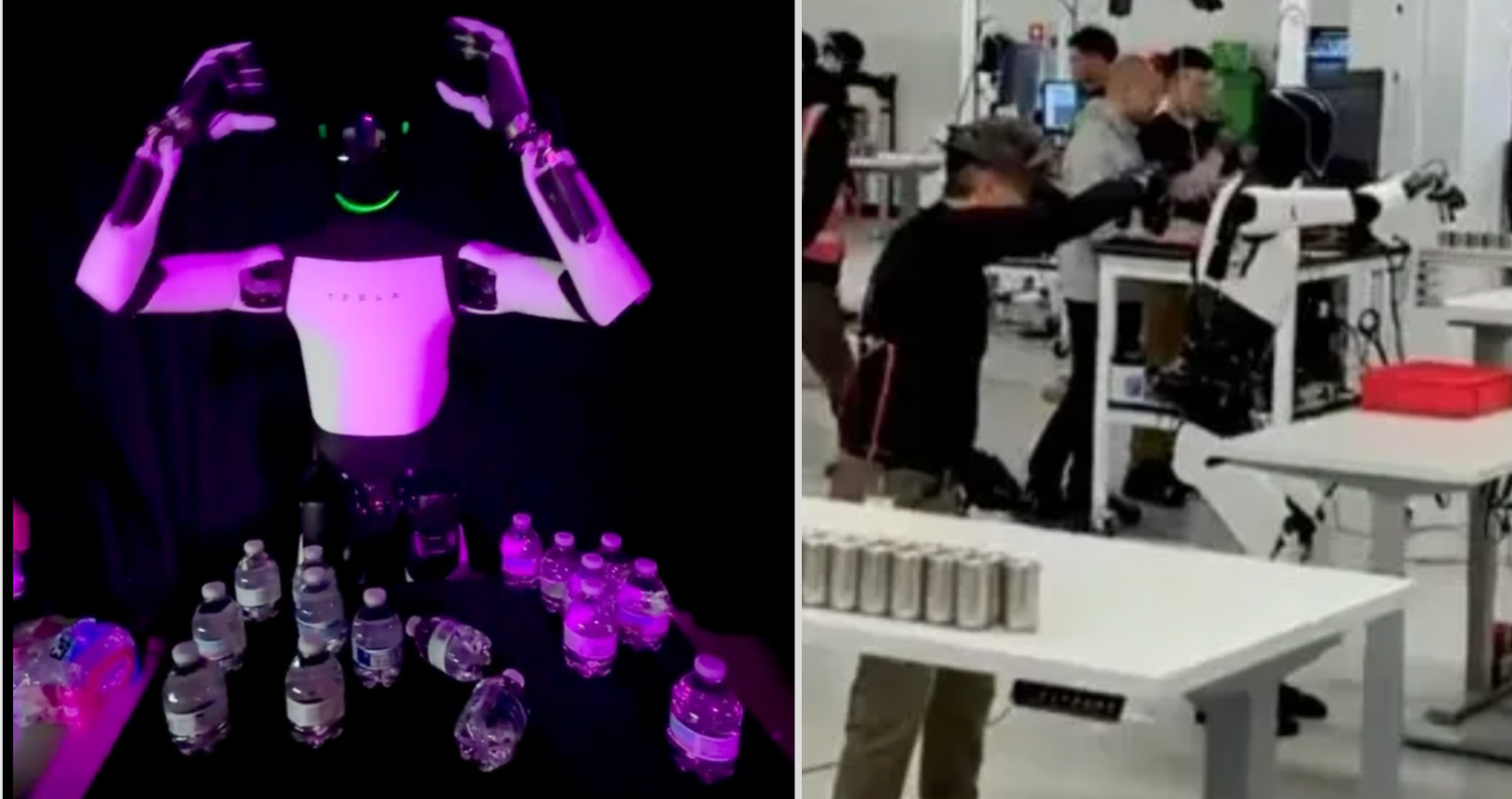
A new video surfacing from a Tesla demonstration in Miami this weekend shows the Optimus humanoid robot taking a nasty fall. But it’s not the fall itself that is raising eyebrows, it’s the specific hand movements the robot made on its way down, which strongly suggest it was mimicking a remote operator frantically removing a VR headset.
Humanoid robots are all the hype right now. Billions in investments are pouring in, and Elon Musk claims it will be a trillion-dollar product for Tesla, justifying its insane valuation.
The idea has been that with the advent of AI, robots in human form could use the new generalized artificial intelligence to replace humans in an increasingly larger number of tasks.
However, there are still many serious concerns about the effort, both at the ethical and technological levels.
Technologically, most humanoid robot demonstrations have relied on remote control by human operators – pointing to a remaining gap between the software and hardware.
We discussed how the robots at the “We, Robot” event were heavily teleoperated, despite Tesla not explicitly disclosing that fact to the public.
That was more than a year ago, and despite claims that Tesla has made “AI demos” of Optimus since, it appears the company still relies on teleoperation to control them during demonstrations.
The Tesla Optimus Miami Incident
This weekend, Tesla held an event called ‘Autonomy Visualized’ at its store in Miami. The goal was to showcase Tesla’s “Autopilot technology and Optimus.”
However, there was nothing “autonomous” at Tesla’s “autonomy” event.
Many Tesla fans were seen posting videos of a Tesla Optimus robot handing out bottles of water at the event. It was also seen posing for pictures and dancing.
On Reddit, someone posted a different video of the demonstration:
As you can see, Tesla Optimus moved its hands too quickly, causing some water bottles to drop to the ground. It then loses its balance and begins to fall backward.
But the most interesting part is that just before falling backward, both of its hands immediately shoot up to its “face” in a distinct grasping motion, as if pulling an object off its head.
The robot, of course, is not wearing anything on its head.
The motion is instantly recognizable to anyone who has used VR or watched teleoperation setups. It appears the human operator, likely located backstage or in a remote facility, removed their headset in the middle of operating the robot for unknown reasons.
Optimus faithfully replicated the motion of removing a non-existent headset as it crashed to the floor.
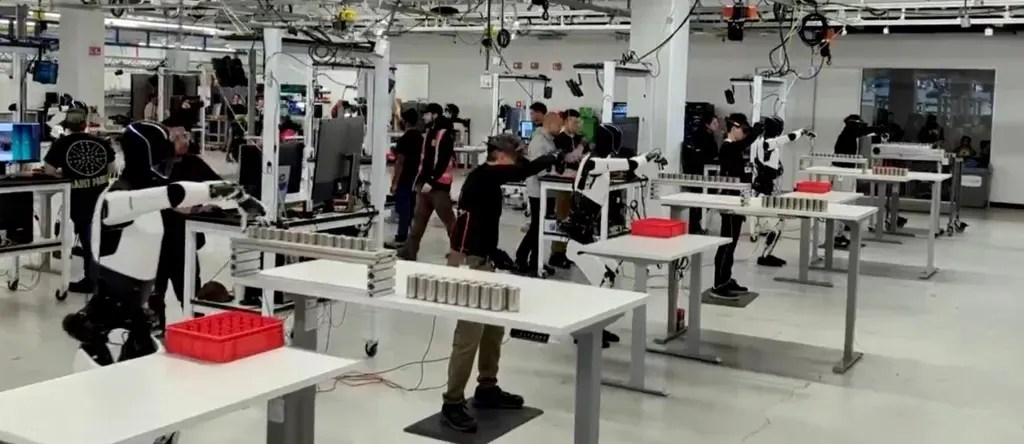
Here’s a look at how Tesla trained Pptimus with VR headsets in its lab:
Electrek’s Take
This is embarrassing, but not just because the robot fell. Robots fall; that’s part of the R&D process. Boston Dynamics blooper reels are legendary, and they never really eroded the company’s credibility.
The problem here is the “Wizard of Oz” moment.
The specific motion of removing the “phantom headset” destroys the illusion of autonomy Tesla tries so hard to curate.
Even recently, Musk fought back against the notion that Tesla relies on teleoperation for its Optimus demonstration. He specified that a new demo of Optimus doing kung-fu was “AI, not tele-operated”:
Musk said again during Tesla’s last earnings call in October:
“Optimus was at the Tron premiere doing kung fu, just up in the open, with Jared Leto. Nobody was controlling it. It was just doing kung fu with Jared Leto at the Tron Premier. You can see the videos online. The funny thing is, a lot of people walked past it thinking it was just a person.”
Musk keeps telling shareholders that Optimus will be the biggest product in history and that millions of units will be working in factories soon. But if they are still relying on 1:1 teleoperation to hand out water bottles right now, it feels like we are still far away from a useful generalized Optimus robot.


FTC: We use income earning auto affiliate links. More.

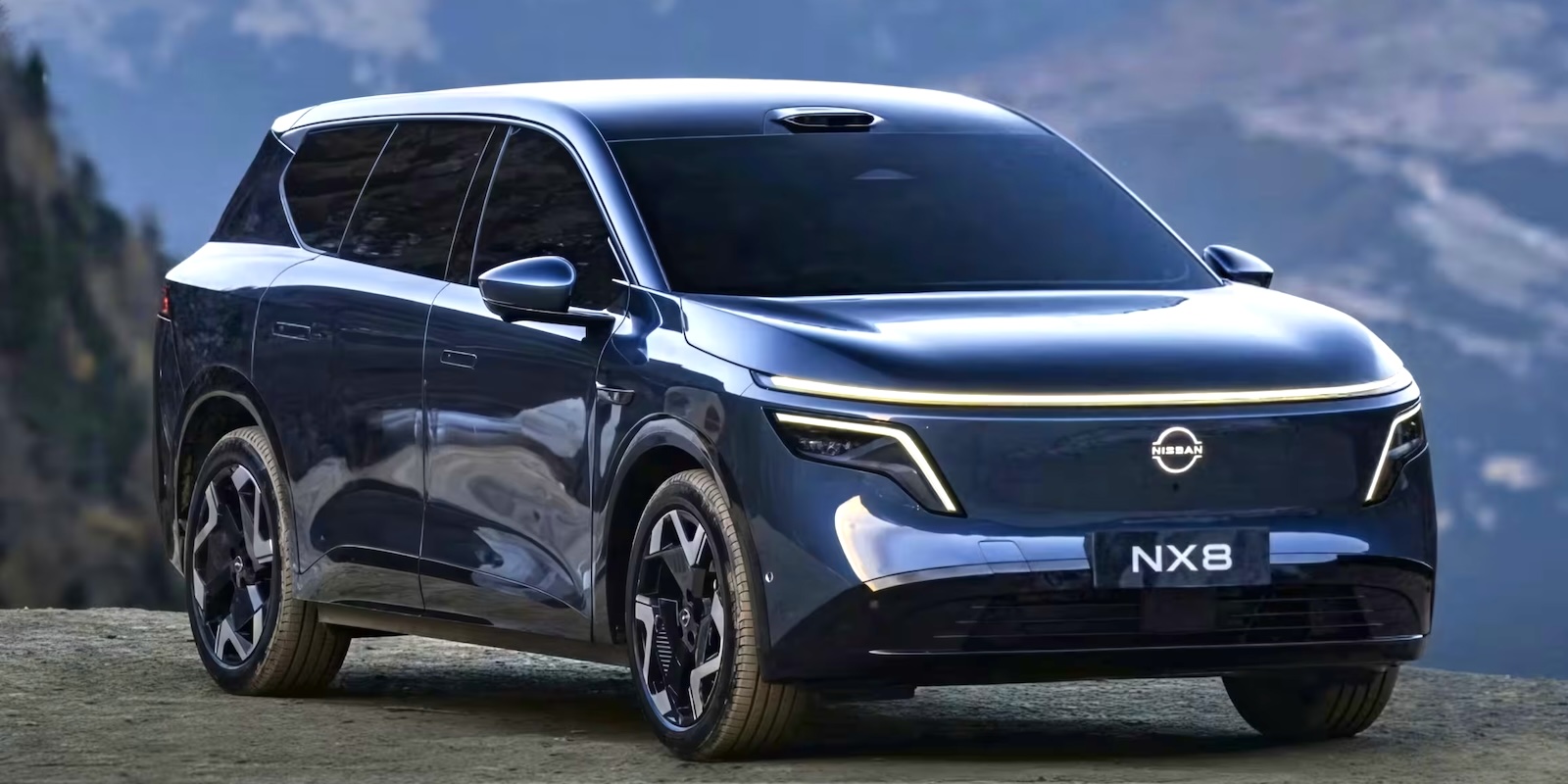
After images of an the new mid-sized electric crossover were leaked by the Chinese MIIT, Nissan pulled the wraps off its all-new NX8 – and it looks so good, I’m wondering if it couldn’t spearhead the brand’s American turnaround.
Nissan has had a rough go of it in the US, if not, well – everywhere of late. And while we may all have our own ideas about what Nissan needs to do to turn its ship around and get back to its winning ways, one thing just about every auto industry analyst seems to understand is that, at its core, Nissan’s problem is a product problem.
It doesn’t have to be this way, though. Despite what the optics of cynically slapping a Nissan badge on a decade-old Mitsubishi platform and calling it a new Rogue might have you believe, Nissan happens to have fantastic, modern new products in its production pipeline – including the all-new NX8 BEV and EREV crossover shown here. There’s just one problem: Nissan’s comeback cars are all in China.
The “N” stands for Nice
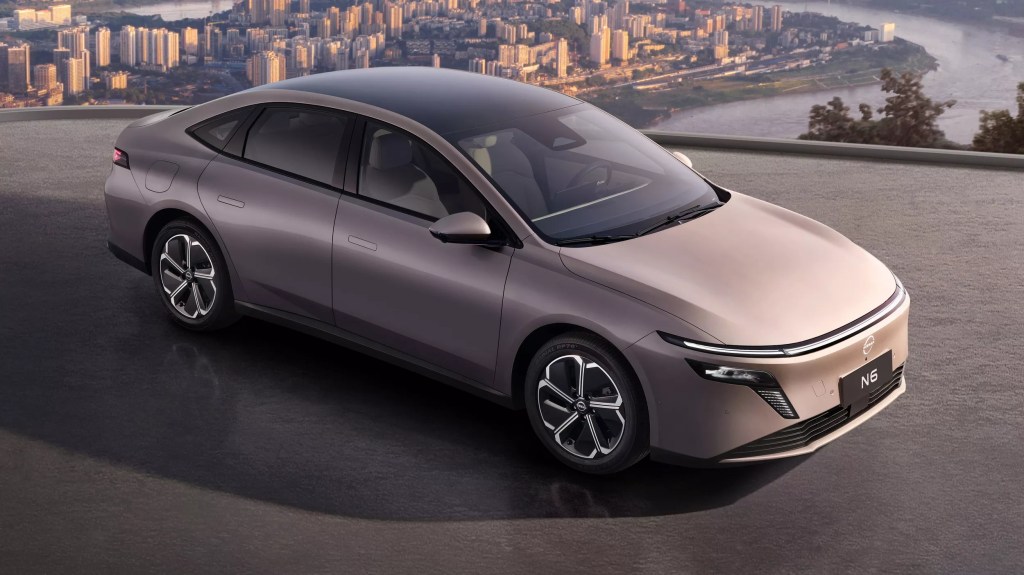
Dongfeng Nissan, a Chinese-market automotive joint venture between Dongfeng Motor Group and Nissan, has been rolling out hit after hit in recent months, like the N6 (above), which sits between the Altima and Maxima, size-wise, and offers 112 miles on a full charge of its 21.1 kWh LFP battery before its 1.5L gas engine kicks on to keep the odometer rolling.
The N6’s stablemate, the all-electric Dongfeng Nissan N7 sedan, debuted a few months earlier to rave reviews and hot sales, too – moving more than 10,000 units in the model’s first three weeks on the market.
Like its sedan siblings, the all-electric version of Nissan NX8 crossover rolls on an 800V system architecture and features a CATL-sourced LFP battery pack with 5C ultra-fast charging technology (xC is how many you can charge in an hour, effectively, so 60 minutes divided by 5 = it can charge in as little as 12 minutes). That battery reportedly sends power to a single electric motor putting out either 215 kW (~290 hp) or 250 kW (~335 hp), depending on model.
EREV version of the NX8, meanwhile, features a similar setup to the N6, pairing a 1.5L ICE producing 109 kW (~145 hp) with a 195 kW (~260 hp) electric motor. Expect the NX8 EREV to get slightly less than the N6’s claimed 112 miles of electric-only range (Chinese cycle).
The NX8 is expected to reach its first customers in April 2026. Take a look at some of the firs official photos of the new Nissan crossover, below, then let us know how you think this would do in the US in the comments section at the bottom of the page.
Dongfeng Nissan NX8
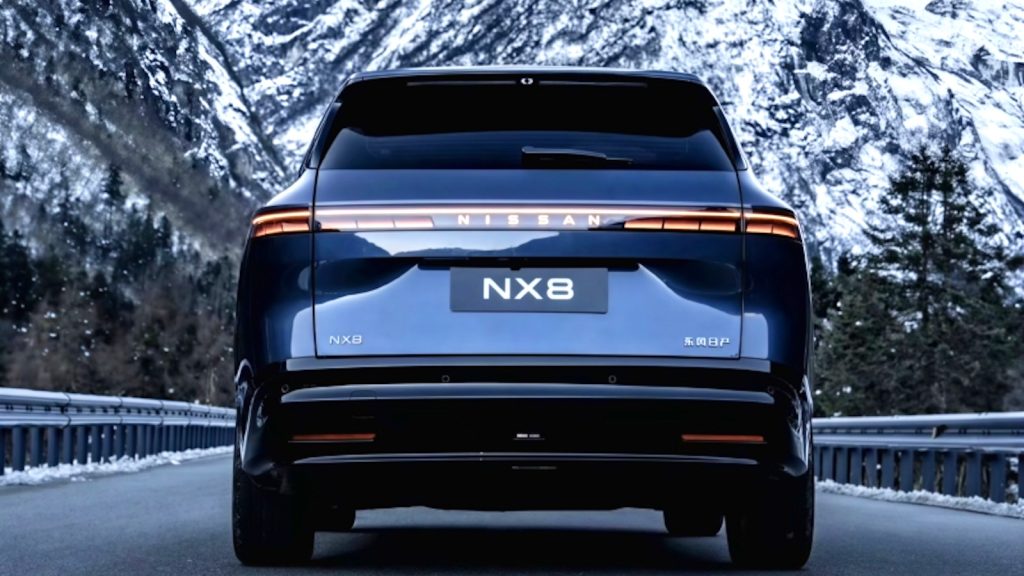
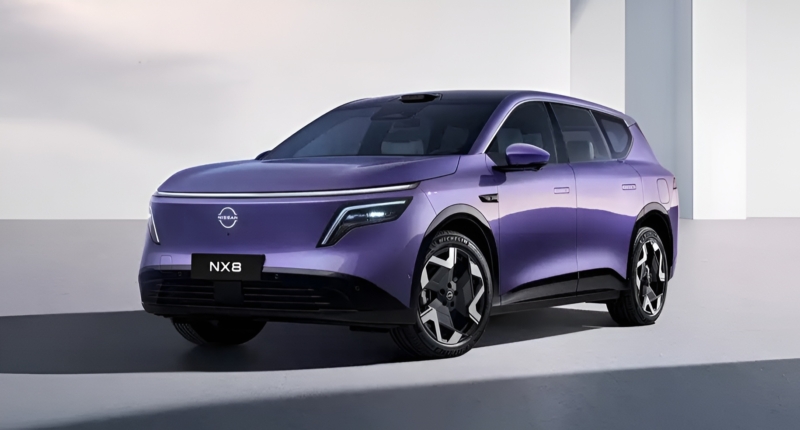
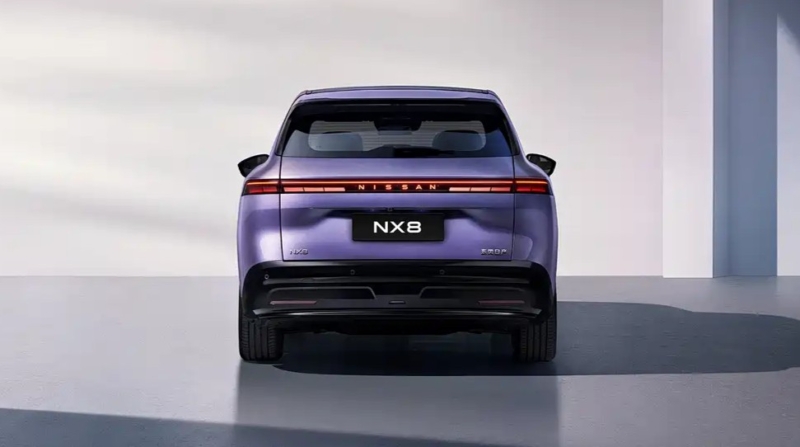
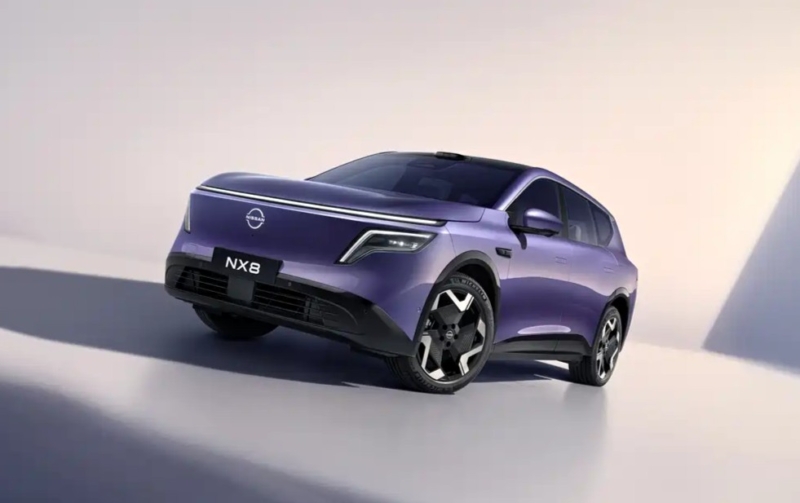
SOURCE: Dongfeng Nissan, via CNEVPost.

If you’re considering going solar, it’s always a good idea to get quotes from a few installers. To make sure you find a trusted, reliable solar installer near you that offers competitive pricing, check out EnergySage, a free service that makes it easy for you to go solar. It has hundreds of pre-vetted solar installers competing for your business, ensuring you get high-quality solutions and save 20-30% compared to going it alone. Plus, it’s free to use, and you won’t get sales calls until you select an installer and share your phone number with them.
Your personalized solar quotes are easy to compare online and you’ll get access to unbiased Energy Advisors to help you every step of the way. Get started here.
FTC: We use income earning auto affiliate links. More.


This week, BYD crossed a major manufacturing milestone as its battery production crossed 113 GWh in the first three quarters of 2025 – but instead of celebrating, the company is doubling down with a new “Zero Defects” initiative to bring battery quality to an even higher level.
CarNewsChina reports that the new “Zero Defects” plan at BYD was launched internally at the start of Q3, with a focus on minimizing manufacturing defects across all stages of the battery’s life, from the manufacturing line to the end user.
The initiative coincides with BYD’s growing role as a battery supplier to other automakers and its expanding battery energy storage system (BESS) business, which are giving BYD both an international footprint and global benchmarks.
In its ongoing bid to prove itself even further in the global battery market, BYD will reportedly emphasize operational efficiency, error reduction, and standardization across manufacturing, process control, and customer service, with the end goal believed to be, “management practices comparable to those of Toyota.”
BYD on a charge

The Chinese automaker seems to be going from strength to strength in 2025, having overtaken EV sales leader Tesla in China back in June and repeating the trick again by overtaking Tesla sales in Europe in August.
Combine those EV sales with the fact that its domestic traction battery production reached 113.42 GWh in just the first three quarters of the year (with 23.65 GWh, or ~20%, being supplied to outside customers – including Tesla), and you might agree that betting against BYD seems to be a bad idea.
Note that BYD has not released official details regarding performance metrics or milestones for its new Zero Defects goal, but the message is clear: BYD plans to keep getting better.
SOURCE: CarNewsChina; images via BYD.
If you’re considering going solar, it’s always a good idea to get quotes from a few installers. To make sure you find a trusted, reliable solar installer near you that offers competitive pricing, check out EnergySage, a free service that makes it easy for you to go solar. It has hundreds of pre-vetted solar installers competing for your business, ensuring you get high-quality solutions and save 20-30% compared to going it alone. Plus, it’s free to use, and you won’t get sales calls until you select an installer and share your phone number with them.
Your personalized solar quotes are easy to compare online and you’ll get access to unbiased Energy Advisors to help you every step of the way. Get started here.
FTC: We use income earning auto affiliate links. More.
-
 Sports2 years ago
Story injured on diving stop, exits Red Sox game
-
 Sports3 years ago
‘Storybook stuff’: Inside the night Bryce Harper sent the Phillies to the World Series
-
 Sports2 years ago
Game 1 of WS least-watched in recorded history
-
 Sports3 years ago
Button battles heat exhaustion in NASCAR debut
-
 Sports3 years ago
MLB Rank 2023: Ranking baseball’s top 100 players
-
Sports4 years ago
Team Europe easily wins 4th straight Laver Cup
-
 Environment3 years ago
Japan and South Korea have a lot at stake in a free and open South China Sea
-
 Environment1 year ago
Here are the best electric bikes you can buy at every price level in October 2024