
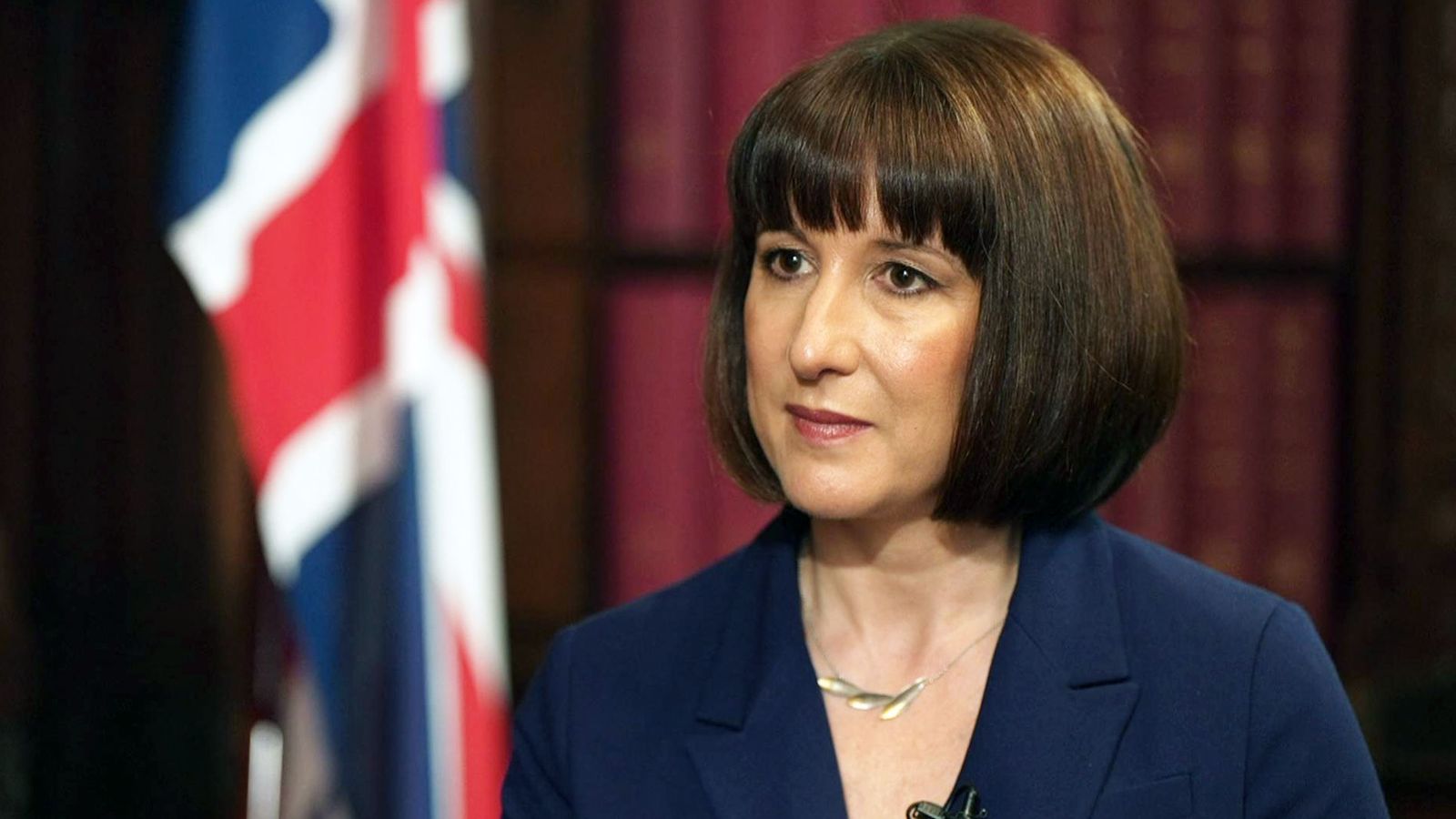
Labour to fund pledges through tax avoidance clampdown after Tories steal non-dom policy


Labour will pursue tax avoiders to fund its commitments on schools and the NHS after the government stole its revenue-raising plan to abolish the non-dom tax status.
The party had long pledged to scrap the rule – that allows wealthy individuals to live in the UK but not pay domestic rates of tax on their overseas income and wealth – if they came into power, giving them billions to pay for their own policy agenda.
But in his last Budget, Chancellor Jeremy Hunt lifted the policy for the Tories – despite their long-held opposition to the move – in order to fund cuts to national insurance, and leaving a gap in Labour’s spending plans.
Politics live: Labour unveils dodger crackdown
Shadow chancellor Rachel Reeves is today set to announce that Labour now plans to raise £5bn a year by the end of the next parliament, which will fund its polices on breakfast clubs for primary school children and additional appointments in the NHS.
However, it is understood that only £2bn of the £5bn raised per year will fund the two policies, with the rest of the money being kept back for other uses.
Labour has said it will also raise £2.6bn over the next parliament by closing “loopholes” in the government’s plans to abolish exemptions for non-doms – a move Ms Reeves branded an “utter humiliation” for the Conservatives.
As well as the non-dom tax status, the government also adopted Labour’s plans to extend the windfall tax on oil and gas companies, which also would have been used to fund the breakfast clubs and NHS appointments.
Ms Reeves is expected to say: “I have been clear that everything in our manifesto will be fully costed and fully funded. There will be no exceptions.
“That is why last month I promised to go through all the government documents in an orderly way to identify the funding streams to honour our commitments to the NHS and schools.
“That process is now complete and the funding a future Labour government will raise from taking on the tax dodgers will fund more appointments in NHS hospitals, new scanners, extra dentist appointments and free breakfast clubs for all primary school pupils.”
Labour HQ painted red in protest at the sale of weapons to Israel
Labour said the “tax gap” – the difference between the amount of money HMRC is owed and the amount it receives – had widened to £36bn in 2021/22 – £5bn more than it had been the previous year.
To close the gap, Labour said it would invest up to £555m a year in boosting the number of compliance officers at HMRC, increasing productivity and improving the organisation’s “dire” customer service.
It will also consider requiring more tax schemes to be registered with HMRC to ensure they are legitimate, and renew the focus on offshore tax compliance.
Read more:
Keir Starmer insists allegations over Angela Rayner’s living arrangements just ‘smear’ by Tories
Everything You Need To Know About Non-Doms
Chief Secretary to the Treasury Laura Trott said: “After a month of searching for a plan to pay for Labour’s unfunded spending, the shadow chancellor still cannot say how she will fill the enormous black hole in their promises. And that means one thing – more taxes.
“The Labour Party hasn’t changed. They remain committed to unfunded spending, including their £28bn a year decarbonisation promise, meaning they will have to raise taxes on working families – taking us back to square one.
“The Conservatives have introduced over 200 measures to clamp down on tax non-compliance and we are sticking to the plan to strengthen the economy so we can cut taxes, putting £900 in the pockets of the average worker and helping families to build a brighter future.”

European tech regulators have fined social media platform X 120 million euros ($140 million) for breaking EU rules pertaining to online content.
The fine follows a two-year investigation under the Digital Services Act (DSA), which reportedly found that X was not doing enough to tackle illegal and harmful material.
Regulators also said that the blue check marks on Elon Musk’s platform were deceiving. They did not follow industry decisions and negatively impacted users’ ability to make informed decisions about the authenticity of an account.
The fine is part of a wider crackdown on Big Tech companies, particularly social media. TikTok reported it had avoided a fine by making concessions.
The actions against X are bound to create tension with the US. Vice President JD Vance said that EU regulators shouldn’t be “attacking” American companies.

The DSA will also apply to crypto platforms, DeFi frontends and NFT marketplaces if they grow to a sufficiently large size. It can influence how these platforms handle ads, user-directed content and market financial instruments.
EU banks launch euro-stablecoin firm as EU considers ESMA crypto oversight
A group of 10 European banks, including institutional heavyweights such as BNP Paribas, is planning to launch a stablecoin backed by the euro by the second half of 2026.
BNP Paribas partnered with Danish Danske Bank, the Netherlands’ ING, Austria’s Raiffeisen Bank International and others to create and incorporate the project as Qivalis. The company will be based in Amsterdam.
Qivalis CEO Jan-Oliver Sell said that stablecoins provide both convenience and monetary autonomy “in the digital age.” He said it will give “new opportunities for European companies and consumers to interact with on-chain payments and digital asset markets in their own currency.”
The new project was announced days before the European Commission proposed expanding the powers of the EU’s key financial regulator, the European Securities and Markets Authority (ESMA).
The proposal, released Thursday, would transfer supervision “over significant market infrastructures such as certain trading venues, Central Counterparties (CCPs), CSDs, and all Crypto-Asset Service Providers (CASPs)” to the ESMA.
The move is part of a broader effort to streamline European market regulation. Three countries — France, Italy and Austria — have requested that the ESMA take over crypto regulations. This followed concerns that there was uneven enforcement of Markets in Crypto-Assets (MiCA) standards across member states.
Related: What is Markets in Crypto-Assets (MiCA)?
Spot crypto assets to begin trading on futures market, CFTC says
In the United States, the Commodity Futures Trading Commission (CFTC) has approved spot cryptocurrency products to trade on futures markets.
Acting Chair Caroline Pham said that the move brings these products onshore to “safe U.S. markets.” She said the approval followed recommendations from the White House’s Working Group on Digital Asset Markets and engagement with the Securities and Exchange Commission (SEC).
Earlier this year, the SEC and CFTC established the “Crypto Sprint” initiative to share recommendations and consult on best practices.

Pham became acting chair at the beginning of the year. She is expected to step down when the Trump administration’s nominee, Michael Selig, is approved by Congress.
South Africa flags crypto risks; new rules in the works
The South African Reserve Bank, the country’s central bank, issued a warning on Nov. 25 about the perceived risks associated with stablecoins and cryptocurrencies. These include a lack of comprehensive regulations.
The bank was concerned that the global and borderless nature of cryptocurrencies would make them ideal for skirting financial regulations.

Herco Steyn, the bank’s lead macroprudential specialist, reportedly said the risk stemmed from “the lack of a complementary and full regulatory framework, which is not possible at the moment.”
In 2023, he wrote, “Regulatory influence over stablecoin issuers – whether domiciled domestically or abroad – may result in spillovers from the crypto asset ecosystem to the traditional financial system, particularly if South African regulatory authorities are unable to impose prudential requirements on stablecoin issuers.”
To address this, the reserve bank is reportedly working on new rules with the National Treasury to monitor cross-border crypto transactions and change exchange control laws so they fall under regulatory scrutiny.
IMF warns stablecoins could upend fragile financial systems
On Thursday, the International Monetary Fund (IMF) published a report on stablecoins outlining a number of risks, including:
-
Volatility in value and runs
-
Disintermediation of banks
-
Interconnection with the financial system
-
Currency substitution.
It said that the “use of foreign currency-denominated stablecoins, especially in cross-border contexts, could lead to currency substitution and potentially undermine monetary sovereignty, particularly in the presence of unhosted wallets.”
The IMF also noted that many major stablecoin issuers don’t provide or offer any redemption rights for holders. “Uncertainty of treatment in case of insolvency of stablecoin issuer may also accelerate runs,” it said.
Runs would also create first-mover advantages when there is a crisis of confidence, which could result in investors selling their holdings at a significant discount.
The IMF did acknowledge possible benefits of stablecoins, including faster transactions compared to bank transfers, particularly in the context of cross-border transactions and remittances. They can also facilitate digital payment in remote areas and reduce counterparty risk when integrated with smart contracts.
Magazine: Indian investors look beyond Bitcoin, Japan to soften crypto tax: Asia Express

Italy’s securities regulator set a firm timetable for applying the European Union’s Markets in Crypto-Assets Regulation (MiCA) in the country, warning that unlicensed crypto platforms face a deadline to either seek authorization or leave the market.
The move directly affects virtual asset service providers (VASPs) currently operating under Italy’s regime and the retail investors who use them.
In a news release published Thursday, Italy’s Commissione Nazionale per le Società e la Borsa (CONSOB) reminded the market that Dec. 30 is the last day VASPs registered with the Organismo Agenti e Mediatori (OAM) can operate under the existing national framework.

After that date, only entities authorized as crypto asset service providers (CASPs) under MiCA, including firms passporting into Italy from another EU member state, will be allowed to offer crypto‑asset services in the country.
CONSOB notes that, under Italy’s MiCA‑implementing legislation, VASPs that submit an application to be authorized as CASPs in Italy or another European Union member state by Dec. 30 may continue operating while their applications are assessed, but no later than June 30, 2026.
This transitional operating period is available only to operators who file by the deadline and ends once authorization is granted or refused, or when the June 30, 2026, limit is reached.
Related: ECB president calls to address risks from non-EU stablecoins
Obligations for firms that do not apply
For VASPs that decide not to seek authorization under MiCA, CONSOB outlined specific obligations. These operators must cease their activities in Italy by Dec. 30, terminate existing contracts, and return clients’ crypto‑assets and funds in accordance with customers’ instructions.
CONSOB also said that VASPs registered in the OAM list must publish adequate information on their websites and inform clients directly about the measures they intend to adopt, either to comply with MiCA or to ensure an orderly closure of existing relationships.
This framework stems from Italy’s legislative decree implementing MiCA, which introduced a transitional regime for existing VASPs and set the conditions under which they can continue operating while moving to the new CASP authorization system. The decree makes use of the flexibility allowed by MiCA’s transitional provisions to set national deadlines, including the June 30, 2026 date referred to in CONSOB’s communication.
Warnings to retail investors
CONSOB’s news release includes a separate section titled “warnings for investors.”
The regulator points out that VASPs currently operating in Italy may no longer be authorized to do so after Dec. 30, and stresses that investors should check whether they have received the necessary information from their provider on its plans to comply with MiCA.
If not, CONSOB advises investors to ask the operator for clarification or request the return of their funds.
EU‑level context under MiCA
CONSOB’s communication sits within the wider EU framework for MiCA’s application and transitional measures. On the same day, the European Securities and Markets Authority (ESMA) published a statement on the end of MiCA transitional periods, highlighting that member states can provide temporary continuation of existing licenses for existing providers, but these periods are limited and will expire.
Related: EU plan would boost ESMA powers over crypto and capital markets
The ESMA’s statement explains that firms operating under national transitional regimes are not automatically MiCA‑authorized and emphasizes the need for “orderly wind-down plans” where providers do not obtain authorization before transitional periods end.
Italy’s hard stop for applications and continued operation shows how member states are using the discretion MiCA gives them over transitional regimes. The Italian transitional period now has defined end‑points, and continued activity in the market will require MiCA‑compliant authorization.
Magazine: EU’s privacy-killing Chat Control bill delayed — but fight isn’t over

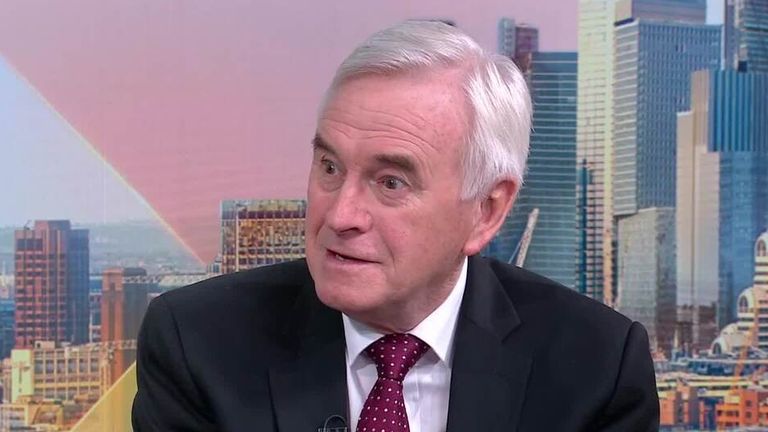
A new long-awaited child poverty strategy is promising to lift half a million children out of poverty by the end of this parliament – but critics have branded it unambitious.
The headline announcement in the government’s plan is the pledge to lift the two-child benefit cap, announced in Rachel Reeves’s budget last week.
It also includes:
• Providing upfront childcare support for parents on universal credit returning to work
• An £8m fund to end the placement of families in bed and breakfasts beyond a six-week limit
• Reforms to cut the cost of baby formula
• A new legal duty on councils to notify schools, health visitors, and GPs when a child is placed in temporary accommodation
Many of the measures have previously been announced.
Two-child cap ‘a real victory for the left’
The government also pointed to its plan in the budget to cut energy bills by £150 a year, and its previously promised £950m boost to a local authority housing fund, which it says will deliver 5,000 high-quality homes for better temporary accommodation.
Downing Street said the strategy would lift 550,000 children out of poverty by 2030, saying that would be the biggest reduction in a single parliament since records began.
But charities had been hoping for a 10-year strategy and argue the plan lacks ambition.
A record 4.5 million children (about 31%) are living in poverty in the UK – 900,000 more since 2010/11, according to government figures.
Phillip Anderson, the Strategic Director for External Affairs at the National Children’s Bureau (NCB), told Sky News: “Abolishing the two-child limit is a hell of a centre piece, but beyond that it’s mainly a summary of previously announced policies and commitments.
“The really big thing for me is it misses the opportunity to talk about the longer term. It was supposed to be a 10-year strategy, we wanted to see real ambition and ideally legally binding targets for reducing poverty.
“The government itself says there will still be around four million children living in poverty after these measures and the strategy has very little to say to them.”

‘A budget for benefits street’
‘Budget for benefits street’ row
The biggest measure in the strategy is the plan to lift the two-child benefit cap from April. This is estimated to lift 450,000 children out of poverty by 2030, at a cost of £3bn.
The government has long been under pressure from backbench Labour MPs to scrap the cap, with most experts arguing that it is the quickest, most cost-effective way to drive-down poverty this parliament.
The cap, introduced by Conservative chancellor George Osborne in 2017, means parents can only claim universal credit or tax credits for their first two children. It meant the average affected household losing £4,300 per year, the Institute for Fiscal Studies calculated in 2024.
The government argues that a failure to tackle child poverty holds back the economy, and young people at school, cutting their employment and earning prospects in later life.
However, the Conservatives argue parents on benefits should have to make the same financial choices about children as everyone else.
Shadow chancellor Mel Stride said: “Work is the best way out poverty but since this government took office, unemployment has risen every single month and this budget for Benefits Street will only make the situation worse. “
OBR leak: This has happened before
‘Bring back Sure Start’
Lord Bird, a crossbench peer who founded the Big Issue and grew up in poverty, said while he supported the lifting of the cap there needed to be “more joined up thinking” across government for a longer-term strategy.
He has been pushing for the creation of a government ministry of “poverty prevention and cure”, and for legally binding targets on child poverty.
“You have to be able to measure yourself, you can’t have the government marking its own homework,” he told Sky News.
Lord Bird also said he was a “great believer” in resurrecting Sure Start centres and expanding them beyond early years.
The New Labour programme offered support services for pre-school children and their parents and is widely seen to have improved health and educational outcomes. By its peak in 2009-2010 there were 3,600 centres – the majority of which closed following cuts by the subsequent Conservative government.

Lord Bird on the ‘great distraction’ from child poverty
PM to meet families
Sir Keir Starmer’s government have since announced 1,000 Best Start Family Hubs – but many Labour MPs feel this announcement went under the radar and ministers missed a trick in not calling them “Sure Starts” as it is a name people are familiar with.
The prime minister is expected to meet families and children in Wales on Friday, alongside the Welsh First Minister, to make the case for his strategy and meet those he hopes will benefit from it.
Several other charities have urged ministers to go further. Both Crisis and Shelter called for the government to unfreeze housing benefit and build more social rent homes, while the Children’s Commissioner for England, Dame Rachel de Souza, said that “if we are to end child poverty – not just reduce it” measures like free bus travel for school-age children would be needed.
The strategy comes after the government set up a child poverty taskforce in July 2024, which was initially due to report back in May. The taskforce’s findings have not yet been published – only the government’s response.
Sir Keir said: “Too many children are growing up in poverty, held back from getting on in life, and too many families are struggling without the basics: a secure home, warm meals and the support they need to make ends meet.
“I will not stand by and watch that happen, because the cost of doing nothing is too high for children, for families and for Britain.”
-
 Sports2 years ago
Story injured on diving stop, exits Red Sox game
-
 Sports3 years ago
‘Storybook stuff’: Inside the night Bryce Harper sent the Phillies to the World Series
-
 Sports2 years ago
Game 1 of WS least-watched in recorded history
-
 Sports3 years ago
Button battles heat exhaustion in NASCAR debut
-
 Sports3 years ago
MLB Rank 2023: Ranking baseball’s top 100 players
-
Sports4 years ago
Team Europe easily wins 4th straight Laver Cup
-
 Environment3 years ago
Japan and South Korea have a lot at stake in a free and open South China Sea
-
 Environment1 year ago
Here are the best electric bikes you can buy at every price level in October 2024