

Rivian is offering a free $5K STEALTH wrap vehicle shield for R1T and R1S orders


For those looking to buy a Rivian EV, now may be the time. Throughout April, Rivian is offering a free STEALTH wrap to protect your R1T or R1S on orders. The offer is valued at $5,000.
Rivian sweetens R1T, R1S orders with free STEALTH wrap
Since Rivian’s R1T hit the US market as the first electric pickup in September 2021, the EV startup has come a long way.
CEO RJ Scaringe announced that Rivian hit a milestone last week after building its 100,000th EV. As the company enters a new growth phase, Rivian is introducing new tech to cut costs.
Rivian officially shut down its Normal, IL manufacturing plant on April 5 as it upgrades the facility to improve efficiency.
First announced last November, the upgrades will “meaningfully” reduce material costs for Rivian as it looks to scale output.
Rivian’s new tech has already led to lower prices, with R1 leases available for as low as $559 per month. That includes the $7,500 EV tax credit at the time of lease.
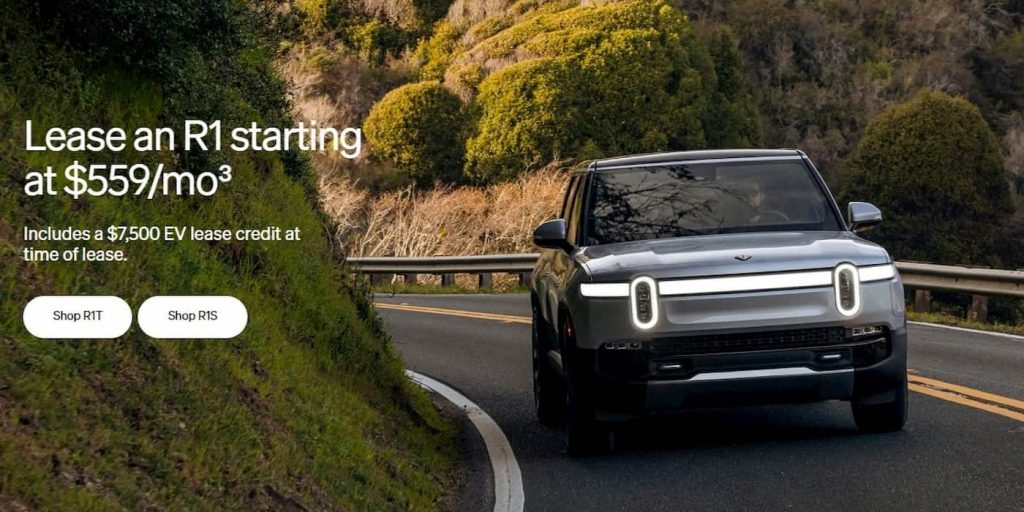
Throughout April, Rivian is sweetening the deal by offering a free XPEL STEALTH vehicle wrap on any R1T or R1S order. The STEALTH wrap, made by XPEL, is a complete paint protection car shield.
Its unique self-healing satin film will protect your Rivian EV from rock chips, scratches, and other debris you may encounter on your adventures.
Not only does it protect your Rivian, but it also upgrades the design. The XPEL STEALTH adds a custom touch with a subtle, satin look. With a slick satin finish, the vehicle wrap hides annoying dust and water spots.
Its UV-resistant coating prevents discoloration and fading from the sun. With self-healing properties, fine scratches and swirl marks disappear when exposed to heat.
The offer, valued at $5,000, is good for US and Canadian buyers throughout April. For more information, visit Rivian’s R1 Shop.
Ready to drive off in your new Rivian? We can help you get started. You can use our links to find deals on the Rivian R1S and R1T near you today.
FTC: We use income earning auto affiliate links. More.

A few weeks ago, we talked about some real-world numbers shared by Redditors who added a rooftop solar system to their homes. Not to be outdone, Electrek readers took to the comments to share their own real-world solar numbers. Here are some of the best!
That original post, which you can read here, was inspired by a Reddit user going by DontBuyBitcoin who shared a screenshot on r/Solar indicating that their newly-installed ~11.5 kW system produced over 1,700 kWh of electricity in October. “Pretty surprised by the production of the system I got,” writes DontBuyBitcoin. “11.48KW. I cant wait to see what JUNE-AUGUST [2026] going to look like 😍 I wish SolarEdge will make their app better looking with more functionality.”
Other Redditors were quick to share in the enthusiasm, but our Electrek readers weren’t going to be outdone, and shared their own results in the comments section.
I’ve got a 49 panel, 16.5 kW system just outside Austin, TX, and while it’s expensive ($320/mo), I produce much more power than I use each month. But with 2 EVs, a hot tub, and air conditioning in a Texas summer, I’m not mad I have all this. On a current sunny day, I’m producing about 65 kWh. I top out around 107 kWh on a long but somehow not hot day.l in late spring or early fall (whatever that means in Texas).
Another reader, Craig Morrow, had a much smaller system at “just” 6.5 kW compared to David’s 16.5 kW deal, but still put up some highly respectable numbers.
My 6.5 kw PV generates from 16 kwh/day (winter) to 38 kwh/day (late spring). Between the efficiency of my house and my consumption habits, my usage averages 5-6 kwh per day. Went all-in on passive and active solar when I built the house ten years ago, an investment which has long since paid for itself with no heating or utility bills, plus having battery storage means no worries about power outages when the grid goes down. A great feeling to be energy independent!
Craig had the top comment with twenty upvotes, but he wasn’t the only reader to see some big efficiency gains with home solar. Several of you posted about the cost of your system, and when you’d begin to see an ROI with the savings you were seeing.
My ROI on a $42k system ($30k with the IRA tax credit) was calculated to be 15 years assuming a 4% yearly rate increase. Without the tax credit it would likely be 20+ years. It makes no sense financially. Interestingly, Europeans pay a lot less for similar size systems. Why is that?
Another commenter, Leonard Bates, was also seeing great returns – but took things a step further by doing some extra math to compare the cost of fueling up his car with gas vs. topping it off with electrons generated by his home solar system.
It is hard for the average Joe to understand electricity production numbers, so I have reduced our experience into dollars. We have a 8.8 kWh rooftop system and two EVs that (other than a few vacation trips a year) are charged at home. We are retired, so we can charge during the day. Bottom line, we saved over $4,000 by not buying gasoline last year (drove ~41,000 miles). Electric bills, with the load of the EVs, is basically a breakeven. The system cost us about $22,000, so a breakeven on the system of about six years and then free electricity for another 20, until the panels need to be replace. Plus we are “energy independent” for our cars. If there is turmoil in the Middle East, it doesn’t affect our pocket books.
Leonard’s math reminds me of landscaper Colin Ash, who has been operating Ash Landscaping for over 30 years and recently traded his diesel excavator in for an electric JCB mini excavator he powers exclusively with solar panels mounted on his carport. “I’m a long-time electric vehicle driver and run my cars on solar energy generated from solar panels on the roof of the car port at my home,” explains Ash. “Adding the new JCB 8008E CTS was a perfect next step and I can plug it in next to the car and charge both overnight.”
So, Ash is happy. It seems like you guys are pretty happy, too – even without the home solar tax credit that a lot of you didn’t even know existed in the first place. Here’s hoping a lot more people decide to share their results with home solar, too.
Or, as one of our commenters put it:
If more homeowners share data like this, it’ll help others make informed decisions rather than relying just on sales projections.
Original content from Electrek.

If you’re considering going solar, it’s always a good idea to get quotes from a few installers. To make sure you find a trusted, reliable solar installer near you that offers competitive pricing, check out EnergySage, a free service that makes it easy for you to go solar. It has hundreds of pre-vetted solar installers competing for your business, ensuring you get high-quality solutions and save 20-30% compared to going it alone. Plus, it’s free to use, and you won’t get sales calls until you select an installer and share your phone number with them.
Your personalized solar quotes are easy to compare online and you’ll get access to unbiased Energy Advisors to help you every step of the way. Get started here.


FTC: We use income earning auto affiliate links. More.

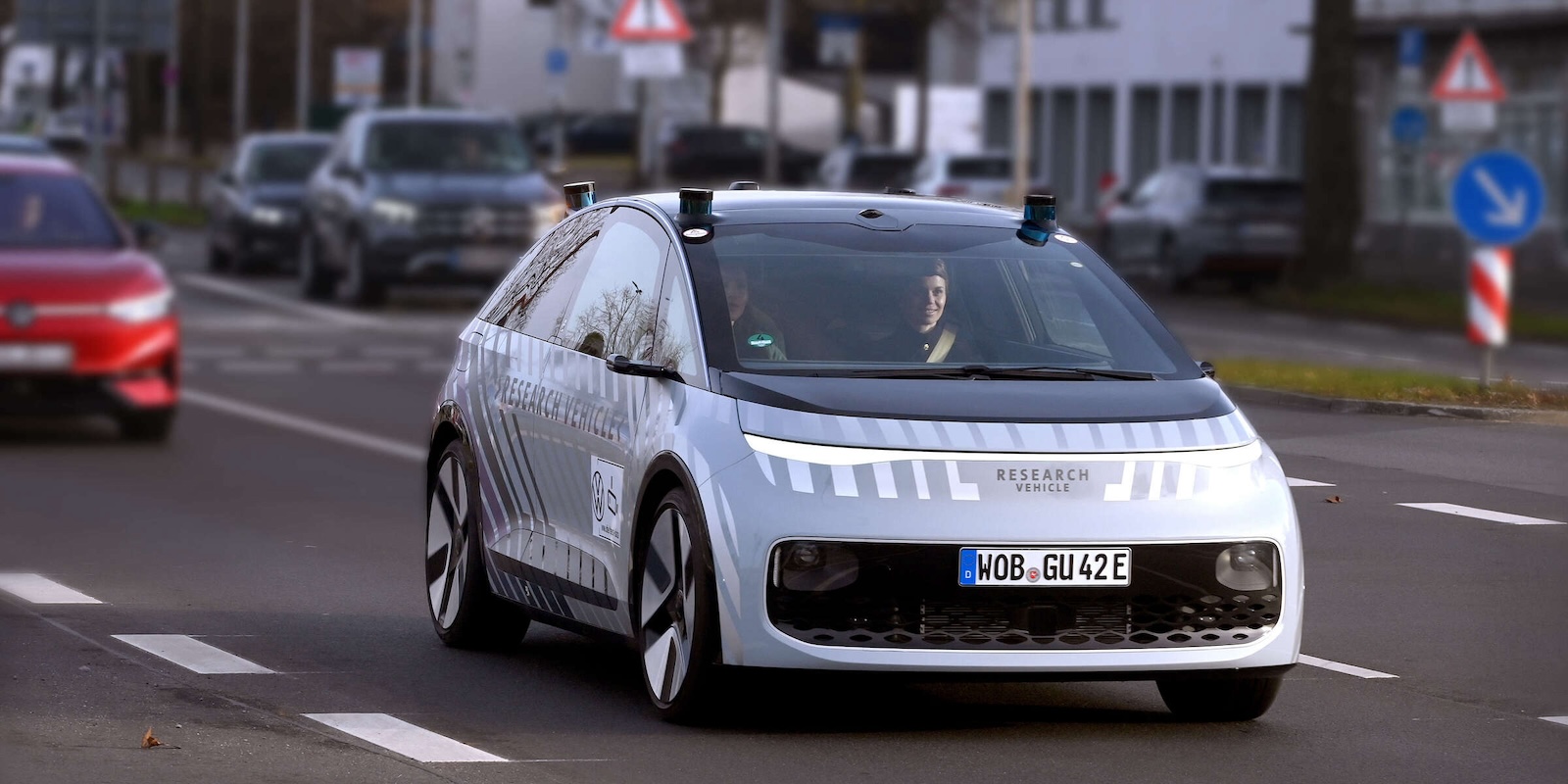
Volkswagen is putting its Tesla Robotaxi rival through its paces in Wolfsburg, Germany, where the self-driving Gen.Urban research vehicle is now driving autonomously in real urban traffic – without a steering wheel or pedals!
VW’s Gen.Urban research project sets out to explore how passengers experience riding in a self-driving vehicle on real roads, among real drivers, and without a traditional steering wheel or pedals, and what those requirements might mean for future vehicle concepts.
Some of the key questions VW is asking include:
- How do people spend their time in a self-driving vehicle?
- Which digital features best support work, entertainment, or relaxation?
- How should interaction between the vehicle and passengers be designed, particularly for older people or children?
- Most importantly: Do people feel comfortable?
“The technology for autonomous driving is making rapid progress,” explains Dr. Nikolai Ardey, Head of Volkswagen Group Innovation. “With our Gen.Urban research vehicle, we want to understand exactly how passengers experience autonomous driving. Because: The key to a positive customer experience is to build trust – through meaningful interaction, a relaxed atmosphere, and intelligent assistance systems that respond precisely to the needs of passengers. Ultimately, technology should fit people, not the other way around. We will benefit from these insights across the entire Group in the long term.”
Not QUITE fully autonomous
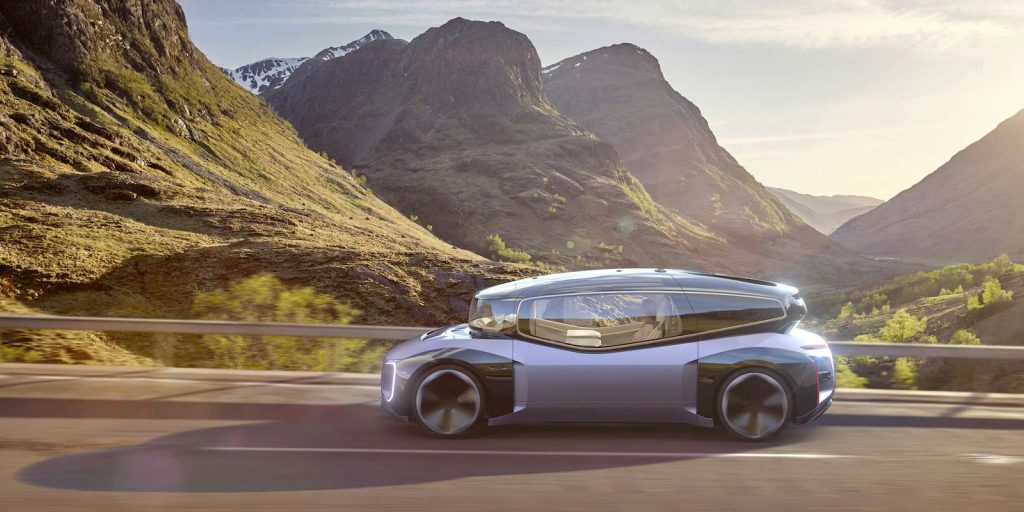
It’s important to note here that, while Volkswagen designed the Gen.Urban without a steering wheel or pedals, the vehicles participating in these test have a trained safety driver monitoring the vehicle from the passenger seat, ready to step in to control the vehicle using a specially developed control panel with a joystick – which means we’re still a long way from the 2022 Volkswagen Gen.Travel concept (above).
Even so, Volkswagen’s autonomous driving efforts have been in public testing phases since at least 2023, when the company unveiled a fleet of ten specially modified VW.Buzz AD electric vans. Tests with those vans have gone well enough, at least, to lead Volkswagen to announce plans for large-scale production.
The current test phase is limited to Volkswagen Group employees as riders, and is planned for a period of several weeks. If results are satisfactory, VW could expand its rider base by the end of Q1.
SOURCE | IMAGES: Volkswagen.
If you’re considering going solar, it’s always a good idea to get quotes from a few installers. To make sure you find a trusted, reliable solar installer near you that offers competitive pricing, check out EnergySage, a free service that makes it easy for you to go solar. It has hundreds of pre-vetted solar installers competing for your business, ensuring you get high-quality solutions and save 20-30% compared to going it alone. Plus, it’s free to use, and you won’t get sales calls until you select an installer and share your phone number with them.
Your personalized solar quotes are easy to compare online and you’ll get access to unbiased Energy Advisors to help you every step of the way. Get started here.
FTC: We use income earning auto affiliate links. More.


Ask anyone who owned or owns one, and they’ll tell you that Honda Element was ahead of its time, delivering a flexible interior, car-like ride, and SUV-levels of visibility – and, if Honda really wanted to, they could roll out an all-new, all-electric Element riding on an Ultium-style electric skateboard tomorrow.
Honda’s first Element made its debut way back in 2003, when it was still a bit strange to think of companies like Cadillac, Volkswagen, and Porsche selling anything as big and clunky as an SUV. It earned plenty of fans, however, and for all the same reasons, they’ll love an electric Element even more.
Consider the following:
Car-like handling
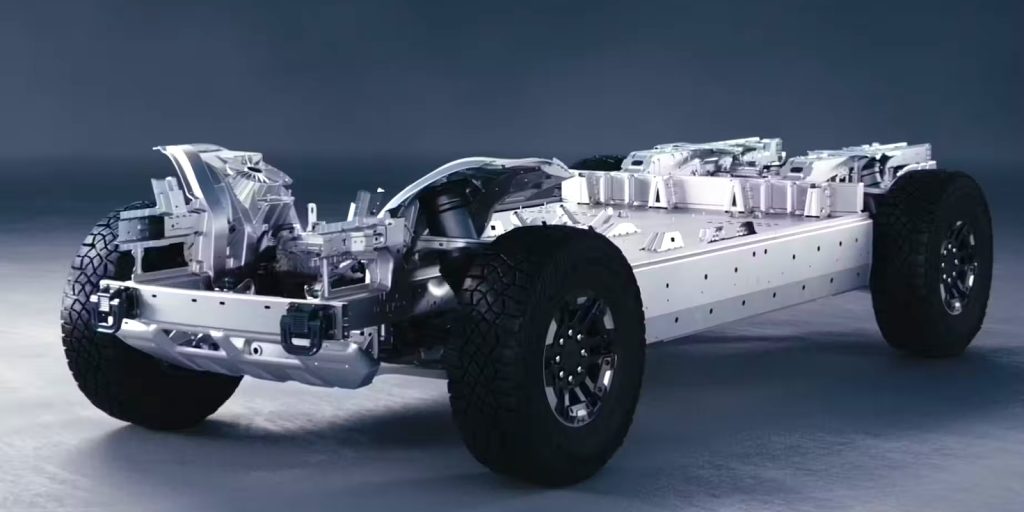
The original Element rolled around on a lot of bits originally developed for the Honda Civic – widely regarded as a fun-to-drive, great-handling little car. That car-based chassis earned it some mockery among automotive journalists who, more than two decades ago, still widely believed that an SUV had to have some off-road chops to it.
Today, we’re a more enlightened bunch. In 2025, an SUV needs to be practical above all else, emphasizing the “Utility” aspect. With a low-slung, low-cg, and low-intrusion electric skateboard underneath its boxy body (more on that in a minute), a modern Element would be than more than capable of delivering a “car-like” ride with plenty of sporty acceleration, as well.
Flexible interior
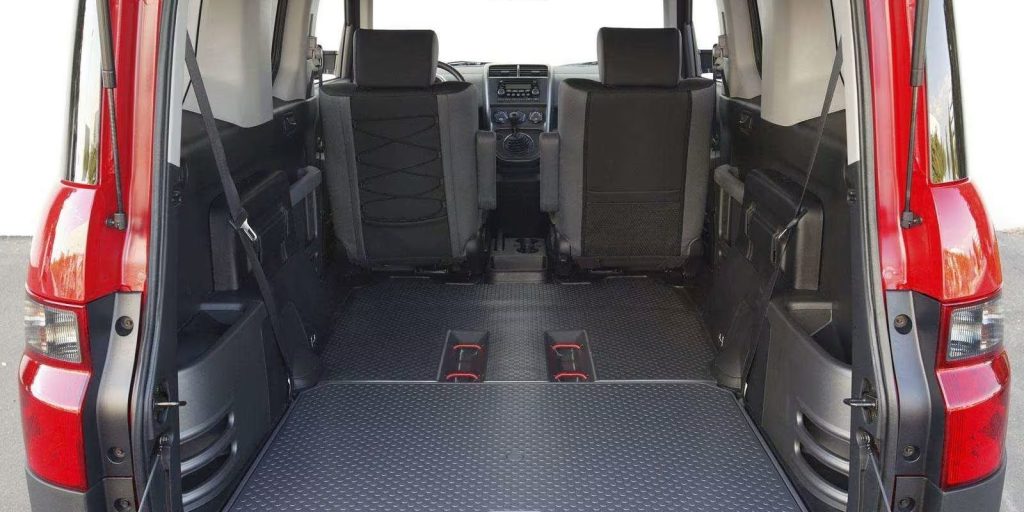
Remember that comment about the low-intrusion nature of the Ultium EV chassis? Without a transmission tunnel to get in the way, Honda was able to offer a massive, flat floor that made the Element ideal for moving, camping, beach days, tailgating, antiquing, and (not to put too fine a point on it) drive-in movies – which we still had those in Florida until at least 2010.
In an EV, all that flat-floor goodness is still there, with the added benefit of being able to offer a flat floor without a transmission tunnel ruining the bedroom cargo bay.
Add a bit of extra width inherited from the Prologue, toss in a friendly ASIMO interface to keep the investment class happy, and offer a full range of inflatable tents, dog beds, and other overlanding, pet, or surf-friendly accessories, and Honda could watch the money roll in. At the very least, if Honda had built a modern Element instead of the Prologue on GM’s skateboard, they might have an easier time moving them in post-rebate America, I think. What do you guys think?
You guys are smart, so I’m sure you’ll be able to find all the problems with this particular take – and I can’t wait to hear them! Should it be FWD only? A plug-in hybrid? Ship with a tent? Scroll on down to the comments and let me know what you think it would take to make a battery-powered Honda Element revival make sense to you.
Original content from Electrek.
If you’re considering going solar, it’s always a good idea to get quotes from a few installers. To make sure you find a trusted, reliable solar installer near you that offers competitive pricing, check out EnergySage, a free service that makes it easy for you to go solar. It has hundreds of pre-vetted solar installers competing for your business, ensuring you get high-quality solutions and save 20-30% compared to going it alone. Plus, it’s free to use, and you won’t get sales calls until you select an installer and share your phone number with them.
Your personalized solar quotes are easy to compare online and you’ll get access to unbiased Energy Advisors to help you every step of the way. Get started here.
FTC: We use income earning auto affiliate links. More.
-
 Sports2 years ago
Story injured on diving stop, exits Red Sox game
-
 Sports3 years ago
‘Storybook stuff’: Inside the night Bryce Harper sent the Phillies to the World Series
-
 Sports2 years ago
Game 1 of WS least-watched in recorded history
-
 Sports3 years ago
Button battles heat exhaustion in NASCAR debut
-
 Sports3 years ago
MLB Rank 2023: Ranking baseball’s top 100 players
-
Sports4 years ago
Team Europe easily wins 4th straight Laver Cup
-
 Environment3 years ago
Japan and South Korea have a lot at stake in a free and open South China Sea
-
 Environment1 year ago
Here are the best electric bikes you can buy at every price level in October 2024