

Ford trims F-150 Lightning price by up to $5,500 in latest effort to boost EV demand

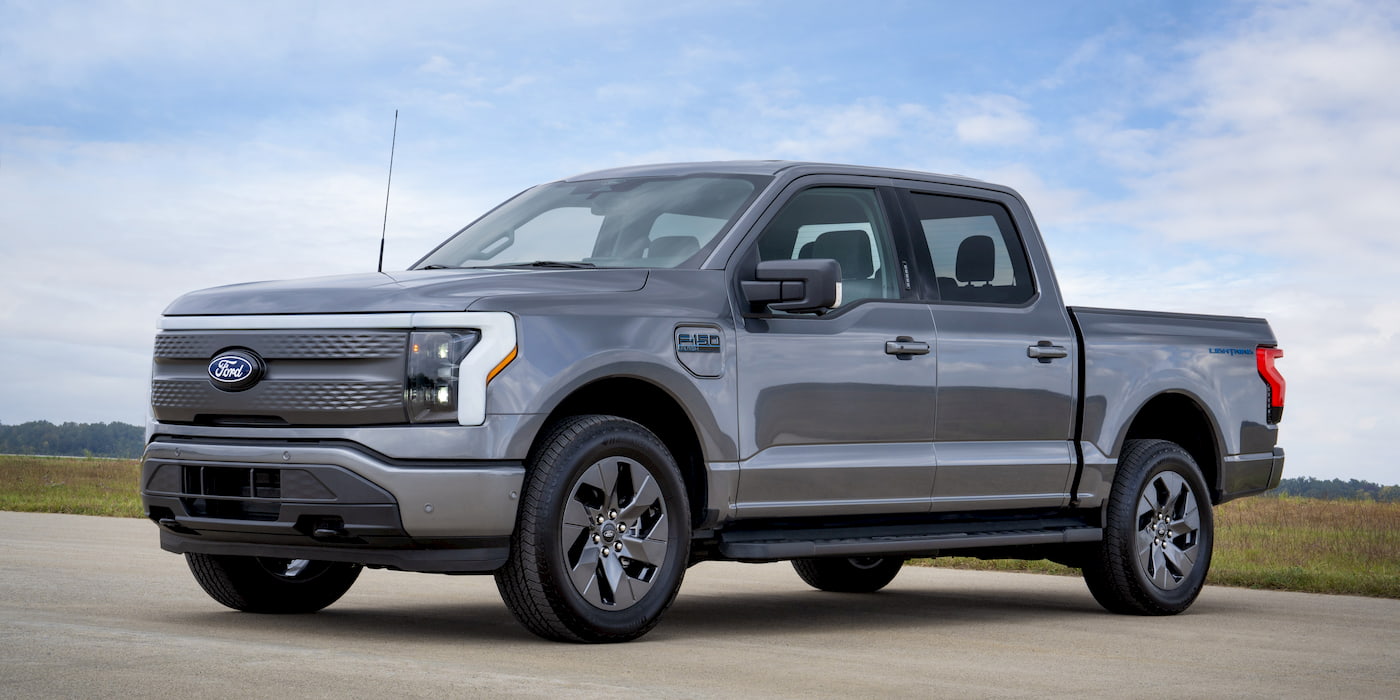
After starting 2024 off strong, with EV sales climbing 86% in the first quarter, Ford looks to boost momentum. Ford is trimming prices on the 2024 F-150 Lightning by up to $5,500 as the American automaker looks to fend off incoming competition.
Ford cuts 2024 F-150 Lightning price to fend off EV rivals
Ford sold 20,233 electric vehicles in the first three months of 2024, surging 86% from last year. The Mach-E led the charge, with sales climbing 77% year-over-year (YOY).
With 9,589 units sold in Q1, Ford’s Mach-E was the second-best-selling electric SUV in the US behind Tesla’s Model Y.
Ford Pro, the company’s commercial and software unit, continues expanding, with E-transit sales up 148% in Q1. The E-Transit was the top-selling electric van, with 2,891 units sold.
The F-150 Lightning remained the top-selling electric pickup in the US, with 7,743 units sold, topping Rivian’s R1T (which is also offering deals this month).
Ford’s EV sales surge comes after the automaker slashed Mach-E prices by up to $8,100 in February. The automaker also introduced significant incentives on the F-150 Lightning, including up to $12,500 in retail bonus cash.
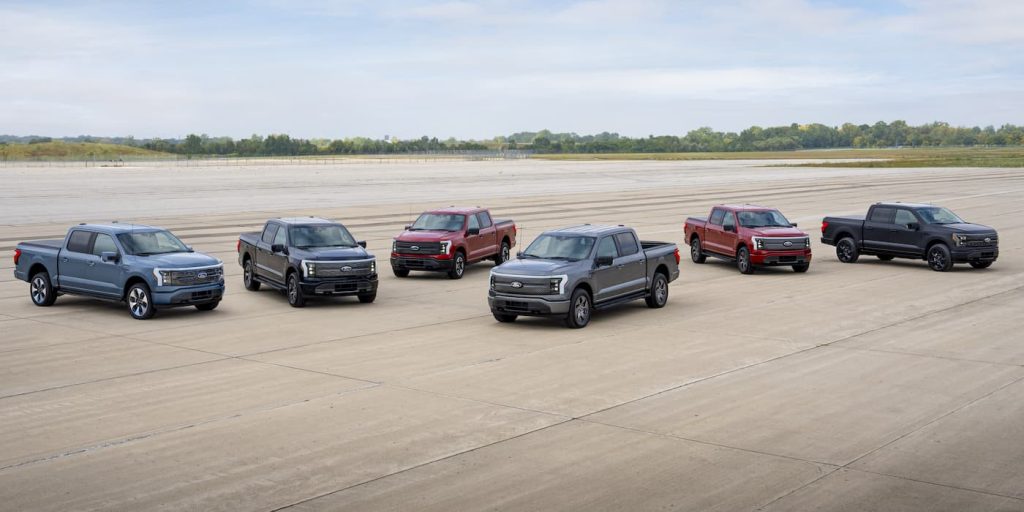
In January, Ford announced new F-150 Lightning prices for the 2024MY, with most trims getting price hikes between $2,000 and $7,500. The base 2024 F-150 Lightning Pro starts at $54,995, up $5,500 from 2023.
The only 2024 Ford Lightning models to receive price cuts from the previous model were the Platinum (-$7,000) and Platinum Black (-$5,000) trims.
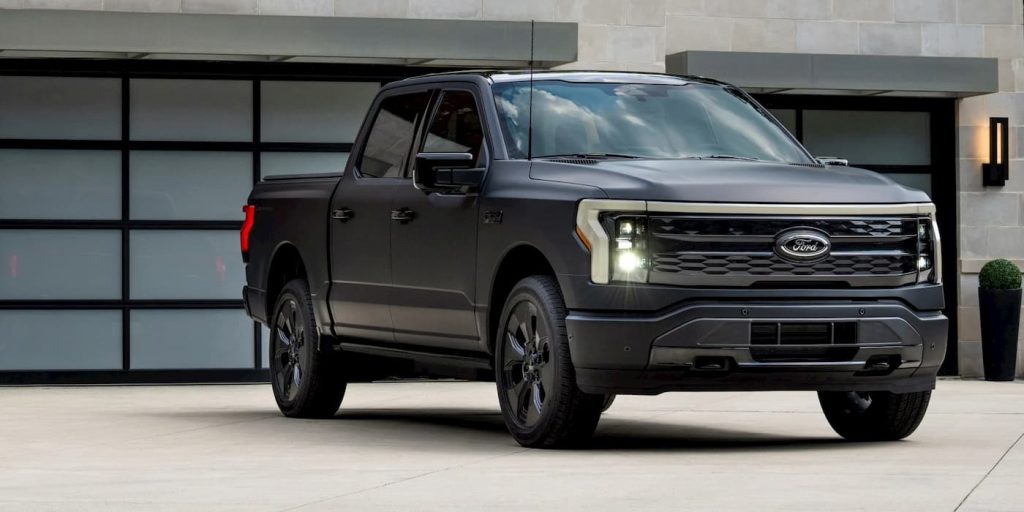
According to a new memo sent to dealers, Ford is reversing with new price cuts on 2024 Lightning models.
Online auto research firm CarsDirect found that the 2024 F-150 Lightning has received a price reduction of up to $5,500. The changes went into effect on April 5, 2024.
|
2024 Ford F-150 Lightning trim |
Initial Starting Price | New Starting Price | Difference | Range (EPA-est miles) |
| Pro | $54,995 | $54,995 | 0 | 240 |
| XLT | $64,995 | $62,995 | -$2,000 | 240 |
| Flash | $73,495 | $67,995 | -$5,500 | 320 |
| Lariat | $79,495 | $76,995 | -$2,500 | 320 |
| Platinum | $84,995 | $84,995 | 0 | 300 |
| Platinum Black | $92,995 | $92,995 | 0 | 300 |
The new Flash trim, added in 2024, received the biggest discount. Ford claims the Flash trim hits the “sweet spot” with up to 320 miles range, an interior loaded with tech and features, and a heat pump. It’s also equipped with Ford’s Tow Tech Package and Power Tailgate. It now starts under $70,000.
Ford’s F-150 Lightning is also eligible for the $7,500 federal tax credit (for trims starting under $80,000).
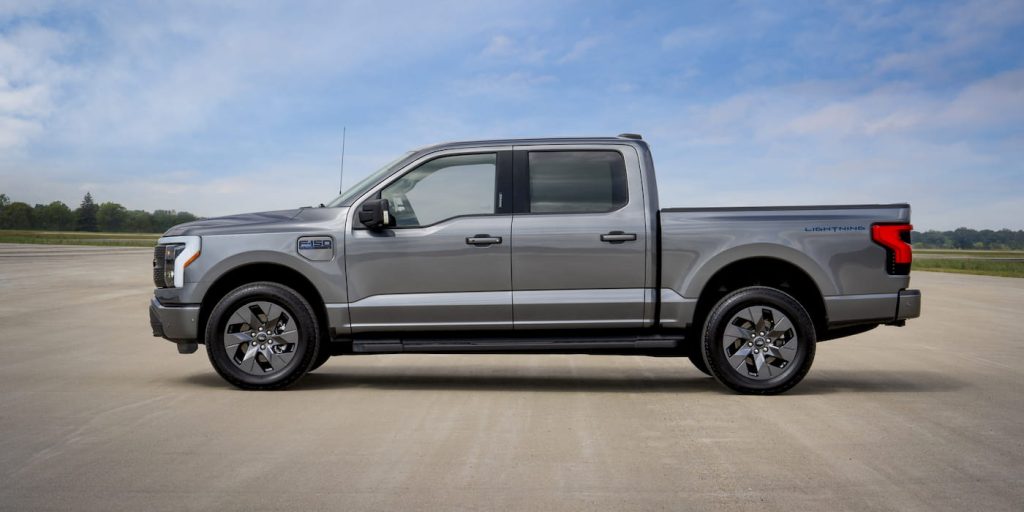
Despite EV sales growing in Q1, Ford is cutting the workforce at its Rouge EV facility by one-third, where the F-150 Lightning is built.
The lower prices come as Ford unveiled its new 2024 Mustang Mach-E. Ford’s new electric crossover features more range, faster charging, and quicker acceleration.
If you’re ready to take advantage of Ford’s new lower prices, we can help you get started today. You can use our links below to find deals on Ford EVs at a dealer near you.
FTC: We use income earning auto affiliate links. More.
Environment
Ford and SK On kill massive $11.4B US battery joint venture, split factories between them


In a massive shakeup for the US electric vehicle supply chain, Ford and South Korean battery giant SK On announced today that they are ending their massive “BlueOval SK” joint venture.
The two companies will effectively split the custody of the three massive battery factories they were building together, with Ford taking the Kentucky site and SK On taking the Tennessee site.
Back in 2021, Ford and SK Innovation (SK On’s parent) announced a massive $11.4 billion investment to build three battery gigafactories in the US: two in Kentucky and one in Tennessee. It was, at the time, the single largest manufacturing investment in Ford’s 118-year history.
The idea was to create a vertically integrated battery supply chain for Ford’s next-generation electric trucks and SUVs.
But today, SK confirmed reports that they are dissolving the JV structure entirely.
According to the announcement, Ford will take full ownership of the two battery plants in Kentucky. One of these plants had already begun initial operations earlier this year, while the second is still under construction.
SK On, meanwhile, will take full ownership of the BlueOval City battery plant in Tennessee.
Ford acknowledged the announcement from SK, but it refused to comment:
We are aware of SK’s disclosure and we have nothing further to share at this time.
The South Korean battery maker was surprisingly candid about the reasoning, stating that the split allows them to “supply batteries for both electric vehicles and energy storage systems not only to Ford but to a wider range of customers.”
This confirms that SK On didn’t want to be tied exclusively to Ford’s production volumes, which have been fluctuating wildly over the last year as the automaker adjusts its EV strategy. SK On explicitly mentioned expanding into the Energy Storage System (ESS) market,a sector that is booming right now, using the capacity at the Tennessee plant.
The deal is expected to close in the first quarter of 2026.
This comes amid narratives of “slowing EV demand” from legacy automakers and a changing political landscape in the US that has introduced uncertainty following the end of federal incentives.
Electrek’s Take
This is a huge deal, and frankly, it smells like trouble for Ford’s original volume targets.
When you form a multi-billion-dollar JV, you do it to lock in supply and share the massive capital burden. Breaking it up less than four years later, before all the plants are even running, suggests that the original plan is effectively dead.
In short, it would suggest Ford does not want the battery capacity from the factory it gave to SK.
This is not exactly surprising considering Ford’s pullback of EV plans, such as the F-150 Lightning, recently.
For SK On, this looks like a smart pivot. If Ford isn’t buying enough cells to fill the lines because they are delaying EV models or pivoting to hybrids, SK needs the freedom to sell those batteries to Hyundai, VW, or into the energy grid storage market, which is insatiable right now.
They basically just freed up 45 GWh of capacity in Tennessee to sell to whoever writes the biggest check.


FTC: We use income earning auto affiliate links. More.

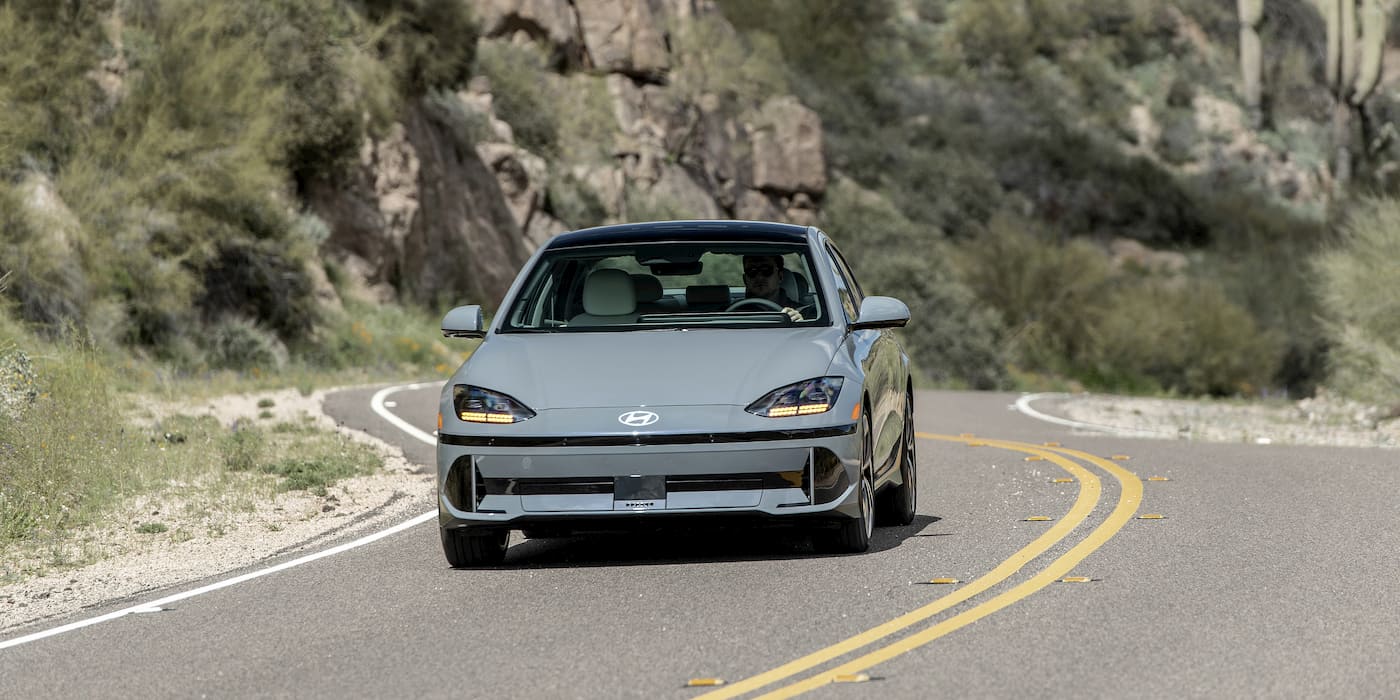
Another EV is reportedly on the chopping block from Hyundai’s US lineup. Here’s what we know so far.
Is Hyundai pulling the IONIQ 6 EV from the US?
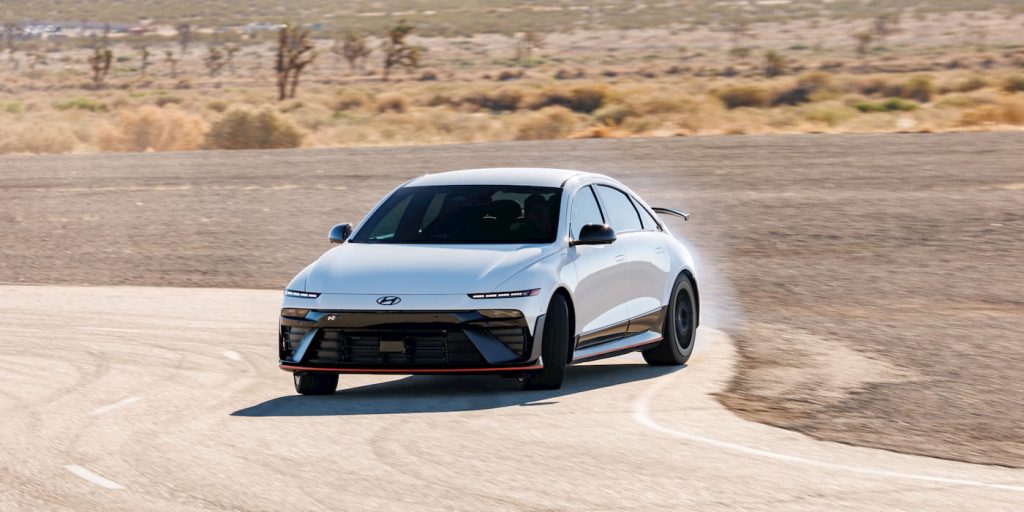
The sporty “N” model may be the only IONIQ 6 trim Hyundai offers in the US for the 2026 model year. Hyundai confirmed the 2026 IONIQ 6 N will be “extremely limited” in the US, but has not offered any updates on the standard version.
Hyundai gave the electric fastback a major refresh for 2026, complete with a sharp new look, a bigger battery for more range, a refined interior, and more.
That sounds nice and all, but will we ever get to see it in the US? According to a report from Jalopnik, the IONIQ 6 N may be the only trim available next year.
When asked whether the updated IONIQ 6 would be coming to the US, Hyundai said no updates were available at the moment. On Hyundai’s website, the 2026 IONIQ 6 is listed with “more details to come.”
Although the Hyundai brand has not scrapped any EVs from its US lineup, its luxury Genesis brand dropped the Electrified G80 and is shifting from initial plans for an all-electric lineup to launching its first hybrid and extended-range electric vehicles (EREVs).
Hyundai’s sister company, Kia, has indefinitely delayed the EV4 electric sedan and the high-performance EV9 GT for the US market.
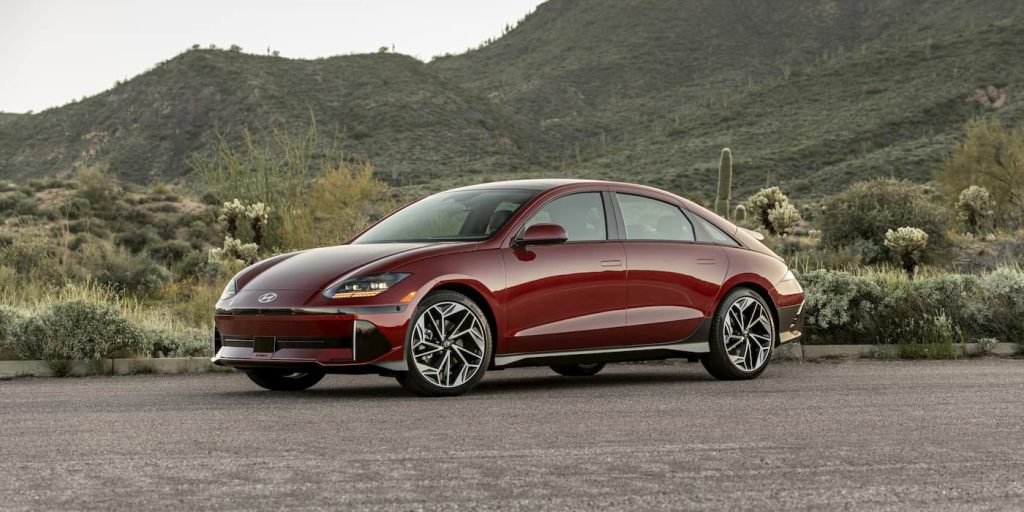
Is the IONIQ 6 next? A Hyundai spokesperson told TheKoreanCarBlog there are currently no new updates on plans to bring the updated IONIQ 6 to the US. The high-performance N variant remains the only 2026 IONIQ N trim confirmed to launch.
Hyundai has yet to reveal prices for the 641 hp electric sports car, but given the 2025 IONIQ 5 N starts at $66,200, the IONIQ 6 N will likely be slightly more expensive.
With the 2026 models arriving at dealerships, Hyundai is offering a few deals worth checking out. The IONIQ 5 remains one of the most affordable EVs in the US, with leases starting at just $189 a month. You can use the links below to find available models by you.
FTC: We use income earning auto affiliate links. More.
Environment
Rivian AI & Autonomy Day: In-house silicon chip, next-gen AI platform, LiDAR for Level 4 self-driving [Video]
![Rivian AI & Autonomy Day: In-house silicon chip, next-gen AI platform, LiDAR for Level 4 self-driving [Video]](https://i0.wp.com/electrek.co/wp-content/uploads/sites/3/2025/12/Rivian-autonomy-R2-LiDAR-front.jpg?resize=1200,628&quality=82&strip=all&ssl=1)

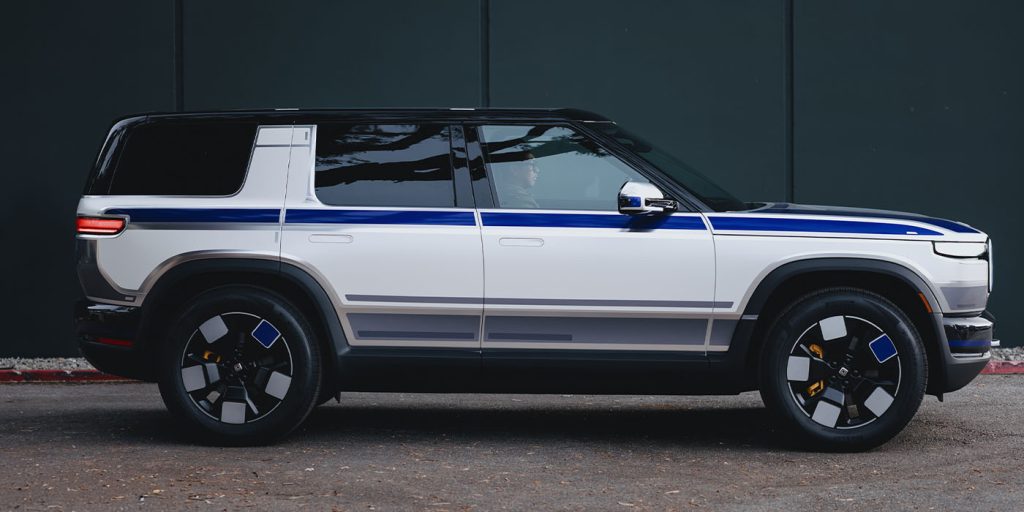
As promised, we are here in Palo Alto, California, live at Rivian’s inaugural AI and Autonomy day, which the American automaker has been teasing for a month now. The event was filled with numerous exciting updates, including new in-house technology, a new AI assistant, the addition of LiDAR, and a uniquely wrapped Rivian R2.
Today’s AI and Autonomy event has been on our radar since Rivian released its Q3 2025 financial report, back in early November. At the time, the American automaker shared it had recently founded a new AI-focused company called Mind Robotics, joining its recently launched e-bike brand, ALSO.
When Rivian’s comms team shared the news about Mind Robotics, it said not to bother asking any additional questions, as the company wasn’t sharing any other details at the time. Instead, more would be revealed at an upcoming event called Rivian’s AI and Autonomy Day, slotted for December 11, 2026.
Here we are, and if you’re reading this, Rivian’s livestream of the inaugural event is either happening or has recently taken place. In addition to AI news, Rivian shared a slew of exciting updates, including some new component integrations as the automaker joins the race to achieve full-fledged Level 4 autonomy someday.
There’s a lot to unpack here, so let’s dig in.
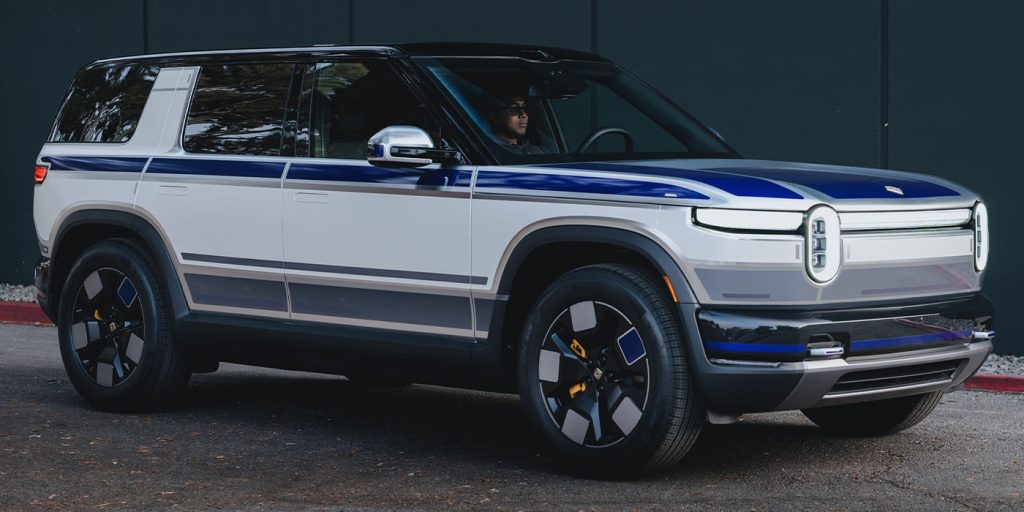

Rivian to deliver new AI and autonomy tech in early 2026
Since today’s event was partially an AI Day, let’s start there. To begin, it revealed a new Rivian Autonomy Processor (RAP1) and Gen 3 Autonomy Computer, powered by a new in-house silicon chip designed for vision-centric AI.
According to Rivian, RAP1 will power its Gen 3 Autonomy computer, called the Autonomy Compute Module 3, or “ACM3.” Here are some key specs:
- 1,600 sparse INT8 TOPS (Trillion Operations Per Second)
- Processing power of 5 billion pixels per second
- RAP1 features RivLink, a low-latency interconnect technology allowing chips to be connected and multiply processing power
- RAP1 is enabled by an AI compiler and platform software developed in-house by Rivian
Additionally, AI plays a key role in Rivian’s business infrastructure and user experience through a shared, multi-modal, and multi-LLM data foundation it calls “Rivian Unified Intelligence” (RUI).
Rivian says RUI will integrate AI into diagnostics to assist techs and quickly identify “complex issues.”Rivian states that the AI platform will also aid in the development of powerful new features, enhance service infrastructure, and facilitate predictive maintenance.
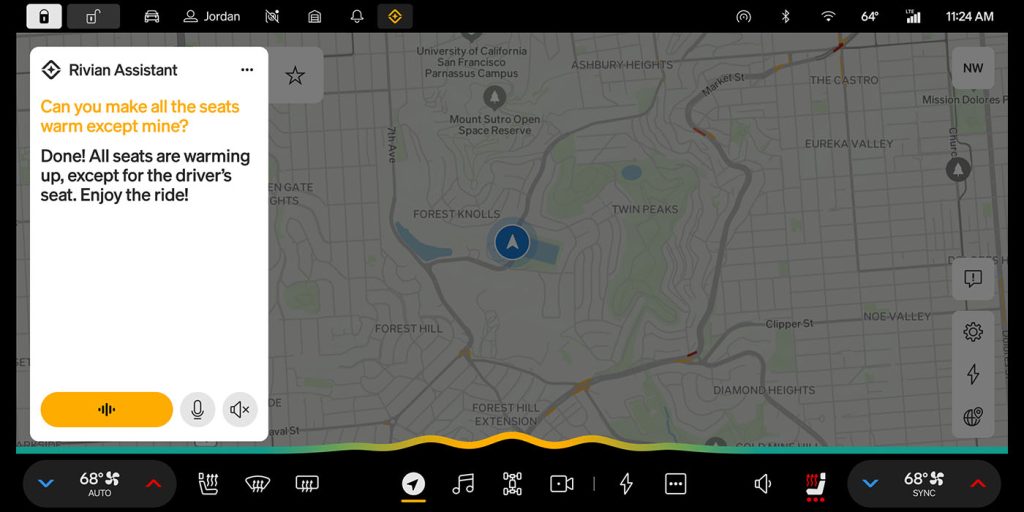
A notable addition that stood out to me in this new architecture is the Rivian Assistant (pictured above), which we’ve learned will launch in early 2026 on Gen 1 and Gen 2 R1 vehicles. Here are some highlights, per Rivian:
- Built on Rivian’s edge models to understand your vehicle, your digital life, and the world around you
- Connects vehicle systems with third-party apps using an in-house agentic framework, with Google Calendar named as the first integration
- Augmented by frontier large language models for grounded data, natural conversation and
- powerful reasoning.
Now for the second part of Rivian’s special event – autonomy. This morning, Rivian shared details of its new Autonomy Platform as well as an end-to-end data loop used to train it. This Large Driving Model (LDM) is trained similarly to a Large Language Model (LLM), but programmed to achieve foundational autonomy, with the ultimate aim of reaching Level 4 self-driving capabilities.
The new LDM will gather ideal driving strategies from massive datasets using Group-Relative Policy Optimization (GRPO) and will then incorporate those techniques into a compatible Rivian vehicle. According to Rivian, those autonomy software enhancements will be rolled out to Gen 2 R1 models in the near future, unlocking Universal Hands-Free (UHF) driving capabilities for over 3.5 million miles of roads across the US and Canada. Check it out:
To access this feature, Rivian has introduced an autonomy subscription called Autonomy+, launching in early 2026 for a one-time fee of $2,500 or a monthly payment of $49.99 to access the feature and its ongoing improvements.
Rivian hinted at some of those autonomy-centric improvements in the works for the Gen 2 R1 and R2 EVs, which include point-to-point, eyes-off, and personal Level 4 driving capabilities. Rivian founder and CEO, RJ Scaringe, spoke to the new tech debuting at AI and Autonomy Day:
I couldn’t be more excited for the work our teams are driving in autonomy and AI. Our updated hardware platform, which includes our in-house 1600 sparse TOPS inference chip, will enable us to achieve dramatic progress in self-driving to ultimately deliver on our goal of delivering L4. This represents an inflection point for the ownership experience – ultimately being able to give customers their time back when in the car.
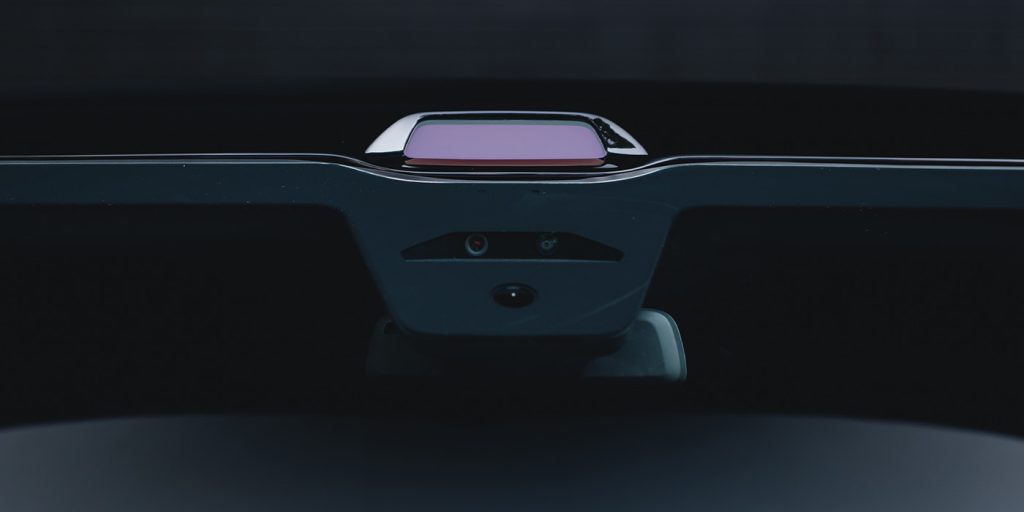
Last but not least, the upcoming R2 made an appearance, cleverly “dressed” as R2D2 from Star Wars. What was more interesting, however, was that the R2 was equipped with a new piece of autonomy tech new to Rivian EVs – LiDAR.
That’s right; today, Rivian confirmed that it plans to integrate LiDAR into future R2 models, alongside the previously mentioned ACM3. Per Rivian:
LiDAR will augment the company’s multi-modal sensor strategy, providing detailed, three-dimensional spatial data and redundant sensing, and improving real-time detection for the edge cases of driving.
Here’s a peek at how it works:
How are we feeling? I know I just threw a lot of technical jargon at you, but here’s the gist – Rivian is continuing to develop, introduce, and integrate its own in-house technologies. Today’s was a purpose-built silicon chip and software-centric autonomy platform bolstered by AI.
LiDAR is likely to be introduced in R2 next year, and future models beyond that, and new autonomy capabilities are on the way (for a fee). That will include more hands-free-friendly routes around the US and Canada. Exciting stuff all around from Palo Alto.
Electrek’s take
While we will still need to see Rivian actually roll out these AI and autonomy technologies to owners for real-world use (and critique), it is exciting to see the American automaker not only deploying technologies like software-first autonomy platforms and silicon chips, but also developing them in-house.
Rivian is by no means the first to do so (Tesla introduced its FSD silicon chip years ago, and several Chinese automakers have followed suit). However, it’s still quite encouraging to see Rivian put a pony in the race to true, Level 4 self-driving.
I also find it interesting (while not surprising) that Rivian has chosen to integrate LiDAR into the R2 to support autonomy as part of its multi-modal approach discussed above. LiDAR remains a hot topic as Tesla still swears by vision cameras and has been joined by other recent converts, such as XPeng Motors. Meanwhile, most other OEMs still see LiDAR as the long-term best option, especially when paired with other sensors.
Rivian has opted for that same route to autonomy, and I can’t disagree with the decision. From a business standpoint, owning IP is a significant advantage, and it’s exciting to see Rivian continuing to develop such technological advancements internally, similar to other American EV brands like Tesla and Lucid.
Their focus on EVs not only promotes a sustainable future but also gives these companies more freedom to invest more heavily in one form of technology (BEVs) compared to legacy automakers, who must spread their R&D budgets across combustion, hybrid, PHEV, and BEV models.
Automakers like Rivian, Lucid, and Tesla have a few proprietary aces up their sleeves that they could one day wield toward other OEMs, whether that’s building and selling that hardware or software to them, or even licensing it. Take, for example, Rivian’s agreement with the Volkswagen Group, which includes EVs from Scout Motors.
Right now, I’m sure those brands are utilizing most of their technology in their own models, but developing their own motors, inverters, chips, and software platforms does have its advantages, whether that’s in Rivian EVs or other makes and models.
I’m personally excited to see Autonomy+ roll out to my Gen 2 R1S and will be sure to test the expanded Hands Free routes when I can. That’s all for now; thank you for reading.
FTC: We use income earning auto affiliate links. More.
-
 Sports2 years ago
Story injured on diving stop, exits Red Sox game
-
 Sports3 years ago
‘Storybook stuff’: Inside the night Bryce Harper sent the Phillies to the World Series
-
 Sports2 years ago
Game 1 of WS least-watched in recorded history
-
 Sports3 years ago
Button battles heat exhaustion in NASCAR debut
-
 Sports3 years ago
MLB Rank 2023: Ranking baseball’s top 100 players
-
Sports4 years ago
Team Europe easily wins 4th straight Laver Cup
-
 Environment3 years ago
Japan and South Korea have a lot at stake in a free and open South China Sea
-
 Environment1 year ago
Here are the best electric bikes you can buy at every price level in October 2024