Connect with us

Published

on

The U.S. government is considering laws to help society adapt to the introduction of artificial intelligence.

Early users of the technology are already seeing labor productivity gains. For example, Klarna, a buy now, pay later financial services provider, estimates that its AI assistant tool will increase its profit outcome by $40 million by the end of 2024.

“It basically does the job of 700 full-time agents,” Klarna CEO Sebastian Siemiatkowski said in an interview with CNBC. “It basically was capable of taking care of two-thirds of all the incoming errands that we have over chat.”

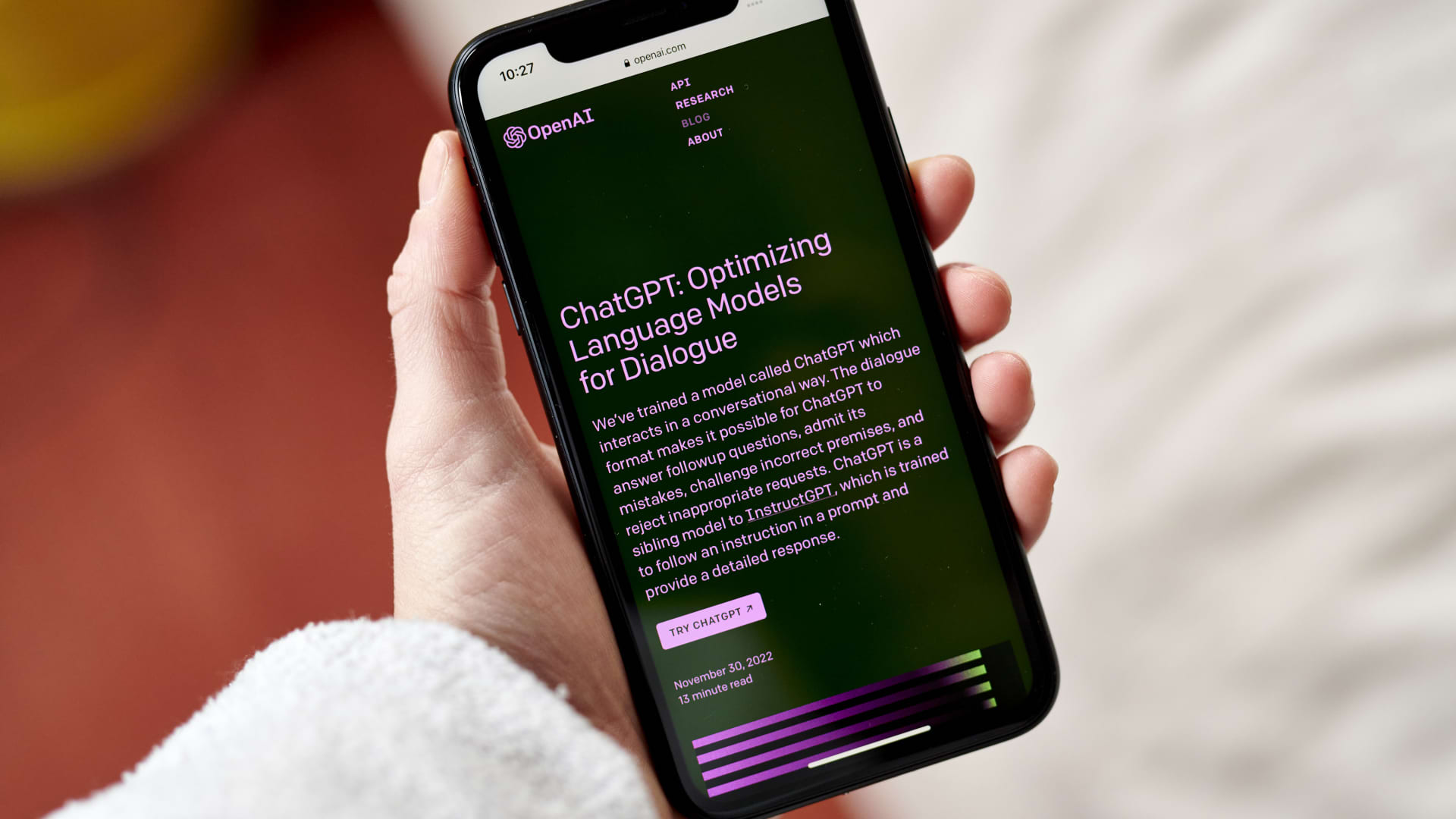
Klarna’s AI assistant tool is built on OpenAI’s systems, which power both ChatGPT and Sora — two products that have captured the attention of both the general public and Congress.

In 2023, members of Congress convened panels, private dinners, and learning sessions with high-profile tech executives including Sam Altman, CEO at OpenAI. The White House followed up by seeking commitment from 15 private industry leaders to help lawmakers understand the best way to identify risks and make use of the new technologies. The list includes some of the biggest players in the tech sector, alongside newcomers such as Anthropic and OpenAI.

The Senate Task Force on AI, established in 2019, has passed at least 15 bills into law that focus on research and risk assessment. But when compared with measures passed by the European Union in 2024, the U.S. regulatory environment appears to be relatively relaxed.

“The folks in Brussels, they come up with a lot of bureaucratic rules that make it harder for companies to innovate,” Erik Brynjolfsson, a senior fellow at Stanford Institute for Human-Centered AI, said in an interview with CNBC. “The entrepreneurial environment isn’t there the way it is in the United States.”

Economists have worried for years that artificial intelligence could sink job prospects for white-collar workers, similar to the effects globalization has had on blue-collar workers in the past. A study from the International Monetary Fund suggests that at least 60% of work in advanced economies would be exposed to changes that stem from the wide adoption of artificial intelligence.

In 2023, lawmakers in the New York State Assembly put forward a measure to limit the expected impact of tech-driven layoffs with robot taxes. The idea is to introduce a cost for companies that use technology to displace workers within the state. As of April 2024, the bill remains in committee with an uncertain future.

Many economists have said that robot taxes, if used at all, should be set at a relatively low level. In the U.S. both employers and employees face payroll taxes of 7.65% of income. But the optimal rate for a robot tax would be between 1% and 3.7%, according to researchers at the Massachusetts Institute of Technology.

“It’s good for us to have output and productivity. And so I’m not sure we want to tax those,” said Brynjolfsson. “Robots are part of what boost technological growth and give us that higher productivity.”

“There will be a time in the future where robots can do most of what humans currently do,” Brynjolfsson said. “We’re not there yet.”

Watch the video above to learn more about the U.S. government’s plan to regulate artificial intelligence. 

Continue Reading

Technology

Amazon pledges a massive $35 billion worth of investments in India’s AI space through 2030

Published

on

By

Amazon pledges a massive  billion worth of investments in India’s AI space through 2030

Employees stand near an The Amazon Inc. logo is displayed above the reception counter at the company’s campus in Hyderabad, India, on Friday, Sept. 6, 2019.

Bloomberg | Bloomberg | Getty Images

Amazon on Wednesday committed to investing over $35 billion in India’s cloud and artificial intelligence space by 2030, as hyperscalers race to get a foothold in the market. 

The commitment, unveiled at the Amazon Smbhav Summit in New Delhi, builds on nearly $40 billion already invested in the country. 

In a press release, Amazon said the new funds will target AI-driven digitization, export growth and job creation, aligning with India’s national priorities to build up its local AI environment.

By 2030, Amazon said the plan is expected to generate an additional 1 million direct, indirect, induced and seasonal jobs in India, quadruple exports to $80 billion and deliver AI benefits to 15 million small businesses.

The investment highlights Amazon’s bet on India’s booming digital economy, where it has been building fulfillment centers, data centers and payments infrastructure. 

It also comes soon after Microsoft announced plans to invest $17.5 billion in India’s AI infrastructure as Big Tech players accelerate their push into the market. 

“We are humbled to have been a part of India’s digital transformation journey over the past 15 years,” said Amit Agarwal, senior vice president for emerging markets at Amazon. 

“Looking ahead, we’re excited to continue being a catalyst for India’s growth, as we democratize access to AI for millions of Indians.”

Continue Reading

Technology

Microsoft to invest $17.5 billion in India’s AI infra as Big Tech queues up for the Asian market

Published

on

By

Microsoft to invest .5 billion in India's AI infra as Big Tech queues up for the Asian market

Microsoft CEO Satya Nadella appears at an event with tech CEOs and senior officials, including Indian Prime Minister Narendra Modi, in the East Room of the White House in Washington on June 22, 2023.

Chris Kleponis | CNP | Bloomberg | Getty Images

Microsoft on Tuesday announced it would invest $17.5 billion in India’s cloud and artificial intelligence infrastructure, making it the U.S. tech giant’s largest investment in Asia. 

The company said that the investments, aimed at expanding hyperscale infrastructure, embedding AI into national platforms, and advancing workforce readiness, will be spread over 4 years, building on its $3 billion pledge made in January. 

The announcement follows a meeting between Microsoft CEO Satya Nadella and Indian Prime Minister Narendra Modi in which the two discussed India’s AI ambitions. Modi met with other tech CEOs on Tuesday too including Intel‘s Lip-Bu Tan.

In a post on social media, Nadella thanked Modi and said that Microsoft’s investments would “help build the infrastructure, skills, and sovereign capabilities needed for India’s AI first future.” 

The move comes as India attempts to catch up on AI, with Modi emphasizing building a comprehensive tech ecosystem and AI sovereignty. The country has also recently attracted data center investment pledges of $15 billion from Google and $8 billion from Amazon Web Services. 

“The youth of India will harness this opportunity to innovate and leverage the power of AI for a better planet,” Modi said in a post on X, referring to Microsoft’s investment.

Microsoft plans to use the funds to scale up its existing cloud and AI infrastructure to serve customers across regions in India. It now provides “Sovereign Public Cloud” and “Sovereign Private Cloud” services in several regions.

The company added that it was doubling its January commitment to train 20 million Indians in AI by 2030, with hopes to grow and skill its more than 22,000 employees in the country. 

Microsoft also announced on Tuesday that it would be integrating its Azure AI capabilities into two key digital public platforms of India’s Ministry of Labour and Employment and the National Career Service. 

India’s Union Minister of Electronics & Information Technology Ashwini Vaishnaw called the investment a signal of India’s rise as a reliable global technology partner, accelerating the shift from digital to AI public infrastructure.

While India lags far behind global leaders in advanced technologies like chips and AI, the country’s massive consumer market and public funding have attracted major tech players. 

Under its “India Semiconductor Mission,” the country has approved 10 chip projects with total investments of over $18 billion.

On Monday, American chip designer Intel signed a deal with Mumbai-based Tata Electronics aimed at collaborating on chip offerings in the country, including on products for AI applications.

Continue Reading

Technology

CNBC Daily Open: A ‘hawkish cut’ by the Fed could dull festivities

Published

on

By

CNBC Daily Open: A 'hawkish cut' by the Fed could dull festivities

An eagle is seen framed though construction fence on the Marriner S. Eccles Federal Reserve Board Building, the main offices of the Board of Governors of the Federal Reserve System on September 16, 2025 in Washington, DC, U.S.

Kevin Dietsch | Getty Images News | Getty Images

On Wednesday stateside, the U.S. Federal Reserve is widely expected to lower its benchmark interest rates by a quarter percentage point to a range of 3.5%-3.75%.

However, given that traders are all but certain that the cut will happen — an 88.6% chance, to be exact, according to the CME FedWatch tool — the news is likely already priced into stocks by the market.

That means any whiff of restraint could weigh on equities. In fact, the talk in the markets is that the Fed might deliver a “hawkish cut”: lower rates while suggesting it could be a while before it cuts again.

The “dot plot,” or a projection of where Fed officials think interest rates will end up over the next few years, will be the clearest signal of any hawkishness. Investors will also parse Chair Jerome Powell’s press conference and central bankers’ estimates for U.S. economic growth and inflation to gauge the Fed’s future rate path.

In other words, the Fed could rein in market sentiment even if it cuts rates. Perhaps end-of-year festivities might be muted this year.

What you need to know today

And finally…

Dado Ruvic | Reuters

Continue Reading

Trending