


Britain loves chocolate.
We’re estimated to consume 8.2kg each every year, a good chunk of it at Christmas, but the cost of that everyday luxury habit has been rising fast.
Whitakers have been making chocolate in Skipton in North Yorkshire for 135 years, but they have never experienced price pressures as extreme as those in the last five.
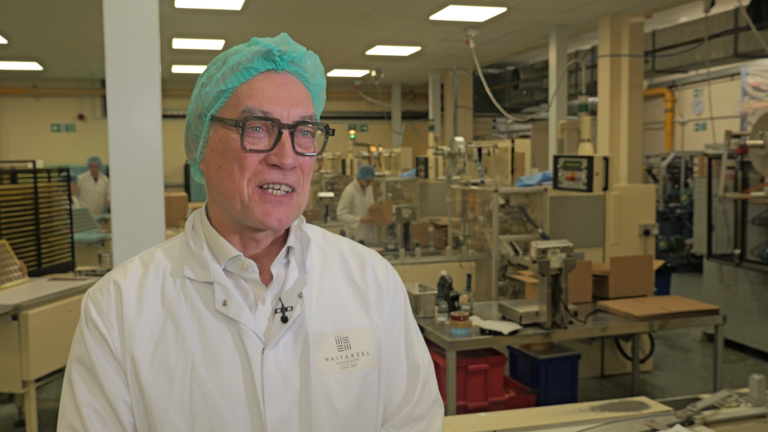
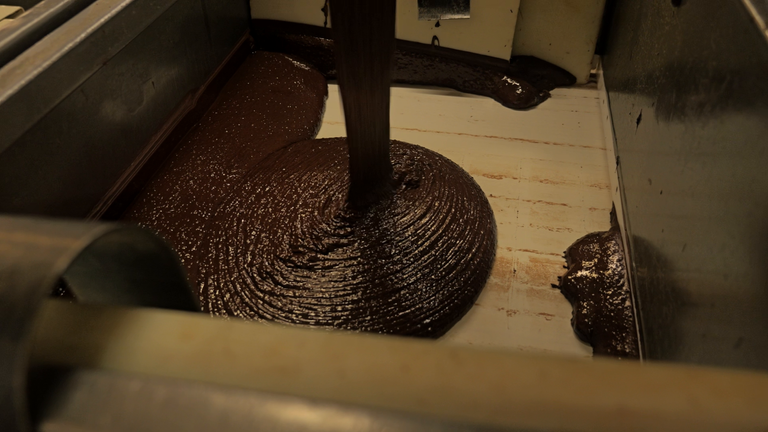
“We buy liquid chocolate and since 2023, the price of our chocolate has doubled,” explains William Whitaker, the real-life Willy Wonka and the fourth generation of the family to run the business.
William Whitaker, managing director of the company
“It could have been worse. If we hadn’t been contracted [with a supplier], it would have trebled.
“That represents a £5,000 per-tonne increase, and we use a thousand tonnes a year. And we only sell £12-£13m of product, so it’s a massive effect.”
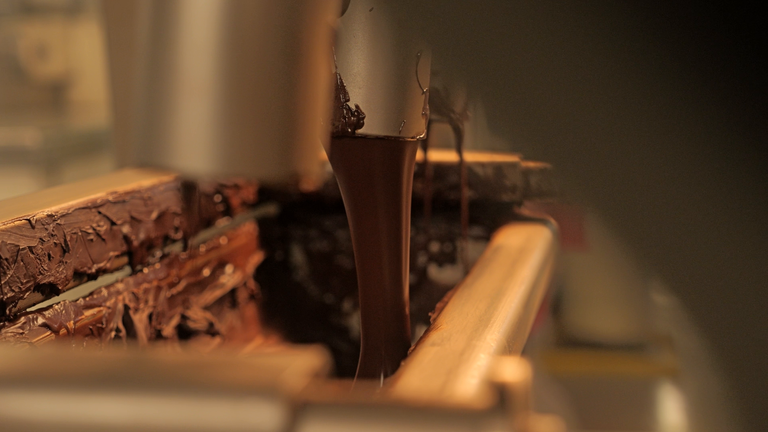
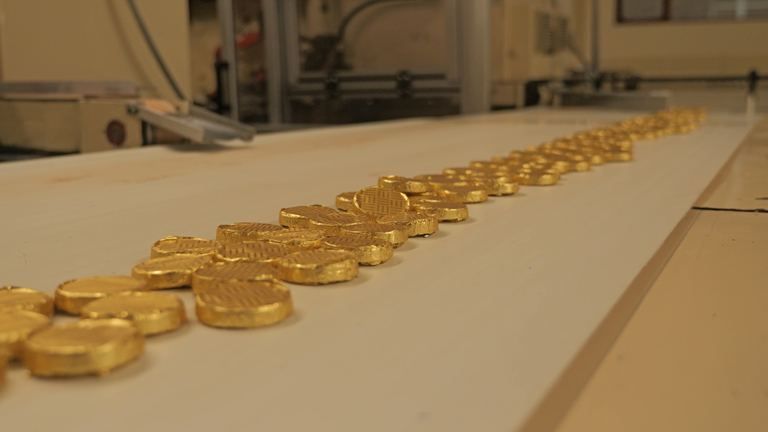
Whitakers makes 10 million pieces of chocolate a week in a factory on the much-expanded site of the original bakery where the business began.
Automated production lines snake through the site moulding, cutting, cooling, coating and wrapping a relentless procession of fondants, cremes, crisps and pure chocolate products for customers, including own-brand retail, supermarkets, and the catering trade.
Steepest inflation in the business
All of them have faced price increases as Whitakers has grappled with some of the steepest inflation in the food business.
Cocoa prices have soared in the last two years, largely because of a succession of poor cocoa harvests in West Africa, where Ghana and the Ivory Coast produce around two-thirds of global supply.
A combination of drought and crop disease cut global output by around 14% last year, pushing consumer prices in the other direction, with chocolate inflation passing 17% in the UK in October.

Skimpflation and shrinkflation
Some major brands have responded by cutting the chocolate content of products – “skimpflation” – or charging more for less – “shrinkflation”.
Household-name brands including Penguin and Club have cut the cocoa and milk solid content so far they can no longer be classified as chocolate, and are marketed instead as “chocolate-flavour”.
Whitakers have stuck to their recipes and product sizes, choosing to pass price increases on to customers while adapting products to the new market conditions.
“Not only are major brands putting up prices over 20%, sometimes 40%, they’ve also reduced the size of their pieces and sometimes the ingredients,” says William Whitaker.
“We haven’t done any of that. We knew that long-term, the market will fall again, and that happier days will return.
“We’ve introduced new products where we’ve used chocolate as a coating rather than a solid chocolate because the centre, which is sugar-based, is cheaper than the chocolate.
“We’ve got a big product range of fondant creams, and others like gingers and Brazil nuts, where we’re using that chocolate as a coating.”
The costs are adding up
A deluge of price rises
Brazil nuts have enjoyed their own spike in price, more than doubling to £15,000 a tonne at one stage.
On top of commodity prices determined by markets beyond their control, Whitakers face the same inflationary pressures as other UK businesses.
“We’ve had the minimum wage increasing every year, we had the national insurance rise last year, and sort of hidden a little bit in this budget is a business rate increase.
“This is a small business, we turn over £12m, but our rates will go up nearly £100,000 next year before any other costs.
“If you add up all the cocoa and all the other cost increases in 2024 and 2025, it’s nearly £3m of cost increases we’ve had to bear. Some of that is returning to a little normality. It does test the relevance of what you do.”

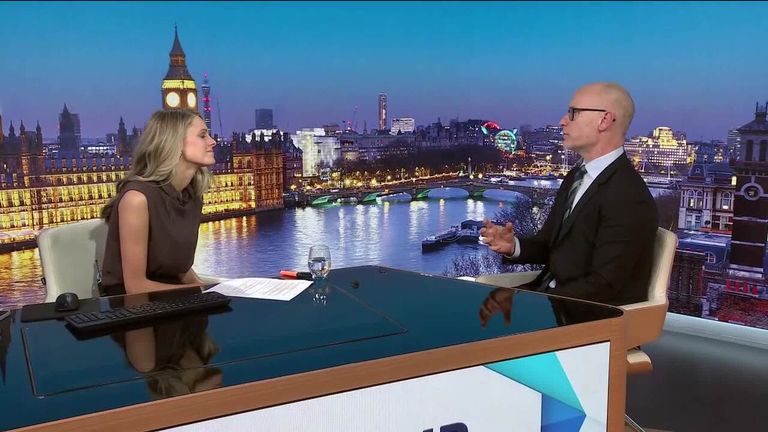
The UK is to rejoin the European Union’s Erasmus student exchange scheme, according to reports.
The popular programme allowed Britons to spend a year studying at European universities as part of their degree, without paying extra fees, and vice versa for their European counterparts.
It ended for British students after Brexit on 1 January 2021 and was replaced by the Turing scheme.
But ministers could announce the UK will rejoin Erasmus from January 2027 as soon today, The Times and The Guardian have reported.
How did we get here?
Sir Keir Starmer promised a post-Brexit reset deal with Brussels and announced the government was working on rejoining the programme in May.
Negotiations have included work on “mutually agreed financial terms” for the UK and the EU.
The UK had pushed for a discount on membership fees, which are calculated on the basis of a country’s gross domestic product (GDP), The Times reported.
It said the EU is understood to have offered the government a 30% reduction of fees in the first year of membership.
Labour MP Darren Frith told Sky News’ Politics Hub he would “welcome” such a move.
The Guardian reported that, as well as university-based study exchanges, British students will be able to participate in vocational training placements under the scheme.
Cabinet Office minister Nick Thomas-Symonds held talks with Maros Sefcovic, the European Commission’s trade lead, in Brussels last week.
A Cabinet Office spokesman said: “We are not commenting on ongoing talks.”
‘Fantastic opportunities for students’
But the UK’s universities welcomed the apparent breakthrough.
Tim Bradshaw, chief executive of the Russell Group of leading universities, said: “We’re delighted at the UK’s association to Erasmus+.
“With an even greater scope than previous programmes, Erasmus+ opens up fantastic opportunities for students, adult learners and young people to all benefit from new experiences and learning.
“It will also renew the huge contributions that EU students and staff make to life on our university campuses.”
The Lib Dems, who have been campaigning to rejoin Erasmus, welcomed the news.
Leader Sir Ed Davey said: “This is a moment of real opportunity and a clear step towards repairing the disastrous Conservative Brexit deal.”
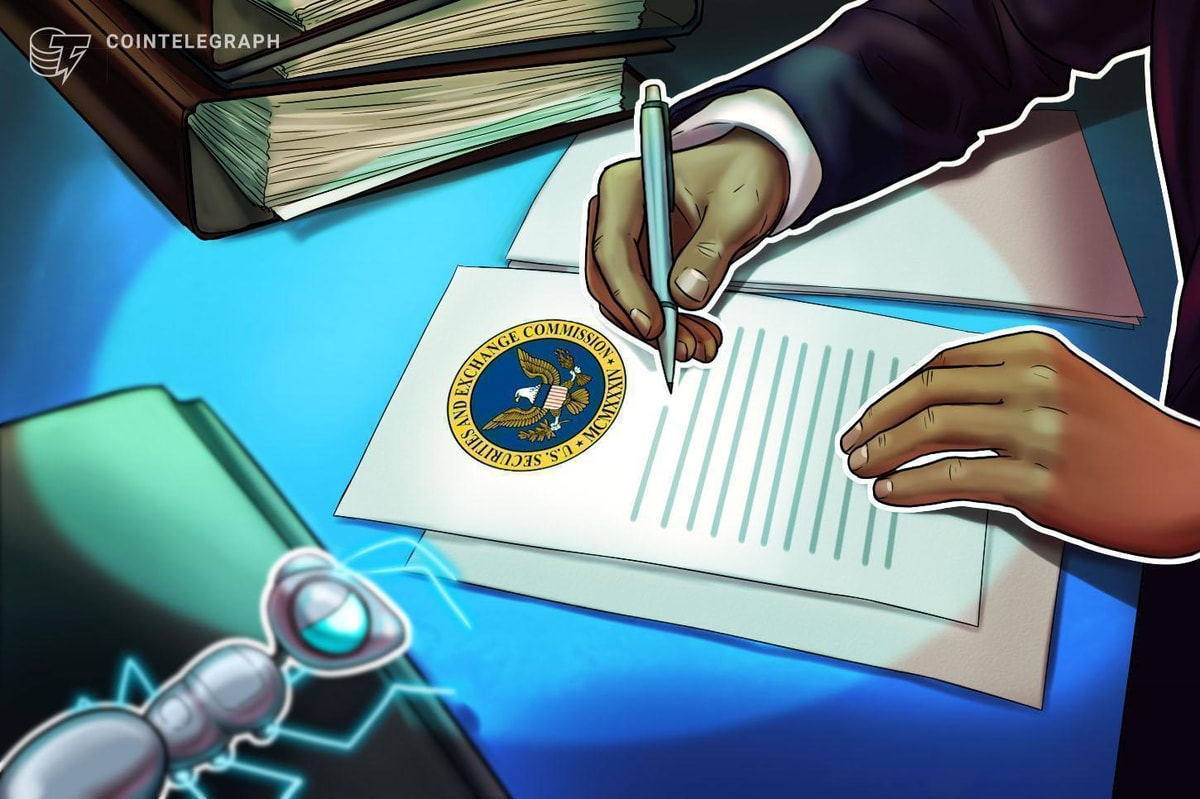
Screenshots of an internal email outlining plans to wind down Shima Capital have surfaced online, days after the US Securities and Exchange Commission sued the crypto venture firm and its founder over allegations of investor fraud.
On Nov. 25, the SEC charged Shima Capital Management LLC and its founder, Yida Gao, with making false and misleading statements while raising almost $170 million from investors, the agency announced on Dec. 3.
The complaint, filed in the US District Court for the Northern District of California, alleged that Gao inflated his investment track record in marketing materials used to raise capital for Shima Capital Fund I between 2021 and 2023.
According to the SEC, Gao claimed one prior investment had delivered a 90x return, when the actual return was closer to 2.8x. The regulator also alleged that when discrepancies in the pitch deck were about to be reported publicly, Gao told investors the issues were the result of clerical errors.
SEC alleges $1.9 million undisclosed gain
Separately, the SEC claimed that Gao raised about $11.9 million through a special purpose vehicle tied to BitClout tokens, telling investors that they would be protected by discounted token purchases. While Gao did acquire tokens at a discount, the SEC said he sold them to the SPV at a higher price without disclosing that he personally retained about $1.9 million in profits.
Related: Crypto fundraising sets new record of $3.5B in a single week
In a Wednesday post on X, crypto journalist Kate Irwin shared screenshots of an email allegedly sent by Gao to portfolio founders. In the screenshots, Gao purportedly said he would step down as managing director of Shima Capital and that the fund would undergo an “orderly wind-down.”

The screenshots purportedly show Gao stating that the SEC and Department of Justice actions are related to his personal conduct, not that of Shima Capital’s portfolio companies, and claiming that no fines have been imposed on the company.
The screenshots also show that independent advisers from FTI Consulting and FTI Capital Management would oversee the wind-down process and monetization of investments, while Shima’s finance team would remain in place. Gao allegedly said he would remain involved with portfolio support “as permitted,” but without management control.
Cointelegraph could not independently verify the email. We reached out to Shima Capital and some of the fund’s portfolio companies for confirmation, but had not received responses at the time of publication.
Related: A beginners guide on raising funds using cryptocurrencies
Shima Capital launched with $200 million debut fund
In 2022, Shima Capital announced the launch of its first venture fund, Shima Capital Fund I, raising $200 million to back early-stage blockchain startups. Founded in 2021 by Gao, the firm said the fund received backing from a range of prominent investors, including Dragonfly Capital, Animoca Brands, OKX Blockdream Capital, Republic and Andrew Yang.
Shima Capital has invested in numerous crypto projects, including Humanity Protocol, Berachain, Monad, Pudgy Penguins, Shiba Inu and many others.
Magazine: 2026 is the year of pragmatic privacy in crypto — Canton, Zcash and more
-
 Sports2 years ago
Story injured on diving stop, exits Red Sox game
-
 Sports3 years ago
‘Storybook stuff’: Inside the night Bryce Harper sent the Phillies to the World Series
-
 Sports2 years ago
Game 1 of WS least-watched in recorded history
-
 Sports3 years ago
Button battles heat exhaustion in NASCAR debut
-
 Sports3 years ago
MLB Rank 2023: Ranking baseball’s top 100 players
-
Sports4 years ago
Team Europe easily wins 4th straight Laver Cup
-
 Environment3 years ago
Japan and South Korea have a lot at stake in a free and open South China Sea
-
 Environment1 year ago
Here are the best electric bikes you can buy at every price level in October 2024