
Rapper’s delight: Snoop sponsors Arizona Bowl


-
Adam Rittenberg, ESPN Senior Writer
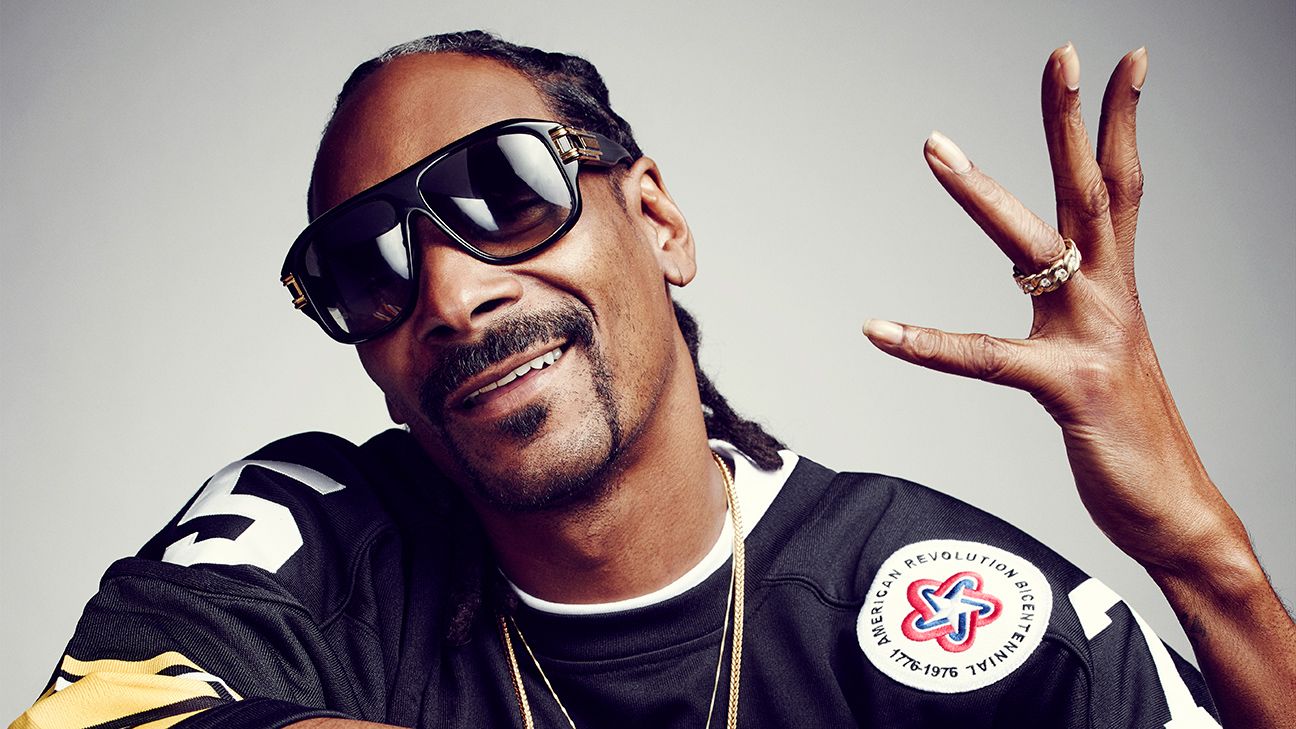
Snoop Dogg is getting into the college football bowl business with a historic sponsorship that recognizes his 1993 hit song and recent beverage line with Dr. Dre, “Gin & Juice.”
The rapper on Monday revealed the new Snoop Dogg Arizona Bowl presented by Gin & Juice By Dre and Snoop, announcing his intent “to bring the juice back to college football.” The game, previously sponsored by Barstool Sports, will take place Dec. 28 in Tucson, Arizona, and pair teams from the Mountain West and Mid-American conferences.
The partnership marks the first with an alcohol product as the presenting sponsor of an NCAA-sanctioned bowl game. In February, the new beverage company introduced “Gin & Juice” as their first ready-to-drink product — a nod to Snoop Dogg’s hit from the album “Doggystyle,” produced by Dr. Dre and Death Row Records.
“The Arizona Bowl is bringing sports, libations and entertainment into a singular bowl game, and we are changing the definition of what a brand partnership is in the NCAA,” Kym Adair, executive director of the Arizona Bowl, said in a statement.
PlayFly Premier Partnerships, a sports media and marketing company that has worked with the Arizona Bowl since 2021, finalized the agreement between Snoop Dogg and the bowl game.
“College football fans are exhausted by the constant talk around NIL, conference realignment, coach movement, transfer portal and super conferences, so it’s time that we get back to the roots of college football,” Snoop Dogg said in announcing the partnership on social media. “When it was focused on the colleges, the players, the competition, the community, the fan experience and the pageantry. … So it’s only fitting that I step up and get this thing right.”
Snoop Dogg has long been involved in football, launching the Snoop Youth Football League in 2005 and often attending USC practices and games. His son Cordell Broadus initially signed to play wide receiver at UCLA but ended up stepping away from the sport.

-
Andrea Adelson
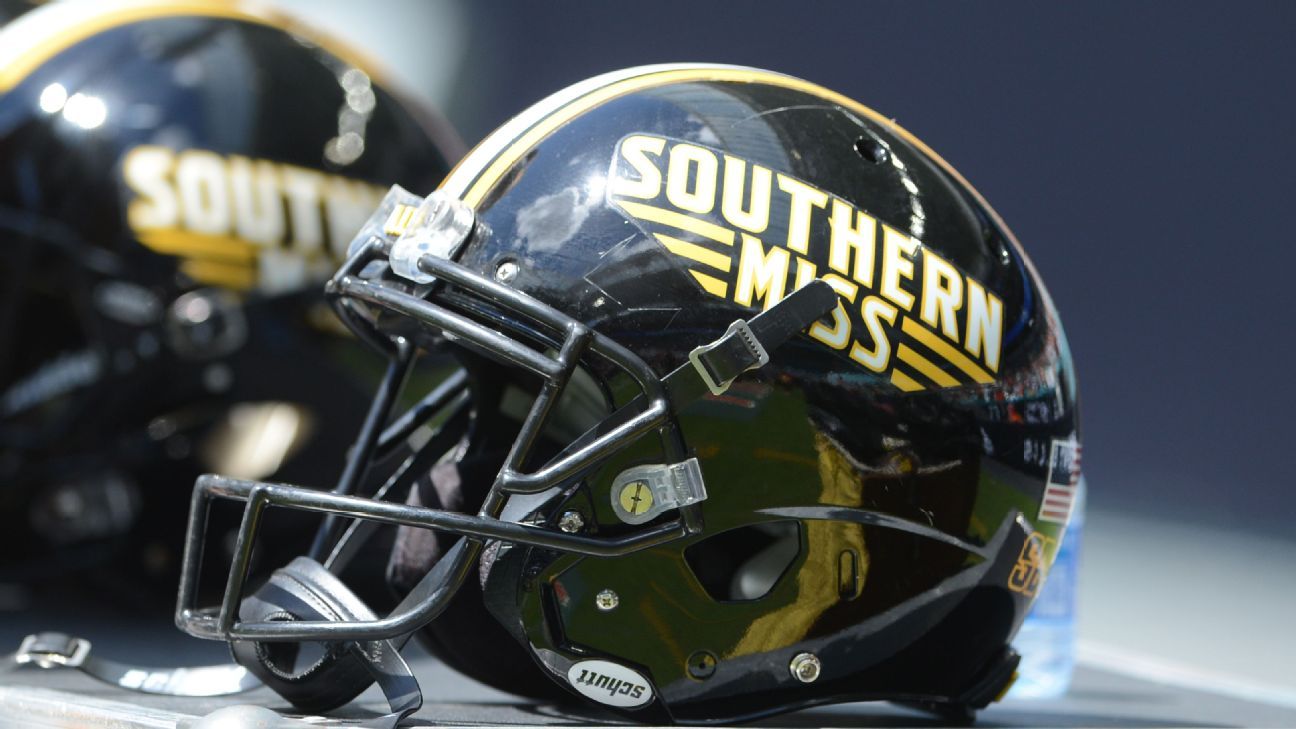
Southern Miss promoted offensive coordinator Blake Anderson to head coach on Thursday to replace Charles Huff, who recently left for Memphis.
The school had previously announced Anderson as interim coach three days earlier after Huff took the Memphis job.
Anderson, who previously was head coach at Utah State and Arkansas State, served this past season at Southern Miss as offensive coordinator, and his passing offense ranked first in the Sun Belt.
In 10 seasons as a Division I head coach, Anderson is 75-54, including nine bowl games and three conference titles.
In a statement, athletic director Jeremy McClain pointed to the success Anderson had as a head coach at his previous stops as one key factor.
“Blake is an exceptional leader, a great communicator, and has the respect of the players and the staff throughout the Duff Center,” McClain said. “We look forward to supporting him at the highest level and continuing the positive momentum for our program.”

Fernando Mendoza was named Associated Press Player of the Year on Thursday after leading unbeaten and top-ranked Indiana to its first Big Ten championship since 1967 and the No. 1 seed in the College Football Playoff.
The redshirt junior quarterback was the overwhelming choice over fellow Heisman Trophy finalists Diego Pavia of Vanderbilt, Jeremiyah Love of Notre Dame and Julian Sayin of Ohio State. Mendoza received 32 of 51 first-place votes from a nationwide panel of media members who cover college football. Pavia got nine to lead the rest of the group, which also included Jacob Rodriguez of Texas Tech.
“I’m shining now but only because there are so many stars around me,” Mendoza said, describing his rise from lightly recruited high school prospect in 2021 to a candidate for the sport’s most prestigious awards. “There’s an analogy that the only reason we’re able to see stars in the sky is because the light reflects from all different types of stars. I have so many stars around myself — whether it’s my teammates, my coaches, my family, support staff — that I’m able to shine now in this light, and I’m so happy for everyone to be a part of this.”
Mendoza, the Hoosiers’ first-year starter after transferring from California, is the signal-caller for an offense that has surpassed program records for touchdowns and points set during last season’s surprise run to the CFP.
Mendoza has thrown for a Bowl Subdivision-leading 33 touchdowns and run for six, giving him a school-record 39 TDs accounted for.
He was the first Big Ten quarterback since 2000 with three straight games with at least four TD passes and no interceptions. His 21-of-23, 267-yard, 5-touchdown passing day in a 63-10 win at Illinois in the conference opener established him as a serious contender for national honors.
Mendoza is among 10 FBS quarterbacks who have completed better than 70% of their passes. He ranks among the most accurate passers on attempts of at least 20 yards, hitting on 23 of 43 (53.5%), and when under pressure (52.1%), according to Pro Football Focus.
Ranked the No. 72 quarterback prospect by ESPN when he was a senior at Christopher Columbus High School in Miami, Mendoza was pledged to Yale for almost six months before he decommitted and signed with California.
He sat out as a redshirt in 2022 and won the starting job for the final eight games in 2023. He was 10th in the nation in passing in 2024 and ranked among the top transfer prospects after the season. He landed at Indiana, where his brother Alberto Mendoza was the No. 3 quarterback last year. This year, Alberto is the top backup to his big brother.
-
 Sports2 years ago
Story injured on diving stop, exits Red Sox game
-
 Sports3 years ago
‘Storybook stuff’: Inside the night Bryce Harper sent the Phillies to the World Series
-
 Sports2 years ago
Game 1 of WS least-watched in recorded history
-
 Sports3 years ago
Button battles heat exhaustion in NASCAR debut
-
 Sports3 years ago
MLB Rank 2023: Ranking baseball’s top 100 players
-
Sports4 years ago
Team Europe easily wins 4th straight Laver Cup
-
 Environment3 years ago
Japan and South Korea have a lot at stake in a free and open South China Sea
-
 Environment1 year ago
Here are the best electric bikes you can buy at every price level in October 2024