
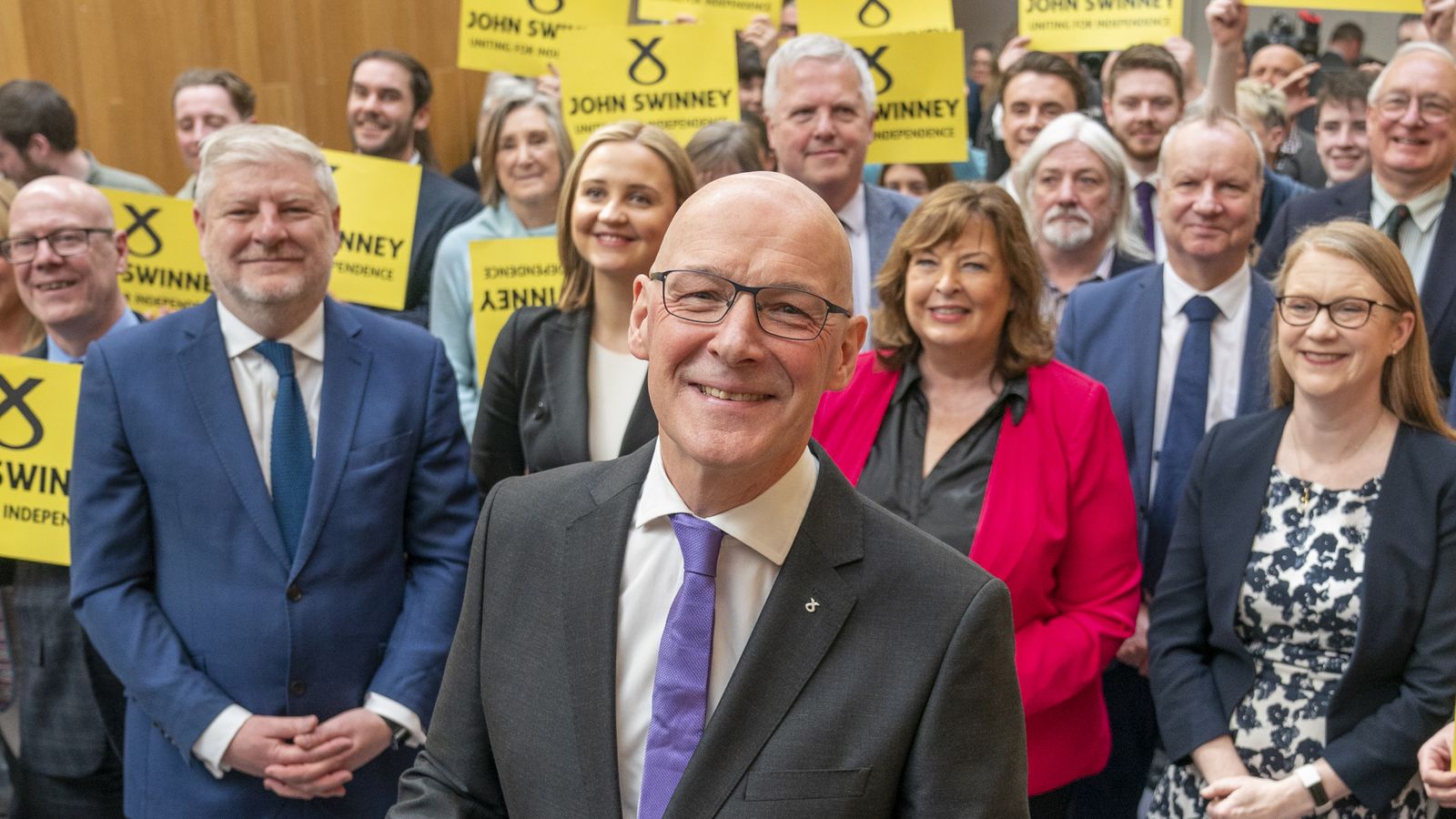
SNP leadership race: John Swinney new party leader and is now set to become Scottish first minister

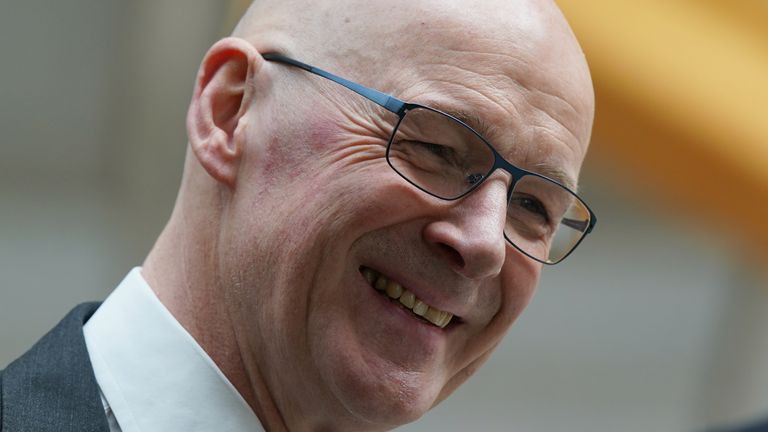
John Swinney has won the SNP leadership contest and is set to be named as Scotland’s new first minister, replacing Humza Yousaf.
Mr Swinney could become Scotland’s seventh first minister as early as Tuesday.
The SNP leadership nominations closed at 12pm on Monday, with the party confirming Mr Swinney was the sole nominee.
He is expected to give a speech later in the day.
Posting on X, he said: “I am deeply honoured to have been elected as leader of the SNP. I will give all that I have to serve my party and my country.”
The former deputy first minister, who served under close ally Nicola Sturgeon, emerged as a frontrunner following Mr Yousaf’s resignation last week.
Former finance secretary Kate Forbes had been tipped to join him, but later announced she would not stand and instead threw her support behind Mr Swinney.
Mr Swinney has said he would want Ms Forbes to “play a significant part” in his government if elected as first minister.
John Swinney. Pic: PA
Potential challenger Graeme McCormick also withdrew his bid at the 11th hour.
The veteran SNP activist claimed he had secured the 100 nominations from 20 branches needed to enter the contest but backed out of the campaign on Sunday evening after a “lengthy and fruitful conversation” with Mr Swinney.
The SNP has appeared keen to avoid an explosive leadership contest similar to the one that followed Ms Sturgeon’s resignation.
Last year’s race, involving Mr Yousaf, Ms Forbes and now Alba Party MSP Ash Regan, featured rows over religious beliefs, arguments about the recollection of past events, and widespread criticism of secrecy surrounding the vote.
It also led to the resignation of Ms Sturgeon’s husband Peter Murrell as SNP chief executive.
Scottish Tory leader Douglas Ross congratulated Mr Swinney on becoming SNP leader for a second time, but urged him to abandon his “relentless push for independence”.
Mr Ross added: “It’s difficult to see how he can be the fresh start Scotland needs when he’s the ultimate continuity candidate.”
Keep up with all the latest news from the UK and around the world by following Sky News
Patrick Harvie, Scottish Greens co-leader, said Scotland “needs a period of stable government”.
He added: “Mr Swinney knows that if he is to have our support then it must be on the basis of progressive policies that help us to tackle the climate crisis and build a fairer and more equal future.”
Mr Harvie said his party remains “utterly committed” to the policies delivered as a result of the Bute House Agreement and will “oppose any move away from them or steps to dilute them”.
He added: “We are committed to delivering on our vision of a fairer, greener and more equal Scotland, and are open to talks with John Swinney and his team about how we can work together to make that happen.”
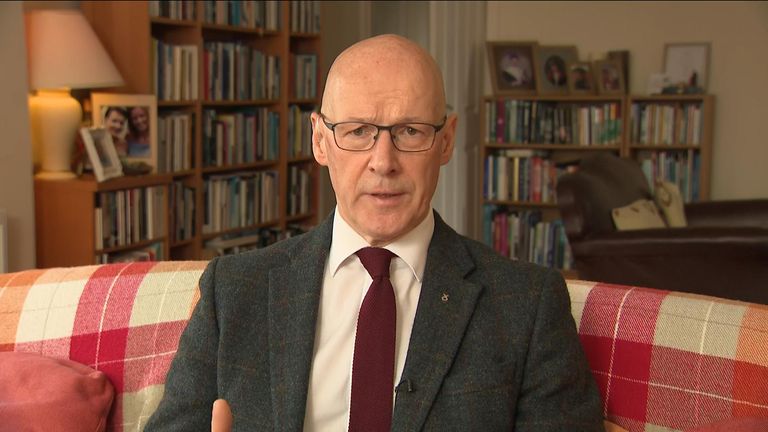
John Swinney speaking to Sky News
Read more:
Who is John Swinney?
What happens next?
Mr Swinney is now clear to take over as SNP leader, but will need to seek parliamentary approval to succeed Mr Yousaf as first minister.
The timing is decided by the parliamentary bureau, and could take place as early as Tuesday.
The parliament will have 28 days to nominate a replacement for Mr Yousaf once his resignation has been accepted by the King.
As the SNP is comfortably the largest party in Holyrood, the onus is on them to find a new leader who can work with other parties in a minority government.
The SNP’s tally of 63 MSPs leaves them just short of a majority in the 129-member parliament, meaning politicians from other parties would need to be persuaded to either vote for Mr Swinney, or at least abstain in the ballot, for the party to be successful.
The leaders from other political parties can also put themselves forward and MSPs can nominate a candidate, although it must be seconded by another member.
If that happens, any candidate that secures more than half of all votes will win the nomination.
If no one reaches that threshold, the candidate with the fewest votes will be eliminated – with the process repeated until the candidates are whittled down to two.
At that point, a candidate will only require a simple majority to win.
Whoever wins the vote is then formally appointed by the King.
An official swearing-in ceremony at the Court of Session in Edinburgh would then take place.
However, if no new first minister can be selected within the 28 days, the Scottish parliament would be forced to hold an extraordinary general election.
MasterChef presenter John Torode will no longer work on the show after an allegation he used an “extremely offensive racist term” was upheld, the BBC has said.
His co-host Gregg Wallace was also sacked last week after claims of inappropriate behaviour.
On Monday, Torode said an allegation he used racist language was upheld in a report into the behaviour of Wallace. The report found more than half of 83 allegations against Wallace were substantiated.
Torode, 59, insisted he had “absolutely no recollection” of the alleged incident involving him and he “did not believe that it happened,” adding “racial language is wholly unacceptable in any environment”.
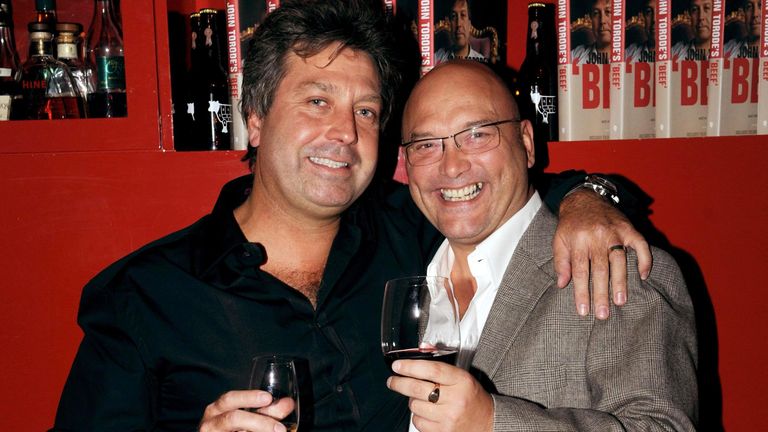
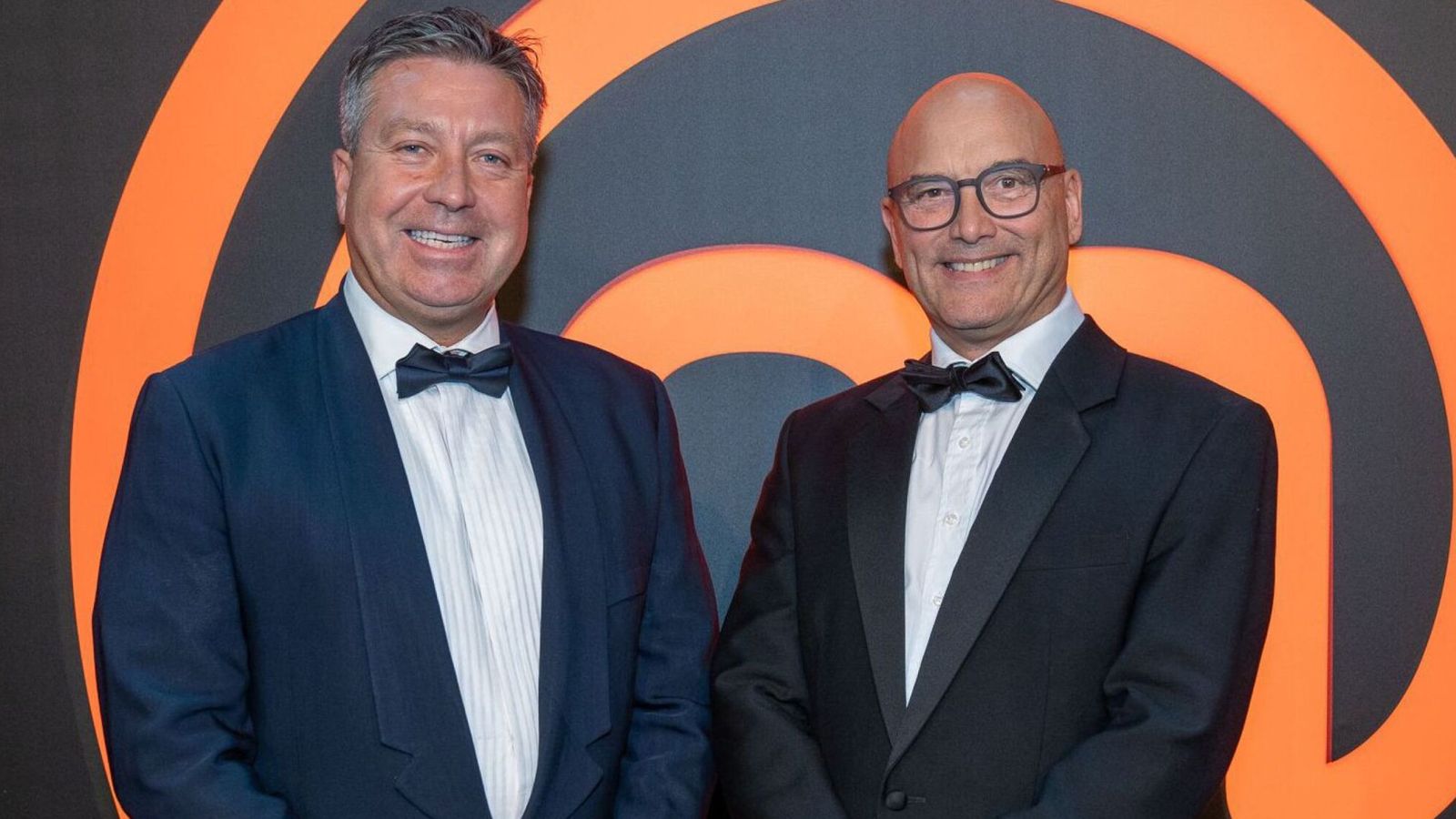
John Torode and Gregg Wallace in 2008. Pic: PA
In a statement on Tuesday, a BBC spokesperson said the allegation “involves an extremely offensive racist term being used in the workplace”.
The claim was “investigated and substantiated by the independent investigation led by the law firm Lewis Silkin”, they added.
“The BBC takes this upheld finding extremely seriously,” the spokesperson said.
“We will not tolerate racist language of any kind… we told Banijay UK, the makers of MasterChef, that action must be taken.
“John Torode’s contract on MasterChef will not be renewed.”
Australian-born Torode started presenting MasterChef alongside Wallace, 60, in 2005.
Why Gregg Wallace says he ‘will not go quietly’
A statement from Banijay UK said it “takes this matter incredibly seriously” and Lewis Silkin “substantiated an accusation of highly offensive racist language against John Torode which occurred in 2018”.
“This matter has been formally discussed with John Torode by Banijay UK, and whilst we note that John says he does not recall the incident, Lewis Silkin have upheld the very serious complaint,” the TV production company added.
“Banijay UK and the BBC are agreed that we will not renew his contract on MasterChef.”
Read more from Sky News:
BBC reveals highest-earning stars
Men who cut down Sycamore Gap tree locked up
Couple murdered two-year-old grandson
Earlier, as the BBC released its annual report, its director-general Tim Davie addressed MasterChef’s future, saying it can survive as it is “much bigger than individuals”.
BBC annual report findings
Speaking to BBC News after Torode was sacked, Mr Davie said a decision is yet to be taken over whether an unseen MasterChef series – filmed with both Wallace and Torode last year – will be aired.
“It’s a difficult one because… those amateur chefs gave a lot to take part – it means a lot, it can be an enormous break if you come through the show,” he added.
“I want to just reflect on that with the team and make a decision, and we’ll communicate that in due course.”
Mr Davie refused to say what the “seriously racist term” Torode was alleged to have used but said: “I certainly think we’ve drawn a line in the sand.”
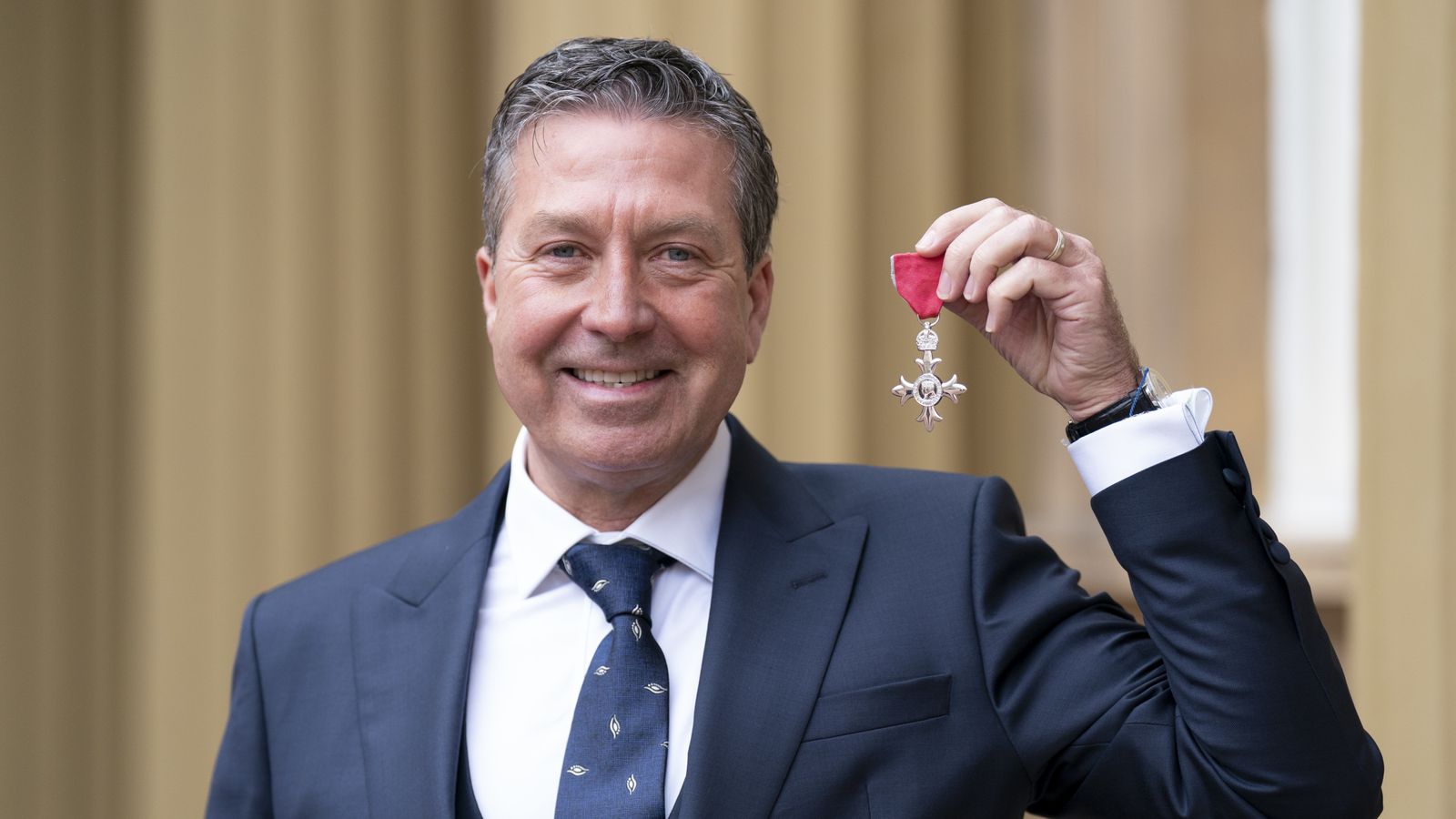
In 2022, Torode was made an MBE in the Queen’s Birthday Honours, for services to food and charity.
UK
David Fuller: Offences committed by hospital worker who sexually abused dozens of corpses ‘could happen again’
BBC director-general Tim Davie has said MasterChef can survive its current scandal as it is “much bigger than individuals” – but the corporation must “make sure we’re in the right place in terms of the culture of the show”.
On Monday, it was revealed an independent review into “inappropriate behaviour” by MasterChef presenter Gregg Wallace had upheld more than half of the allegations against him.
A few hours later, Wallace’s former MasterChef co-presenter, John Torode, said an allegation he used “racial language” was upheld in the report as part of a review.
After the report was published, Wallace, 60, said he was “deeply sorry” for causing any distress, and never set out to “harm or humiliate”.
Torode, 59, said he had “no recollection of the incident” and said he “did not believe that it happened,” and said he was “shocked and saddened by the allegation”.
Mr Davie said the BBC’s leadership team would not “tolerate behaviour that is not in line with our values,” while BBC chair Samir Shah acknowledged there were still pockets within the broadcaster where “powerful individuals” can still “make life for their colleagues unbearable”.
They said several BBC staff members had been dismissed in the last three months, following an independent review into workplace culture.
Wallace, who was sacked from MasterChef last week, is not included in that count as he was not directly contracted by the corporation, but employed by independent production company Banijay.
The corporation has yet to decide if the unseen MasterChef series – filmed with both Wallace and Torode last year – will be aired or not.
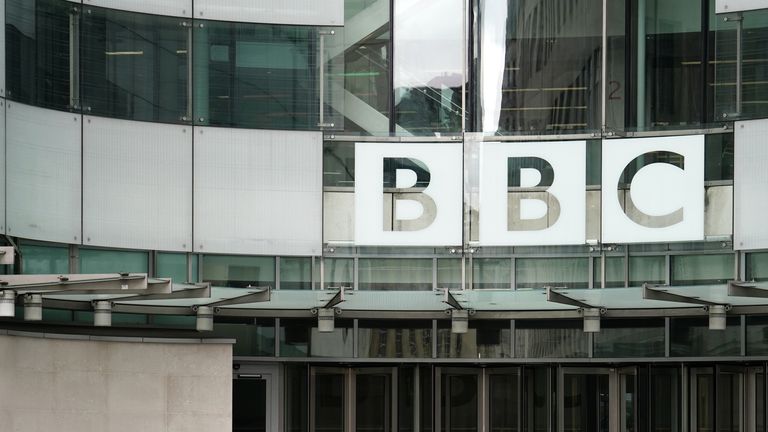
BBC Broadcasting House in Portland Place, London. Pic: Jordan Pettitt/PA
News of the findings in the Gregg Wallace report came just hours before the BBC was deemed to have breached its editorial guidelines by failing to disclose that the child narrator of a Gaza documentary was the son of a Hamas official.
Media watchdog Ofcom subsequently launched its own investigation into the programme.
While the 2024-25 annual report showed a small rise in trust overall for the corporation, Mr Davie acknowledged it had been a year which saw the reputation of the BBC damaged by “serious failings” in the making of the documentary.
The BBC boss acknowledged: “It was important that the BBC took full responsibility for those failings and apologised for them,” and later in response to a question, called the documentary – Gaza: How To Survive A Warzone – “the most challenging editorial issue I’ve had to deal with”.
He went on: “The importance of fair balance reporting, the need for high-quality homegrown programming in the face of massive pressure, I think has never, ever been greater. And I believe my leadership and the team I’ve assembled can really help the BBC thrive in that environment and very competitive environment.”
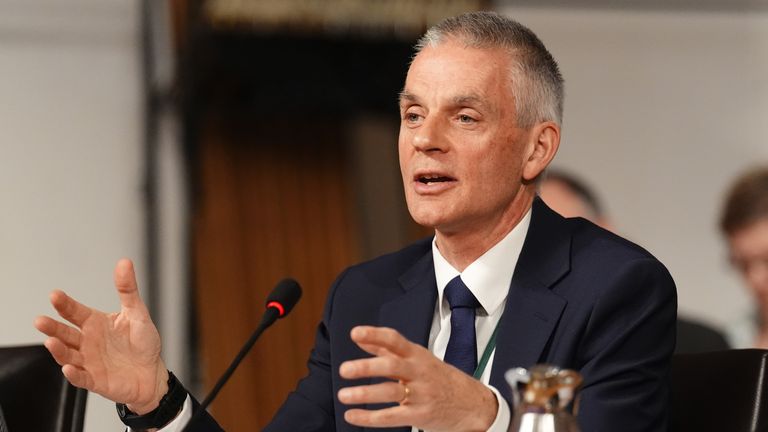
BBC Director-General Tim Davie. Pic: PA
BBC boss has chair’s ‘full support’
Despite a series of failings in recent months – including livestreaming the controversial Bob Vylan set at Glastonbury last month – Mr Davie insisted he can “lead” the organisation in the right direction.
When asked if he would resign, he replied: “I simply think I’m in a place where I can work to improve dramatically the BBC and lead it in the right way.
“We will make mistakes, but I think as a leadership and myself, I’ve been very clear, and I think we have been decisive.”
He said the organisation was setting a “global standard” for media.
Mr Shah, reiterated his support for Mr Davie.
“Tim Davie and his team, and Tim in particular, has shown very strong leadership throughout all this period and he has my full support.”
The report also revealed its top earners, which saw former Match Of The Day host Gary Lineker top the chart once again.
Meanwhile, Australian children’s cartoon Bluey proved a boon for the broadcaster, and was the most watched show in the US across all genres – with 55 billion minutes viewed.
The top 10 shows watched over Christmas 2024 were also all from the BBC.
Recent annual reviews have been overshadowed by the Huw Edwards scandal and allegations of a toxic environment around flagship show Strictly Come Dancing.
This breaking news story is being updated and more details will be published shortly.
Please refresh the page for the latest version.
You can receive breaking news alerts on a smartphone or tablet via the Sky News app. You can also follow us on WhatsApp and subscribe to our YouTube channel to keep up with the latest news.
-
 Sports3 years ago
‘Storybook stuff’: Inside the night Bryce Harper sent the Phillies to the World Series
-
 Sports1 year ago
Story injured on diving stop, exits Red Sox game
-
 Sports2 years ago
Game 1 of WS least-watched in recorded history
-
 Sports2 years ago
MLB Rank 2023: Ranking baseball’s top 100 players
-
Sports4 years ago
Team Europe easily wins 4th straight Laver Cup
-
 Sports2 years ago
Button battles heat exhaustion in NASCAR debut
-
 Environment2 years ago
Japan and South Korea have a lot at stake in a free and open South China Sea
-
 Environment2 years ago
Game-changing Lectric XPedition launched as affordable electric cargo bike