

Nigeria to ban peer-to-peer crypto trading in naira

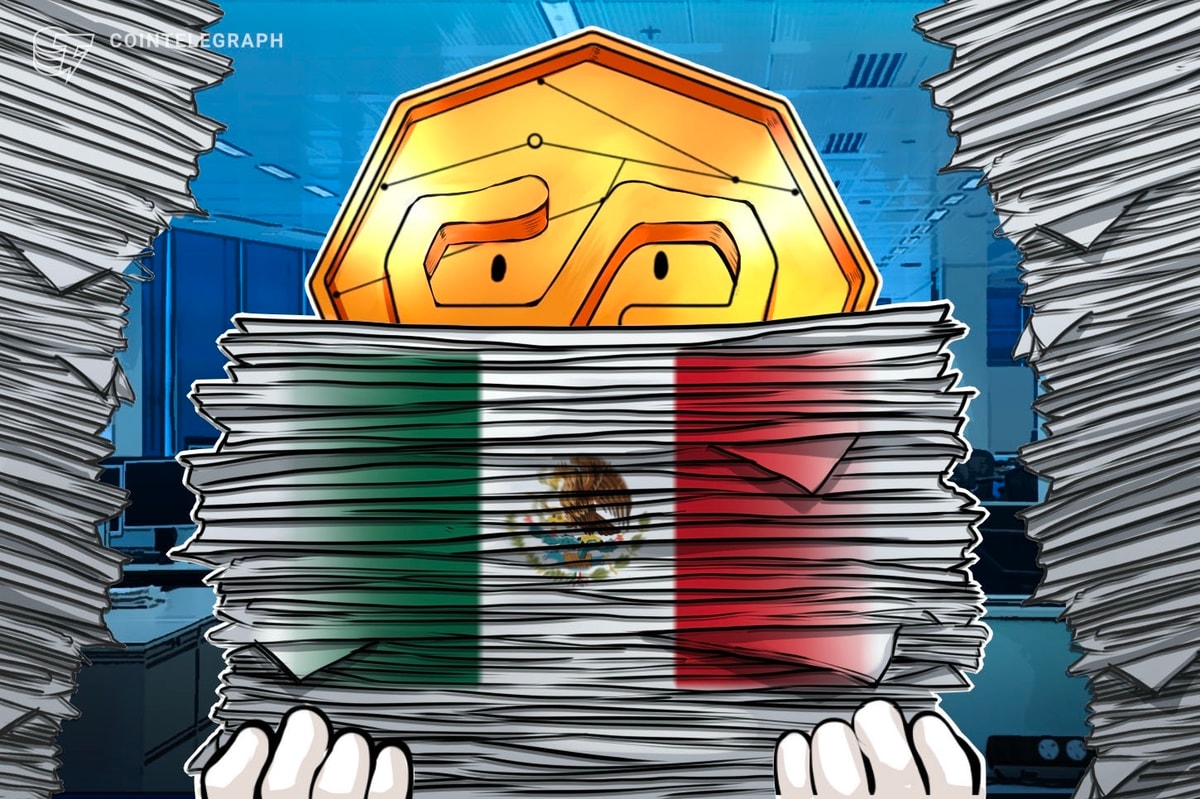
Mexico’s central bank warned in a new financial stability report that “stablecoins pose significant potential risks to financial stability,” citing their rapid growth, links to traditional finance and global regulatory gaps that could fuel arbitrage and magnify market stress.
Stablecoins’ heavy reliance on short-term US Treasurys, market concentration with two issuers controlling 86% of the supply and past depegging episodes with stablecoins underscore how vulnerable the sector remains to stress, according to the Banxico report.
Without coordinated international safeguards, mass redemptions or issuer failures could spill into broader funding markets, the central bank warned.
Banxico also highlighted diverging regulatory approaches as a growing source of risk, noting that frameworks like the EU’s MiCA and the US GENIUS Act impose different reserve, redemption and depositor-protection requirements, creating regulatory gaps that could incentivize arbitrage across jurisdictions.

Banxico acknowledged that stablecoins can improve settlement efficiency, reduce transfer costs and support remittances and liquidity in decentralized finance. However, it plans to keep a cautious distance between the traditional financial system and virtual assets, citing their potential to cause stress in broader markets.
Crypto adoption in Mexico is relatively low. According to Chainalysis’ Global Crypto Adoption Index, the country fell to 23rd place in 2025 from 14th place in 2024 in the adoption ranking.
The central bank’s warning reflects Mexico’s broader cautious stance on crypto. Despite the rise of exchanges like Bitso, the country has not introduced significant new digital-asset legislation and still relies on its 2018 Fintech Law as the primary regulatory framework.
Related: As inflation bites, Latin America banks on stablecoins instead of bankers
Brazil and Argentina lead Latin America in crypto adoption
While Mexico’s central bank maintains a cautious stance on digital assets, other Latin American countries have embraced adoption.
Chainalysis’ 2025 Geography of Crypto Report shows that Latin America generated nearly $1.5 trillion in crypto transaction volume from July 2022 to June 2025, with monthly activity increasing to almost $88 billion by December 2024 from $20.8 billion in mid-2022. Several months in late 2024 and early 2025 consistently exceeded $60 billion.
According to the report, Brazil led Latin America by a wide margin, receiving $318.8 billion in crypto value from July 2022 to June 2025, nearly one-third of all activity in the region, while Argentina ranked second with $93.9 billion in transaction volume.

The central banks of the two leading countries are also taking a more proactive stance in regulating digital assets.
In November, Brazil’s central bank finalized rules that place crypto companies under banking-style supervision, including treating stablecoin transactions and certain self-custody wallet transfers as foreign exchange operations.
In Argentina, a country that has suffered from soaring inflation, the central bank is reportedly weighing whether to allow traditional financial institutions to trade cryptocurrencies in a potential reversal of its 2022 ban, according to a report from La Nación on Friday.
Magazine: Meet the onchain crypto detectives fighting crime better than the cops

SEC Commissioner Caroline Crenshaw, expected to leave the agency in less than a month, used one of her final public speaking engagements to address the regulator’s response to digital assets.
Speaking at a Brookings Institution event on Thursday, Crenshaw said standards at the SEC had “eroded” in the last year, with “markets [starting] to look like casinos,” and “chaos” as the agency dismissed many years-long enforcement cases, reduced civil penalties and filed fewer actions overall.
The commissioner, expected to depart in January after her term officially ended in June 2024, also criticized many crypto users and the agency’s response to the markets.

“People invest in crypto because they see some others getting rich overnight,” said Crenshaw. “Less visible are the more common stories of people losing their shirts. One thing that consistently puzzles me about crypto is what are cryptocurrency prices based on? Many, but not all, crypto purchasers are not trading based on economic fundamentals.”
She added:
“I think it’s safe to say [crypto purchasers are] speculating, reacting to hysteria from promoters, feeding a desire to gamble, wash trading to push up prices, or, as one Nobel laureate has posited, ‘betting on the popularity of the politicians who support or stand to benefit from the success of crypto.’”
In contrast to Crenshaw’s remarks, SEC Chair Paul Atkins, Commissioner Hester Peirce and Commissioner Mark Uyeda have all publicly expressed their support for the agency’s approach to digital assets and the Trump administration’s direction of policy.
Peirce and Atkins spoke at a Blockchain Association Policy Summit this week to discuss crypto regulation and a path forward on market structure under consideration in the Senate.
Related: Crypto industry fears ‘vehemently anti crypto’ Caroline Crenshaw SEC vote
During the Thursday event’s question-and-answer session, Crenshaw expanded on her views of crypto, stating that it was a “tiny piece of the market,” and suggested that the SEC focus on other regulatory concerns. In addition, she expressed concern that the agency was heading toward giving crypto companies an exception from policies that applied to traditional finance.
“I do worry that as the crypto rules are perhaps implemented, or perhaps we just put out more guidance […] where we say they are not securities, where we loosen the basic fundamentals of the securities laws so that they can operate in our system, but without any of the guardrails that we have in place. I do worry that that can lead to more significant market contagion,” said Crenshaw.
The final throes of bipartisan financial regulators under Trump?
The departure of Crenshaw would leave the SEC with three Republican commissioners, two of whom were nominated by US President Donald Trump. As of Thursday, Trump had not made any announcements signaling that he ever planned to nominate another Democrat to the SEC, and Crenshaw said the agency’s staff had been reduced by about 20% in the last year.
The Commodity Futures Trading Commission also faces a dearth of leadership, with many commissioners leaving the agency in 2025. As of December, acting Chair Caroline Pham was the sole remaining CFTC commissioner and a Republican. However, the US Senate is soon expected to vote on Trump’s nominee, Michael Selig, to chair the agency after Pham.
Magazine: When privacy and AML laws conflict: Crypto projects’ impossible choice
-
 Sports2 years ago
Story injured on diving stop, exits Red Sox game
-
 Sports3 years ago
‘Storybook stuff’: Inside the night Bryce Harper sent the Phillies to the World Series
-
 Sports2 years ago
Game 1 of WS least-watched in recorded history
-
 Sports3 years ago
Button battles heat exhaustion in NASCAR debut
-
 Sports3 years ago
MLB Rank 2023: Ranking baseball’s top 100 players
-
Sports4 years ago
Team Europe easily wins 4th straight Laver Cup
-
 Environment3 years ago
Japan and South Korea have a lot at stake in a free and open South China Sea
-
 Environment1 year ago
Here are the best electric bikes you can buy at every price level in October 2024