
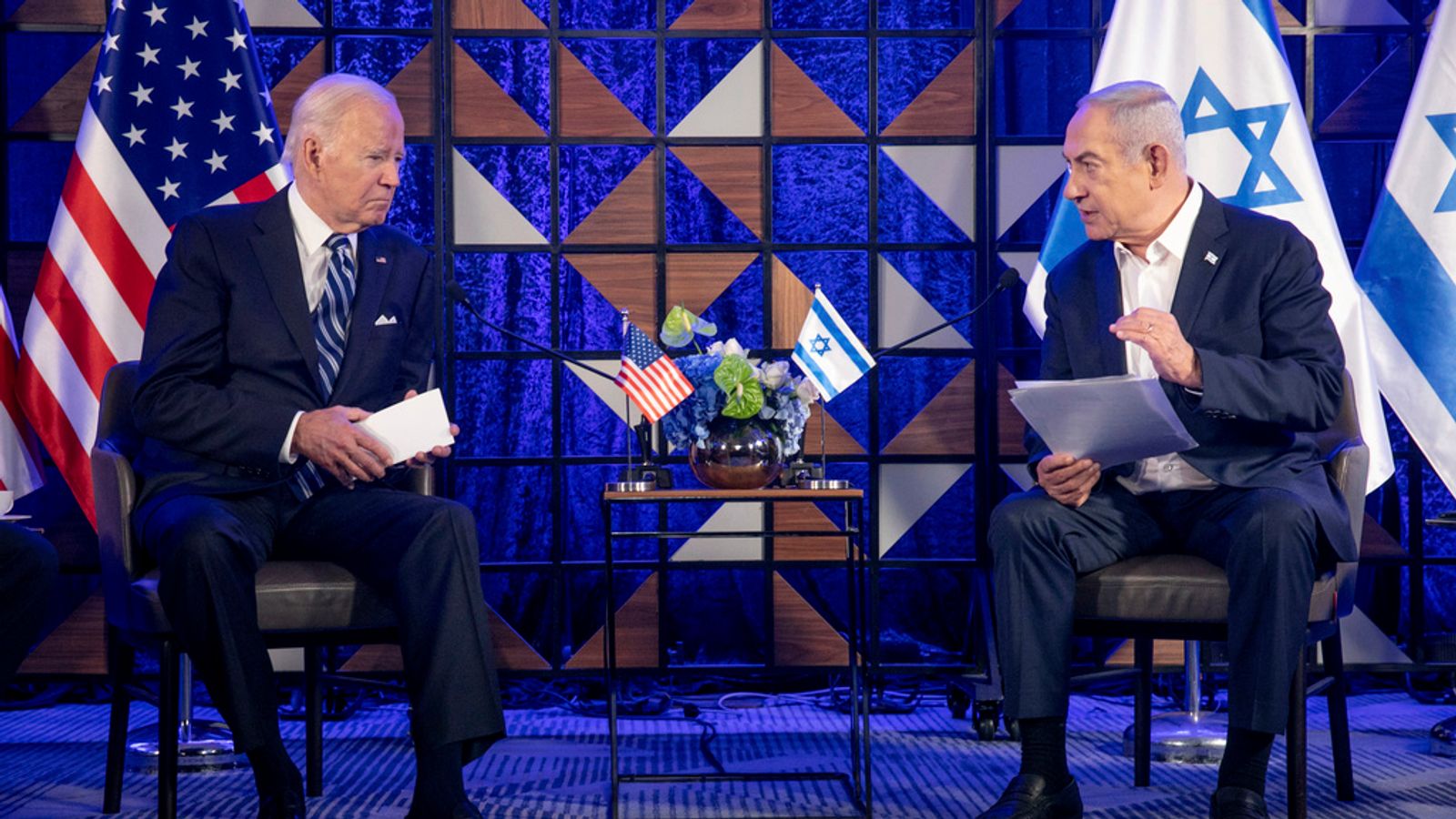
Rafah is Biden’s red line for Netanyahu – but there’s not much he can do to stop it being crossed

Setting red lines is all very well, as long as you follow through when they are crossed. President Joe Biden knows that all too well.
But he also knows that if he follows through on this big new red line of withholding offensive weapons for Israel it could cost him dearly domestically.
The push-me-pull-you balance of geopolitics and domestic politics is intensely difficult right now for the American president.
Gaza latest: Follow live updates
I’ll break this down into two parts. The politics in a moment. First the challenges of red lines.
Western leaders throw them down in interviews, like Mr Biden’s pronouncement on CNN last night, as unequivocal threats. “Cross the line, if you dare!” is the rhetoric.
But too often they turn out to be flawed tools of geo-political diplomacy.
Barack Obama set a chemical weapons red line with Syria’s Bashar al Assad in 2012. He walked right through it.
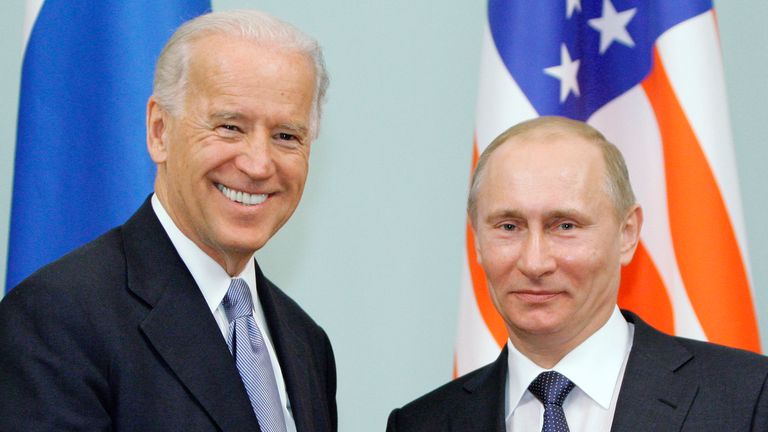
Vladimir Putin remembered that when he walked through a red line Mr Biden had set on Ukraine in 2021. Mr Putin invaded. The rest is history.
Every red line is distinct, of course, and they vary in terms of the gravity of the event they are seeking to prevent.
But the principle behind laying them is the same, as is the message set when they are crossed.
Read more:
Israeli hostages’ families urge Netanyahu to accept deal
Israel claims control of key Rafah crossing
Joe Biden with Vladimir Putin during their meeting in Moscow in 2011. Pic: AP
Biden’s frustration with Netanyahu
Over the past six months, as Israel has sought to defeat Hamas in Gaza, President Biden didn’t think he’d need to lay out red lines. After all, Israel is one of America’s closest allies.
Instead, the Biden administration thought gentle diplomacy and frank back-channels with a “close friend of America” would do the trick.
But gradually, as Mr Biden and the Netanyahu government increasingly diverged on protecting civilians and a plan for “the day after” in Gaza, a red line began to appear – Rafah.
This has become Mr Biden’s red line for Israel.
The American president has repeatedly made clear his opposition to Mr Netanyahu’s insistence on a ground invasion of the southern Gazan city (Mr Netanyahu’s own red line) where about 1.4 million people are living, half of them under 18.
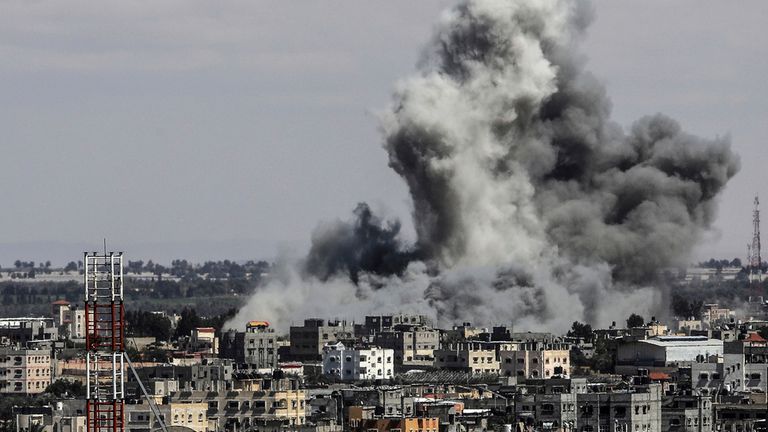
Smoke rises from Rafah after an Israeli airstrike on the Gaza city this week. Pic: AP
The Israeli military has not (yet) moved into Rafah city but is instead concentrating its operations to the east of the city and around the crossing to Egypt.
That fact has allowed the Biden administration to claim its red line hasn’t yet been crossed. “They didn’t describe it as a major ground operation,” spokesman John Kirby said this week.
Sometimes, red lines are smashed through. Sometimes, they are gradually chipped away at.
To counter the chipping Mr Netanyahu has been doing for weeks, Mr Biden hardened his red line.
“I made it clear that if they go into Rafah – they haven’t gone in Rafah yet – if they go into Rafah, I’m not supplying the weapons that have been used historically to deal with Rafah, to deal with the cities – that deal with that problem,” he told CNN.
A significant admission
That he has personally admitted what was already a fact – that American weapons have killed thousands of civilians – is significant.
But there is important nuance in his red line.
He’s talking about stopping the delivery of offensive weapons for the type of operations that have flattened much of Gaza and could do the same to Rafah.
He is not threatening to cut Israel off from all US weapons, of course not.
Defensive weapons to counter Iranian proxy rockets will keep coming. As will long-range weapons and jets to counter Iran. None of that will stop being delivered.
Still, it’s a big shift for Biden. It’s not been done before and symbolically for Israel, in the middle of its longest and most critical war, it looks terrible.
The domestic political risks
And that brings us to the domestic politics of all this.
For every lever of influence Mr Biden pulls (and he’s seen they have their limited use) there is a domestic political calculus.
Pretty much all Republicans are against every lever; they want nothing less than unequivocal support for Israel.
More than that though – a significant number of his own Democrats will also be uneasy about America limiting weapons for Israel.
But critical voters in key states are very pro-Palestine. President Biden isn’t oblivious to their cry “Genocide Joe!”
It is a perilous political push-me-pull-you and the election is six months away.
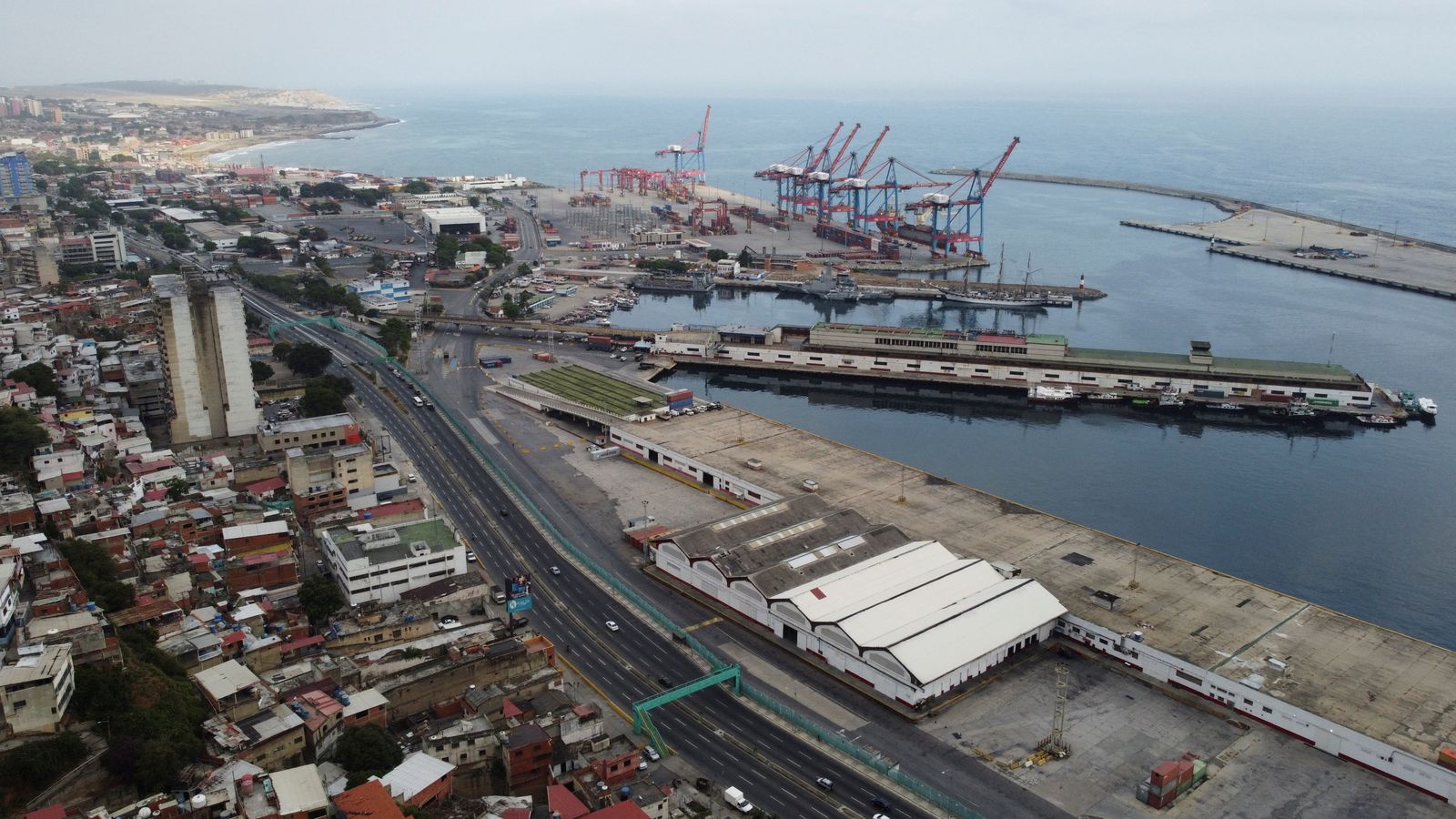
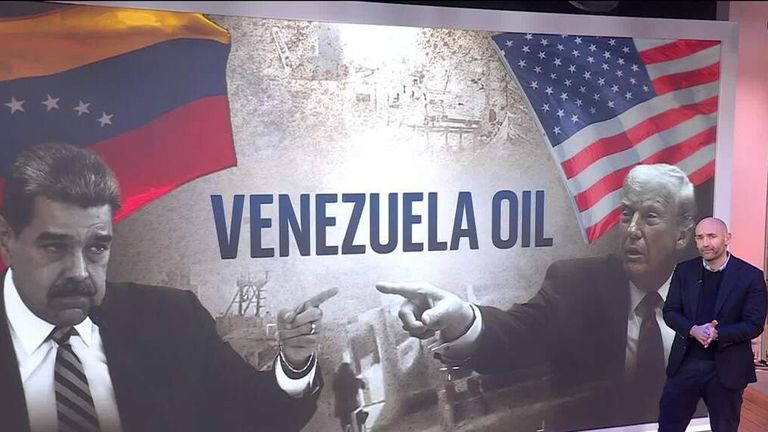
The US is in “active pursuit” of a third oil tanker near Venezuela in the Caribbean Sea, officials have said.
It comes amid escalation from the Trump administration against Nicolas Maduro’s government, and as the US builds up a naval military presence in the region, including the USS Gerald R Ford aircraft carrier and its support group.
The status of the attempted interception is unclear, according to Sky’s US partner network NBC News, but reports first emerged at around 2.30pm in the UK that the operation was under way.
As it happened: US in ‘active pursuit’ of third vessel
Two officials told NBC News the US Coast Guard was in “active pursuit” of the vessel, which is sanctioned by the US.
One told the outlet it was “a sanctioned dark fleet vessel that is part of Venezuela’s illegal sanctions evasion”.
“It is flying a false flag and under a judicial seizure order,” they said, adding that dark fleet vessels usually do not operate exclusively for one country.
It is understood the vessel is sailing under the name Bella 1, according to British maritime risk management group Vanguard, according to NBC News and Bloomberg.
Sky News has seen Bella 1 is sanctioned by the US government, according to the Office of Foreign Assets Control (OFAC) website, and has been included on the list since June 2024.
Read more: The real reason for Donald Trump’s Venezuela exploits
One US official told NBC the vessel was sanctioned under the counterterrorism authority for its involvement in the network of Houthi financial facilitator Sa’id al Jamal.
Another US official separately told the New York Times the ship did not submit to being boarded and continued onward.
If successful, it would mark the third such interception near Venezuela in the past two weeks, with a tanker being seized on Saturday and near the start of the month.
Explained: The US-Venezuela crisis
Trump’s ‘blockade’ of tankers
Earlier this week, the US president declared he had ordered the “blockade” of oil tankers into and out of the South American country.
He said the US military would remain in place until Venezuela returns “all of the oil, land, and other assets that they previously stole from us”.
In the social media post following months of escalating tensions in the Caribbean, Donald Trump said Venezuela was surrounded by the “largest armada ever assembled in the history of South America”.

A map showing Venezuelan military facilities
Venezuela’s government has accused Mr Trump of “violating international law, free trade, and the principle of free navigation” with “a reckless and grave threat” against the South American country.
China’s foreign minister Wang Yi later accused the US of “bullying” Venezuela, and said on Wednesday: “China believes the international community understands and supports Venezuela’s position in defending its legitimate rights and interests.”
Washington has also announced sanctions on numerous oil tankers, shipping companies and family members of Mr Maduro.
President Trump has been ramping up pressure on the Maduro regime, accusing it of involvement in the drugs trade.
As part of his efforts, he has also authorised deadly strikes against vessels he claims are trafficking drugs in the Caribbean and Eastern Pacific.
President Maduro claims Mr Trump is trying to overthrow him with a view to seizing Venezuela’s oil reserves.
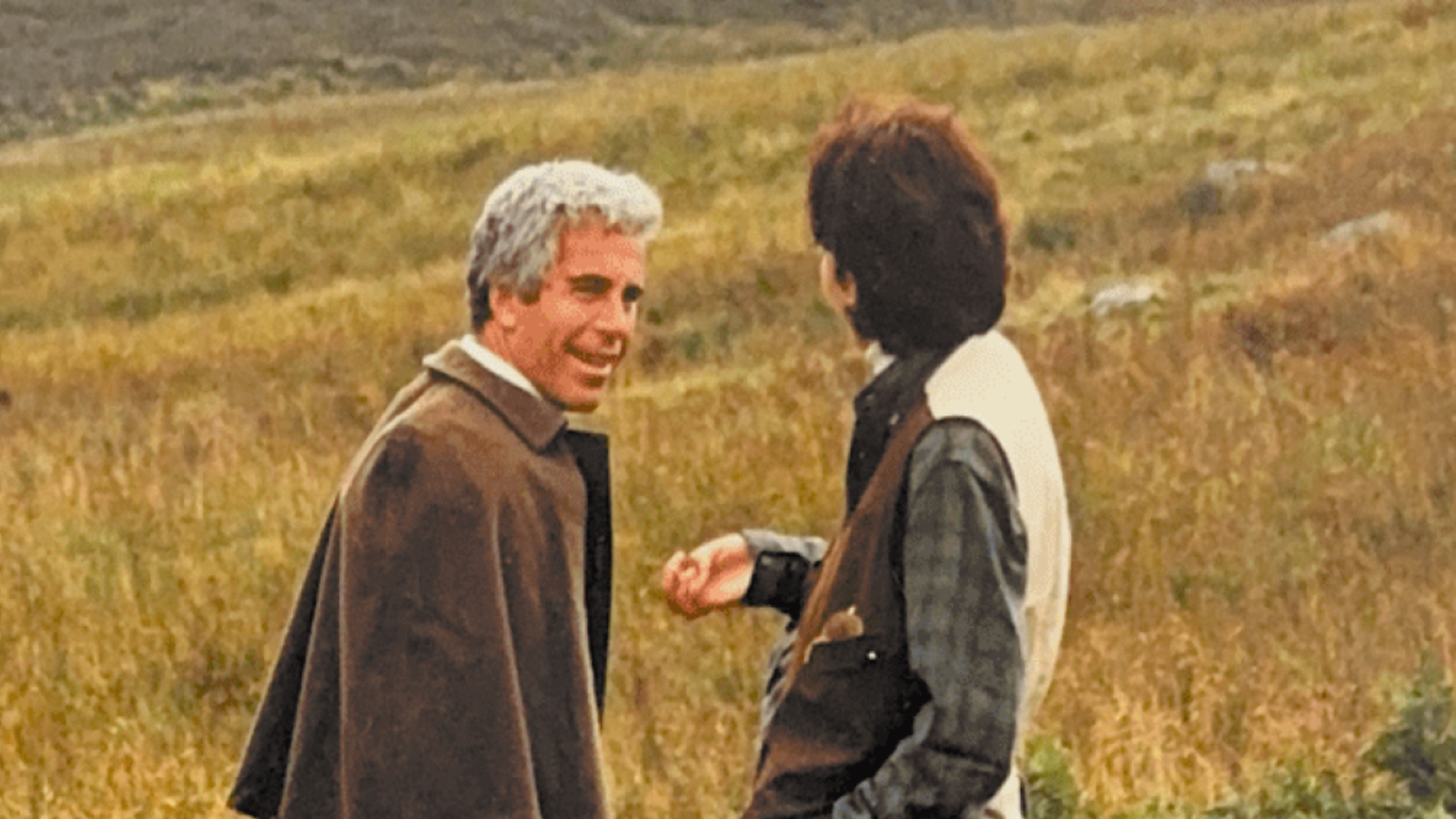
Pictures of Donald Trump were included among at least 16 documents that disappeared from the Epstein files released by the Department of Justice (DOJ).
The Democrats from the House Oversight Committee drew attention to the apparent removal of an image showing two printed pictures of Mr Trump in a desk draw.
One picture had Mr Trump standing surrounded by women in bathing suits, while the second appears to be an already known picture – partly obscured – of him, his wife Melania, Ghislaine Maxwell and Jeffrey Epstein.
After the Democrats flagged the missing image on Saturday, Sky News went back to the files online and confirmed that it did appear to be missing, despite the fact they downloaded it when the files were initially released on Friday.
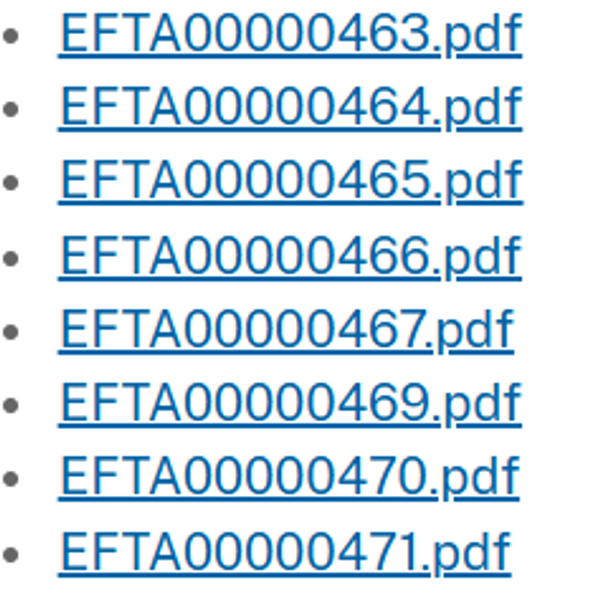
List of documents online as of Saturday evening shows a gap where the file ending ‘468’ was
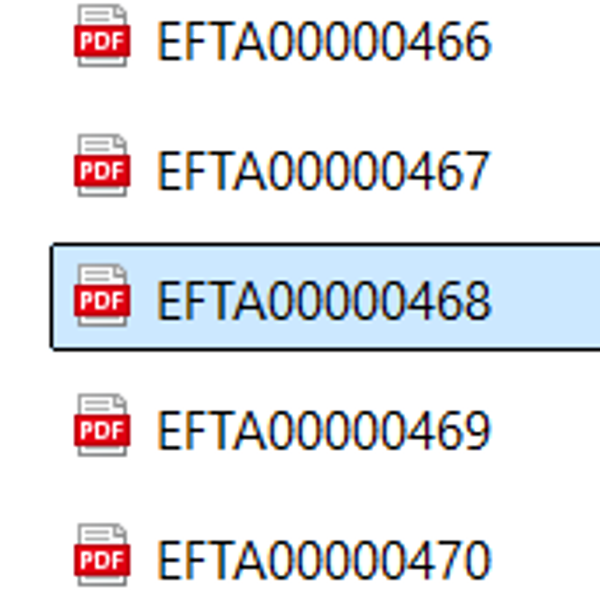
The file ending ‘468’ seen in Sky News’s downloads from Friday
The other photos removed from the trove of documents were almost all nude paintings of women in Epstein’s home.
In a post on X on Sunday, the DOJ said the image including pictures of Mr Trump has since been reposted on to the Epstein Files page.
Sky News has seen that file number 468 is once again listed online. Mr Trump is still visible in the latest version of the image, and there is no immediate difference from the original upload.
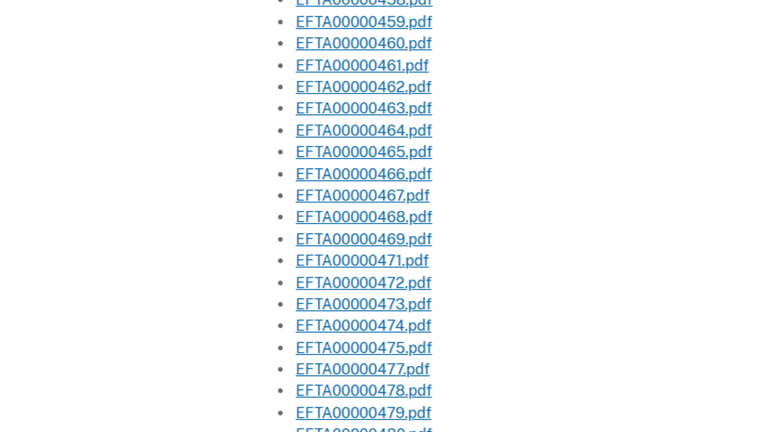
As of 9pm on Sunday, ‘468’ was again available on the DOJ website
The DOJ said that “the Southern District of New York flagged an image of President Trump for potential further action to protect victims”.
“Out of an abundance of caution, the Department of Justice temporarily removed the image for further review,” the department added.
“After the review, it was determined there is no evidence that any Epstein victims are depicted in the photograph, and it has been reposted without any alteration or redaction.”
Mr Trump has not commented on the release of the files and has not been accused of wrongdoing in connection with Epstein’s case.
Questions over heavy redactions

Pic: New York State Division of Criminal Justice Services/Handout via Reuters
Thousands of documents relating to the dead paedophile financier were made public by the DOJ on Friday – hours before a legal deadline following the passing of the Epstein Files Transparency Act.
Many of the pages were either partially or fully redacted, which the DOJ says is to protect the more than 1,200 victims and their families identified in them.
Some of Epstein’s victims, legal experts and members of the public have questioned whether this is the sole reason for the redactions, while the Oversight Democrats have claimed: “This is a White House cover-up.”
Ashley Rubright, who was abused for several years after meeting Epstein in Palm Beach when she was 15, told Sky News: “Seeing […] completely redacted pages, there’s no way that that’s just to protect the victims’ identities, and there better be a good reason. I just don’t know if we’ll ever know what that is.”
Gloria Allred, a lawyer who has represented some of Epstein’s victims, says she has been told that despite the heavy redactions, some compromising pictures of survivors and their names were left in the files released on Friday.
“We have had to notify the Department of Justice about names that should have been redacted that weren’t redacted,” she told Sky News.
“So this is further trauma to survivors, and apparently also some of the images of some of the survivors appear not to have been redacted, and they are nude or not completely dressed.
“This is a major concern because the law clearly indicates, and the judges have indicated, that the names and any identifying information of the survivors must be redacted.”
Read more:
Epstein victims react to partial release of files
Links between Epstein and the UK revealed in new files
In a letter to the judges overseeing the Epstein and Ghislaine Maxwell cases, US attorney for the Southern District of New York Jay Clayton acknowledged that a review “of this size and scope is vulnerable to machine error [or] instances of human error”.
He also said the DOJ had opted to redact the faces of women in photographs with Epstein “even where not all the women are known to be victims,” as it was not viewed as practical for the DOJ to identify every person in all the photos.
The methodology has led to some confusion and misled speculation online.
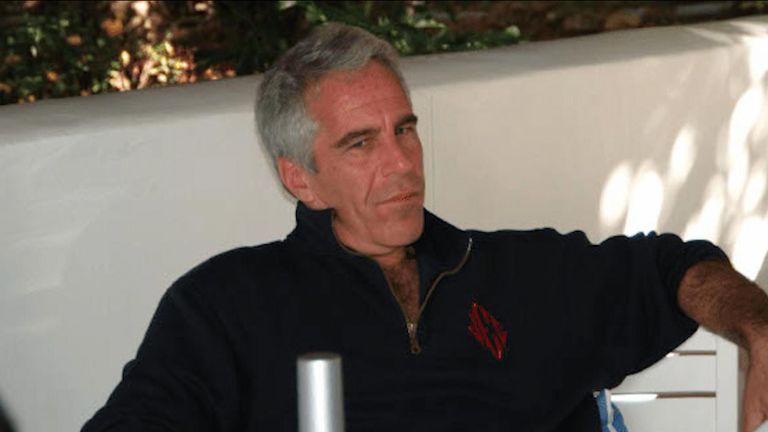
Epstein died in prison in 2019 while awaiting trial on federal sex trafficking charges
Many celebrities and public figures appear with Epstein in the photos published by the DOJ, often included without context.
There is no suggestion that these pictures imply anyone has done anything wrong, and many of those featured in them have denied any wrongdoing in relation to Epstein.
Through its release, the Trump administration has claimed to be the most transparent in history, despite the fact Congress forced their hand by voting to make the files public by 19 December.
But some have been held back, with Todd Blanche, deputy attorney general and a former personal lawyer for Donald Trump, saying more would follow in the coming weeks.
Many Democrats and some Republicans have criticised the partial release as failing to “comply with law,” as have lawyers including Ms Allred.
“So clearly, the law has been violated. And it’s the Department of Justice letting down the survivors once again,” she said.
She labelled the incomplete release of the files a “distraction”, adding: “This is not over, and it won’t be over until we get the truth and transparency for the survivors.”
US
Epstein survivor describes ‘blindness’ around financier – and criticises justice department over files
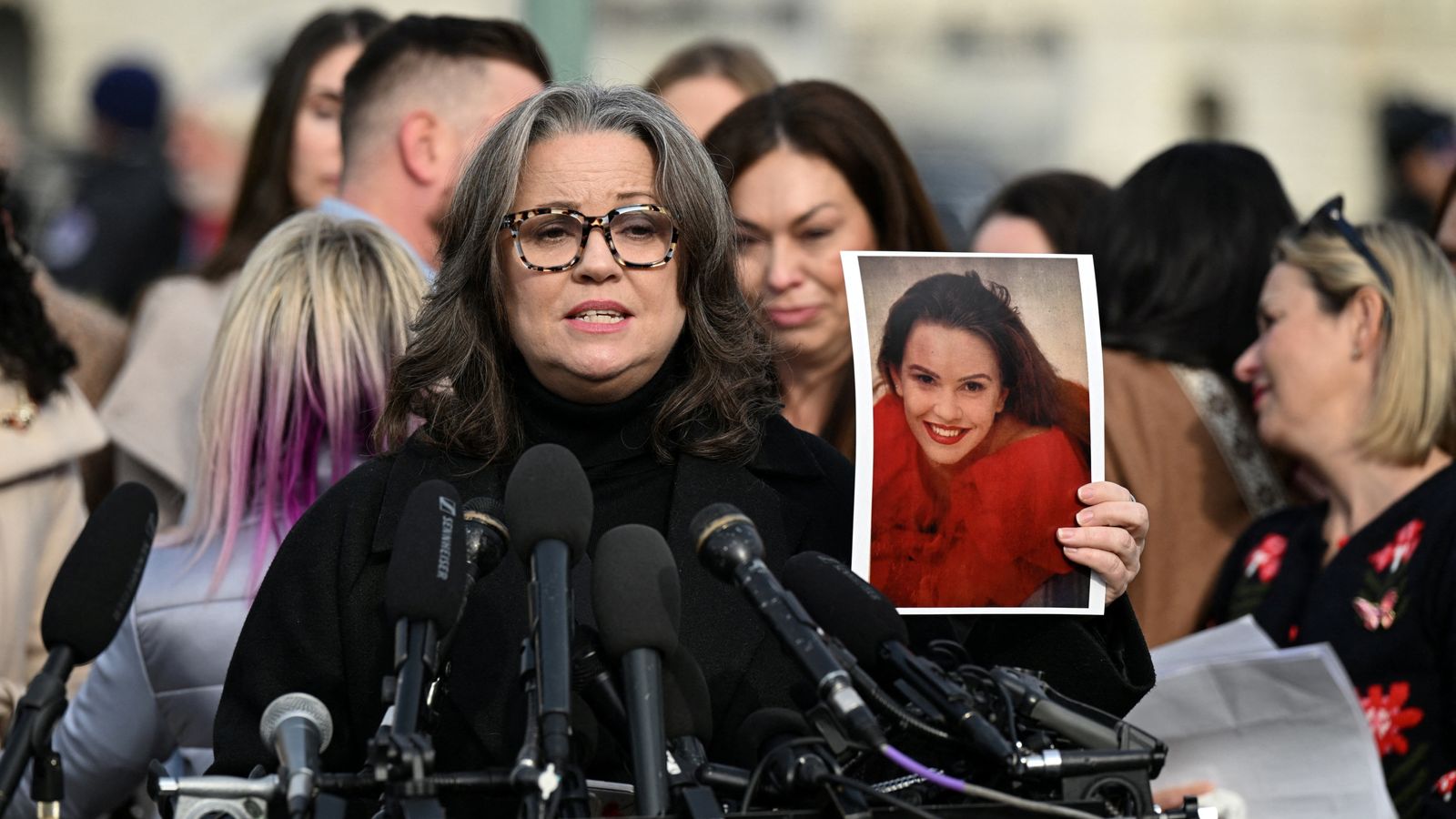
The earliest publicly known survivor of Jeffrey Epstein’s abuse has told Sky News there was a “wilful blindness” about the young women and children around him – as she claimed the US Department of Justice (DoJ) had “broken the law” with the Epstein files.
Warning: This article contains details of sexual assault.
In 1991, Jess Michaels, then a 22-year-old professional dancer, was introduced to Epstein by a roommate who said he had a “fabulous experience” with the financier.
They met twice, with the first meeting being an interview at his office in Madison Avenue for a role as a masseuse.
During their second meeting at Epstein’s penthouse, she said he raped her.
Speaking to Sky News presenter Barbara Serra, Ms Michaels said that while she did not meet anyone else in connection with the convicted sex offender, “the volume of wilful blindness and blatant disregard for the protection of the young women and the children” that were “very obviously around Jeffrey Epstein” was “horrific”.
Three months after her encounter with Epstein, Ms Michaels said she left New York “because of the anxiety and the insomnia”.
Six months after, she said she could “pull a pair of size zero jeans down off of my hips because I was really struggling to even eat properly”, and noted that a friend remembered she “just slept all the time”.
Jess Michaels said Epstein raped her when she was 22 in 1991. Pic: Reuters
‘That didn’t even get us justice’
Speaking almost 35 years after her ordeal and days after the release of thousands of files relating to Epstein, Ms Michaels said her mission now “is that nothing like this happens again and that we change something”.
However, the White House has come under heavy criticism as only a fraction of the files have so far been released, with many heavily redacted and some disappearing after being uploaded.
When asked how she felt about the latest release, Ms Michaels noted that the Epstein Transparency Act, signed by Donald Trump in November, required the DoJ to release all files by 19 December.
“The US Department of Justice has broken the law,” she said. “Blatantly so. So sometimes I hear from people or journalists, ‘so how do you feel? what comes up next?’ I actually don’t care.”
She added the DoJ had “proved the point of why we needed to get an Act of Congress to actually listen to us and try to get justice. And that didn’t even get us justice.”
Ms Michaels later said “it’s not unexpected”, and said it marked the “exact same treatment we have received across five administrations”.
It is important to note that inclusion in the Epstein files does not infer any wrongdoing.
Pic: Reuters
‘What do you expect us to do?’
Ms Michaels said she had been looking for her own statement she made to the FBI about Epstein, and said many survivors “want to hear the FBI tipline recordings because it proves the volume of victims that did come forward that maybe got disregarded”.
In the wake of Epstein’s arrest in 2019, the FBI set up a telephone number for any information on his crimes. However, Ms Michaels said she “initially got disregarded” when she rang.
“When they called back in 2019, the officer said to me, ‘Well, we have to call everyone back, but it was 30 years ago. What do you expect us to do about it now?'”
Ms Michaels said she has not been able to find any information on her call to the FBI in the files released, and said it is “extremely frustrating because we don’t know how to easily search this database”.
She also noted that despite being told her statement was going to be used in Epstein’s ex-girlfriend Ghislaine Maxwell’s 2021 sex trafficking trial, “I never heard a word” and that “the lack of statement proves the negligence we’ve been saying all along”.
Ms Michaels is the earliest victim of Epstein to have come forward with her experience.
Epstein died in prison in 2019 while awaiting trial on sex trafficking charges.
Read more:
Victims express shock and outrage over incomplete release of files
The links between Epstein and the UK revealed in new files
He did not face prosecution for crimes relating to the sexual abuse of young girls until the 2000s. He was later arrested in Florida on state felony charges of procuring a minor for prostitution and solicitation of a prostitute in 2006.
An FBI investigation also found dozens of women had accused the financier of sexual assault, and it looked likely that the 53-page federal indictment built against him would see him face a lengthy prison sentence.
Epstein instead agreed to a plea deal and was convicted on those state charges, and was sentenced to 18 months in prison and was registered as a sex offender.
Read more: The mysterious life and death of Epstein
At the time of his death, Epstein was being held in custody on charges related to running a sex-trafficking scheme that involved dozens of underage girls.
He had pleaded not guilty and faced up to 45 years in prison if convicted.
Epstein was specifically accused of using his private jet, nicknamed the Lolita Express, to shuttle girls as young as 14 between his lavish residences in New York and Florida between 2002 and 2005.
In a post on X, US attorney general Pam Bondi said the DoJ would “bring charges against anyone involved in the trafficking and exploitation of Jeffrey Epstein’s victims”.
“We reaffirm this commitment, and ask any victim to please come forward with any information pertaining to any individuals who engaged in illicit activity at their expense,” she said.
“We have met with many victims and victims groups, and will continue to do so if more reach out. Please contact myself, DAG Blanche, or the FBI and we will investigate immediately. We believe in the equal standard of justice in this country and will ensure that Justice is served.”
The US deputy attorney general, Todd Blanche, said the justice department was continuing to review the remaining Epstein files and was withholding some documents under exemptions meant to protect victims.
“The only redactions being applied to the documents are those required by law – full stop. Consistent with the statute and applicable laws, we are not redacting the names of individuals or politicians unless they are a victim,” the justice department said, quoting Mr Blanche in a post on X.
-
 Sports2 years ago
Story injured on diving stop, exits Red Sox game
-
 Sports3 years ago
‘Storybook stuff’: Inside the night Bryce Harper sent the Phillies to the World Series
-
 Sports2 years ago
Game 1 of WS least-watched in recorded history
-
 Sports3 years ago
Button battles heat exhaustion in NASCAR debut
-
 Sports3 years ago
MLB Rank 2023: Ranking baseball’s top 100 players
-
Sports4 years ago
Team Europe easily wins 4th straight Laver Cup
-
 Environment3 years ago
Japan and South Korea have a lot at stake in a free and open South China Sea
-
 Environment1 year ago
Here are the best electric bikes you can buy at every price level in October 2024