
Chinese ambassador summoned to Foreign Office after men charged with ‘spying for Hong Kong’


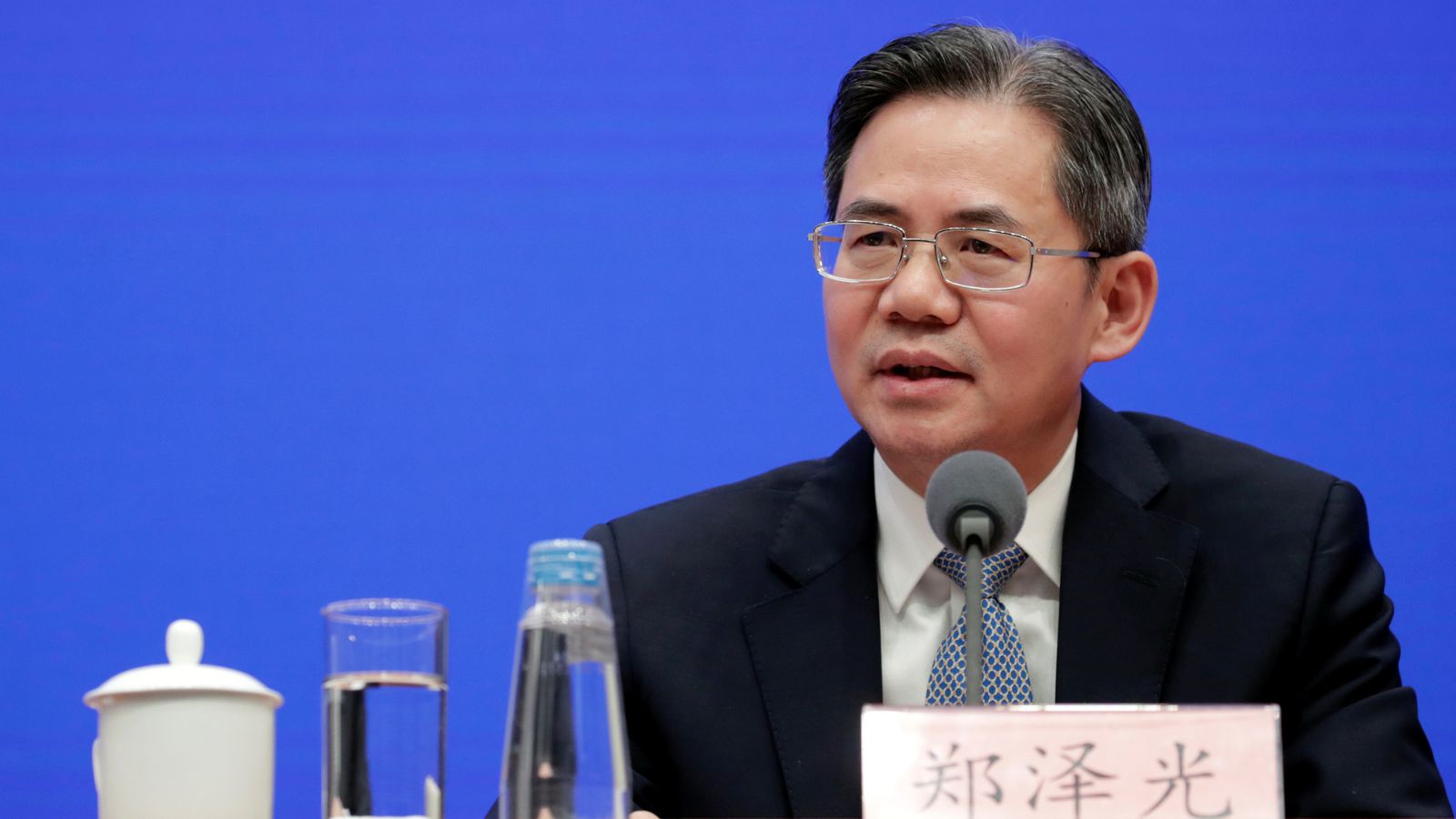
China’s ambassador to the UK has been summoned to the Foreign Office after three people were charged with spying for Hong Kong.
The Foreign Office said it was “unequivocal in setting out that the recent pattern of behaviour directed by China against the UK including cyber-attacks, reports of espionage links and the issuing of bounties is not acceptable”.
A spokesman said ambassador Zheng Zeguang was summoned on instruction from Foreign Secretary Lord Cameron after the men were charged under the National Security Act with assisting Hong Kong’s intelligence service and foreign interference.
Chi Leung (Peter) Wai, 38, Matthew Trickett, 37, and Chung Biu Yuen, 63, appeared at Westminster Magistrates’ Court on Monday.
It is alleged that between 20 December 2023 and 2 May, Yuen, Wai and Trickett agreed to undertake information gathering, surveillance and acts of deception that were likely to assist a foreign intelligence service.
It is also alleged that they forced entry into a UK residential address on 1 May.
The “bounties” mentioned by the Foreign Office are about money provided for information leading to the arrest of overseas nationals – something the Hong Kong government offered in July and December 2023.
A custody van arrives at Westminster Magistrates’ Court where the three men appeared. Pic: PA
Alicia Kearns, chair of the foreign affairs committee, said the Chinese ambassador being summoned was “a relief to hear and long overdue”.
“Hostile interference on UK soil is a serious issue for which we should have absolutely zero tolerance,” she said.
“We must be absolute on that with all countries.”
Read more:
China hacked Ministry of Defence, Sky News learns
Parliamentary researcher charged with spying for China
The Chinese embassy in London on Monday denied all the allegations, strongly condemned the UK’s “unwarranted accusation” and said the UK has staged a “series of accusations against China”, with the claims about Chinese spies and cyber attacks “groundless and slanderous”.
“It must be stressed that Hong Kong has long returned to China. Hong Kong is China’s Hong Kong. The UK has no right and is in no position to point fingers at and meddle in Hong Kong affairs,” it added.
The three suspects were granted bail on Monday and will appear at the Old Bailey on 24 May.

China ‘certainly’ behind MoD cyberattack
District Judge Louisa Cieciora said they must abide by conditions including a 10pm to 5am curfew, reporting weekly to their local police station, not travelling internationally and informing police of devices used to access the internet.
Trickett, Yuen and Wai were charged following an investigation led by officers from the Met’s counter-terrorism command in which 11 people were detained.
Eight men and a woman were arrested by officers on 1 May in the Yorkshire area, before a man was arrested in London and another man was arrested in the Yorkshire area the following day, the force said.
The seven men and one woman who were not charged were released from custody on or before 10 May.
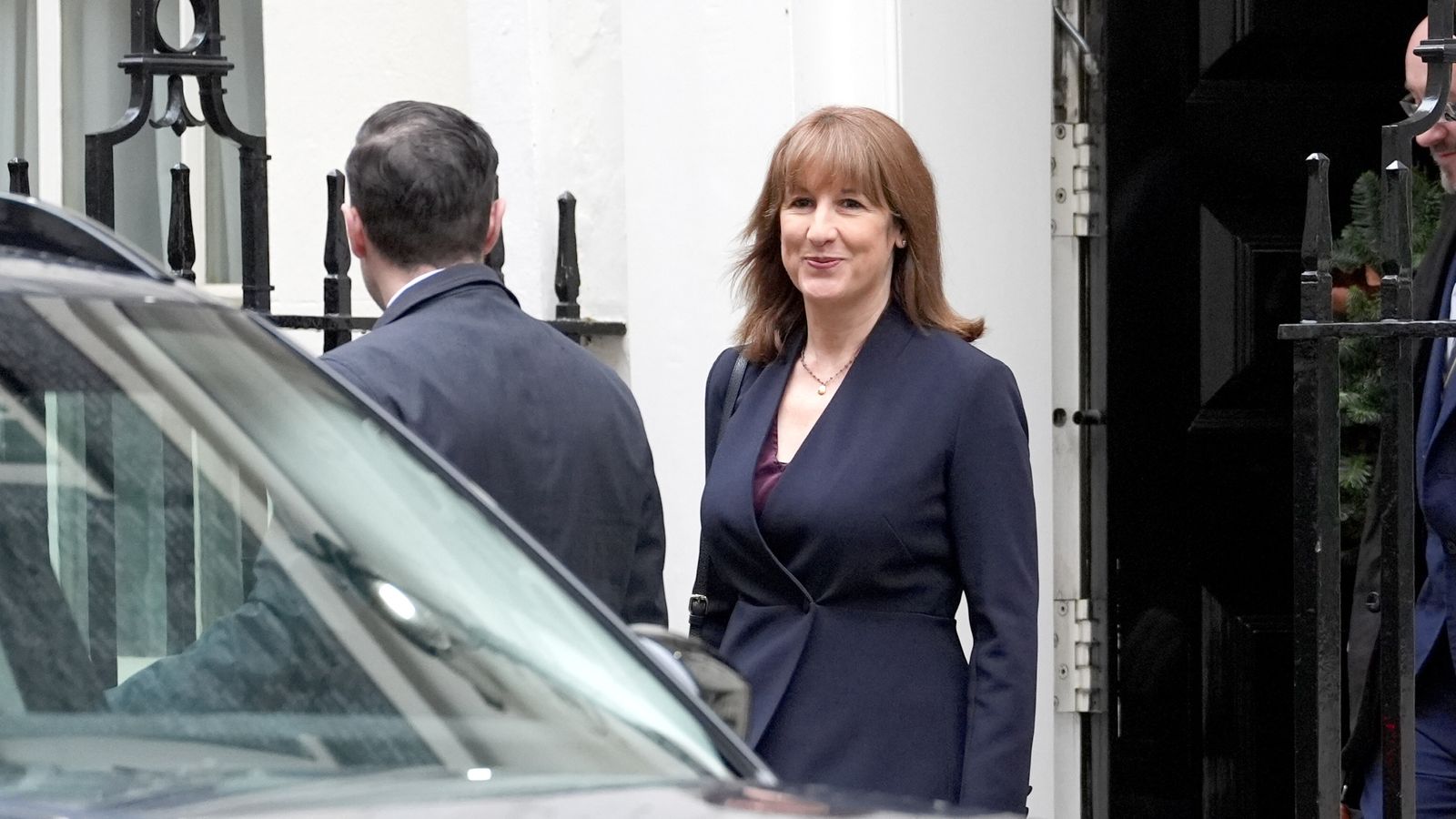

The Chancellor Rachel Reeves has acknowledged there were “too many leaks” in the run-up to last month’s budget.
The flow of budget content to news organisations was “very damaging”, Ms Reeves told MPs on the Treasury select committee on Wednesday.
“Leaks are unacceptable. The budget had too much speculation. There were too many leaks, and much of those leaks and speculation were inaccurate, very damaging”, she said.
Money blog: Nine-year-old set up Christmas tree business to pay for university
The cost of UK government borrowing briefly spiked after news reports that income taxes would not rise as first expected and Labour would not break its manifesto pledge.
An inquiry into the leaks from the Treasury to members of the media is to take place. But James Bowler, the Treasury’s top official, who was also giving evidence to MPs, would not say the results of it would be published.
Committee chair Dame Meg Hillier asked if the group of MPs could see the full inquiry.
“I’d have to engage with the people in the inquiry about the views on that”, replied Mr Bowler, permanent secretary to the Treasury.
OBR leak ‘a mistake of such gravity’
The entire contents of the budget ended up being released 40 minutes early via independent forecasters, the Office for Budget Responsibility (OBR).
A report into this error found the OBR had uploaded documents containing their calculations of budget numbers to a link on the watchdog’s website it had mistakenly believed was inaccessible to the public.
Tax rises ruled out
The chancellor ruled out future revenue-raising measures, including applying capital gains tax to primary residences and changing the state pension triple.
Committee member and former chair Dame Harriet Baldwin had noted that the chancellor’s previous statement to the MPs when she said she would not overhaul council tax and look at road pricing, turned out to be inaccurate.
During the budget, an electric vehicle charge per mile was introduced, as was an additional council tax for those with properties worth £2m or more.

Strategy, the largest Bitcoin treasury company, submitted feedback to index company MSCI on Wednesday about the proposed policy change that would exclude digital asset treasury companies holding 50% or more in crypto on their balance sheets from stock market index inclusion.
Digital asset treasury companies are operating companies that can actively adjust their businesses, according to the letter, which cited Strategy’s Bitcoin-backed credit instruments as an example.
The proposed policy change would bias the MSCI against crypto as an asset class, instead of the index company acting as a neutral arbiter, the letter said.

The MSCI does not exclude other types of businesses that invest in a single asset class, including real estate investment trusts (REITs), oil companies and media portfolios, according to Strategy. The letter said:
“Many financial institutions primarily hold certain types of assets and then package and sell derivatives backed by those assets, like residential mortgage-backed securities.”
The letter also said implementing the change “undermines” US President Donald Trump’s goal of making the United States the global leader in crypto. However, critics argue that including crypto treasury companies in global indexes poses several risks.
Related: Strive calls on MSCI to rethink its ‘unworkable’ Bitcoin blacklist
Crypto treasury companies can create systemic risks and spillover effects
Crypto treasury companies exhibit characteristics of investment funds, rather than operating companies that produce goods and services, according to MSCI.
MSCI noted that companies capitalized on cryptocurrencies lack clear and uniform valuation methods, making proper accounting a challenging task and potentially skewing index values.
Strategy held 660,624 BTC on its balance sheet at the time of this writing. The stock has lost over 50% of its value over the last year, according to Yahoo Finance.
Bitcoin (BTC) is also 15% below its value at the beginning of 2025, when it was trading over $109,000, meaning that the underlying asset has outperformed the equity wrapper.
The high volatility of cryptocurrencies may heighten the volatility of the indexes tracking these companies or create correlation risks, where the index performance would mirror crypto market performance, according to a paper from the Federal Reserve.

The “common use” of leverage by crypto traders amplifies volatility and lends to crypto’s fragility as an asset class, the Federal Reserve wrote.
MSCI’s proposed policy change, set to take effect in January, could also prompt treasury companies to divest their crypto holdings to meet the new eligibility criteria for index inclusion, creating additional selling pressure for digital asset markets.
Magazine: The one thing these 6 global crypto hubs all have in common…
The American Federation of Teachers (AFT), a union championing educators in the United States, has voiced its opposition to crypto market structure legislation moving through the Senate, claiming it “threatens the stability of their retirement security.”
In a Monday letter to Republican and Democratic leaders on the US Senate Banking Committee provided by CNBC, the AFT said it opposed passage of the Responsible Financial Innovation Act, the bill that senators said “built on” the House of Representatives’ proposed solution to market structure, the CLARITY Act. According to the teachers’ union, the bill presents “profound risks” to economic stability and retirement plans.
“This bill fails to provide a regulatory structure for crypto assets and stablecoin that is equivalent to that for other pension holdings,” said the letter. “Most pensions do not carry crypto assets because of their risk. This legislation pretends that crypto assets are stable and mainstream, and they are not.”

The CLARITY Act, a July draft of the market structure bill proposed by the Senate Banking Committee, and a November draft from the Senate Agriculture Committee did not explicitly mention allowing digital assets to be used in pensions or retirement funds. The AFT claimed that if the bill were to be passed, “Pensions and 401(k) plans will end up having unsafe assets even if they were invested in traditional securities.”
The American Federation of Labor and Congress of Industrial Organizations raised similar concerns over the market structure bill posing risks to “retirement funds and to the overall financial stability of the US economy” in an October letter to the banking committee. The group claimed that the legislation would “increase workers’ exposure by greenlighting retirement plans like 401(k)s and pensions to hold this risky asset.”
Related: Japan plans major shift as crypto moves from payments to securities law
The AFT represents 1.8 million members working in education, healthcare and public services. According to the National Association of State Retirement Administrators, aggregate public pension assets, including teachers, totaled more than $6.5 trillion as of the second quarter of 2025, while the Investment Company Institute reported in September that total retirement assets in the US were about $45.8 trillion.
Trump is addressing crypto in retirement funds through executive orders
Separate from the Senate’s efforts to pass market structure, US President Donald Trump has attempted to change policy to allow cryptocurrencies to be included in 401(k) retirement plans. In August, Trump signed an executive order directing the Labor Department to reevaluate restrictions around alternative assets in defined-contribution plans, including digital assets.
Asset management companies have already been making moves signaling openness to adding digital assets to individual retirement arrangements (IRAs) and 401(k)s.
In October, Morgan Stanley reportedly began allowing its advisers to suggest crypto funds as part of its clients’ retirement portfolios. State-managed retirement funds, such as those in Michigan and Wisconsin, also have exposure to crypto through digital asset-linked exchange-traded funds.
It’s unclear when the Senate will vote on a market structure bill in the full chamber. Wyoming Senator Cynthia Lummis, one of the bill’s most outspoken proponents, said on Tuesday that she anticipated the banking committee releasing an updated draft this week, with a possible markup hearing before Congress broke for the holidays.
Magazine: When privacy and AML laws conflict: Crypto projects’ impossible choice
-
 Sports2 years ago
Story injured on diving stop, exits Red Sox game
-
 Sports3 years ago
‘Storybook stuff’: Inside the night Bryce Harper sent the Phillies to the World Series
-
 Sports2 years ago
Game 1 of WS least-watched in recorded history
-
 Sports3 years ago
Button battles heat exhaustion in NASCAR debut
-
 Sports3 years ago
MLB Rank 2023: Ranking baseball’s top 100 players
-
Sports4 years ago
Team Europe easily wins 4th straight Laver Cup
-
 Environment3 years ago
Japan and South Korea have a lot at stake in a free and open South China Sea
-
 Environment1 year ago
Here are the best electric bikes you can buy at every price level in October 2024