

Sir Keir Starmer unveils promises to ‘change Britain’ – but warns it may take 10 years

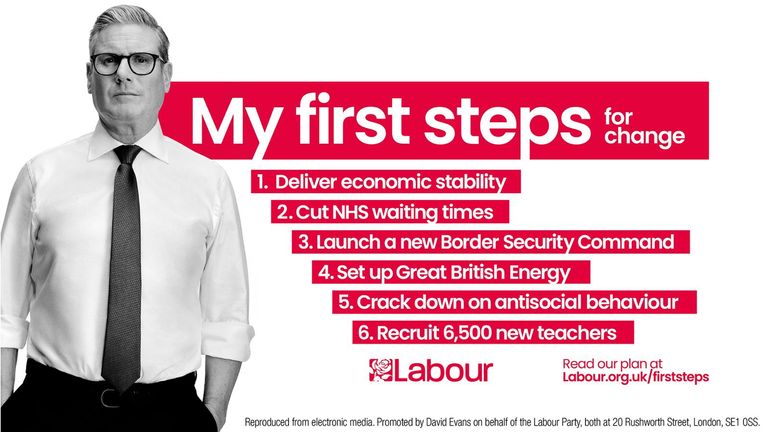
Sir Keir Starmer has promised to change the country “for the better” if Labour wins the next election – but warned his plan for “national renewal” may take a decade to see through.
The leader was speaking at a major pre-election party event in Essex, setting out the “first steps” of a Labour government before the public heads to the polls later this year.
The pledges are to:
– Deliver economic stability
– Cut NHS waiting lists
– Crack down on anti-social behaviour
– Recruit 6,500 new teachers
– Launch a new border security command
– Set up publicly-owned Great British Energy
Sir Keir said the programme “is going to be hard” to achieve, adding that the public could expect to see the promises materialise within two terms of a Labour government
What are Labour’s pledges for government?
He said: “We can deliver this over five or 10 years, a decade of national renewal”.
Politics latest: Asylum seekers detained for removal to Rwanda
The headline speech came as Labour continues to dominate the polls over the Conservatives, and after a set of local elections that saw them win key battleground seats – including taking the West Midlands mayoralty from their rivals.
But there are still questions over whether Sir Keir himself or his party’s policies will be popular enough with the public to secure victory when the general election is called – making today’s speech, and the “evolution of its traditional pledge card” made famous during Tony Blair’s 1997 landslide win, an important moment in the campaign.
Along with the NHS, crime and education pledges, the leader reiterated his promises to deliver “economic stability” – including a pledge to keep taxes “as low as possible” – and to set up a publicly-owned power company, Great British Energy.
Sir Keir also highlighted his sixth priority for government, which he launched last week – setting up a new Border Security Command with hundreds of new specialist investigators, using counter-terror powers “to smash the criminal boat gangs” behind Channel crossings.
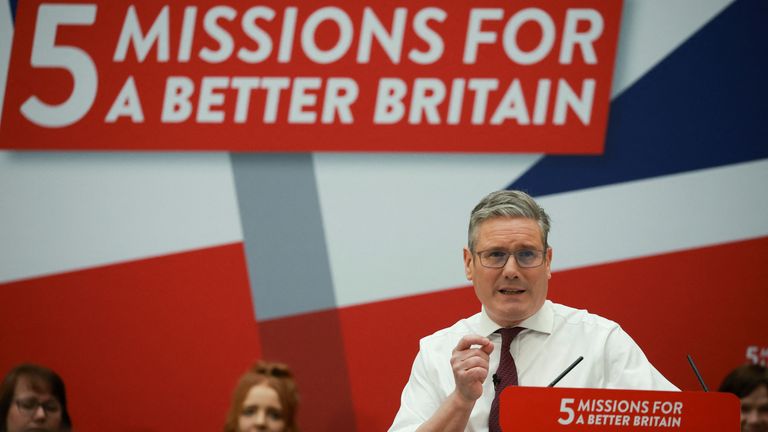
Starmer unveils Labour ‘missions’
In what is being dubbed “Labour’s doorstep offer to the British people”, a fresh advertising campaign is now being launched as the party ramps up its election offering.
A party spokesman described it as the largest spend since the previous general election that will see the Labour leader appear on ad vans and billboards, alongside his six priorities – though they stressed those pledges would not be the “sum total” of the party’s election offer.
Presenting the “first steps” pledges on a card to the room, Sir Keir said: “So here we are. One card, six steps, in your hand, a plan to change the country.
“This is a message that we can take to every doorstep across the country and make the argument that decline is not inevitable, politics can make a difference.
“Britain will have a better future and you can choose it with Labour. Stop the chaos with Labour. Turn the page with Labour. Return politics to service with Labour.
“And with patience, with determination, with these first steps, we can rebuild our country with Labour.”
Delivery will matter on Starmer’s key pledges

The six individual pledges announced today set out Labour’s priorities.
But delivering on them will be key to building trust in politics, which a recent Sky News poll revealed was miserably low.
Sir Keir Starmer described this as the first steps in a “mission”. Big, bold change, he said.
But Labour seem to be making bold promises, while trying not to promise too much.
Sir Keir’s refusal in the Q&A after his speech to put a number on how many extra NHS appointments they could deliver in the first few weeks of a Labour government, for example, goes to the heart of their fear.
The potential problem is that Labour’s pledges are broadly similar to the Conservative ones; migration, economy, health – the usual big election issues.
But voters will want to see clearly how the parties differ.
But the Tories hit out at what they said was Labour’s “16th relaunch”, adding it “won’t amount to a hill of beans”.
Chair of the party Richard Holden said: “Today’s speech was devoid of any plan for Britain.
“Sir Keir Starmer is a serial promise breaker who doesn’t have the courage or conviction to stick to a single a pledge he has ever made.
“His unfunded spending, higher taxes and amnesty for illegal migrants would take Britain back to square one.”
? Listen above then tap here to follow Electoral Dysfunction wherever you get your podcasts ?
The SNP’s deputy Westminster leader Mhairi Black also claimed the speech was “was full of broken promises and empty slogans”.
She added: “The problem for Sir Keir is that he has u-turned on nearly every policy he has ever promised – so it’s little wonder the public don’t trust a single promise he now makes.”
Politics
Soaring demand for mental health, ADHD and autism services to be reviewed after ‘overdiagnosis’ claim
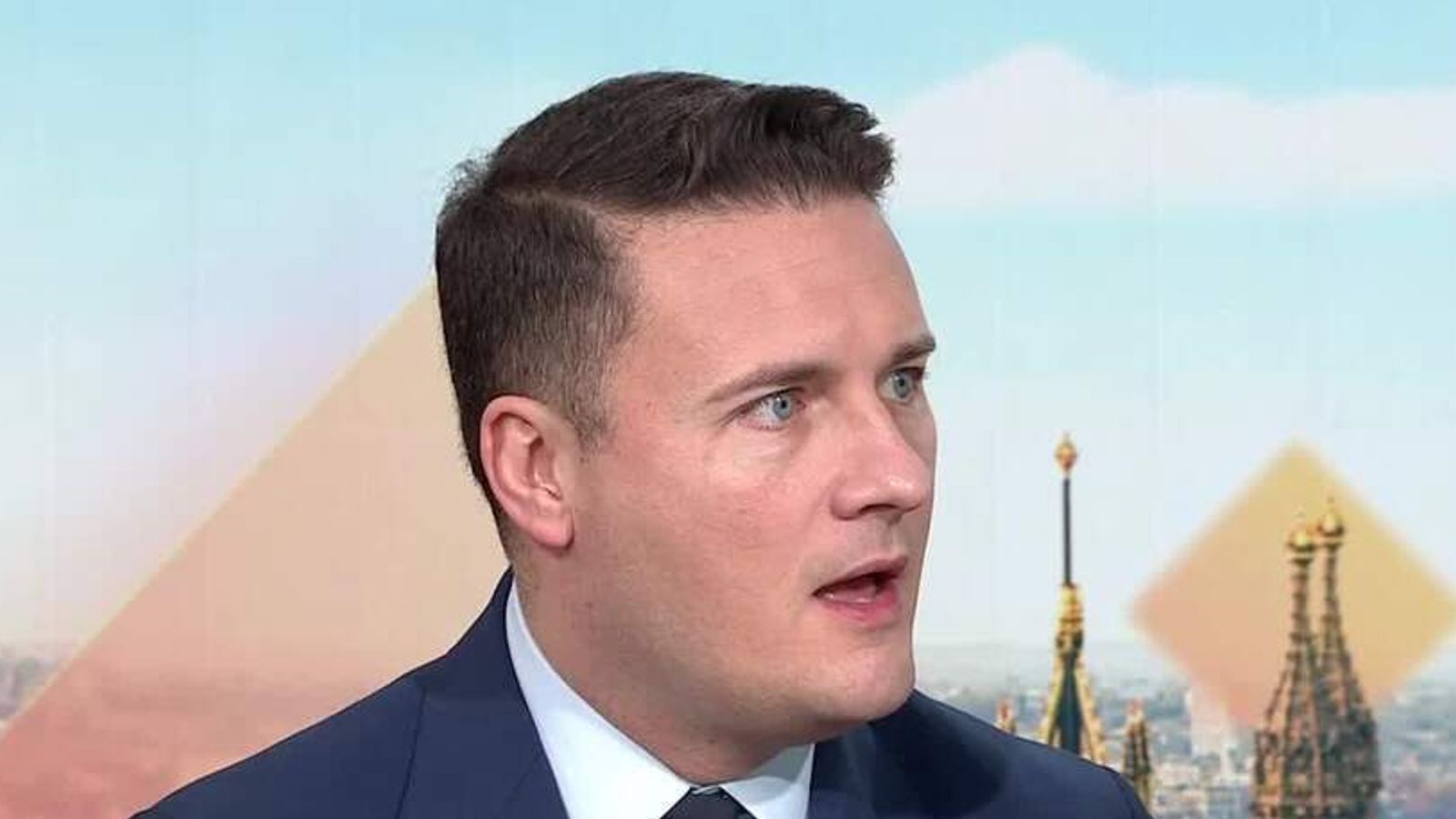
A review into the rising demand for mental health, ADHD and autism services has been launched by the health secretary.
The independent review will look at rates of diagnosis, and the support offered to people.
Health Secretary Wes Streeting said the issue needs to be looked at through a “strictly clinical lens” after he claimed in March that there had been an “overdiagnosis” of mental health conditions, with “too many people being written off”.
Politics latest: Reform receives largest ever UK donation from living person
Mental health conditions are being more commonly reported among the working-age population, figures analysed by the Institute for Fiscal Studies found.
More than half of the increase in 16 to 64-year-olds claiming disability benefits since the pandemic is due to more claims relating to mental health or behavioural conditions.
A total of 1.3 million people claim disability benefits – 44% of all claimants – primarily for mental health or behavioural conditions, the analysis shows.
The review will be led by leading clinical psychologist Professor Peter Fonagy, the national clinical adviser on children and young people’s mental health, who will work with academics, doctors, epidemiological experts, charities and parents.
He will look at what is driving the rising demand for services, and inequalities in accessing support.
Govt orders review into ADHD rise
The Department of Health said 13 times more people were waiting for an autism assessment in September 2025 compared with April 2019.
There is £688m in extra funding going towards hiring 8,500 more mental health workers so the NHS can expand on talking therapies and increase the number of mental health emergency departments.
Mr Streeting said: “I know from personal experience how devastating it can be for people who face poor mental health, have ADHD or autism, and can’t get a diagnosis or the right support.
“I also know, from speaking to clinicians, how the diagnosis of these conditions is sharply rising.
“We must look at this through a strictly clinical lens to get an evidence-based understanding of what we know, what we don’t know, and what these patterns tell us about our mental health system, autism and ADHD services.
“That’s the only way we can ensure everyone gets timely access to accurate diagnosis and effective support.”
Read more:
Tory-Reform pact talks ‘not happening’, says Tice
Reeves hit by rural Labour MP rebellion

ADHD is changing the world of work
Prof Fonagy said: “This review will only be worthwhile if it is built on solid ground. We will examine the evidence with care to understand, in a grounded way, what is driving rising demand.
“My aim is to test assumptions rigorously, and listen closely to those most affected, so that our recommendations are both honest and genuinely useful.”
The findings will be published next summer.
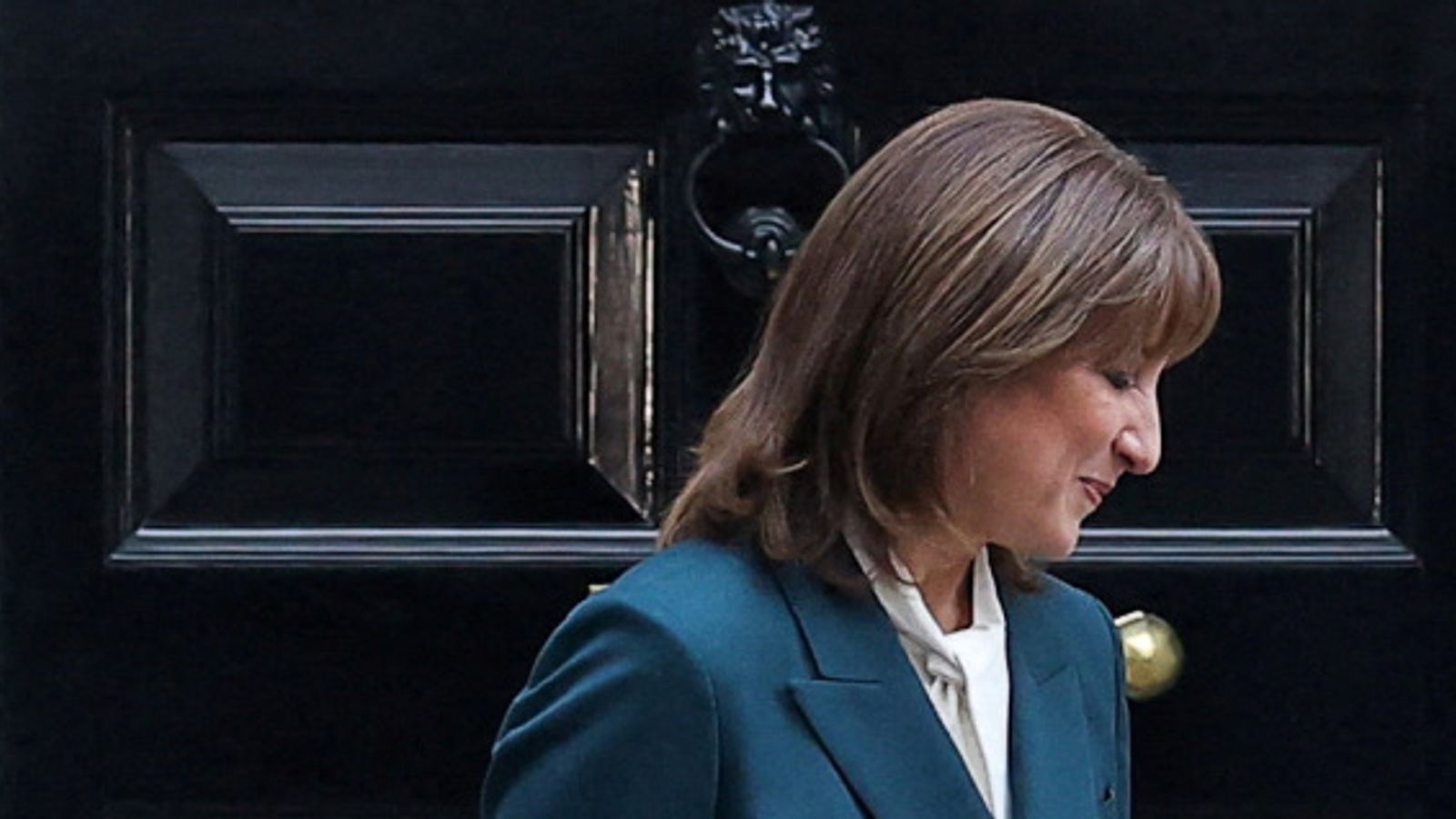
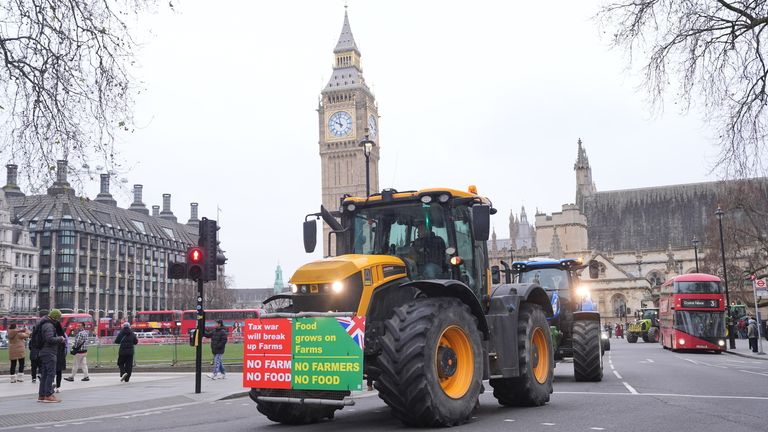
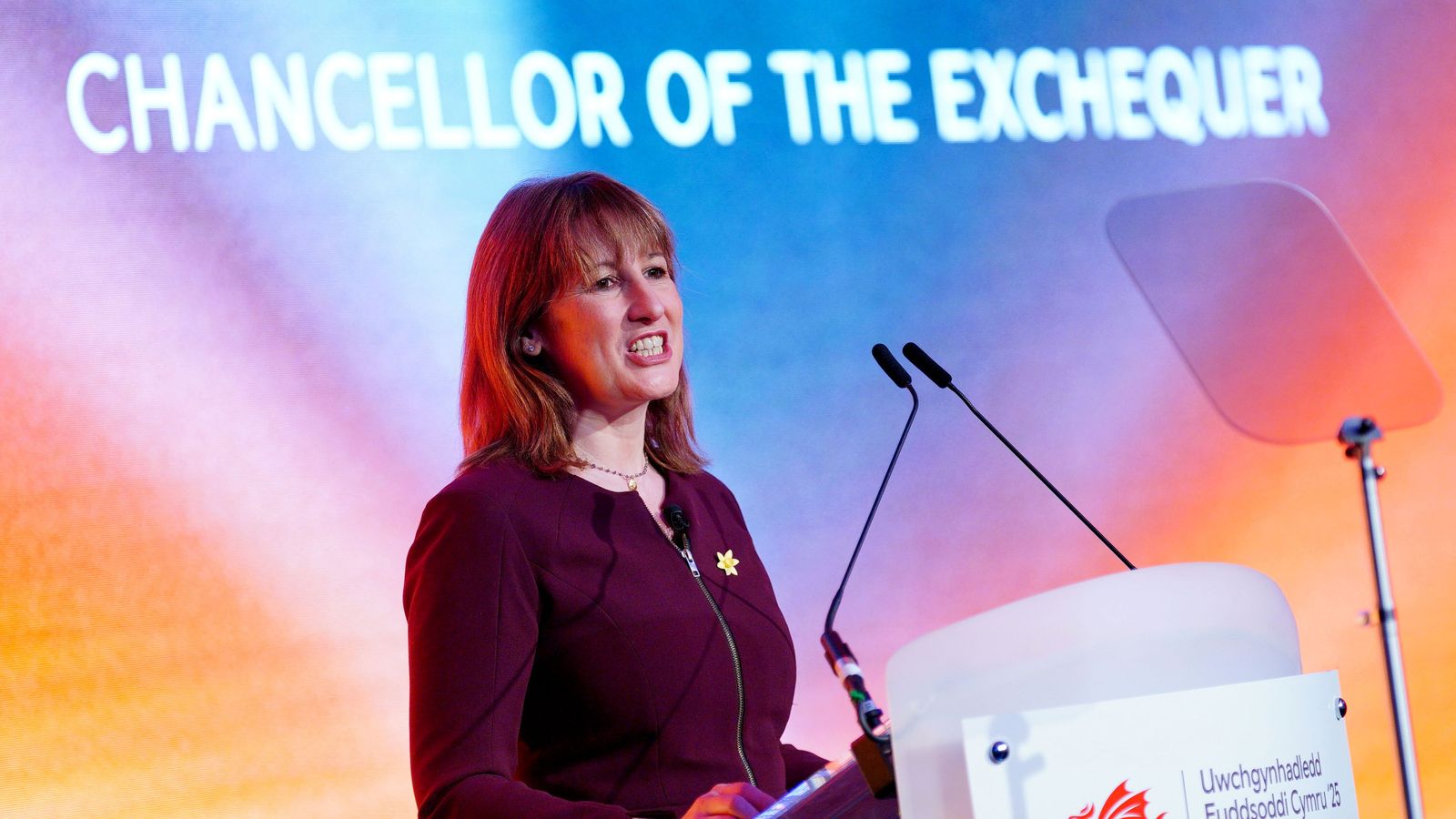
Chancellor Rachel Reeves has suffered another budget blow with a rebellion by rural Labour MPs over inheritance tax on farmers.
Speaking during the final day of the Commons debate on the budget, Labour backbenchers demanded a U-turn on the controversial proposals.
Plans to introduce a 20% tax on farm estates worth more than £1m from April have drawn protesters to London in their tens of thousands, with many fearing huge tax bills that would force small farms to sell up for good.
Farmers have staged numerous protests against the tax in Westminster. Pic: PA
MPs voted on the so-called “family farms tax” just after 8pm on Tuesday, with dozens of Labour MPs appearing to have abstained, and one backbencher – borders MP Markus Campbell-Savours – voting against, alongside Conservative members.
In the vote, the fifth out of seven at the end of the budget debate, Labour’s vote slumped from 371 in the first vote on tax changes, down by 44 votes to 327.
‘Time to stand up for farmers’
The mini-mutiny followed a plea to Labour MPs from the National Farmers Union to abstain.
“To Labour MPs: We ask you to abstain on Budget Resolution 50,” the NFU urged.
“With your help, we can show the government there is still time to get it right on the family farm tax. A policy with such cruel human costs demands change. Now is the time to stand up for the farmers you represent.”
After the vote, NFU president Tom Bradshaw said: “The MPs who have shown their support are the rural representatives of the Labour Party. They represent the working people of the countryside and have spoken up on behalf of their constituents.
“It is vital that the chancellor and prime minister listen to the clear message they have delivered this evening. The next step in the fight against the family farm tax is removing the impact of this unjust and unfair policy on the most vulnerable members of our community.”
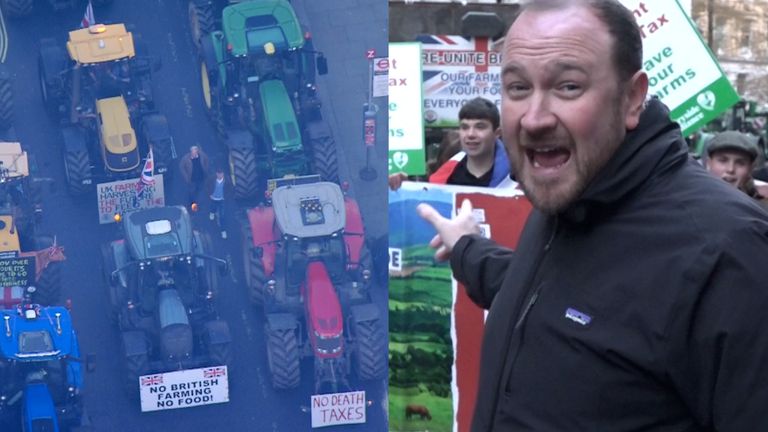
Farmers defy police ban in budget day protest in Westminster.
The government comfortably won the vote by 327-182, a majority of 145. But the mini-mutiny served notice to the chancellor and Sir Keir Starmer that newly elected Labour MPs from the shires are prepared to rebel.
Speaking in the debate earlier, Mr Campbell-Savours said: “There remain deep concerns about the proposed changes to agricultural property relief (APR).
“Changes which leave many, not least elderly farmers, yet to make arrangements to transfer assets, devastated at the impact on their family farms.”
Samantha Niblett, Labour MP for South Derbyshire abstained after telling MPs: “I do plead with the government to look again at APR inheritance tax.
“Most farmers are not wealthy land barons, they live hand to mouth on tiny, sometimes non-existent profit margins. Many were explicitly advised not to hand over their farm to children, (but) now face enormous, unexpected tax bills.
“We must acknowledge a difficult truth: we have lost the trust of our farmers, and they deserve our utmost respect, our honesty and our unwavering support.”

UK ‘criminally’ unprepared to feed itself in crisis, says farmers’ union.
Labour MPs from rural constituencies who did not vote included Tonia Antoniazzi (Gower), Julia Buckley (Shrewsbury), Jonathan Davies (Mid Derbyshire), Maya Ellis (Ribble Valley), and Anna Gelderd (South East Cornwall), Ben Goldsborough (South Norfolk), Alison Hume (Scarborough and Whitby), Terry Jermy (South West Norfolk), Jayne Kirkham (Truro and Falmouth), Noah Law (St Austell and Newquay), Perran Moon, (Camborne and Redruth), Samantha Niblett (South Derbyshire), Jenny Riddell-Carpenter (Suffolk Coastal), Henry Tufnell (Mid and South Pembrokeshire), John Whitby (Derbyshire Dales), Steve Witherden (Montgomeryshire and Glyndwr) and Amanda Hack, (North West Leicestershire).
-
 Sports2 years ago
Story injured on diving stop, exits Red Sox game
-
 Sports3 years ago
‘Storybook stuff’: Inside the night Bryce Harper sent the Phillies to the World Series
-
 Sports2 years ago
Game 1 of WS least-watched in recorded history
-
 Sports3 years ago
Button battles heat exhaustion in NASCAR debut
-
 Sports3 years ago
MLB Rank 2023: Ranking baseball’s top 100 players
-
Sports4 years ago
Team Europe easily wins 4th straight Laver Cup
-
 Environment3 years ago
Japan and South Korea have a lot at stake in a free and open South China Sea
-
 Environment1 year ago
Here are the best electric bikes you can buy at every price level in October 2024