
Mad Max: Director George Miller on tech limitations, the origin of the franchise and the future of film

Director George Miller says the Mad Max film franchise that exists today was borne out of limitations.
Originally an emergency room doctor, the Australian director transitioned into film and created the story of a world where limitation is a central theme and abundance a dream.
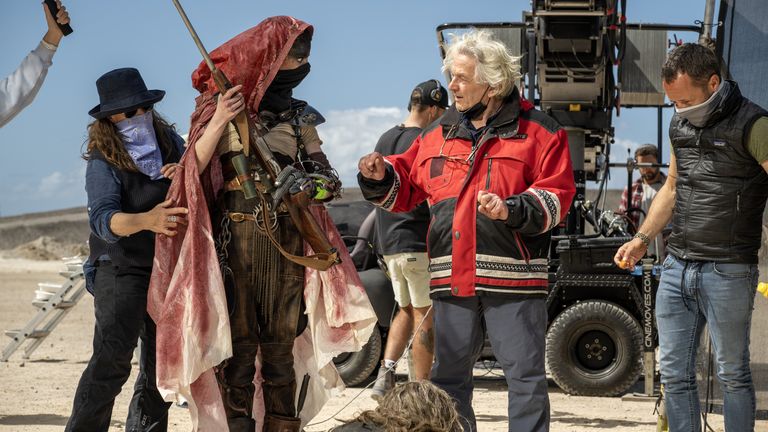
(L-R): Taylor-Joy with Miller on set. Pic: Warner Bros/Domain Pictures
The Australian director made his first Mad Max film in 1978 with a crew of 35 and a fresh-faced Mel Gibson as the lead.
He says it was filmed on a discarded camera lens from a Steve McQueen film, and the lack of resources to create the project ended up working in his favour.
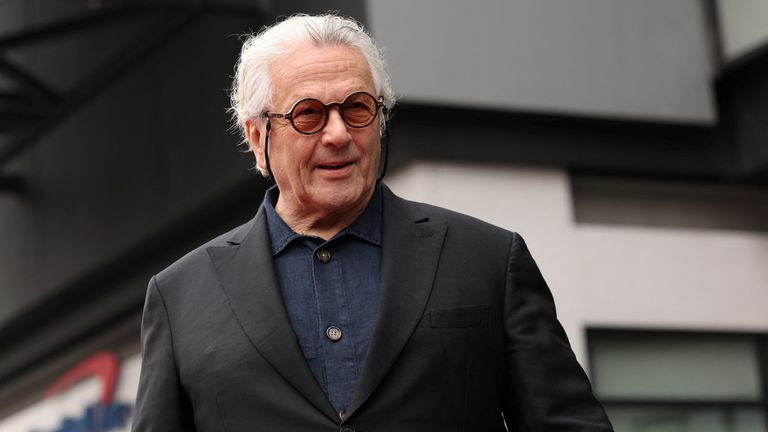
George Miller. Pic: Reuters
He tells Sky News: “The first Mad Max was definitely borne out of limitations. It ultimately turned out to be very key to it.”
The 79-year-old says the original story was written as a “contemporary story set in the city of Melbourne,” but financial limitations spawned the idea of it being set in a “dystopian future”.
“We couldn’t afford to have car chases in the middle of the street,” he says. “We couldn’t afford [to have] the extra cars or put stuntmen in those cars. We couldn’t have extras in the street, trams or busses and we couldn’t use the buildings so we decided to set it a few years in the future.”
Read more entertainment news:
Nicki Minaj’s show at Co-op Live in Manchester postponed
Eamonn Holmes and Ruth Langsford announce divorce
Miller says they decided to instead focus on what they could use and thus the Mad Max franchise we know today was created.
“We could shoot in backstreets, where there were no extras and no cars, or shoot in really old, decrepit buildings where the people wouldn’t ask you for rent. And that led to the film becoming more allegorical.
“Had we not done that? I don’t think we’d be still doing it.”
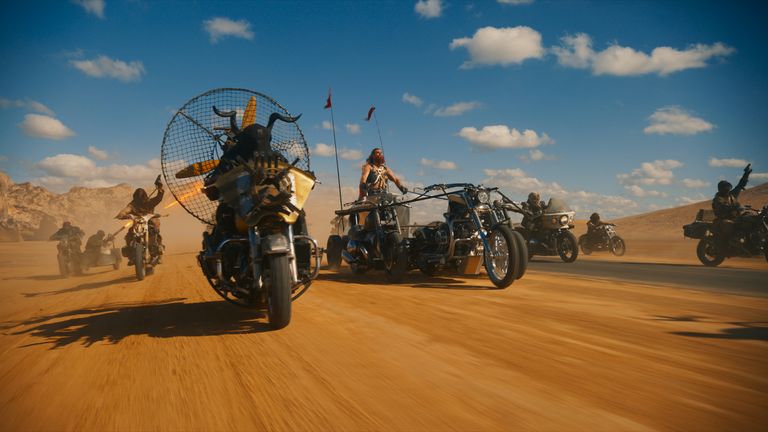
Pic: Warner Bros/Domain Pictures
Burnt land and no speed limits
Miller is a cinephile at heart and for Mad Max, he had a vision – for it to be shot on a “big anamorphic widescreen”.
He previously credited his childhood in rural Queensland and the over-powering car culture there as the influences for Mad Max.

Keep up with all the latest news from the UK and around the world by following Sky News
At the time, the area consisted of completely flat roads, burnt land and no speed limits – the results of which Miller witnessed as an emergency room doctor at the age of 26.
“We couldn’t afford the cameras, or the lenses, but there was a set of lenses in Australia at the time, in one particular place that had been dumped out of Hollywood from the movie that Sam Peckinpah shot called The Getaway with Steve McQueen and Ali MacGraw”.
All but one of these lenses was “wrecked”.
He says: “The rental house virtually gave it to us for nothing. There was one lens called the 35mm lens, and we used that and it allowed us to get much more dynamics in the shot”.
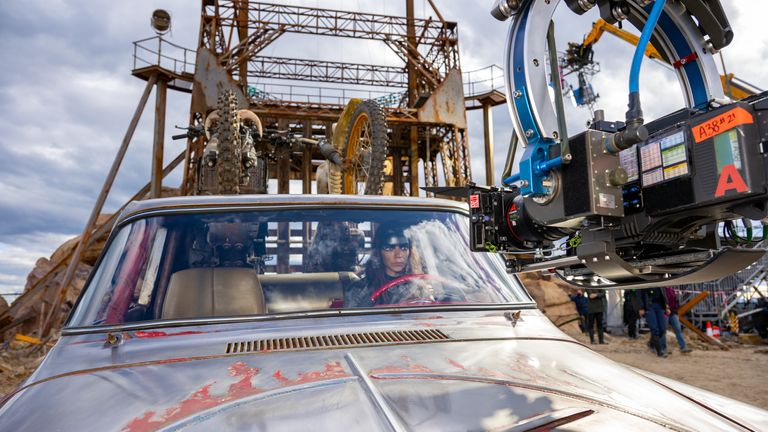
Pic: Warner Bros/Domain Pictures
Why are moments in the Mad Max franchise sped up?
Inspired by the silent film era, Miller’s aim was to create “pure cinema” and make “‘a silent film with sound”.
To achieve the aesthetic he craved, he played around with frame rates.
In film, video is essentially a number of images (frames) captured sequentially to make the image move. Movies display 24 frames per second.
Miller says his plan was to shoot everything at high speed but, because of financial restraints, could not use speed ramps as it would cost the equivalent of a day of filming.
When he started to edit Mad Max he noticed “something was too slow” and to achieve the look he desired, began removing frames from the sequence.
“It looks a little bit like the old silent movies and sped up. By the time I got to Mad Max two, we would shoot at 20 frames or 18 frames. And so, I started to do a lot of that.”
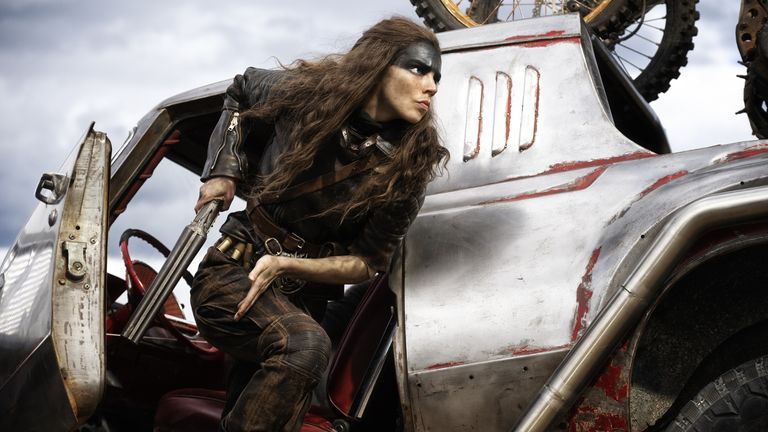
Pic: Warner Bros/Domain Pictures
Reflecting on Furiosa: A Mad Max Saga, he says: “Nowadays digitally I shoot most things at 48 frames because you can ramp it up and down from 48 frames, provided you’ve got the resolution, you can do so much more with that.”
The film Mad Max was released in 1979 and put Mel Gibson on the road to stardom.
Oddly, at that time the film distributor in the US, American International Pictures, opted to dub the strong Australian accents used by the actors for fears that they would not be understood by American audiences.
A far cry from misunderstanding the Australian accent, the country’s actors have become some of the most well-known faces in Hollywood nowadays.
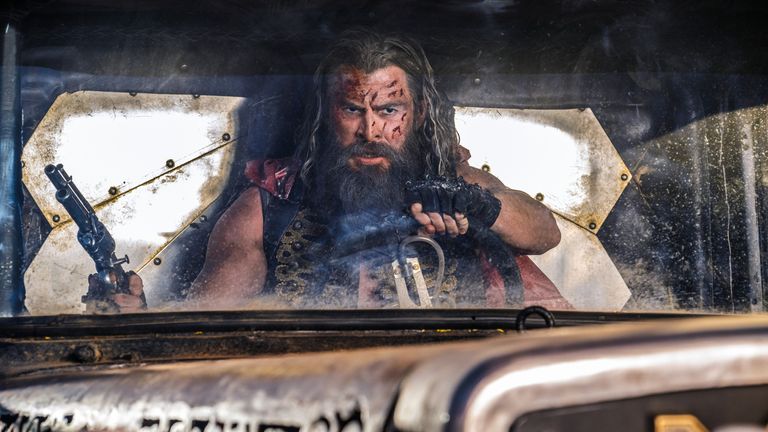
Pic: Warner Bros/Domain Pictures
Furiosa: A Mad Max Saga
Miller’s latest release, Furiosa: A Mad Max Saga serves as a prequel to Mad Max: Fury Road.
It was written before the Tom Hardy film began in production in order to “fully understand” the characters on screen.
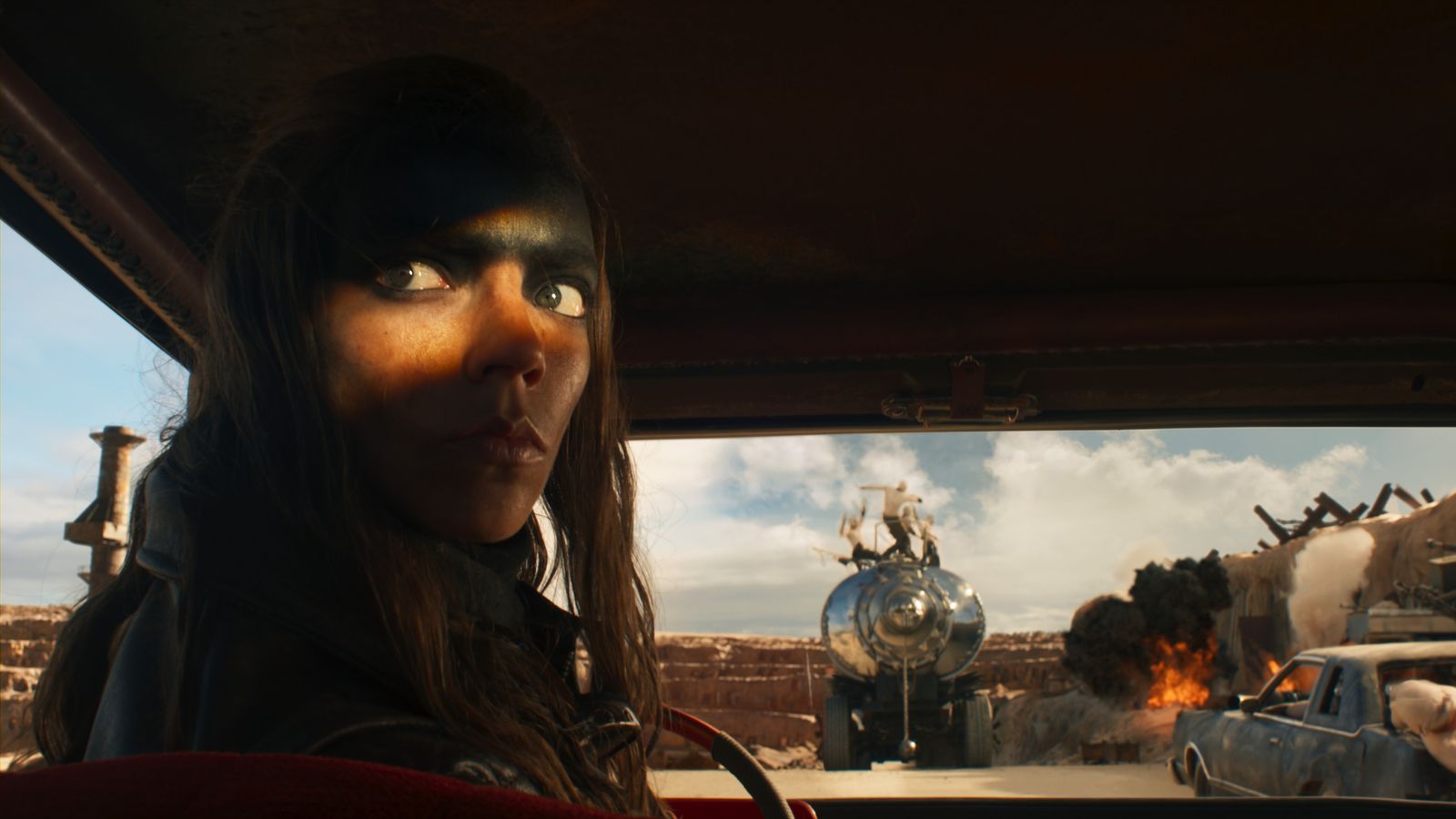
It stars Anya Taylor-Joy as Imperator Furiosa and Chris Hemsworth as Dementus.
Miller says it feels good for the prequel to finally be in cinemas.
“We had a magnificent cast and crew who gave their very best. We tried to get the best story we could have on the screen using all the tools we have and hopefully it means something significant to people.”
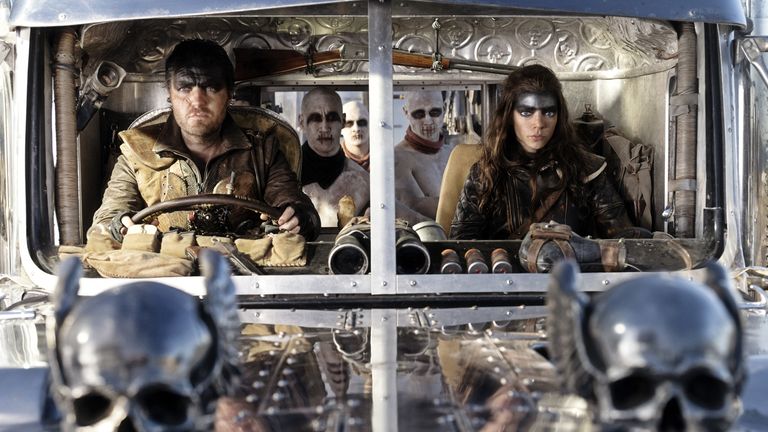
Pic: Warner Bros/Domain Pictures
Miller on the future of film
The Australian director decided against using de-ageing technology for the role of Furiosa and instead cast Anya Taylor-Joy to play the character first depicted by Charlize Theron.
It is not that he is against using AI technology in fact, Taylor-Joy recently revealed they used software to mix her face with that of the child actor, Alyla Browne, for her scenes.
Miller says the beauty of cinema is that it constantly changes.
“From the very beginning of cinema, which is 130 years old, there’s always change. The silent era and sound. Then there was Technicolor, then there was the digital dispensation in the early 90s. Once that’s come along, things have changed so rapidly even since then.”
Always attracted to the tech behind the scenes, Miller cites the digital ability to make Sheep-Pig talk in Babe or Mumble tap dance in Happy Feet as game-changing moments for him.
“By the time we got to do Fury Road, I realiSed, ‘Oh my God, we could do things that we never dreamed of doing back in the celluloid days’.
“Technology will keep changing and advancing… I don’t think we should limit ourselves if the tools are available. It’s always been the case, and cinema has to adjust.”
Furiosa: A Mad Max Saga is in cinemas now
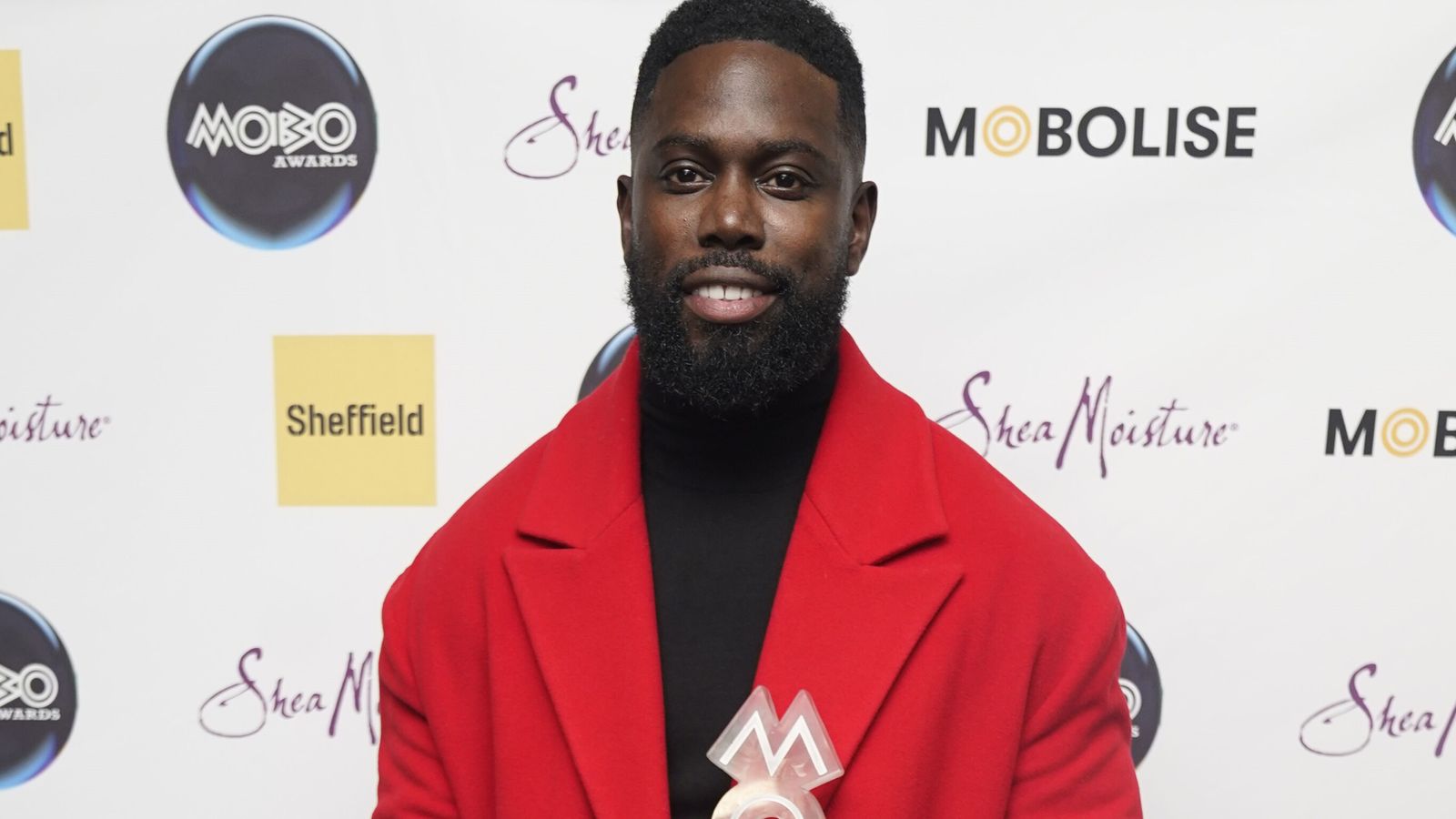
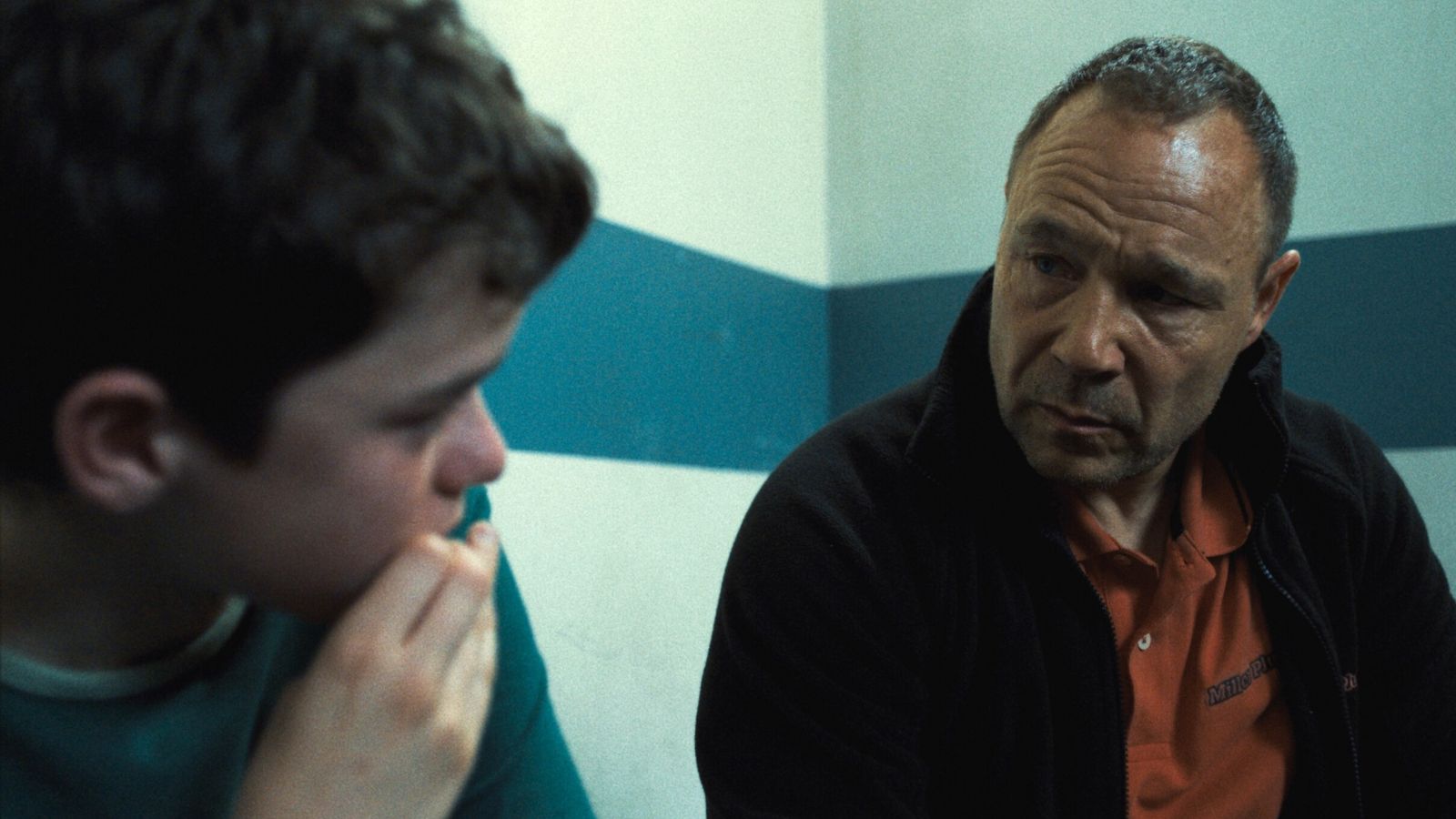
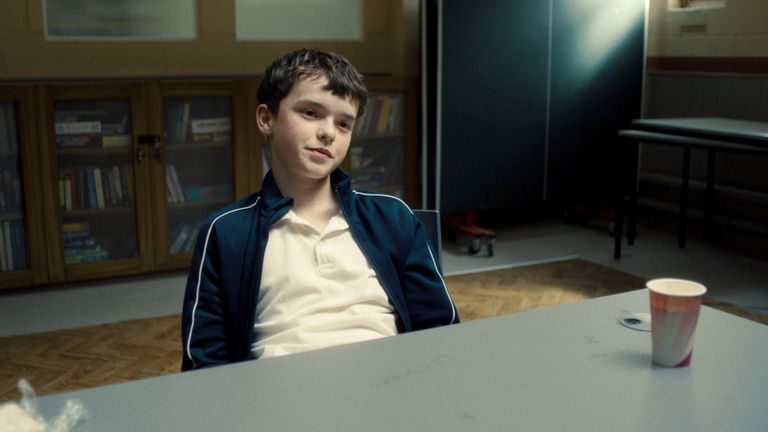
British drama Adolescence has seen its lead stars all nominated for Golden Globe awards.
The drama, starring Stephen Graham, depicts the aftermath of the stabbing of a teenage girl, as a 13-year-old boy from her school is arrested for her murder. It was one of the most talked-about shows of the year.
Young Owen Cooper is up for best supporting actor. Pic:Netflix
Graham, along with Owen Cooper, Ashley Walters and Erin Doherty are all up for gongs. It follows a host of wins at the Emmys in September.
Receiving five nominations in total, the Netflix limited series was only beaten by HBO’s White Lotus, which got six nods, coming top in the TV category.
Cynthia Erivo was nominated for her role in the Wicked sequel, Wicked For Good, while British stars Gary Oldman, Helen Mirren and Aimee Lou Wood also got recognition for their roles in Slow Horses, Mobland and The White Lotus, respectively.
Mirren will also be awarded one of the Globe’s two lifetime achievement awards, the Cecil B DeMille Award, announced a few days before the ceremony in the New Year.
Emily Blunt picked up a surprise nomination for her role in The Smashing Machine, opposite Dwayne ‘The Rock’ Johnson – who also got a nod for the sports biopic.
Tessa Thompson was recognised for her role in Hedda, a modern re-telling of Henrik Ibsen’s classic play.
Irish stars Paul Mescal and Jessie Buckley were both nominated for Hamnet, the adaptation of Maggie O’Farrell’s book about William Shakespeare and his wife Agnes. The movie isn’t out in the UK until January.
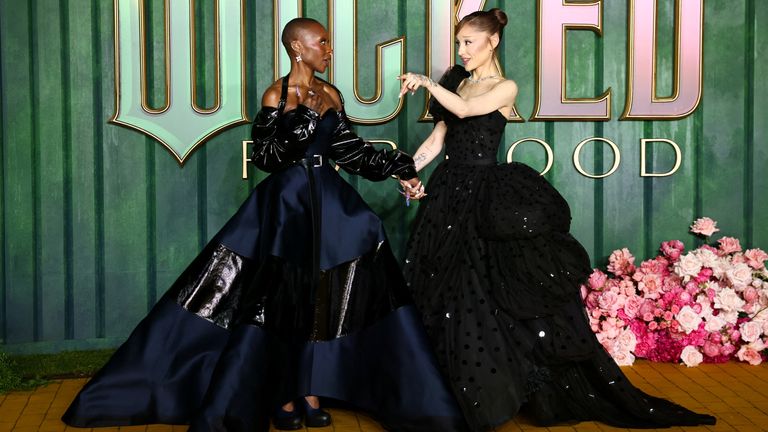
Ariana Grande and Cynthia Erivo at the London premiere for Wicked: For Good

Ryan Coogler (L) and Michael B Jordan at the Sinners premiere. Pic: AP
Films, TV – and podcasts
Unlike other awards, the Globes cover both TV and film and are split by genre, falling into either the drama or comedy and musical category – meaning a wealth of nominees are in the running.
This year, there are 28 categories.
In the film category, One Battle After Another, starring Leonardo DiCaprio, led the nominations with nine, followed by Norwegian comedy-drama Sentimental Value with eight, and vampire horror Sinners with seven.
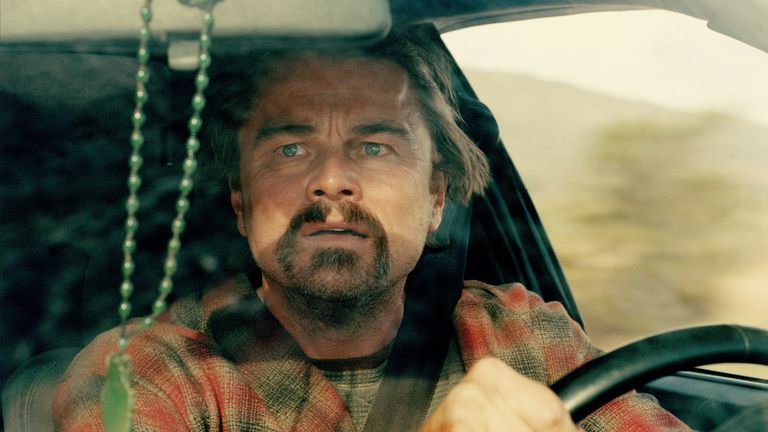
Leonardo DiCaprio in a scene from One Battle After Another.
Pic: Warner Bros/AP
KPop Demon Hunters continued its world domination with three nominations – best animated film, cinematic and box office achievement and original song – making an Oscar nod further down the line look more and more likely.
New to this year’s nominations is a category for podcasts. Selected from a long list of the 25 most-listened to shows, Good Hang With Amy Poehler, Armchair Expert With Dax Shepard and Call Her Daddy were among the casts that made the cut.
Sarah Jessica Parker will be honoured with the Carol Burnett Award.
Now in comeback mode, the Globes had previously faced criticism over a lack of diversity in the organisation, which led to the event being held behind closed doors in 2022.
The 83rd Golden Globes ceremony will take place in LA on 11 January, and will be hosted by US comedian Nikki Glaser for the second year running.
This breaking news story is being updated and more details will be published shortly.
Please refresh the page for the latest version.
You can receive breaking news alerts on a smartphone or tablet via the Sky News app. You can also follow us on WhatsApp and subscribe to our YouTube channel to keep up with the latest news.
-
 Sports2 years ago
Story injured on diving stop, exits Red Sox game
-
 Sports3 years ago
‘Storybook stuff’: Inside the night Bryce Harper sent the Phillies to the World Series
-
 Sports2 years ago
Game 1 of WS least-watched in recorded history
-
 Sports3 years ago
Button battles heat exhaustion in NASCAR debut
-
 Sports3 years ago
MLB Rank 2023: Ranking baseball’s top 100 players
-
Sports4 years ago
Team Europe easily wins 4th straight Laver Cup
-
 Environment3 years ago
Japan and South Korea have a lot at stake in a free and open South China Sea
-
 Environment1 year ago
Here are the best electric bikes you can buy at every price level in October 2024