

Save $1,098 on the EGO Power+ Z6 riding mower with extra batteries, Aventon’s pink Level.2 e-bike, VEVOR EV charger, more


Memorial Day is here, which means all the amazing deals we’ve covered over the last one to two weeks will be ending soon. Kicking off this week’s Green Deals (and leading the end of our Memorial Day sales coverage) is the EGO Power+ 56V 42-inch Z6 Zero-Turn Riding Mower with four 10.0Ah batteries and an extra two 5.0Ah batteries for $4,999. It is joined by the Himalayan Pink Aventon Level.2 Commuter Step-Through e-bike at $1,499, as well as the VEVOR 40A Level 2 Portable EV Charger for $128. Plus, all the other hangover Green Deals that are still alive and well.
Head below for other New Green Deals we’ve found today and, of course, Electrek’s best EV buying and leasing deals. Also, check out the new Electrek Tesla Shop for the best deals on Tesla accessories.
With its Memorial Day sale on its final day, Amazon is now preparing for Father’s Day needs by offering the EGO POWER+ 56V 42-inch Z6 Zero Turn Riding Mower with four 10.0Ah batteries and an extra two 5.0Ah batteries for $4,999 shipped. With this bundle usually going for $6,097, this is the lowest price we have seen to date, with only two previous discounts to speak of. You can find the mower with its normal battery amount currently discounted to the same rate, meaning you’re getting two extra batteries for no added cost while already saving you $1,098. You can also find a similar bundle on the Z6 riding mower with four 12.0Ah batteries and an e-steer wheel at $5,499, down from $6,597.
The Z6 riding mower comes stocked with four 10.0Ah batteries that allows it to cover up to 2 acres of land on a single charge (which can be slightly extended with the extra two batteries). Its four independent brushless motors are housed within the 42-inch weather-resistant steel cutting deck, equivalent to a 22-horsepower engine, allowing it to move at up to 8 MPH. You’ll have 10 cutting heights to choose from here, ranging from 1.5 inches to 4.5 inches, three different driving modes, as well as 3-in-1 functionality for mulching, bagging, or side-discharges. It also sports some premium features like the 32 LED lights laid out on its front, sides, and rear for those early morning or late evening jobs – and even Bluetooth connectivity and a USB charging port for devices.
More EGO Power+ discounts:

Aventon’s Himalayan Pink Level.2 Commuter Step-Through e-bike now $1,499
As part of its Memorial Day sale, Best Buy is offering the Aventon Himalayan Pink Level.2 Commuter Step-Through e-bike for $1,499 shipped. Regularly fetching $1,949, in 2023 we saw this particular model drop farthest during Black Friday sales, where it was brought down to $1,499. With this colorway no longer being offered from Aventon directly, we’ve mainly seen it included in Best Buy flash sales since the start of the new year, with today’s deal coming in as a $450 markdown that returns costs to the third-lowest price we have tracked – not only matching Black Friday rates, but also matching Aventon’s current Memorial Day rate. It’s also among some of the Electrek favorites, which you can read about in our launch review or by heading below.
This flagship commuter e-bike comes ready to carry you wherever needed around town with its 500W rear-hub motor (750W peak) paired alongside a fully-integrated 14.0Ah battery that provides a 60-mile travel range on a single charge. Using only its throttle you’ll top off at 20 MPH, but when utilizing the five different levels of pedal assistance, that limit is bumped up to 28 MPH.
It also comes with a rear-mounted rack for carrying along cargo as well as front and rear fenders to protect the bike from any adverse elements during your journey. It features integrated head and taillights, with the rear lights offering a brake light function, and you’ll find a handy backlit LCD display attached to the handlebars that gives you real-time status of all the important metrics: speed, travel distance, pedal assistance settings, and battery levels.
As I stated before, this lowered price currently matches Aventon’s Memorial Day sale rate, albeit there is one tradeoff worth noting – by sacrificing the colorway, you’ll receive a free extra battery from Aventon’s direct sale that doubles the e-bike’s mileage from 60 miles to 120 miles!
VEVOR’s 40A Level 2 Portable EV Charger with NEMA 14-50 plug at new $128 low
Alongside its Memorial Day sales, Amazon is offering the VEVOR Level 2 Portable EV Charger with NEMA 14-50 Plug for $128.24 shipped, after clipping the on-page 10% off coupon. Already down from its $200 price tag, it entered the new year at $150 before steadily rising at small rates until April, when we finally started seeing some short-lived price cuts before once more rising back up. Today’s deal comes in to shake up the stagnation as a combined 36% markdown off the going rate that gives you $72 in savings and drops costs to a new all-time low.
This portable 40A level 2 EV charger can be stowed away in your vehicle (or kept out for regular use thanks to the included accessory parts) for quick and effortless charging solutions whenever you find yourself far from any official charging stations. It features an LED display that conveys in-time information, as well as a smart chip that provides protection against lightning, leakage, grounding, over voltage, under voltage, over charge, over current, and overheating. You’ll also be able to fully monitor and control the device through your smartphone, letting you even schedule charging for 1 to 12 hours, with options to take advantage of off-peak hours. It is compatible with vehicles and plug-in hybrids that comply with the J1772 standard, requiring only a NEMA 14-50 outlet to plug the charger into.
Spring e-bike deals!
- Super73 RX Electric Motorbike: $2,600 (Reg. $3,695)
- Aventon Ramblas Mountain e-bike: $2,399 (Reg. $2,699)
- Lectric ONE Long-Range e-bike with $220 in free gear (pre-order): $2,199 (Reg. $2,419)
- Juiced JetCurrent Pro Foldable e-bike (pre-order): $2,099 (Reg. $2,799)
- Lectric ONE e-bike with $220 in free gear: $1,999 (Reg. $2,219)
- Hover-1 Altai Pro R750 e-bike: $1,816 (Reg. $3,000)
- Aventon Abound Cargo e-bike with $494 in free accessories: $1,599 (Reg. $2,199)
- Rad Power RadRunner Plus Utility e-bike with free extra battery: $1,599 (Reg. $1,799)
- Lectric XPress 750 High-Step e-bike with extra battery (pre-order): $1,299 (Reg. $1,799)
- Lectric XPress 750 Step-Thru e-bike with extra battery (pre-order): $1,299 (Reg. $1,799)
- Rad Power RadExpand 5 Folding e-bike with free extra battery: $1,249 (Reg. $1,599)
- Rad Power RadRover 6 Plus e-bike: $1,099 (Reg. $1,599)
- Schwinn Ridgewood Electric Mountain Bike: $800 (Reg. $1,500)
- Aventon Soltera.2 e-bike: $799 (Reg. $999)
- Schwinn Ingersoll Electric Hybrid Bike: $700 (Reg. $1,500)
- Schwinn Mendocino Hybrid Electric Cruiser Bike: $699 (Reg. $1,700)

Other new Green Deals landing this week
The savings this week are also continuing to a collection of other markdowns. To the same tune as the offers above, these all help you take a more energy-conscious approach to your routine. Winter means you can lock in even better off-season price cuts on electric tools for the lawn while saving on EVs and tons of other gear.
- Best Memorial Day EV deals: e-bikes, GoKarts, more from Aventon, Rad Power, Lectric, Segway, and other popular brands
- Post-launch discount on Jackery’s Explorer 600 portable power station sees drop to $419 low
- Best Buy Memorial Day sale takes $400+ off this Greenworks electric 3-tool combo with free extra battery promo starting from $600
- Anker’s PowerCore Reserve power station gives you 60,000mAh battery in easy-to-carry design at new $95 low (Reg. $150)
- Bluetti AC180 power station comes with 200W solar panel for return $879 low (Save $719), more from $159
- Zip and drift in the Segway Ninebot GoKart Pro with rare deal at $1,600 (Reg. $2,300), more from $200
- Yards and gardens thrive with Rachio 3 smart 4-zone sprinkler controller at new $98 low, more for Memorial Day
- Goal Zero’s latest Yeti portable power stations hit new lows starting at $225, more offers from $113
- Save thousands in Amazon’s ECOFLOW power station Memorial Day sale, up to 47% off with deals from $169
- Anker SOLIX C1000 Portable Power Station falls $390 to new $609 low in Memorial Day sales
- Jackery’s Memorial Day sales take up to $2,000 off power stations, bundles, more from $199
- Jackery’s new Explorer 1000 v2 power station now $679 in pre-order special (Save $120)
- Amazon takes up to 50% off Greenworks tools during Memorial Day sales starting from $97
- Prep for camps or storms with Jackery’s solar generator 2000 Pro bundle at return $1,899 low (Reg. $3,599)
- Pit Boss’ table top wood pellet grill covers campsite meals at $240 (Reg. $369)
FTC: We use income earning auto affiliate links. More.


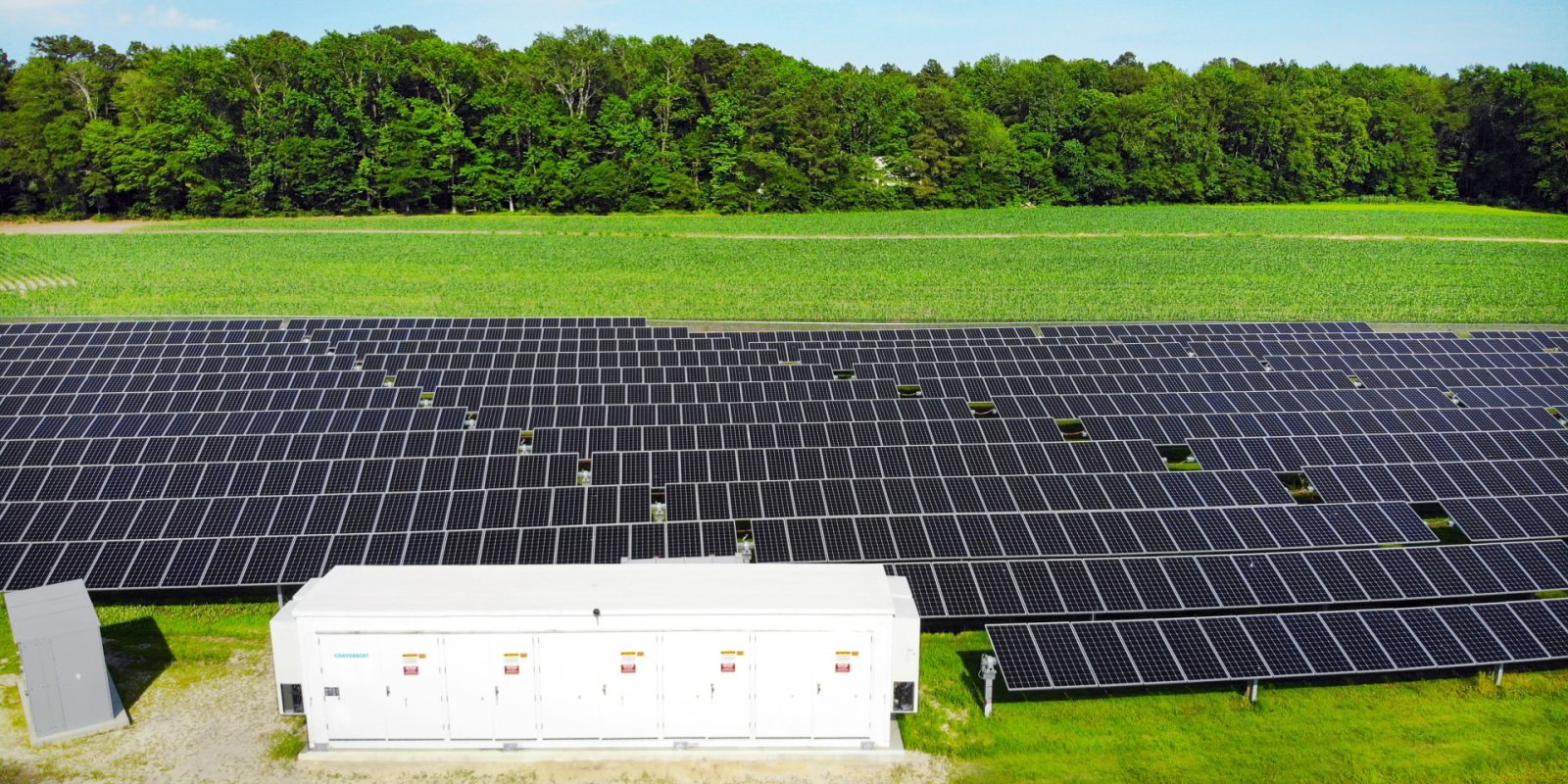
Newly published data from the Federal Energy Regulatory Commission (FERC), reviewed by the SUN DAY Campaign, reveal that solar accounted for over 75% of US electrical generating capacity added in the first nine months of 2025. In September alone, solar provided 98% of new capacity, marking 25 consecutive months in which solar has led among all energy sources.
Year-to-date (YTD), solar and wind have each added more new capacity than natural gas has. The mix of all renewables remains on track to exceed 40% of installed capacity within three years; solar alone may be 20%.
Solar was 75% of new generating capacity YTD
In its latest monthly “Energy Infrastructure Update” report (with data through September 30, 2025), FERC says 48 “units” of solar totaling 2,014 megawatts (MW) were placed into service in September, accounting for 98% of all new generating capacity added during the month. Oil provided the balance (40 MW).
The 567 units of utility-scale (>1 MW) solar added during the first nine months of 2025 total 21,257 MW and were 75.3% of the total new capacity placed into service by all sources. Solar capacity added YTD is 6.5% more than that added during the same period a year earlier.
Solar has now been the largest source of new generating capacity added each month for 25 consecutive months, from September 2023 to September 2025. During that period, total utility-scale solar capacity grew from 91.82 gigawatts (GW) to 158.43 GW. No other energy source added anything close to that amount of new capacity. Wind, for example, expanded by 11.07 GW while natural gas’s net increase was just 4.60 GW.
Between January and September, new wind energy has provided 3,724 MW of capacity additions – an increase of 28.6% compared to the same period last year and more than the new capacity provided by natural gas (3,161 MW). Wind accounted for 13.2% of all new capacity added during the first nine months of 2025.
Renewables were 88% of new capacity added YTD
Wind and solar (plus 4 MW of hydropower and 6 MW of biomass) accounted for 88.5% of all new generating capacity while natural gas added just 11.2% YTD. The balance of net capacity additions came from oil (63 MW) and waste heat (17 MW).
Utility-scale solar’s share of total installed capacity (11.78%) is now virtually tied with that of wind (11.80%). If recent growth rates continue, utility-scale solar capacity should surpass that of wind in FERC’s next “Energy Infrastructure Update” report.
Taken together, wind and solar make up 23.58% of the US’s total available installed utility-scale generating capacity.
Moreover, more than 25% of US solar capacity is in the form of small-scale (e.g., rooftop) systems that are not reflected in FERC’s data. Including that additional solar capacity would bring the share provided by solar and wind to more than a quarter of the US total.
With the inclusion of hydropower (7.59%), biomass (1.05%) and geothermal (0.31%), renewables currently claim a 32.53% share of total US utility-scale generating capacity. If small-scale solar capacity is included, renewables now account for more than one-third of the total US generating capacity.
Solar soon to be No. 2 source of US generating capacity
FERC reports that net “high probability” net additions of solar between October 2025 and September 2028 total 90,614 MW – an amount almost four times the forecast net “high probability” additions for wind (23,093 MW), the second fastest growing resource.
FERC also foresees net growth for hydropower (566 MW) and geothermal (92 MW) but a decrease of 126 MW in biomass capacity.
Meanwhile, natural gas capacity is projected to expand by 6,667 MW, while nuclear power is expected to add just 335 MW. In contrast, coal and oil are projected to contract by 24,011 MW and 1,587 MW, respectively.
Taken together, the net new “high probability” net utility-scale capacity additions by all renewable energy sources over the next three years – the Trump administration’s remaining time in office – would total 114,239 MW. On the other hand, the installed capacity of fossil fuels and nuclear power combined would shrink by 18,596 MW.
Should FERC’s three-year forecast materialize, by mid-fall 2028, utility-scale solar would account for 17.3% of installed U.S. generating capacity, more than any other source besides natural gas (39.9%). Further, the capacity of the mix of all utility-scale renewable energy sources would exceed 38%. The inclusion of small-scale solar, assuming it retains its 25% share of all solar energy, could push solar’s share to over 20% and that of all renewables to over 41%, while the share of natural gas would drop to less than 38%.
In fact, the numbers for renewables could be significantly higher.
FERC notes that “all additions” (net) for utility-scale solar over the next three years could be as high as 232,487 MW, while those for wind could total 65,658 MW. Hydro’s net additions could reach 9,927 MW while geothermal and biomass could increase by 202 MW and 32 MW, respectively. Such growth by renewable sources would swamp that of natural gas (29,859 MW).
“In an effort to deny reality, the Trump Administration has just announced a renaming of the National Renewable Energy Laboratory (NREL) in which it has removed the word ‘renewable’,” noted the SUN DAY Campaign’s executive director Ken Bossong. “However, FERC’s latest data show that no amount of rhetorical manipulation can change the fact that solar, wind, and other renewables continue on the path to eventual domination of the energy market.”

If you’re looking to replace your old HVAC equipment, it’s always a good idea to get quotes from a few installers. To make sure you’re finding a trusted, reliable HVAC installer near you that offers competitive pricing on heat pumps, check out EnergySage. EnergySage is a free service that makes it easy for you to get a heat pump. They have pre-vetted heat pump installers competing for your business, ensuring you get high quality solutions. Plus, it’s free to use!
Your personalized heat pump quotes are easy to compare online and you’ll get access to unbiased Energy Advisors to help you every step of the way. Get started here. – *ad


FTC: We use income earning auto affiliate links. More.


The Century is considered the most luxurious Toyota, and now it’s being spun off into its own high-end brand. Despite the rumors, the ultra-luxury brand won’t be as electric as expected.
Toyota sets new luxury brand up to fail with ICE plans
First introduced in 1967, the Century was launched in celebration of Toyota’s founder, Sakichi Toyoda’s 100th birthday.
The Century has since become a symbol of status and wealth in Japan, often used as a chauffeur car by high-profile company officials.
Toyota previewed the future of the ultra-luxury marquee at the 2025 Japan Mobility Show in October, launching it as a new standalone brand positioned above Lexus.
The new Century brand is set to rival higher-end automakers like Rolls-Royce and Bentley, but it won’t be as electric as initially expected. Toyota’s powertrain boss, Takashi Uehara, told CarExpert that the luxury brand’s first vehicle will, in fact, have an internal combustion engine.
Although no other details were offered, Uehara confirmed, “Yes, it will have an engine.” As to what kind, that has yet to be decided, Toyota’s powertrain president explained.

Like the next-gen Lexus supercar and upcoming Toyota GR GT, Uehara said the Century model could include a V8 engine.
The Century has been Toyota’s only vehicle with a V12 engine. In 2018, Toyota dropped the V12 in favor of a V8 hybrid powertrain for its third-generation.

Toyota’s Century launched its first SUV in 2023, currently on sale in Japan with a V6 plug-in hybrid system alongside the sedan.
Already widely considered the biggest laggard in the shift to fully electric vehicles, Toyota doubled down, developing a series of new internal combustion engines for upcoming models.
Century is one of the five global brands the Japanese auto giant introduced in October, along with Daihatsu, GR Sport, Lexus, and Toyota.
Electrek’s Take
It’s not surprising to see Toyota sticking with ICE for its ultra-luxury Century brand, but it will likely be a costly move.
Chinese auto giants, such as BYD and FAW Group, are quickly expanding into new segments, including high-end models under luxury brands such as Yangwang and Hongqi.
These companies are now expanding into new overseas markets, like Europe and Southeast Asia, where Japanese brands like Toyota have traditionally dominated, to drive growth.
Top luxury brands, including Porsche, BMW, and Mercedes-Benz, are already struggling to keep pace with Chinese EV brands. How does Toyota plan to compete with an “ultra-luxury” brand that still sells outdated ICE vehicles? We will find out more over the coming months and years as new sales data is released.
FTC: We use income earning auto affiliate links. More.


SparkCharge has partnered with the Massachusetts Clean Energy Center (MassCEC) and Zipcar to launch the Northeast’s first off‑grid, mobile DC fast‑charging hub for shared EVs. The goal is to bring fast, reliable EV charging infrastructure into communities without having to wait for costly or slow grid upgrades.
The hub sits at Zipcar’s maintenance facility in East Boston, an Environmental Justice community. It’s funded through MassCEC’s InnovateMass program and gives onsite mechanics the ability to quickly recharge a rotating fleet of Zipcar EVs before they’re dispatched across Greater Boston. Members and rideshare drivers who rent Zipcars will get steadier access to charged EVs.
“Electrification should never be limited by where the grid is or how long it takes,” SparkCharge founder and CEO Joshua Aviv said. “With this program in East Boston, we’re showing how fleets can deploy at scale, in any community, and deliver clean mobility today.”
At the center of the setup is SparkCharge’s Mobile Battery‑Powered Trailer, which delivers 320 kW of DC fast charging without the delays and big price tags that usually come with fixed infrastructure. The trailer can recharge from Zipcar’s existing onsite power between sessions, topping up its high‑capacity batteries without stressing the local grid. Since it avoids major grid upgrades entirely, the model is designed to deploy quickly and at zero upfront cost for fleets.
MassCEC says the project shows what community‑first fast charging can look like. “Every resident deserves access to clean, reliable transportation,” said Leslie Nash, MassCEC’s senior director of Technology‑to‑Market. “By partnering with SparkCharge and Zipcar in East Boston, we’re showing how Massachusetts is leading the way in clean transportation innovation.”
The hub also plays into Massachusetts’ push to hit its net‑zero 2050 targets. As shared mobility grows, electrifying fleets will be key to cutting emissions in dense urban corridors. This project introduces a scalable charging option to a part of Boston that is underserved by public charging, helping to keep Zipcar’s EVs reliably on the road.
“For twenty‑five years, Zipcar has been a leader in shared mobility, and we’re proud to take another step toward a more sustainable future,” said Angelo Adams, Zipcar’s president. “Working with SparkCharge and MassCEC allows us to bring fast, reliable EV charging directly to our members and rideshare drivers.”
Zipcar, which is owned by car rental company Avis Budget, announced on December 1 that it was shutting down its UK operations by December 31, 2025. An Avis Budget spokesperson stated that the reason was “to streamline operations, improve returns, and position the company for long-term sustainability and growth,” adding that “all other markets remain unaffected.”
Read more: With a $30M raise, SparkCharge takes EV fleet charging off-grid

If you’re looking to replace your old HVAC equipment, it’s always a good idea to get quotes from a few installers. To make sure you’re finding a trusted, reliable HVAC installer near you that offers competitive pricing on heat pumps, check out EnergySage. EnergySage is a free service that makes it easy for you to get a heat pump. They have pre-vetted heat pump installers competing for your business, ensuring you get high quality solutions. Plus, it’s free to use!
Your personalized heat pump quotes are easy to compare online and you’ll get access to unbiased Energy Advisors to help you every step of the way. Get started here. – *ad
FTC: We use income earning auto affiliate links. More.
-
 Sports2 years ago
Story injured on diving stop, exits Red Sox game
-
 Sports3 years ago
‘Storybook stuff’: Inside the night Bryce Harper sent the Phillies to the World Series
-
 Sports2 years ago
Game 1 of WS least-watched in recorded history
-
 Sports3 years ago
Button battles heat exhaustion in NASCAR debut
-
 Sports3 years ago
MLB Rank 2023: Ranking baseball’s top 100 players
-
Sports4 years ago
Team Europe easily wins 4th straight Laver Cup
-
 Environment3 years ago
Japan and South Korea have a lot at stake in a free and open South China Sea
-
 Environment1 year ago
Here are the best electric bikes you can buy at every price level in October 2024