
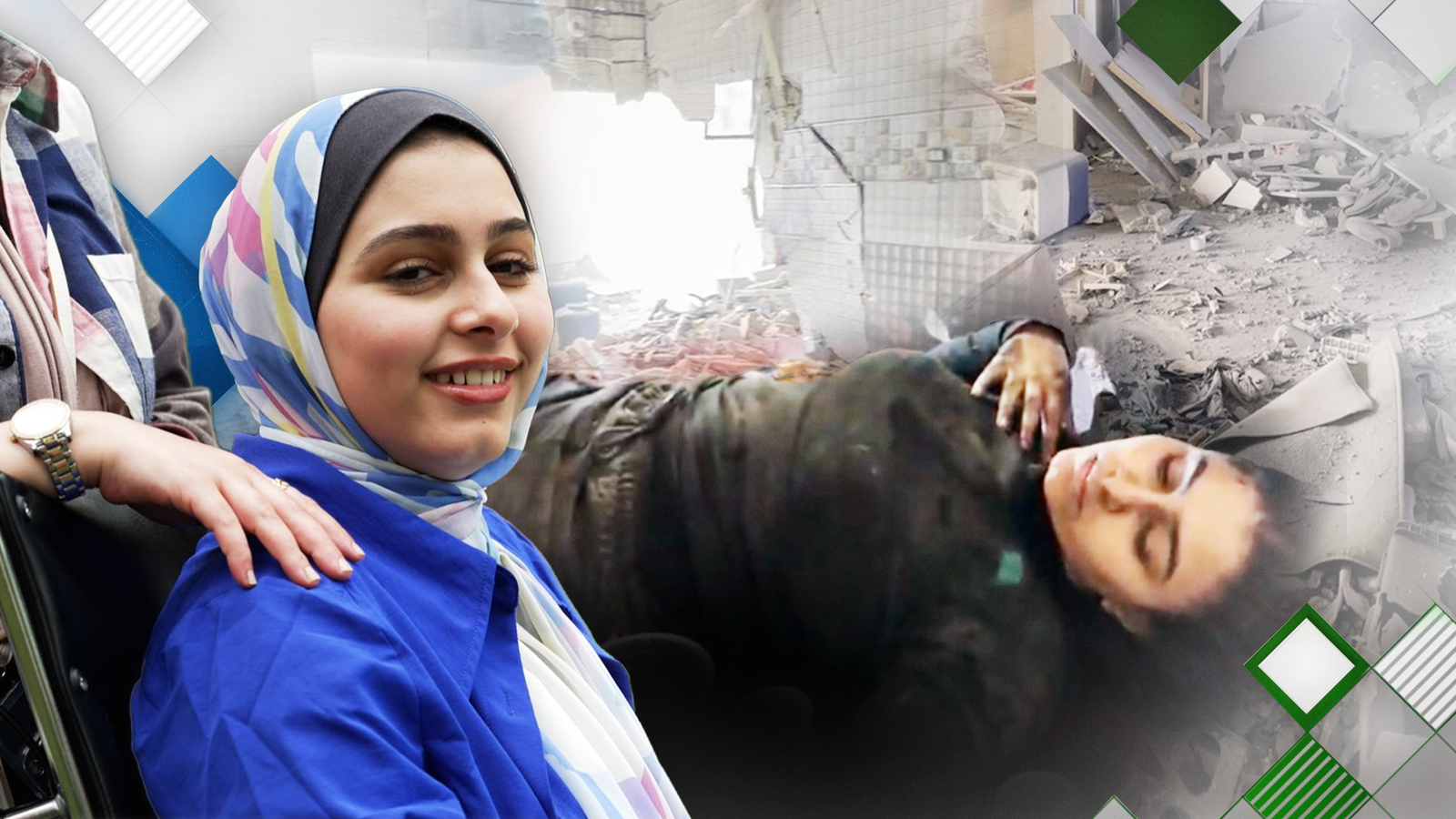
‘It was her leg or her life’: Woman from viral video on how she escaped Gaza after brutal amputation

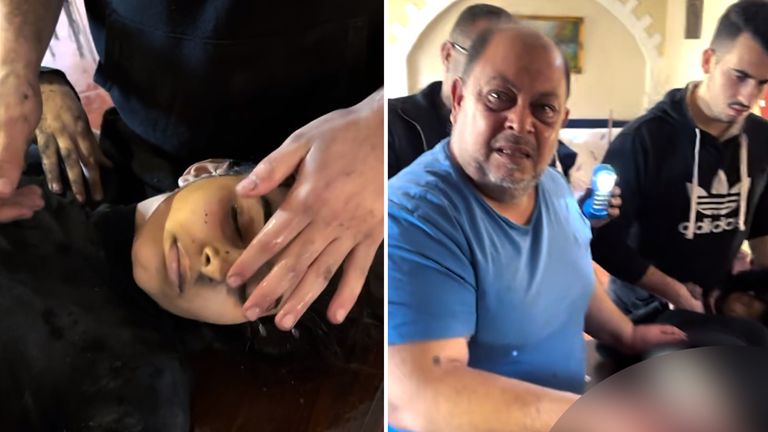
It was a moment of horror from Gaza which went viral – a video of an amputation on a dining table. No anaesthetic. No bandages. Just a bucket, some soap and a kitchen knife.
It was 19 December 2023, and the war in Gaza was in its third month. Israel’s bombardment of the northern part of the narrow strip of land was at its most intense.
Inside the Bseiso family home, an apartment on the ground floor of a six-storey block not far from Gaza City’s Shifa Hospital, 17-year-old Ahed Bseiso was laid across the kitchen table.
The table, where Ahed’s mother had been making bread moments before, was now a scene of unimaginable horror, as Ahed’s uncle Hani, who is a doctor, carried out an emergency operation.
Ahed’s left leg was badly wounded, and her right lower leg was in shreds.
Desperate, she had pleaded with her uncle not to amputate it but Hani knew he had no choice.
It was her leg or her life.
Minutes earlier, Ahed had been on the top floor of their building, trying to call her father who lives in Belgium. The high floors were best for phone signal and every day, she and her older sister, Mona, would head up there to tell him they were still alive.
Ahed (left) had no anaesthetic as her uncle (right) amputated her leg
On this particular morning, as she struggled to get a connection, she noticed some large Israeli tanks outside on the street. Then a huge explosion split the air.
“I heard a bang and a wall came tumbling on top of me,” Ahed told Sky News. “There was dust all over the place and I couldn’t understand where I was.”
Trapped in the rubble, Ahed was disorientated. She called for Mona. Her mother and her cousins rushed to help. They managed to free her from the rubble, revealing the young Gazan – alive but with one leg broken and the other in pieces.
“I asked my cousin, ‘Is my leg gone?’ and he said, ‘No, don’t look’.”
Her cousins carried Ahed down the stairs to their apartment. There was gunfire outside.
“There was no surgical equipment,” Ahed recalled. “My uncle got soap and the scrubber from the kitchen and started to clean my leg… He started to cry. Then he cut my leg off.
“I remained conscious the entire time without anaesthesia. My only solace was my cousin, who stood next to me, reciting the Koran.”
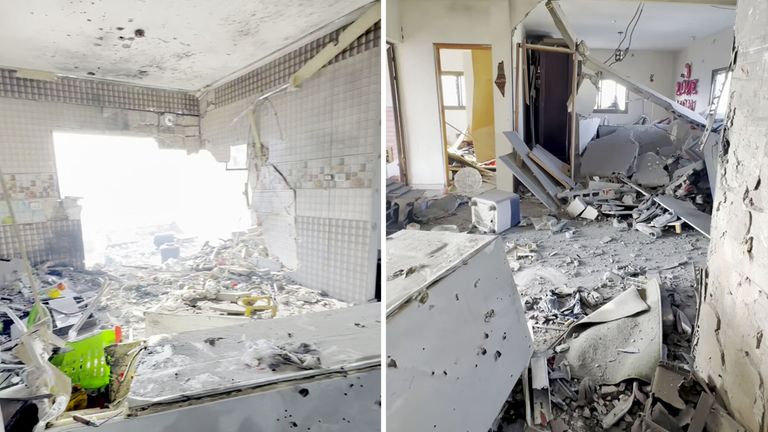
The spot where Ahed was injured
Her uncle Hani saved her life. He had also felt compelled to film the procedure; to show the world what had come of life, and death, for the people of Gaza.
“What is this injustice that has befallen us?” he screamed straight at the camera as he cleaned Ahed’s wound.
“We have been surrounded for 15 days. I had to amputate my niece’s leg without anaesthesia. Where is the mercy? Where is humanity? What have we done to deserve this?”
The decision to upload the video to social media would in time precipitate a journey for Ahed out of Gaza, to Egypt and eventually to America.

Keep up with all the latest news from the UK and around the world by following Sky News
Six thousand miles away in the small American town of Aiken, South Carolina, a woman called Wafa Abed was online. Like so many exiled Palestinians around the world, she was deeply affected by the images emerging from her homeland.
As she scrolled, she came across the video of Hani Bseiso, his niece and the amputation. The Bseisos were strangers to her but the footage had an immediate impact.
“You have to get this girl out,” Wafa told her son Tareq. “You have to do this.”
Tareq Hailat, 27, a medical student, had recently taken on a new part-time role. As an Arab-American, he was consumed by the tragedy of the Israel-Gaza conflict, and had started working for a charity.
The Palestine Children’s Relief Fund (PCRF) is an American charity with a long history of helping the region’s vulnerable children. Since this latest conflict began it has tried, initially with little success, to evacuate injured children.
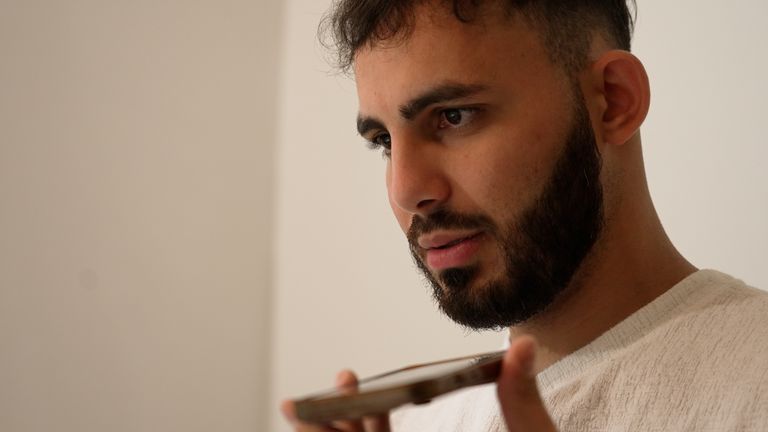
Tareq Hailat, Head of the Treatment Abroad Program, Palestine Children’s Relief Fund
Now, desperate to help Ahed and others who he had seen online, Tareq began to put together a global network of strangers. Despite the huge obstacles in his path, he pulled every lever and followed every lead.
PCRF’s long-established status in Gaza and the West Bank – combined with this young medical student’s drive and determination – began to work wonders.
“I kept working on ensuring that we can pull Ahed out,” Tareq said over a Palestinian breakfast at his parents’ South Carolina home.
“I started reaching out to my professors and they connected me with different physicians here in the US. Once that was established, then I started connecting with people inside Gaza and in Egypt.”
It took over a month, and 17 failed attempts, to get Ahed out of Gaza.
Israel repeatedly denied her permission to leave. Her ambulance convoy was attacked and the vehicle next to hers was destroyed.
In Egypt, in preparation, there were passports to apply for, and visas to be issued.
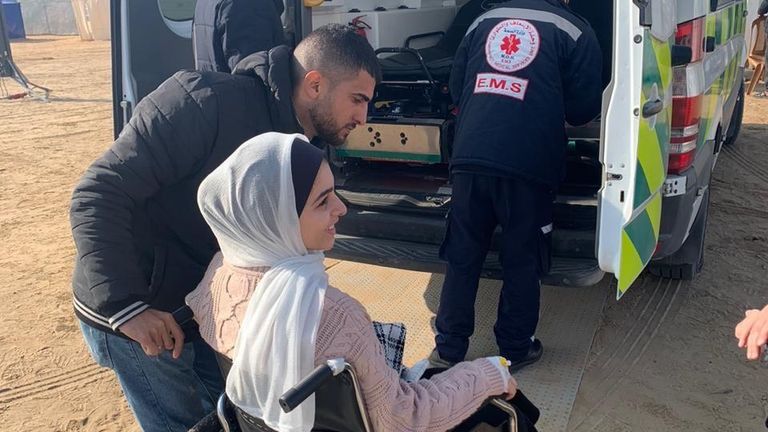
Ahed’s journey out of Gaza was fraught with danger
For Tareq and his new team, it felt like a logistical and bureaucratic impossibility. He was on the phone daily, sometimes hourly, for two weeks to the Red Crescent.
“They would ask the Israelis for permission to go up to the north of Gaza to get her. We would never get the green light. Finally, we did.”
Ahed Bseiso arrived in Greenville, South Carolina, on 17 February 2024, having just turned 18.
She had never left Gaza before and was now in a new world with her sister Mona beside her. The rest of the Bseiso family had to remain behind, trapped in Gaza.
Greenville was where they ended up because Tareq studies medicine there and he knew people willing to treat her injuries.
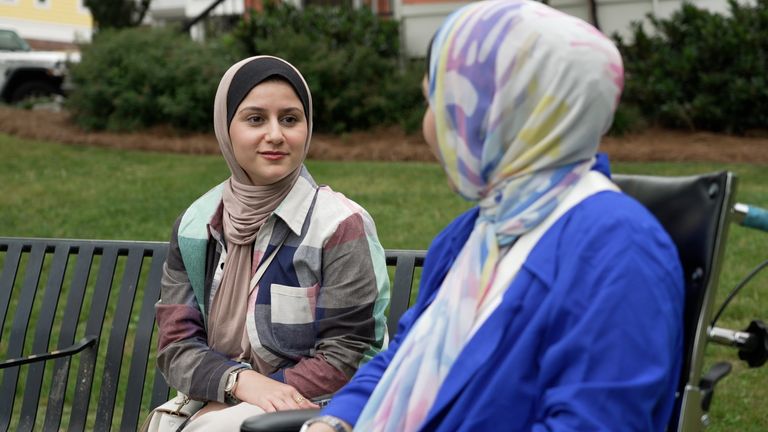
Ahed’s sister Mona travelled with her to America
Ahed was sitting in her wheelchair, with her sister, a faint smile on her face, when I first met her.
Like Tareq’s mother and many millions of others, I had seen the viral video months earlier. I never imagined I would meet the young woman at the heart of it.
“Marhaba,” I said – Arabic for hello. She replied in English. “Hello.”
I wasn’t quite sure where to begin. But she chose to start on that fateful day explaining it all with bravery and poise.
I asked her the question I’d wondered about ever since I’d first seen the video. Why wasn’t she screaming? How on earth did she cope?
”The strength came from within me,” she replied, “…because I never want to give my occupier the opportunity that they were able to kill us and silence us.”
Last week was the latest stage of Ahed’s journey, from South Carolina to Colorado. The strangers compelled to help her through every step were taking her to see a doctor in Denver.
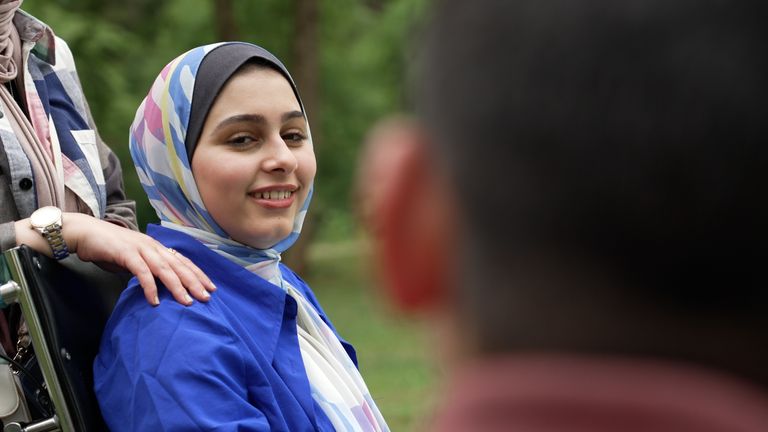
Ahed was grateful for the kindness she received in America
Dr Omar Mubarak is a leading American vascular surgeon and another remarkable character who makes things happen. He’d been contacted by the PCRF and immediately wanted to help.
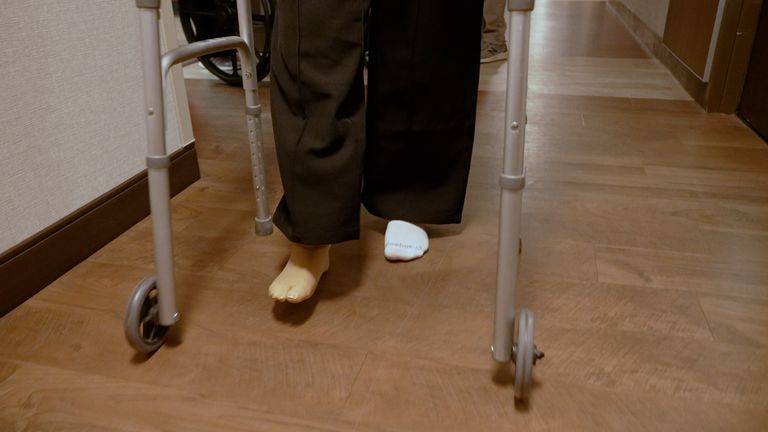
Beyond the welcome party he gathered at the arrivals hall at Denver airport, Dr Omar had arranged a new prosthetic leg. For free, for Ahed.
The morning of the fitting began with a smile. Ahed had left her right shoe in Greenville. There wouldn’t be anything to put on the new foot. She giggled and we all laughed.
The fitting itself was private – her moment.
But then, as the clinic door opened, one tentative step. Then lots. Ahed marched down the hospital corridor. “It feels great,” she said.
Dr Omar watched, smiling, but with a tear in his eye. “She took to it like a fish. She made four steps before we could stop her. Awesome day. Awesome. She’s extremely excited.”
Ahed seemed so grateful to those who have helped her, only a handful of whom could be mentioned in this story.
“It is something I will never forget,” she said.
But how did she feel about coming to America – a place where she’s found such kindness but the country which is the biggest supporter of the nation which caused her injuries? It was a tricky question but an important one.
Her answer spoke volumes.
“When you see people happy to see you or trying their best to support you… it is something I will never forget.
“But the first thing I thought was ‘how I could leave Gaza and seek treatment in a country that is possibly – even more than Israel – largely responsible for my condition?'”
Out of a war which has stirred so much and damaged so many, I found a young woman grateful but hugely conflicted too.
Ahed will now head back to South Carolina to continue her recovery. She wants to return home as soon as possible.
“I’m happy for this opportunity, but my heart is still with my family in northern Gaza, which is the most terrible place on earth right now.”
The Palestine Children’s Relief Fund (PCRF) has now extracted about 100 injured children from Gaza since this latest conflict began. Seven of them, including Ahed, have come to the United States.
Most have been sent for treatment in the region – 47 have been moved to Qatar and 15 to the United Arab Emirates. Many are in hospital in Egypt. Lebanon, South Africa and Jordan have all agreed to take patients. Others have gone to Europe. The UK has not accepted any Gazans.
World
Zelenskyy to make first official visit to Ireland – as ‘productive’ Ukraine-US talks under way in Florida
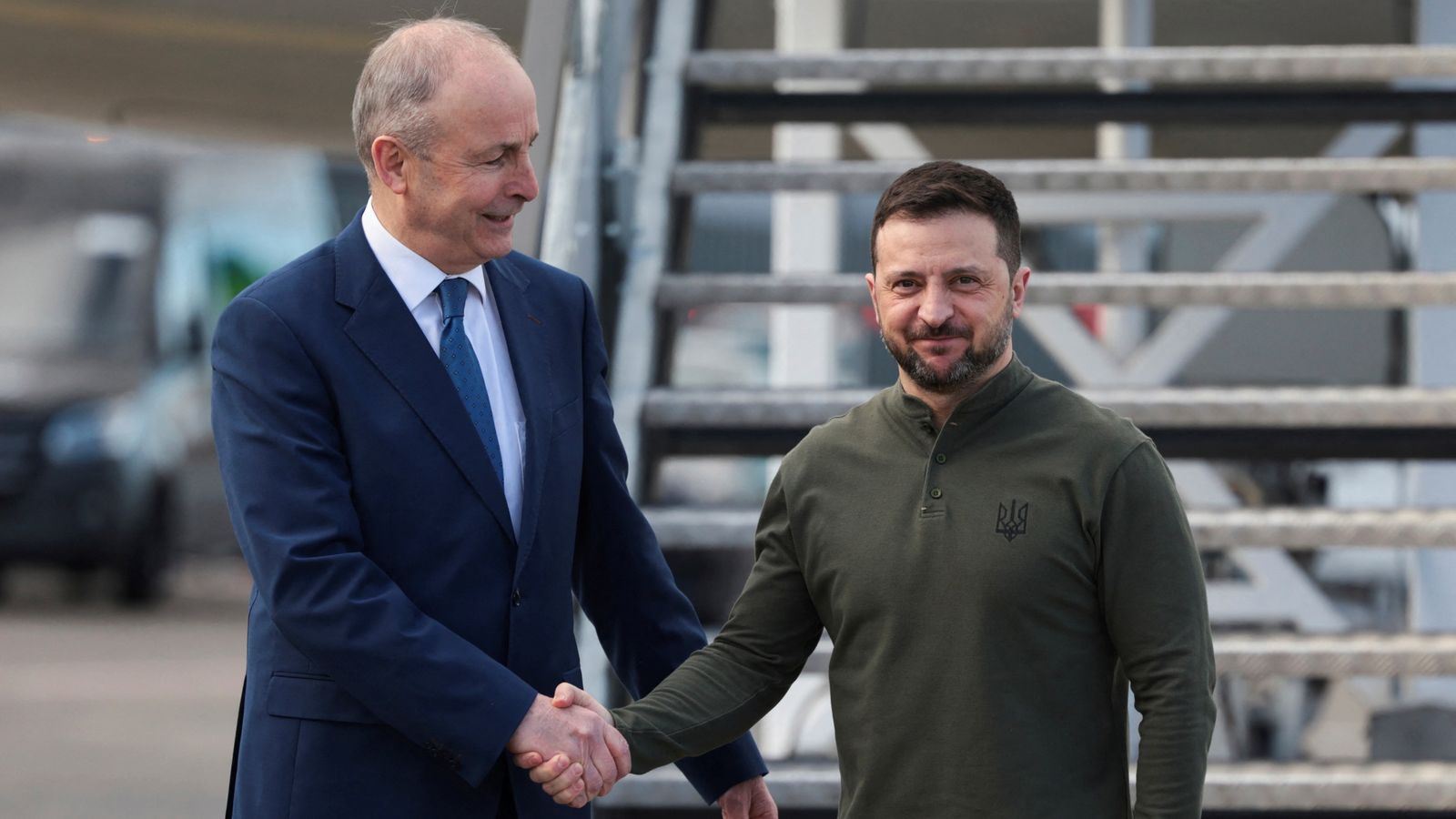

Volodymyr Zelenskyy is set to make his first official visit to Ireland tomorrow, Taoiseach Micheal Martin has revealed.
The Ukrainian president will be accompanied by First Lady Olena Zelenska and meet Mr Martin, president Catherine Connolly and foreign minister Helen McEntee.
Mr Martin said he and Mr Zelenskyy would be holding a bilateral meeting, as well as attending the inauguration of the Ireland-Ukraine Economic Forum, which he said “offers an opportunity to explore the potential for strengthened business-to-business, trade and investment links between Ireland and Ukraine”.
Micheal Martin greets Volodymyr Zelenskyy as he briefly stops in Ireland on way to the US in February. Pic: Reuters
Speaking ahead of the visit, the Taoiseach said: “It is an honour to welcome President Zelenskyy and the First Lady to Ireland.
“Around the world, he is rightly recognised as someone who embodies the courage and resilience of the Ukrainian people, who have inspired the world in their brave defence of their country and its sovereignty since it was brutally and illegally invaded by Russia.
“I have met with President Zelenskyy many times, including in Kyiv, but I particularly look forward to greeting him on this first official visit of a Ukrainian president to Ireland.”
Ireland has been a staunch ally of Ukraine’s since Russia began its invasion in 2022, offering some 120,000 Ukrainians a safe haven.
US-Ukraine talks begin in Florida
The Ireland announcement comes after Mr Zelenskyy’s top team engaged in peace talks with the US for several hours in Florida on Sunday.
The US-Ukraine talks were quickly organised after Donald Trump released a 28-point proposal that was largely seen to be favouring Russia, having been developed in earlier negotiations between Washington and Moscow.
The plan would have imposed limits on the size of Ukraine’s military, blocked Ukraine from joining NATO and required it to hold elections in 100 days. It also initially envisioned Ukraine ceding the entire eastern region of the Donbas to Russia.
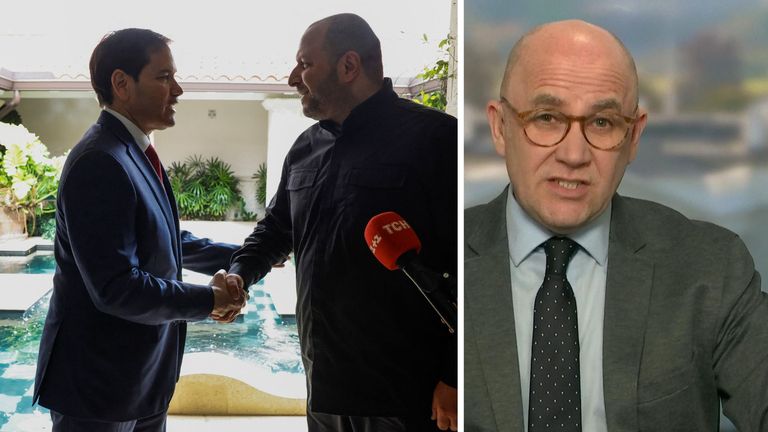
Sky’s US correspondent David Blevins analyses what’s at state this week
Read more:
Who is Steve Witkoff, the property mogul seeking a peace deal?
Go behind the scenes on the frontline with new-look Sky News show
It isn’t clear what changes have been made so far, but US secretary of state Marco Rubio has reassured Ukraine over the plans.
“This is not just about ending a war. This is about ending a war in a way that creates a mechanism and a way forward that will allow them to be independent and sovereign, never have another war again, and create tremendous prosperity for its people,” he said.
“Not just rebuild the country, but to enter an era of extraordinary economic progress.”
He added: “This is not just about peace deals. It’s about creating a pathway forward that leaves Ukraine sovereign, independent and prosperous. We expect to make even more progress today.”
Rustem Umerov, head of Ukraine’s security council, responded by saying the US was “hearing”, “supporting” and “working beside” Ukraine.
Mr Zelenskyy’s team in the US was without his former chief of staff and lead negotiator, Andrii Yermak, as he quit on Friday after officials raided his home amid a corruption scandal.
After the meeting, Mr Rubio said the talks had been “productive”, but more work remained to be done.
On X, Mr Zelenskyy said: “I am grateful to the United States, to President Trump’s team, and to the President personally for the time that is being invested so intensively in defining the steps to end the war. We will continue working. I look forward to receiving a full report from our team during a personal meeting.”
Later this week, Mr Trump’s special envoy Steve Witkoff is set to travel to Moscow to continue talks with the Kremlin.
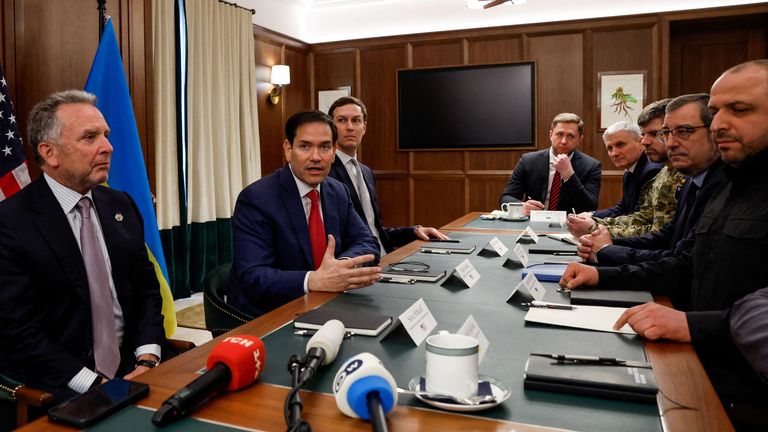
‘Ukrainians have a delicate job’
Sustained Russian aerial assaults over the weekend
While peace talks ensued, Russian forces launched overnight attacks in and around Kyiv over the weekend, killing at least seven people and injuring dozens more.
Impacts were also reported in the regions of Dnipro, Kharkiv, Odesa, Sumy and Kherson.
Mr Zelenskyy said: “Such attacks occur daily. This week alone, Russians have used nearly 1,400 strike drones, 1,100 guided aerial bombs and 66 missiles against our people. That is why we must strengthen Ukraine’s resilience every day.”
The attacks also hit Ukrainian energy facilities and left hundreds of thousands without power in the capital. Supplies have since been restored.
Targeting such infrastructure has become a familiar tactic from Russia over the winter, in what Ukraine officials say is the “weaponising” of the cold.

Moment Ukraine strikes Russian ‘shadow fleet’ ships
Ukraine launched its own drones at two of Russia’s so-called “shadow fleet” oil tankers in the Black Sea on Friday, and claimed responsibility for damaging a major oil terminal on Saturday near the Russian port of Novorossiysk.
The terminal is owned by the Caspian Pipeline Consortium, which includes Russian, Kazakh and US shareholders.
Subsequently, on Sunday, Kazakhstan’s foreign ministry said it viewed Ukraine’s attack as “an action harming the bilateral relations of the Republic of Kazakhstan and Ukraine”, adding it expected Ukraine to “take effective measures to prevent similar incidents in the future”.
Ukraine’s foreign ministry said the country’s actions were not directed against Kazakhstan or third parties and were only aimed at repelling what it called “full-scale Russian aggression”.
World
‘This is journalism at its most raw’: Go behind the scenes on the frontline with new-look Sky News show

World
More than 600 dead in Indonesia and Thailand after floods and landslides – and Sri Lanka reporting more than 200 deaths from cyclone
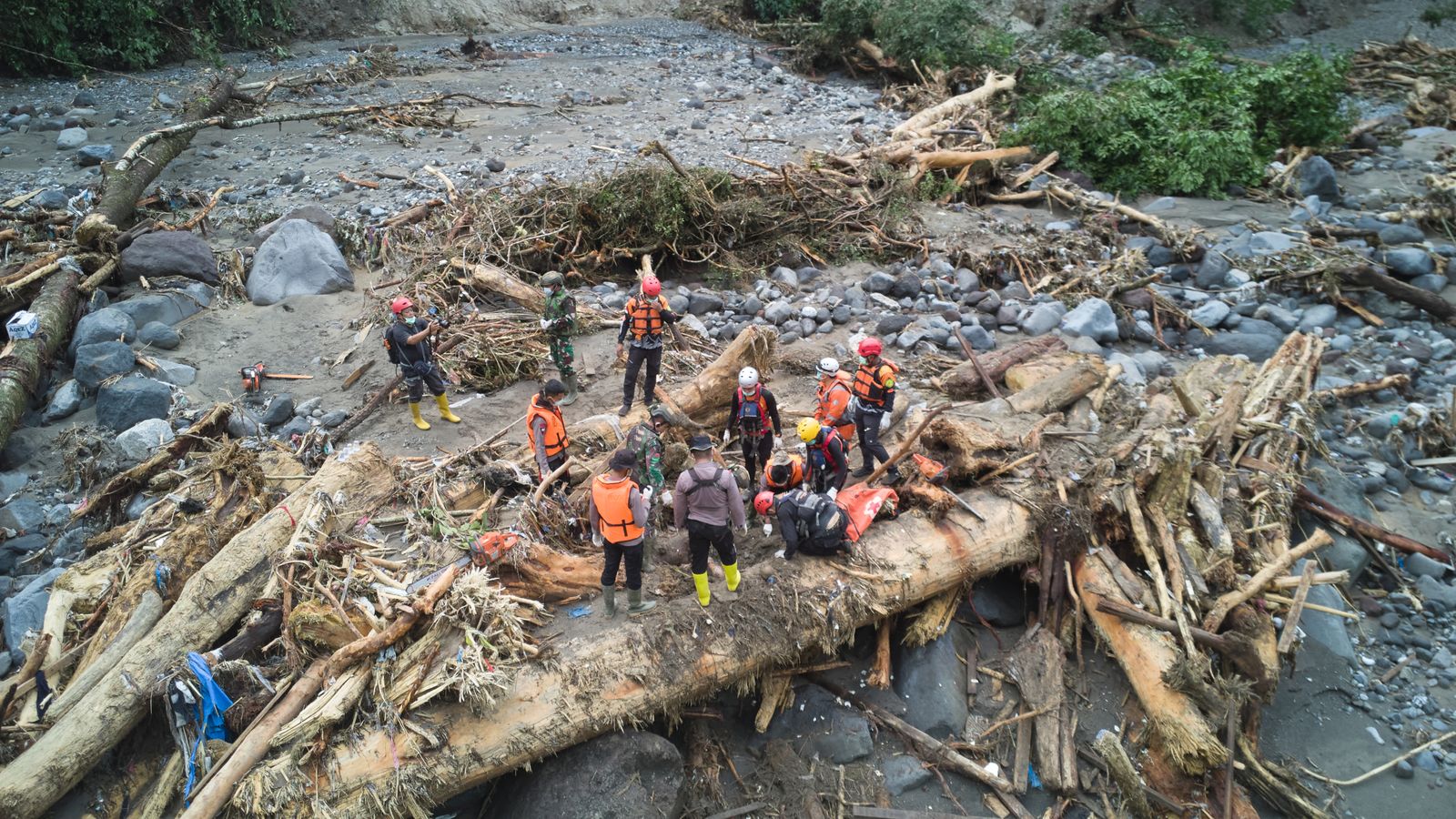
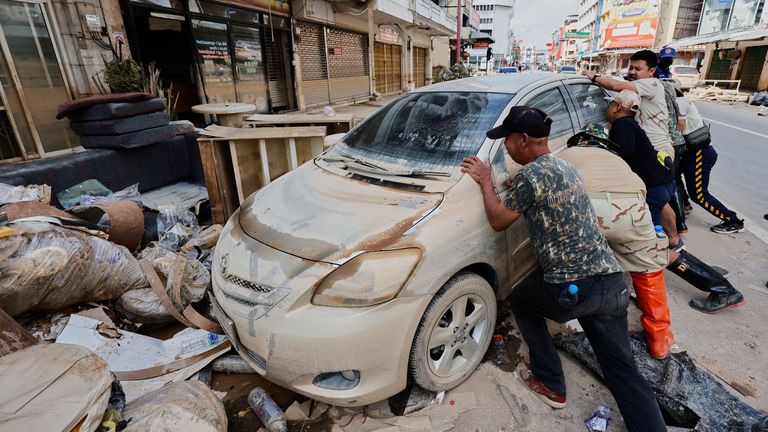
The death toll following flooding and landslides in Indonesia and Thailand has risen to more than 600 – with nearby Sri Lanka also reporting more than 200 deaths after a cyclone.
Three people have also died in Malaysia, officials have said, due to the extreme weather in South Asia and Southeast Asia.
In total, Indonesian officials said 442 people had died and Thai authorities reported 170 deaths in the southern part of the country, as of midday UK time on Sunday.
People move a car damaged by floods in Songkhla province, Southern Thailand. Pic: AP
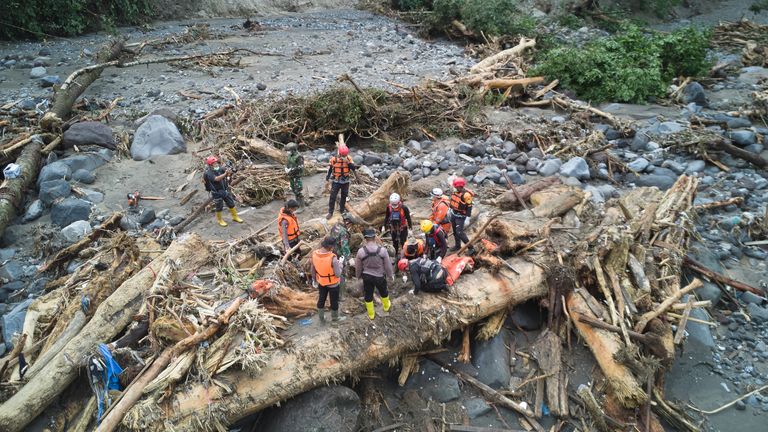
Rescuers search for flood victims in Tanah Datar, West Sumatra, Indonesia. Pic: AP
Rescue efforts were ongoing throughout the day, with more than four million people affected – almost three million in Southern Thailand and 1.1 million in Western Indonesia – by the effects of a tropical storm formed in the Malacca Strait.
Indonesian relief and rescue teams have used helicopters to deliver aid to people they could not access because of blocked roads on the western island of Sumatra.
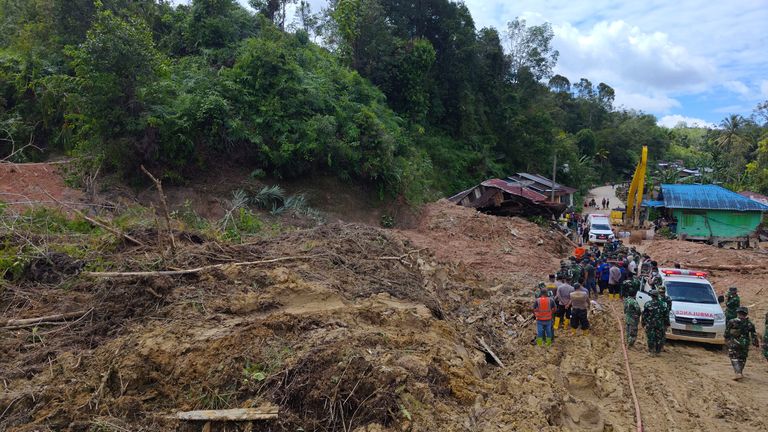
Rescuers search for victims at the site of a landslide in Adiankoting, North Sumatra, Indonesia. Pic: AP
Many areas have been cut off, while damage to telecommunications infrastructure has hampered communications.
Officials said on Saturday that they had received reports of people looting supply lines as they grow desperate for relief in other areas.
Hat Yai, the largest city in Thailand’s Songkhla province, received 335mm (13 inches) of rain on Friday last week, its highest single-day tally in 300 years.
After days of rain, meteorological authorities in Malaysia lifted tropical storm and continuous rain warnings there yesterday, forecasting clear skies for most of the country.
However, there are still about 18,700 people in evacuation centres, according to the country’s national disaster management agency.
Read more from Sky News:
Surgeon may never face justice over ‘botched’ operations
William ‘moved’ by severely ill Gazan children’s courage
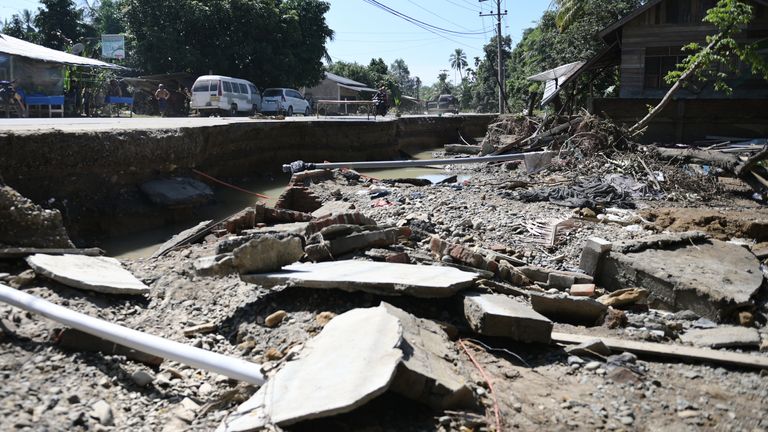
A road heavily damaged by a flash flood in Bireun, Aceh province, Indonesia. Pic: AP
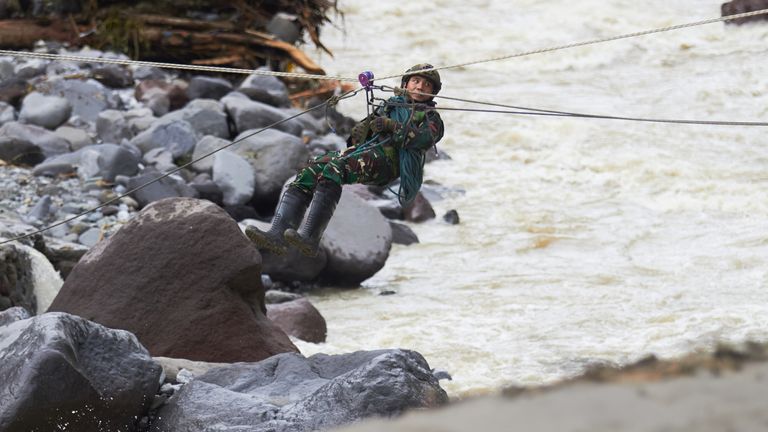
A soldier uses ropes to cross a river during a search operation in Tanah Datar, West Sumatra, Indonesia. Pic: AP
More than 200 dead in Sri Lanka
Across the Bay of Bengal, Sri Lanka’s disaster management centre said in a situation report on Sunday that 212 people had died as a result of Cyclone Ditwah.
Another 218 people have been recorded as missing across the South Asian country’s 25 districts, and more than half a million people have been affected nationwide.
-
 Sports2 years ago
Story injured on diving stop, exits Red Sox game
-
 Sports3 years ago
‘Storybook stuff’: Inside the night Bryce Harper sent the Phillies to the World Series
-
 Sports2 years ago
Game 1 of WS least-watched in recorded history
-
 Sports3 years ago
Button battles heat exhaustion in NASCAR debut
-
 Sports3 years ago
MLB Rank 2023: Ranking baseball’s top 100 players
-
Sports4 years ago
Team Europe easily wins 4th straight Laver Cup
-
 Environment3 years ago
Japan and South Korea have a lot at stake in a free and open South China Sea
-
 Environment1 year ago
Here are the best electric bikes you can buy at every price level in October 2024