
Glove tossing, viral tweets and a whole lot of losing: A look at Mets’ month of misery as London Series looms


-
Jorge Castillo, ESPN Staff Writer
NEW YORK — Mets luminaries from a bygone era packed a room in the bowels of Citi Field on Saturday afternoon. Most on hand were protagonists during the franchise’s last World Series championship in 1986. Doc Gooden, Mookie Wilson, Kevin Mitchell, Jesse Orosco, Ron Darling, Keith Hernandez and others were in attendance to celebrate their former teammate Darryl Strawberry, who sat at the podium for a news conference reminiscing about his eight seasons starring in Flushing.
Strawberry’s No. 18 was retired during a pregame ceremony a little later. Mets fans arrived early to watch, filling the stands on a day that will be remembered in this organization’s history. It was a timely palate cleanser, on the first day of June, after a month that will be remembered for all the wrong reasons.
The Mets are 11-21 since May 1, but the slog has been even uglier lately than that record indicates. The misery really picked up steam on May 13, when All-Star closer Edwin Díaz blew his second save of the season, and over the ensuing weeks the team has been dropping games in every way imaginable.
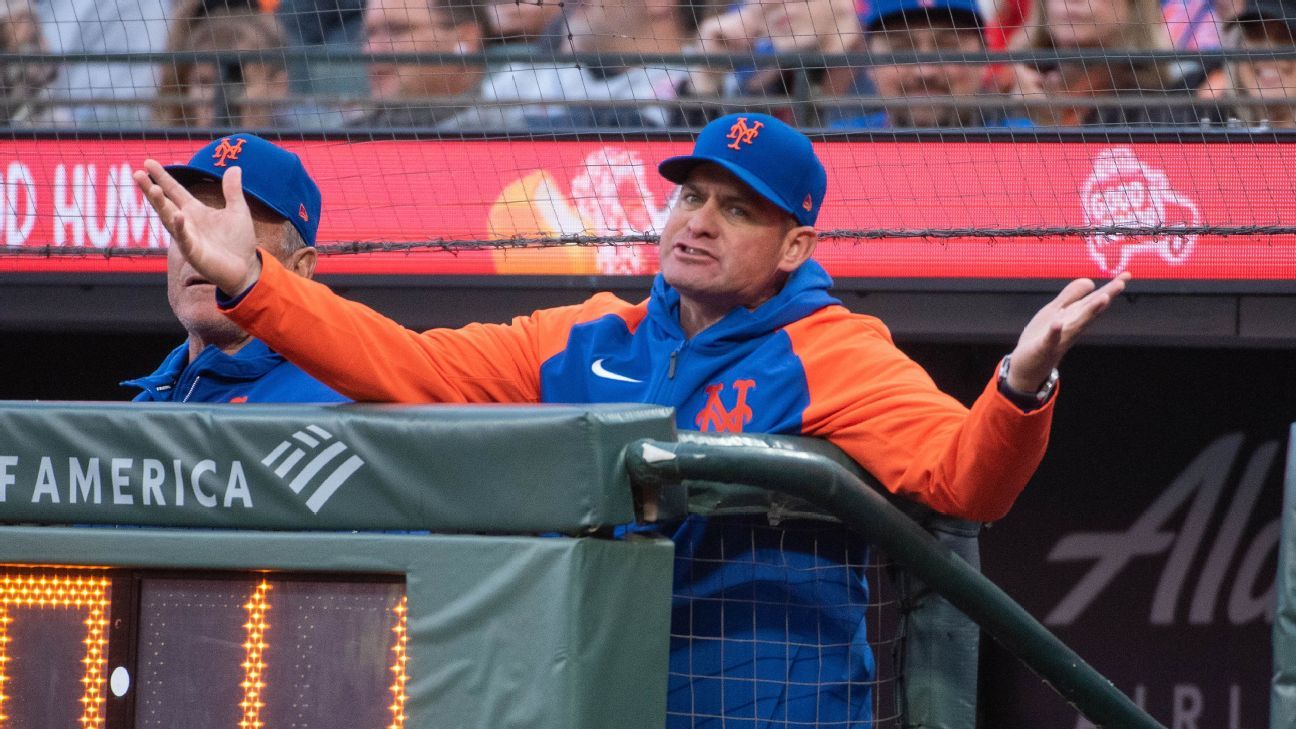
There was a flurry of bullpen implosions and roster moves. There were injuries, injury setbacks and injury scares. There was a called third strike that went viral, announcers voicing sarcastic optimism on air, a glove angrily thrown into the crowd, an emergency players-only team meeting and a bizarre, misunderstood clubhouse outburst. The frustration leaked onto owner Steve Cohen’s X account.
There are encouraging trends within the turmoil, but getting good offense, good pitching and good defense to align on the same day has been rare. The bullpen is leaky. Fielding miscues are too regular. The rotation lacks a front-line starter with Kodai Senga on the injured list.
There is time for the club with MLB’s highest payroll to rebound. The chaotic stretch, however, has plunged the Mets into a deep hole, with the third-worst record in the National League, and on track for a trade deadline exodus for the second consecutive summer.
The Mets head to London for two games against the Philadelphia Phillies this weekend. Facing the best team in the National League isn’t a recipe for a turnaround, but traveling across the pond might be the change of scenery the team needs to reverse course in a season careening toward disaster.
“They’ll continue to fight, they’ll continue to work and we’ll get through it,” Mets first-year manager Carlos Mendoza said. “But it’s not a secret. It’s been hard for us these past three, four weeks here.”
Here’s a look back at the lowest moments of that stretch.

May 13: Díaz melts down, again (and again and again)
Questions about Edwin Díaz’s injury comeback begin to mount as he blows his second save of the season, giving up two runs on two hits and two walks in a loss to the Phillies
Díaz, the Mets’ All-Star closer known for his festive entrances from the bullpen, has endured a nightmarish season so far, after missing all of 2023 with a knee injury sustained at the World Baseball Classic. After the May 13 loss, he would blow another save in his next outing three days later before squandering a four-run lead against the Miami Marlins two days after that. He managed a clean seventh inning in his next appearance after a five-day layoff, but less than 24 hours later, he blew another save in a loss to the San Francisco Giants.
“He’s our closer,” Mendoza said after the loss to San Francisco. “In order for us to win games and get to where we want to get to, he’s got to pitch. And I felt like that was the right spot.”
Four days later, Díaz landed on the injured list with a shoulder impingement.
May 15: Cohen’s ‘DM’ debacle
Responding to a fan arguing that the front office should sell at the trade deadline, Mets owner Steve Cohen tweets, “All in the future, not much we can do until trade deadline,” during another Mets loss to the Phillies
Cohen often engages with fans on social media, though this time doing so backfired for the billionaire owner. The post was widely deciphered as Cohen’s acknowledgment that the Mets again intend to wave the white flag in July, as they did last year when they traded future Hall of Fame pitchers Justin Verlander and Max Scherzer.
Did Steve Cohen just hint at the Mets selling at the trade deadline?
Cohen later deleted this tweet. pic.twitter.com/rWuav4HJCt
— Foul Territory (@FoulTerritoryTV) May 16, 2024
Cohen quickly deleted the tweet. The next day, he told SNY that the tweet — which he said was meant to be a direct message — was misinterpreted. He emphasized he “fully” expects the team to reach the postseason.
Still, nine days later, after another bullpen implosion, Cohen tweeted that the team’s disastrous stretch was “mind boggling.”
What a stretch , mind boggling .I know how disheartening this is for our fans.Ty for caring so much.
— Steven Cohen (@StevenACohen2) May 25, 2024
“I didn’t see it,” Mendoza said when asked about the second tweet. “I said it last night: You get pissed. It’s frustrating, but we’re professionals. We know we’re going through it right now, but I just met with our hitters again, we just have to keep going.”
May 24: Another setback for Senga
Mendoza announces Kodai Senga will be shut down for three to five days after an MRI revealed inflammation in his triceps
Senga was supposed to be the Mets’ ace this season, but he hasn’t thrown a pitch yet. The diagnosis came amid his longer-than-expected recovery from a strained posterior shoulder capsule that has sidelined him since February. The Mets expected the right-hander to return before June, but Senga had already made the decision to slow down his rehab– just as he resumed throwing off a mound — to work on mechanics. The triceps inflammation reset his throwing program to playing catch upon being cleared.
May 25: Lindor caught looking — and ‘the sun will come up tomorrow’
With one out, a runner on second, and the Mets leading the Giants 2-1 in the seventh inning, shortstop Francisco Lindor decides he’s not going to swing and instead takes a breaking ball right down the middle of the plate for strike three
Lindor’s early decision not to swing at anything was clear — so clear that the clip went viral. After the game, Lindor explained he wasn’t picking up the spin on reliever Randy Rodríguez’s first five pitches. Lindor, however, swung at two of them — so he simply decided not swinging at all was the best option to reach base.
“He hadn’t thrown a strike,” Lindor said. “I made every pitch a strike, and was helping him out. My best bet was to take a pitch. It just so happened that was the one strike the whole at-bat.”
Francisco Lindor just admiring a nice breaking ball pic.twitter.com/H7CFjhpjlb
— Jomboy Media (@JomboyMedia) May 25, 2024
The Mets would lose 7-2 in 10 innings, producing some wry words of encouragement from SNY play-by-play voice Gary Cohen for viewers: “The Mets are now 9-22 in their last 31 games. … Remember, the sun will come up tomorrow, as difficult as that may be to realize.”
“There’s losing, and then there’s what’s happening here. And it’s two different things. This is just gut-wrenching.” – Ron Darling
“The Mets are now 9-22 in their last 31 games… Remember, the sun will come up tomorrow, as difficult as that may be to realize.” – Gary Cohen pic.twitter.com/N6Fw1wUPGy
— Awful Announcing (@awfulannouncing) May 25, 2024
May 29 (Part 1): ‘An inflection point’
David Stearns, the Mets’ president of baseball operations, tells reporters it is too early to decide whether the team will offload veterans at the trade deadline
The Mets’ record was 22-30 ahead of a doubleheader against the Dodgers when Stearns insisted he will give the roster until the July 30 trade deadline to claw back into the postseason race. He acknowledged the Mets “haven’t played like a playoff team” but said he believed he had “plenty of time” before weighing trades.
“We haven’t won enough games,” Stearns said, “and we certainly recognize that that’s going to need [to] change.”
Stearns, who was hired after the end of the last season, inherited the most expensive payroll in the majors and a team that had massively failed to reach expectations in 2023. He and Cohen pursued free agent Yoshinobu Yamamoto during the offseason, but they settled for several minor moves once Yamamoto chose to sign with the Dodgers.
The offseason didn’t include a contract extension for Pete Alonso, making the star first baseman a prime trade candidate and intensifying speculation as the Mets struggle to win games.
“Nothing’s changed with Pete’s situation,” Stearns said. “Our goal is, on a daily basis, [to] help this team succeed as much as possible so we can win as many games as possible. And that’s where I expect we’ll continue to be.”
The Dodgers went on to sweep the doubleheader that night.
May 29 (Part 2): The Mets-less Mount Rushmore
Asked to name his Mount Rushmore of New York athletes, Mets outfielder Harrison Bader names zero Mets and three New York Yankees — Derek Jeter, Aaron Judge and Anthony Volpe. The fourth spot goes unoccupied
Bader grew up a Yankees fan in Bronxville and spent parts of the last two seasons playing in the Bronx. Still, the Mets are paying him $10.5 million this season. The bit went viral. Fans were not pleased.
Harrison Bader says that his Mount Rushmore of New York athletes includes Derek Jeter, Aaron Judge and Anthony Volpe. pic.twitter.com/OQUsJKg4Zm
— Sam Luckini (@SamLuckiniESM) May 29, 2024
May 29 (Part 3): Injuries, an outburst and a team meeting
Minutes before first pitch against the Dodgers, the Mets announce Díaz was placed on the injured list with a shoulder impingement. Just as that was being digested, Alonso exits the game after being hit by a 93 mph pitch on his right hand in the first inning. Seven innings later, reliever Jorge López is ejected and throws his glove into the stands. After the loss, Lindor calls a players-only team meeting before López splashes gasoline on the fire, telling reporters he doesn’t regret his actions
López’s postgame comments caused a stir, both for his unfiltered candor and a subsequent debate over what he actually said in his second language. Speaking in English, the reliever called himself “the worst teammate in probably the whole f-ing MLB,” though initially there was confusion over whether he said “teammate” or “team.”
“I don’t regret it.”
– Jorge López on his glove toss pic.twitter.com/NB0cDJ5w0i
— SNY (@SNYtv) May 30, 2024
Either way, the Mets had seen and heard enough, and he was designated for assignment the next day. In a statement released shortly thereafter, López apologized for his behavior “on and off the field” and clarified his comment.
Jorge López posted this statement on Instagram. pic.twitter.com/f2A0TR2FlR
— Jorge Castillo (@jorgecastillo) May 30, 2024
His former teammates, meanwhile, were seemingly reenergized after airing out their thoughts and concerns in the team meeting that lasted nearly an hour.
Clubhouse leaders, without offering many details, summarized the meeting to the media, with Lindor explaining he believed it was a chance for players to vent and hold themselves accountable. Brandon Nimmo, who said López’s behavior wasn’t directly addressed, called it “very constructive” and “positive.”
“It just felt like a boiling-over point,” Nimmo said. “It felt like the right time to do it.”
Reliever Adam Ottavino explained the floor was open to anyone who wanted to speak. He noted most of the team, including players who usually don’t openly express themselves, volunteered. They spoke of process and of keeping perspective.
“I mean, we stink right now,” Ottavino said. “It doesn’t mean we’re going to stink going forward.”
The good news was tests on Alonso’s hand showed no structural damage. He delivered a pinch-hit double in a win over the Arizona Diamondbacks the next night.
May 31: The roster shake-up
The Mets make six roster moves. Brett Baty, Christian Scott and Omar Narváez are sent out. José Iglesias, Dedniel Núñez and Luis Torrens are brought in
Optioning Baty, a former top prospect, to Triple-A Syracuse was largely expected, because the Mets needed a backup middle infielder and rookie Mark Vientos had outperformed Baty for the starting job at third base.
Demoting Scott, one of the team’s few bright spots this season, was explained as a temporary move as the team navigates an unusual portion of its schedule thanks to this weekend’s trip to London. Acquiring Torrens from the Yankees to replace Narváez was a production-based decision. Narváez was struggling mightily both offensively and defensively.
On the field, the Mets beat the Diamondbacks for the second straight night to open a four-game series. After Friday’s 10-9 win, Vientos noted there was a palpable difference in the vibe after the team meeting.
“Completely different,” Vientos said. “As in — we walk in, the room feels light. There’s good energy. We listen to music. We’re enjoying the game. It’s a kid’s game. So let’s just have fun and play.”
Will June play out better than May did? So far, the results are mixed. The Mets’ post-team-meeting winning streak lasted all of two games, giving way to consecutive losses to Arizona to begin the month and conclude their 10-game homestand, including another draining bullpen implosion Sunday.
Still, the Mets will try for a three-game sweep against lowly Washington on Wednesday. After two much-needed days off, the London Series begins Saturday.
“The front office, they’re going to make decisions no matter what,” Lindor said. “Whether it’s to add or subtract. And whether it’s to focus on the next season or focus on August and September.
“So they’re going to make decisions. I want to be on the side of adding. We don’t have 100-plus games for that moment. But we do have time to make sure we’re above water.”

-
Kyle Bonagura
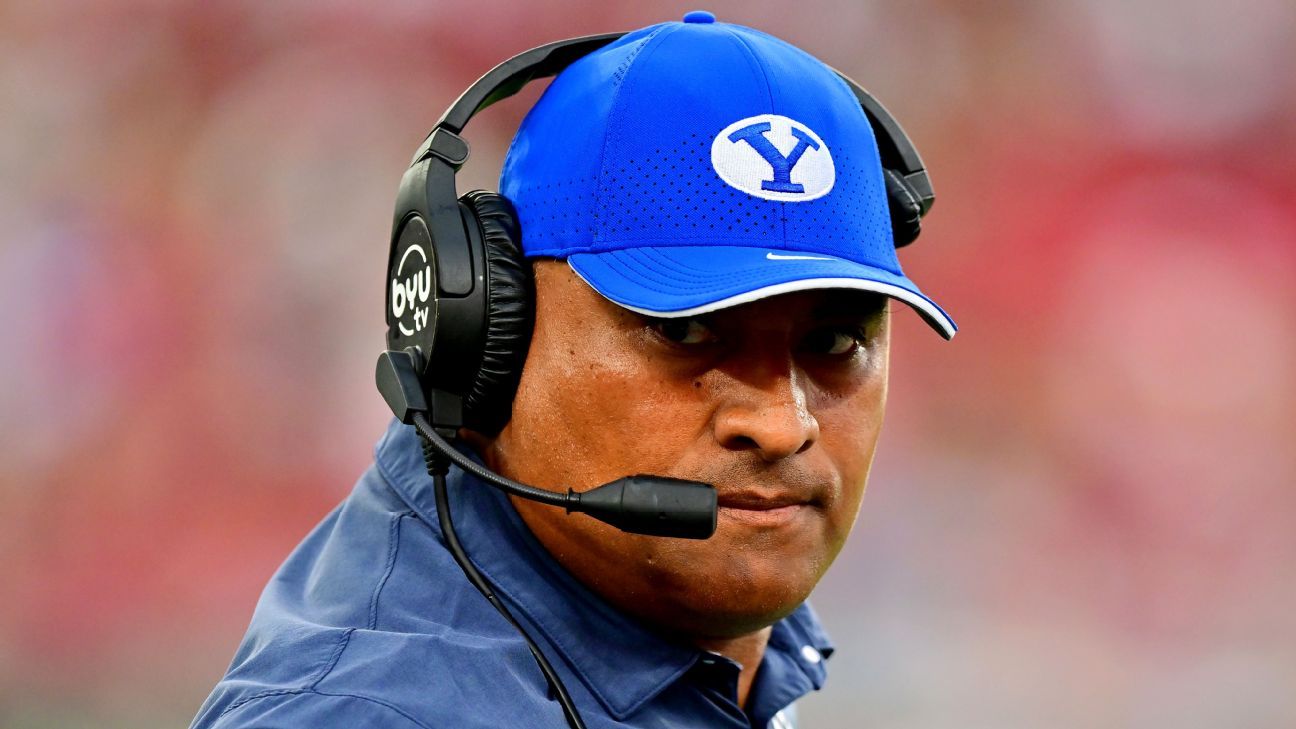
BYU coach Kalani Sitake has begun to inform people that he intends to stay at the school, rebuffing overtures from Penn State, sources told ESPN’s Pete Thamel on Tuesday.
BYU is in the process of putting together a lucrative contract to keep him and Sitake informed Penn State of his intention to remain in Provo, sources said.
The development comes as No. 11 BYU prepares for Saturday’s Big 12 title game against No. 5 Texas Tech, with the winner securing an automatic bid to the College Football Playoff.
Sitake has been BYU’s head coach since 2016 and has won more than 65% of his games. He led BYU to an 11-2 record in 2024, and the Cougars are 11-1 this season as they continue a rapid ascent in their third year in the Big 12. BYU officials had been aggressive in trying to retain Sitake, sources said, and considered keeping him the athletic department’s top priority.
Sitake has won at least 10 games in four of the past six seasons at BYU. After a 2-7 mark in Big 12 play during the program’s transition year in 2023, the Cougars have gone 15-3 since and identified a long-term answer at quarterback in freshman Bear Bachmeier.
The Penn State coaching search had focused on Sitake in recent weeks, with the sides engaging in discussions about the job. While there had been mutual interest — including conversations about staffing and other details of a potential tenure in State College — no agreement was ever reached, and Sitake ultimately elected to stay in Provo.
Penn State officials were active early in their coaching search, which included numerous in-person meetings around the country. That activity has quieted in recent weeks, sources told Thamel, even as candidates got new jobs and others received new contracts.
Sitake, who played high school football in Missouri and starred at BYU before signing with the Cincinnati Bengals in 2001, has spent his entire coaching career in the Mountain Time Zone or farther west, with stops at BYU, Oregon State, Utah, Southern Utah and Eastern Arizona. He is BYU’s fourth head coach since LaVell Edwards took over the program in 1972.

-
Adam Rittenberg
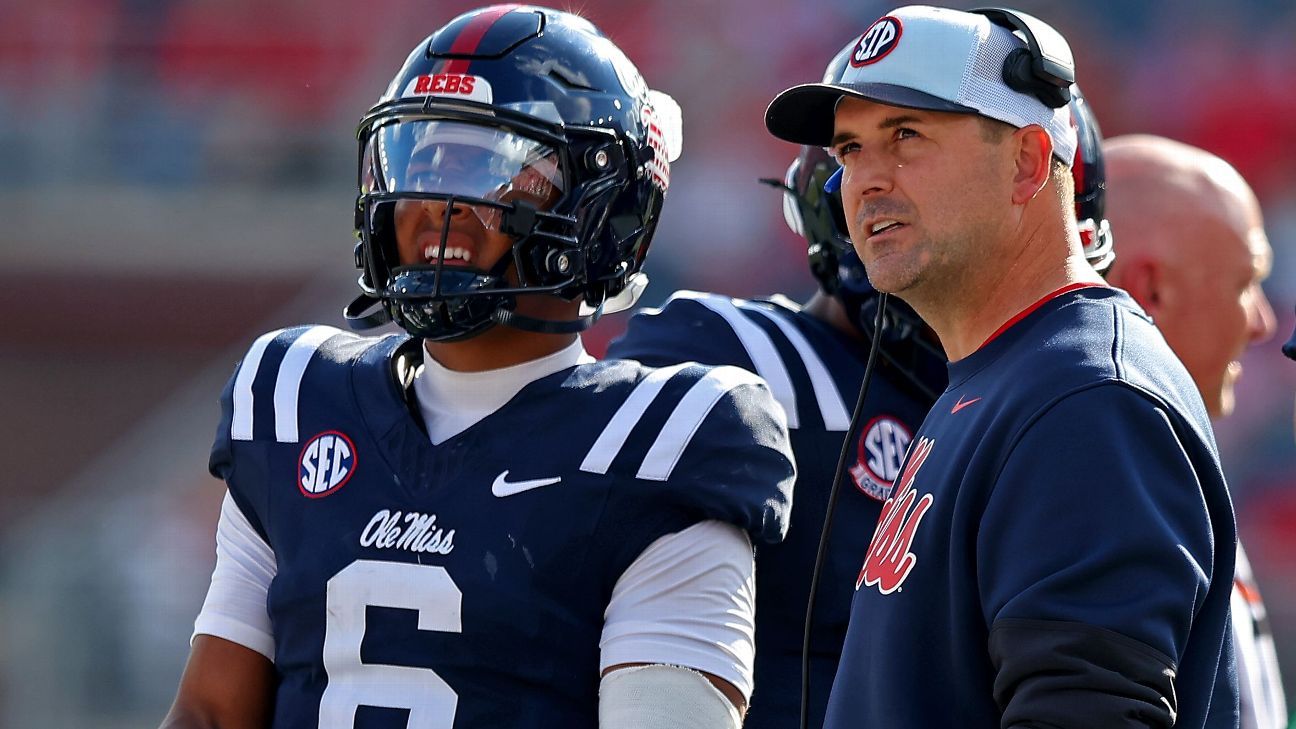
LSU assistant Charlie Weis Jr., who joined new coach Lane Kiffin with the Tigers earlier this week, will be allowed to return to Ole Miss and serve as the team’s offensive coordinator through the College Football Playoff.
Weis, who has been the Rebels’ offensive coordinator under Kiffin since 2022, was among several assistants to immediately join Kiffin at LSU. But he will return to Ole Miss and work alongside new Rebels coach Pete Golding and the staff there for the CFP.
Ole Miss finished the regular season at 11-1 and was No. 7 in last week’s CFP standings. The new CFP rankings will be revealed Tuesday night on ESPN.
“With the playoff committee releasing updated rankings tonight, I wanted it to be known that after conversations with LSU, we are allowing Charlie to return to Ole Miss to coach the team during the playoffs,” Kiffin said in a statement. “I’ve already made the committee aware of this and I’m hopeful this decision will allow Ole Miss to receive the highest ranking possible because these great players are very deserving of that. I’m excited that Charlie will be back to help coach the greatest team in the history of Ole Miss.”
Ole Miss confirmed Weis’ return, listing him alongside Golding, quarterbacks coach Joe Judge and six other assistants for the CFP staff.
Kiffin had wanted to remain Ole Miss’ head coach even after taking the LSU job but was informed Sunday he could not stay on. Ole Miss moved quickly to promote Golding, the team’s defensive coordinator, as permanent head coach.
Weis has reportedly agreed to a three-year deal with LSU worth about $6 million. Five other Ole Miss assistants joined Kiffin at LSU, including co-offensive coordinator and tight ends coach Joe Cox, but Weis will be the only one returning to Ole Miss for the CFP. Weis first worked under Kiffin at Florida Atlantic, where he served as offensive coordinator in 2018 and 2019.
-
Adam Rittenberg
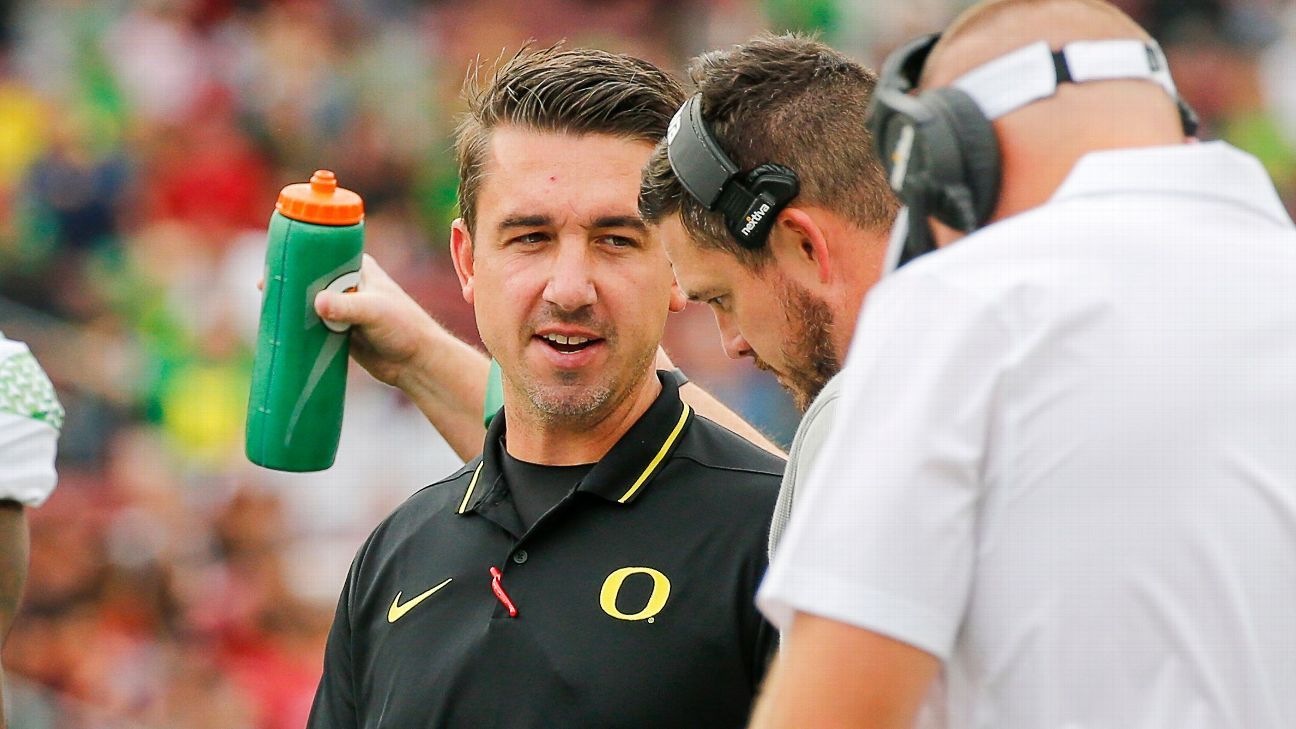
The wildest college football coaching cycle — perhaps ever — has reached the hiring phase.
Schools around the Power 4 that fired their coaches in the first two months of the season — or, in Stanford’s case, way back in late March — are targeting candidates and finalizing deals. Interestingly enough, one of the first major coaches to lose his job, Penn State’s James Franklin, was the first noninterim coach to be hired, as he is headed to Virginia Tech.
New hires always come with hope and optimism, grand proclamations and the chance to get programs on the right track. But not all hiring processes are the same. The financial component with jobs is essential — what schools are willing to spend not just on their head coach, but the assistants and support staff and, perhaps most important, the team roster.
We will be reviewing all of the major coaching hires in the 2025-26 cycle, evaluating how each coach fits in the job, their major challenges and what it will take to be successful. We will also assign an initial letter grade for each hire.
Jump to: Kentucky | Michigan State | UCLA | LSU | Ole Miss | Florida | Arkansas
Auburn | Stanford | Oklahoma State | Virginia Tech


Why is this a good fit?
Stein loves Kentucky. He told me that when I visited Oregon recently. We were talking about the coaching carousel, jobs that had opened and potential openings, and he mentioned his connection to Kentucky. How both of his parents went there and that his dad, Matt, played defensive end for the Wildcats under coach Jerry Claiborne. Stein is from Louisville and played quarterback for the University of Louisville, Kentucky’s in-state rival, but grew up attending UK games. Despite other suitors in this cycle and likely in future ones, Stein had a desire to coach Kentucky, which really matters.
He also gives Kentucky a vision for the offense that it needs after the past few seasons. Since the start of the 2022 season, Kentucky ranks 115th nationally in scoring and 101st in total offense. Stein has quickly emerged as one of the sport’s top playcallers, and has won with different quarterbacks, from the record-setting Frank Harris at UTSA to Bo Nix, Dillon Gabriel and now Dante Moore at Oregon. He operates a system that should attract talented offensive players to Lexington. Stein also has been around strong mentors, from Jeff Traylor to Dan Lanning.
What are the biggest challenges for Stein?
Stein has shown he can handle quarterbacks and design offensive game plans, but how ready is he to oversee an SEC program? He has made a quick rise after landing his first on-field job in the FBS in 2020. The SEC is seemingly getting deeper by the year and can be merciless to coaches and programs that aren’t buttoned-down in every aspect. Stein will need to compile a strong staff, especially on defense but also with a veteran mentor or two. He must take the best elements of coaches like Lanning and Traylor, and apply them as he shapes his own program.
The other big challenge is personnel and upgrading Kentucky’s talent level, ideally with greater resources than Stoops had at the end of his tenure. Stein’s childhood connection to Kentucky and personality should get donors and fans engaged, but the program has fallen behind operationally as teams like Vanderbilt and Missouri have accelerated. Athletics director Mitch Barnhart and university president Eli Capilouto have been in their roles a long time, but they’re also nearing the ends of their careers. Stein must push both leaders to help him get what he needs, especially during the first 12-18 months of his tenure.
Grade: A-
Stein’s lack of head-coaching experience is the only thing keeping the grade from being a full-on A. Kentucky needed a coach who wanted to be there, knew enough about the program and had a plan to elevate its offensive production after Mark Stoops went through a revolving door of coordinators late in his tenure. Kentucky will score and be exciting under Stein, who already has a baked-in connection to the program. Stein will need a strong staff around him but should give UK a chance to rise, even in the difficult SEC. — Adam Rittenberg

Why is this a good fit?
The Big Ten always made the most sense as the setting for Fitzgerald’s return to the sideline. His connections to Northwestern and the Chicago area are obviously extensive, and he has a son playing for Kirk Ferentz at Iowa, where he attended several games this season. Fitzgerald knows the league and the recruiting footprint, and also how to do more with less. Jonathan Smith is a good coach but had never worked outside of the Pacific Northwest; Fitzgerald is a true Midwesterner who has seen firsthand how good Michigan State can be. He coached at Northwestern when MSU won three Big Ten titles under Mark Dantonio and recorded three consecutive AP top-6 finishes from 2013 to 2015. Fitzgerald should create an immediate connection with MSU fans that Smith unfortunately lacked.
The 50-year-old will receive improved resources at Michigan State, both financially and with admissions, that he never really had at Northwestern. He put together Northwestern’s most consistently successful stretch of the modern era from 2008 to 2018, when the program had five AP Top 25 finishes, won two Big Ten West titles and appeared in 10 bowl games. He will need a much better plan for the staff than he showed toward the end of his Northwestern tenure, when the team’s results fell off a cliff. But sometimes several years away from the game can give a talented coach like Fitzgerald the perspective needed to shift certain philosophies that held him back. — Rittenberg
Biggest challenges Fitzgerald will face?
Michigan State’s quarterbacks have struggled the past decade, following the years of stability with Drew Stanton, Kirk Cousins, Brian Hoyer and Connor Cook, who all gave the Spartans offense a high floor. Aidan Chiles, who came over with Smith from Oregon State two years ago, was benched in favor of Alessio Milivojevic on Nov. 1. Milivojevic lost his first three starts before throwing four touchdowns in the season-ending win over Maryland. To have any chance at instant success, Fitzgerald will have to look at the quarterback situation, potentially bringing in a transfer. Fitzgerald will also have to be smart with who he brings in at coordinator.
Northwestern never recovered after Fitzgerald fired longtime offensive coordinator Mick McCall in 2019 and veteran defensive coordinator Mike Hankwitz retired in 2020. The Wildcats won four games combined in 2021-22. The Big Ten is also different from when Fitzgerald last coached. Oregon, Washington and USC — combined with the emergence of Indiana — have made the Big Ten that much tougher for programs like Northwestern and Michigan State. — Jake Trotter
Grade: B
Fitzgerald deserved another opportunity after settling his lawsuit with Northwestern this past summer and being publicly cleared of culpability in the hazing scandal. There has been some selective amnesia in evaluating his candidacy, though. He wasn’t the first coach to win at Northwestern (predecessors Randy Walker and Gary Barnett both won Big Ten titles there). While he had a really nice run before NIL, the transfer portal and when the Big Ten had divisions, he also went 4-20 in his last two seasons and won three games or fewer in three of the last four. Fitzgerald must harness the qualities that made him a consistent winner at Northwestern but also show growth in how he hires staff and approaches roster-building to win at MSU. — Rittenberg

Why is this a good fit?
For UCLA to come out of a competitive hiring cycle with a coach like Chesney is certainly a big win for the program. Chesney not only has continued the success predecessor Curt Cignetti had at James Madison, but he has won everywhere else he has coached. The 48-year-old guided Holy Cross to five consecutive FCS playoff appearances, including a No. 6 finish in 2022. Chesney went 44-16 at Assumption University in Massachusetts and 23-9 at Salve Regina, a Division III program in Rhode Island. There might not be an exact replica of Cignetti out there, but Chesney’s background as a program-builder, with a clear vision, provides a nice pathway for UCLA after a tumultuous period.
Penn State seemingly would have made more sense for Chesney, a Pennsylvania native who has spent his entire career in the region. But UCLA pried him away and gives itself a chance to reset after a 2025 season that began with great optimism but sidetracked quickly with the firing of coach DeShaun Foster. Chesney is charismatic and should be able to connect with key UCLA stakeholders and garner the support needed to move the program forward. UCLA has tried several coaches with ties to its program who haven’t really panned out. Chesney is a bit of a departure but could be the one to get the Bruins more competitive in the Big Ten. — Rittenberg
What are the biggest challenges for Chesney?
When Foster was hired to be UCLA’s next head coach after Chip Kelly’s departure, the challenge was making UCLA attractive again. The Bruins opted for familiarity with a former player and first-time head coach and it backfired. Now, they’ve gone outside the box to a coach who hasn’t spent any time on the West Coast. There lies Chesney’s biggest challenge.
UCLA may not be able to immediately recruit or use the transfer portal with the likes of USC and Oregon on this side of the college football world, but Chesney has the pedigree of being able to develop players at lower levels and win wherever he has been. How he can harness that into not only excitement around the program, but also substance and results will be crucial.
There’s plenty of talent on the West Coast for UCLA to be better than it has been in recent years, but Chesney may need to completely revamp the school’s reputation on the recruiting trail (and in his roster-building approach utilizing the portal) as he sets out to create a vision for what kind of team he wants the Bruins to be.
It never quite felt like Foster was able to do just that, and though interim Tim Skipper did infuse life into the team after Foster’s firing, this is a program that needs a clear, viable and effective long-term directive. The question is whether Chesney can concoct the right recipe to turn a fledgling brand into more than just a Big Ten also-ran. — Paolo Uggetti
Grade: B+
Chesney is a really strong hire for UCLA. My only hesitation is the location — and, to a degree, the league — as Chesney has never worked anywhere near the West Coast. UCLA is a hard job even for those familiar with campus politics, the University of California system, the stadium situation and the Southern California recruiting scene. Although parallels will be drawn between Cignetti and Chesney, Cignetti worked in the Power 4 for Nick Saban at Alabama, as well as NC State and Pitt. There will be an adjustment period for Chesney, but his track record suggests UCLA will be winning soon and consistently. — Rittenberg

Why is this a good fit?
LSU got the coach it wanted ahead of other suitors, further confirming that its coaching job, despite the drama and dysfunction, remains one of the best in college football. Kiffin left a great situation at the height of his powers because he knows that LSU can consistently compete for national titles in ways that other programs simply cannot. In Kiffin, LSU gains a coach accustomed to the bright lights and the big stadiums, who can attract and develop talent and potentially restore the program to national powerhouse status. LSU can offer the big stage Kiffin lacked at Ole Miss, and wanted again.
Kiffin hasn’t worked at LSU but knows the SEC well after stops at Ole Miss, Alabama and Tennessee. Like Kiffin did at Ole Miss, he should put together an excellent staff that can scour Louisiana, Texas and the surrounding areas for top talent. He certainly will try to bring some of Ole Miss’ top players with him. Kiffin brings the offensive chops that LSU lacked at the end of Kelly’s tenure. He’s one of the nation’s best at identifying and developing quarterbacks, and the emergence of running back Kewan Lacy and others underscores that the Kiffin plan works on offense. — Rittenberg
Biggest challenges Kiffin will face
LSU has a reputation as a place where it is possible to win championships, and that expectation will be placed on Kiffin immediately – especially with the money he is being paid. The Tigers pride themselves on this fact as Nick Saban, Les Miles, then Ed Orgeron all won national titles. Brian Kelly was an awkward fit from the start and never truly got the vibe down on the Bayou. Kiffin has his own unique way of running a program, but he has to find a way to work with all the different “cooks in the kitchen” so to speak. The entire state is heavily invested in LSU football, and though Kiffin has an extremely high profile, he is moving to an even bigger spotlight in Baton Rouge — the only Power 4 school in the state. Kiffin must embrace that, and everything that comes with it. As coveted as he was in this cycle, Kiffin has never won a conference title and finding a way to get over the hump at a school like LSU has to happen. This will be his best shot to get it done, and the clock will start ticking as soon as his first press conference ends. — Andrea Adelson
Grade: A-
The fixation around Kiffin the past few weeks would normally be attached to a multi-time national championship winner, or at least a coach who has won a Power 4 conference title. Kiffin did tremendous work at Ole Miss but still needs to show he can win the biggest games consistently. LSU is a national championship-or-bust type of program, and Kiffin will be judged at the very highest level, which he craves. He brings the right ingredients to get it done in Baton Rouge, especially his work with quarterbacks. — Rittenberg

Ole Miss makes DC Pete Golding new head coach
Why is this a good fit?
Under normal circumstances, Ole Miss could run a complete coaching search, thoroughly assess candidates currently in head-coaching roles, and others who might help build on the historic success under Lane Kiffin. But these are the strangest of times in Oxford, as Kiffin exits for LSU, a College Football Playoff first-round game looms for the Rebels, and emotions are running extremely high. Kiffin certainly will try to poach the roster for top pieces, and Ole Miss must do what it can to protect as many players as possible. Golding was the lead recruiter for many of them. He’s well-liked by players and won’t need to familiarize himself with Oxford, the administration and how Ole Miss is set up to compete.
Golding, 41, might not have been on the wish list for other SEC jobs just yet, but Ole Miss found itself in a unique situation. He’s a Louisiana native who has spent his entire career in the region, first at his alma mater Delta State and other smaller programs, and then Southern Miss and UTSA before getting his big break with Nick Saban at Alabama in 2018. Golding spent five seasons as a coordinator under Saban, and helped the Crimson Tide to a national title in 2020, before joining Kiffin at Ole Miss. He gives Ole Miss a chance not only for success in this year’s CFP, but can minimize disruptions during a very bumpy coaching transition.
What will be Golding’s biggest challenge?
Golding should be able to handle the next few weeks, but his true readiness for the enormity of the job is unclear. Again, he didn’t emerge as a candidate for the other SEC openings in this cycle, which suggests some external concern about his ability to handle such a role. Any first-time coaching job brings its challenges and even though Golding knows Ole Miss, he hasn’t been the face of the program. He’s also replacing a coach who put together the team’s most successful run since John Vaught in the late 1950s and early 1960s.
Although Golding has shown his talents in recruiting and with schematics, how will he handle the media? How does he do in front of donors and other key stakeholders with the university? Perhaps he just needed the chance, which he now has, but assistant coaches that are shielded from the media often take some time to get fully comfortable.
Grade: B
Coaching hires can’t be evaluated in a vacuum, and Golding’s ultimate success or failure at Ole Miss will be judged by what he accomplishes beyond the 2025 season. But what happens in Ole Miss’ first CFP appearance, after losing Kiffin to a rival SEC school, absolutely does matter, too, and Golding gives Ole Miss a chance to prolong a really special season. There’s little doubt he will continue to compile strong rosters. He will need a strong supporting staff, especially a talented offensive coordinator hire, to ultimately sustain and even elevate the program. The key question here is whether other SEC programs missed out on a great candidate in Golding, or will Ole Miss suffer for making an in-the-moment decision that could backfire long-term? — Rittenberg

Why is this a good fit?
Florida fans: Sumrall isn’t Billy Napier. Yes, Sumrall is another promising Group of 5 coach from a program in Louisiana, just as Napier was when he came to Gainesville. But Sumrall is a different personality who comes from the opposite side of the ball and has more ties to the SEC, where he both played (Kentucky) and coached (Ole Miss, Kentucky). He is more comfortable than Napier was in being the face of a major program and will delegate to his coordinators while compiling a strong staff. Although Auburn seemed like a more natural spot for Sumrall because of his connections to the state of Alabama, Florida gives him an even bigger platform at the lone SEC program in one of the nation’s top talent-producing states.
The other thing Sumrall brings is wins. He won Sun Belt titles in both of his seasons at Troy and went to the American Conference title game in his first year at Tulane. Sumrall has succeeded in different ways and with different types of quarterbacks. He hasn’t won in the Power 4 or at a program such as Florida, which is an understandable concern. But Sumrall is ready for the opportunity and should be able to foster the consistency Florida has lacked for far too long. Florida didn’t have a talent problem under Napier, and Sumrall should continue to excel in personnel while translating it better on the field. — Rittenberg
Biggest challenges Sumrall will face
Where do we start? First and foremost, Sumrall has to find a way to win over a fan base that thought it had a shot at landing Lane Kiffin. Whether that was a reality or not, Gators fans had their hopes up that Kiffin would choose them. With that, Sumrall has to convince fans he is not another version of Napier. Once Sumrall has done that, he has to find a way to win at what has proved to be one of the hardest jobs to crack in the SEC. Florida has not won an SEC title since 2008, and while there remains a belief it is one of the best jobs in the country, Florida goes through coaches at a fairly frequent clip. If past is precedent, Sumrall will be given a year or two to find success before the fan base starts to turn on him; four years max to compete for a championship. Expectations are sky-high, and Sumrall will be given no leeway to learn on the job. — Adelson
Grade: B+
Sumrall has the ingredients to become the next great SEC coach. He’s an excellent communicator who connects with a range of people and should get Florida fans excited about the future, even if they might be skeptical at first because of his background. Florida isn’t where I initially saw Sumrall ending up in a wild coaching cycle, but if the school gives him some time, he should stabilize and elevate the Gators’ on-field performance and start getting more out of very talented rosters there. — Rittenberg

Why is this a good fit?
Silverfield has quietly become a really successful coach in the region, and he certainly seems ready for a Power 4 opportunity such as Arkansas. Although he hasn’t generated as much buzz as Tulane’s Jon Sumrall and other American Conference coaches, Silverfield has beaten many of them in head-to-head matchups and boasts a 29-9 record since the start of the 2023 season, including an AP Top 25 finish last fall. Silverfield led Memphis to a win against Arkansas earlier this season, and he has beaten four consecutive Power 4 opponents, including West Virginia and Iowa State in bowl games over the past two seasons.
He has led Memphis since late 2019 but has been at the program since 2016, so he understands the recruiting landscape and where Arkansas must look for players. Arkansas’ location can be a challenge for acquiring talent, but Silverfield shouldn’t be intimidated by it. He also brings a strong background on offense to Fayetteville and should compile a staff that has similar knowledge to the area and possibly the SEC.
What are the biggest challenges for Silverfield?
The SEC is only getting tougher with the additions of Texas and Oklahoma, the emergence of Texas A&M, Ole Miss and Vanderbilt, and the pressure on a traditional heavyweight such as Florida to start making the CFP. Where does Arkansas really fit in the SEC pecking order? Silverfield likely will have to do more with less initially and win games against programs that have been on steadier footing. His real challenge will be trying to energize and unite the financial hubs around the Arkansas program, which give it a chance to accelerate but haven’t always been harnessed.
Athletic director Hunter Yurachek was blunt earlier this year about the increased resources needed to better compete in the SEC. Arkansas seemingly could access those individuals and corporations with the right coach and vision. That’s where Silverfield comes in, as Arkansas can use those relationships to overcome some of its baked-in obstacles. Silverfield will need a strong introductory period, as Arkansas fans might not know him that well and need to embrace his personality and leadership style. The first offseason will be critical to make sure the program doesn’t fall further behind.
Grade: B
Silverfield’s consistency and success tended to go under the radar at a program such as Memphis, where people have grown accustomed to really strong seasons. But his steady leadership style, shown in 2023, 2024 and most of this year, should help an Arkansas program that needs clear direction. He hasn’t coached in the SEC, and there could be a learning curve, but he shouldn’t be surprised walking in the door at Arkansas after spending so much time with Memphis. — Rittenberg

Why is this a good fit?
Every SEC school asks its head coaches to be engaged in recruiting, and Auburn is no exception. Although Auburn never got the results it wanted with Hugh Freeze, the school’s approach toward NIL and acquiring talent — a major draw when it tried to lure Lane Kiffin from Ole Miss — showed up on the roster. Golesh is the type of head coach who could harness Auburn’s established personnel apparatus and really maximize things going forward. He’s about as hands-on in the recruiting space as head coaches get. When Golesh was offensive coordinator at Tennessee, I remember sitting in his office and seeing him monitor all the recruiting transactions from social media on a giant screen. Golesh will get after it to upgrade Auburn’s roster and use all the resources available to him. He won’t be intimidated by the SEC recruiting scene and has ties to multiple states, including Florida and Ohio.
Golesh also brings an offensive background that should energize Auburn fans, especially after how poorly things went on that side of the ball under Freeze. Golesh spent time with Matt Campbell early in his career then with Josh Heupel at both UCF and Tennessee. South Florida ranks in the top five nationally in both scoring and total offense this season, and its defense shined in wins against Boise State and Florida.
What will be Golesh’s biggest challenge?
The challenge at Auburn is almost always the same: Can the head coach truly capitalize on the best parts of the place — an advantageous recruiting location, strong financial resources and a large and extremely devoted fan base — while navigating the big donors and other significant forces that have clashed too often over time and ultimately held back the program’s progress? Golesh is a strong communicator and brings a good mix of experience to the Plains, most notably his two seasons as an SEC coordinator at Tennessee.
He hasn’t been an SEC head coach, though, and he will need to show he won’t be pushed around or swayed by the forces that have doomed Auburn in the past. Golesh’s staff hires at Auburn will be especially important on defense, as South Florida made strides on that side this season but also struggled in key losses to Memphis and Navy. The other element worth watching is how Golesh balances the personnel element, undoubtedly his passion, with some of the other key responsibilities that come with managing an exciting but complicated program such as Auburn.
Grade: B+
Despite no Power 4 head coaching experience, Golesh checks a lot of boxes with his background, having worked in the Big Ten, Big 12 and SEC, and in the Midwest, South and Southeast. His time at Tennessee should really help him at a program such as Auburn, which has a chance to move up in the SEC pecking order but will need a smart, aggressive approach. Golesh’s record of 23-15 doesn’t really jump off the page, and he hasn’t been part of a conference championship just yet. But his assertive vision as a recruiter gives Auburn a chance to quickly improve its roster and win more in an increasingly difficult SEC. — Rittenberg

Why is this a good fit?
Pritchard understands Stanford — its advantages, limitations and possibilities — better than most. He played quarterback for the Cardinal from 2006 to 2009, ahead of Andrew Luck’s run, and then spent the first 13 years of his coaching career with his alma mater, until joining the Washington Commanders‘ staff in 2023. He won’t be blindsided by what he’s walking into at Stanford. He also has a very close relationship with Luck, who is truly directing the program. There will be no feeling-out period between head coach and general manager.
Pritchard, 38, was part of Stanford’s seismic shift under Jim Harbaugh, quarterbacking the team to a signature win against USC in 2007. He then witnessed Stanford’s rise to a consistent contender and, more importantly, saw how things went downhill so quickly after COVID and in the portal/NIL era. His ability to learn from those difficult times and ensure Stanford avoids them will be important. But again, he’s not doing this alone, as he comes in immediately aligned with Luck. — Rittenberg
What will be Pritchard’s biggest challenge?
Generating momentum. Few people share as close an association with some of the biggest moments in Stanford history as Pritchard, but during those heights, the Cardinal never truly resonated broadly within a competitive San Francisco Bay Area sports market. With the collapse of the Pac-12 and six losing seasons in the past seven years, Stanford football has essentially become irrelevant locally. Building a program under those circumstances is difficult.
The academic side of things will always be a draw and should, in theory, help the program limit excessive outgoing transfers, but there also needs to be a robust NIL program. At Stanford that doesn’t have to be a problem. The university’s alumni base is notably wealthy, but it also has not proved to be a group eager to part with large sums of money to help field a better football team. That’s perhaps more of an issue that Luck will be responsible for dealing with, but it is very much part of the hand Pritchard has been dealt.
Beyond the structural challenges, this is just a team that needs a talent upgrade. They don’t have the players right now to compete at a high level. — Kyle Bonagura
Grade: C+
Luck didn’t make the most imaginative hire here. He went with a close friend who needs no introduction to Stanford and the vision for success there. But Pritchard hasn’t been a head coach before and wasn’t mentioned as being on the radar for many other college or NFL jobs. Stanford is really betting on potential here. He only really knows Stanford, which might work out in this case, but he also must learn from what happened toward the end of David Shaw’s tenure and chart out a new path. — Rittenberg

Why is this a good fit?
Oklahoma State needed a coach who knew the Big 12 and the region, and someone who could bring a clear vision, especially on offense. Quarterback play was central to Oklahoma State’s identity under Mike Gundy, and Morris has become one of the best talent identifiers in recent years. Oklahoma State needs to accelerate its recruiting, but likely won’t have the first choice for players, and Morris has repeatedly shown the ability to find and develop under-the-radar players. Ideally, he can bring quarterback Drew Mestemaker and others to Stillwater, and perhaps more importantly, make Oklahoma State an attractive destination for top offensive performers again.
Morris played and coached in the Big 12 at Texas Tech and spent time at Houston early in his career, so he won’t be unfamiliar with the key characteristics of a program like Oklahoma State. He’s not a Gundy disciple, but he can respect what Gundy did to elevate the program, while implementing his own vision, which worked both at Incarnate Word and at North Texas. — Rittenberg
What will be Morris’ biggest challenge?
The answer here is twofold: 1) Morris must live up to the unprecedented levels of consistent success his predecessor brought Oklahoma State; 2) Morris will also have to figure out exactly how to take the Cowboys’ football program to the future.
On the first point, whomever Oklahoma State chose to hire this cycle was going to be replacing a coach who won more — and more consistently — than any other figure in program history. Before 2023, the Cowboys made 18 consecutive bowl appearances under Gundy, winning eight or more games in 13 of those seasons. Past leading Oklahoma State to the very top of the sport and turning the program into a national brand, Gundy’s greatest achievement was transforming a school that had registered back-to-back 10-win seasons only once before he took over in 2005 into a perennial winner. Morris, who made two playoff appearances at Incarnate Word and has North Texas contending for the American this fall, has a history of producing quick turnarounds. Getting Oklahoma State upright — which will likely require a massive roster and staff overhaul — should be his first objective. From there, Morris will be judged on the expectations set by Gundy before him.
How does Morris take Oklahoma State into the future? Gundy’s initial, outspoken reluctance, then too-little, too-late embrace of college football’s NIL/transfer portal era hurt the Cowboys on the field and laid the groundwork for his unceremonious departure earlier this fall. Oklahoma State has fallen behind in terms of roster budgeting compared to its Big 12 counterparts, and industry sources suggested that the Cowboys’ ability to present improved resources would be a key piece of the hiring process. Morris has built a career on making more out of less, and that will serve him well in Stillwater. He has also proven capable of navigating the transfer portal and the current complexities of the sport. With help from Oklahoma State (and its boosters), Morris must take steps to modernize the program. If he can, a Big 12 conference landscape that remains wide open outside of Texas Tech could once again be Oklahoma State’s for the taking. — Eli Lederman
Grade: A-
Morris is only 40 (cue the Gundy memes), hasn’t been a Power 4 head coach, and before this season had only middling results with North Texas. His quarterback track record is his superpower, though, and Oklahoma State needs a renaissance at the position after things fell off too sharply. Morris can recruit Texas and build up the roster. Time will tell if he has the expertise to win one-score games in a league where programs are extremely similar. — Rittenberg

0:32
Paul Finebaum: Is Virginia Tech an upgrade for James Franklin?
Paul Finebaum weighs in on James Franklin reportedly being hired as Virginia Tech’s next coach.
Why is this a good fit?
When Franklin was fired and almost immediately announced his intentions to coach in 2026, Virginia Tech emerged as a natural landing spot for the 53-year-old. He has spent most of his career near the mid-Atlantic region, twice serving as a Maryland assistant, leading programs in Vanderbilt and Penn State and even working within the state at James Madison in 1997.
He understands the key recruiting areas extremely well. Franklin ultimately was fired for not winning the biggest games at Penn State, but he still won a lot of them (104) and understands how to build a consistently successful program. Virginia Tech ultimately had to do more of the selling here and convince a veteran coach that it was financially serious enough to contend in the ACC. Franklin isn’t shy about asking for what he needs, and he wouldn’t take the job if he didn’t feel that Virginia Tech’s investments are sufficient to compete for ACC championships. — Rittenberg
What will be Franklin’s biggest challenge?
This hire would not have happened without the financial investment Virginia Tech is about to make in football. The Hokies have languished behind their ACC counterparts in nearly every area — from staffing to salaries to NIL — and some of that has to do with an outdated way of thinking. The one through line has been the thought that the Hokies could win the way Frank Beamer won. That is a big reason why they hired Brent Pry, who served as Franklin’s defensive coordinator, as head coach in November 2021. That clearly did not work, as Pry never won more than seven games in a season. Virginia Tech pledged to add $229 million to its overall athletics budget over the next four years — a huge concession that the old model no longer works in this new era of college football.
But Franklin has to get the entire athletic department to believe the old Beamer days truly are over and things must be done his way. That is challenge No. 1. The second challenge is to restore Virginia Tech’s prowess in recruiting its home state. Franklin had success taking players out of Virginia Tech’s backyard and turning them into stars at Penn State. Will he be able to do the same now at Virginia Tech, which has lost an enormous amount of ground to powers outside the state? The high school players being recruited now were toddlers the last time Virginia Tech was a nationally respected program playing in BCS games. They don’t remember the Hokies being elite. Convincing players to stay in state will be a challenge, but one that Franklin can achieve given his track record. — Adelson
Grade: A
Virginia Tech’s two post-Frank Beamer hires were a coach who had not led a Power 4 program (Justin Fuente) and a first-time head coach (Brent Pry). In Franklin, Virginia Tech gets a proven winner from the Big Ten and SEC, who knows the region extremely well and will be extremely motivated to compete for league titles and CFP appearances.
Franklin’s big-stage shortcomings are a concern but perhaps not as much for a program like Virginia Tech, which is seeking to become a consistent conference title contender again. — Rittenberg
-
 Sports2 years ago
Story injured on diving stop, exits Red Sox game
-
 Sports3 years ago
‘Storybook stuff’: Inside the night Bryce Harper sent the Phillies to the World Series
-
 Sports2 years ago
Game 1 of WS least-watched in recorded history
-
 Sports3 years ago
Button battles heat exhaustion in NASCAR debut
-
 Sports3 years ago
MLB Rank 2023: Ranking baseball’s top 100 players
-
Sports4 years ago
Team Europe easily wins 4th straight Laver Cup
-
 Environment3 years ago
Japan and South Korea have a lot at stake in a free and open South China Sea
-
 Environment1 year ago
Here are the best electric bikes you can buy at every price level in October 2024