
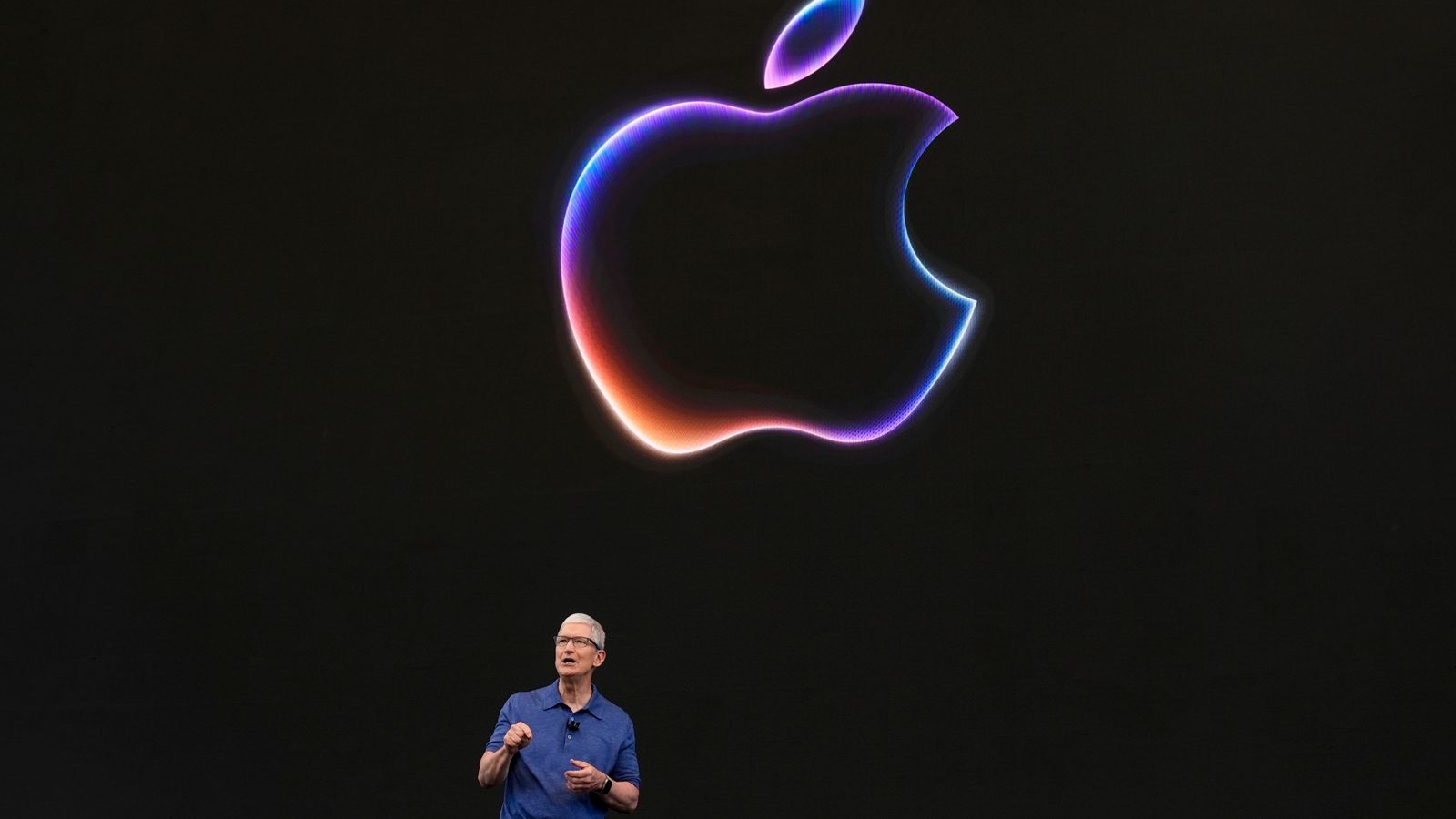
Apple to integrate AI, including ChatGPT, into new phones as Elon Musk threatens ban over security fears

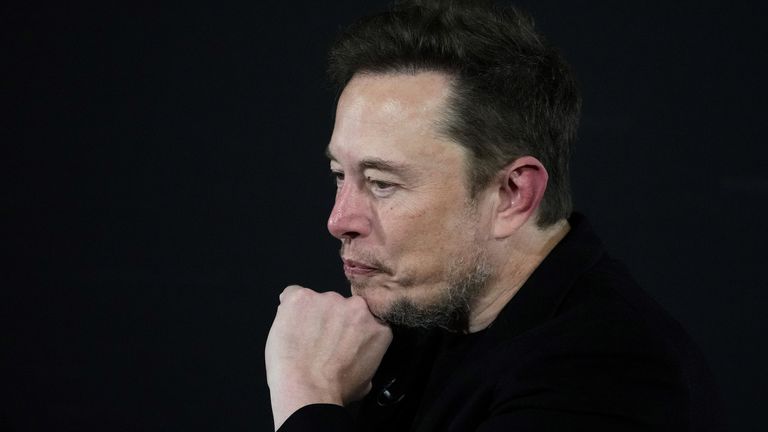
Apple is set to integrate artificial intelligence into its new phones, but billionaire Elon Musk has threatened a ban of the devices at his companies over what he alleges are security fears.
The tech giant held its annual developer conference in California on Monday during which it made the long-awaited announcement that it was bringing AI to its devices.
Dubbed Apple Intelligence, it is a collection of features that includes text and image generation and an improved Siri voice assistant.
This will be supported by integrating the already popular ChatGPT into the company’s phones.
However, Tesla and X owner Elon Musk, who has a long history with ChatGPT’s owners OpenAI, warned that he would ban iPhones from all of his companies over the move.
Musk has a fractious relationship with OpenAI – he was a founder of the company but has since turned against it and accused it of failing to follow its founding principles.
Apple’s new AI system would revamp Siri, allowing it to mine information from across a user’s apps.
But South African billionaire Musk said the decision was an “unacceptable security violation” and said that if OpenAI is integrated at the OS level “then Apple devices will be banned at my companies”.
He accused the Silicon Valley company, without evidence, of turning over user data to OpenAI.
Elon Musk. Pic: PA
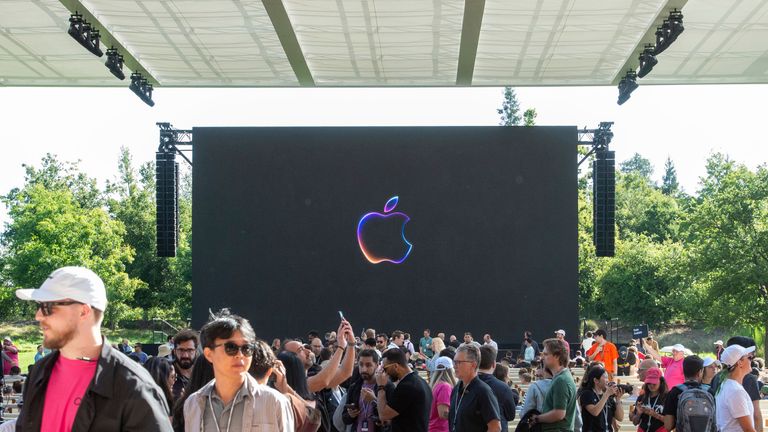
Apple’s WWDC developer conference this week held at Apple Park headquarters. Pic: AP
In their announcement, Apple said that the new AI system would be rooted in privacy, carrying out most processes on the device itself.
Any computing done externally would be done through a new procedure called private cloud computer, Apple said – and claimed it would keep users’ data secure.
They added that users would have to give permission before any request was shared with OpenAI.
The row reflects diverging views surrounding AI, and how quickly the technology is being developed and implemented.
When OpenAI announced ChatGPT back in November 2022 it fired the starting gun on the tech industry’s AI arms race.
Read more from Sky News:
Electric headset for depression recommended after NHS trial
Genetics testing firm investigated over data breach
Apple overtaken as world’s second most valuable company
Keep up with all the latest news from the UK and around the world by following Sky News
Some of the biggest companies in the world, such as Microsoft and Google, have since surged ahead of Apple with their own use of AI.
But with this week’s announcement Apple has thrust itself into the race.
It came after the company has seen slowing global sales over the past years and was recently overtaken as the second most valuable company in the world by Nvidia – an AI microchip maker.
The deal will also put ChatGPT, the highflying AI start-up, directly into the phones of possibly millions of users and place Apple alongside other tech companies in betting that AI is the future of their industry.
Apple chief executive Tim Cook said the AI features would be “indispensable” in the company’s products in the years ahead.
But as recently as May of last year, the Washington Post reported that Mr Cook was less enthusiastic on AI, saying generative AI still had “a number of issues that need to be sorted”.
After Monday’s conference, Apple executives said the company was keen to do more deals with other AI chatbots to give users more options for generative tools.
Popularly used AI models have often been pointed out as having faults, including making up information.
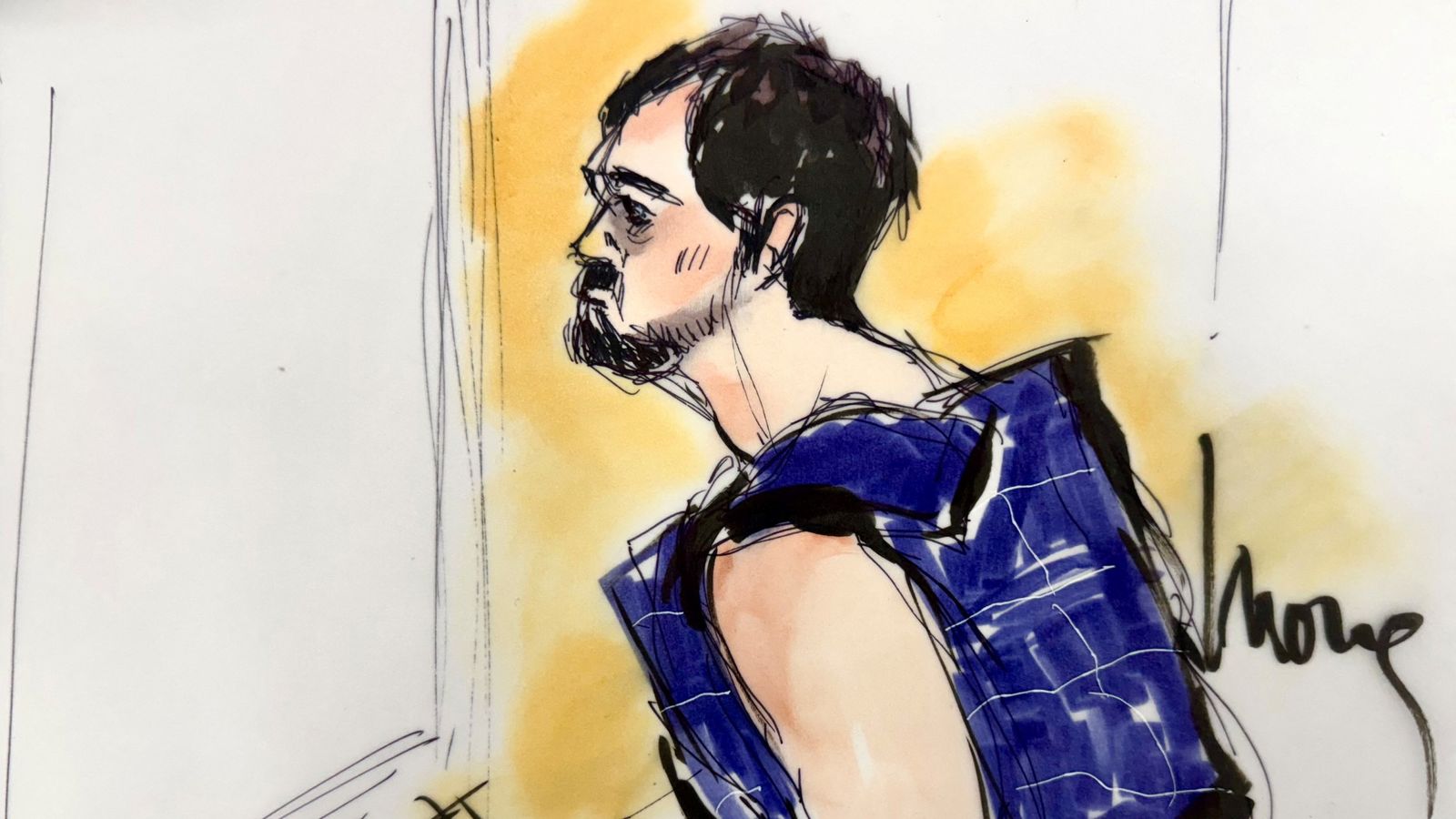
Rob Reiner’s son Nick made his first court appearance on Wednesday on two counts of first-degree murder in the killing of his parents.
Wearing a suicide prevention smock and shackles, the 32-year-old did not enter a plea as he appeared from behind the glass wall of a custody area.
His next court appearance will be on 7 January.
As it happened: Nick Reiner makes first court appearance
Nick Reiner makes his first court appearance on murder charges in this courtroom sketch. Pic: Reuters/Mona Edwards
Nick Reiner spoke only to say, “yes, your honour” to agree to the date.
He was charged Tuesday with killing the 78-year-old actor and director Rob Reiner and his wife, Michele Singer Reiner, Los Angeles County District Attorney Nathan Hochman announced at a news conference.
Nick Reiner is being held without bail and could face the death penalty.
Along with the two counts of first-degree murder, prosecutors added a special circumstance of multiple murders, as well as an allegation that he personally used a dangerous and deadly weapon, a knife.
Speaking outside the court, Nick Reiner’s lawyer, Alan Jackson, called on the public not to “rush to judgement”.
Mr Jackson pointed to “complex and serious issues that are associated with this case” that needed to be thoroughly and “very carefully dealt with and examined”.
He added that it was a “devastating tragedy that has befallen the Reiner family”.
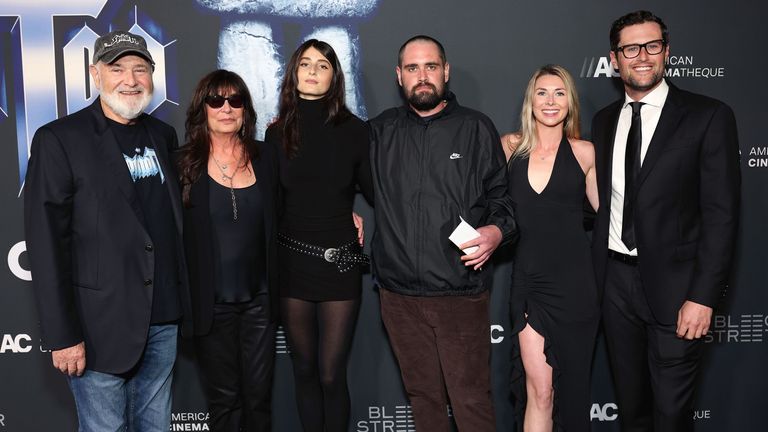
Rob Reiner, Michele Singer Reiner, Romy Reiner, Nick Reiner, Maria Gilfillan and Jake Reiner. Pic: JanuaryImages/Shutterstock
‘Unimaginable pain’
Nick Reiner’s two siblings Jake and Romy have released a statement, saying “words cannot even begin to describe the unimaginable pain we are experiencing every moment of the day”.
“The horrific and devastating loss of our parents, Rob and Michele Reiner, is something that no one should ever experience,” they said.
“They weren’t just our parents; they were our best friends. We are grateful for the outpouring of condolences, kindness, and support we have received not only from family and friends but people from all walks of life.”
The two asked for “respect and privacy” and for speculation to be treated with “compassion and humanity”.
Authorities have not disclosed a motive for the killings.
Rob Reiner and Michele Singer Reiner were found dead from apparent stab wounds in their home in the upscale Brentwood neighbourhood of Los Angeles.

The area near Rob Reiner’s home. Pic: AP
Read more from Sky News:
Moment Nick Reiner arrested for murder of his parents
Could Reiner actually face the death penalty?
Nick Reiner did not resist when he was arrested hours later near the University of Southern California, about 14 miles (22.5 kilometres) from the crime scene, according to police.
Rob Reiner was a celebrated director, whose work included some of the most memorable films of the 1980s and 1990s, including This Is Spinal Tap, The Princess Bride, When Harry Met Sally and A Few Good Men.
He met Michele Singer, a photographer, movie producer and advocate for LGBTQ+ rights, in 1989, while directing When Harry Met Sally.
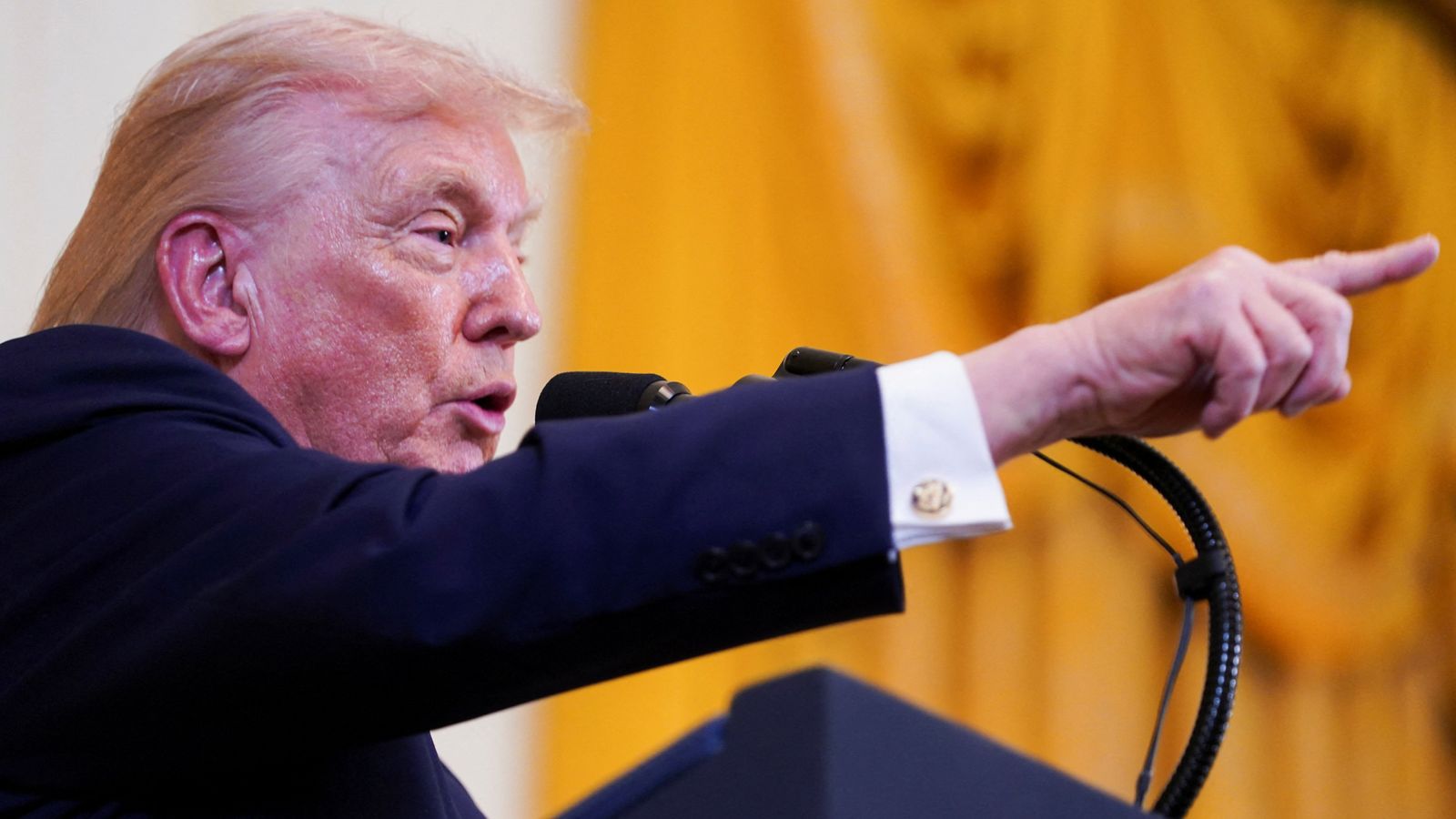
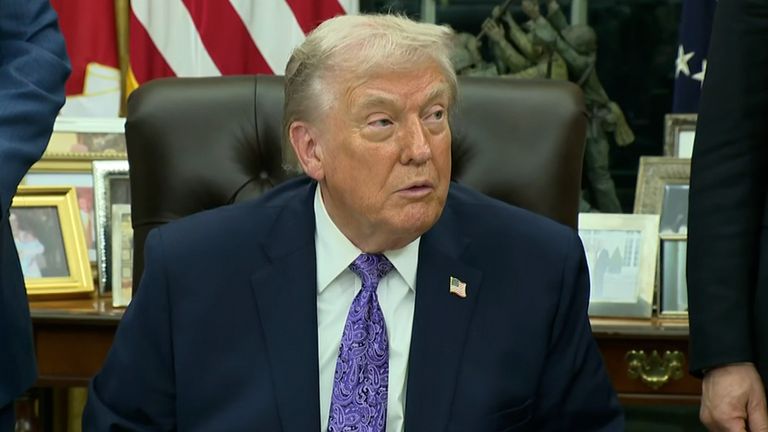
Donald Trump has said the quiet stuff out loud. His Tuesday evening social media post on Venezuela feels like an offload, a dump of thoughts. But it is nonetheless very revealing.
“Venezuela is completely surrounded by the largest Armada ever assembled in the History of South America,” the US president says.
“It will only get bigger, and the shock to them will be like nothing they have ever seen before…”
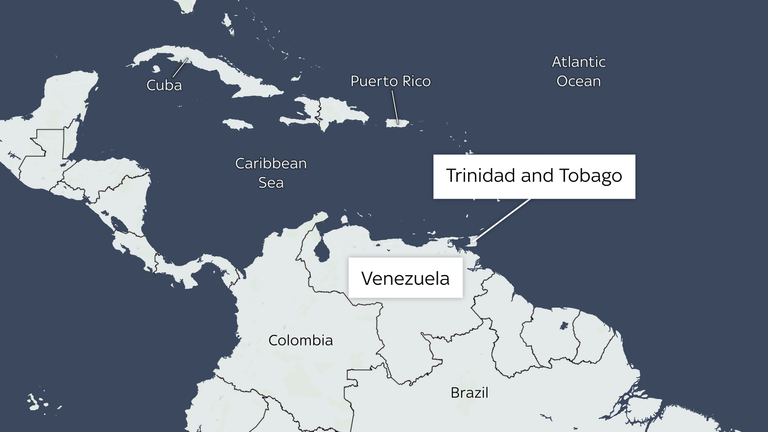
That’s a reference to the massive US naval and Air Force presence in the Caribbean off Venezuela. It is indeed an armada, and it’s been there for months now.
On the face of it, it’s all part of an anti-drug mission, to counter the drug trade from Venezuela into America. At least that’s the public messaging. And the missile and drone attacks on suspected drug boats in the region are all part of the play.
And that’s why the second part of his post is particularly interesting, because he now appears to be saying out loud what plenty have suspected all along – that this is actually about regime change, and it is about oil far more than it is about drugs.
He says that the military will remain in place “until such time as they [Venezuela] return to the United States of America all of the Oil, Land, and other Assets that they previously stole from us”.
He continues: “The illegitimate Maduro Regime is using Oil from these stolen Oil Fields to finance themselves, Drug Terrorism, Human Trafficking, Murder, and Kidnapping.”
This is a reference to the fact that the US was once a huge importer of Venezuelan oil. American companies based in the country extracted the oil and refineries on the Texan coast processed it. The refineries were adapted over decades to refine the thick, heavy crude that is typical of Venezuela.
The process was big business for American firms until Venezuela, under Hugo Chavez in the 2000s, nationalised the foreign oil assets.
Read more:
The US-Venezuela crisis explained
Trump wants all that back – the oil, the revenue, the influence. So all this, it seems clear now, is about oil, and it is about spheres of influence – hemispheres. Trump is determined to assert American control over the western hemisphere.
The ultimate ambition it seems is threefold:
• To remove the Maduro regime and support a friendly, compliant government;
• To seize control of the oil, through commercial partnerships, not force;
• And to stop any drug and people smuggling into the US.
With this latest social post, Trump has now said all that out loud. Interesting days ahead are certain.
Warner Bros is reportedly set to reject a hostile $108bn (£81bn) takeover bid from Paramount, with one of the prospective buyer’s financing partners confirming it’s pulled out of the offer.
A spokesman for investment firm Affinity, owned by Donald Trump‘s son-in-law Jared Kushner, told Sky News’ US partner network NBC News “the dynamics of investment have changed significantly”.
It had backed Paramount’s bid, along with funds from Saudi Arabia and other Middle Eastern countries.
The Warner Bros Discovery board is set to advise shareholders to reject Paramount‘s bid – paving the way for Netflix, which had struck a $72bn (£54bn) deal.
If the takeover goes through, it would give the streaming giant the rights to hit Warner franchises like Harry Potter, Batman, and Game Of Thrones, as well an extensive back catalogue of classic films.
Money latest: Oil prices fall to lowest level since 2021
Pic: iStock
It is the latest twist in a takeover saga where the winner will acquire a huge advantage in the streaming wars.
In June, Warner announced its plan to split into two companies – one for its TV, film studios and HBO Max streaming services, and one for the Discovery element of the business, which primarily comprises legacy TV channels that show cartoons, news, and sports.
Netflix agreed a $27.75 per-share price with the firm, which equates to the $72bn purchase figure deal to secure its film and TV studios, with the deal giving the assets a total value of $82.7bn.
However, Paramount said its offer would pay $30 (£22.50) cash per share, representing $18bn (£13.5bn) more in cash than its rival offered. The offer was made directly to shareholders, asking them to reject Netflix’s deal, in what is known as a hostile takeover.
The Paramount deal would involve rival US news channels CBS and CNN being brought under the same parent company.
Read more:
Why is Warner Bros for sale and how is Trump involved?
The US government will have a big say on the final deal, with the winning company likely facing the Department of Justice’s (DOJ) Antitrust Division, a federal agency which scrutinises business deals to ensure fair competition.
-
 Sports2 years ago
Story injured on diving stop, exits Red Sox game
-
 Sports3 years ago
‘Storybook stuff’: Inside the night Bryce Harper sent the Phillies to the World Series
-
 Sports2 years ago
Game 1 of WS least-watched in recorded history
-
 Sports3 years ago
Button battles heat exhaustion in NASCAR debut
-
 Sports3 years ago
MLB Rank 2023: Ranking baseball’s top 100 players
-
Sports4 years ago
Team Europe easily wins 4th straight Laver Cup
-
 Environment3 years ago
Japan and South Korea have a lot at stake in a free and open South China Sea
-
 Environment1 year ago
Here are the best electric bikes you can buy at every price level in October 2024