
Connect with us

Published

on

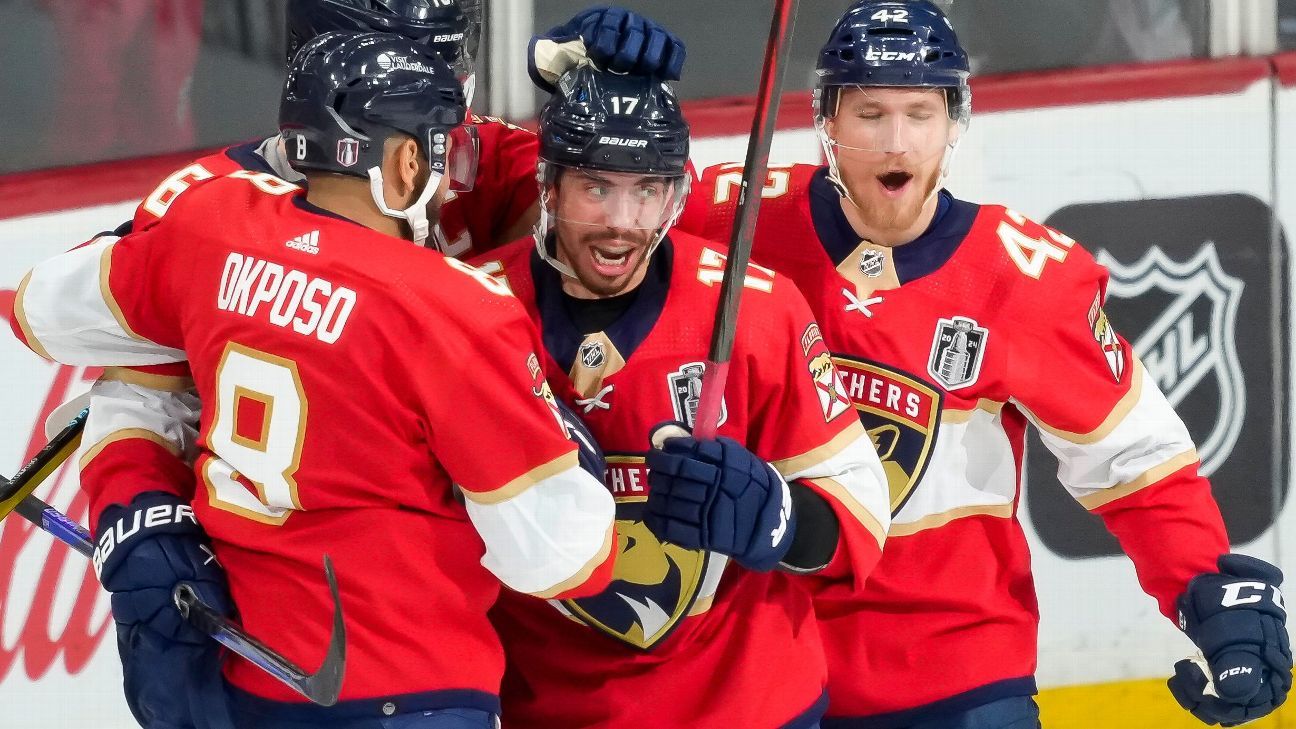
EDMONTON, Alberta — The Florida Panthers did in fact make it to Edmonton on Wednesday after travel delays, and they were rather amused with all the concern ahead of Thursday’s 4-3 win in Game 3 of the Stanley Cup Final.

“It’s just so funny how everything gets so magnified in the Cup finals,” Panthers forward Kyle Okposo said during Thursday morning’s skate. “This happens four times a year to every team in the regular season and nobody says anything. And now it’s like, ‘Oh my God, they’re not going to be able to play!'”

Torrential rain in South Florida on Wednesday caused massive flooding and significant travel delays, including the Panthers’ charter flight to Edmonton, which was delayed for a few hours. Fans and media were tracking the flight online to see when it could get to Edmonton. It landed in the 8 p.m. hour locally — about two hours after the team was scheduled to do interviews at the Edmonton Oilers‘ arena.

“I think we always knew we would get out at some point, whether we got in at 2 in the morning or whatever. We were going to get here,” Okposo said. “Everybody was just kind of having fun with it, honestly.”

Unbeknownst to players, even the Edmonton air traffic controllers were getting in on the fun. One jokingly told the pilots of the Panthers’ charter that there would be a “two-hour hold or whatever it would take for you to be low enough in fuel to have to divert from Edmonton.”

Rather than immediately fly to Edmonton after Game 2 of the Stanley Cup Final on Monday night, the Panthers opted to remain in South Florida — despite weather forecasts that predicted significant rain for Wednesday.

“We pay a bunch of really smart people to have better answers than we do,” Panthers coach Paul Maurice said. “This is the way we do it, and there are reasons for it, and I’m 100% good with it. At no point when a guy gets a cold do they come to see me on how they should fix it.

“We spent an hour at our rink, a little longer. We sat there, and our chef is unbelievable. The coaches put on 7 pounds yesterday. That’s the only ramification.”

Once on the plane, the Panthers spent an extra 90 minutes on the tarmac, Maurice said. The players passed the time as they usually do on trips: watching movies, catching up on sleep and playing cards.

“We love adversity. We got some more team bonding time. It was fun,” forward Evan Rodrigues said. “We had some guys go behind the scenes to do things that usually don’t [happen] to get us off the ground, and happy to finally take off, obviously.

“It was either we would be sitting on the plane or we were going to get here and go to the lounge and hang out together. So it made no difference for us.”

The Panthers, who have a 2-0 lead over the Oilers, said the delay did nothing to interrupt their Game 3 preparations.

“No, not at all,” defenseman Aaron Ekblad said. “We got to practice in the morning, and I got like nine hours of sleep last night, so it was great.”

Added forward Matthew Tkachuk: “It wasn’t that big of a deal, to be completely honest with you. … I think most guys did something when they got to the hotel: pool, bike, whatever. I mean, it was a long flight. By the time you get to the hotel, you just do that and you go right to bed.”

Maurice did acknowledge the severity of the weather in South Florida.

“I’m joking around with that, but there’s some people who are struggling right now in Florida with the flooding,” he said. “So it’s a serious thing that happened there. But our day was not serious.”
Continue Reading

Sports

Lightning sign McDonagh to 3-year, $12.3M deal

Published

on

By

Lightning sign McDonagh to 3-year, .3M deal

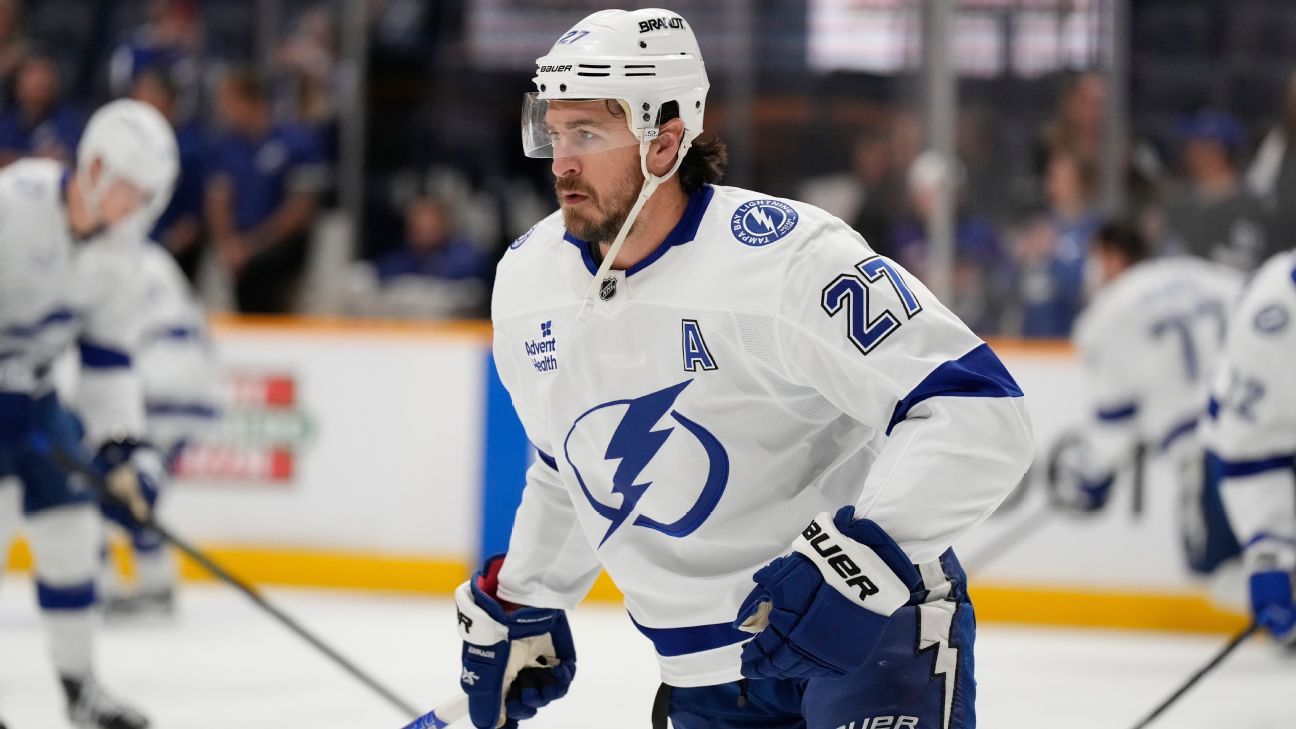
TAMPA, Fla. — The Tampa Bay Lightning have signed veteran defenseman Ryan McDonagh to a three-year extension worth $12.3 million.

General manager Julien BriseBois announced the deal Thursday. McDonagh will be 37 when the new contract kicks in; it counts $4.1 million against the salary cap through the 2028-29 season.

McDonagh helped the Lightning win back-to-back Stanley Cups in 2020 and 2021 and reach the Final in 2022 before losing in six games to the Colorado Avalanche.

They traded him to the Nashville Predators that summer to clear cap space at a time when it was not going up much because of the pandemic and reacquired him in 2024.

Record cap increases will have McDonagh account for less than 4% of the cap each of the next three years.

McDonagh is currently injured, one of several players Tampa Bay has been missing, along with No. 1 defenseman Victor Hedman. The team has still won 16 of 26 games and leads the Atlantic Division.

Continue Reading

Sports

NASCAR’s France labeled ‘brick wall’ on rev share

Published

on

By

NASCAR's France labeled 'brick wall' on rev share

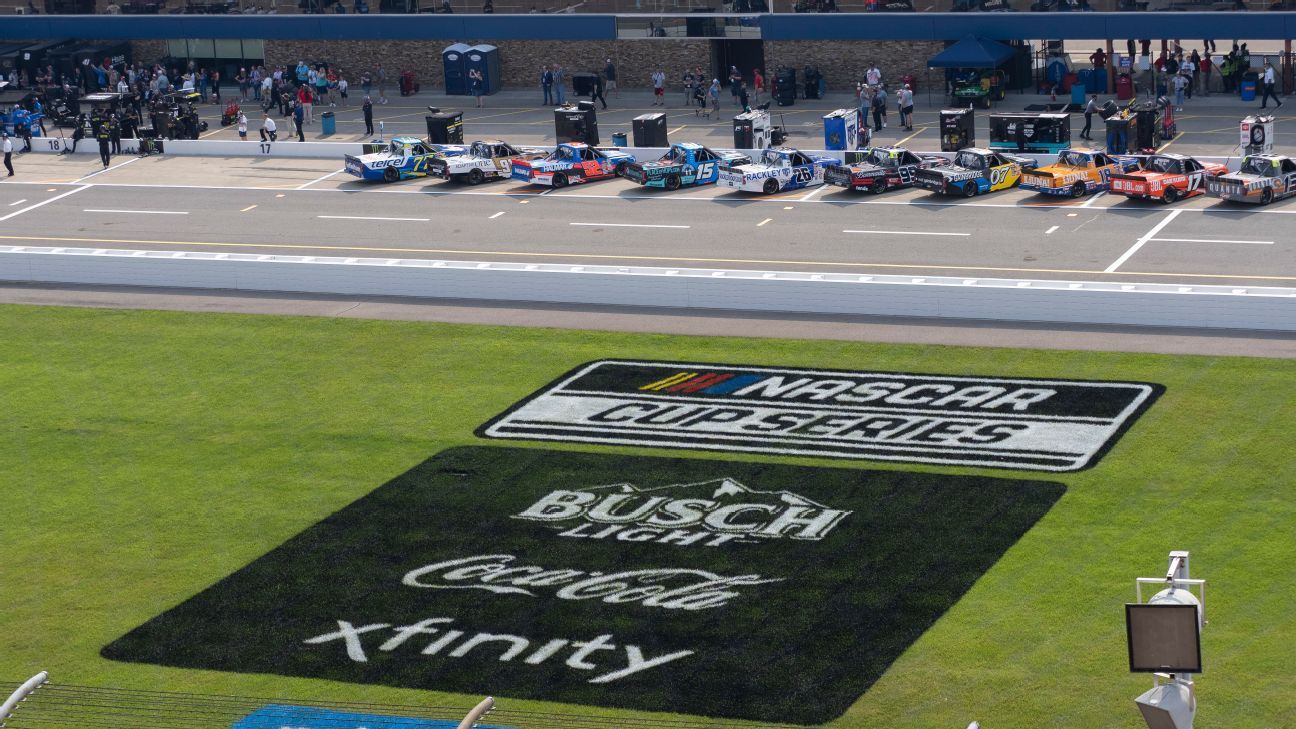
CHARLOTTE, N.C. — The attorney for the two teams suing NASCAR portrayed series chairperson Jim France as “a brick wall” in negotiations over the new revenue-sharing model that has triggered the Michael Jordan-backed federal antitrust case against the top form of motorsports in the United States.

23XI Racing, owned by Basketball Hall of Famer Jordan and three-time Daytona 500 winner Denny Hamlin, and Front Row Motorsports, owned by fast-food franchiser Bob Jenkins, were the only two organizations out of 15 that refused to sign extensions on new charter agreements in September of 2024.

A charter is the equivalent of the franchise model used in other sports and in NASCAR guarantees every chartered car a spot in all 38 races, plus a defined payout from NASCAR.

NASCAR spent more than two years locked in bitter negotiations with the teams over the extensions because the teams made specific requests in an attempt to improve their financial position. The deal given to the teams on the eve of the start of the 2024 playoffs lacked most of those requests and gave teams a six-hour deadline to sign the 112-page document.

Jeffrey Kessler, attorney for 23XI and Front Row, spent much of Thursday trying to portray France as the holdout in acquiescing to the teams. NASCAR was founded 76 years ago by the late Bill France Sr. and, to this day, is privately owned by the Florida-based family. Jim France is his youngest son.

Kessler questioned NASCAR president Steve O’Donnell for more than three hours in a contentious session in which the attorney at times was shouting at the executive. He used internal communications among NASCAR executives to demonstrate frustration among non-France family members over the slow pace of negotiations and Jim France’s refusal to grant the teams permanent charters. The charter system was established in 2016 to create stability for the teams, and the charters are renewable.

One tense exchange involved an impassioned letter sent by Heather Gibbs, daughter-in-law of team owner Joe Gibbs, in which she implored France to grant permanent charters to help secure the family business.

O’Donnell, in a text message, told Ben Kennedy, nephew of Jim France, “Jim is now reading Heather’s letter out loud and swearing every other sentence.”

Pressed by Kessler as to what France was saying as he read the letter, O’Donnell said the chairperson never swore. Kessler tried to force O’Donnell to reconcile what he wrote to Kennedy, but O’Donnell maintained that his boss was not cursing.

“That’s what I wrote, but he was not doing that,” O’Donnell testified. “We were all taken aback by the letter. I think Jim was frustrated, as we all were.”

Kessler then demanded what sort of gestures or actions France made that led to O’Donnell to tell Kennedy he was swearing. A judge-ordered break in the session prevented O’Donnell from ever clarifying why he characterized France’s reaction that way.

But the internal communications among executives showed the mounting frustration over both the slow pace and direction of the negotiations. As O’Donnell, commissioner Steve Phelps and others tried to find concessions for the teams, they all indicated they were met by resistance time and again by France and his niece, vice chair Lesa France Kennedy.

“Mr. France was the brick wall in the negotiations,” Kessler said to O’Donnell.

“Those are your words, not mine,” the executive replied.

Earlier Thursday, O’Donnell testified that teams approached the sanctioning body in early 2022, asking for an improved revenue model, arguing the system was unsustainable.

O’Donnell was at the meeting with representatives from four teams, who asked that the negotiating window on a new charter agreement open early because they were fighting for their financial survival. The negotiating window was not supposed to open until July 2023.

O’Donnell testified that in that first meeting, four-time series champion Jeff Gordon, now vice chair of Hendrick Motorsports, asked specifically if the France family was “open to a new model.”

Kennedy, great-grandson of NASCAR’s founder, told Gordon yes.

But O’Donnell testified that chairperson France was opposed to a new revenue model.

The teams have maintained that the deal ultimately given to them was “take it or leave it.” 23XI and Front Row were the only teams that refused to sign and instead sued in federal court over antitrust allegations.

O’Donnell said the teams had very specific requests: maximized television revenue, the creation of a more competitive landscape, a new cost model and a potential cost cap.

NASCAR spent the next few months in internal discussions on how to approach the charter renewal process, said O’Donnell, who was called as an adverse witness for the plaintiffs. NASCAR acknowledged the teams were financially struggling, and worried they might create a breakaway series similar to the LIV Golf league.

In a presentation made to the board, O’Donnell listed various options that the teams and NASCAR could take. O’Donnell noted the teams could boycott races, build their cars internally, and race at non-NASCAR-owned tracks, or potentially sell their charters to Liberty Media, the commercial rights holder for Formula 1.

“We knew the industry was challenged,” O’Donnell testified.

As far as NASCAR’s options, O’Donnell told the board it could lock down an exclusivity agreement with tracks not owned by NASCAR, dissolve the charter system, or partner directly with the drivers.

The extensions that began this year upped the guaranteed money for every chartered car to $12.5 million in annual revenue, from $9 million. Hamlin and Jenkins have testified it costs $20 million to bring a single car to the track for all 38 races. That figure does not include any overhead, operating costs or a driver’s salary.

Jenkins opened the fourth day of the trial with continued testimony. He has said he has lost $100 million since becoming a team owner in the early 2000s — and that’s even with a 2021 victory in the Daytona 500. He said Thursday that he “held his nose” when he signed the 2016 charter agreements because he didn’t think the deal was very good for the teams, but a step in the right direction.

When the extensions came in 2024, Jenkins said the agreement went “virtually backward in so many ways.” Jenkins said no owners he has spoken to are happy about the new charter agreement because it falls short of so many of their requests. He refused to sign because “I’d reached my tipping point.”

Jenkins said he was upset that France refused a meeting the week before the final 2025 offers were presented with four owners who represented nine charters, only to learn France was talking to other team owners.

“Our voice was not being heard,” said Jenkins, who believes NASCAR rammed through the 2025 agreement. “They did put a gun to our head and got a domino effect — teams that said they’d never sign saw their neighbor sign.”

Jenkins also said teams are upset about the current Next Gen car, which was introduced in 2022 as a cost-saving measure. The car was supposed to cost $205,000 but parts must be purchased from specified NASCAR vendors, and teams cannot make any repairs themselves, so the actual cost is now closer to double the price.

“To add $150,000 to $200,000 to the cost of the car — I don’t think any of the teams anticipated that,” Jenkins testified. “What’s anti-competitive is I don’t own that car. I can’t use that car anywhere else.”

Continue Reading

Sports

Sources: Penn St. turns focus to ISU’s Campbell

Published

on

By

Sources: Penn St. turns focus to ISU's Campbell

Iowa State coach Matt Campbell has emerged as the focus of Penn State‘s head coaching search, sources told ESPN on Thursday.

Penn State is in discussions with Campbell about its vacancy after initiating contact with him Wednesday. Both sides are early in the process, and any hire at Penn State will require additional steps and board approval.

Penn State shifted its attention to other candidates after BYU coach Kalani Sitake chose to remain with the Cougars and agree to a long-term extension Tuesday.

Penn State had also engaged at least three other candidates over the past few days, sources told ESPN.

The hiring of Campbell, the winningest coach in Iowa State history, would bring an end to a search that has extended more than 50 days since Penn State fired longtime coach James Franklin on Oct. 12.

The three-time Big 12 Coach of the Year achieved a major turnaround and consistent success during his decade in Ames with eight winning seasons, two Big 12 championship game appearances and a Fiesta Bowl victory over Oregon in 2020 for the school’s first top-10 finish.

Campbell is 72-55 during his tenure at Iowa State. He went 8-4 this season.

The news of Campbell emerging in Penn State’s search was first reported by On3.com.

ESPN’s Pete Thamel and Adam Rittenberg contributed to this report.

Continue Reading

Trending





