
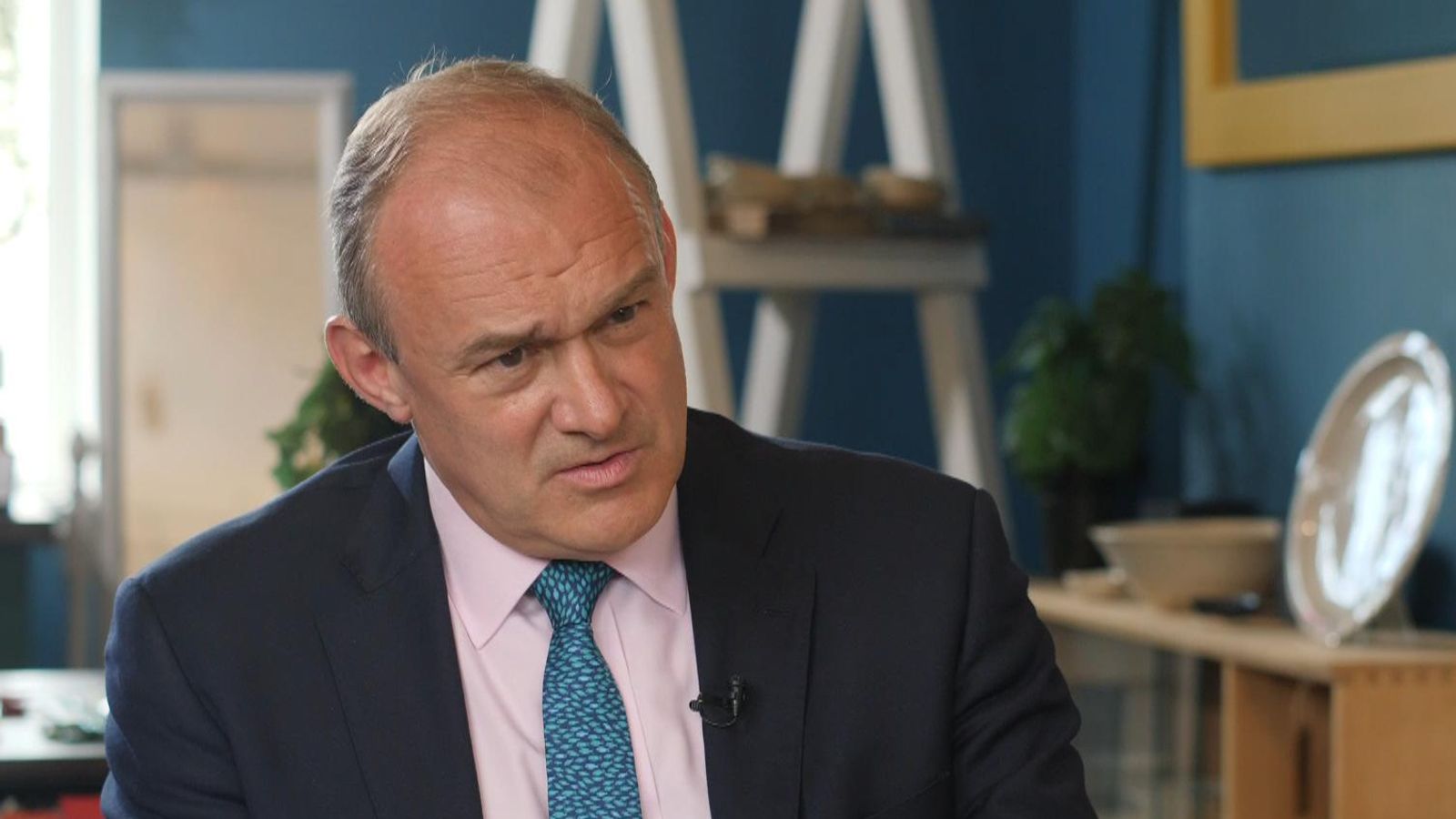
Ed Davey says legal migration ‘too high’ but refuses to accept own policies will make it worse
Politics
Watchdog criticises ‘unprecedented’ government offer to delay local elections – as five councils confirm requests for postponement

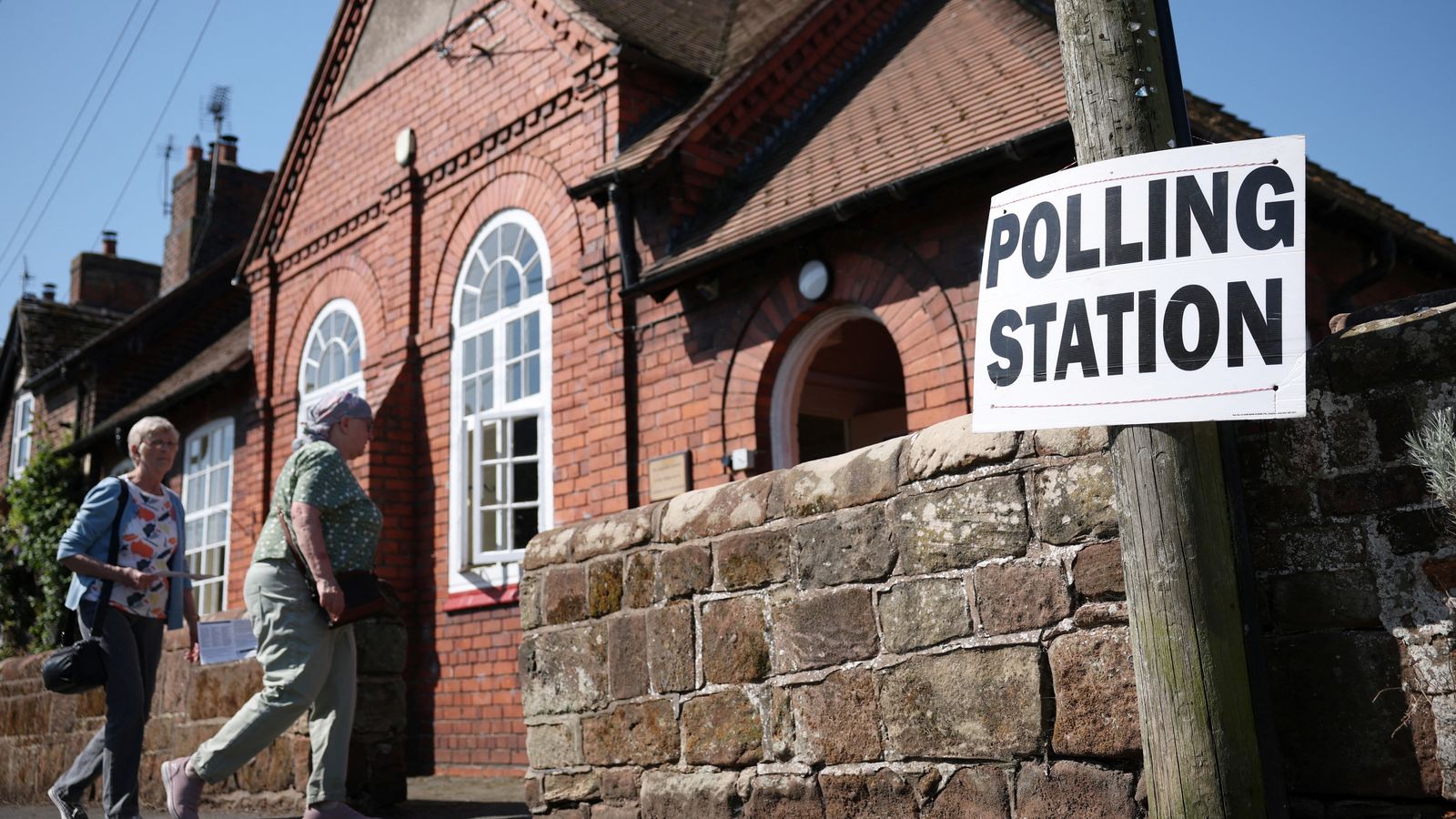
The elections watchdog has criticised the government for offering to consider delaying 63 local council elections next year – as five authorities confirmed to Sky News that they would ask for a postponement.
On Thursday, hours before parliament began its Christmas recess, the government revealed that councils were being sent a letter asking if they thought elections should be delayed in their areas due to challenges around delivering local government reorganisation plans.
The chief executive of the Electoral Commission, Vijay Rangarajan, hit out at the announcement on Friday, saying he was “concerned” that some elections could be postponed, with some having already been deferred from 2025.
“We are disappointed by both the timing and substance of the statement. Scheduled elections should, as a rule, go ahead as planned, and only be postponed in exceptional circumstances,” he said in a statement.
“Decisions on any postponements will not be taken until mid-January, less than three months before the scheduled May 2026 elections are due to begin.
“This uncertainty is unprecedented and will not help campaigners and administrators who need time to prepare for their important roles.”
Mr Rangarajan added: “We very much recognise the pressures on local government, but these late changes do not help administrators. Parties and candidates have already been preparing for some time, and will be understandably concerned.”
He said “capacity constraints” were not a “legitimate reason for delaying long planned elections”, which risked “affecting the legitimacy of local decision-making and damaging public confidence”.
The watchdog chief also said there was “a clear conflict of interest in asking existing councils to decide how long it will be before they are answerable to voters”.
Sky News contacted the 63 councils that have been sent the letter about potentially delaying their elections.
At the time of publication, 17 authorities had replied with their decisions, while 33 said they would make up their minds before the government’s deadline of 15 January.
Many councils told Sky News they were surprised at yesterday’s announcement, saying that they had been fully intending to hold their polls as scheduled.
They said they were now working to understand the appropriate democratic mechanism for deciding whether to request a postponement of elections. Some local authorities believe it should be a decision made by their full council, while others will leave it up to council leaders or cabinet members to decide.
Multiple councils also emphasised in statements to Sky News that the ultimate decision to delay elections lay with the government.
Reform UK has threatened legal action against ministers, accusing Labour and the Tories of “colluding” to postpone elections in order to lock other parties out of power – a sentiment echoed by Liberal Democrat leader Sir Ed Davey.
But shadow local government secretary Sir James Cleverly told Sky News this morning that the Conservative Party “wants these elections to go ahead”. Sky News understands that the national party is making that position clear to local leaders.
A spokesperson for the Ministry of Housing, Communities, and Local Government, said it was taking a “locally-led approach”, and emphasised that “councils are in the best position to judge the impact of postponements on their area”.
They added: “These are exceptional circumstances where councils have told us they’re struggling to prepare for resource-intensive elections to councils that will shortly be abolished, while also reorganising into more efficient authorities that can better serve local residents.
“There is a clear precedent for postponing local elections where local government reorganisation is in progress, as happened in 2019 and 2022.”
The five councils that confirmed they would be seeking postponements were:
- Blackburn with Darwen Council (Labour);
- Chorley Borough Council (Labour);
- East Sussex County Council (Conservative minority);
- Hastings Borough Council (Green minority);
- West Sussex County Council (Conservative).
The councils in Chorley, and East and West Sussex, had decided prior to Thursday’s government announcement that they would request a delay.
An East Sussex County Council spokesperson told Sky News: “It is welcome that the government is listening to local leaders and has heard the case for focussing our resources on delivery in East Sussex, particularly with devolution and reorganisation of local government, as well as delivering services to residents, such high priorities.”
They also pointed to the cost of electing councillors for a term of just one year, and argued that it would be “more prudent for just one set of elections to be held in 2027”.
Read more from Sky News:
David Walliams dropped by publisher
Woman jailed for plotting to murder husband
Christmas number one revealed
West Sussex County Council echoed those reasons and said it would cost taxpayers across the county £9m to hold elections in 2026, 2027, and 2028, as currently planned.
Chorley and Blackburn councils also cited the cost of delivering elections, and said they would prefer that money be spent on delivering the local government reorganisation and delivering services to local residents.
Meanwhile, 12 councils confirmed to Sky News that they would not be requesting delays:
- Basingstoke and Deane Borough Council (Liberal Democrat-Independents);
- Broxbourne Borough Council (Conservative);
- Colchester City Council (Labour-Liberal Democrat);
- Eastleigh Borough Council (Liberal Democrat);
- Essex County Council (Conservative);
- Hart District Council (Liberal Democrat-Community Campaign);
- Hastings Borough Council (Green minority);
- Isle of Wight Council (no overall control);
- Newcastle-under-Lyme Borough Council (Conservative);
- Portsmouth City Council (Liberal Democrat minority);
- Rushmoor Borough Council (Labour minority);
- Southampton City Council (Labour).
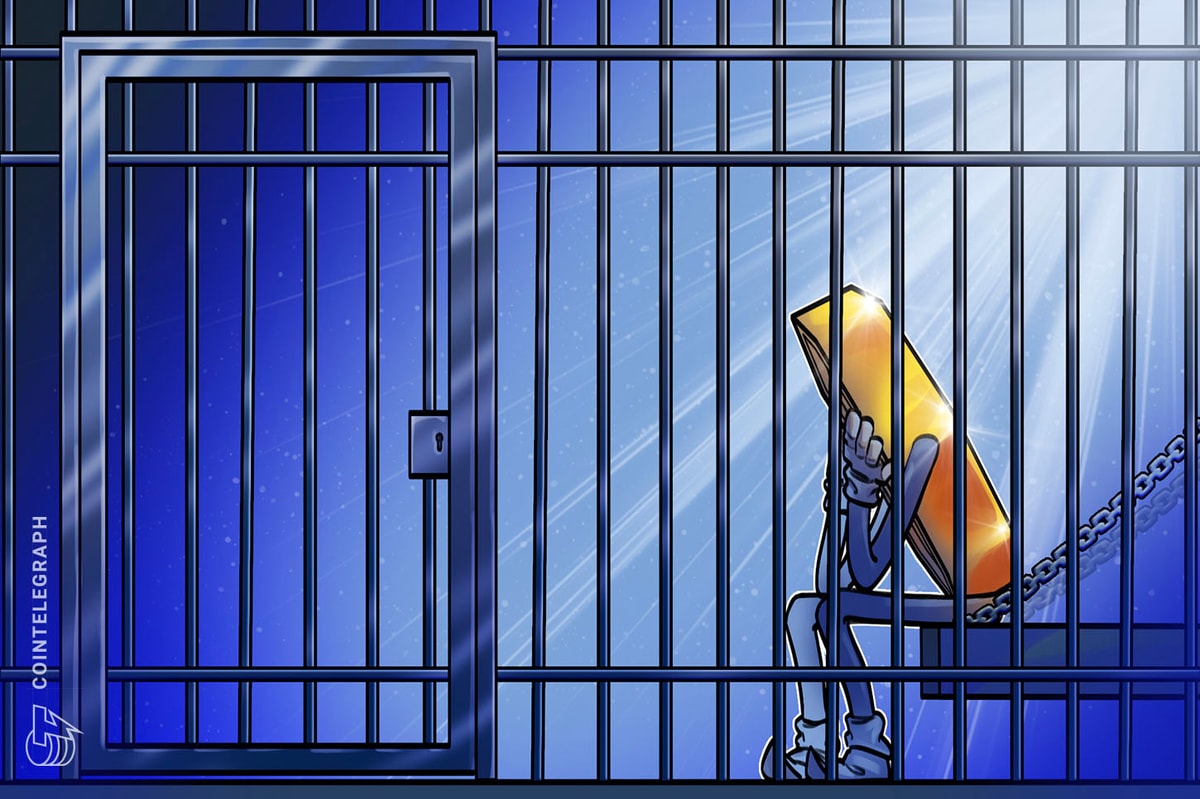

Keonne Rodriguez, who pleaded guilty to one felony count related to his role at Samourai Wallet, is calling on US President Donald Trump to pardon him, citing similar language that has been successful in previous pardon applications.
In a Thursday X post, Rodriguez said he would report to prison on Friday, where he will serve a five-year sentence for operating an illegal money transmitter. The Samourai co-founder claimed there were no “victims” to his crime, and blamed his incarceration on “lawfare perpetrated by a weaponized Biden DOJ.”
In a message tagging Trump, Rodriguez expressed hope that the US president would issue a federal pardon for him and William “Bill” Lonergan Hill, another Samourai executive who pleaded guilty and was sentenced to four years. Rodriguez blamed “activist judges” for his legal troubles, claiming he was targeted by a “political anti-innovation agenda.”
“I maintain hope that [Trump] is a fair man, a man of the people, who will see this prosecution for what it was: an anti innovation, anti american, attack on the rights and liberties of free people,” said Rodriguez. “I believe his team […] and others truly want to end the weaponization of the DOJ that the previous administration wielded so effectively […] I believe he will continue to wield that power for good and pardon me and Bill.”
Related: Samourai Wallet co-founders to now plead guilty to US charges
Rodriguez’s public plea followed Trump’s statement that he would “take a look” at a pardon for the Samourai co-founder, claiming that he had no knowledge of the case. It’s unclear whether Rodriguez filed an official application for a pardon or is relying on public statements to get the president’s attention.
Other crypto execs successfully lobbied for a Trump pardon
One of Trump’s first acts as president in January was to issue a pardon for Silk Road founder Ross Ulbricht, who had been serving a life sentence for his role in creating and operating the darknet marketplace.
Former Binance CEO Changpeng “CZ” Zhao, who pleaded guilty to one felony in 2023 related to the exchange’s Anti-Money Laundering program, served four months in prison but also received a pardon from the president. Trump later said he “[knew] nothing about” Zhao when asked about the pardon in a November interview.
Rodriguez’s language addressing Trump mirrored comments from the White House on previous pardons. For example, Press Secretary Karoline Leavitt said it was a “weaponization of justice from the previous administration” when the president commuted the sentence of David Gentile, who was convicted of defrauding “thousands of individual investors in a $1.6 billion” scheme in 2024.
Crypto users on Polymarket were not given the choice of betting on the odds of a Trump pardon of Rodriguez as of Friday. At the time of publication, Trump ally Steve Bannon had the highest odds, at 9%.
Magazine: When privacy and AML laws conflict: Crypto projects’ impossible choice

-
 Sports2 years ago
Story injured on diving stop, exits Red Sox game
-
 Sports3 years ago
‘Storybook stuff’: Inside the night Bryce Harper sent the Phillies to the World Series
-
 Sports2 years ago
Game 1 of WS least-watched in recorded history
-
 Sports3 years ago
Button battles heat exhaustion in NASCAR debut
-
 Sports3 years ago
MLB Rank 2023: Ranking baseball’s top 100 players
-
Sports4 years ago
Team Europe easily wins 4th straight Laver Cup
-
 Environment3 years ago
Japan and South Korea have a lot at stake in a free and open South China Sea
-
 Environment1 year ago
Here are the best electric bikes you can buy at every price level in October 2024