
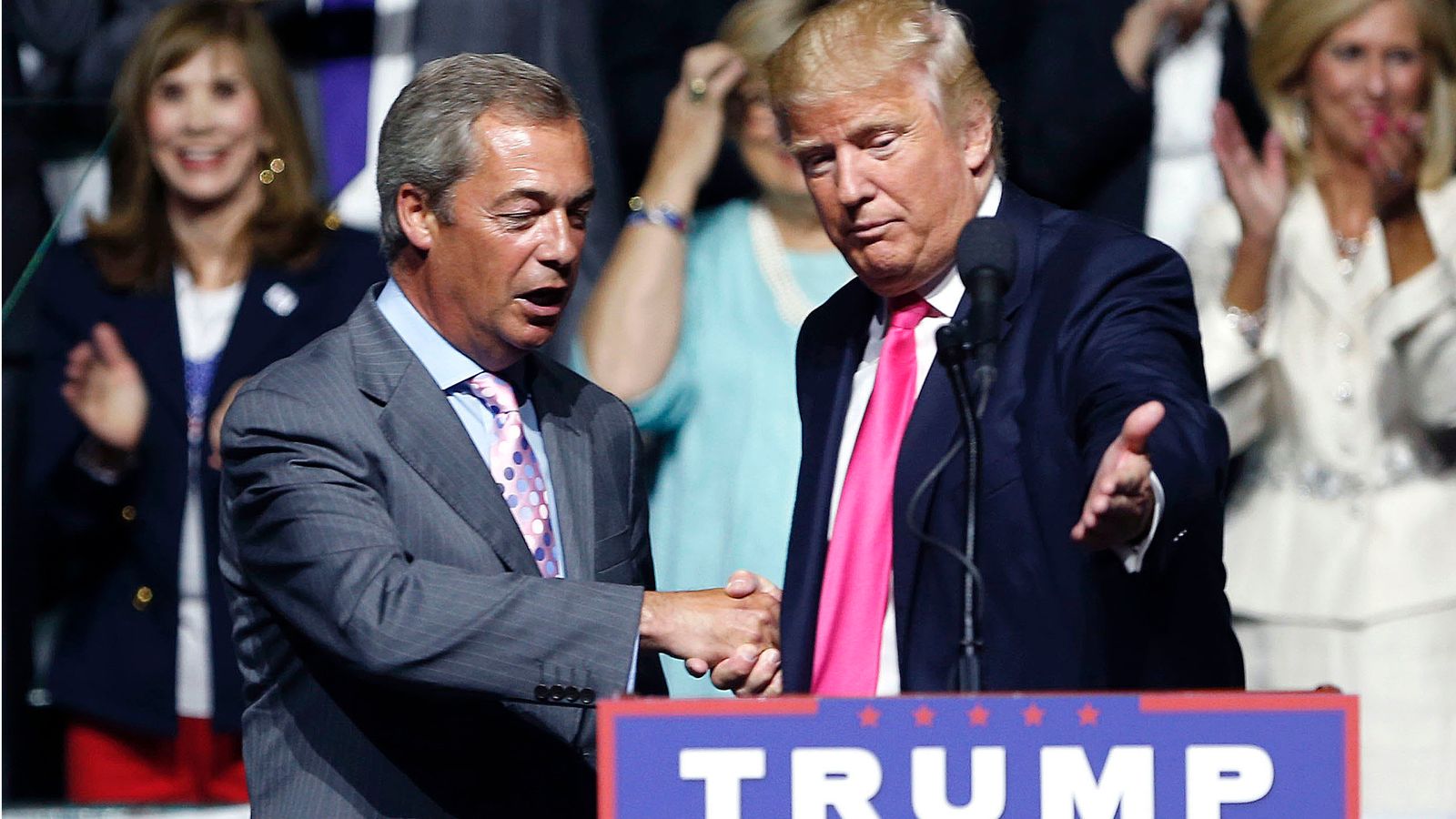
Nigel Farage claims Donald Trump ‘learned a lot from me’

Nigel Farage has claimed former US president Donald Trump “learned a lot” from studying his speeches before he ran for office.
The Reform UK leader denied he thought he was Britain’s version of Trump, telling ITV’s The Leader Interviews – Tonight programme: “I think we’re very different but I think we think the same on many things.”
He added: “He’s learned quite a lot from me, I think it goes both ways… He was watching my speeches in the European Parliament for many years… before he decided to run.”
Follow the latest updates on the general election campaign
When asked if the former president had told him this, Mr Farage replied: “I know that to be true.”
Mr Farage is close to Trump and has repeatedly praised the former US president.
Before his decision to join Reform UK earlier this month, Mr Farage had said he planned to help Trump with his presidential campaign this year.
But he has since admitted: “If I’m elected the MP for Clacton, and I’m there every Friday… it’ll become more difficult but not impossible.”
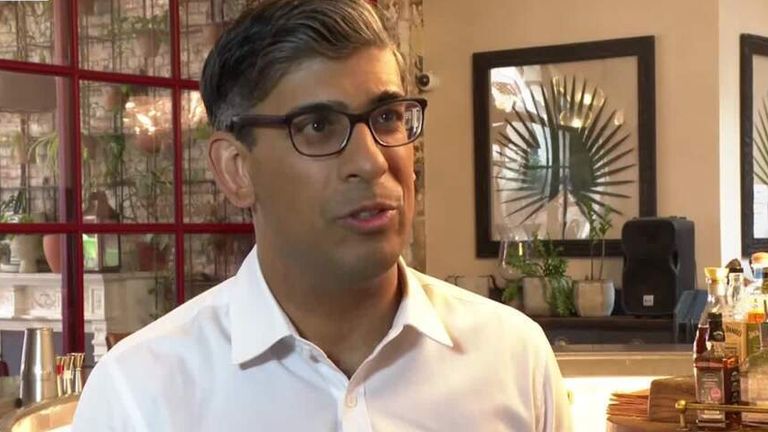
PM condemns Farage’s Ukraine war comments
Farage doubles down on Ukraine comments
In the interview Mr Farage also doubled down on his claim the West “provoked” Vladimir Putin’s invasion of Ukraine.
Asked how he would deal with the Russian president, he told ITV: “Well, we’ve tried of course through sanctions to weaken him, but all that’s actually done is drive him into the arms of China.
“He needs to know there’s a threat now, he needs to know, he does need to know, it is so far and no further.
“I think the West historically, up until a few years ago, provoked Putin stupidly.
“I felt the ever, ever eastward expansion of NATO and the European Union was giving Putin a reason to go to war. I guess the question is, what do we do now? And yes, I do support us giving munitions and help to Ukraine but I feel the war is a complete stalemate.
“I think the number of lives being lost is horrific. There have been no sensible, substantive negotiations of any kind and even if negotiations to try and find a peace, to try and find a way through, fail, I think it’s better to have those negotiations than not.”
Read more from Sky News:
Bookies to reveal details of election bets of more than £20
First minister ‘assured’ publicly-funded stamps not used in campaign
Labour candidate sends message to culprits who attacked her office
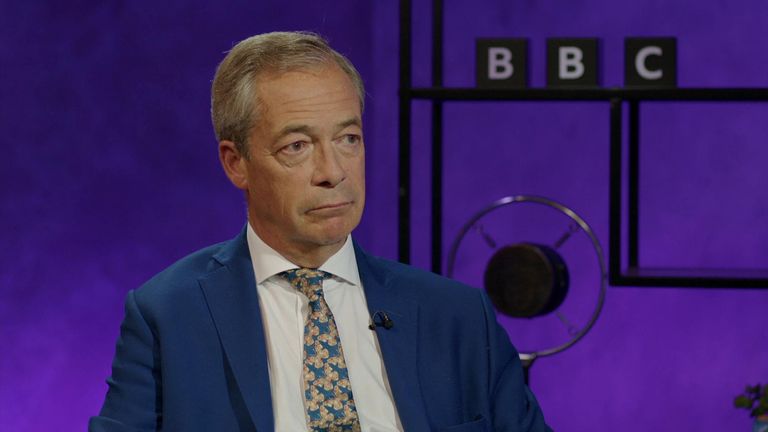
NATO expansion ‘provoked’ Ukraine war, says Farage
‘That is a disaster’
Mr Farage also said he has an issue with migrants coming to Britain and continuing to speak their own language.
He said: “I have a huge problem with people coming to Britain, not assimilating, maintaining their own languages.
“You know, not mixing in communities. That is a disaster.”
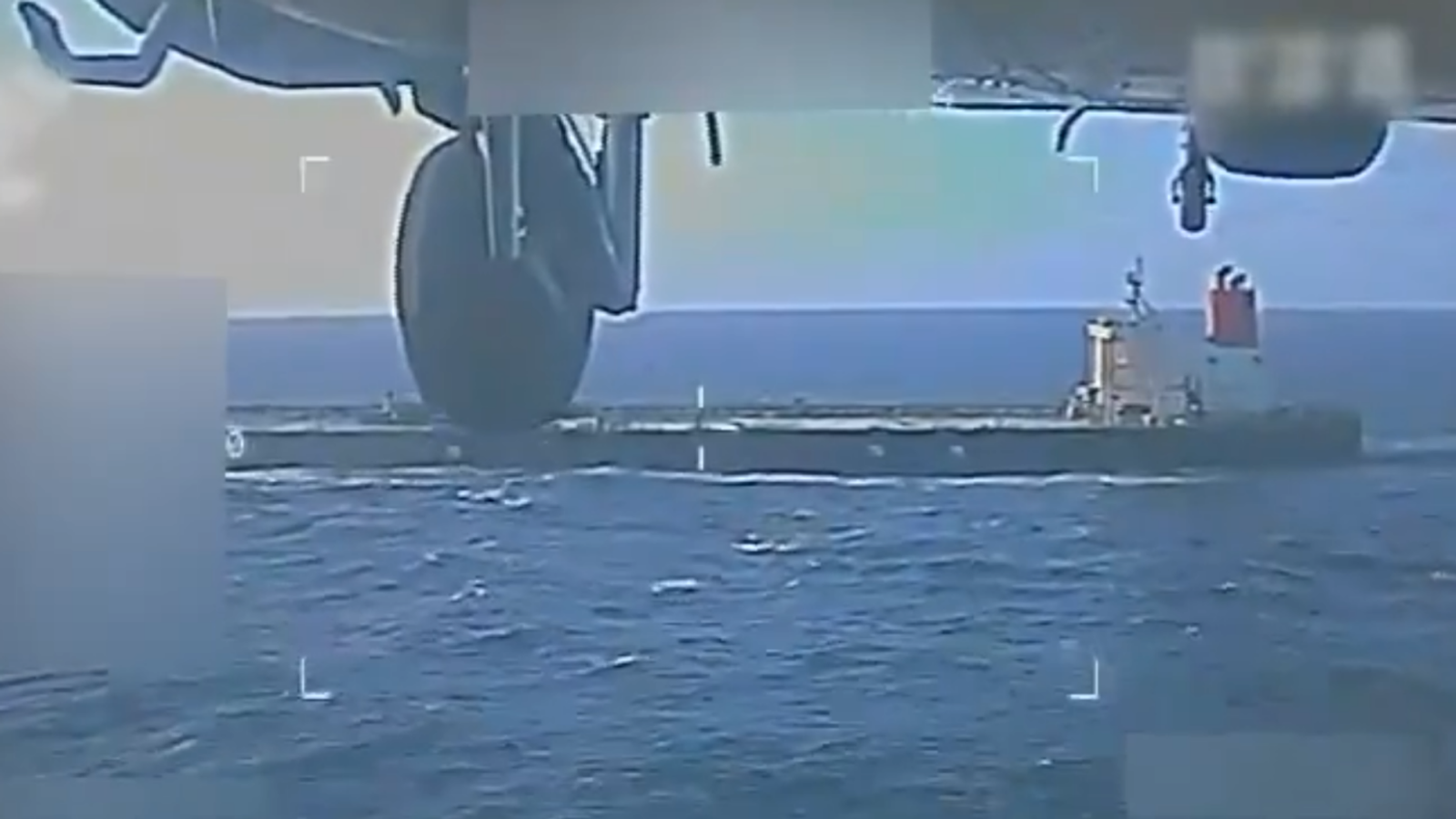
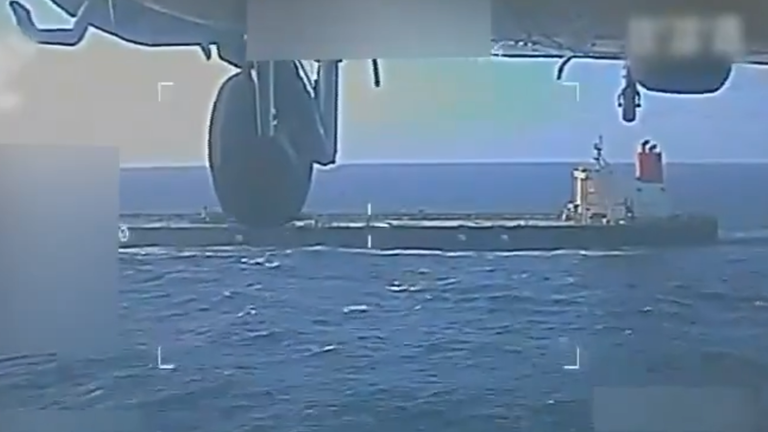
The US has intercepted and seized a sanctioned oil tanker off the coast of Venezuela, Donald Trump has said.
President Trump confirmed the operation at a meeting with business leaders at the White House on Wednesday.
“We’ve just seized a tanker on the coast of Venezuela, a large tanker, very large, largest one ever seized, actually,” he said at the start of the meeting.
It marks the latest escalation from the Trump administration, which has in recent months ramped up pressure on Venezuelan President Nicolas Maduro.
The US accuses Mr Maduro of presiding over a narcotrafficking operation in Venezuela, which he denies
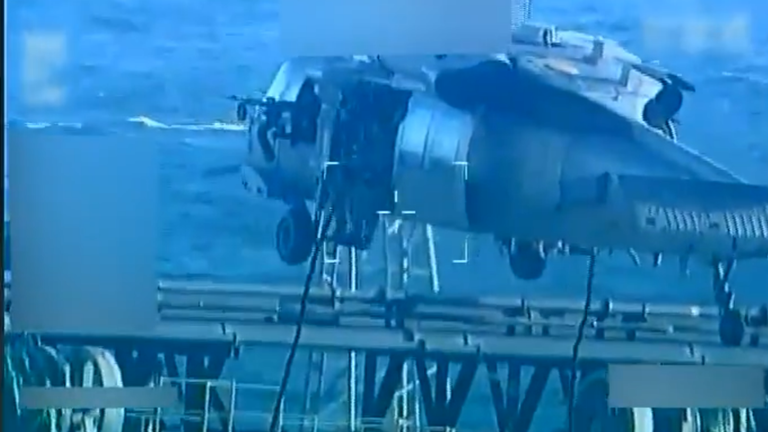
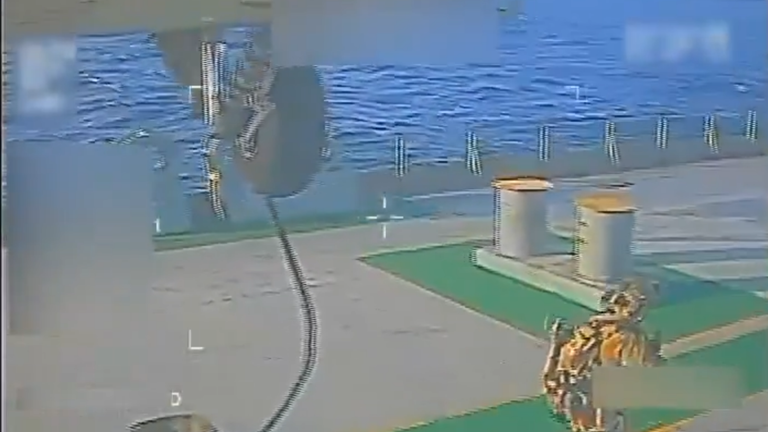
Pics: X/@AGPamBondi
Tanker ‘used to transport sanctioned’ oil, US claims
Later, Attorney General Pam Bondi shared a video of the operation, confirming that the FBI, Homeland Security, US Coast Guard, and Department of Defence were involved.
She said on X that the US forces “executed a seizure warrant for a crude oil tanker used to transport sanctioned oil from Venezuela and Iran”.
“For multiple years, the oil tanker has been sanctioned by the United States due to its involvement in an illicit oil shipping network supporting foreign terrorist organisations,” she added.
“This seizure, completed off the coast of Venezuela, was conducted safely and securely-and our investigation alongside the Department of Homeland Security to prevent the transport of sanctioned oil continues.”
She did not name the vessel, what flag the vessel sailed under, or exactly where the incident took place.
UK maritime risk management group Vanguard said that the tanker Skipper – which the US sanctioned for alleged involvement in Iranian oil trading under the name Adisa – was believed to have been seized.
Trump on seized oil: ‘We keep it’
Without giving additional information on the operation, Mr Trump added during the White House meeting with business leaders that “other things are happening”.
Later, Mr Trump said that the tanker was “seized for a very good reason,” and when asked what will happen to the oil on board the vessel, he added: “Well, we keep it, I suppose”.
He also suggested that Colombian President Gustavo Petro, who angered the Trump administration by speaking at a pro-Palestinian demonstration outside the UN in September, could “be next” if his country doesn’t “wise up” on alleged drug trafficking.
The US has escalated military deployments against the Latin American country over the last few months, with Mr Trump suggesting that American forces could launch a land attack on Venezuela.
On 2 September, the White House posted on X that it had conducted a strike against so-called “narcoterrorists” shipping fentanyl to the US, without providing direct evidence of the alleged crime.
Sky’s Data & Forensics unit has verified that in the past four months since strikes began, 23 boats have been targeted in 22 strikes, killing 87 people.
Read more: Is this what the beginning of a war looks like?
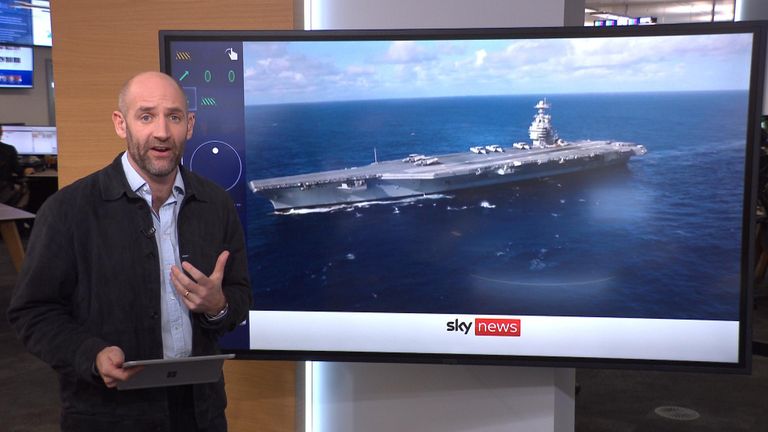
Are US strikes on Venezuela about drugs or oil?
Geoffrey Corn, director of the Centre for Military Law at Texas Tech University, told Sky News’s Mark Austin on The World that Mr Trump’s remarks on land strikes “ostensibly” refer to drug cartel members.
Formerly a senior adviser to the US army on warfare law, Mr Corn added: “That could very easily provide the pretext for some confrontation between Venezuelan armed forces and US armed forces.
“And then that would open the door to a broader campaign to basically negate the power of the Venezuelan military.”
Read more on Venezuela:
Hegseth cites ‘fog of war’ in defence of second US strike
Most advanced US aircraft carrier close to Venezuela
Venezuela ‘prepared to break the teeth’ of US
Speaking to Politico on Tuesday, Mr Trump declined to comment on whether US troops would enter Venezuela, but said that Mr Maduro’s “days are numbered”.
According to Bloomberg, the Maduro government describes US actions as a grab for Venezuela’s oil reserves – among the biggest in the world.
Meanwhile, at a rally before a ruling-party-organised demonstration in Caracas, Mr Maduro did not address the seizure, but told supporters that Venezuela is “prepared to break the teeth of the North American empire if necessary”.
Flanked by senior officials, he said that only the ruling party can “guarantee peace, stability, and the harmonious development of Venezuela, South America and the Caribbean”.
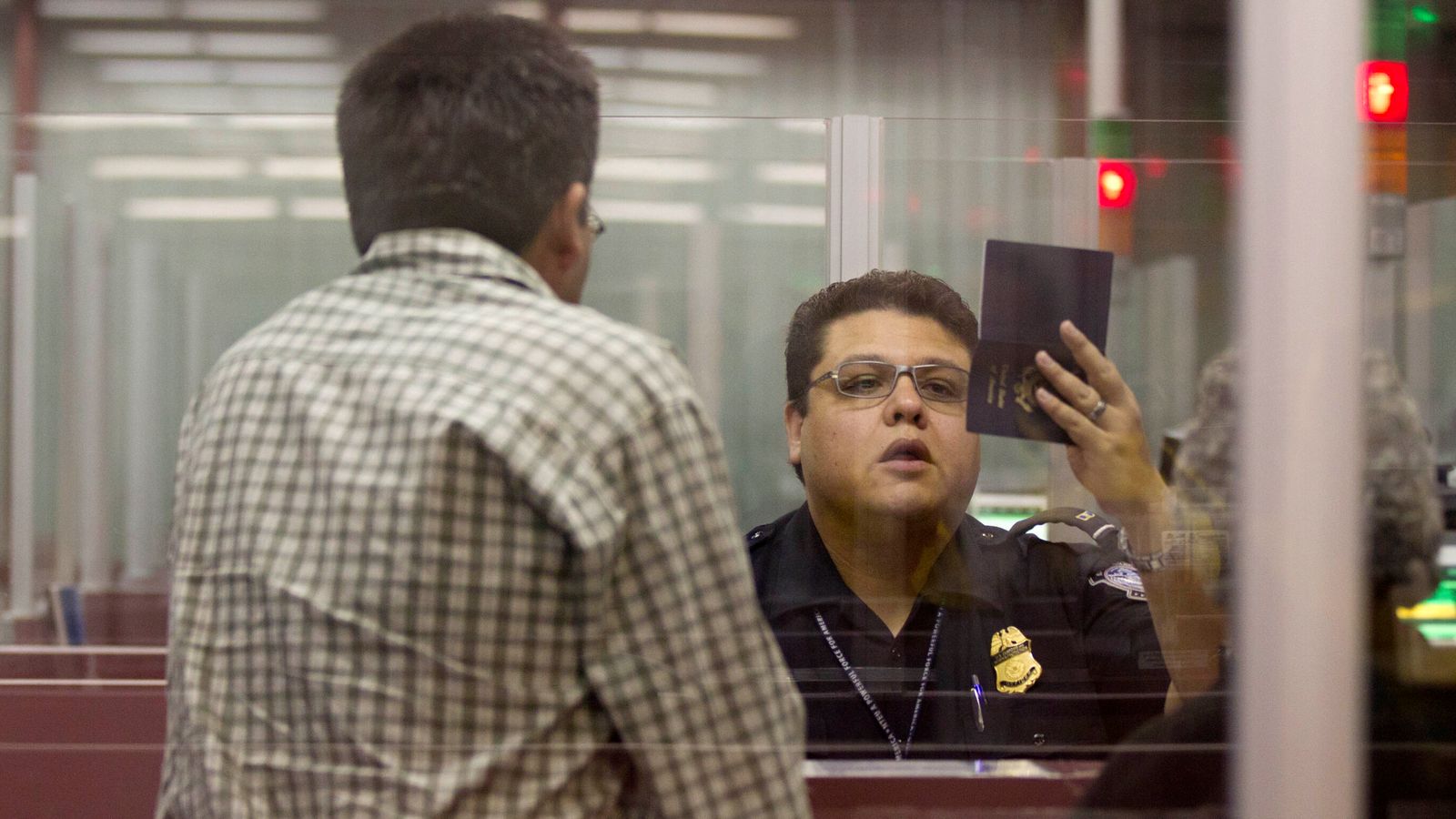
All tourists – including those from Britain – will have to undergo a social media screening before being allowed entry into the US under new plans being considered by the country’s border force.
At the moment, Britons are among those who can visit for up to 90 days without a visa. They just have to obtain an electronic travel authorisation, known as an ESTA, for $40 (£30).
The potential social media mandate being proposed by Customs and Border Protection (CBP) would apply to anyone visiting, whether they require a visa or not.
According to a notice published in America’s federal register on Tuesday, foreign tourists would need to provide their social media from the last five years.
Pic: iStock
It will be “mandatory” to hand over the information, and other details – including email addresses and telephone numbers used in the last five years, as well as the names, addresses, numbers, and birthdays of family members – will also be required.
Currently, as part of the ESTA application process, a tourist from Britain would have to provide an email address, home address, phone number, and emergency contact details. If approved, the ESTA lasts for two years.
CBP is proposing that moving forward, ESTA applications would require a selfie.
It further wants to collect biometrics – face, fingerprints DNA and iris – as part of the ESTA application. It currently only records face and fingerprints upon arrival at the US border.
The proposed changes are open for public consultation for 60 days.
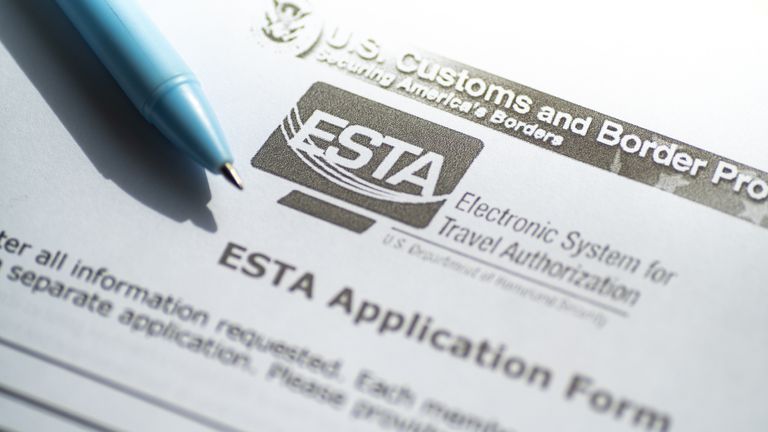
An ESTA application form. Pic: iStock
So much for free speech?
There have been several reports of travellers already having been denied entry into the US over social media posts and messages found on their personal devices after President Donald Trump took office in January.
This includes a French scientist who was turned away at the US border in March after messages “that reflect hatred toward Trump and can be described as terrorism” were found on his phone.
Despite Mr Trump vowing to “restore freedom of speech” on online platforms and end “federal censorship” when he took office, he has found himself at the centre of various free speech rows since.
In September, talk show host Jimmy Kimmel was taken off-air by Disney-owned ABC over comments he made about the assassination of the right-wing influencer Charlie Kirk.
Mr Kimmel accused the Trump administration and its allies of “working very hard to capitalise on the murder of Charlie Kirk”, with the president among those to pin it on left-wing extremism.
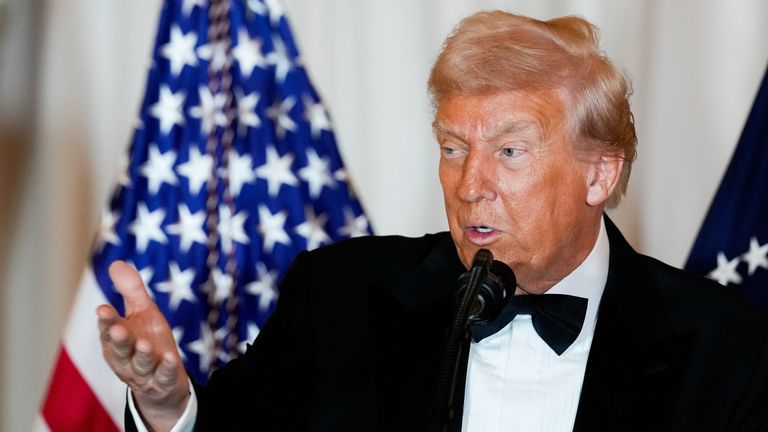
President Donald Trump has been at the centre of several free speech rows. Pic: AP
At the time, Mr Trump suggested certain networks should have their licenses revoked over a lack of support for him.
Mr Kimmel’s show was reinstated less than a week after his suspension following widespread backlash from celebrities and viewers.
Read more from Sky News:
This is the reality of Trump’s trade war
Trump’s verdict on America’s traditional allies
And in April, Harvard University sued the Trump administration for seeking “unprecedented and improper” control of the school, after it froze $2.6bn (£1.9bn) of its federal funding.
Harvard’s lawsuit accused the government of waging a retaliation campaign against the university after it rejected a list of 10 demands from a federal antisemitism task force, which included sweeping changes related to campus protests, academics and admissions.
A judge ruled in September that the Trump administration’s freeze of billions in research funding to Harvard was unconstitutional and retaliatory, a decision the US government vowed to appeal.
An agreement has not yet been reached, so the fight between the Ivy League university and Mr Trump rages on.
US
Egypt and Iran complain to FIFA after World Cup match scheduled to coincide with Seattle Pride event
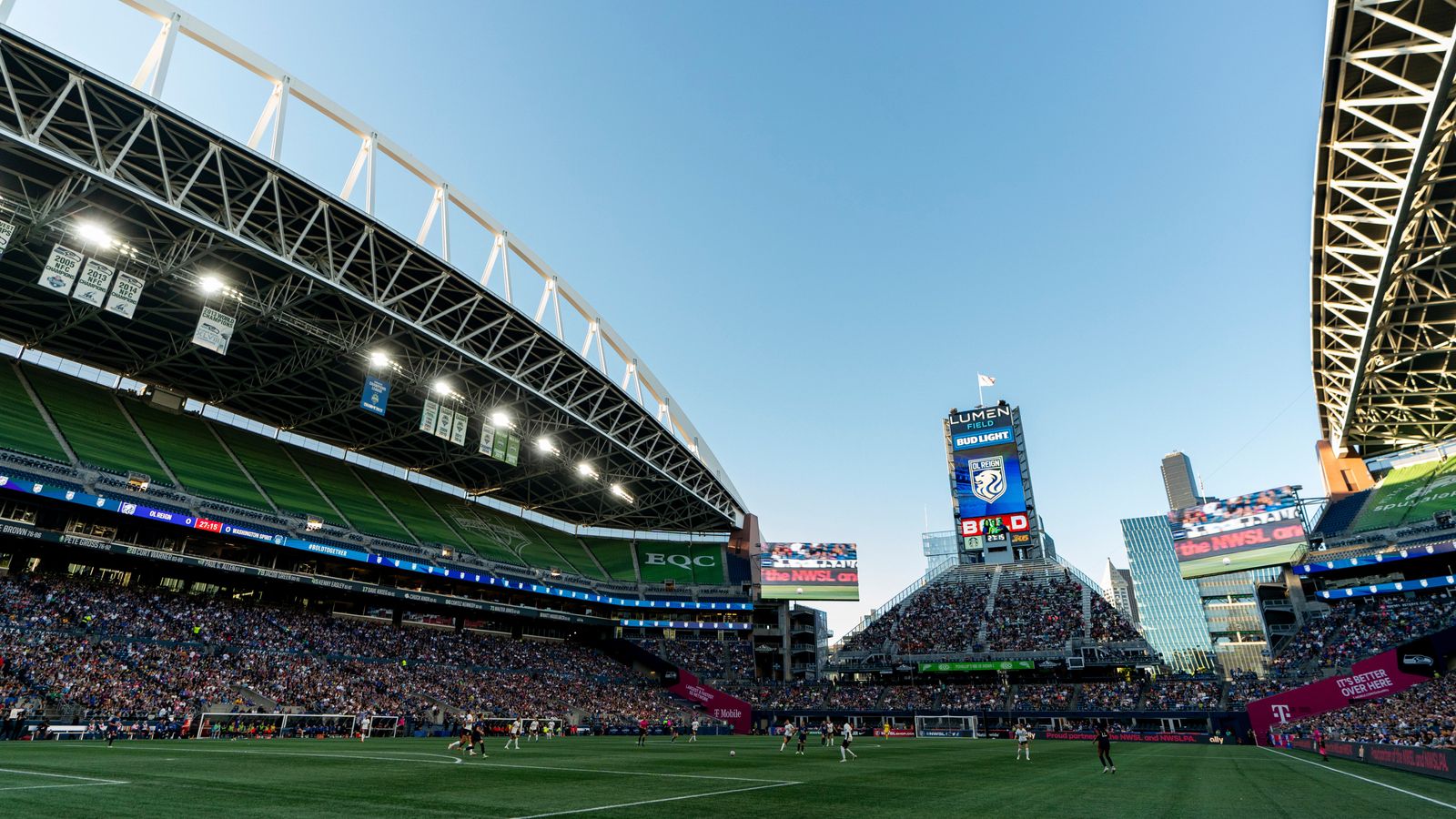
Iran and Egypt have complained after FIFA scheduled a World Cup match between the two nations in Seattle to coincide with the city’s LGBTQ+ Pride festival.
Seattle’s PrideFest 2026, which organisers say regularly sees more than 200,000 participants, takes place on 27 and 28 June – immediately following the match.
Local organisers have said the 26 June game at the Seattle Stadium will include a “once-in-a-lifetime moment to showcase and celebrate LGBTQIA+ communities in Washington”.
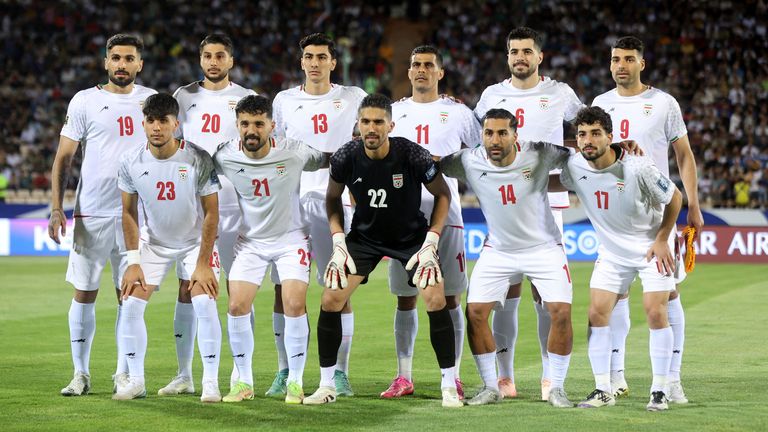
Iran players pose for a team group photo before a match against North Korea in June 2025. Pic: Reuters
In Iran, where gay couples can face the death penalty, the president of Iran’s Football Federation, Mehdi Taj, condemned the decision to use Seattle as a venue and the timing of the match.
Mr Taj told Iranian state TV: “Both Egypt and we have objected, because this is an unreasonable and illogical move that essentially signals support for a particular group, and we must definitely address this point.”
He said Iran would bring up the issue at a FIFA Council meeting in Qatar next week.
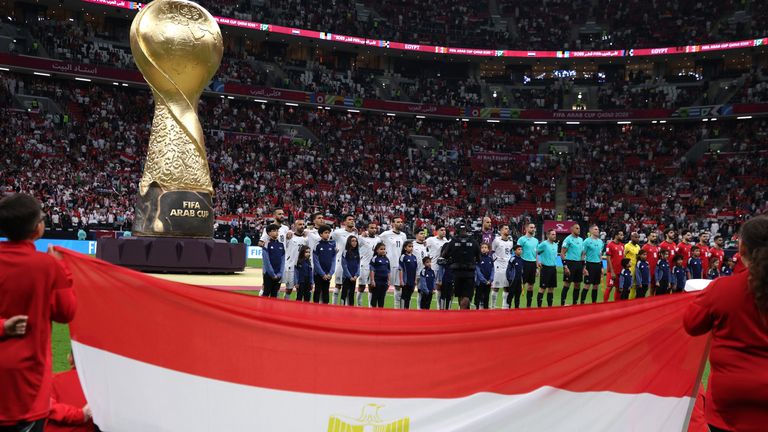
The Egypt players line up during the national anthems before the match against Jordan. Pic: Reuters
The football federation in Egypt, where Human Rights Watch says people from LGBTQ+ communities face persecution, said in a statement that it had written to FIFA “categorically rejecting any activities related to supporting homosexuality during the match between the Egyptian national team and Iran.”
The letter also stated: “Information had circulated indicating the local organising committee’s decision and plans to hold some activities related to supporting homosexuality during that match” and the federation “completely rejects such activities, which directly contradict the cultural, religious and social values in the region, especially in Arab and Islamic societies”.
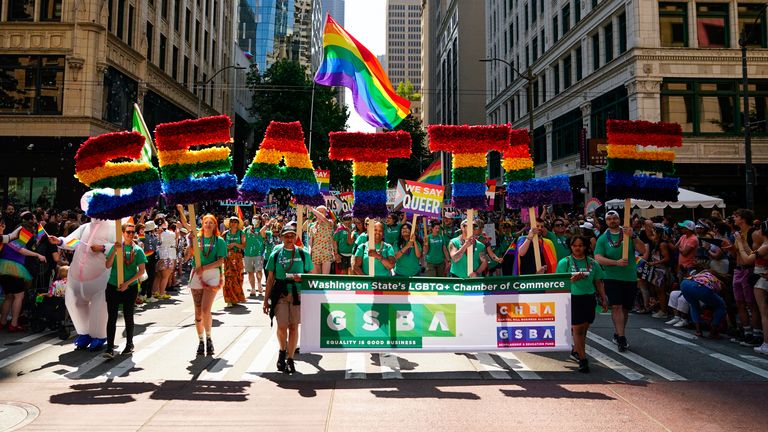
The Seattle Pride festival takes place in late June, attracting hundreds of thousands of people every year, like in 2023. File pic: AP
In Seattle, the local organising committee said it was “moving forward as planned with our community programming outside the stadium during Pride weekend and throughout the tournament,” having already promoted an art contest ahead of the match.
Read more:
Man charged with racially abusing Antoine Semenyo
Steven Hutton: Three men and one woman jailed over ‘frenzied’ Dundee murder
It added: “We get to show the world that in Seattle, everyone is welcome.”
Seattle PrideFest has been organised in the city since 2007 by a nonprofit group which designated the 26 June match for celebration before FIFA carried out the World Cup draw on Friday.
On Saturday, FIFA announced the Egypt-Iran game had been allocated to Seattle instead of Vancouver, where the teams’ group rivals Belgium and New Zealand will play at the same time.
FIFA has been asked for a comment.
-
 Sports2 years ago
Story injured on diving stop, exits Red Sox game
-
 Sports3 years ago
‘Storybook stuff’: Inside the night Bryce Harper sent the Phillies to the World Series
-
 Sports2 years ago
Game 1 of WS least-watched in recorded history
-
 Sports3 years ago
Button battles heat exhaustion in NASCAR debut
-
 Sports3 years ago
MLB Rank 2023: Ranking baseball’s top 100 players
-
Sports4 years ago
Team Europe easily wins 4th straight Laver Cup
-
 Environment3 years ago
Japan and South Korea have a lot at stake in a free and open South China Sea
-
 Environment1 year ago
Here are the best electric bikes you can buy at every price level in October 2024