

Nvidia share price plunge has one major explanation

Just one week ago, Nvidia became the world’s most valuable company.
The chipmaker – whose shares had risen nine-fold since the end of 2022 – overtook Microsoft as its stock market valuation reached $3.34trn (£2.63bn).
Since then, the shares have fallen by 13%, declining in each of the last three trading sessions.
That has been enough to clip more than $500bn (£394bn) from Nvidia’s stock market valuation reached when, last Thursday, the shares hit an all-time intra-day high of $140.76 (£110.94) each (taking into account the 10-for-one share split completed earlier this month).
Post Office Horizon IT Inquiry – watch live
To put that into context, Exxon Mobil – the 14th biggest company in the S&P 500 index and itself one of only a dozen companies ever to achieve the status of the world’s most valuable company – has a stock market valuation of $511bn.
So what is going on?
There are a number of factors at play.
The first is profit-taking. Nvidia shares, prior to last Thursday, had enjoyed a fantastic run and had attracted a lot of hot money from so-called “momentum buyers” who see a stock moving higher and jump on board to profit from the ride.
It was natural for such buyers to lock in profits by selling.
Added to that is that speculative money has moved on. A report published over the weekend in the Wall Street Journal that Meta Platforms, the parent of Facebook, has held talks with Apple about integrating Meta’s generative AI model into the recently unveiled Apple Intelligence system sent shares in both higher as profits from Nvidia’s recent strong run were recycled.
Last week: Nvidia overtakes Microsoft
That money has not left the market – it has simply been redeployed from Nvidia to other stocks, not least Meta and Apple, but also elsewhere.
That can be shown by the fact that the sell-off in Nvidia, while also dragging down peers such as Broadcom, Taiwan Semiconductor, and Super Micro Computer (a server maker which is a heavy buyer of Nvidia’s chips), did not lead to a wider sell-off.
The Dow Jones, admittedly not as good a barometer of the US stock market as the S&P 500, hit its highest level for a month on Monday even as the S&P 500 and Nasdaq, both of which have a heavier weighting in Nvidia, were falling.
Also contributing to the sell-off was the revelation – via a filing to the main US financial regulator, the Securities & Exchange Commission – that Jensen Huang, Nvidia’s founder and chief executive, has taken advantage of the recent rise in the share price to reduce his holding.
Mr Huang, who founded Nvidia in 1993, sold just under $95m (£74.9m) worth of shares between Thursday 13 June and Friday 21 June. Nor is Mr Huang – who still owns more than 866 million shares in Nvidia worth $102.3bn (£80.3bn) at Monday evening’s closing price – the only director to have been selling recently.
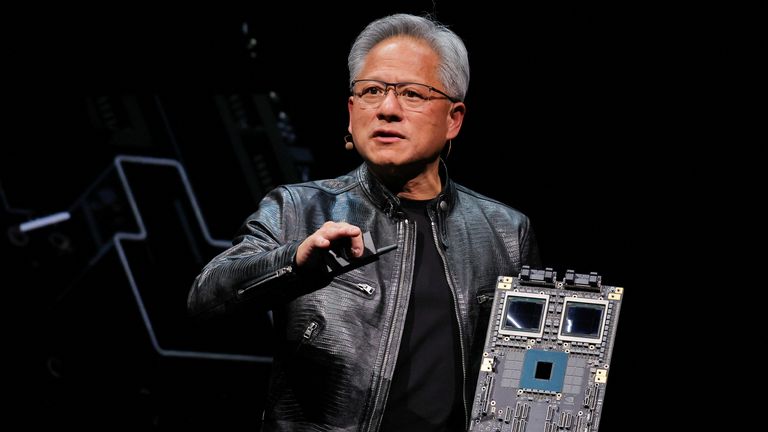
Nvidia CEO Jensen Huang is among directors to have recently sold shares
Mark Stevens, a veteran venture capitalist who has been on the Nvidia board since 2008, has offloaded $28m (£22m) worth of shares this month while Tench Coxe, another VC who was one of Mr Huang’s earliest backers and who has been on the board since the start, has sold $119.5m (£94.1m) worth.
Selling by directors is not always a reliable guide to a company’s prospects. Sometimes it reflects personal factors, such as a divorce or estate planning, rather than indicating what a director thinks of a company’s prospects. Rightly or wrongly, though, it is usually taken as a negative signal.
Perhaps the most significant factor in the sell-off, though, is that some investors have been looking at Nvidia through traditional investment yardsticks.
Read more business news from Sky News:
Telegraph suitors given deadline in £600m bidding war
Getir shareholders back break-up of food delivery group
The main one of these is the price/earnings (P/E) ratio. The higher the P/E ratio is, the more expensively a stock is valued.
Last week, after its latest gains, shares of Nvidia were changing hands at 45 times expected earnings.
To put that in context, the forward P/E of the S&P 500 is 22 times and the Nasdaq only slightly more. Put another way, investors were ascribing more than twice the value to Nvidia’s future earnings as they were to those of its peers.
Moreover, as the influential investment magazine Barron’s pointed out at the weekend, Nvidia was being valued at some 20 times its expected sales for the year to the end of January 2026 – a racy valuation, to say the least.

Keep up with all the latest news from the UK and around the world by following Sky News
Stocks with those kinds of valuation have to justify it with spectacular earnings growth.
Yet, as Barron’s columnist Eric Savitz pointed out, Nvidia’s quarter-on-quarter earnings growth has, over the last four quarters, slowed from 88% to 34% to 22% to 18%. Now, quarter-on-quarter earnings growth of 18% is still pretty spectacular. But it does not quite justify a price/earnings multiple that has gone from 25 to 45 over the last year.
Pointing out that from 1976 to 2020, stocks trading at P/E rations of over 15 tended to underperform, Mr Savitz added: “I know what you’re thinking. It’s different this time. This is AI! And sure, maybe AI really is the most important thing to happen in technology since cloud computing, or the internet, or mobile phones, or even the personal computer. But the numbers worry me.
“Nvidia’s market value is now nearly five times the industry estimate for next year’s global chip sales-yes, the total from every company worldwide. Microsoft has seven times the number of employees Nvidia does, and twice the sales. Apple has five times the staff, and triple the sales volume. Nonetheless, this past week, Nvidia’s market cap vaulted past them both.”
Mr Savitz was not the only investment columnist suggesting that, perhaps, Nvidia’s shares might be over-valued.
Some of Monday’s sell-off was also fuelled by the highly influential ‘Heard on the Street’ column in the Wall Street Journal which, at the weekend, invited readers to cast their minds back to the dot-com bubble at the beginning of the century and, in particular, to the gyrations seen at that time in shares of Cisco Systems.
Cisco, the Journal reminded its readers, was favoured along with stocks such as IBM, Lucent and Intel – companies whose hardware were at the forefront of connecting households and businesses to the internet. By the end of 1999, it had become the world’s most valuable company.
The comparison with Cisco has undoubtedly dented sentiment towards Nvidia in some quarters.
Pointing out that today Cisco is now valued at 40% less than it was back then, the Journal highlighted that, at its peak in March 2000, Cisco shares were valued at 131 times forward earnings despite a less impressive financial performance than that recently shown by Nvidia.
Read more:
How Nvidia climbed to the top of the market
Stressing that Nvidia was not is frothily valued as Cisco had been, the column added: “That doesn’t necessarily make Nvidia’s shares safe at their current level, though.
“The stock has seen a big influx of individual investors since the company’s latest financial results last month. Daily retail inflow has averaged nearly $141m since the earnings compared with a daily average of about $39m during the month prior, according to Vanda Research.
“Sell-side analysts are also getting rather exuberant. Several have pushed up their price targets since the stock’s 10 June split. And at least four of those targets are now at $160 and higher, which would put Nvidia’s market capitalization near $4trn at its current share count.
“Nvidia may be the top gun of AI, but investors should be careful not to write checks the stock can’t cash.”
Quite so.
AI is still a nascent technology and it is impossible to know, from here, who may be the greatest winners from it over time.
Just as investors back in 1999, trying to predict who would be the world’s biggest winners from widespread adoption of the internet, could not have known.
US
‘Never-before-seen’ images of Jeffrey Epstein’s island released – showing ‘disturbing look into his world’


Images and video of Jeffrey Epstein’s private Caribbean island have been released by politicians in the US.
Democrats on the House Oversight Committee said on X that they were “a harrowing look behind Epstein’s closed doors”.
“We are releasing these photos and videos to ensure public transparency in our investigation and to help piece together the full picture of Epstein’s horrific crimes,” said representative Robert Garcia.
“We won’t stop fighting until we deliver justice for the survivors.”
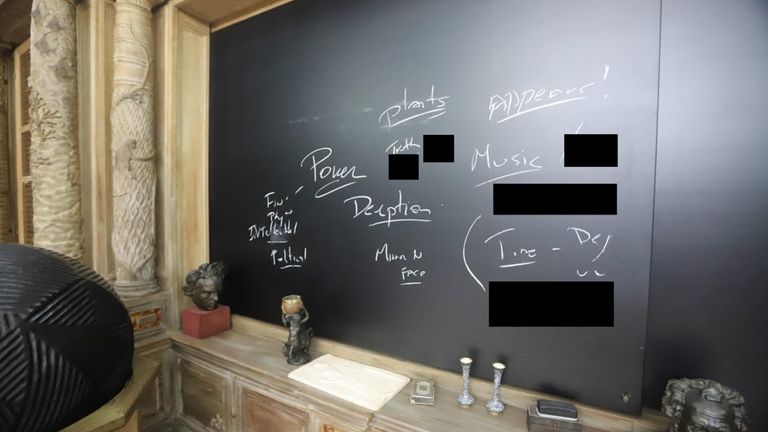
The images show empty courtyards, bedrooms and other rooms from his villa.



.
Mr Garcia said: “It’s time for President Trump to release all the files, now.”
President Trump recently approved their release after US Congress voted overwhelmingly in favour.
The US Department of Justice now has until mid-December to release thousands of files linked to civil and criminal cases involving Epstein.

.


It could shed more light on the paedophile financier, who socialised with figures including Donald Trump, Andrew Mountbatten-Windsor and Peter Mandelson.
Their connections have already been revealed in more than 20,000 other files disclosed last month.
But much more is set to follow as the Epstein Files Transparency Act demands release of all files relating to Epstein, including investigations, prosecutions and custodial matters, as well as records connected to Ghislaine Maxwell.
Politicians have said the files’ release is critical to uncovering whether powerful figures have received special treatment or protection.
This breaking news story is being updated and more details will be published shortly.
Please refresh the page for the latest version.
You can receive breaking news alerts on a smartphone or tablet via the Sky News app. You can also follow us on WhatsApp and subscribe to our YouTube channel to keep up with the latest news.
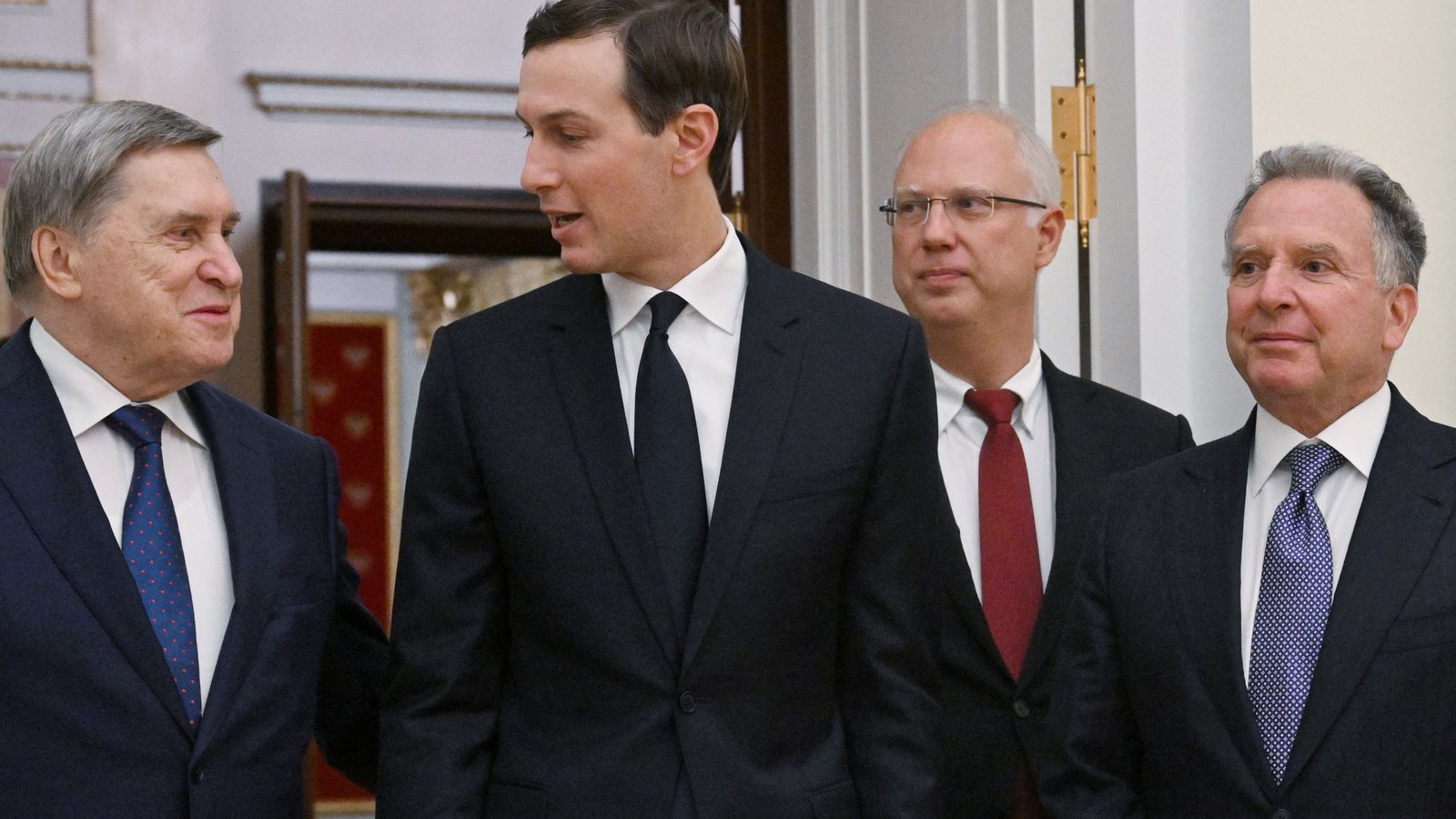
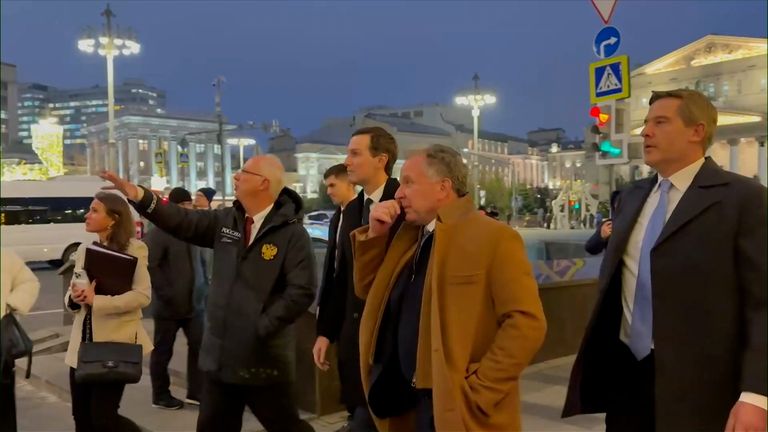
The Americans were given the full VIP treatment on their visit to Moscow.
There was a motorcade from the airport, lunch at a Michelin-starred restaurant, and even a stroll around Red Square.
It felt like Steve Witkoff and Jared Kushner were on more of a tourist trail than the path to peace.
Trump’s envoys walk around Moscow
They finally got down to business in the Kremlin more than six hours after arriving in Russia. And by that point, it was already clear that the one thing they had come to Moscow for wasn’t on offer: Russia’s agreement to their latest peace plan.
According to Vladimir Putin, it’s all Europe’s fault. While his guests were having lunch, he was busy accusing Ukraine’s allies of blocking the peace process by imposing demands that are unacceptable to Russia.
The Europeans, of course, would say it’s the other way round.
But where there was hostility to Europe, only hospitality to the Americans – part of Russia’s strategy to distance the US from its NATO allies, and bring them back to Moscow’s side.
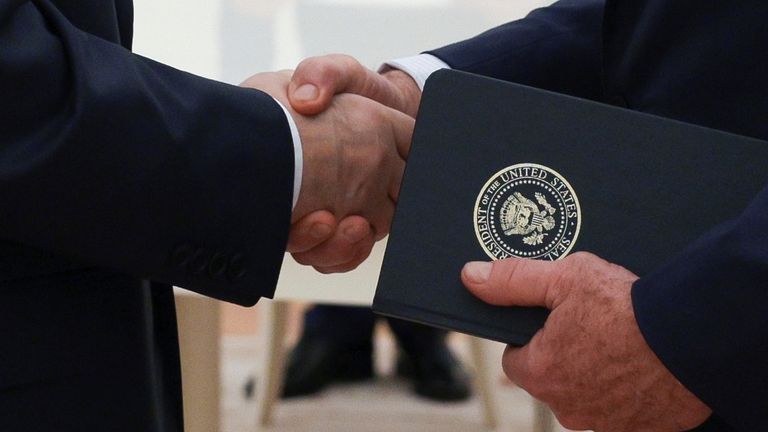
Vladimir Putin and Steve Witkoff shaking hands in August. AP file pic
Putin thinks he’s winning…
Russia wants to return to the 28-point plan that caved in to its demands. And it believes it has the right to because of what’s happening on the battlefield.
It’s no coincidence that on the eve of the US delegation’s visit to Moscow, Russia announced the apparent capture of Pokrovsk, a key strategic target in the Donetsk region.
It was a message designed to assert Russian dominance, and by extension, reinforce its demands rather than dilute them.
Read more:
Michael Clarke answers your Ukraine war questions
‘Thousands’ of Westerners applying to live in Russia

‘Everyone must be on this side of peace’
…and believes US-Russian interests are aligned
The other reason I think Vladimir Putin doesn’t feel the need to compromise is because he believes Moscow and Washington want the same thing: closer US-Russia relations, which can only come after the war is over.
It’s easy to see why. Time and again in this process, the US has defaulted to a position that favours Moscow. The way these negotiations are being conducted is merely the latest example.
With Kyiv, the Americans force the Ukrainians to come to them – first in Geneva, then Florida.
As for Moscow, it’s the other way around. Witkoff is happy to make the long overnight journey, and then endure the long wait ahead of any audience with Putin.
It all gives the impression that when it comes to Russia, the US prefers to placate rather than pressure.
According to the Kremlin, both Russia and the US have agreed not to disclose the details of yesterday’s talks in Moscow.
I doubt Volodymyr Zelenskyy is filled with hope.
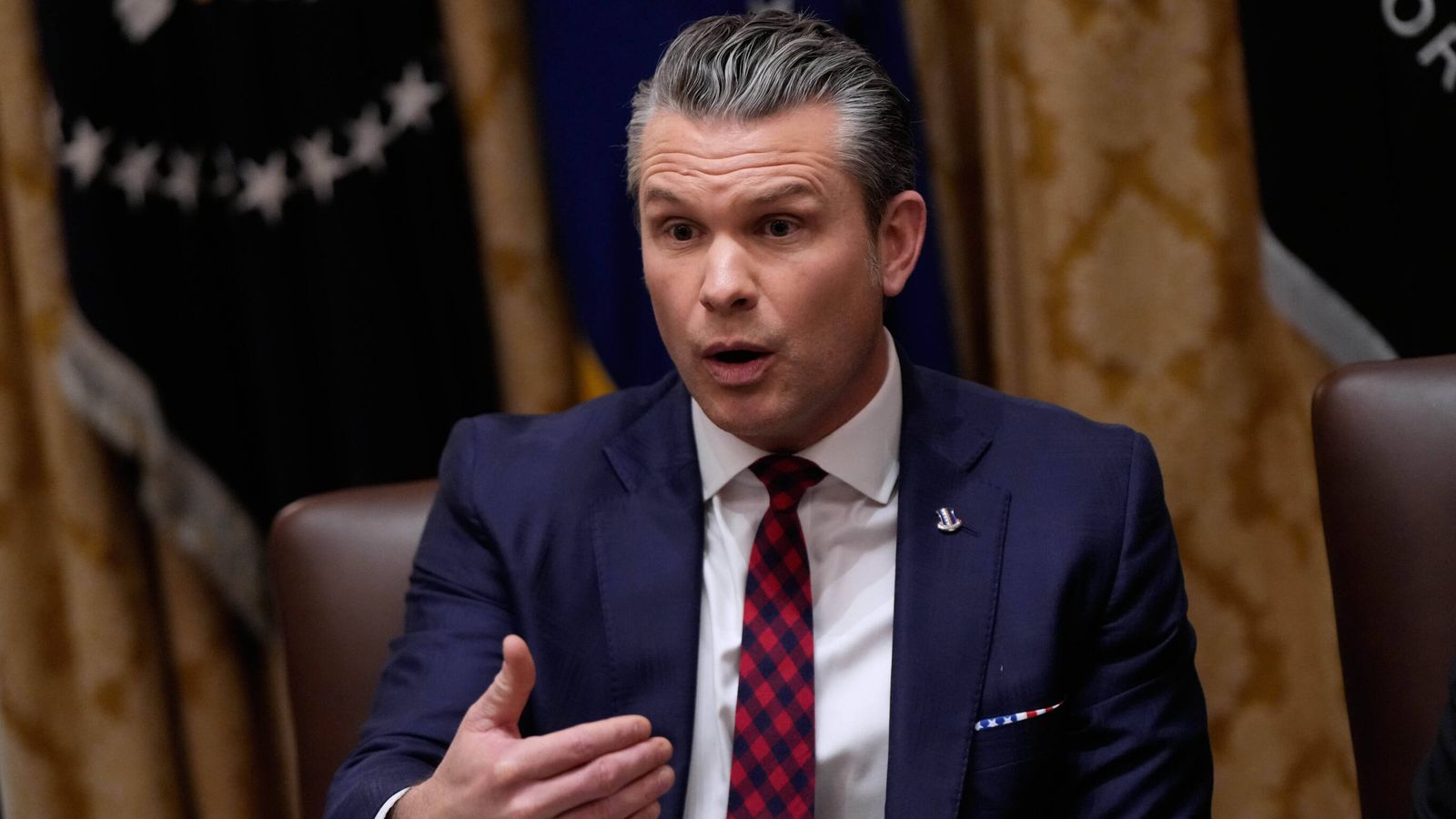
US defence secretary Pete Hegseth has cited the “fog of war” in defence of a follow-up strike earlier this year on a boat alleged to be carrying drugs in the Caribbean Sea.
His comments came on the day the Pope urged Donald Trump not to try to oust Venezuelan President Nicolas Maduro using military force.
Speaking at a cabinet meeting on Tuesday alongside Mr Trump, Mr Hegseth said the US had paused strikes because it was hard to find drug boats.
But strikes against drug traffickers would continue, he said.
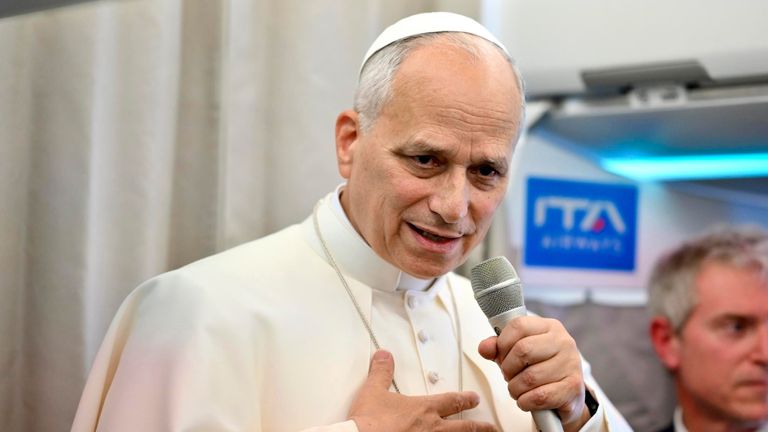
Pope Leo XIV talks to reporters as he returns from visits to Turkey and Lebanon. Pic: AP
During the cabinet meeting at the White House, Mr Hegseth said that he did not see that there were survivors in the water when the second strike was ordered and launched in early September, saying that “the thing was on fire”.
Mr Hegseth also said he “didn’t stick around” for the rest of the mission following the first strike, adding that the admiral in charge had “made the right call” in ordering it, which he “had complete authority to do”.
The Washington Post first reported that Mr Hegseth issued a verbal order for the second strike that killed survivors on the boat.
On Monday, the White House said that Navy vice admiral Frank “Mitch” Bradley acted “within his authority and the law” when he ordered the second strike.
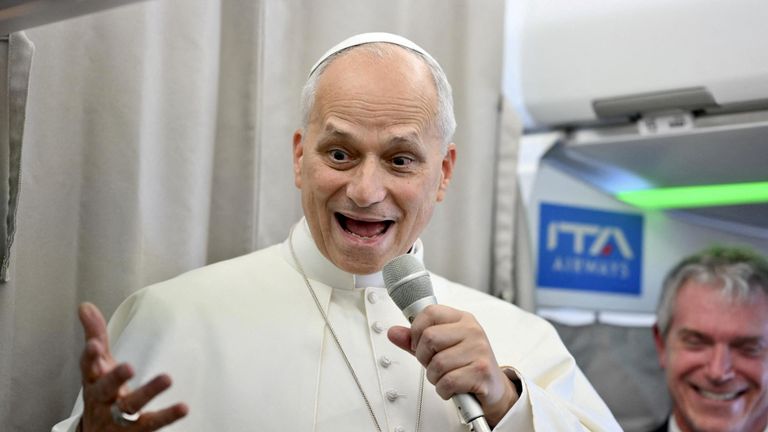
Pope pleads to Trump not to oust Venezuelan president by force
Asked if he supported the second strike on a boat in the Caribbean Sea in September, President Trump said he “didn’t know anything” and “still haven’t gotten a lot of information because I rely on Pete”, referencing Mr Hegseth.
On Tuesday, Pope Leo, the first American pontiff, said it would be better to attempt dialogue or impose economic pressure on Venezuela if Washington wanted to pursue change there.
Read more from Sky News:
Government delays Chinese ‘super embassy’ decision
Imran Khan healthy but isolated in jail, his sister says
The Trump administration has been weighing options to combat what it has portrayed as Mr Maduro’s role in supplying illegal drugs that have killed Americans.
The socialist Venezuelan president has denied having any links to the illegal drug trade.
Asked during a news conference about President Trump’s threats to remove Mr Maduro by force, the Pope said: “It is better to search for ways of dialogue, or perhaps pressure, including economic pressure.”
He added that Washington should search for other ways to achieve change “if that is what they want to do in the United States”.
The Pope was speaking as he flew home from visiting Turkey and Lebanon – his first overseas trip in the role.
Mr Maduro has said Venezuelans are ready to defend their country as the US considers a land attack.
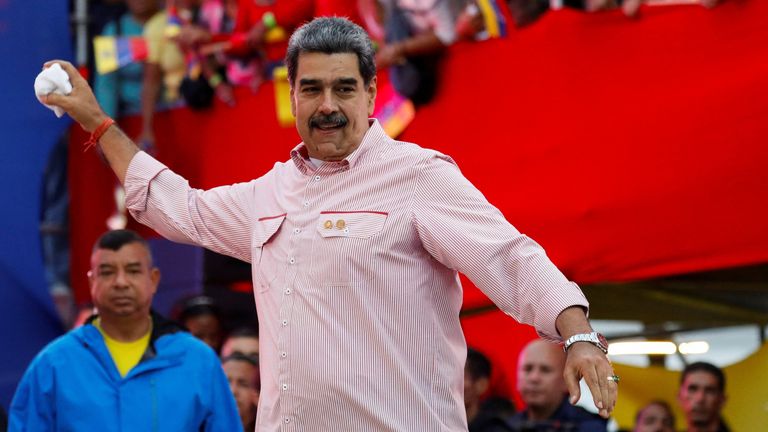
Venezuela’s President Nicolas Maduro in Caracas. Pic: Reuters

A map showing Venezuelan military facilities
The president held a rally in Caracas amid heightened tensions with Mr Trump’s administration, which has been targeting what it says are boats carrying drug smugglers.
Mr Trump met his national security team on Monday evening, having warned last week that land strikes would start “very soon”.
It has not been confirmed what was discussed at the meeting. But White House press secretary Karoline Leavitt told reporters: “There’s many options at the president’s disposal that are on the table – and I’ll let him speak on those.”
US forces have carried out at least 21 strikes on boats it claims were carrying narcotics to its shores over the last few months.
Did Pete Hegseth commit a war crime?
Mr Maduro – considered a dictator by many in the West – said on Monday that Venezuelans were ready “to defend [the country] and lead it to the path of peace”.
“We have lived through 22 weeks of aggression that can only be described as psychological terrorism,” he said.
Venezuela has said the boat attacks, which have killed more than 80 people, amount to murder – and that Mr Trump’s true motivation is to oust Mr Maduro and access its oil.
-
 Sports2 years ago
Story injured on diving stop, exits Red Sox game
-
 Sports3 years ago
‘Storybook stuff’: Inside the night Bryce Harper sent the Phillies to the World Series
-
 Sports2 years ago
Game 1 of WS least-watched in recorded history
-
 Sports3 years ago
Button battles heat exhaustion in NASCAR debut
-
 Sports3 years ago
MLB Rank 2023: Ranking baseball’s top 100 players
-
Sports4 years ago
Team Europe easily wins 4th straight Laver Cup
-
 Environment3 years ago
Japan and South Korea have a lot at stake in a free and open South China Sea
-
 Environment1 year ago
Here are the best electric bikes you can buy at every price level in October 2024