
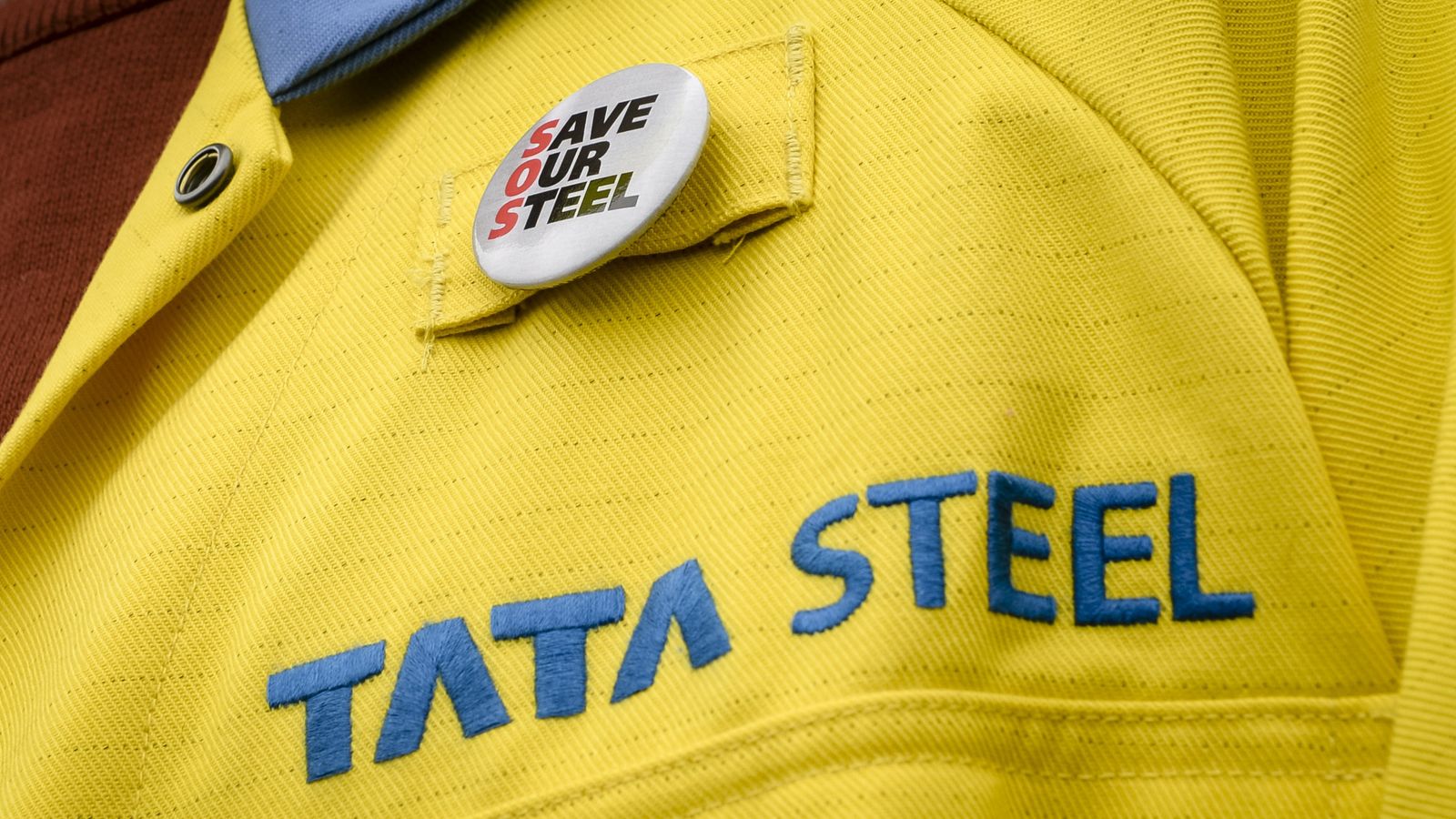
Tata’s Port Talbot steelworks set to be shutdown early due to Unite strikes


Multinational conglomerate Tata is set to shut the Port Talbot steelworks earlier than first announced over strike plans.
The company has said it will bring the final closure date to 7 July, from September, as Unite members at the steel plant were due to strike on 8 July.
Cutting emissions
One of the steel blast furnaces is to close at the end of this month in a push to reduce carbon emissions at what is the UK’s single largest source of CO2.
But that second closure looks set to take place next month, quickening the end of the plant and the loss of 2,800 jobs – 2,500 in the next year, a further 300 in three years.
It comes despite £500m of taxpayer cash to support the site’s transition to cheaper, greener steel production to cut emissions.
The previous fossil-fuel-powered blast furnaces are to be replaced by a single electric arc furnace.
Political intervention
Labour had pleaded with the company to hold fire on any closures before a new government is elected on 4 July.
Senior Labour figures including shadow Welsh secretary Jo Stevens had urged Tata to wait for a possible Labour government so fresh talks could take place.
Keep up with all the latest news from the UK and around the world by following Sky News
Unite general secretary Sharon Graham said: “Unite is fighting for the future of the steel industry. We have secured serious investment from Labour to safeguard jobs.”

The price of going green? Unions say it’s workers’ jobs
Ms Graham described Tata’s move as being the “latest In a long line of threats that won’t deter us”.
“The Unite campaign is not about selling jobs, it’s about securing the long-term future of steel making in this country for thousands of workers in Port Talbot and South Wales. We call on the real decision-makers in Mumbai to take hold of this dispute, sit down, negotiate and realise that the investment secured will be good for the company and workers.”
The GMB union also voiced its support, saying “Tata must step back from this irreversible decision and safeguard steelmaking assets. There’s a general election in days that could change so much”.
A Tata Steel spokesperson said Unite’s strike announcement was made unilaterally and it is “unfortunately forced to commence legal action to challenge the validity of Unite’s ballot”.
“In the coming days, if we cannot be certain that we are able to continue to safely operate our assets in a stable fashion through the period of strike action, we will not have any choice but to pause or stop heavy end operations (including both blast furnaces) on the Port Talbot site.
“That is not a decision we would take lightly, and we recognise that it would prove extremely costly and disruptive throughout the supply chain, but the safety of people on or around our sites will always take priority over everything else.
“The company again calls for Unite to withdraw its industrial action and join Community and GMB unions in giving consideration to the company’s proposed memorandum of understanding, which puts forward a wide-ranging proposal including generous employee support packages, training and skills development.”



The first-ever Capture case has been delayed at the Court of Appeal as the Post Office asks for an extension to respond, Sky News has learned.
Pat Owen, a former sub postmistress who has since passed away, was convicted of stealing in 1998 based on evidence from computer software.
The system, known as Capture, was used in up to 2,500 branches in the 1990s, before the infamous Horizon system was introduced.
Hundreds of sub-postmasters were wrongfully convicted between 1999 and 2015 as part of the Horizon scandal.
Earlier this year, Sky News unearthed a 1998 report showing the Capture software was also faulty.
That report, commissioned by the solicitors acting for Mrs Owen in 1998, was served on the Post Office and may never have been seen by the jury in her case.
‘All we want is her name cleared’
Ms Owen was given a suspended prison sentence and fought to clear her name subsequently – but died in 2003.
Her case was referred by the Criminal Cases Review Commission (CCRC) to the Court of Appeal in October.
The Post Office had until 5 December to respond to papers put forward by Mrs Owen’s defence team but they have now asked for an extension until 30 January.
Ms Owen’s daughter, Juliet Shardlow, described the family’s suffering at the lengthening wait.
“I need to emphasise the profound impact the ongoing delay is having on our family,” she said.
“The continuous uncertainty only compounds our heartache, stress, and anxiety.
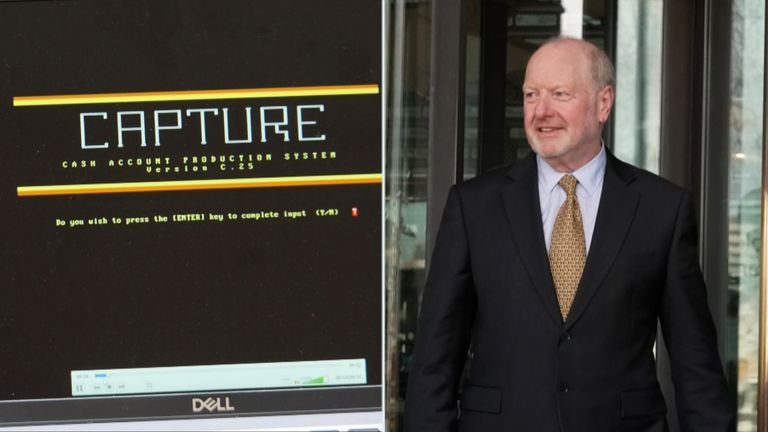
Alan Bates: New redress scheme ‘half-baked’
“It has become the last thing I think about before I go to sleep and the first thing when I wake up.
“We have waited 27 years for justice, and this additional wait feels never-ending.”
Ms Owen’s case is the first time a conviction based on Capture has reached the Court of Appeal since the scandal was exposed.
Read more from Sky News:
Corporate manslaughter charges considered in Post Office scandal
21 ‘Capture’ cases investigated for miscarriages of justice
Lawyers have said that if Ms Owen is exonerated posthumously, it may “speed up” the handling of others.
CCRC chair Dame Vera Baird also told Sky News in the summer it could be a “touchstone case” for other victims.
The CCRC is also continuing to investigate around 30 other “pre-Horizon” convictions.
A Post Office spokesperson said: “We have sought an extension of time to fully consider and respond to the CCRC’s Statement of Reasons in Ms Owen’s case.
“We deeply regret the impact our request for further time will have on Ms Owen’s family.
“We have a duty to carefully consider the evidence presented in the Statement of Reasons submitted by the CCRC and do everything we can to fully assist the Court when it considers this conviction.”
Meanwhile, the first-ever redress scheme for victims of the Post Office Capture IT scandal was launched this autumn.
The Capture Redress Scheme will provide payments of up to £300,000, and more in “exceptional” cases, to former postmasters who suffered financial losses.

-
 Sports2 years ago
Story injured on diving stop, exits Red Sox game
-
 Sports3 years ago
‘Storybook stuff’: Inside the night Bryce Harper sent the Phillies to the World Series
-
 Sports2 years ago
Game 1 of WS least-watched in recorded history
-
 Sports3 years ago
Button battles heat exhaustion in NASCAR debut
-
 Sports3 years ago
MLB Rank 2023: Ranking baseball’s top 100 players
-
Sports4 years ago
Team Europe easily wins 4th straight Laver Cup
-
 Environment3 years ago
Japan and South Korea have a lot at stake in a free and open South China Sea
-
 Environment1 year ago
Here are the best electric bikes you can buy at every price level in October 2024