

Amazon aggregators Branded and Heyday plan to merge as once-booming industry continues to shrink

An Amazon contract worker pulls a cart of packages for delivery in New York, US, on Monday, April 22, 2024.
Angus Mordant | Bloomberg | Getty Images
Amazon aggregators Branded and Heyday plan to merge, CNBC has learned, as a segment of the e-commerce industry that boomed during the Covid era continues to consolidate.
In a note to staffers on Monday, Heyday CEO Sebastian Rymarz said the combined companies will form a new entity called Essor, which translates to “take flight” in French, “capturing our vision of elevating brands to new heights through our platform,” he wrote.
The new name will be officially rolled out in the coming days, and the combined companies are expected to generate annual revenue of $400 million, Rymarz wrote.
Apollo Global Management and BlackRock are in talks to provide new debt financing to help the combined entity make further acquisitions, according to Bloomberg, citing people familiar with the matter.
“The merger is the culmination of an effort that began well over a year ago to find a partner who could help advance our mission, accelerate progress toward our goals and strengthen our balance sheet, as we’ve spoken about in the past,” Rymarz said. “Branded is the perfect partner.”
Representatives from Heyday and Branded didn’t immediately respond to requests for comment. BlackRock declined to comment, and Apollo didn’t have an immediate response.
In connection with the merger, Heyday is expected to conduct a massive round of layoffs that could result in up to 70% of employees losing their jobs, according to a person familiar with the matter who asked not to be named because the cuts haven’t been announced. Branded will absorb Heyday’s technology team, and several brands, the person said, including skincare line ZitSticka and Boka, which makes fluoride-free toothpaste and other dental care products.
Heyday and Branded are part of the crowded and turbulent market of Amazon seller aggregators. Companies in the space took advantage of low interest rates and pandemic-driven growth in e-commerce to collectively raise more than $16 billion from top names on Wall Street and in Silicon Valley with the intent of rolling up independent sellers on Amazon’s marketplace. Aggregators caught the attention of high-profile investors like L Catterton, BlackRock, and even Jared Kushner’s Affinity Partners.
Cracks began to appear in 2022 as venture funding dried up for cash-burning startups and e-commerce demand cooled with consumers returning to physical stores. Aggregators were suddenly struggling to profitably operate the brands they acquired.
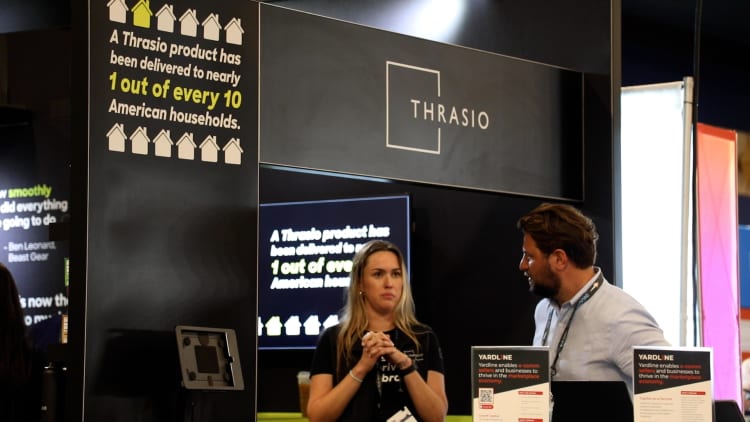
Former highflier Thrasio, an early leader in the aggregator space, filed for bankruptcy in February and lost several key executives. Consolidation among aggregators has accelerated over the past year. Prior to the deal with Paris-based Branded, Heyday explored a possible tie-up with Dragonfly, whose backers include L Catterton, before the talks fell apart, CNBC previously reported.
WATCH: What’s behind the hype and billion-dollar aggregators buying Amazon sellers


Intel stock held a sharp hike in pretrading on Monday, after the stock surged on Friday when an analyst predicted the chip giant was nearing a deal to supply Apple in 2027.
Shares in Intel rose 10% on Friday after TF International Securities analyst Ming-Chi Kuo posted on X that he expected Intel to begin shipping its lowest-end M processor to Apple as early as second or third quarter 2027.
He said that his latest industry surveys indicate that “visibility on Intel becoming an advanced-node supplier to Apple has recently improved significantly.”
Intel stock fell 0.59% as of 6.26am ET on Monday in early pretrading.
Kuo added that the timeline of the partnership is contingent on the development process after Intel releases its process design kit — the blueprint from which Apple’s engineers can build the chips — which is expected early 2026.
Apple’s silicon chips for its iPhone, iPad and Mac products are currently supplied by TSMC.
In his post, Kuo played down the potential Intel-Apple partnership’s impact on the Taiwanese chip maker, saying that Apple is expected to remain “highly dependent” on the company’s advanced nodes for the “foreseeable future.”
“In absolute terms, order volumes for the lowest-end M processor are relatively small and virtually no material impact on TSMC’s fundamentals or its technology leadership over the next several years.”
Kuo added a deal with Intel would signal strong support from Apple for the Trump administration’s push for its homegrown companies to manufacture in the U.S.
Neither Intel nor Apple immediately responded to a request for comment from CNBC.
‘If Intel pulls it off, there is potential to win higher volume and value business from Apple’
Intel’s stock has seen a resurgence over the past 12 months after years of decline. Share price fell as low as $17.66 in April, before recovering over the past few months.
“Apple is a potential major reference customer whose presence validates Intel’s high-performance foundry offering,” Paul Markham, investment director at GAM Global Equities, told CNBC.
“If Intel pulls it off, there is potential to win higher volume and value business from Apple, for example CPU production for the iPhone, and win business from other large chip designers.”
Intel has had an up and down relationship with Apple since it first announced the chip giant’s processors would power some products in 2005. The iPhone maker transitioned away from the company’s processors at the start of the 2020s.
Last week Intel was on the subject of a lawsuit filed by TSMC, in which it alleged one of its former senior vice president had leaked “confidential information” to the company. Intel did not immediately respond to CNBC’s request for comment at the time.


-
 Sports2 years ago
Story injured on diving stop, exits Red Sox game
-
 Sports3 years ago
‘Storybook stuff’: Inside the night Bryce Harper sent the Phillies to the World Series
-
 Sports2 years ago
Game 1 of WS least-watched in recorded history
-
 Sports3 years ago
Button battles heat exhaustion in NASCAR debut
-
 Sports3 years ago
MLB Rank 2023: Ranking baseball’s top 100 players
-
Sports4 years ago
Team Europe easily wins 4th straight Laver Cup
-
 Environment3 years ago
Japan and South Korea have a lot at stake in a free and open South China Sea
-
 Environment1 year ago
Here are the best electric bikes you can buy at every price level in October 2024