
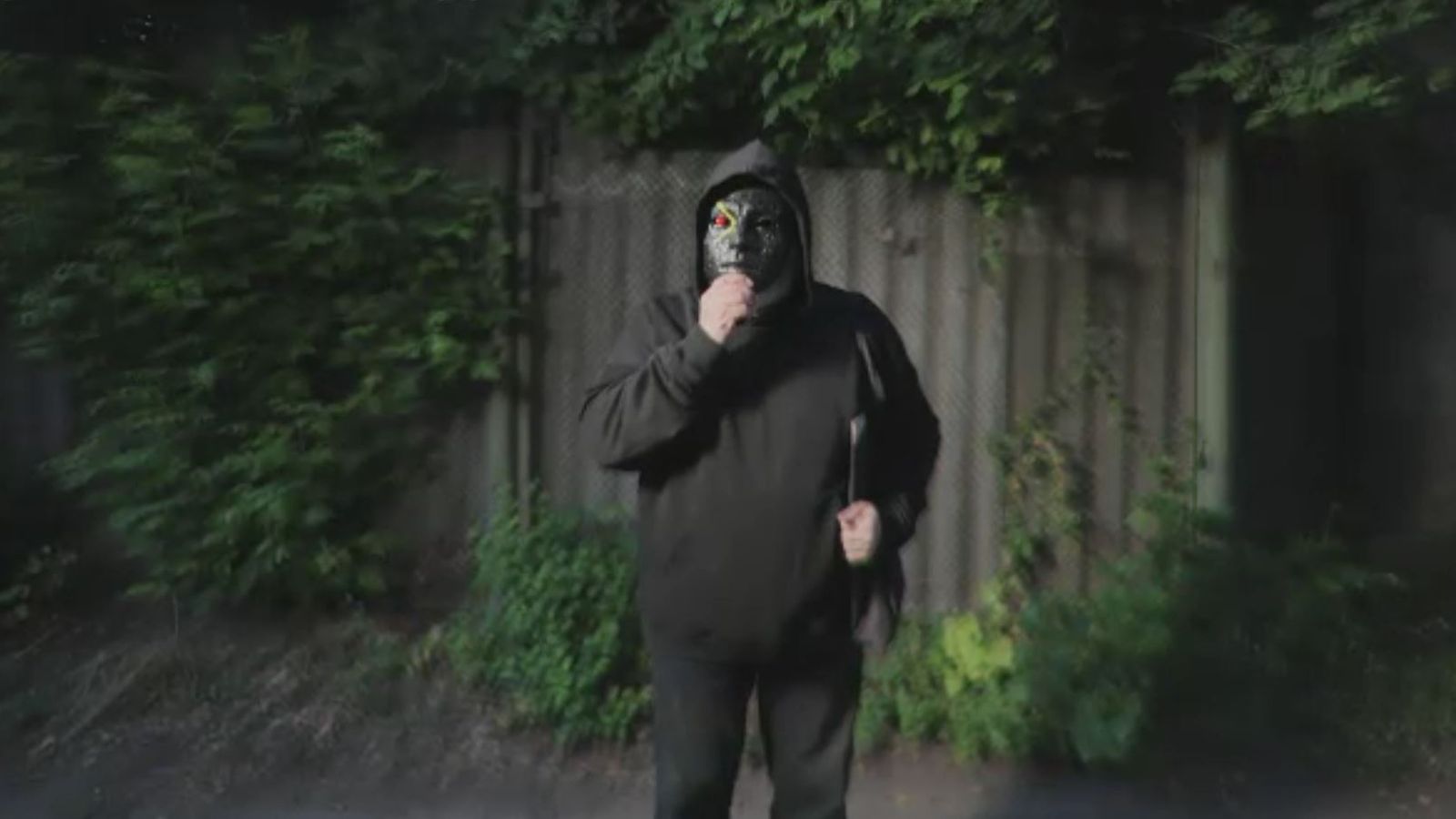
How the covert Ukrainian resistance movement is operating behind Russian lines

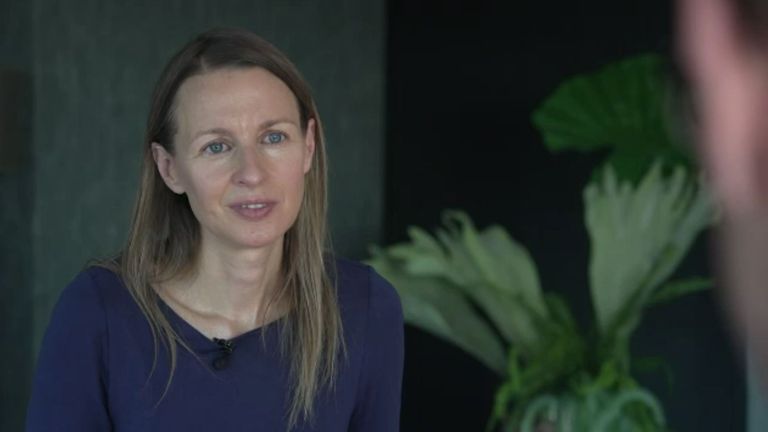
One of the most secret weapons to combat Russia’s invasion of Ukraine has started to raise its profile.
A new video posted on social media seeks to promote the covert activities of a network of Ukrainian civilians, living – and fighting – behind Russian lines.
Run by the Ukrainian special forces, this resistance movement is growing, according to its commander, who said any adult – old, young, male, female – can join.
Ukraine war latest: Russia and Ukraine swap 115 prisoners each
They just need to be loyal to Ukraine – and brave.
In an echo of Britain’s Special Operations Executive that ran missions behind enemy lines during the Second World War, the tasks of the Ukrainian resistance inside territory captured by Moscow include espionage, sabotage and “eliminating” Russian forces, the commander told Sky News.
He said the men and women of the resistance are active in Crimea as well as parts of southern and eastern Ukraine and have carried out jobs within Russia.
Groups are also being created – as a precaution – in parts of Ukraine that may yet fall under Russian control.
In addition, civilians in Russia who oppose Vladimir Putin’s rule have started learning from Ukraine’s resistance to help them with their own operations.
Security and defence editor Deborah Haynes interviewing the leader
“Of course, the work that our people are doing is dangerous,” said the commander, a special forces colonel, who asked to be anonymous for security reasons. We are calling him Mykola.
“Many of our people have died during their work and many of them end up in Russian prisons,” Mykola said.
“But this does not scare us, because our goal justifies the losses we are suffering.”
It is the first time the head of the Resistance of Ukrainian Special Operations Forces – the name of the military branch that runs the resistance movement – has given an interview.
“Among us are those people who calmly, quietly, covertly perform their tasks without expecting a quick reward or glory,” the colonel said, speaking at a hotel in Kyiv.
“The main motivation of our people, all of us, is freedom. We want to defend our country… the Russians will have to either kill us all – or leave.”
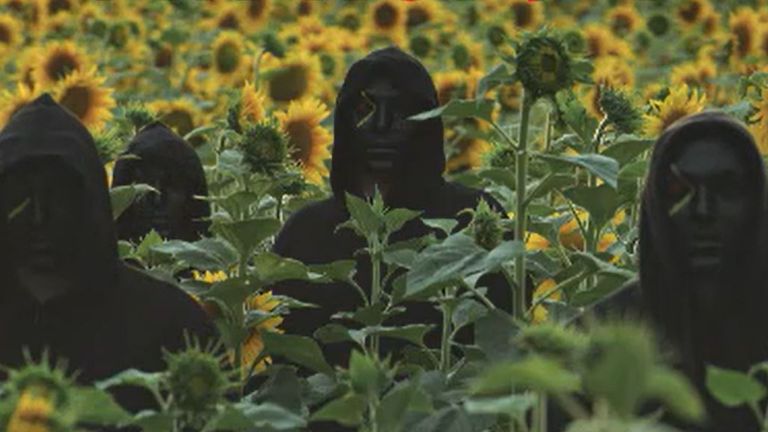
Another screenshot from the promotional video
Video footage shared with Sky News by the Ukrainian special forces purportedly shows a number of resistance missions – though the commander was very reluctant to talk about any specific operation because of the danger to his people on the ground.
One clip from last year purportedly shows members of the resistance setting fire to electricity transmitters in Russia’s southwestern region of Voronezh, next door to Ukraine.
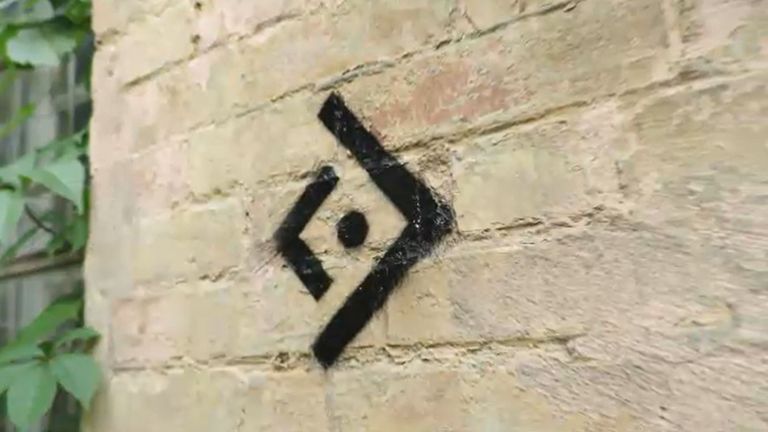
The group’s symbol
There is also footage from 2023 of individuals, their faces covered, spray-painting in black the logo of the resistance – two arrows pointing in opposite directions, and a dot in the middle – on the side of buildings in an occupied part of Donetsk region in eastern Ukraine.
In addition, a video from the first days of the full-scale invasion in 2022, offered evidence of a member of the resistance filming Russian troop movements in the town of Irpin, just outside Kyiv, during a failed push by Moscow to assault the capital.
Read more:
Zelenskyy says Trump has signalled support for ‘free Ukraine’
British citizen found dead after ‘Russian missile strike’
Russian prisoners captured in Kursk offensive freed in prison swap
The commander said the resistance is used to monitor Russian troops and share information on how the Russian authorities are operating in an occupied area.
They have more active roles too.
Some members are deployed to disrupt supply lines to make it harder for Moscow to transport food and ammunition to its frontline forces.
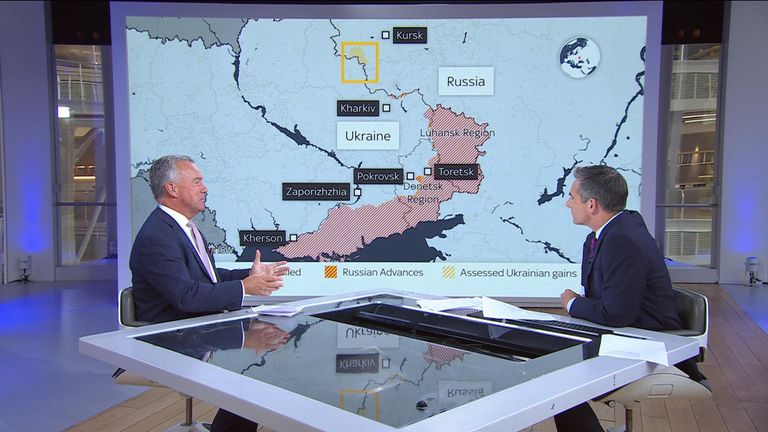
What is Putin’s next move?
“We also try to kill the military personnel of the Russian Federation at all costs – and destroy their military equipment,” Mykola said.
The information provided by resistance members is shared with the Ukrainian armed forces to help coordinate military strikes and other offensives, including into Crimea.
The commander said the resistance will be key in any future push to force the Russian military to withdraw from the peninsula that they have occupied since 2014.
“A lot of our subordinates there are carrying out reconnaissance missions,” Mykola said.
“It’s not surprising that the FSB [Russian security services] is doing a lot of work [in Crimea]. But they still can’t catch our people.”
Hinting at the weight of responsibility on his shoulders for being in charge of such high-risk operations, he added: “Thank God for that.”
Mykola said the resistance began informally after Russia first invaded Crimea and parts of eastern Ukraine a decade ago.
However, it became a more formal structure, under the command of the special operations forces, in the run-up to Putin’s full-scale invasion in 2022.
He described the programme as being like an iceberg.
Mykola said he sat on the visible part at the top of the iceberg, with special forces officers – who are in charge of different parts of the resistance – placed beneath him and then the vast network of resistance members spreading out underneath them.
Asked how big the resistance was, he said: “I can’t tell you a specific number, because this information is secret. But I can tell you that there are thousands of these people… I am happy to see it is growing.”

Keep up with all the latest news from the UK and around the world by following Sky News
The promotion video directs anyone who is interested in joining to contact the special forces team via a website.
“We have now started a campaign to popularise the resistance movement and we are creating the conditions for every citizen of Ukraine to be able to communicate with us in a confidential way and to offer their services,” Mykola said.
While boosting its ranks, this open-door policy also raises the risk of pro-Russian infiltrators penetrating the network. But the commander said his team was alert to this and they cut ties with anyone they suspect as being a mole working for the other side.
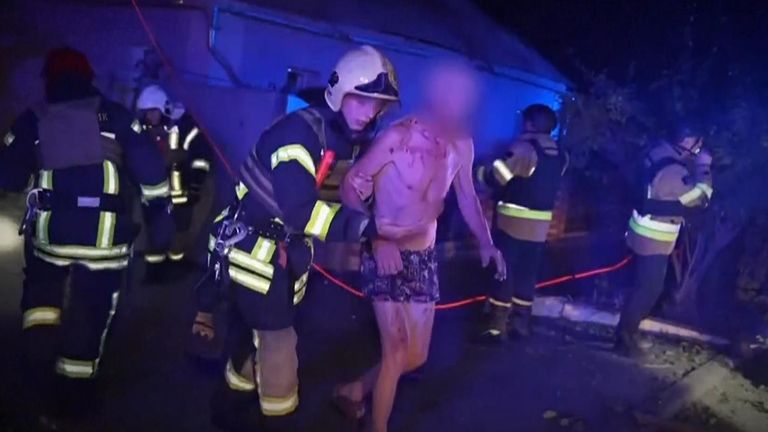
Russia strikes northern and eastern Ukraine
As well as expanding the resistance in Ukraine, Mykalo said his unit has recently started to receive expressions of interest from civilians inside Russia.
He said any Russian resistance would not be run by his team but they could learn lessons from Ukrainian resistance operations.
“It is a part of the resistance, but their resistance is against Putin’s regime. It is not our movement that we organise inside of our country,” Mykalo said.
“They are already learning from us and they are starting to use our methods already within the Russian Federation and we see a great potential in those things.”
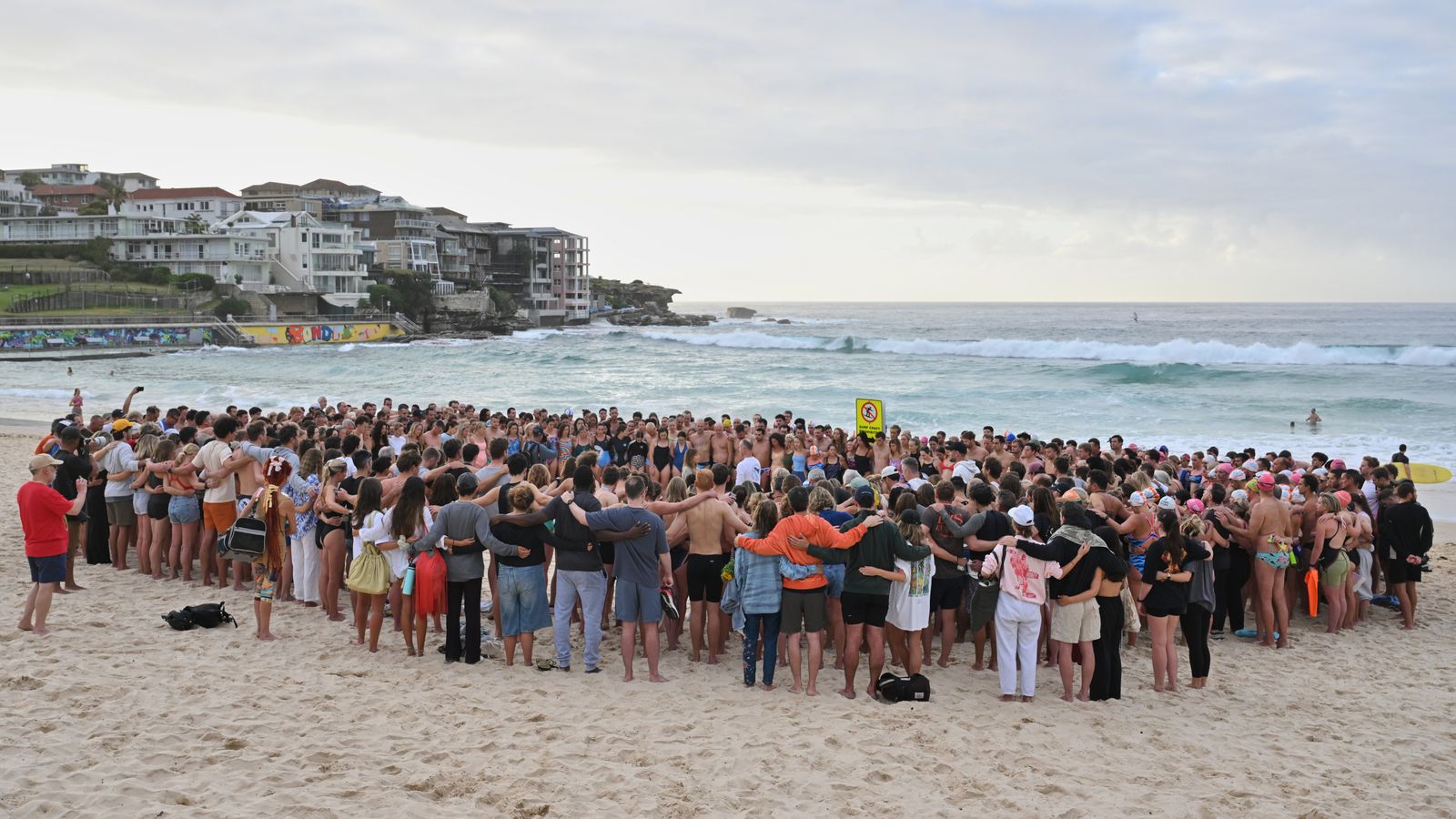
One of the alleged gunmen in the killing of 15 people on Bondi Beach has been charged.
Naveed Akram, 24, faces 59 counts, including 15 of murder and a terror charge.
The other alleged attacker, his 50-year-old father Sajid, died at the scene in Sydney.
The charges came as people gathered for funerals three days after Sunday’s terror attack shocked Australia and intensified concerns about rising antisemitism.
Some 22 victims remain in hospital following the shooting, carried out at an event marking the start of the Jewish celebration of Hanukkah.
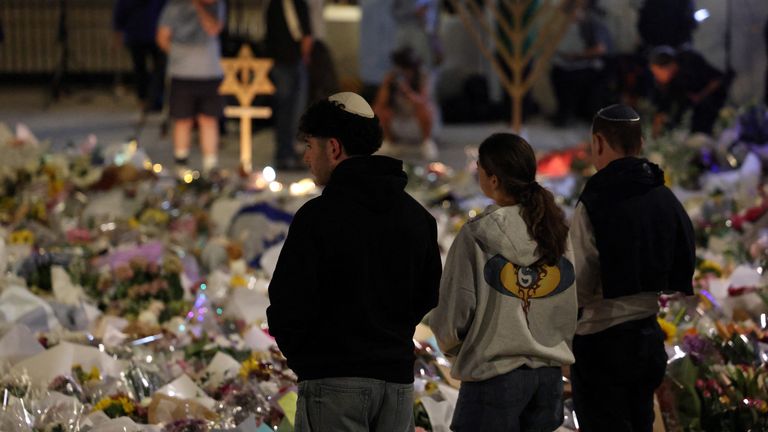
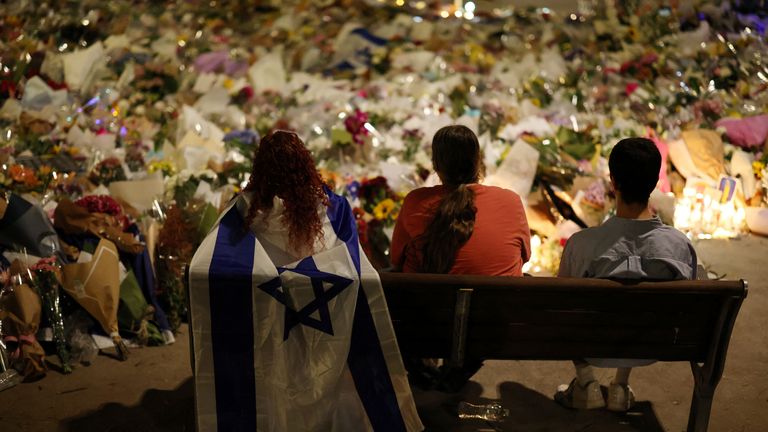
People look at flowers laid out for the victims. Pic: Reuters
At the first of the funerals, relatives mourned the death of British-born Rabbi Eli Schlanger, a 41-year-old father of five, who organised the Chanukah by the Sea event.
Often speaking through tears, his father-in-law, Rabbi Yehoram Ulman, expressed his “biggest regret” that he “could have done more” to tell him “how much we love him”.
“I hope he knew that. I’m sure he knew it,” he added. “But I think it should’ve been said more often.”
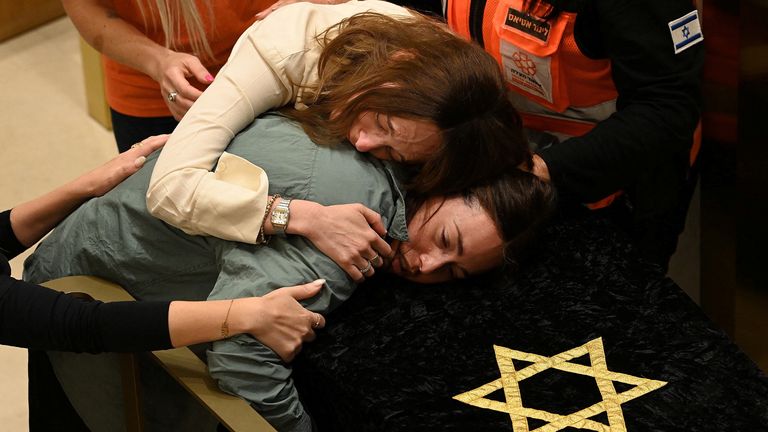
Relatives of Rabbi Eli Schlanger next to his coffin during his funeral. Pic: Reuters
The father of 10-year-old victim Matilda, whose surname has been withheld at her family’s request, spoke at a vigil on Tuesday night.
Local media reported him as saying: “We came here from Ukraine… and I thought that Matilda is the most Australian name that can ever exist.
“So just remember the name, remember her.”
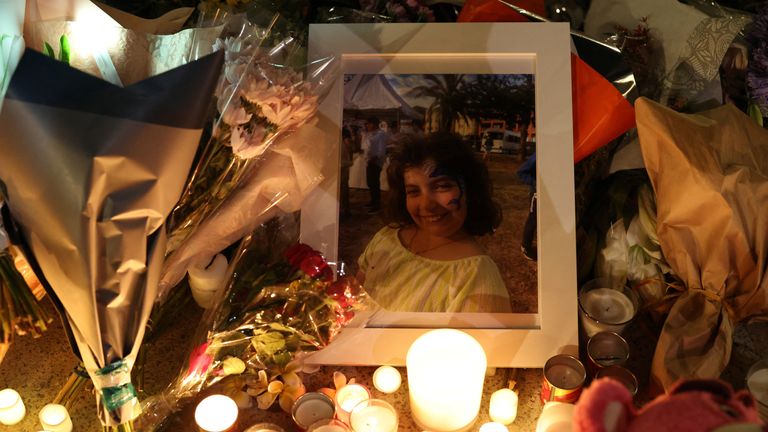
A photo of Matilda. Pic: Reuters
Read more: Who were the suspected gunmen?
Police have said the two alleged gunmen – who were shot by officers – were motivated by Islamic State ideology.
A recent trip to the Philippines is under investigation. The older Akram used an Indian passport to travel, while his son used an Australian one.
The Akrams stayed at the GV Hotel in Davao from 1 November to 28 November, according to a source, who said police had visited on Wednesday.
The pair are said to have only left their rooms for meals and no one was seen visiting them.
Davao is in an area associated with Islamic extremism but a spokesman for the president of the Philippines said he rejected the claim the country is an “ISIS training hotspot”.
New South Wales to debate gun reforms
The Australian government and intelligence services have come under pressure because the alleged attackers were legally able to acquire the high-powered rifles and shotguns used in the attack.
Prime Minister Anthony Albanese has vowed to toughen the country’s gun laws after its deadliest mass shooting in three decades, and the state parliament in New South Wales will reconvene next week to discuss reforms.
They include capping the number of guns allowed by a single person and making some shotguns harder to access.
State premier Chris Minns told a news conference: “We’ve got a monumental task in front of us. It’s huge.
“It’s a huge responsibility to pull the community together.
“We need a summer of calm and togetherness, not division.”
Mr Albanese has vowed to work with the Jewish community to “stamp out and eradicate antisemitism”. The prime minister has been accused of not doing enough to prevent its spread since the war in Gaza began two years ago.
Fellow world leaders have expressed their shock and anguish since the attack, including British Prime Minister Sir Keir Starmer, who hosted a Hanukkah event at Downing Street on Tuesday.
And speaking at the White House last night, US President Donald Trump said: “We join in mourning all of those who were killed, and we’re praying for the swift recovery of the wounded.”
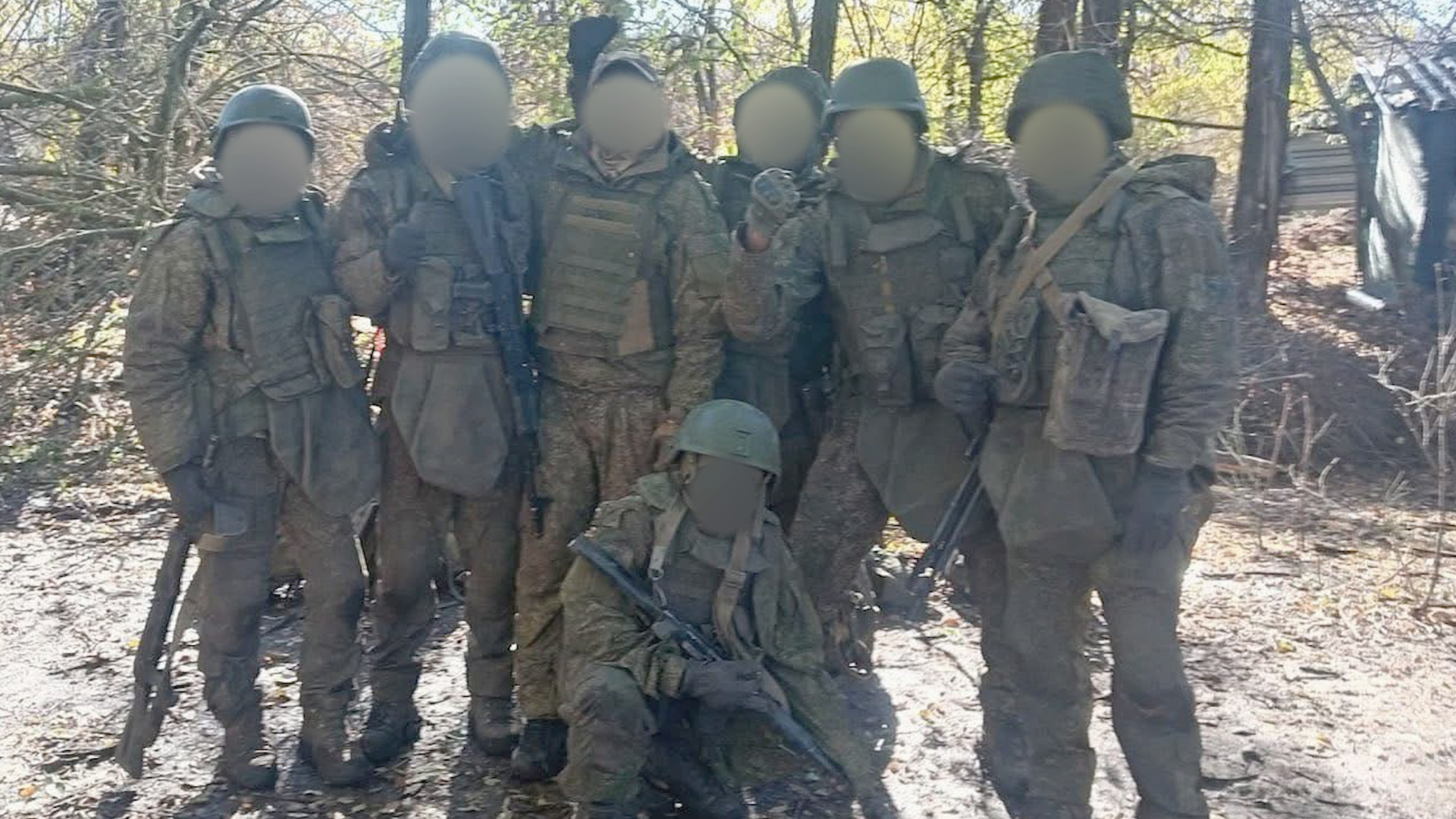
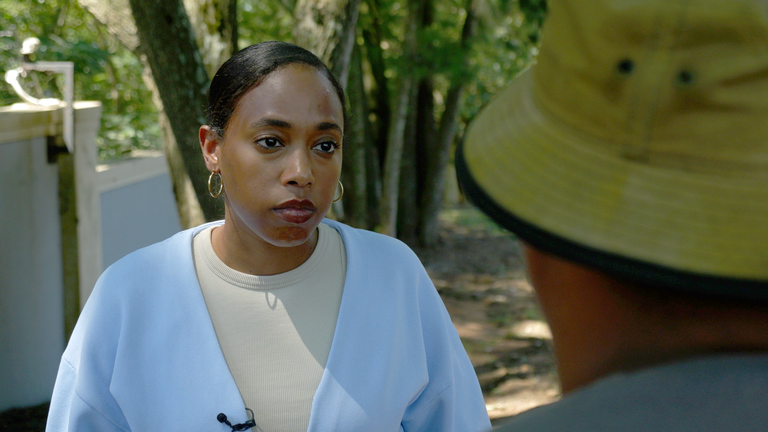
A South African man, with eyes darkened by sleepless nights, tells us his older brother was lured into fighting for Russia on the frontline in Ukraine’s raging Donbas region.
“To them, it’s a suicide mission because they have never been trained for the military. They don’t have military training – they don’t have military experience,” says Bongani, whose name we have changed for his safety.
In the hidden back garden of a modest hotel in KwaZulu-Natal province, he continues: “They don’t have experience of any war. They are just bodyguards who want to get a job and provide for their families. That’s all.”
Bongani says his brother travelled to Russia on a flight via Dubai after being told he would be receiving bodyguard training along with at least 16 other South African men. After signing a contract in Russian, their fate was sealed.
Bongani, not his real name, tells Yousra his brother was on a ‘suicide mission’
“The problems started when they were moved from Russia to Ukraine, and they asked them: ‘Guys – where are we going now because we are here for training?’
“And then the Russians said: ‘Training for what? We don’t know anything about training – what we know is that you’ve signed the contract. You are under our command now – under the Russian army.'”
How is this happening?
Sky News has seen harrowing SOS video messages from South African men who describe entrapment and deployment to the frontline in Ukraine.
In one video, a man in military fatigues details the moment they signed their contracts. He claims Duduzile Zuma-Sambudla, the daughter of former South African President Jacob Zuma, encouraged them to sign away their lives.
“We refused to sign the contract forms because it was written in Russia, which we didn’t understand. We asked them for a translator – someone who can translate the language. They said there was no network,” he says in fluent English.
“That is when Duduzile came with a guy by the name of Khosa. She said we must sign the contract because it is the same thing they did. Duduzile said she is doing the same course we are doing, the same training, and that unfortunately she won’t be with us because she is training somewhere else.”
“Yes, we agreed. We did sign the forms because we trust the lady, Duduzile.”
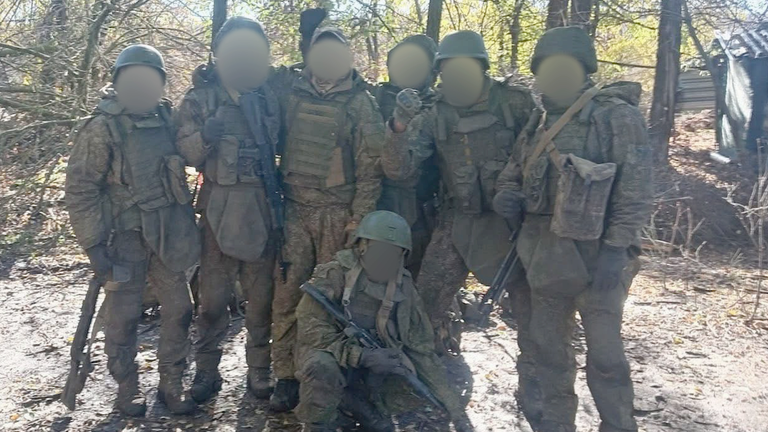
South African men claim they were trafficked by Duduzile Zuma, daughter of the country’s former president – allegations she denies
Duduzile Zuma-Sambudla is accused of trafficking South African men – including eight of her own relatives – for mercenary recruitment by her half-sister Nkosazana Bonganini Zuma-Mncube, who has filed police charges against her.
She denies the allegations and says she was a victim of deception, misrepresentation, and manipulation.
The South African Police Service (SAPS) say they are currently investigating the charges. Duduzile Zuma-Sambudla has resigned as a member of parliament and has not responded to our request for comment.
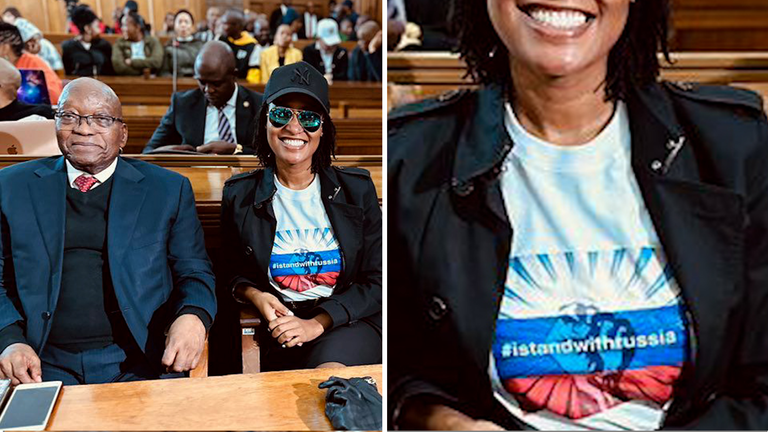
Former president Jacob Zuma with his daughter Duduzile Zuma, wearing “I Stand With Russia” T-Shirt in 2023. Pic: @DZumaSambudla/X
Five hours away in Johannesburg’s Gauteng province, we watched as another case of suspected mercenary recruitment played out in a South African magistrate’s court.
Five suspects were ushered out into a crowded courtroom in Kempton Park after being arrested on their way out of Johannesburg’s Oliver R Tambo airport following a tip-off to the police that they were allegedly travelling to Russia via the United Arab Emirates.
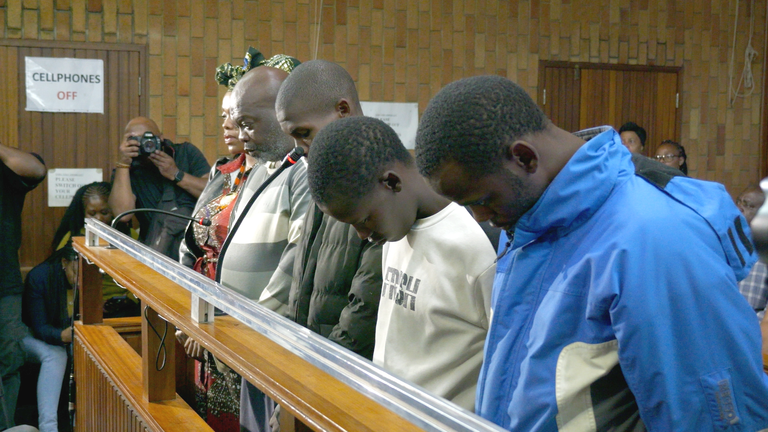
Five people suspected of attempting to join Russia’s war effort in Ukraine appear in a Johannesburg court
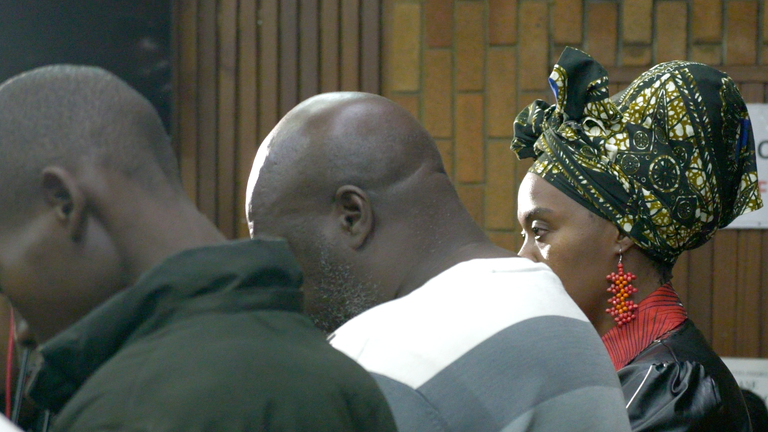
Among the five suspects is Patricia Mantuala, 39, suspected of recruiting the men
The line-up is sullen as the three young men on one end of the stand look down at their hands. The youngest is only 21 years old.
At the other end of the stand is a 39-year-old woman called Patricia Mantuala, who stands accused of recruiting them. The five suspects were eventually granted bail by the court after a postponed hearing.
Read more from Sky News:
G20 overshadowed by Ukraine
Alleged mercenary arrested in London
Is time running out for Ukraine?
Colonel Katlego Mogale, a spokesperson for the Directorate for Priority Crime Investigation (DPCI), also known as the HAWKS, told Sky News and other journalists in a news conference that they are not ruling out the possibility that more suspects will be arrested.
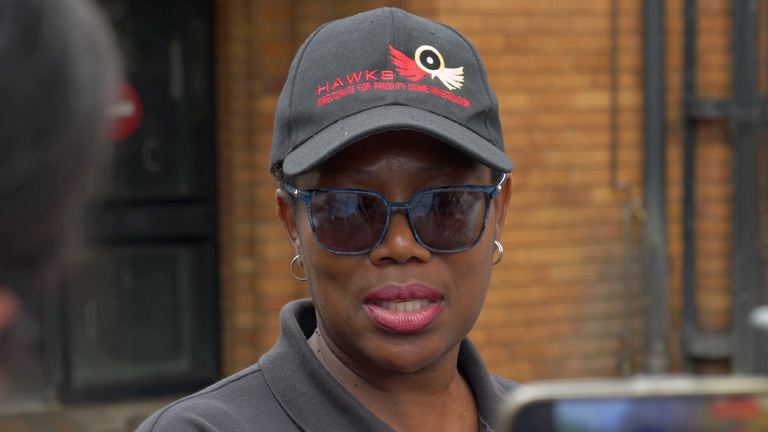
South Africa’s specialised police unit is investigating a growing recruitment drive
Amid signs of a growing recruitment drive, the families of those who say they are trapped fighting for Russia in Ukraine are advocating for their loved ones to return home – against all odds.
“You are dealing with people who are well known in South Africa and in South Africa nobody’s safe and we may never know what’s going to happen next to us,” says Bongani.
“What’s going to happen to our family?”
World
Imran Khan’s sons ‘fear they may never see him again’ as former Pakistan PM ‘held in death cell’
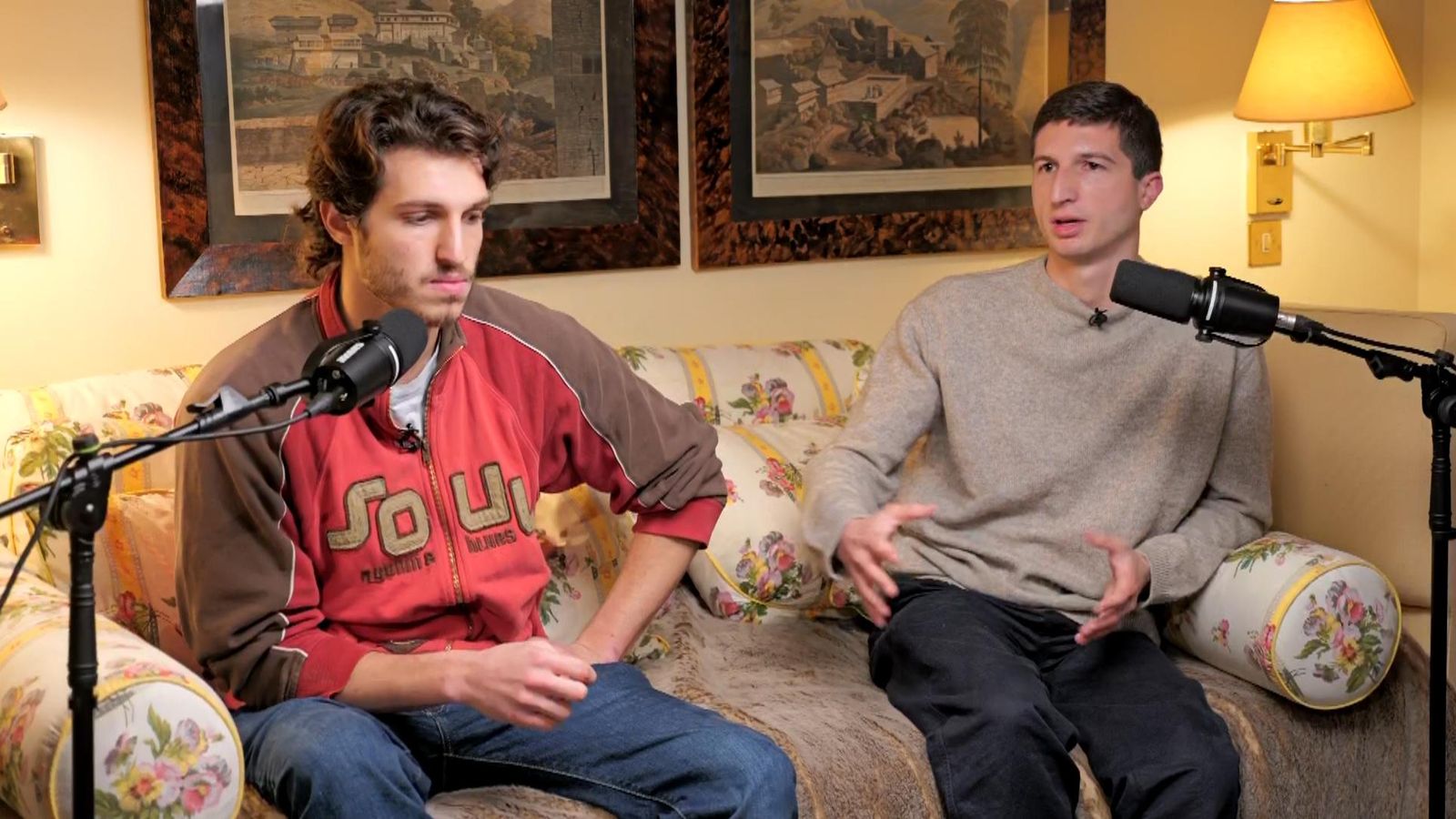

The sons of former Pakistani prime minister Imran Khan have said they fear they might never see their father again as he is being “psychologically tortured” in a “death cell”.
Speaking to Sky News’ The World with Yalda Hakim, Kasim and Sulaiman Khan said they had not spoken to their father, who has been in prison since August 2023, for months.
Imran Khan’s sons being interviewed by Yalda Hakim
Kasim described the conditions the former Pakistani leader has been kept, saying: “He’s been in a solitary confinement cell for over two years where he’s had filthy water, he is around inmates who are dying of hepatitis, the conditions are disgusting and also he is completely isolated from any human contact.”
He continued: “It’s getting harder to see a route out at this point. We’re trying to have faith. But at the same time, right now, the conditions are getting worse.
“It’s very hard to see a way out… We’re now worried we might never see him again.”
Kasim said his father was being subjected to “psychological torture tactics” as even the prison guards weren’t allowed to communicate with the former Pakistani leader, who led the country between 2018 and 2022.
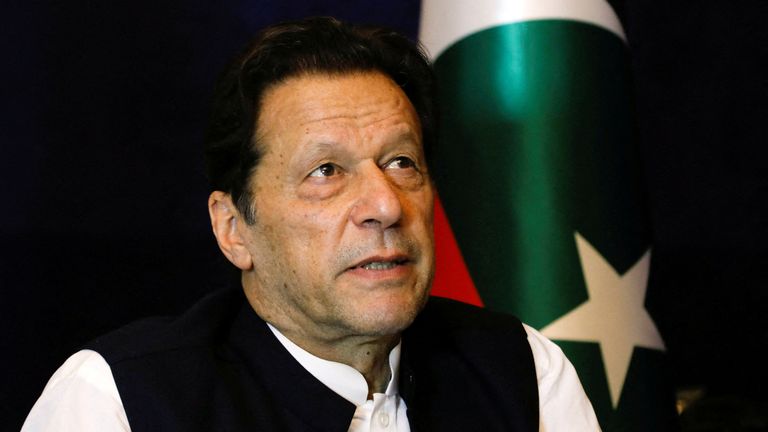
Imran Khan, pictured in March 2023 before his arrest on corruption charges. File pic: Reuters
Sulaiman said his father’s cell, where he allegedly spends 23 hours a day, has been described as a “death cell”.
He said an army spokesperson announced on Friday that Imran Khan, who has in the past been shot three times, was now officially in full isolation.
He added that Imran Khan was being kept in “completely substandard conditions that don’t meet international law for any sort of prisoner”.
The brothers’ words echo what one of Khan’s sisters reported after being allowed to meet the former cricketer in prison at the start of the month.
Uzma Khanum said at the time that Khan was facing isolation and psychological strain in prison following weeks in which his family said access had been blocked.
The former leader was jailed after being convicted in a string of cases that he says were politically driven following his ousting in a 2022 parliamentary vote.
Before launching his political career, Imran Khan was best known as a star of international cricket and for leading Pakistan to Cricket World Cup victory in 1992.
Kasim said his father would “never take a deal and leave all of his other party members in jail to die and fester in these jails…
“Instead he stays in those conditions, happy to rot and it means that he can move towards his goal of ridding Pakistan of corruption, a goal that he has stated to us a million times.”
Mosharraf Zaidi, a Pakistani government spokesperson, will be speaking to Yalda Hakim tonight on Sky News from 9pm.
-
 Sports2 years ago
Story injured on diving stop, exits Red Sox game
-
 Sports3 years ago
‘Storybook stuff’: Inside the night Bryce Harper sent the Phillies to the World Series
-
 Sports2 years ago
Game 1 of WS least-watched in recorded history
-
 Sports3 years ago
Button battles heat exhaustion in NASCAR debut
-
 Sports3 years ago
MLB Rank 2023: Ranking baseball’s top 100 players
-
Sports4 years ago
Team Europe easily wins 4th straight Laver Cup
-
 Environment3 years ago
Japan and South Korea have a lot at stake in a free and open South China Sea
-
 Environment1 year ago
Here are the best electric bikes you can buy at every price level in October 2024