

Tesla Cybertruck gets turned into Halo Warthog with working machine gun

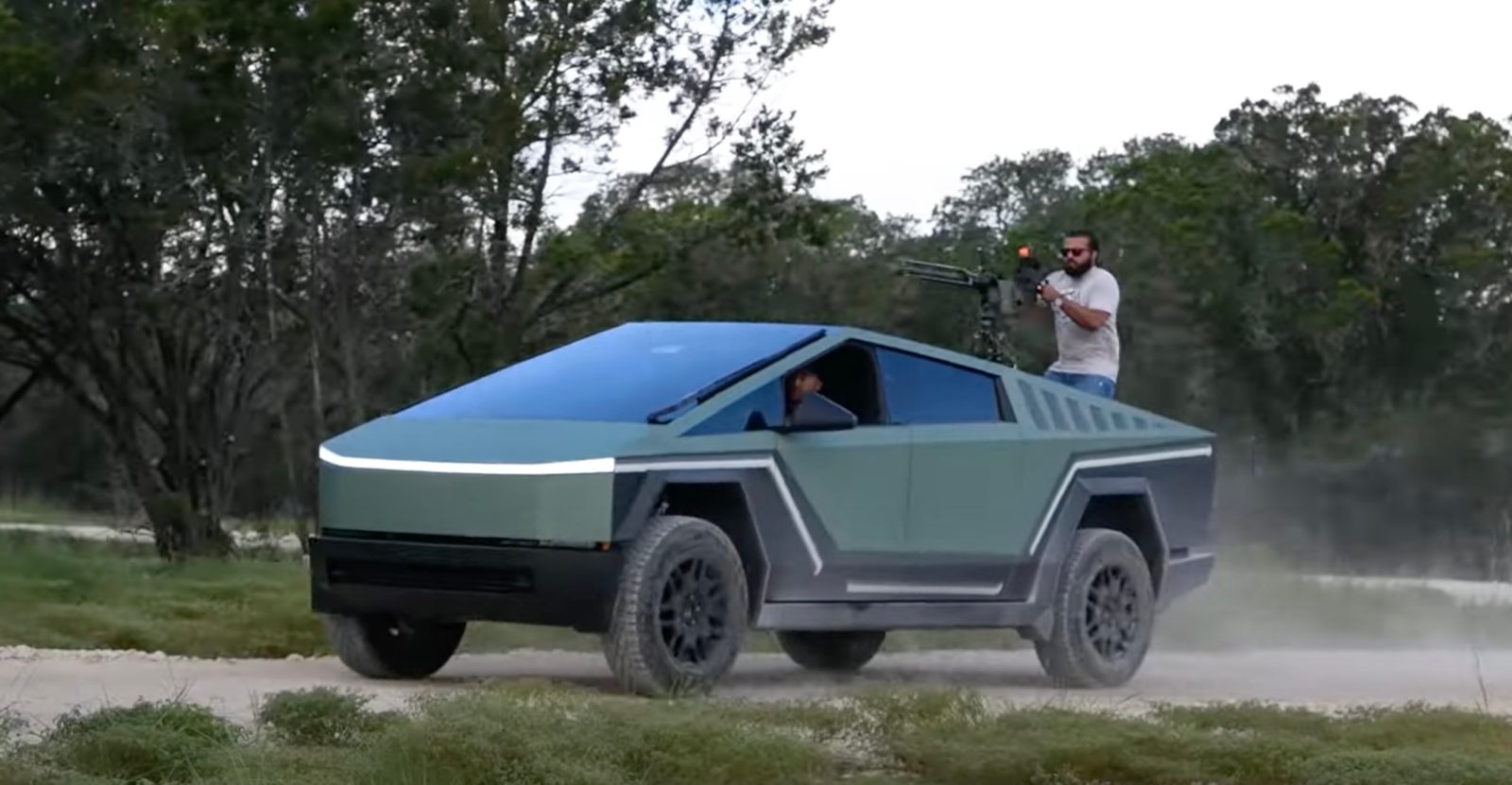
A Youtuber has turned a Tesla Cybertruck into a Warthog, famous from the video game Halo, with a working machine gun on top.
The fact that the Cybertruck only comes in a stainless steel finish is forcing some creativity out of the owners.
You have to make a few modifications unless you want your Cybertruck to look like the thousands of other Cybertrucks on the roads today and thousands more coming in the next few years.
Vynil wraps are the most popular modifications. We have seen a few creative ones, including one that make the Cybertruck look like a Warthog, but this Youtuber went a step further and actually tried to turn his Cybertruck into the famous vehicle from Halo:
YouTuber Brandon Herrera installed a functioning M2 Browning .50 caliber machine gun inside the bed of the Cybertruck.
It’s actually not the first machine gun installed in a Cybertruck, but this one is a lot less worrying than when a Russian warlord does it.
What do you think about this Cybertruck Wathog? Let us know in the comment section below. Personally, I’m not big into gun culture, but I do like Halo, and it’s pretty cool to see an electric Warthog.
FTC: We use income earning auto affiliate links. More.



Jaguar is betting on expensive luxury EVs, like the controversial Type 00, as part of its comeback plans. The struggling British automaker sees an opportunity in the 140,000 euro ($160,000) to 300,000 euro ($350,000) price range.
Jaguar bets on $300,000 luxury EVs for survival
If you haven’t seen it yet, well, the Type 00 is unique, to put it nicely. Jaguar revealed the radical GT concept late last year, nearly breaking the internet.
Everyone from Tesla’s Elon Musk to Lucid Motors chimed in, poking fun at the design and Jaguar’s desperate search for a new image.
Although Jaguar’s design boss, Gerry McGovern, the man behind the Type 00’s controversial look, was fired earlier this month, that isn’t stopping the company from plowing ahead with plans to launch its first next-gen EV in 2026.
Members of the media were invited to Jaguar’s UK headquarters earlier this month for a closer look at the flagship EV and a brief test run.
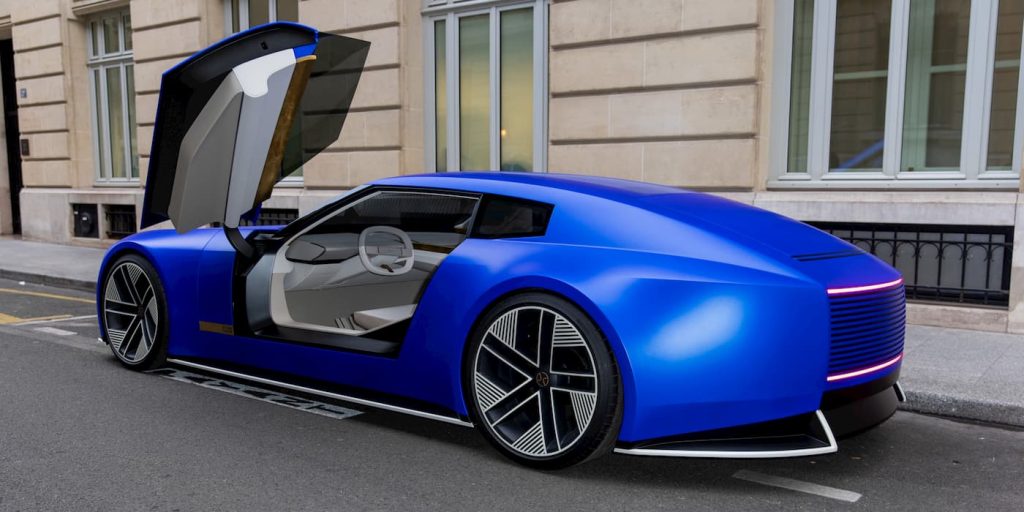
According to WIRED, which attended the event, the Type 00 “still looks odd,” but it packs some serious power. Unlike the two-door GT concept, the vehicle actually has four doors. Although the second set of doors is a slight improvement, the hood is still a bit too long.
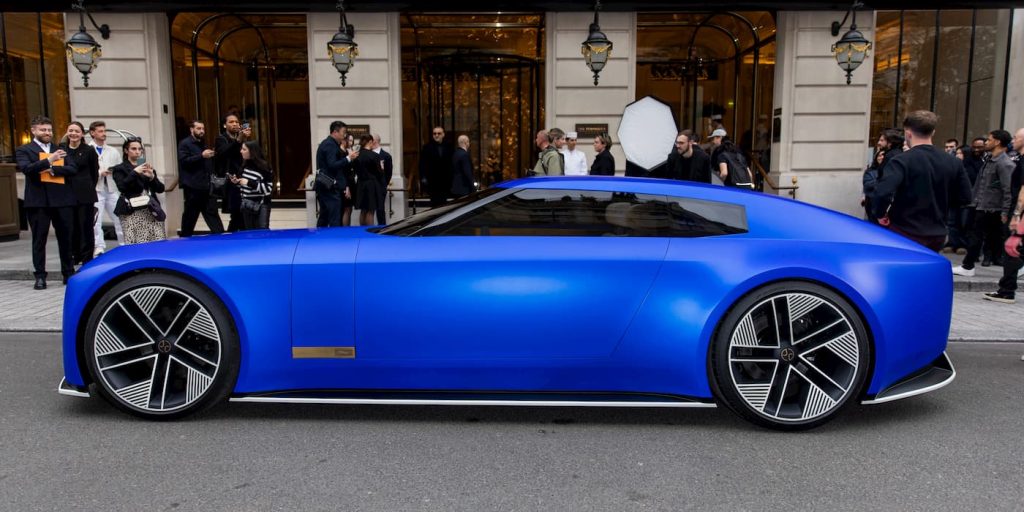
Jaguar’s managing director, Rawdon Glover, said the company has gone through about 150 prototypes, and that six months ago the hardware was updated.
The interior design wasn’t finalized with wires and bolted-on displays, but “it does have one of the nicest steering wheels I have seen in a long time,” WIRED said (at least it’s a start.).
Like BMW and Mercedes-Benz, Jaguar stressed the importance of computing power. JLR’s vehicle engineering director, Matt Becker, said that, like BMW’s “Heart of Joy” ECU, Jaguar’s new tech cuts ECUs’ lag time to just 1 millisecond.
Thanks to the improved ECU and added software, the “car seems to keep accelerating with ease way beyond the 100-mph mark.”

Jaguar revealed the flagship EV will be equipped with a tri-motor setup, delivering over 1,000 hp. The setup will include two electric motors on the rear axle, plus one on the front.
Other specs, including charging speeds and official driving range, have yet to be revealed. However, Jaguar did say it’s aiming for around 400 miles (WLTP).


Glover made it clear that “Jaguar had to change” to ensure the brand’s survival. According to Jaguar’s boss, “there’s a space right at the top end of premium, but underneath the uber luxury of the Rolls Royce, the Lamborghinis, the Bentleys. There’s a big gap between 140,000 euros and 300,000 euros [$160,000 and $350,000].”
Jaguar has been successful in that segment before. Can it do it again as an all-electric brand? With other global OEMs, like Ford, water down EV plans, will Jaguar follow suit? “Anything’s possible,” Glover said, adding, “but it’s not in our plan.”
Jaguar’s electric four-door GT is expected to launch in the first half of 2026. It will be followed by at least two more luxury EVs, which are expected to be a sedan and an SUV.


FTC: We use income earning auto affiliate links. More.

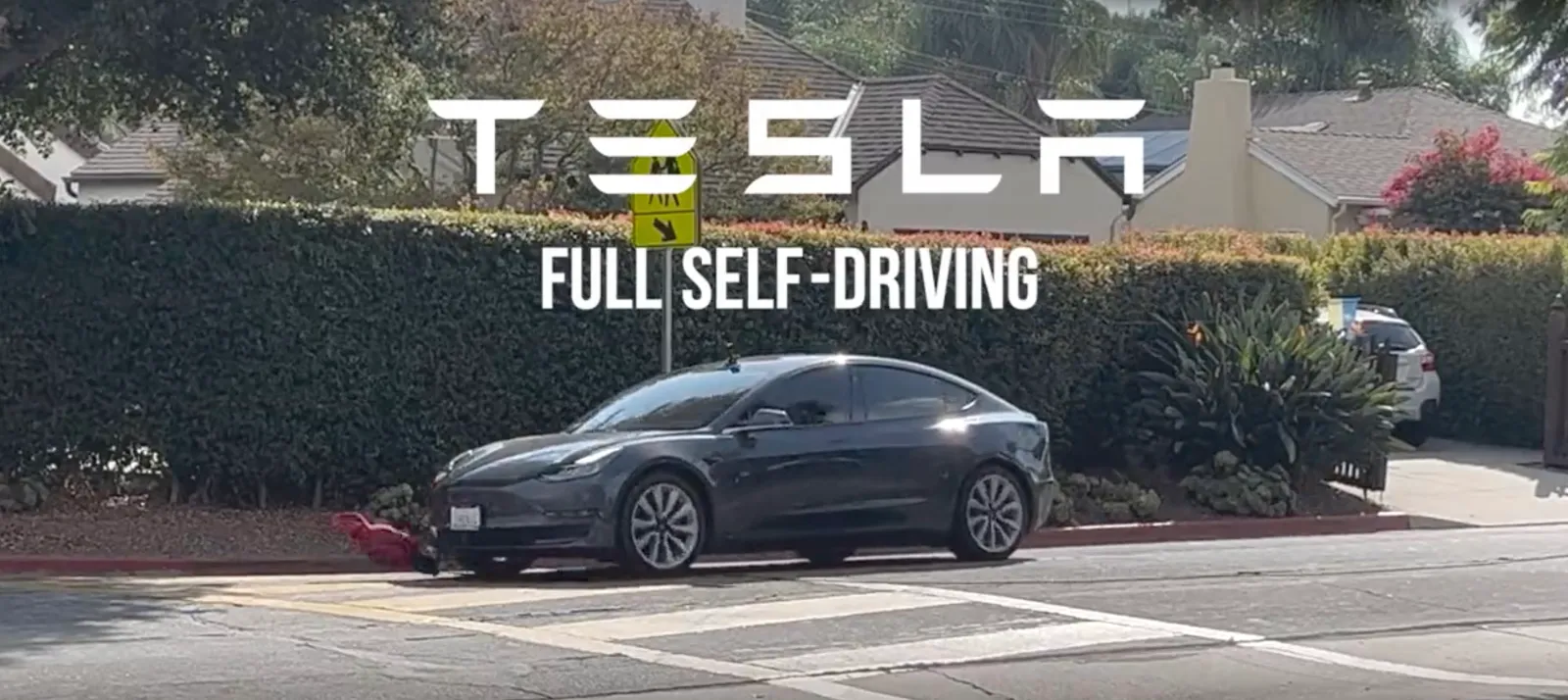
A California judge ruled late Tuesday afternoon that Tesla engaged in “deceptive marketing” in reference to its Full Self-Driving system, and that Tesla’s license to sell and produce cars in the state should be revoked for 30 days.
However, the California DMV has said it will give Tesla 60 days to comply and fix its marketing before going through with the suspension.
The ruling is big news in a case that has been ongoing for years now.
Tesla has been selling level 2 driver assist software since 2016 which it calls “Full Self-Driving” (FSD), despite that this software did not (and still does not) make its cars capable of driving themselves.
This name has attracted much consternation over the years, becoming more absurd as each of Tesla’s predicted deadlines for the advent of full autonomy blow by.
Tesla also provides software under the name “Autopilot,” another term that evokes some level of autonomy, though perhaps not as explicitly as the aforementioned FSD. Tesla long held the position that this word is meant to evoke airplane-like systems that still require a pilot, but can just do most of the work for them.
So eventually, in 2021, the California Department of Motor Vehicles (DMV) officially started an investigation into Tesla’s marketing claims, to determine whether the company had lied to consumers.
California found that the company was saying different things to the public than it was saying to the DMV.
The DMV then sent an official inquiry to Tesla in 2022, asking for it to respond to the claim that it was creating incorrect perceptions about the capabilities of its system. Tesla’s response stated that it had been allowed to lie about FSD for so long that it should get to keep going, which was apparently not persuasive enough to the courts, and the case was then slated for trial.
During this time, the California legislature got involved as well, passing a law that specifically banned automakers from deceiving consumers into thinking vehicles have more autonomous capabilities than they do.
Well, after all these investigations and waiting, we finally have an an answer, and the judge’s ruling makes it quite clear: Tesla lied to consumers about its autonomous capabilities.
California court rules Tesla lied about autonomy
The court looked at Tesla’s marketing claims and also at surveys of people exposed to those claims and their opinion of whether a Tesla would be able to drive itself, given the marketing messages put out by the company.
It found problems both with the word Autopilot and the phrase Full Self-Driving.
The word “Autopilot” was not found to be “unambiguously false,” but the court said that its use “follows a long but unlawful tradition of ‘intentionally (using) ambiguity to mislead consumers while maintaining some level of deniability about the intended meaning.’” The court found that a reasonable person could believe that a car on Autopilot doesn’t require their constant undivided attention, which is incorrect as the driver is still fully responsible for the vehicle.
On “Full Self-Driving,” the court was even more harsh. It found that this feature name is “actually, unambiguously false and counterfactual” (comically, Tesla tried to argue here that “no reasonable person” could believe that Full Self-Driving actually means Full Self-Driving).
The court noted other language used by Tesla, including marketing copy that said “the system is designed to be able to conduct short and long distance trips with no action required by the person in the driver’s seat,” and suggested that “legal reasons” are the only things holding Tesla back from full autonomy. Tesla tried to say that this was a statement of future intent, but the court found that its use of the present tense shows otherwise.
Tesla has repeatedly changed its wording around FSD, first calling it Full Self-Driving Capability, then changing that to Full Self-Driving (Supervised) to emphasize the need for a driver to supervise the vehicle. The court noted these changes, and then said it would not be a burden to force Tesla to change its marketing further to clarify that its cars do not drive themselves.
The DMV could now shut Tesla down for 30 days if it does not comply
Which leads us to the proposed legal remedy: the court said that the DMV could suspend or revoke Tesla’s licenses for 30 days, stopping its ability to sell or build cars in the state.
Tesla’s first factory is in Fremont, California, where it still builds around half a million vehicles a year and employs some ~20,000 employees. Tesla says this remedy would be “draconian,” but the court said that without this option, there’s no reason to believe Tesla would stop its misrepresentations to the public.
The court also examined the possibility of financial restitution, but deemed that inappropriate. Since the case did not establish any quantifiable financial harm done by Tesla’s misrepresentation and noted the impracticality of accounting for that harm.
This ruling does not yet mean that Tesla can’t sell cars in California, which is its largest market in the US by far. The court noted that the DMV has the option of suspension or revocation, which the DMV can do at its discretion. And the DMV has said that it will allow Tesla 60 days to comply with the order before it takes action, and that it would focus on Tesla’s dealer license rather than its manufacturing license.
This would mean, specifically, that Tesla not refer to a level 2 driving system as “Autopilot” or using language that suggests these vehicles are autonomous. It will have to change its marketing materials and stop making public statements misleading the public about its autonomous capabilities.
Tesla said after the ruling that “sales in California will continue uninterrupted.” But we’ll see what happens in 60 days, and what sort of changes Tesla does or does not make to its deceptive marketing.
Tuesday’s ruling is just one of many legal cases against Tesla right now, specifically having to do with FSD. One relevant case is a class action lawsuit in California claiming Tesla misled customers about its cars self-driving capabilities. This ruling could provide fuel for that lawsuit, given a California judge has already gone on the record with an official determination that Tesla misled the public about FSD.
Electrek’s Take
Well, this ruling has been a long time coming, but it’s good that it has finally come.
Tesla has deceived its customers in many ways regarding FSD. It’s not just a deceptive name, but Tesla’s timelines have continually been wrong, it has lied about hardware capabilities and tried to charge owners again for hardware they already bought (then pretended that never happened), it has changed prices willy-nilly, and it has held customers’ software purchases hostage as an incentive to try to get them to buy new cars.
Most significantly, there are around 4 million cars on the road that do not have the hardware Tesla said they have.
And these misstatements continue through today, with Tesla constantly hyping up its “Robotaxi” program, despite that those cars are only capable of level 2 driver-assistance. It even says that robotaxis are operating in California, when by any definition, they are not.
While courts have held Tesla to account a few times with small claims actions in the UK and the US, this is the first big, sweeping decision that could require the company to change its ways.
That said, government has gagged Tesla CEO Elon Musk before, to little effect. After the SEC found that he lied to investors in a tweet, it said that all his public statements must be pre-screened if they’re relevant to Tesla’s stock price.
That didn’t seem to change his behavior much, though. So given that history, he may continue with the same misleading public statements about FSD.
Which leaves it up to the California DMV: will it follow through and do something if the lies continue? Or will Tesla change its ways and start being more realistic about its cars’ capabilities? Either way, we’ll find out within 60 days.
The 30% federal solar tax credit is ending this year. If you’ve ever considered going solar, now’s the time to act. To make sure you find a trusted, reliable solar installer near you that offers competitive pricing, check out EnergySage, a free service that makes it easy for you to go solar. It has hundreds of pre-vetted solar installers competing for your business, ensuring you get high-quality solutions and save 20-30% compared to going it alone. Plus, it’s free to use, and you won’t get sales calls until you select an installer and share your phone number with them.
Your personalized solar quotes are easy to compare online and you’ll get access to unbiased Energy Advisors to help you every step of the way. Get started here.
FTC: We use income earning auto affiliate links. More.
Environment
Waymo seeks massive $15 billion raise at $100 billion valuation to fuel robotaxi expansion

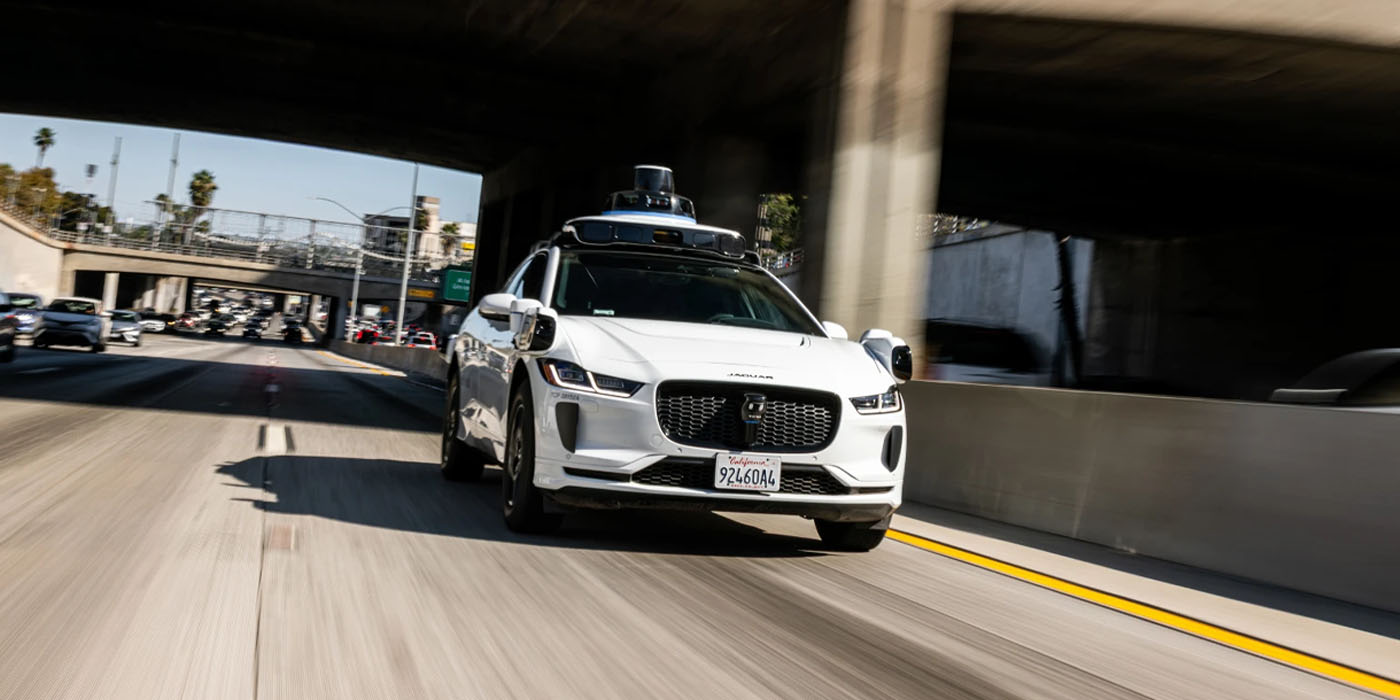
Waymo is reportedly looking to raise a massive new round of funding that would value the autonomous driving company at over $100 billion as it accelerates its expansion.
Since Alphabet spun out its self-driving car project into Waymo back in 2016, the company has been seen as the leader in the space, at least when it comes to deploying actual driverless vehicles on public roads without anyone in the driver’s seat.
While Tesla has been promising “Full Self-Driving” for years with a camera-only approach on consumer vehicles, Waymo has taken the more expensive, sensor-heavy robotaxi route.
It has been a capital-intensive journey, but it seems to be paying off in terms of deployment, as it now completes hundreds of thousands of paid autonomous rides per week in half a dozen US cities.
Now, a new report from Bloomberg states that Waymo is looking to raise more than $15 billion in a new funding round.
According to the report, the round is expected to value Waymo at nearly $100 billion:
“Waymo, Alphabet Inc.’s autonomous driving unit, is in discussions to raise more than $15 billion at a valuation near $100 billion, in a financing round led by its parent company. The maker of robotaxis has discussed raising billions in equity from external backers as well as Alphabet, said the people.”
This would be a massive jump in valuation for the company. For context, Waymo raised $5.6 billion just a year ago in October 2024 at a valuation of around $45 billion.
If this new round goes through, it would more than double the company’s valuation in less than a year.
The funding push comes as Waymo aggressively expands its service. The company recently announced that it has completed over 14 million rider-only trips in 2025 alone. It is currently operating fully driverless commercial services in several major markets, including San Francisco, Phoenix, Los Angeles, and Austin, with plans to expand to cities like Miami and potentially international markets like London and Tokyo by 2026.
Waymo’s fleet currently consists of about 2,500 vehicles, primarily the Jaguar I-PACE, though it is transitioning to a custom-built robotaxi vehicle from Zeekr in the near future.
Electrek’s Take
Waymo can do a lot with $15 billion. It could 40x its fleet with 100,000 vehicles and still have a few billion left for operations.
For a long time, the narrative was that Waymo’s approach, HD maps, LiDAR, expensive sensors, and remote monitoring, was too expensive to scale compared to Tesla’s vision-only global fleet approach.
And while that might still be true in the long run if Tesla solves FSD, which is a big if, the reality on the ground today is that Waymo is the one offering rides with nobody in the front seat.
With 100,000 autonomous vehicles, it could capture 10% of the US ride-hailing market and likely become financially self-sustainable.
FTC: We use income earning auto affiliate links. More.
-
 Sports2 years ago
Story injured on diving stop, exits Red Sox game
-
 Sports3 years ago
‘Storybook stuff’: Inside the night Bryce Harper sent the Phillies to the World Series
-
 Sports2 years ago
Game 1 of WS least-watched in recorded history
-
 Sports3 years ago
Button battles heat exhaustion in NASCAR debut
-
 Sports3 years ago
MLB Rank 2023: Ranking baseball’s top 100 players
-
Sports4 years ago
Team Europe easily wins 4th straight Laver Cup
-
 Environment3 years ago
Japan and South Korea have a lot at stake in a free and open South China Sea
-
 Environment1 year ago
Here are the best electric bikes you can buy at every price level in October 2024