

Black hole ‘likely larger than £22bn’ – as ministers pushed to scrap projects immediately

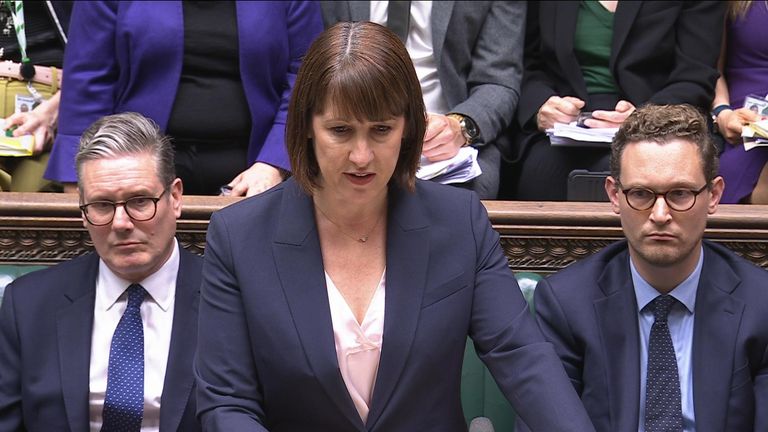
The government’s “black hole” could be bigger than the £22bn it has claimed as cabinet ministers are being pressured to scrap projects immediately to fill it, Sky News understands.
After Labour won the election in July, Chancellor Rachel Reeves accused the previous government of leaving a £22bn shortfall in public finances they had not disclosed.
She promptly cancelled several projects, including 40 new hospitals, reforms to adult social care charges, a new Advanced British Standard qualification, and several road and train projects – and reduced the number of pensioners who will get the winter fuel allowance.
But speaking on the Politics with Jack and Sam podcast today, Sky News’ deputy political editor Sam Coates said: “One of the things I’m told is that the overall black hole could be bigger than £22bn, because don’t forget, £20bn is just the gap in this financial year alone.”
He said the government has not yet had the numbers from the Office for Budget Responsibility (OBR) but has had a rough forecast for the coming years.
“So they could have to fill an even bigger sum, these are massive amounts of money,” he added.
But because the black hole is for this year alone, it has to be filled quickly which poses the question of how to do that.
Read more:
Which taxes could Labour increase?
Labour said there is a £22bn black hole
“I’m told that to fill an immediate in-year black hole, you can’t really use tax at all because it takes too long to set it up,” Sam said.
“So there will be tax rises. But they can’t really use that to solve this problem. And welfare decisions are the same really.
“You have to look to Whitehall spending, and most of all the Treasury want to scrap projects to fill this black hole that for accounting reasons as much as anything else, will be what the Treasury is pressuring cabinet ministers to look for.
“So those front pages about mad contracts, questions about rail and road projects, all of that will come under the most pressure in this process, because that’s where they think that they can get the money from.”

Capital Gains Tax could see an increase. Pic: iStock
Politico’s editor Jack Blanchard added governments “making very quick decisions on these projects they don’t really understand have a tendency sometimes to get them horribly wrong”.
“You may see very poor, controversial decisions being made in the budget where, you think you can get away with just srapping that little thing that no one cares about,” he added.
“And then, the budget blows up in your face and it’s these stories take a life of their own and you lose control of the narrative.
“That’s what Rachel Reeves and Downing Street will no doubt be worried about.”
The autumn budget is set to take place on 30 October, with tax rises expected to be announced after Sir Keir Starmer said it will be “painful”.
Inheritance and Capital Gains tax are the most likely to face an increase, with business rates also potentially seeing a change.
👉 Tap here to follow Politics at Jack and Sam’s wherever you get your podcasts 👈


A US court is once again being asked to weigh in on maximal extractable value practices after a judge allowed new evidence to be added to a class-action lawsuit tied to a memecoin platform.
The judge granted a motion to amend and refile to include new evidence a class-action lawsuit against memecoin launch platform Pump.fun, the maximal extractable value (MEV) infrastructure company Jito Labs, the Solana Foundation, which is the nonprofit organization behind the Solana ecosystem, and others.
The motion said over 5,000 pieces of evidence in the form of internal chat logs were submitted by a “confidential informant” in September that were previously unavailable. The filing said:
“Plaintiffs assert that the logs contain contemporaneous discussions among Pump.fun, Solana Labs, Jito Labs, and others concerning the alleged scheme, and that they materially clarify the enterprise’s management, coordination, and communications.”
The lawsuit, originally filed in July, alleges that the Pump.fun platform deliberately misled retail investors by marketing memecoin launches as “fair,” but engaged in a scheme with Solana validators to front-run retail participants through maximal extractable value (MEV).
Maximal extractable value is a technique that involves reordering transactions within a block to maximize profit for MEV arbitrageurs and validators.
The plaintiffs allege that Pump.fun used MEV techniques to give insiders preferential access to new tokens at a low value, which were then pumped and dumped onto retail participants, who were used as exit liquidity by insiders.
Cointelegraph reached out to Burwick Law, the legal firm representing the plaintiffs, as well as Pump.fun, Jito Labs and the Solana Foundation, but did not receive any responses by the time of publication.

The lawsuit could set a precedent for MEV cases in the United States, as the ethics of the practice continue to be debated within the crypto industry and legal bodies struggle to define proper regulations about the highly technical subject.
Related: Pump.fun co-founder denies $436M cash out, claims it was ‘treasury management’
The MEV bot trial leaves questions unanswered
Anton and James Peraire-Bueno, the brothers accused of using a MEV trading bot to make millions of dollars in profit, went to trial in November in the US.
Prosecutors argued that the brothers tricked victims out of their funds, but defense attorneys said that they were executing a legitimate trading strategy and did not do anything illegal.
The jury struggled to reach a verdict in the case, and several jurors requested additional information to clarify the complexities surrounding the technical specifics of blockchain technology.
The case ended in a mistrial after the jury was deadlocked and failed to reach a verdict, highlighting the complexity of adjudicating legal disputes surrounding the application of nascent financial technology.
Magazine: Meet the onchain crypto detectives fighting crime better than the cops
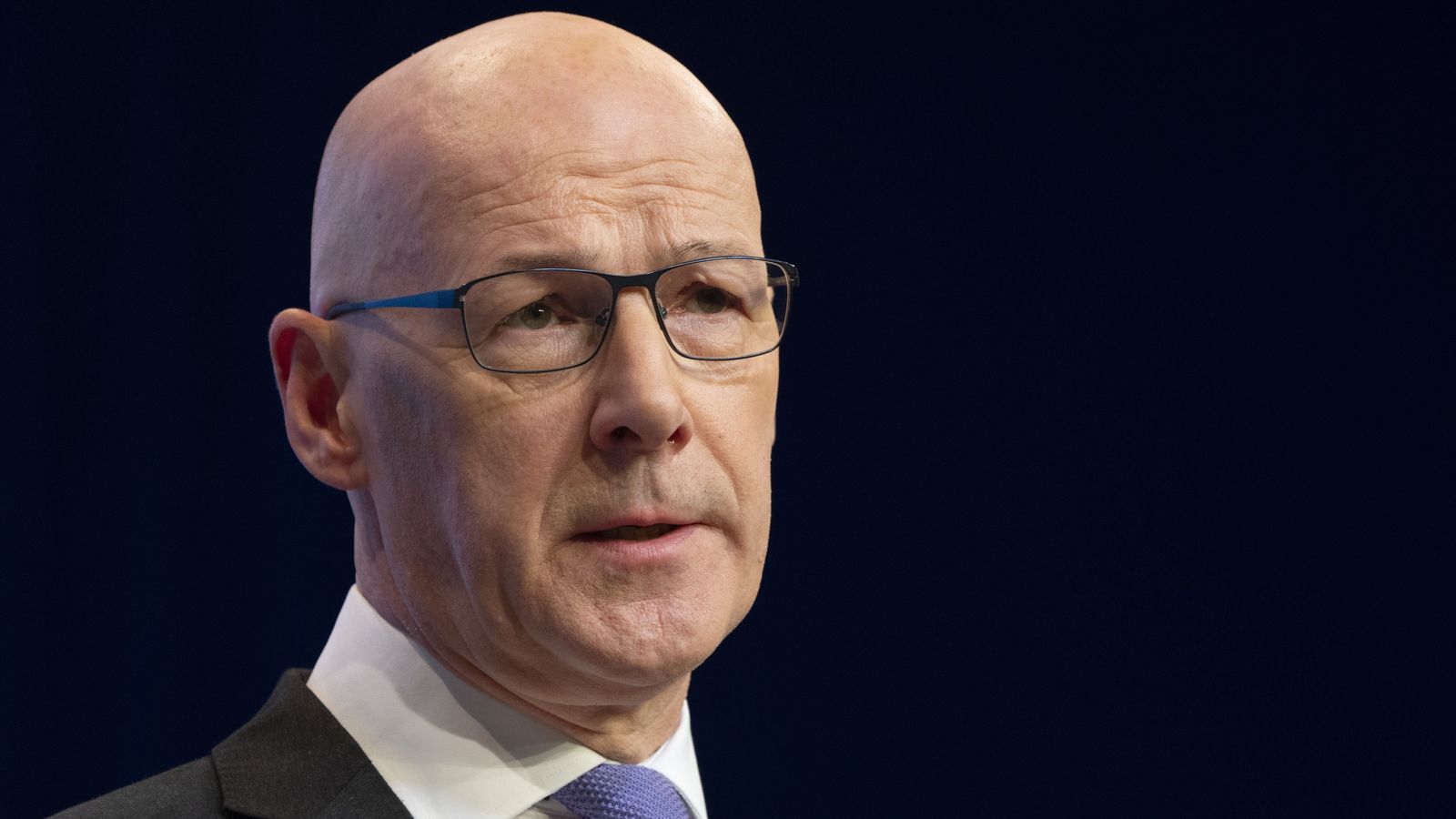

Reports a female MSP had a secret recording device planted in her office by a member of her own staff are “completely and utterly unacceptable”, SNP leader John Swinney has said.
Scottish parliament officials are investigating the alleged bugging incident by a man, which is said to have taken place in 2023 at Holyrood.
The Scotsman newspaper reported the staffer is still involved with the SNP and moved on to work with a male MP after the issue came to light.
Sky News has yet to independently verify the details, but one senior party source with knowledge of events has said it is “100% true”.
The source alleges “the SNP did nothing; indeed he simply got moved and continued to be promoted by very senior members of executive”.
It is suggested the female MSP, who has not been publicly named, is liked, rated and respected by her colleagues.
The Scottish parliament building in Edinburgh. Pic: PA
First Minister Mr Swinney was stopped by reporters in Edinburgh on Thursday where he said he was “not familiar with all of the details… but that type of conduct is completely and utterly unacceptable”.
“Individuals are entitled to operate in an open and transparent environment that shouldn’t be subjected to that kind of behaviour,” he concluded.
Read more from Sky News:
Millions could see council elections delayed again
Bank of England rate cut to 3.75% following fall in inflation
MPs and MSPs employ staff directly, rather than the political party.
Sky sources confirmed the victims of the incident had to get counselling in the aftermath before suggesting the SNP “definitely has a woman problem”.
The source claims it is “not a one-off incident”, adding: “Women are habitually treated differently.”
An SNP spokesperson said: “The SNP has no involvement in the employment processes of parliamentarians. That is a confidential matter between elected members, employees, and Scottish parliament authorities.
“The reports outline a very traumatic situation for those involved and nobody should ever have to experience fear or harassment for doing their job.”
Scottish Labour deputy leader Jackie Baillie said: “These jaw-dropping revelations pose serious questions for the SNP top brass.
“It appears a grave breach of privacy and potentially criminal behaviour has been swept under the carpet by the SNP.
“Once again it looks like the SNP chose to close ranks and protect their own, rather than dealing with serious misconduct head-on.”
A spokesperson for the Scottish parliament said: “Each MSP is an employer in their own right and is responsible for managing staff welfare issues and employment disputes.
“Complaints about staff conduct are investigated by an independent adviser, and it is for the member to act on their findings accordingly.
“As a matter of standard practice, we do not comment upon or confirm any individual cases.”


Major US cryptocurrency exchange Coinbase is expanding payment options in Poland by integrating with one of the country’s most widely used mobile payment systems.
Coinbase has partnered with European payment processor PPro to enable payments via Blik, a popular Polish mobile payment network with nearly 20 million users.
The announcement was made by Coinbase executive and NFT Paris co-founder Côme Prost, who joined the exchange in February 2024 to lead its French operations.
“Improving local payment rails is a key focus for us,” Prost said in a LinkedIn post on Wednesday, highlighting the importance of simple, fast and familiar payment options in driving crypto adoption.
Coinbase holds MiCA licence as Poland struggles to pass crypto bill
Coinbase’s local expansion comes as Poland struggles to pass cryptocurrency legislation amid political divisions. Last week, the Polish government reintroduced an identical version of a strict crypto bill that had been vetoed by President Karol Nawrocki just weeks earlier.
Coinbase holds a license under the European Union’s Markets in Crypto-Assets Regulation (MiCA), which it secured in June.
“It has been a pleasure working with the team at Coinbase to launch Blik on their platform to enable Polish customers to access Crypto,” PPro executive Tom Benson wrote in a LinkedIn post on Wednesday.
He added that he was confident the partnership with Coinbase would deepen in 2026 as the company adds more local payment methods and expands collaboration across additional areas.
Poland’s crypto adoption booming despite lagging local regulation
Crypto adoption in Poland has surged despite slow-moving local legislation, with the country emerging as one of the leaders in Chainalysis’ 2025 European Crypto Adoption report.
Poland is the only EU member state without a functioning national legal framework to enforce the MiCA regulation, even though the framework applies even without formal implementation.

Following the president’s veto of the government’s bill, Poland is indeed the only EU member state without any step toward implementation,” Juan Ignacio Ibañez, a member of the Technical Committee of the MiCA Crypto Alliance, told Cointelegraph recently.
Related: Coinbase adds stock trading, prediction markets in ‘everything app’ push
“Not every country has a single implementation law,” he added, pointing to Germany and France, which have specific laws, while other member states, such as Spain and Luxembourg, rely on amendments to existing financial legislation.
Ibañez noted, however, that a lag in implementation does not mean all countries are equally advanced, nor does it imply that Poland is more hostile to crypto. Hungary, for example, has implemented MiCA with additional regulations that are “more unfriendly to crypto asset service providers than Poland,” he added.
-
 Sports2 years ago
Story injured on diving stop, exits Red Sox game
-
 Sports3 years ago
‘Storybook stuff’: Inside the night Bryce Harper sent the Phillies to the World Series
-
 Sports2 years ago
Game 1 of WS least-watched in recorded history
-
 Sports3 years ago
Button battles heat exhaustion in NASCAR debut
-
 Sports3 years ago
MLB Rank 2023: Ranking baseball’s top 100 players
-
Sports4 years ago
Team Europe easily wins 4th straight Laver Cup
-
 Environment3 years ago
Japan and South Korea have a lot at stake in a free and open South China Sea
-
 Environment1 year ago
Here are the best electric bikes you can buy at every price level in October 2024