
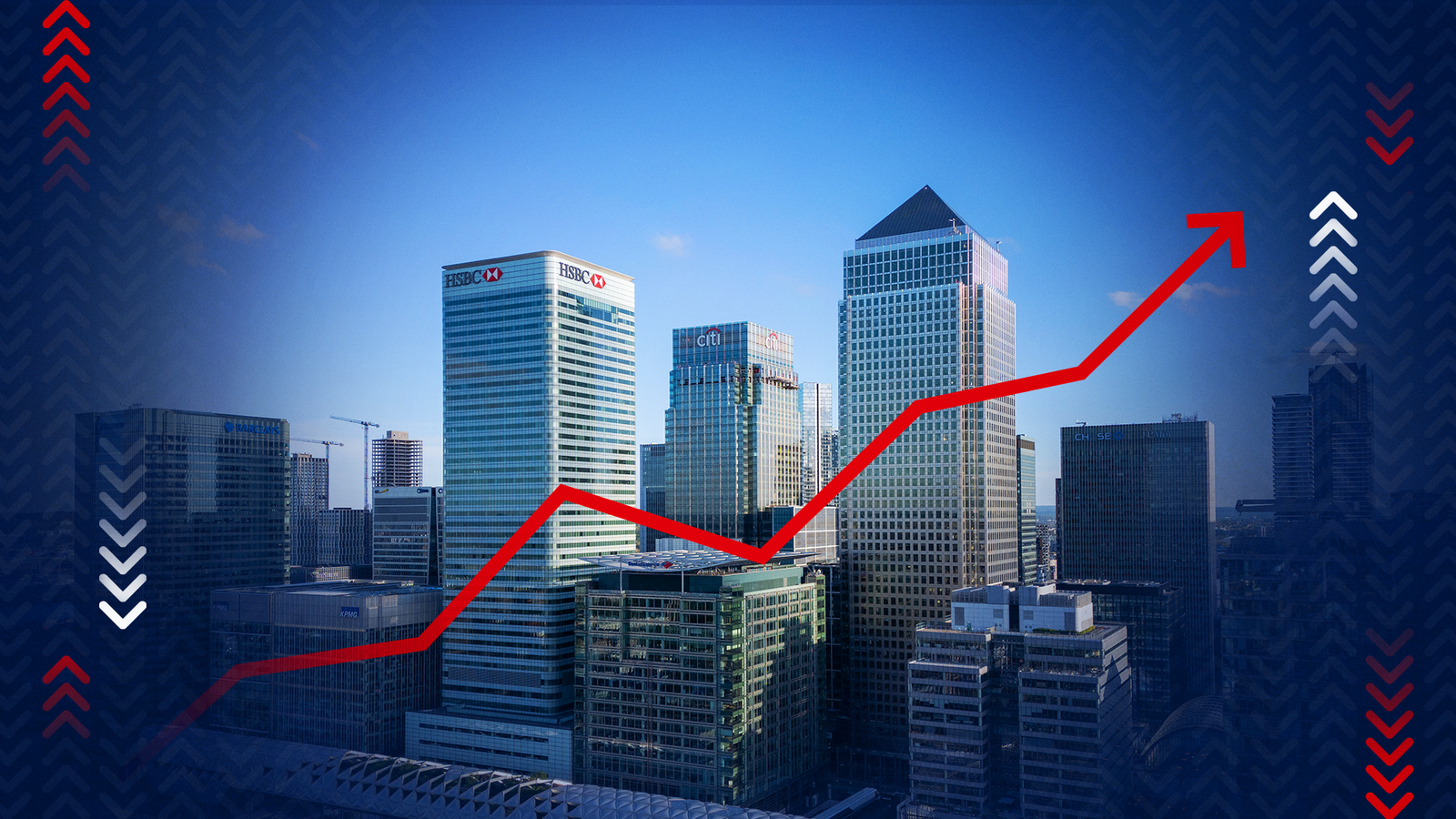
National debt to triple due to climate change and sick population – OBR


The gap between how much money the state takes in and its spending will triple in the next 50 years, according to independent forecasters.
Public debt will rise due to an ageing and ill population as well as climate change, the fiscal watchdog the Office for Budget Responsibility (OBR) has said.
The ratio between debt and everything produced in the economy as measured by gross domestic product (GDP) will reach 270%.
Money blog: Most stressful UK jobs revealed
Latest figures show debt is nearly 100% of GDP.
Why?
The effects of climate change are estimated to damage the economy and public finances by adding between sums equivalent to 20% and 30% of GDP to the debt pile.
But there could be an improvement in the estimates by making everyone healthier, the OBR said.
Improved population health could reduce national debt expectations by more than 40% by the mid-2070s.
Keep up with all the latest news from the UK and around the world by following Sky News
As the population gets older fewer people are paying tax and more needs to be spent on health and care services, costing the state and raising debt levels.
It’s been described by the body as “unsustainable”.
As the combustion engine is phased out and motorists turn to electric vehicles revenue will be lost from fuel duty, cutting a key source of state revenue.
A carbon tax does not replace lost motoring taxes as fuel duty declines, the OBR’s report said.
What’s the OBR?
The office was established to crunch the public finance numbers, provide forecasts and analyse government budgets.
Its assessment of the long-term fiscal risks facing the economy was published on Thursday – a report which is typically published in July but was moved due to the UK general election.
The same warning was also made when last year’s report was issued.
Reaction
In response, the chief secretary to the Treasury said: “The OBR has laid bare the shocking state that our public finances were left in by the previous government.
“That’s why this government began work immediately to address the inheritance with tough choices on spending alongside ambitious action to drive growth. By fixing the foundations, we will rebuild Britain and make every part of the country better off.”
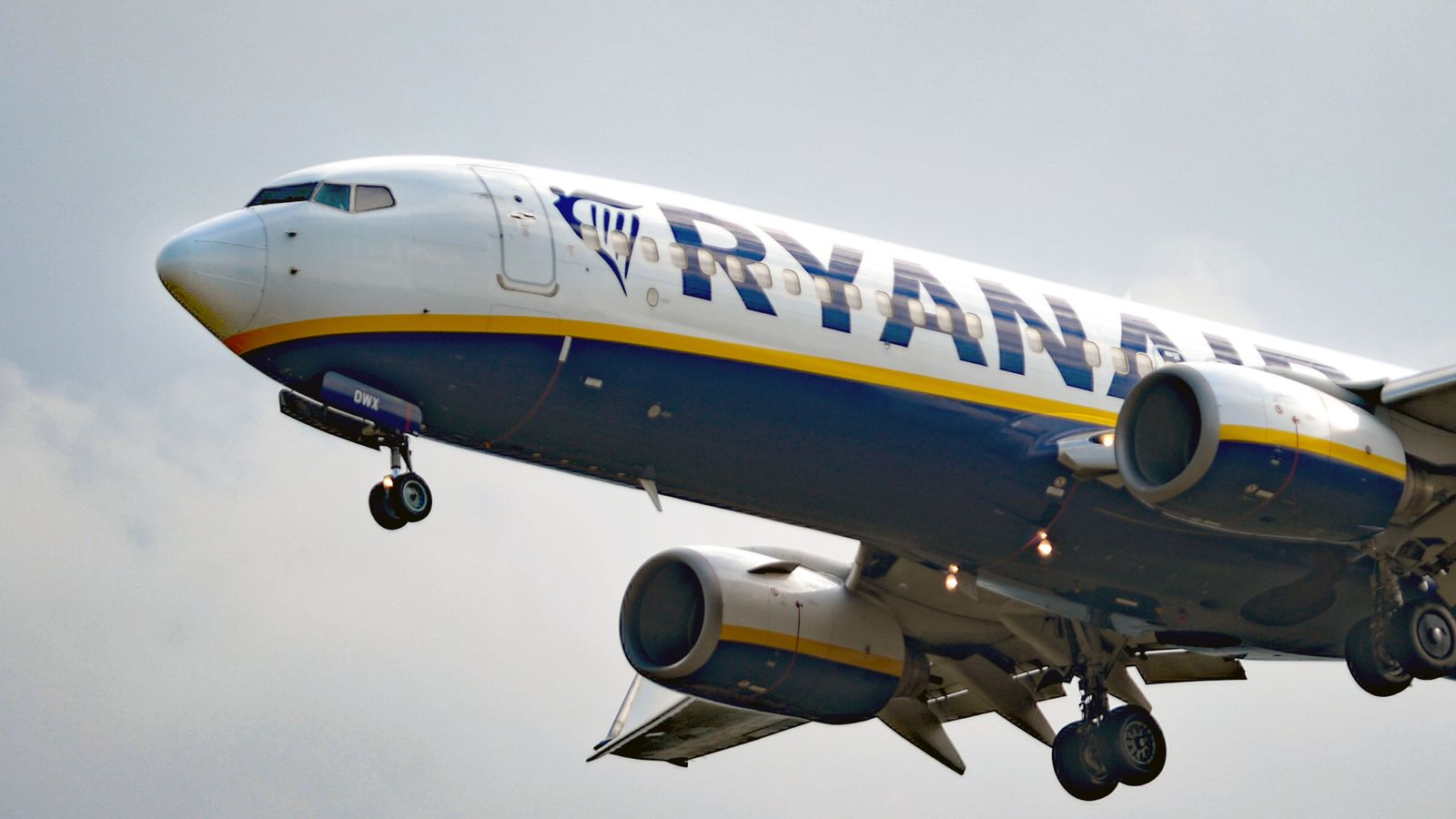
The boss of Ryanair has told Sky News the president of the European Commission should “quit” if she can’t stop disruption caused by repeated French air traffic control strikes.
Michael O’Leary, the group chief executive of Europe’s largest airline by passenger numbers, said in an interview with Business Live that Ursula von der Leyen had failed to get to grips, at an EU level, with interruption to overflights following several recent disputes in France.
The latest action began on Thursday and is due to conclude later today, forcing thousands of flights to be delayed and cancelled through French airspace closures.
Money latest: ‘Lifeblood of mortgage market’ enjoying lower rates
Mr O’Leary told presenter Darren McCaffrey that French domestic flights were given priority during ATC strikes and other nations, including Italy and Greece, had solved the problem through minimum service legislation.
He claimed that the vast majority of flights, cancelled over two days of action that began on Thursday, would have been able to operate under similar rules.
Mr O’Leary said of the EU’s role: “We continue to call on Ursula von der Leyen – why are you not protecting these overflights, why is the single market for air travel being disrupted by a tiny number of French air traffic controllers?
Ryanair has cancelled more than 400 flights over two days due to the action in France. File pic: PA
“All we get is a shrug of their shoulders and ‘there’s nothing we can do’. We point out, there is.”
He added: “We are calling on Ursula von der Leyen, who preaches about competitiveness and reforming Europe, if you’re not willing to protect or fix overflights then quit and let somebody more effective do the job.”
The strike is estimated, by the Airlines for Europe lobby group to have led to at least 1,500 cancelled flights, leaving 300,000 travellers unable to make their journeys.
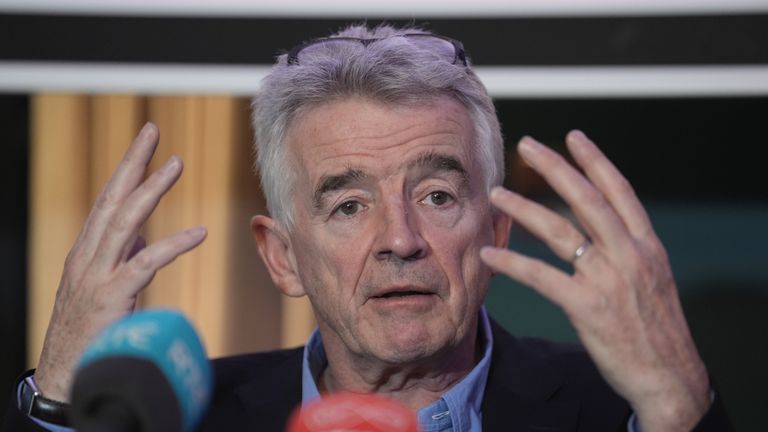
Michael O’Leary believes the EU can take action on competition grounds. Pic: PA
Ryanair itself had axed more than 400 flights so far, Mr O’Leary said. Rival easyJet said on Thursday that it had cancelled 274 services over the two days.
The beginning of July marks the start of the European summer holiday season.
The French civil aviation agency DGAC had already told airlines to cancel 40% of flights covering the three main Paris airports on Friday ahead of the walkout – a dispute over staffing levels and equipment quality.
Mr O’Leary described those safety issues as “nonsense” and said twhile the controllers had a right to strike, they did not have the right to close the sky.
DGAC has warned of delays and further severe disruption heading into the weekend.
Many planes and crews will be out of position.
Mr O’Leary is not alone in expressing his frustration.
The French transport minister Philippe Tabarot has denounced the action and the reasons for it.
“The idea is to disturb as many people as possible,” he said in an interview with CNews.
Passengers are being advised that if your flight is cancelled, the airline must either give you a refund or book you on an alternative flight.
If you have booked a return flight and the outbound leg is cancelled, you can claim the full cost of the return ticket back from your airline.
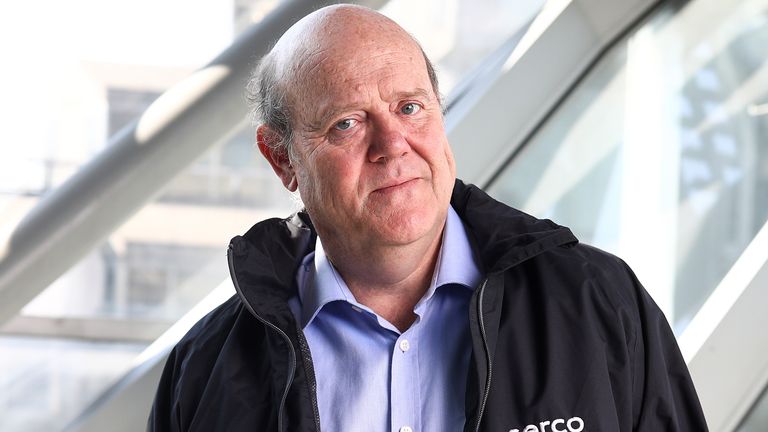
The CBI has begun a search for a successor to Rupert Soames, its chairman, as it continues its recovery from the crisis which brought it to the brink of collapse in 2023.
Sky News has learnt that the business lobbying group’s nominations committee has engaged headhunters to assist with a hunt for its next corporate figurehead.
Mr Soames, the grandson of Sir Winston Churchill, was recruited by the CBI in late 2023 with the organisation lurching towards insolvency after an exodus of members.
Money latest: Has bond market calmed after chancellor’s tears?
The group’s handling of a sexual misconduct scandal saw it forced to secure emergency funding from a group of banks, even as it was frozen out of meetings with government ministers.
One prominent CBI member described Mr Soames on Thursday as the group’s “saviour”.
“Without his ability to bring members back, the organisation wouldn’t exist today,” they claimed.
Rupert Soames. Pic: Reuters
Read more:
Starmer could be ousted as PM ‘within months’
Reeves’s tears a hard watch but reminder of her challenges
Mr Soames and Rain Newton-Smith, the CBI chief executive, have partly restored its influence in Whitehall, although many doubt that it will ever be able to credibly reclaim its former status as ‘the voice of British business’.
Its next chair, who is also likely to be drawn from a leading listed company boardroom, will take over from Mr Soames early next year.
Egon Zehnder International is handling the search for the CBI.
“The CBI chair’s term typically runs for two years and Rupert Soames will end his term in early 2026,” a CBI spokesperson said.
“In line with good governance, we have begun the search for a successor to ensure continuity and a smooth transition.”
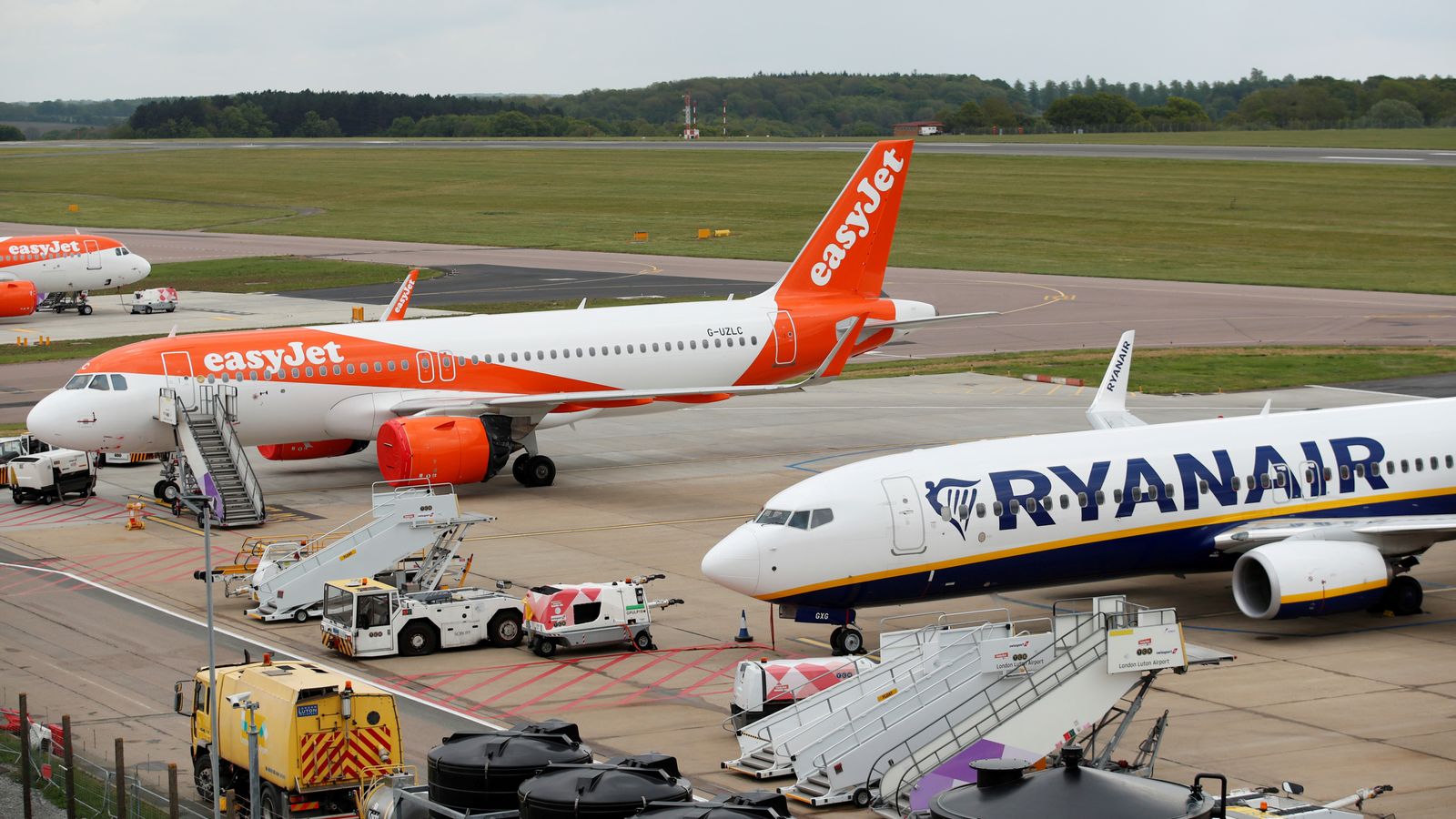
Ryanair and easyJet have cancelled hundreds of flights as a French air traffic controllers strike looms.
Ryanair, Europe’s largest airline by passenger numbers, said it had axed 170 services amid a plea by French authorities for airlines to reduce flights at Paris airports by 40% on Friday.
EasyJet said it was cancelling 274 flights during the action, which is due to begin later as part of a row over staffing numbers and ageing equipment.
Money latest: Bond market fires warning shot at Downing St
The owner of British Airways, IAG, said it was planning to use larger aircraft to minimise disruption for its own passengers.
The industrial action is set to affect all flights using French airspace, leading to wider cancellations and delays across Europe and the wider world.
Ryanair said its cancellations, covering both days, would hit services to and from France, and also flights over the country to destinations such as the UK, Greece, Spain and Ireland.
Group chief executive Michael O’Leary has campaigned for a European Union-led shake-up of air traffic control services in a bid to prevent such disruptive strikes, which have proved common in recent years.
He described the latest action as “recreational”.
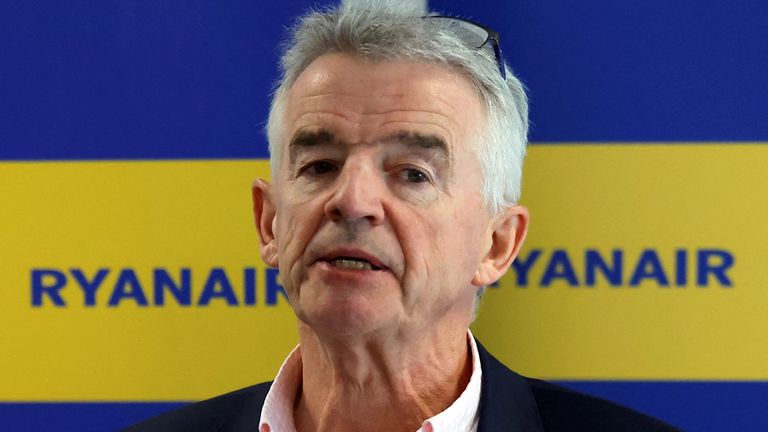
Michael O’Leary. Pic: Reuters
“Once again, European families are held to ransom by French air traffic controllers going on strike,” he said.
“It is not acceptable that overflights over French airspace en route to their destination are being cancelled/delayed as a result of yet another French ATC strike.
“It makes no sense and is abundantly unfair on EU passengers and families going on holidays.”
Ryanair is demanding the EU ensure that air traffic services are fully staffed for the first wave of daily departures, as well as to protect overflights during national strikes.
“These two splendid reforms would eliminate 90% of all ATC delays and cancellations, and protect EU passengers from these repeated and avoidable ATC disruptions due to yet another French ATC strike,” Mr O’Leary added.
-
 Sports3 years ago
‘Storybook stuff’: Inside the night Bryce Harper sent the Phillies to the World Series
-
 Sports1 year ago
Story injured on diving stop, exits Red Sox game
-
 Sports2 years ago
Game 1 of WS least-watched in recorded history
-
 Sports2 years ago
MLB Rank 2023: Ranking baseball’s top 100 players
-
Sports4 years ago
Team Europe easily wins 4th straight Laver Cup
-
 Environment2 years ago
Japan and South Korea have a lot at stake in a free and open South China Sea
-
 Sports2 years ago
Button battles heat exhaustion in NASCAR debut
-
 Environment2 years ago
Game-changing Lectric XPedition launched as affordable electric cargo bike