
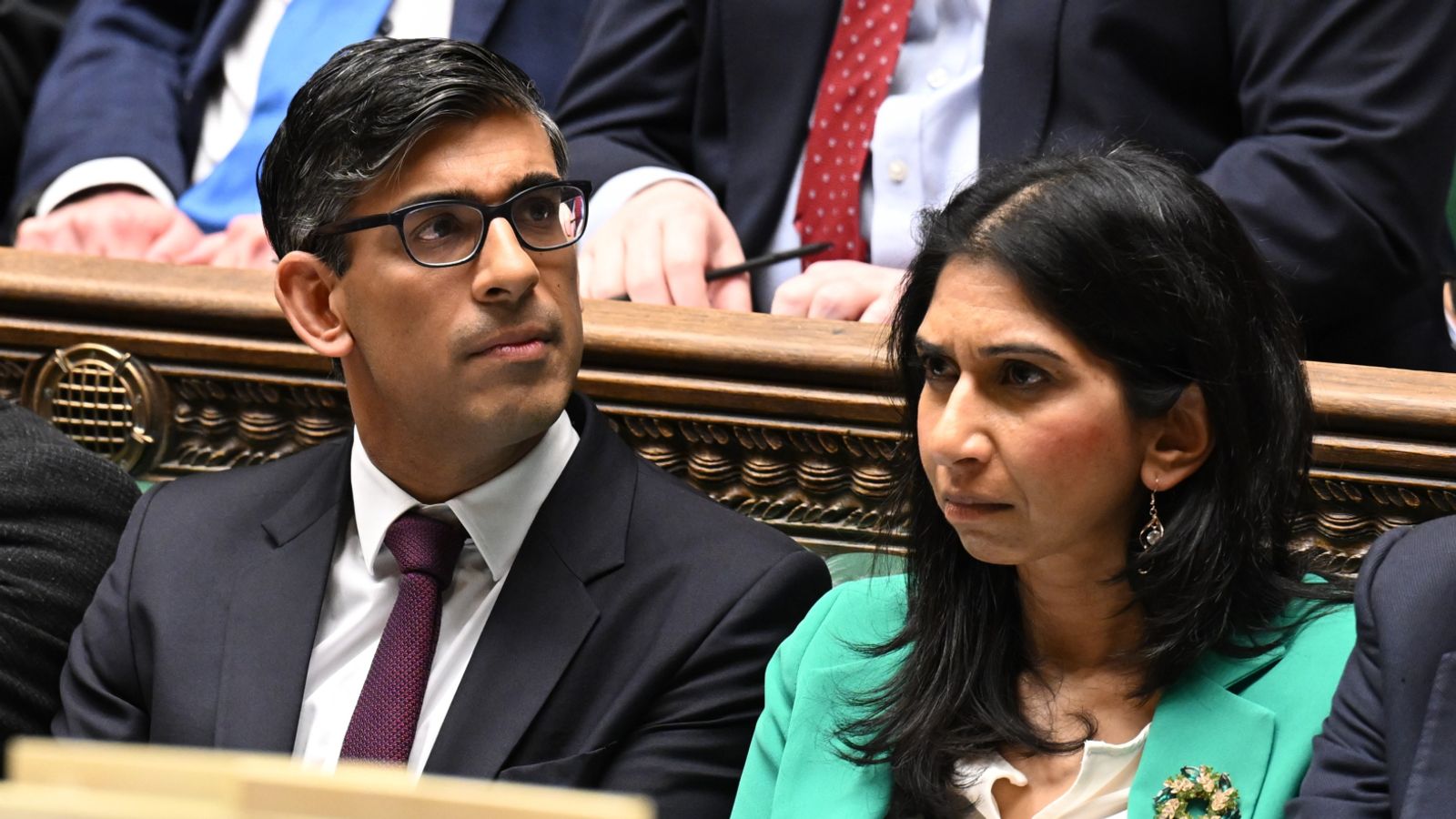
Protester’s placard depicting Sunak and Braverman was ‘racially abusive’, court hears

A placard held by a woman at a pro-Palestinian protest showing images of former prime minister Rishi Sunak and ex-home secretary Suella Braverman was “racially abusive”, a court has heard.
Warning: This article contains language some may find offensive
Marieha Hussain, 37, of High Wycombe, pleaded not guilty to a racially aggravated public order offence at Westminster Magistrates’ Court on Thursday over the placard depicting the politicians as coconuts.
As the trial began, about 40 pro-Palestinian protesters gathered outside the building.
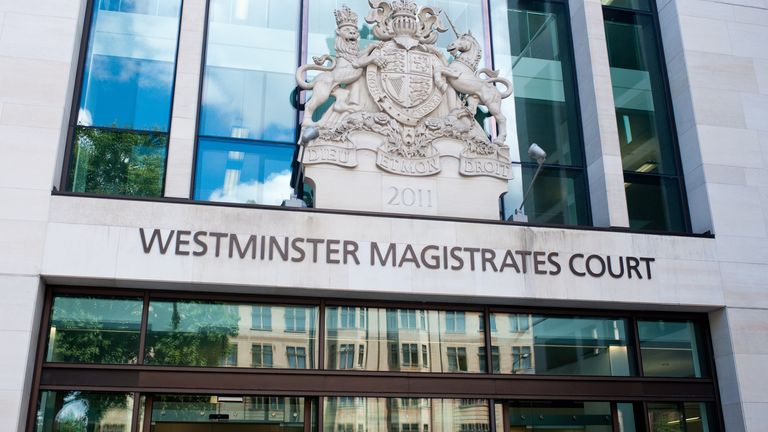
The trial is taking place at Westminster Magistrates’ Court in London. Pic: iStock
Prosecutor Jonathan Bryan told the court the term “coconut” was a “well-known racial slur which has a very clear meaning”.
“You may be brown on the outside, but you’re white on the inside. In other words, you’re a race traitor – you’re less brown or black than you should be,” he said.
He argued Hussain had “crossed the line between legitimate political expression” and moved into “racial insult”.
“We say that the placard was abusive, it was racially abusive,” he told the court.
“There were people present who were likely to have been caused harassment, alarm and distress by seeing what was on that placard.”
Keep up with all the latest news from the UK and around the world by following Sky News
An image of the placard, held by Hussain at a pro-Palestinian protest on 11 November, was shown in court.
It showed cut-out pictures of Mr Sunak and Ms Braverman placed alongside coconuts under a tree.
Defending, Rajiv Menon KC, said the placard was a “political criticism” of Mr Sunak and Ms Braverman.
He told the court: “What she is saying is Suella Braverman – then home secretary, sacked two days after – was promoting in different ways a racist political agenda as evidenced by the Rwanda policy, the racist rhetoric she was using around small boats.
“And the prime minister was either quiescing to it or being inactive.
“It was a political criticism of these two particular politicians.”
Read more from Sky News:
First images of historic private spacewalk
Spurs star charged by FA over racist joke
Holly Ramsay and Adam Peaty engaged
Metropolitan Police communications manager Chris Humphreys told the court that images come to the attention of the police service if the force’s social media account is “tagged in the post”.
He added the force “actively monitors” accounts that frequently post protest-related images.
Mr Menon told the court the image of the placard had been posted by an X account with the username Harry’s Place.
He asked Mr Humphreys: “Are you aware that Harry’s Place is a secretive political blog headquartered in Washington DC that has a particular interest in opposing any criticism of the Israeli state?”
Mr Humphreys replied: “I know Harry’s Place is an anonymous political blog.”
The trial continues.

A care worker who reported the alleged abuse of an elderly care home resident, which triggered a criminal investigation, is facing destitution and potential removal from Britain after speaking up.
“Meera”, whose name we have changed to protect her identity, said she witnessed an elderly male resident being punched several times in the back by a carer at the home where she worked.
Sky News is unable to name the care home for legal reasons because of the ongoing police investigation.
“I was [a] whistleblower there,” said Meera, who came to the UK from India last year to work at the home.
“Instead of addressing things, they fired me… I told them everything and they made me feel like I am criminal. I am not criminal, I am saving lives,” she added.
‘Meera’ spoke up about abuse she said she witnessed in the care home where she worked
Like thousands of foreign care workers, Meera’s employer sponsored her visa. Unless she can find another sponsor, she now faces the prospect of removal from the country.
“I am in trouble right now and no one is trying to help me,” she said.
Meera said she reported the alleged abuse to her bosses, but was called to a meeting with a manager and told to “change your statement, otherwise we will dismiss you”.
She refused. The following month, she was sacked.
The care home claimed she failed to perform to the required standard in the job.
She went to the police to report the alleged abuse and since then, a number of people from the care home have been arrested. They remain under investigation.
‘Migrants recruited because many are too afraid to speak out’
The home has capacity for over 60 residents. It is unclear if the care home residents or their relatives know about the police investigation or claim of physical abuse.
Since the arrests, the regulator, the Care Quality Commission (CQC), carried out an investigation at the home triggered by the concerns – but the home retained its ‘good’ rating.
Meera has had no reassurance from the authorities that she will be allowed to remain in Britain.
In order to stay, she’ll need to find another care home to sponsor her which she believes will be impossible without references from her previous employer.
She warned families: “I just want to know people in care homes like these… your person, your father, your parents, is not safe.”
She claimed some care homes have preferred to recruit migrants because many are too afraid to speak out.
“You hire local staff, they know the legal rights,” she said. “They can complain, they can work anywhere… they can raise [their] voice,” she said.
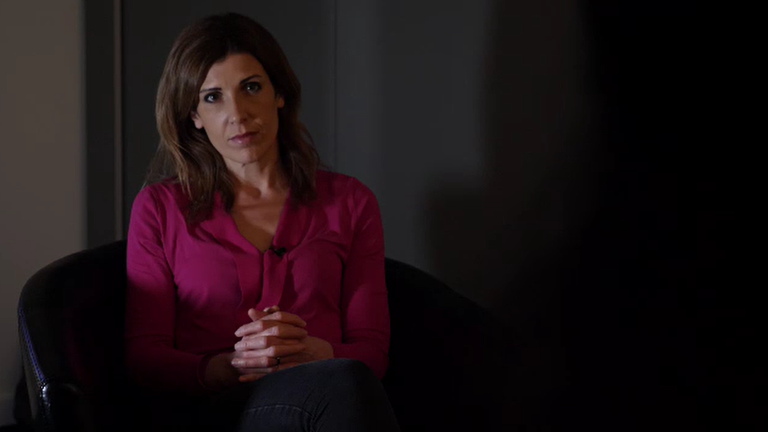
Sky’s Becky Johnson spoke to ‘Meera’
Sky News has reported widespread exploitation of care visas and migrant care workers.
Read more:
More than 100 migrants face being in UK illegally
Immigration crackdown will fuel ‘exodus’ of nurses
New English language and UK citizenship requirements for migrants
Currently migrants make up around a third of the adult social care workforce, with the majority here on visas that are sponsored by their employers.
As part of measures announced in April in the government’s immigration white paper, the care visa route will be closed, meaning care homes will no longer be able to recruit abroad.
‘Whole system is based on power imbalance’
But the chief executive of the Work Rights Centre, a charity that helps migrants with employment issues, is warning that little will change for the tens of thousands of foreign care workers already here.
“The whole system is based on power imbalance and the government announcement doesn’t change that,” Dr Dora-Olivia Vicol told Sky News.
She linked the conditions for workers to poor care for residents.
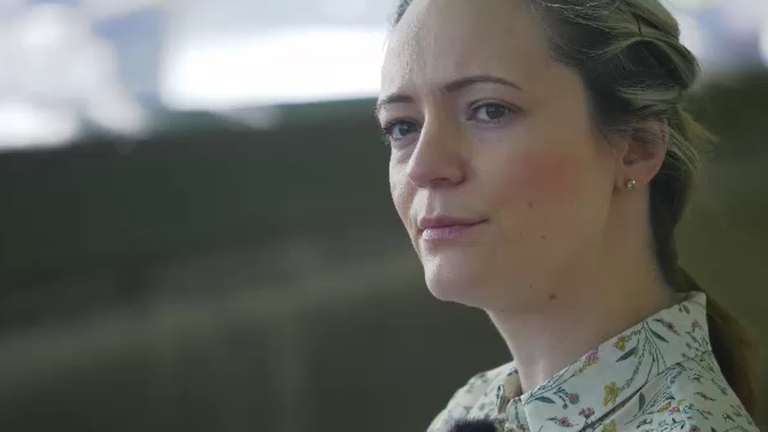
Work Rights Centre CEO Dr Dora-Olivia Vicol
“I think the power that employers have over migrant workers’ visas really makes a terrible contribution to the quality of care,” she said.
Imran agrees. He came to the UK from Bangladesh, sponsored by a care company unrelated to the one Meera worked for. He says he frequently had to work 14-hour shifts with no break because there weren’t enough staff. He too believes vulnerable people are being put at risk by the working conditions of their carers.
Migrant workers ‘threatened’ over visas
“For four clients, there is [a] minimum requirement for two or three staff. I was doing [it] alone,” he said, in broken English.
“When I try to speak, they just directly threaten me about my visa,” he said.
“I knew two or three of my colleagues, they are facing the same issue like me. But they’re still afraid to speak up because of the visa.”
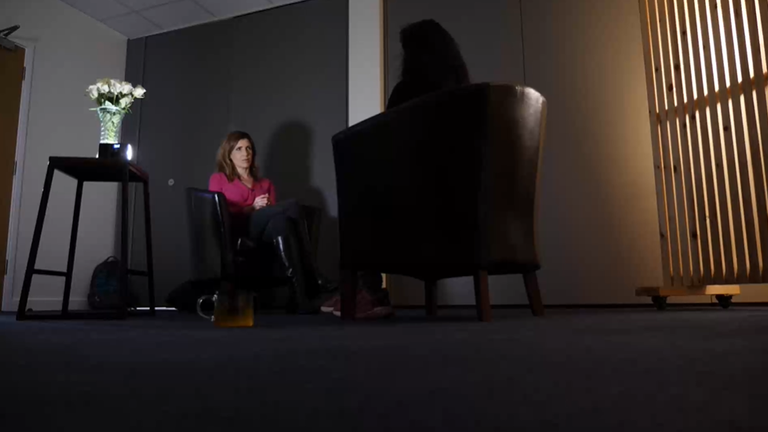
A government spokesperson called what happened to Imran and Meera “shocking”.
“No one should go to work in fear of their employer, and all employees have a right to speak up if they witness poor practice and care.”
James Bullion, from the CQC, told Sky News it acts on intelligence passed to it to ensure people stay safe in care settings.
Additional research by Leah Adin
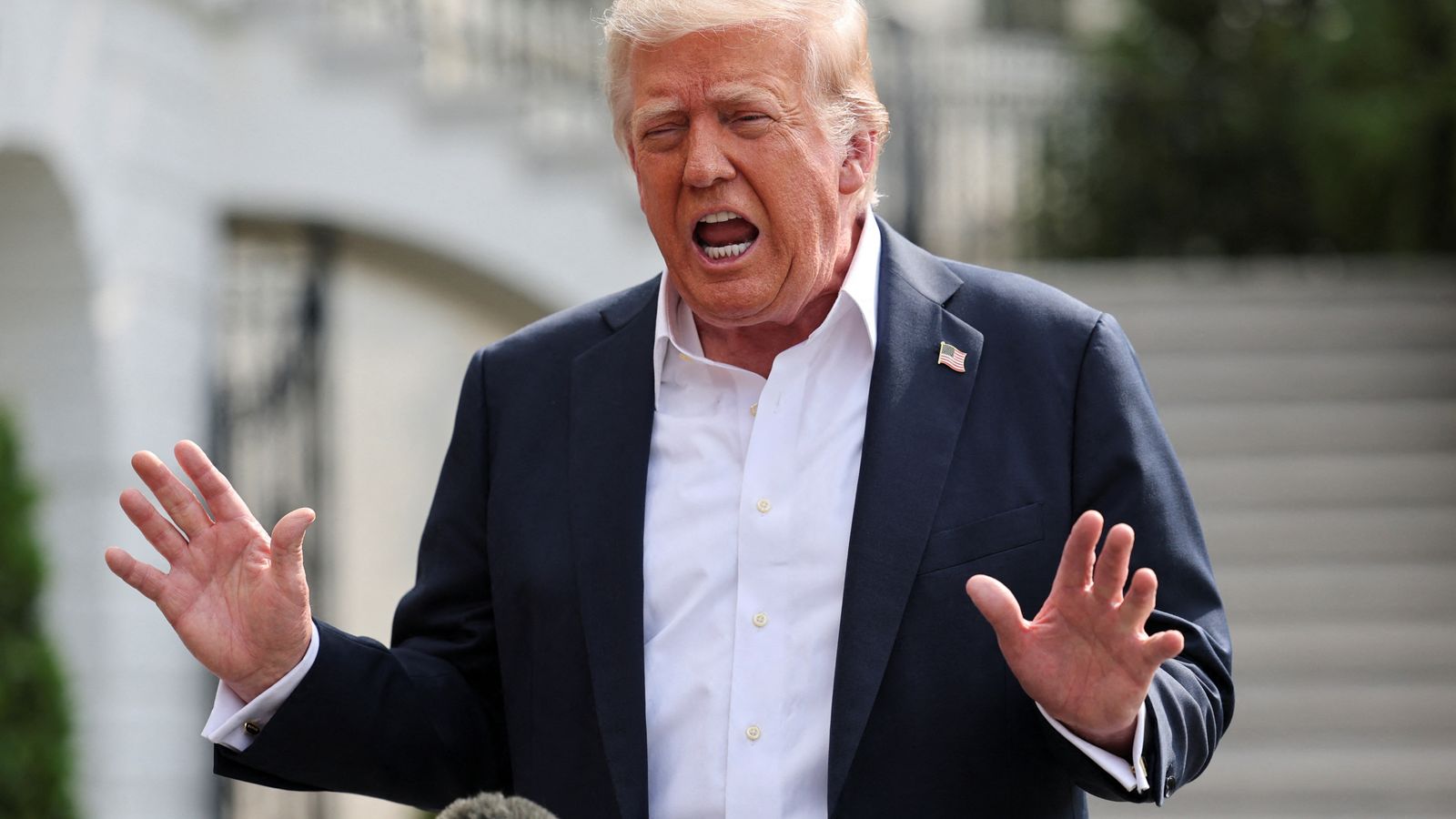
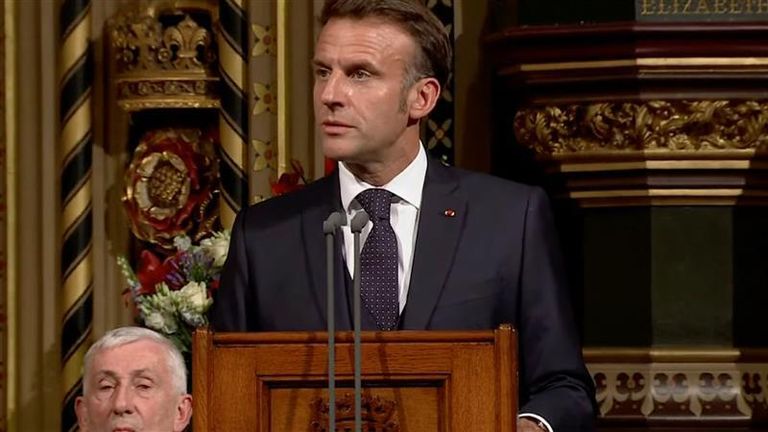
Donald Trump may be denied the honour of addressing parliament on his state visit to the UK later this year, with no formal request yet submitted for him to be given that privilege.
It comes after President Macron’s successful state visit this week, in which he was invited to speak in front of both Houses of Parliament.
Sky News has been told the Speaker of the House of Commons, Sir Lindsay Hoyle, hasn’t so far received a request to invite the US president to speak in parliament when he is expected to visit in September.
It was confirmed to MPs who have raised concerns about the US president being allowed to address both houses.
Kate Osborne, Labour MP for Jarrow and Gateshead East, wrote to the speaker in April asking him to stop Mr Trump from addressing parliament, and tabled an early-day motion outlining her concerns.
“I was happy to see Macron here but feel very differently about Trump,” she said.
“Trump has made some very uncomfortable and worrying comments around the UK government, democracy, the Middle East, particularly around equalities and, of course, Ukraine.
“So, I think there are many reasons why, when we’re looking at a state visit, we should be looking at why they’re being afforded that privilege. Because, of course, it is a privilege for somebody to come and address both of the houses.”
But the timing of the visit may mean that any diplomatic sensitivities, or perceptions of a snub, could be avoided.
France’s President Emmanuel Macron addressed parliament during his state visit this month
Lord Ricketts, a former UK ambassador to France, pointed out that parliament isn’t sitting for much of September, and that could help resolve the issue.
In 2017, he wrote a public letter questioning the decision to give Donald Trump his first state visit, saying it put Queen Elizabeth II in a “very difficult position”.
Parliament rises from 16 September until 13 October due to party conferences.
The dates for the state visit haven’t yet been confirmed by Buckingham Palace or the government.
However, they have not denied that it will take place in September, after Mr Trump appeared to confirm they were planning to hold the state visit that month. The palace confirmed this week that the formal planning for his arrival had begun.
With the King likely to still be in Scotland in early September for events such as the Braemar Gathering, and the anniversary of his accession and the death of Queen Elizabeth on the 8th September, it may be expected that the visit would take place sometime from mid to the end of September, also taking into consideration the dates of the Labour Party conference starting on the 28th September and possibly the Lib Dem’s conference from the 20th-23rd.
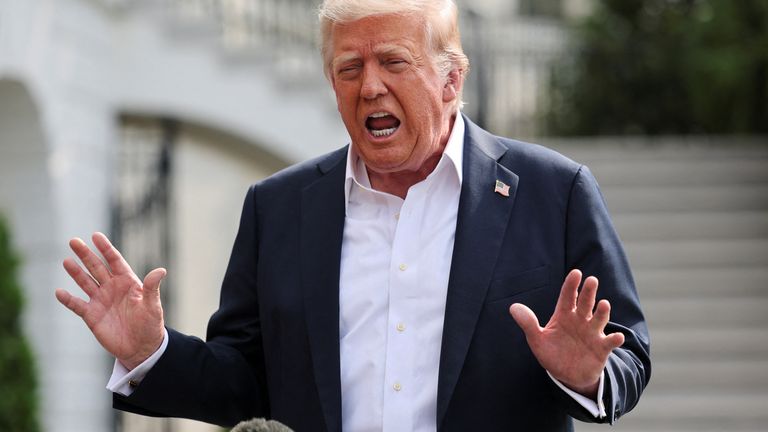
Mr Trump has said he believes the trip to the UK will take place in September. Pic: Reuters
When asked about parliamentary recess potentially solving the issue, Ms Osborne said: “It may be a way of dealing with it in a very diplomatic way… I don’t know how much control we have over Trump’s diary.
“But if we can manoeuvre it in a way that means that the House isn’t sitting, then that seems like a good solution, maybe not perfect, because I’d actually like him to know that he’s not welcome.”
A message from the speaker’s office, seen by Sky News, says: “Formal addresses to both Houses of Parliament are not automatically included in the itinerary of such a state visit.
“Whether a foreign head of state addresses parliament, during a state visit or otherwise, is part of the planning decisions.”
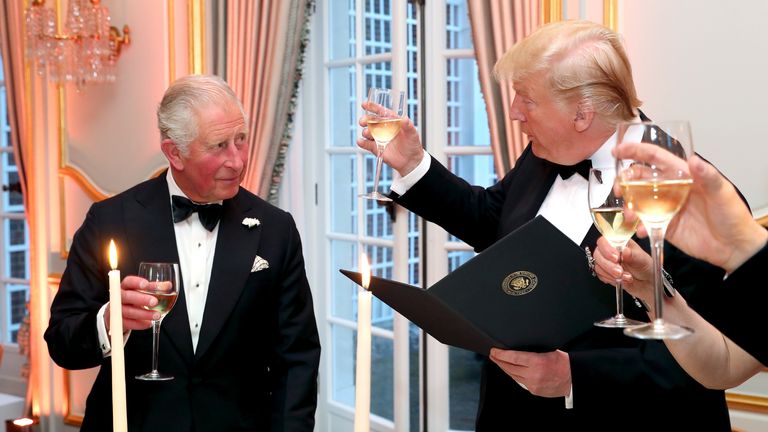
Mr Trump made his first state visit to the UK in June 2019 during his first presidency. File pic: Reuters
It’s understood that if the government agrees to a joint address to parliament, the Lord Chamberlain’s office writes to the two speakers, on behalf of the King, to ask them to host this.
It will be Mr Trump’s second state visit.
During his first, in 2019, he didn’t address parliament, despite the fact that his predecessor, Barack Obama, was asked to do so.
It was unclear if this was due to the fact John Bercow, the speaker at the time, made it clear he wasn’t welcome to do so.
However, it didn’t appear to dampen Mr Trump’s excitement about his time with the Royal Family.
Read more from Sky News:
Two women killed as BMW crashes into care home
Officers who confronted Southport killer win bravery award
Speaking earlier this year, he described his state visit as “a fest” adding “it’s an honour… I’m a friend of Charles, I have great respect for King Charles and the family, William; we have really just a great respect for the family. And I think they’re setting a date for September.”
It is expected that, like Mr Macron, the pageantry for his trip this time will revolve around Windsor, with refurbishment taking place at Buckingham Palace.
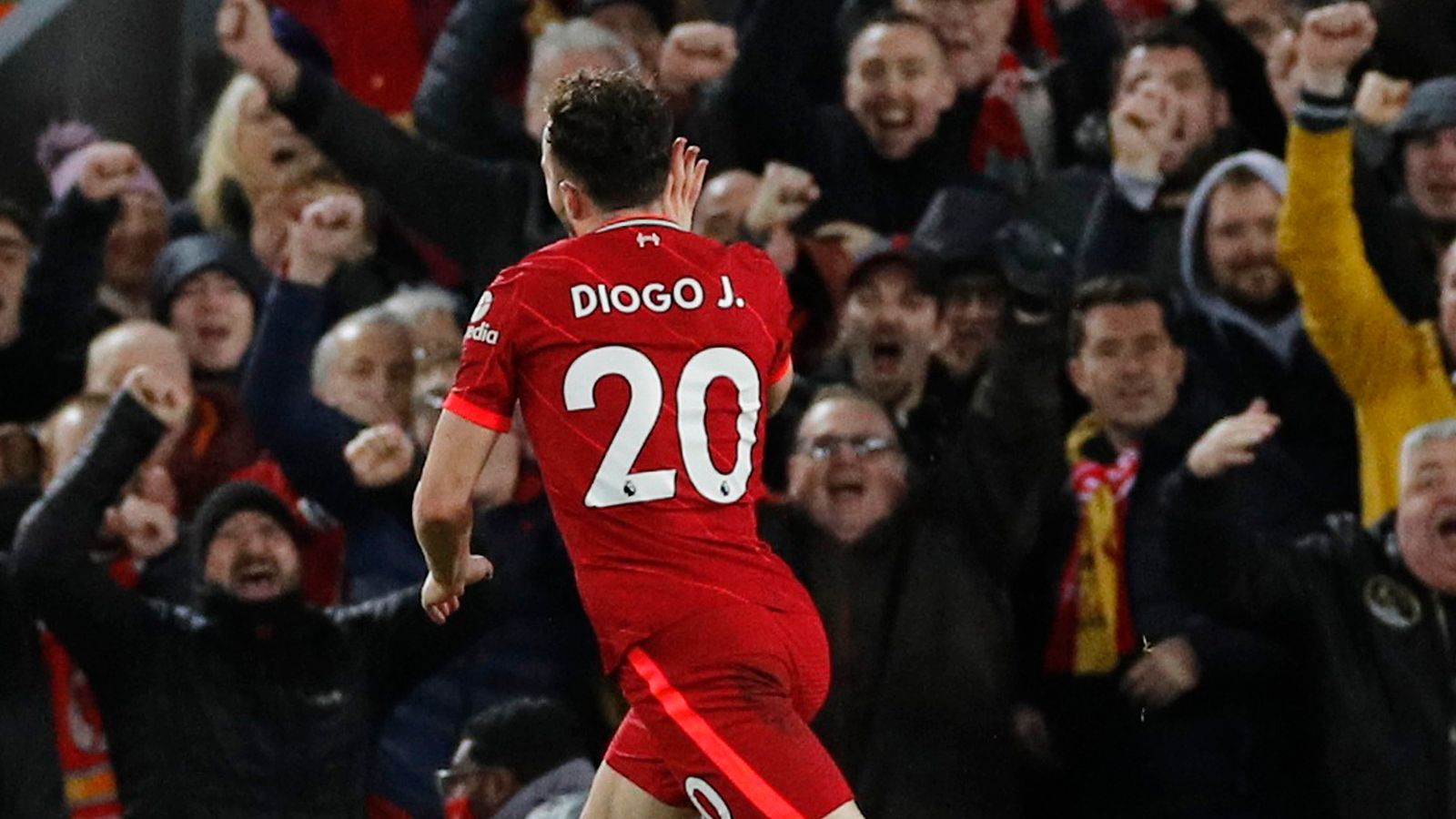
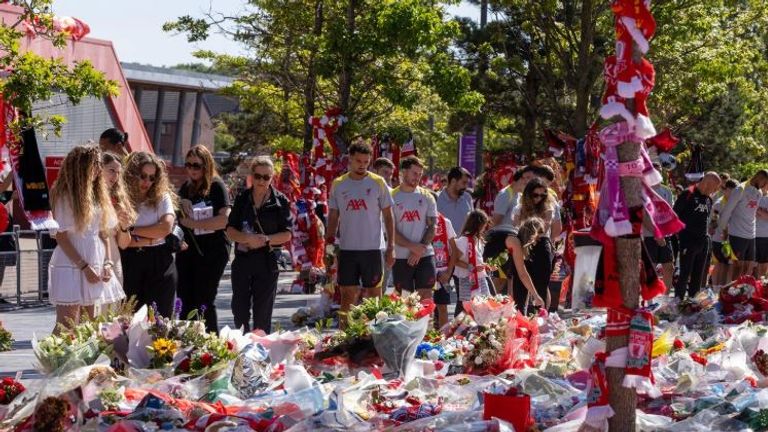
Liverpool have retired the number 20 shirt in honour of Diogo Jota – the first time it has made such a gesture.
The club said it was a “unique tribute to a uniquely wonderful person” and the decision was made in consultation with his wife and family.
The number 20 will be retired at all levels, including the men’s and women’s first teams and academy squads.
A statement said: “It was the number he wore with pride and distinction, leading us to countless victories in the process – and Diogo Jota will forever be Liverpool Football Club’s number 20.”
The club called it a “recognition of not only the immeasurable contribution our lad from Portugal made to the Reds’ on-pitch successes over the last five years, but also the profound personal impact he had on his teammates, colleagues and supporters and the everlasting connections he built with them”.
Jota’s wife joined Liverpool players to view tributes at Anfield on Friday. Pic: Liverpool FC
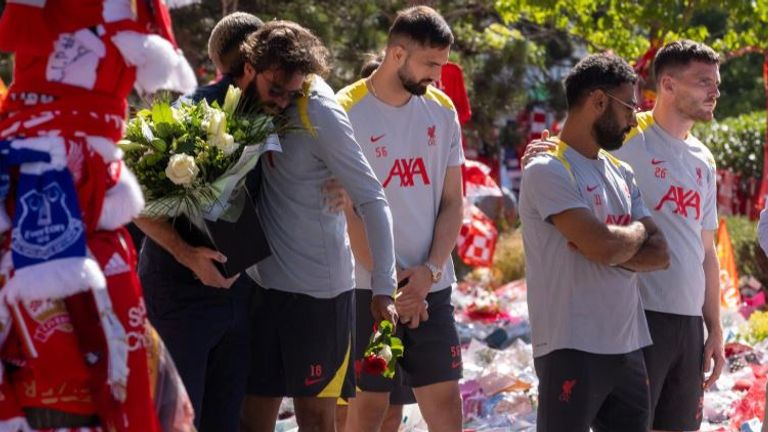
Pic: Liverpool FC
Newly-married Jota died alongside his brother when his Lamborghini crashed in northern Spain on 3 July.
Police said this week that all the evidence so far suggests Jota was the one driving the vehicle.
Liverpool teammates joined members of Jota’s family, including his wife Rute, at a huge memorial site outside Anfield on Friday.
Read more from Sky News:
Mystery in space is most likely ‘oldest comet ever seen’
Trump may be denied privilege of addressing parliament
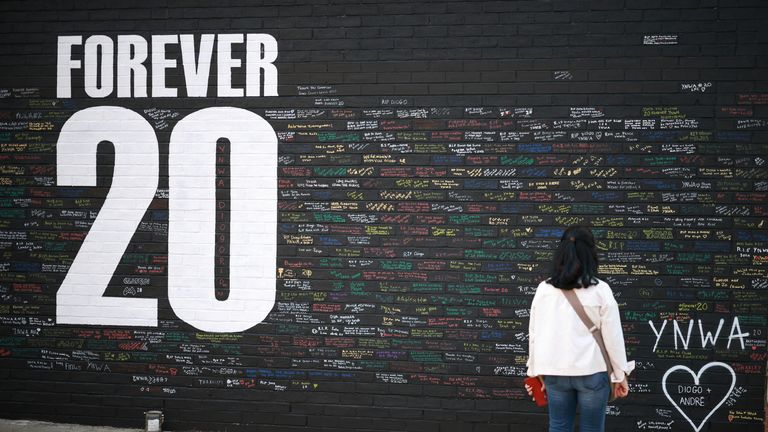
A fan looks at messages on a memorial wall near Anfield. Pic: Reuters

Virgil van Dijk and Andy Robertson were among players at the funeral. Pic: Reuters
The star’s funeral took place last weekend, with Liverpool colleagues and members of the Portuguese national team in attendance.
Reds captain Virgil van Dijk carried a shirt bearing the number 20 made from flowers.
Liverpool players returned to the club’s training ground for the start of pre-season on Tuesday.
Their first game since Jota’s death will be on Sunday when they play a friendly away against Preston North End.
-
 Sports3 years ago
‘Storybook stuff’: Inside the night Bryce Harper sent the Phillies to the World Series
-
 Sports1 year ago
Story injured on diving stop, exits Red Sox game
-
 Sports2 years ago
Game 1 of WS least-watched in recorded history
-
 Sports2 years ago
MLB Rank 2023: Ranking baseball’s top 100 players
-
Sports4 years ago
Team Europe easily wins 4th straight Laver Cup
-
 Sports2 years ago
Button battles heat exhaustion in NASCAR debut
-
 Environment2 years ago
Japan and South Korea have a lot at stake in a free and open South China Sea
-
 Environment2 years ago
Game-changing Lectric XPedition launched as affordable electric cargo bike