Connect with us

Published

on

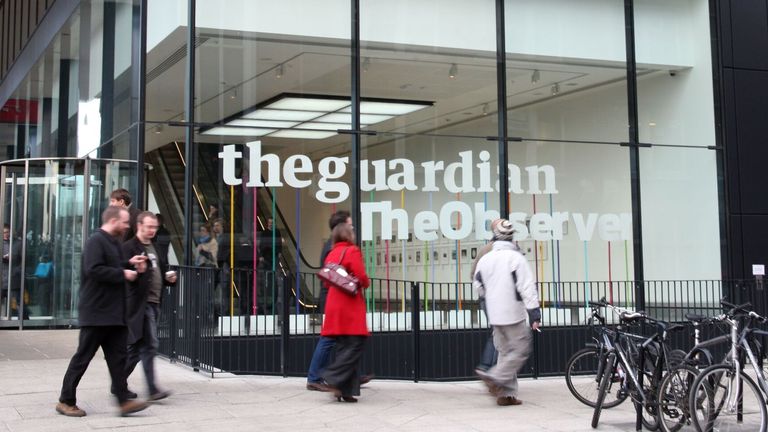
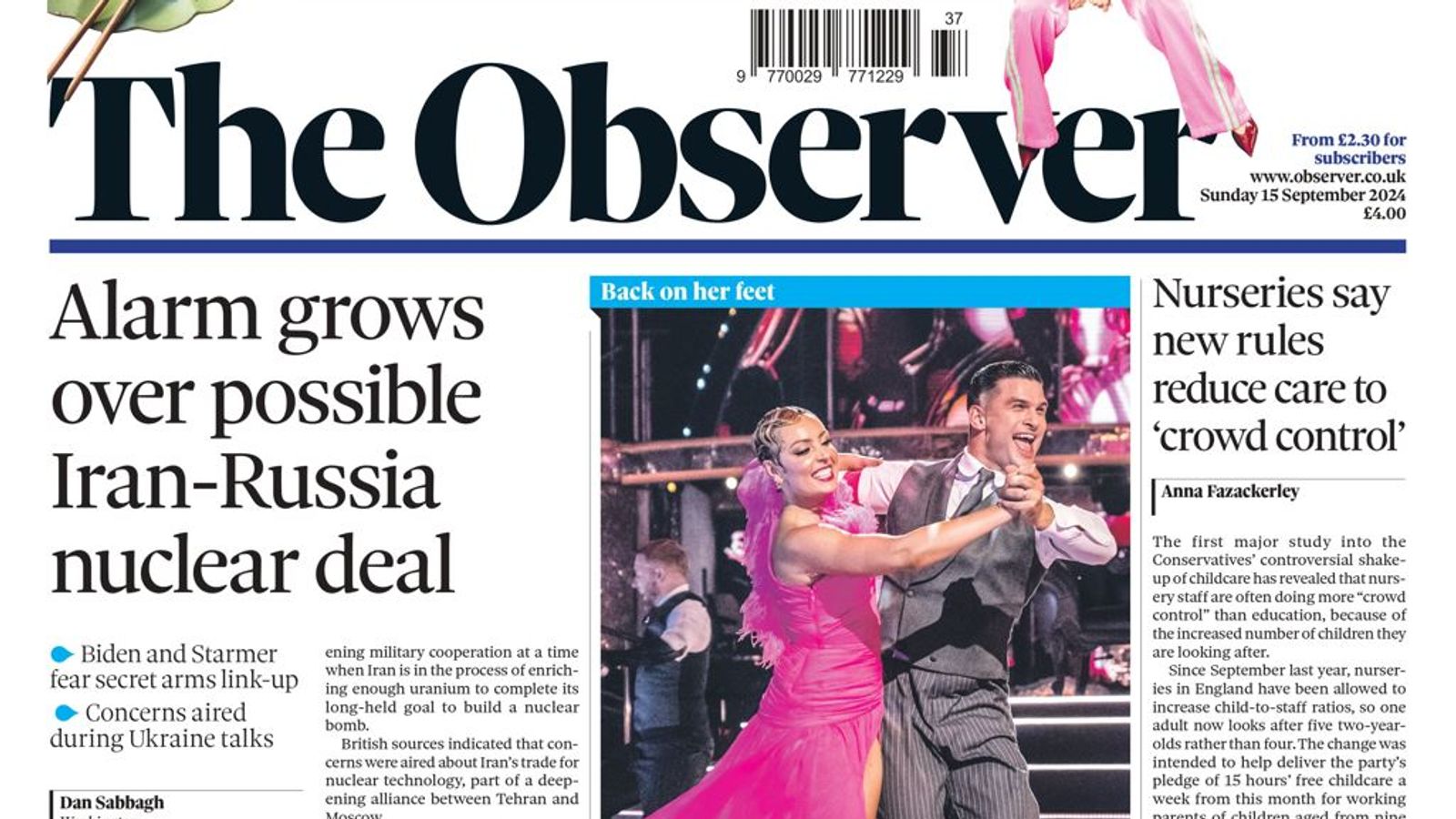
Guardian Media Group (GMG) is in talks to sell The Observer, the world’s oldest Sunday newspaper, to Tortoise Media, a start-up founded five years ago by a former BBC and Times executive.

Sky News can exclusively reveal that GMG was in the process of informing staff on The Observer on Tuesday that it is in exclusive discussions with Tortoise Media about a sale of the title.

Talks are said to have been under way for some time, although banking sources cautioned that it was possible that a deal might not be reached.

Tortoise Media is understood to be committing an investment of £25m in The Observer in the first five years of its ownership.

The potential price that would be paid by Tortoise Media, which was established by James Harding in 2019, and other key details of the prospective transaction were unclear.

A deal to sell The Observer would reshape Britain’s declining Sunday newspaper market, and will raise questions about whether The Guardian plans to extend its six day a week print operation to Sundays.

Pic: Shutterstock
Image:
Pic: Shutterstock

One source said that GMG had been given approval by The Scott Trust, which oversees The Guardian’s stewardship, to explore a deal.

They added that there was a belief among GMG executives that the investment required to provide a robust digital future for The Observer was more likely to be provided by a third party as The Guardian focuses on its own internationally renowned reporting.

Tortoise Media has 120,000 subscribers to its Daily Sensemaker newsletter, while its podcasts attract between two million and three million downloads each month.

Follow Sky News on WhatsApp

Keep up with all the latest news from the UK and around the world by following Sky News

Tap here

It has been backed by Thomson Reuters chair David Thomson, Lansdowne Partners and LocalGlobe, a leading venture capital firm, since its launch.

Mr Harding is a former editor of The Times and head of news at the BBC, and set up Tortoise Media in a bid to provide deeper insight into and analysis of significant global stories.

A spokesman for Tortoise Media said: “We believe The Observer is one of the greatest brands in news, and we believe passionately in its future both in print and digital formats.

“The idea of it combining with our newsroom, to marry our expertise in podcasts and live events, and their exceptional record in reporting and original thinking, as well as their passion for music and film and food, is one we are keen to explore.”

The Observer is thought to employ fewer than 100 full-time and freelance staff on a standalone basis.

It was founded in 1791 by WS Bourne on the simple premise that “the establishment of a Sunday newspaper would obtain him a rapid fortune”.

GMG acquired the title in 1993.

The potential deal comes amid a shake-up in the British national newspaper industry, with The Daily Telegraph and its Sunday sister title in the process of being sold.

A spokeswoman for GMG declined to comment.

Continue Reading

Business

Modella continues high street shopping spree with Wynsors deal

Published

on

By

Modella continues high street shopping spree with Wynsors deal

The investment firm which has become this year’s most prolific buyer of high street chains in Britain is targeting a takeover of a privately owned footwear retailer.

Sky News has learnt that Modella Capital is in advanced talks to buy Wynsors World of Shoes, which trades from approximately 50 standalone shops across the north of the country.

Retail industry sources said that Modella was now the likeliest buyer of Wynsors, with a deal potentially being struck before the end of the year.

Wynsors has been exploring a sale for the last two months, and hired the accountancy firm RSM to explore interest from prospective bidders.

The chain also trades from about 40 concession sites, and employs roughly 440 people.

It has a particular focus on the children’s school shoes segment of the footwear market.

Like many retailers, it is understood to have seen its recent performance adversely affected by the labour cost pressures heralded by last year’s Budget.

More from Money

If the deal is completed, it would add Wynsors to a stable of brands which includes TG Jones, the new name for WH Smith’s high street chain; Hobbycraft; and The Original Factory Shop.

Modella was also one of the bidders for Poundland, which was sold during the summer to Gordon Brothers, another specialist retail investor.

A spokesman for Modella declined to comment, while RSM has been contacted for comment, and Wynsors could not be reached for comment.

Continue Reading

Business

Netflix executive Lloyd screen-tested for top Channel 4 job

Published

on

By

Netflix executive Lloyd screen-tested for top Channel 4 job

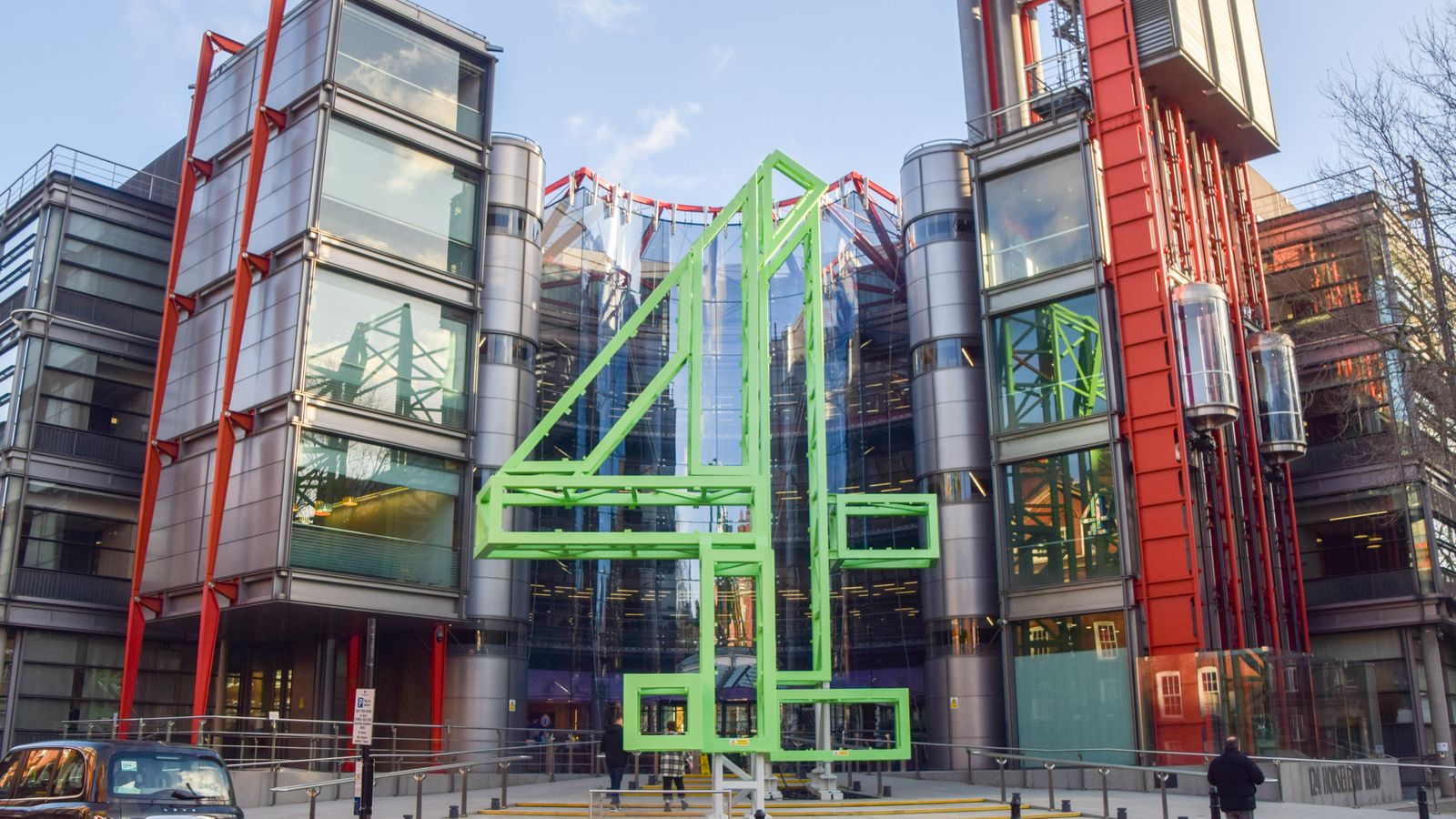
A senior executive at Netflix is among the contenders vying to become the next boss of Channel 4, the state-owned broadcaster.

Sky News has learnt that Emma Lloyd, the streaming giant’s vice-president, partnerships, in Europe, the Middle East and Africa, is one of a handful of media executives shortlisted to replace Alex Mahon as Channel 4’s chief executive.

Ms Lloyd, whose previous employers included Sky, the immediate parent company of Sky News, also served on the board of Ocado Group, from which she stepped down this month after nine years as a non-executive director.

She is understood to be a serious contender to take the helm at Channel 4, with other candidates understood to include Jonathan Allan, the interim chief executive who has also been its chief commercial officer and chief operating officer.

The identities of others involved in the recruitment process was unclear this weekend.

The appointment of a successor to Ms Mahon, Channel 4’s long-serving boss, comes at an important time for the company, and the broader public service broadcasting sector.

Recruitment to the board of Channel 4 is technically led by Ofcom, the media regulator, in agreement with the culture secretary, Lisa Nandy, although the process to land a new chief executive is being steered from within the company.

More on Channel 4

In September, Geoff Cooper, who chairs the online electrical goods retailer AO, was named Channel 4’s next chairman.

He replaced Sir Ian Cheshire, the former Kingfisher boss, who held the role for a single three-year term.

Channel 4 saw off the prospect of privatisation under the last Conservative government, with Ms Mahon a particularly vocal opponent of the move.

Nevertheless, Channel 4, which is funded by advertising revenues, faces significant financial challenges amid shifting – and in many cases waning – consumption of traditional television channels.

In the aftermath of a sale of the company being abandoned, its board last year unveiled Fast Forward, a five-year strategy designed to “elevate its impact across the UK and stand out in a world of global entertainment conglomerates and social media giants”.

“While getting ourselves into the right shape for the future is without doubt the right action to take, it does involve making difficult decisions,” Ms Mahon said at the time.

“I am very sad that some of our excellent colleagues will lose their jobs because of the changes ahead.

“But the reality of the rapid downshift in the UK economy and advertising market demand that we must change structurally.

“As we shift our centre of gravity from linear to digital our proposals will focus cost reductions on legacy activity.”

Ms Mahon’s departure earlier this year saw her quit to run Superstruct, a music festival business owned by private equity backers.

In recent weeks, her name has been linked with the BBC director-general’s post, which is soon to be vacated by Tim Davie.

Mr Davie announced this month that he would step down amid fierce criticism of the Corporation’s handling of a misleadingly edited speech made by President Donald Trump, which was included in an edition of the current affairs programme last year.

The public service broadcasting arena will also undergo significant change if a prospective bid by Sky for the television arm of ITV progresses to a definitive transaction.

Talks between the two companies emerged earlier this month.

In addition to the corporate developments in British broadcasting, the government has also confirmed a Sky News report that a search for a successor to Lord Grade, the Ofcom chairman, is under way.

On Saturday, Netflix declined to comment on Ms Lloyd’s behalf.

Continue Reading

Business

Ministers line up bankers to review options for UK steel industry

Published

on

By

Ministers line up bankers to review options for UK steel industry

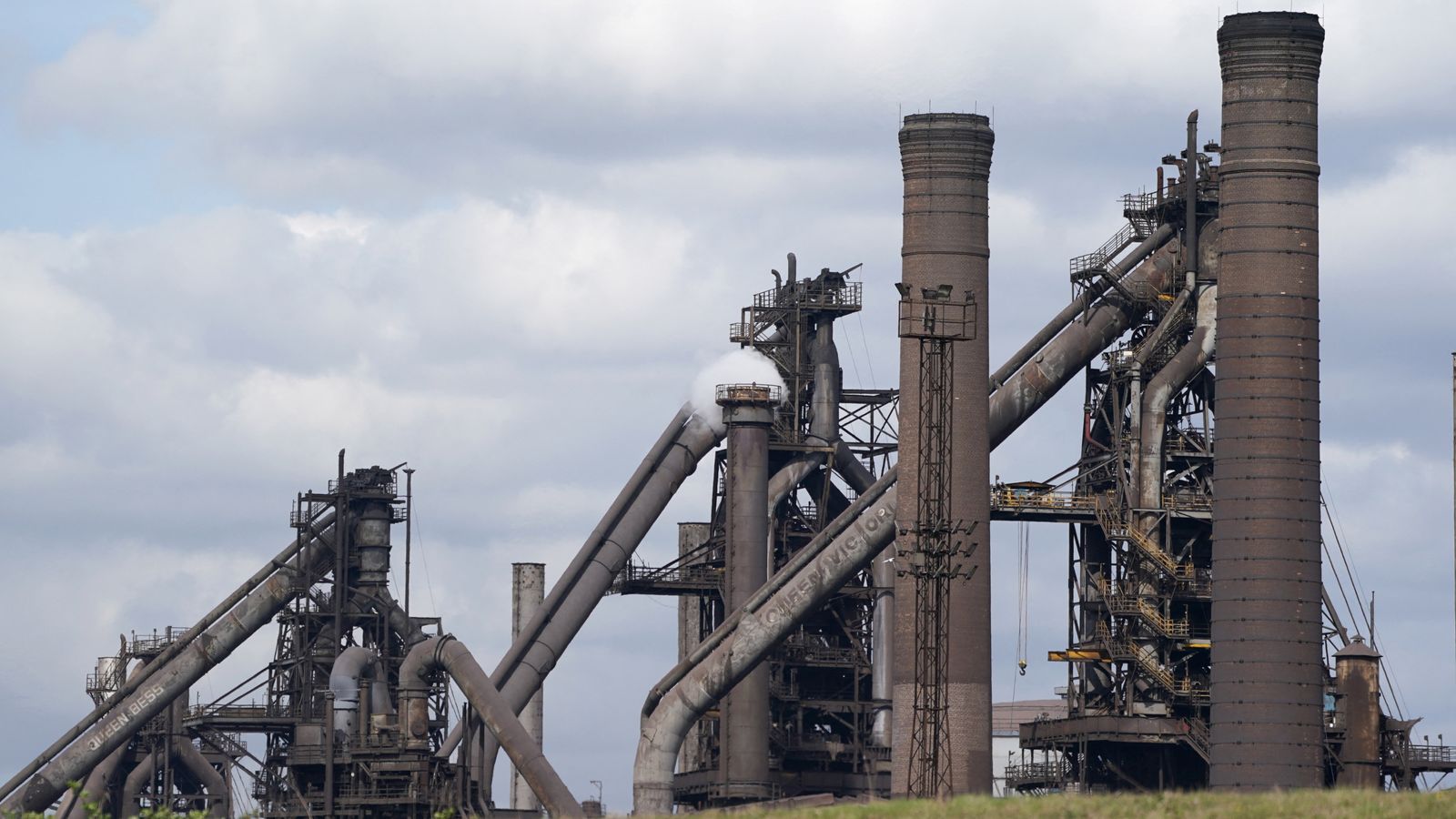
The government is lining up bankers to conduct a review of options for Britain’s embattled steel industry amid calls for ministers to orchestrate mergers between some of the sector’s biggest players.

Sky News has learnt that Evercore, the independent investment bank which now employs George Osborne, the former chancellor, was expected to be appointed in the coming weeks to oversee a strategic review of the sector.

If its appointment is confirmed, Evercore will report its findings to Peter Kyle, the business secretary, and UK Government Investments (UKGI), the Whitehall agency which manages taxpayers’ interests in a range of companies, including the Post Office and Channel 4.

The talks with Evercore come as the steel industry contends with the impact of President Trump’s tariff war and the prospect of retaliatory measures from the European Union.

The move to recruit bankers for a key review of Britain’s struggling steel sector also comes during a period when the government has significant financial exposure to all of the country’s three largest steel producers.

Last year, ministers agreed to provide £500m in grant funding to Tata Steel, the Indian company, to install an electric arc furnace at its Port Talbot steelworks in Wales.

The new facility is expected to be operational in 2027, but has been bitterly opposed by trade unions infuriated that the new funding was effectively used to drive through thousands of redundancies at the plant.

More on British Steel

In April, the then business secretary, Jonathan Reynolds, moved to seize control of British Steel after its Chinese owner, Jingye Group, threatened to close the UK’s last-remaining blast furnaces at its site in Scunthorpe.

The move sparked a diplomatic row with Beijing, with Jingye considering various legal options in an attempt to secure compensation for its shares in the company.

Last month, ministers disclosed that the cost of taking control of British Steel had risen to £235m, in addition to a £600m bill for preserving its future in 2019 and 2020 when the company fell into insolvency under its previous owner.

The government’s move prevented the immediate loss of more than 3,000 jobs, although there remain questions about the company’s viability as a standalone entity.

Some advisers believe that a combination of British Steel with other industry players, including Sheffield Forgemasters, which is also in government control, will be a necessary step to preserving steelmaking capacity in the UK.

People familiar with the plans said that a newspaper report this month suggesting that bankers were being recruited by the government to sell British Steel was “wrong”.

“The UK government doesn’t own British Steel; it’s hard to sell an asset you do own,” they said.

Nevertheless, it remains conceivable that the government will at some stage be able to determine the future ownership of the industry’s second-largest company, amid recent suggestions that Beijing could be willing to cede Jingye’s claim to the company in return for Sir Keir Starmer’s approval of a controversial new Chinese embassy in Central London.

“We continue to work with Jingye to find a pragmatic, realistic solution for the future of British Steel,” Chris McDonald, the industry minister, said in a statement to parliament this month.

“Our long-term aspiration for the company will require co-investment with the private sector to enable modernisation and decarbonisation, safeguard taxpayers’ money and retain steelmaking in Scunthorpe.”

Britain’s third-largest steelmaker, Speciality Steels UK (SSUK), is also effectively in government hands, having been placed into compulsory liquidation during the summer.

The business was part of Liberty Steel, which is owned by GFG, the metals empire of businessman Sanjeev Gupta.

In August, a judge declared SSUK as “hopelessly insolvent”, with a special manager now overseeing an auction of the business, which employs about 1,500 people.

A spokesperson for the Department for Business and Trade (DBT) said: “This government sees a bright and sustainable future for steelmaking in the UK, and we’ll set out our long-term vision for the sector in our upcoming Steel Strategy.”

Sources said that that strategy was likely to be published either next month or early in the new year.

Continue Reading

Trending