
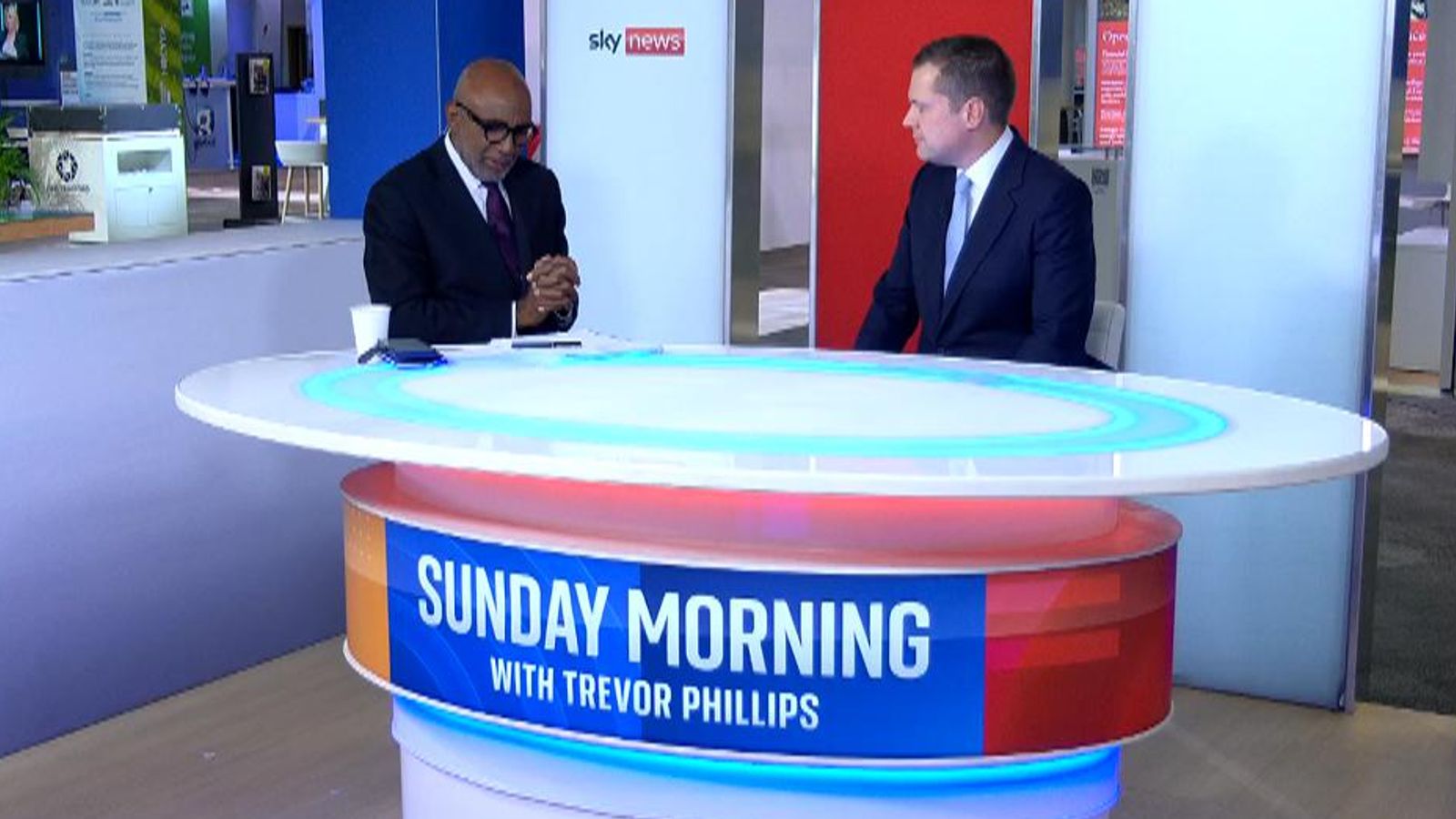
Robert Jenrick defends £75k donation after criticising Labour in freebies row

Robert Jenrick has defended being handed a £75,000 donation from a company which had received money from a firm registered in the British Virgin Islands (BVI), despite criticising Labour over the freebies row.
Questions have been raised over the ultimate source of the funds from The Spott Fitness, which gave Mr Jenrick three separate £25,000 donations in July.
As first reported by Tortoise Media, the company received a loan from a firm based in the BVI.
The Tory leadership contender told Sunday Morning With Trevor Phillips that The Spott Fitness “as I understand it… is a fitness company that operates in the UK”, and the donation was “perfectly legal and valid”.
Politics Live: Tory leadership candidates faced questions on Sky News
Mr Jenrick spoke to Sky News alongside the three other rivals to replace Rishi Sunak, as the Conservative Party Conference in Birmingham kicks off.
During the interviews, Kemi Badenoch said she is a fighter and if someone takes a swing at her “I will swing back”.
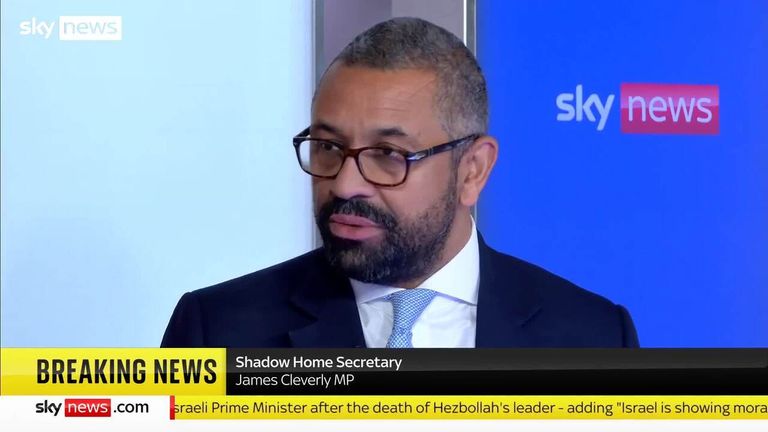
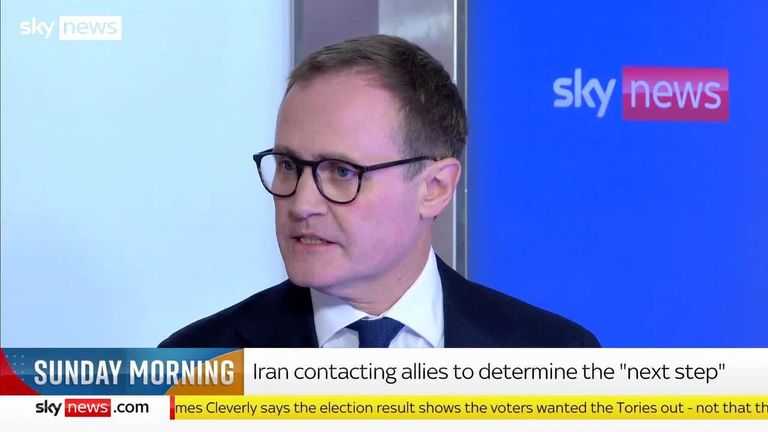
Meanwhile, Tom Tugendhat defended his “posh boy public school background”, saying his military service has given him leadership skills, while former home secretary James Cleverly refused to name any of the previous four Tory prime ministers as being to blame for the party’s general election defeat, saying the public “don’t like infighting”.
Jenrick says donations ‘valid’
Asked about the donations from The Spott Fitness, which have been declared on his MPs’ register of interests, Mr Jenrick said: “As I understand it, this is a fitness company that operates in the UK.
“It’s a perfectly legal and valid donation under British law and we’ve set it out in the public domain in the way that one does with donations.”
Pressed for details on who owns the company and who works for it, the former immigration minister said this would be set out “on Companies House in the normal way” and he has “obviously met people who are involved in the company”.
“What people are criticising Labour for is actually rather different,” he added.
“Labour are being criticised for their rank hypocrisy that they spent years complaining about other political parties and then they’ve chosen to take off donors and cronies and to give passes to Number 10 in response.”
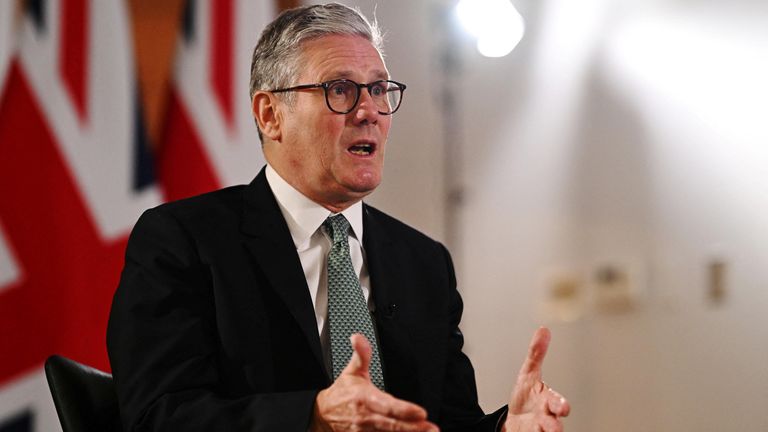
The Labour Party Conference in Liverpool last week was overshadowed by a donation and freebies row, after it emerged Sir Keir Starmer accepted over £100,000 in gifts since 2019.
Starmer has been criticised for accepting freebies. Pic: Reuters
Questions have been raised in particular over the large amount given by Labour peer and TV executive Lord Alli, who had a pass to Number 10 for a short time in order to attend meetings, the government said.
The Conservatives are now gathering in Birmingham since their worst defeat at the ballot box in history at the July general election.
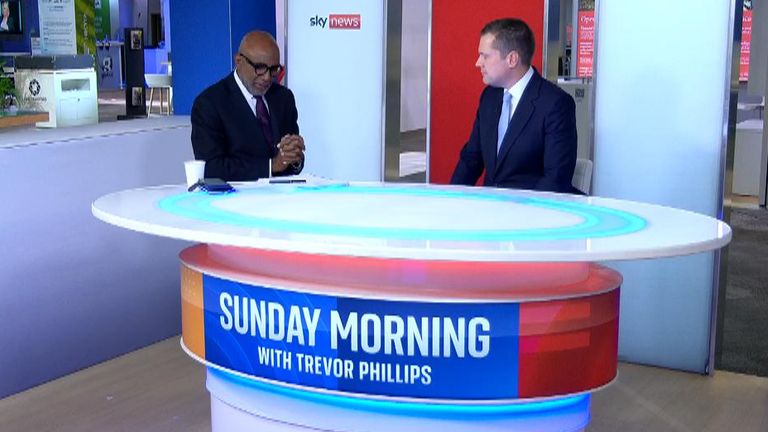
Robert Jenrick speaks to Trevor Phillips
Jenrick backs ‘cast iron cap’ on migration
Mr Jenrick, currently the frontrunner to replace Mr Sunak, said his party made “serious mistakes” and failed to deliver.
He is pitching himself as a “change” candidate, telling Trevor Phillips he would take the UK out of the European Convention on Human Rights (EHCR) in order to get the failed £700m Rwanda asylum scheme up and running, and introduce a cap on migration.
He said this would be different from previous commitments to introduce a limit as the cap would be “legally binding… cast in iron”, with the number set “in the tens of thousands or lower”.
‘I will swing back’
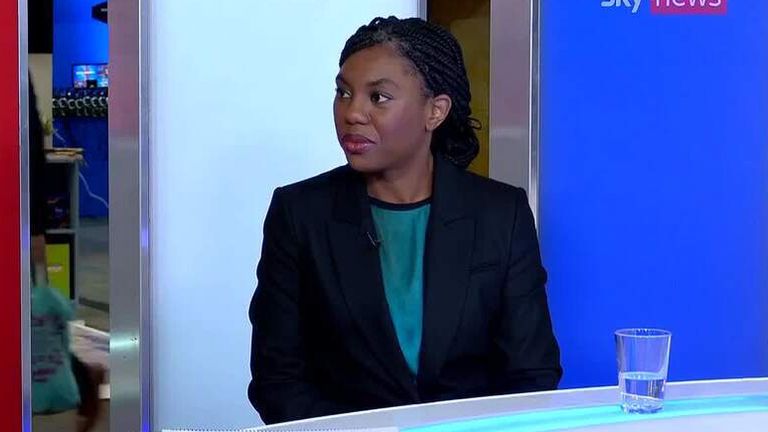
Badenoch: ‘If you swing at me I will swing back’
Mr Jenrick faces competition on the right from Kemi Badenoch, the former equalities minister.
Speaking to Phillips, she defended an Op-ed in The Daily Telegraph in which she claimed there was a rise in the number of migrants coming to the UK who “hate Israel”.
She said she was not referring to all Muslim immigrants “but there are some, those who buy into Islamist ideology, political Islam, they do not like Israel and we need to be able to distinguish between the two”.

Keep up with all the latest news from the UK and around the world by following Sky News
The combative shadow housing secretary also insisted she does not go looking for fights when asked about her rows with the likes of Doctor Who star David Tennant, but that she will stand up for herself.
The North West Essex MP said: “I will not stand there and let people punch me. If you swing at me I will swing back but I don’t look for fights.”
She added: “I am something that is just different and unique and that is why I stand out in this contest.”
‘People have seen my faults’
‘Public don’t like bickering’
All four leadership contenders will make their case at the party conference this week, before another round of voting by MPs will reduce them to the final two, which the party membership will then vote on.
Mr Cleverly, who got the least votes of those remaining in the previous round, said his various cabinet roles in the past few years meant he has spent “more time promoting other people’s ideas” rather than his own – but that shows he is a “team player”.
He declined to name a prime minister who he blamed most for the party’s 2024 defeat but added: “I’ll tell you what the public told me they didn’t like – they didn’t like the constant infighting, they didn’t like the bickering.”
Need to be ‘tough’ on Iran
Mr Tugendhat asked the public to judge him on his own record, rather than his public schooling.
“I think that decisions I have made for the last 35 years demonstrate the character that you are looking at,” he said.
“I have chosen consistently to serve our country. I have put myself on the frontline in Iraq and Afghanistan.”
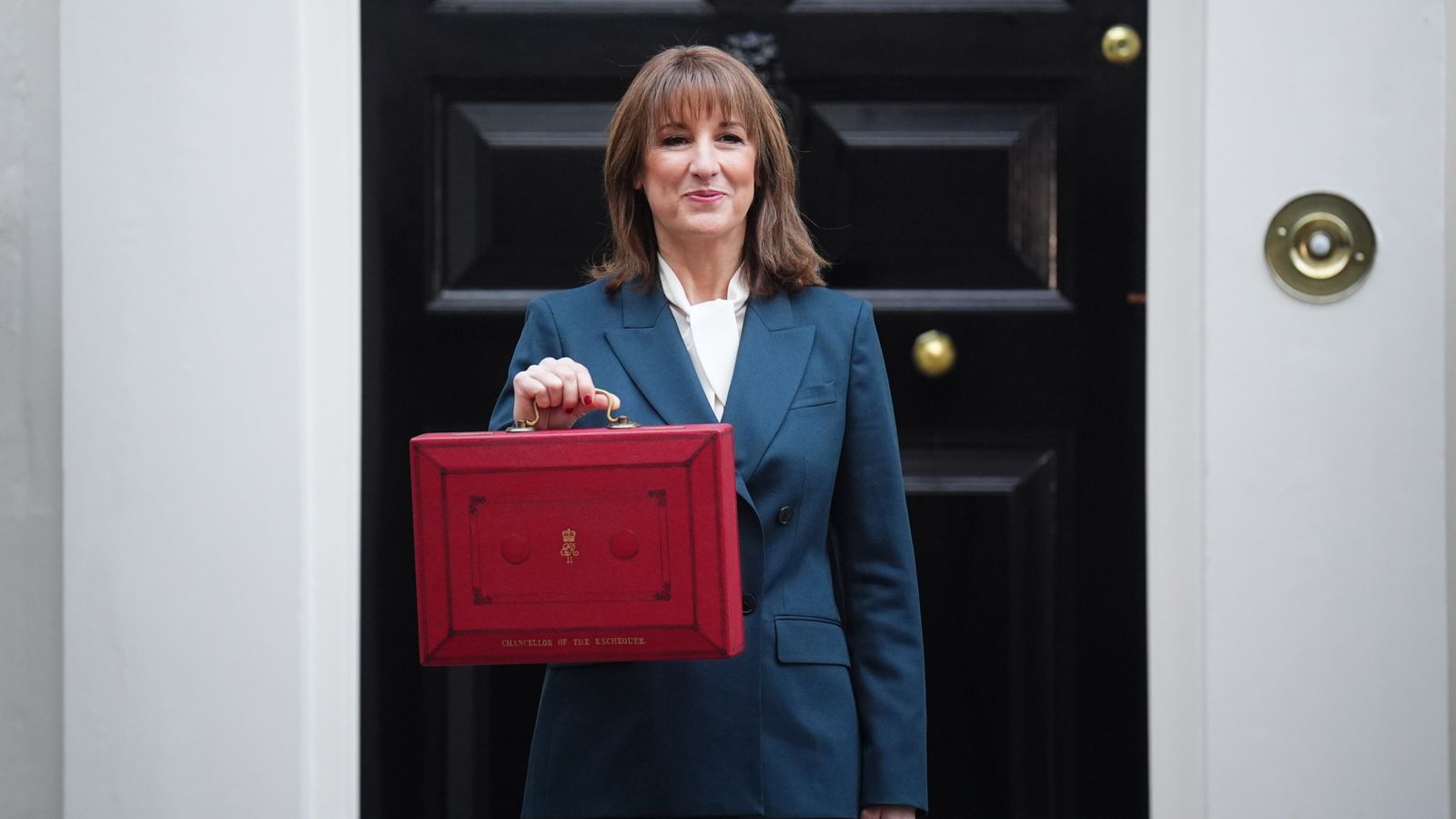
Rachel Reeves is fighting claims that she “lied” to the public about the state of the finances in the run-up to last Wednesday’s budget – in which she raised £26bn in taxes.
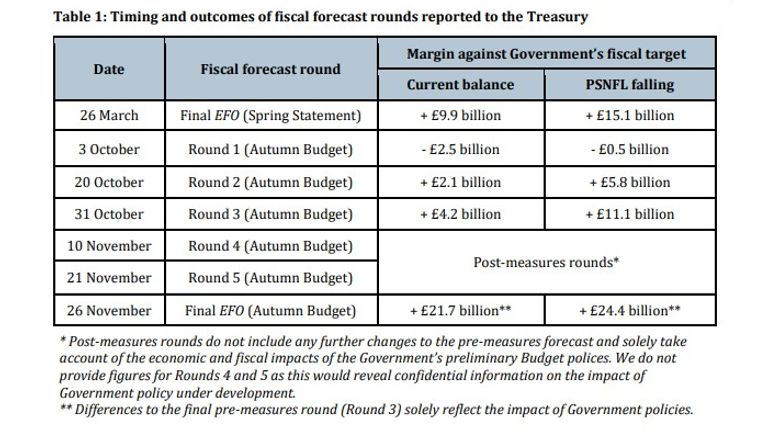
It follows a letter published by the Office for Budget Responsibility (OBR), the official watchdog which draws up forecasts for the Treasury, published on Friday.
In it, OBR chair Richard Hughes (who is already under fire for the leak of the budget measures) said he’d taken the unusual step of revealing the forecasts it had submitted to Rachel Reeves in the 10 weeks before the budget, and which is normally shrouded in secrecy.
The OBR sent this table revealing its timings and outcomes of the fiscal forecasts reported to the Treasury
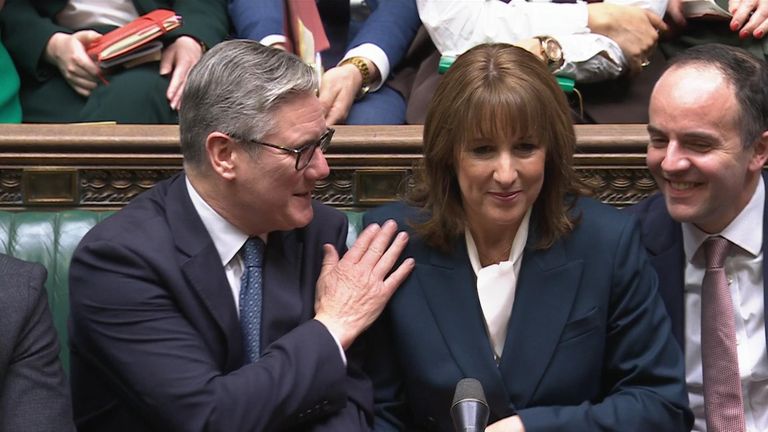
Sir Keir Starmer congratulates Rachel Reeves after the budget
The letter reveals this timeline, which has plunged the chancellor into trouble:
17 September – first forecast
At this point, it was already known that the UK’s growth forecast would be downgraded. The chancellor was told that the “increases in real wages and inflation” would offset the impact of the downgrade. The deficit forecast by the end of the parliament was £2.5bn.
20 October – second forecast
By this point, that deficit had turned into a small surplus of £2.1bn – i.e. the productivity downgrade has been wiped out and “both of the government’s fiscal targets were on course to be met”.
31 October – third forecast
The final one before the Treasury put forward its measures. The finances were now net positive with a £4.2bn surplus.
But the accusation is that Rachel Reeves was presenting an entirely different picture – that she had a significant black hole which needed to be filled.
13 October
Ms Reeves tells Sky’s deputy political editor Sam Coates the productivity downgrade has been challenging but added: “I won’t duck those challenges. Of course we’re looking at tax and spending.”
👉 Click here to listen to Electoral Dysfunction on your podcast app 👈
27 October
With the Treasury now aware the deficit had been wiped out, the Financial Times was briefed about a “£20bn hit to public finances.”
4 November
Ms Reeves gave a dawn news conference in Downing Street, setting the stage for tax rises. She says she wants people “to understand the circumstances we are facing… productivity performance is weaker than previously thought”, adding that “we will all have to contribute”.
10 November
Ms Reeves tells BBC 5Live that sticking to Labour’s promises not to raise taxes would require “things like deep cuts in capital spending”. The stage seemed set for the nuclear option – the first income tax rise in decades.
13 November
After headlines about a plot to oust Prime Minister Sir Keir Starmer, the Financial Times reported that the chancellor had dropped plans to raise income tax because of improved forecasts [which we now know hadn’t changed since 31 October], putting the black hole closer to £20bn than £30bn.
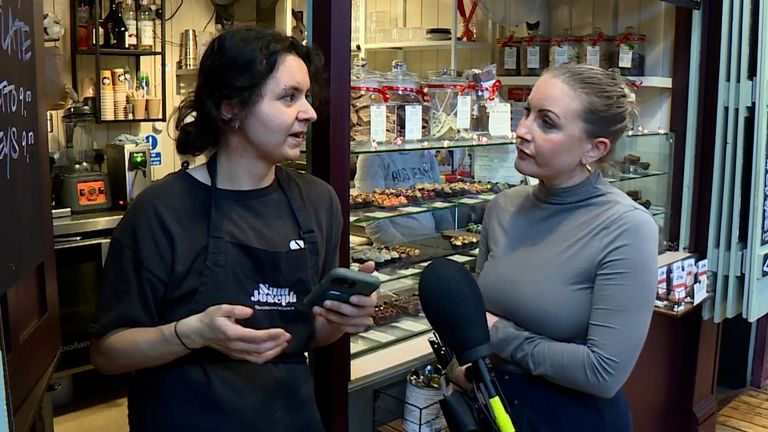
Budget 2025: ‘It’s sickening’
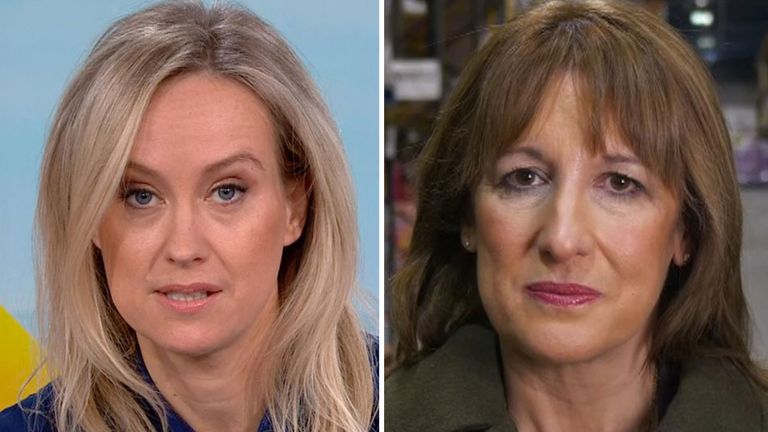
‘You’ve broken a manifesto pledge, haven’t you?’
The prime minister’s spokesperson has insisted Ms Reeves did not mislead voters and set out her choices, and the reasons for them, at the budget.
But the issue has had enormous cut-through, with newspapers giving it top billing.
The Sun’s Saturday front page headline – “Chancer of the Exchequer – fury at Reeves ‘lies’ over £30bn black hole” – will not have been pleasant reading for ministers.
She now has questions to answer about the chaotic run-up to the budget – of briefing and counter-briefing, which critics say now makes little sense.
Tory leader Kemi Badenoch said on Saturday: “We have learned that the chancellor misrepresented the OBR’s forecasts. She sold her ‘Benefits Street’ budget on a lie. Honesty matters… she has to go.”
Economist Paul Johnson, former director of the respected Institute for Fiscal Studies (IFS), told The Times the chancellor’s 4 November news briefing “probably was misleading. It was clearly intended to have an impact and confirm what independent forecasters like [the National Institute of Economic and Social Research] and the IFS had been saying”.
“It was designed to confirm a narrative that there was a fiscal hole that needed to be filled with significant tax rises. In fact, as she knew at the time, no such hole existed.”
Read more on budget fallout:
Reeves accused over forecasts
Hospitality ‘needs a lifeline’
Ms Reeves is doing a round of morning interviews on Sunday in which she’ll be grilled over which of her budget measures will generate economic growth (which the government claimed was its number one priority), why they have been unable to tackle rising welfare spending and now about why markets and voters were left confused by dire warnings.
She may claim that she never personally said there was a specific £30bn black hole or that the extra headroom generated by the tax rises will ensure she does not have to come back for more next year.
In an interview with The Saturday’s Guardian, Ms Reeves said she had “chosen to protect public spending” on schools and hospitals in the budget.
She confirmed an income tax rise had been looked at, and insisted that OBR forecasts “move around” after the Treasury has submitted its planned measures. There are plenty more questions to come.
Meanwhile, Sir Keir will use a speech on Monday to support Ms Reeves’ budget decisions and set out his long-term growth plans.
He will praise the budget for bearing down on the cost of living, ensuring economic stability through greater headroom, lower inflation and a commitment to fiscal rules, and protecting investment and public services.
Sir Keir will say “economic growth is beating the forecasts”, but that the government must go “further and faster” to encourage it.
Politics
Lammy says justice reforms will reduce victims’ suffering – as right to jury trial set to go in some cases
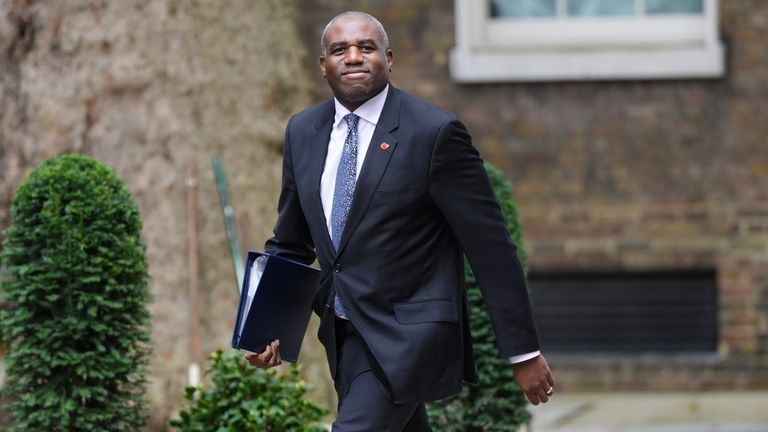
Victims will be put “front and centre” in reforms to be announced this week, the justice secretary has said, amid reports jury trials will be scrapped in some cases.
Sky News understands ministers have already been briefed on the changes, which would see a judge decide most cases on their own except for murder, rape or manslaughter – or those in the “public interest”.
The Ministry of Justice (MoJ) said the reforms would speed up justice and save victims from “years of torment and delay”.
Nearly 80,000 cases are currently waiting to be heard in crown courts, but a bid to limit the right to jury trial is likely to be divisive.
Shadow justice secretary Robert Jenrick said Mr Lammy should “pull his finger out” to cut the backlog rather than “depriving British citizens of ancient liberties”.
“The right to be tried by our peers has existed for more than 800 years – it is not to be casually discarded when the spreadsheets turn red,” said Mr Jenrick.
Full details are expected in the coming days, but in a statement today Mr Lammy said he had “inherited a courts emergency; a justice system pushed to the brink”.
“We will not allow victims to suffer the way they did under the last government, we must put victims front and centre of the justice system,” he added.
Mr Lammy said thousands of lives were on hold due to the case backlog, a “rape victim being told their case won’t come before a court until 2029. A mother who has lost a child at the hands of a dangerous driver, waiting to see justice done”.
He said he wanted a system that “finally gives brave survivors the justice they deserve”.
The justice secretary will reportedly go further than a review recommended. Pic: PA
.However, it’s been reported Mr Lammy will go further than a review conducted by Sir Brian Leveson.
The retired judge backed the move for juries only in the most serious cases, but also proposed some lesser offences could go to a new intermediate court where a judge would be joined by two lay magistrates.
The Times said Mr Lammy had suggested in an internal memo he would remove the lay element from many serious offences that carry sentences of up to five years.
There are fears such a move could increase miscarriages of justice and racial discrimination.
Read more from Sky News:
Reeves fighting ‘lie’ claims as Starmer set to back budget
Your Party co-founder refuses to enter conference hall
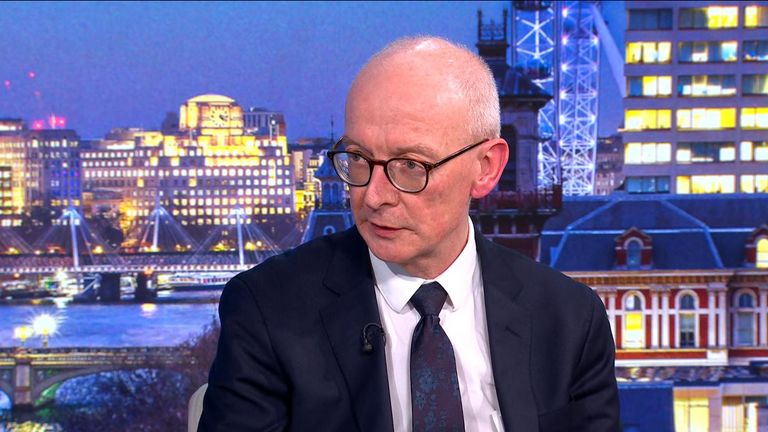
Work and pensions secretary speaks to Sky about justice reforms
Speaking to Sky News’ Politics Hub programme this week, work and pensions secretary Pat McFadden did not deny the changes were on the way.
The MoJ has laid the ground for the reforms by saying the court backlog could hit 100,000 by 2028 under the current system.
It said just 3% of cases are currently decided by a jury, with more than 90% already dealt with by magistrates alone.
Politics
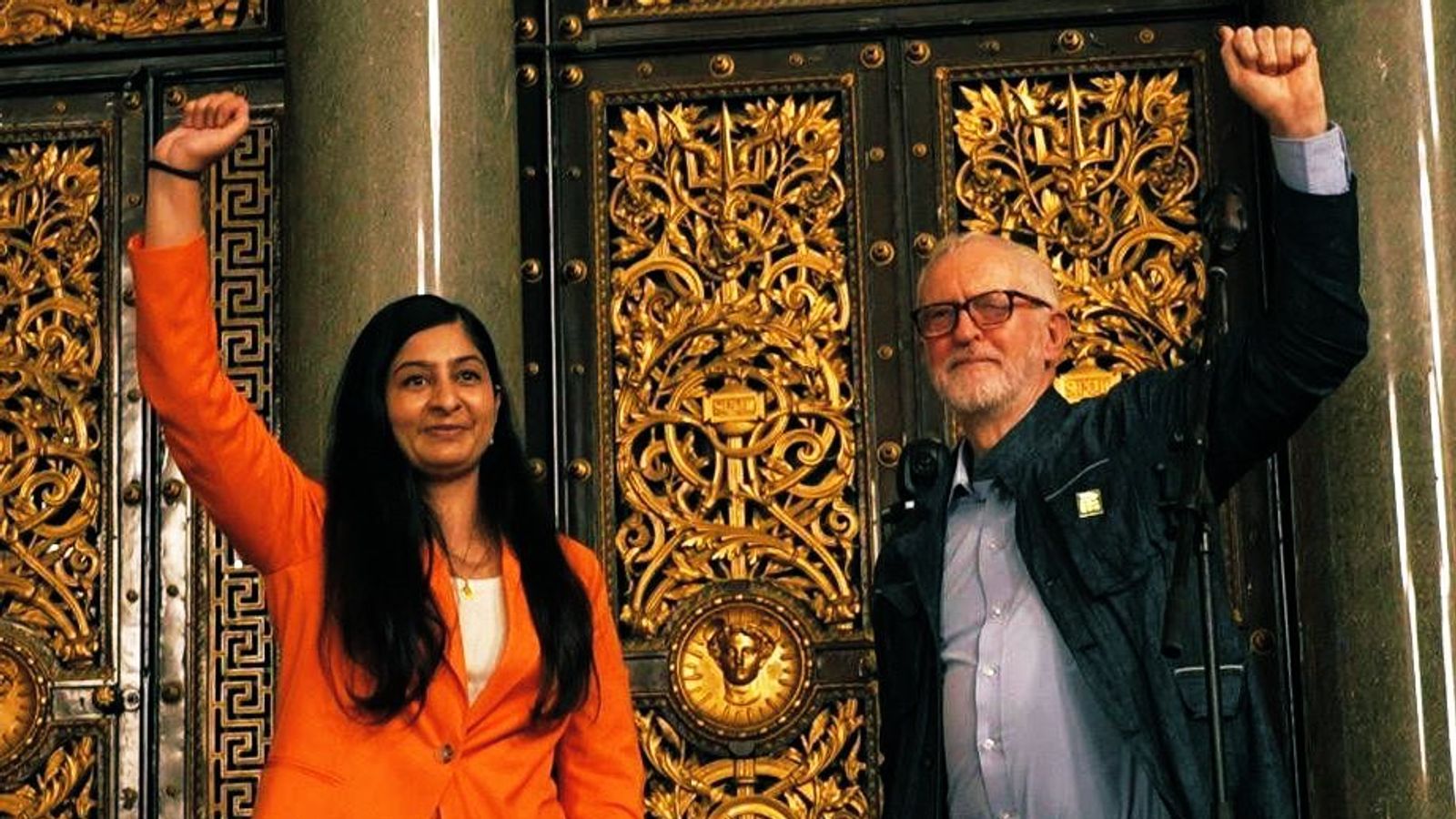
Your Party votes to be led by members rather than single MP – avoiding Corbyn-Sultana battle
-
 Sports2 years ago
Story injured on diving stop, exits Red Sox game
-
 Sports3 years ago
‘Storybook stuff’: Inside the night Bryce Harper sent the Phillies to the World Series
-
 Sports2 years ago
Game 1 of WS least-watched in recorded history
-
 Sports3 years ago
Button battles heat exhaustion in NASCAR debut
-
 Sports3 years ago
MLB Rank 2023: Ranking baseball’s top 100 players
-
Sports4 years ago
Team Europe easily wins 4th straight Laver Cup
-
 Environment3 years ago
Japan and South Korea have a lot at stake in a free and open South China Sea
-
 Environment1 year ago
Here are the best electric bikes you can buy at every price level in October 2024