
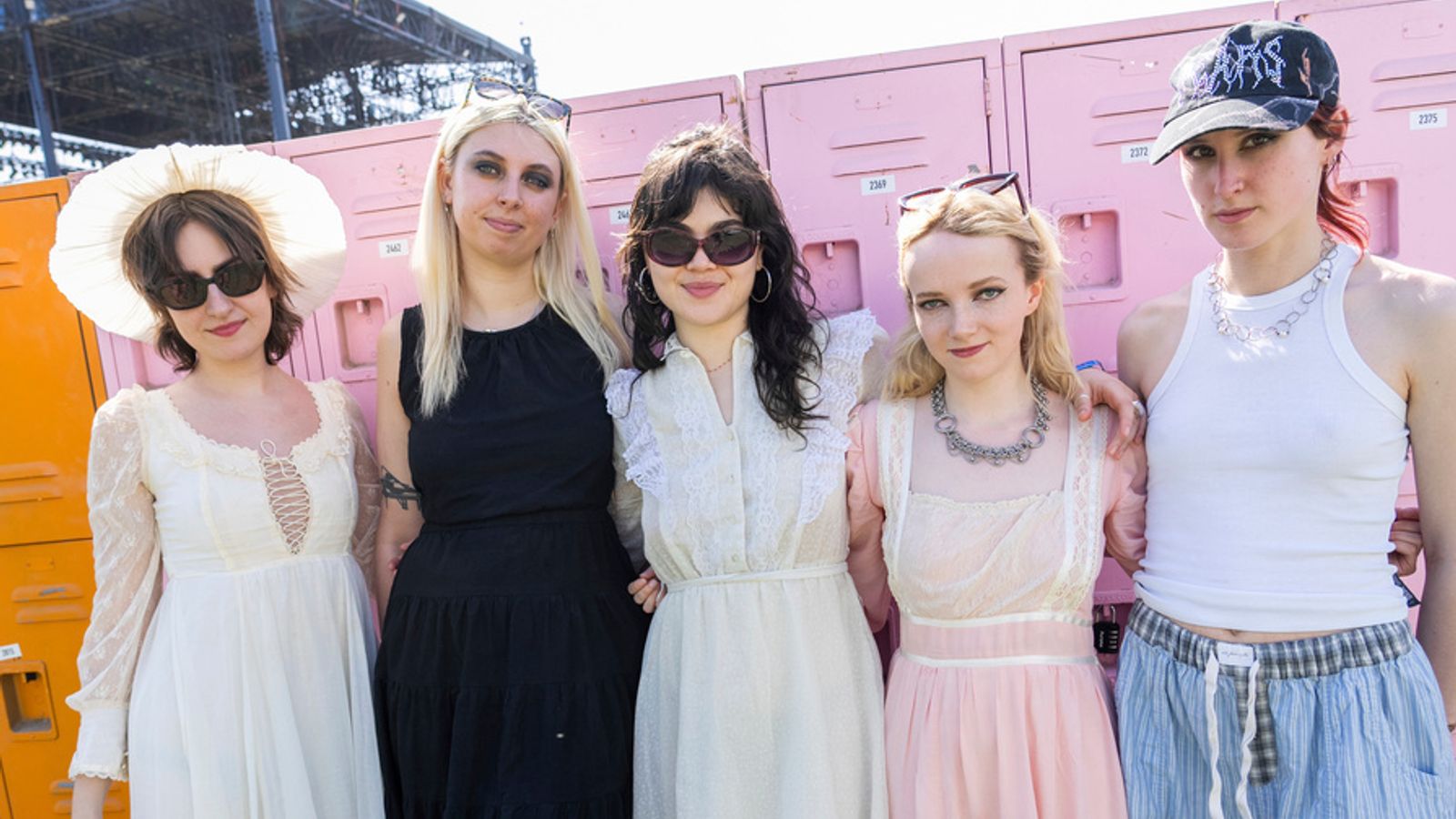
The Last Dinner Party cancel tour due to illness after gig security investigation

The Last Dinner Party have cancelled the remainder of their UK tour dates “due to an unforeseen illness in the band” after some fans were subjected to “strange” behaviour when arriving at a gig at the weekend.
It comes after the Brit-winning and Mercury nominated band said they were “appalled and disappointed” that some fans were left feeling “uncomfortable and disrespected” at The Engine Shed in Lincoln.
Audience members online suggested male fans faced prejudice and an investigation into security policy at the gig has since been launched by the venue. Several male fans said they were quizzed on their knowledge of the band before they were given entry.
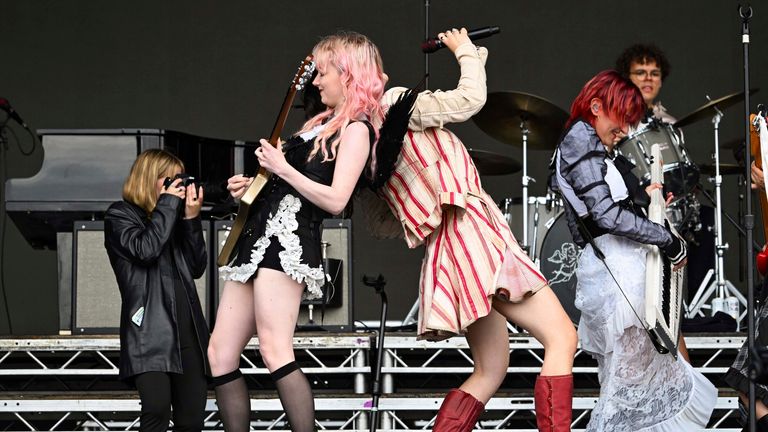
The band performed at Reading Festival in the summer. Pic: Cover Images/AP
The show in Lincoln was cancelled at short notice, with the band citing a “sudden illness”. Now, they have called off further headline shows in Birmingham, Nottingham, Bristol and Southampton, “following medical advice”.
“We have to prioritise our health at this time,” the band said in a statement on social media, saying they took the decision “with heavy hearts”.
They also cancelled a show in Cardiff on Sunday.
The Last Dinner Party are an all-female indie outfit featuring lead singer Abigail Morris, guitarist Emily Roberts, Lizzie Mayland on rhythm, bassist Georgia Davies, and keyboard player Aurora Nishevci.
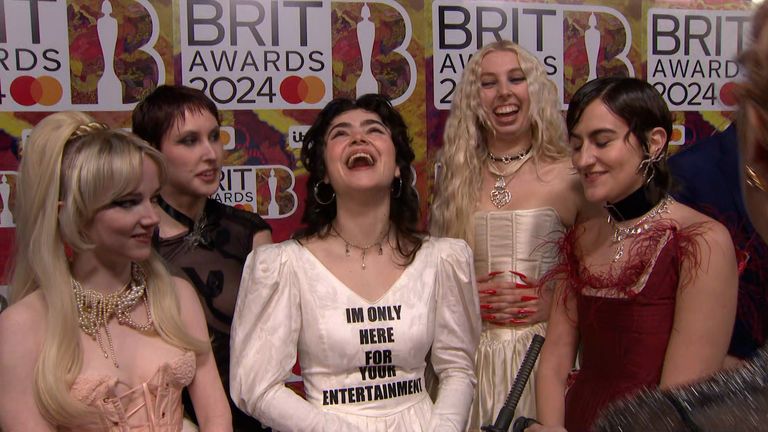
Feb ’24: The Last Dinner Party at the Brits
“We are devastated not to be sharing these nights with you, and to have missed the shows in Lincoln and Cardiff,” a statement on the band’s social media said.
“You should all know you’ve made this the most wonderful year of our lives and we can’t thank you enough for your love and support, truly.
“TLDP is here today because of you and we want to keep touring and sharing our music with you for a long long time – but in order to do that we have to make serious decisions like these now so that our long term health doesn’t suffer.”
A statement posted on the band’s social media following the controversy at the Lincoln gig said the band were not aware of the security policies at the show and “they would not have been implemented had we been made aware of them in advance”.
Read more from Sky News entertainment:
BBC’s Strictly Come Dancing report released
Oasis announce US gigs – and scrap dynamic pricing
The Engine Shed, which bills itself as Lincolnshire‘s largest live music venue, posted a statement on its official Instagram page to say their entry procedure had fallen “far short of our venue entry policy, which requires all attendees to be treated equally and be subject to the same entry requirements”.
It said security policy was changed in response to “incidents” at one of the band’s previous gigs, but that it resulted in the “unacceptable treatment of some guests” during entry.
The Last Dinner Party’s debut album, Prelude To Ecstasy, topped the charts following its release in February. It was subsequently nominated for this year’s Mercury Prize, and the band also picked up the rising star gong at the Brit Awards.
Entertainment
Sean ‘Diddy’ Combs guilty of prostitution offences – but cleared of sex trafficking and racketeering
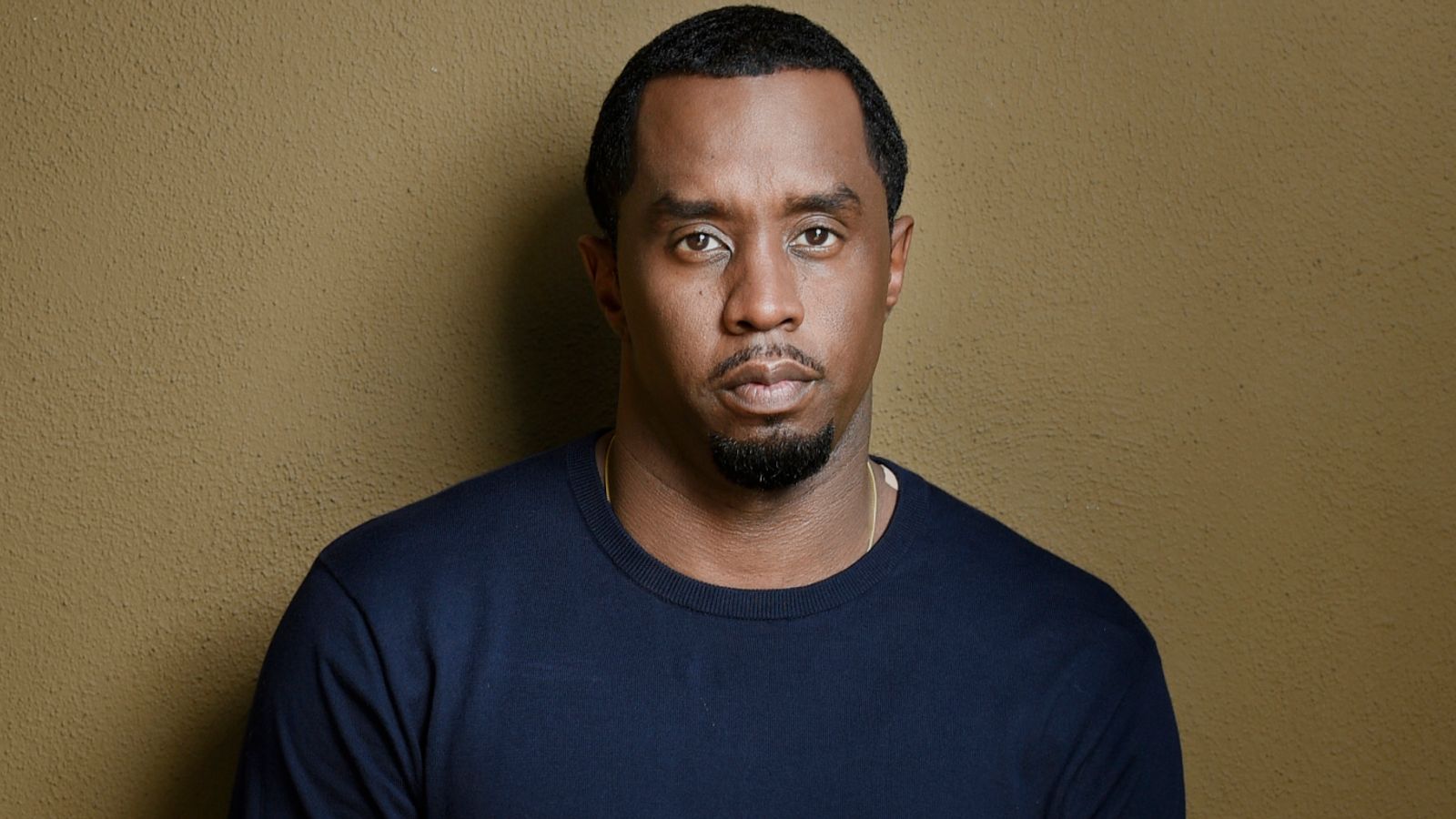
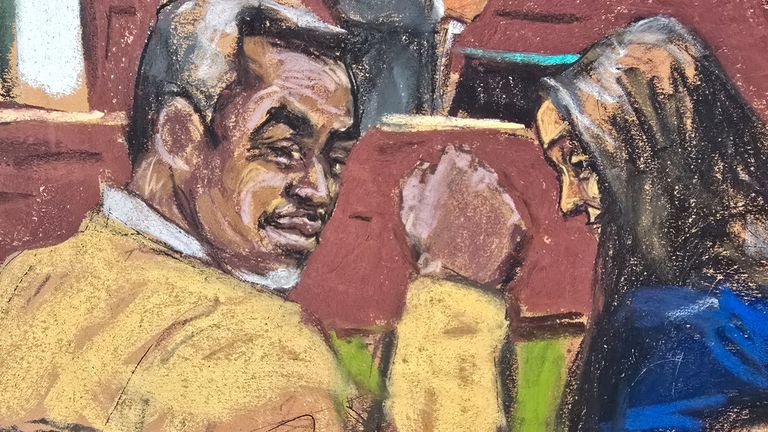
Sean “Diddy” Combs has been found guilty of transportation for prostitution following a landmark trial in New York – but cleared of more serious charges of sex trafficking and racketeering conspiracy.
The 55-year-old hip-hop mogul was accused by prosecutors of abusing and coercing three alleged victims, including his former long-term partner, singer and model Cassie Ventura, and other crimes including kidnapping, arson and blackmail.
Jurors decided not all the allegations were proven – but Combs still faces up to 20 years in prison after being convicted of transporting people across the US, including Cassie and another former girlfriend, Jane*, and paying male escorts to engage in sexual encounters.
However, with the not guilty verdict on three other more serious charges – racketeering conspiracy and two of sex-trafficking – he has avoided a maximum possible sentence of life behind bars.
Combs appeared upbeat in court as the verdict was announced. Pic: Jane Rosenberg/ Reuters
The mixed result from the jury came not long into their third day of deliberations. In the courtroom in Manhattan, New York, there were cheers from Combs’s family, and the rapper himself held his hands up in a prayer motion, looking at the jury, and hugged his defence lawyer Teny Geragos.
His mood seemed very different to just a day earlier – when he learned the jury had reached a verdict on four of the five charges, but were split on the racketeering charge. After deliberating for longer on Wednesday, they came to a unanimous decision.
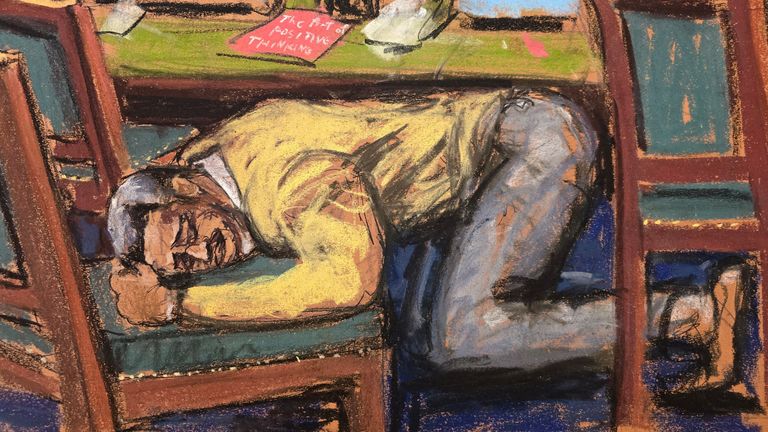
Combs later seemed to become overwhelmed with relief. Pic: Jane Rosenberg/ Reuters
Judge Arun Subramanian adjourned the court while he considered whether to grant Combs bail before sentencing. The rapper has been in prison since his arrest in September 2024 – but his lawyers argue his acquittal on the most serious counts has changed the legal landscape enough that he should now be released.
As the verdict sunk in, Combs appeared overwhelmed, kneeling at his chair and bowing his head in prayer once again.
“I’ll be home soon,” he said as he faced his family members. “I love you, Mum.”
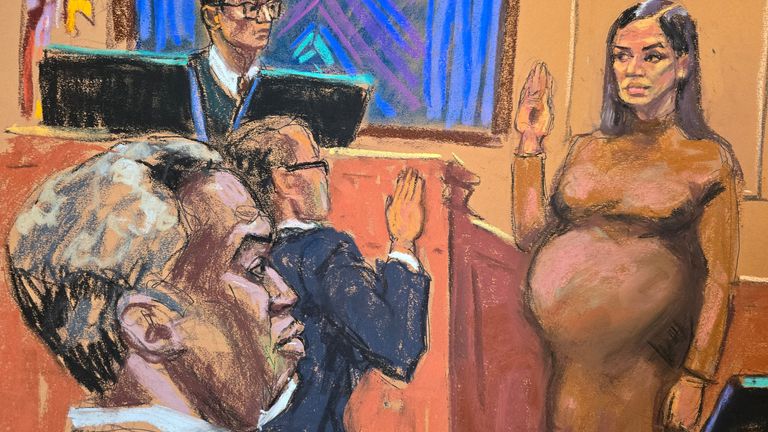
Casandra ‘Cassie’ was heavily pregnant when she gave evidence at the start of the trial. Pic: Jane Rosenberg/ Reuters
Cassie ‘paved the way’
Reacting to the verdict, Cassie’s lawyer Douglas H Wigdor said that although jurors did not find Combs guilty of sex-trafficking Cassie, she had “paved the way” for the other guilty verdicts.
“By coming forward with her experience, Cassie has left an indelible mark on both the entertainment industry and the fight for justice,” he said.
“We must repeat – with no reservation – that we believe and support our client, who showed exemplary courage throughout this trial.”
Cassie, who testified heavily pregnant just three weeks before giving birth, displayed “unquestionable strength”, he added, and “brought attention to the realities of powerful men in our orbit”.
Videos of “freak off” sex sessions with male escorts were shown to jurors only during the seven-week trial, with the footage kept private from members of the public and media in court.
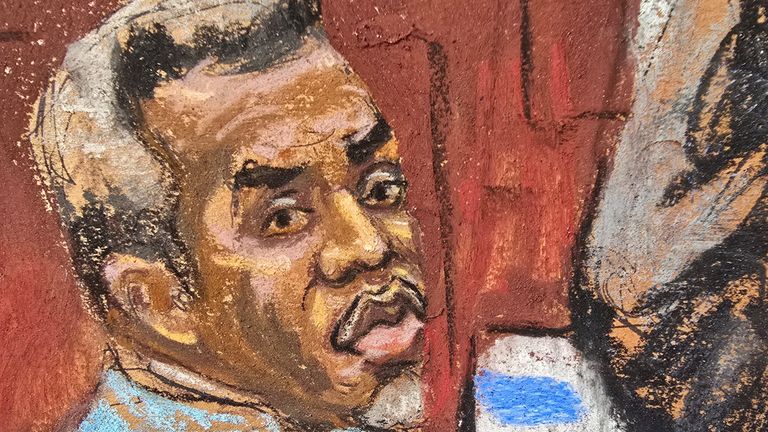
Pic: Reuters/ Jane Rosenberg
Former employees, along with escorts, hotel staff and police officers were among those to give evidence.
Cassie and Jane, who used a pseudonym, also testified. They told the court they were coerced into drug-fuelled freak offs – which were also referred to as “hotel nights” or “wild king nights” – with male escorts, and abused throughout their relationships.
Combs’s defence team presented a very different picture to show that sexual acts, including freak offs, were consensual.
They conceded the music star could be violent, had a bad temper, and used drugs. He also had multiple relationships at the same time. But crucially, they said, while he was “not proud” of some of his behaviour, none of it made him guilty of the charges against him.
After hearing evidence of flights and travel for escorts and Cassie and Jane, paid for by Combs, as well as hotel bookings across the US and the Caribbean, jurors found him guilty of the transportation to engage in prostitution charges. However, they did not find that the allegations against the rapper amounted to sex-trafficking or racketeering.
The Cassie hotel tape
Combs, known variously as Puff Daddy, P Diddy, and Diddy over the years, was once one of the most influential figures in hip-hop – famous as a producer, founder of Bad Boy Records and manager of the late Notorious BIG in the 1990s, as well as a rapper in his own right.
As an artist, he won three Grammys during his career, and had hits including I’ll Be Missing You, Come With Me, and Bad Boy For Life.
In September 2023, he received the “global icon” award from MTV and was given the key to New York City at a ceremony in Times Square, just a few miles away from the streets in Harlem where he spent his first years.
Allegations first came to prominence in November 2023, when Cassie filed a bombshell lawsuit accusing him of coercing her into unwanted sex sessions, as well as blackmail and several incidences of violence.
The suit was settled in 24 hours – for $20m, it emerged during the trial – but months later CNN aired hotel security footage showing Combs punching and kicking Cassie and throwing her to the floor in 2016.
He apologised after the video aired, saying: “I was disgusted when I did it.”
Footage from the hotel incident was shown during the trial.
Following the verdict, the rapper now awaits sentencing. He also still faces several civil lawsuits, most of which were filed in the wake of his arrest in September 2024.
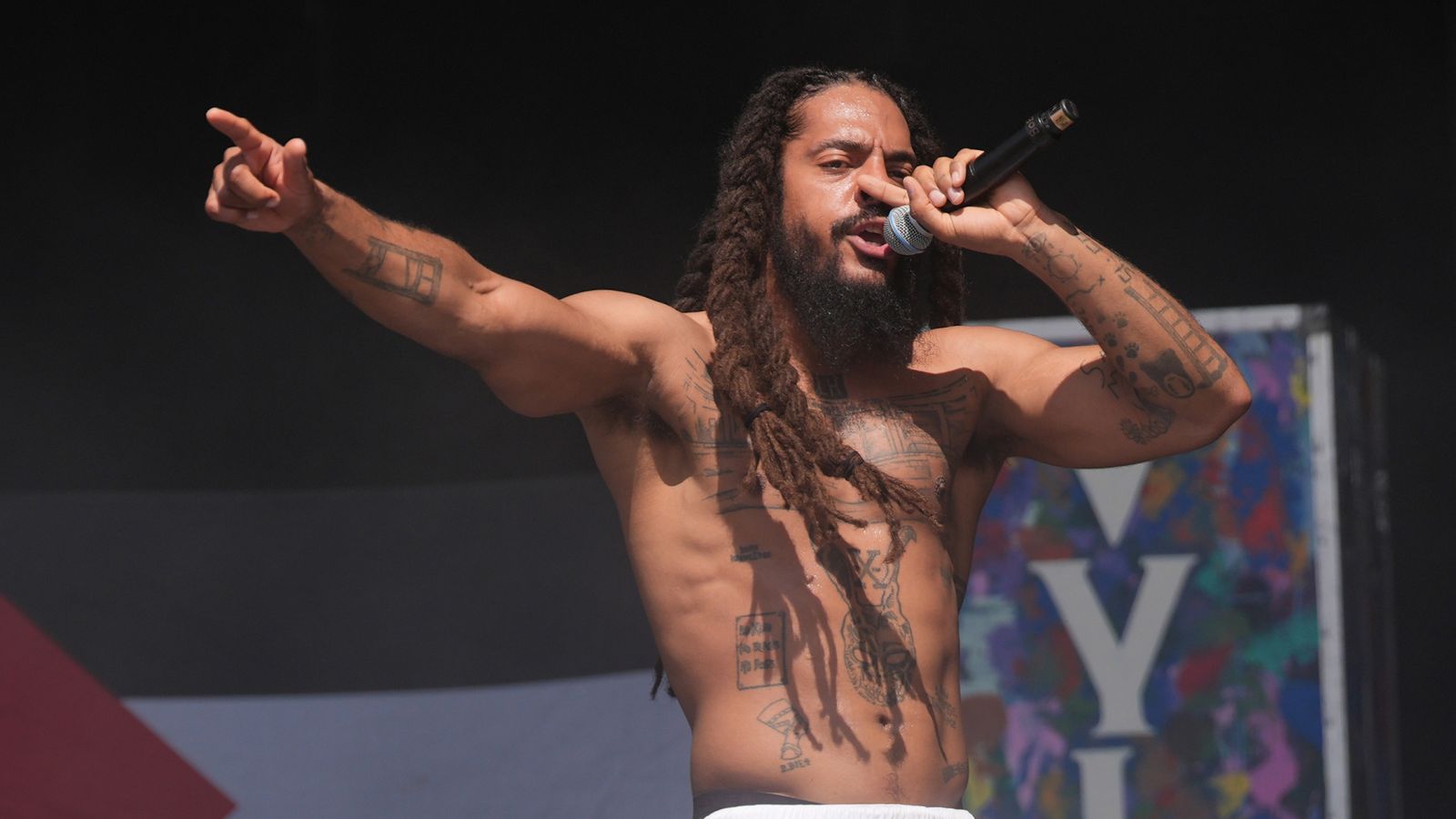
Punk rap duo Bob Vylan will no longer headline the Radar Festival in Manchester days after leading chants of “death to the IDF” at Glastonbury.
The performance on the West Holts Stage on Saturday was livestreamed on the BBC – leading the corporation to apologise as it described the chants referencing the Israeli military as “antisemitic” and “unacceptable”.
Avon and Somerset Police announced on Monday that it had opened a criminal investigation after reviewing footage of performances at Glastonbury by Bob Vylan and Irish hip hop trio Kneecap.
The force said the case has been recorded as a “public order incident” and said the investigation will be “evidence-led and will closely consider all appropriate legislation, including relating to hate crimes”.
In a post on Instagram on Wednesday, the Radar Festival, which takes place at the O2 Victoria Warehouse in Manchester, wrote: “Bob Vylan will not be appearing at Radar Festival this weekend.”
The festival has not explained why the duo will no longer appear on Saturday night – with its line-up now reading “headliner TBC”.
In response, the group shared the festival’s statement on their Instagram story, adding the caption: “Silence is not an option. We will be fine, the people of Palestine are hurting. Manchester we will be back.”
It comes after the band were barred from the US, where they were due to tour in autumn with performances in Chicago, Brooklyn and Philadelphia.
US deputy secretary of state Christopher Landau said the duo’s visas were revoked for their “hateful tirade at Glastonbury”.
The band have also been pulled from an upcoming performance at a German music venue.
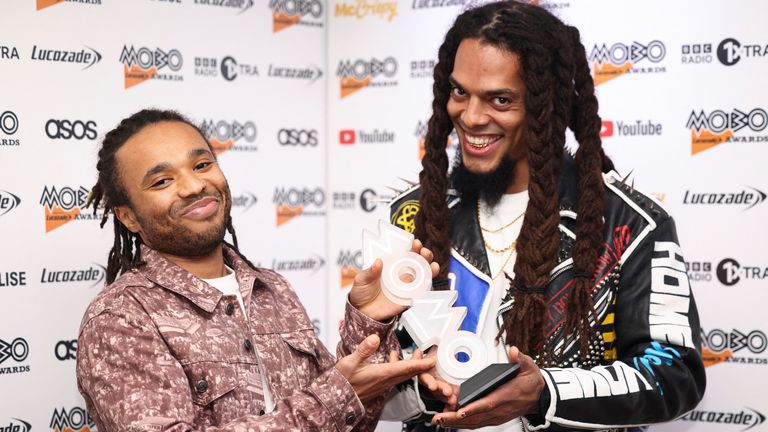
Bob Vylan with their MOBO award in London in November 2022. Pic: Reuters
In a statement on Tuesday, the duo said they were being “targeted for speaking up” after police opened their investigation.
They wrote: “We are not for the death of Jews, Arabs or any other race or group of people.
“We are for the dismantling of a violent military machine. A machine whose own soldiers were told to use “unnecessary lethal force” against innocent civilians waiting for aid.
“A machine that has destroyed much of Gaza.”
The statement added: “We, like those in the spotlight before us, are not the story.
“We are a distraction from the story. And whatever sanctions we receive will be a distraction.
“The government doesn’t want us to ask why they remain silent in the face of this atrocity? To ask why they aren’t doing more to stop the killing? To feed the starving?
“The more time they talk about Bob Vylan the less time they spend answering for their criminal inaction.
“We are being targeted for speaking up. We are not the first, we will not be the last, and if you care for the sanctity of human life and freedom of speech, we urge you to speak up too.”
Read more:
Chief rabbi condemns BBC over Bob Vylan chants
Bob Vylan have US visas revoked
Culture secretary Lisa Nandy hits out at BBC
During the performance on Saturday, Bobby Vylan, one half of the duo, also led his crowd in chants that included “Free, free Palestine”.
Bob Vylan performed on the West Holts Stage slot directly before Kneecap, whose member Liam Og O hAnnaidh, also known as Mo Chara, appeared in court in June charged with a terror offence.
He is accused of displaying a flag in support of Hezbollah, a proscribed organisation in the UK, at a gig last year.
Kneecap also led the Glastonbury crowd in “Free Palestine” chants.
The BBC has faced strong criticism for continuing to livestream the Bob Vylan performance on iPlayer with on-screen warnings about discriminatory language.
It has since been revealed that BBC director-general Tim Davie was at Glastonbury when the chants were broadcast.
A BBC spokesperson said: “The director-general was informed of the incident after the performance and at that point he was clear it should not feature in any other Glastonbury coverage.”
Culture Secretary Lisa Nandy criticised the BBC over its decision not to pull the Bob Vylan livestream during the chants on Saturday and said there is “a problem of leadership” at the corporation.
The group was formed in Ipswich in 2017, and are known for addressing political issues in their albums, including racism, masculinity and class.
The group are scheduled to perform at the Boardmasters surfing and music festival in Newquay, Cornwall in August.
The UK’s YouTubers, TikTok creators and Instagram influencers have been surveyed en masse for the first time ever, and are demanding formal recognition from the government.
The creator economy in the UK is thought to employ around 45,000 people and contribute over £2bn to the country in one year alone, according to the new research by YouTube and Public First.
But, despite all that value, its workers say they feel underappreciated by the authorities.
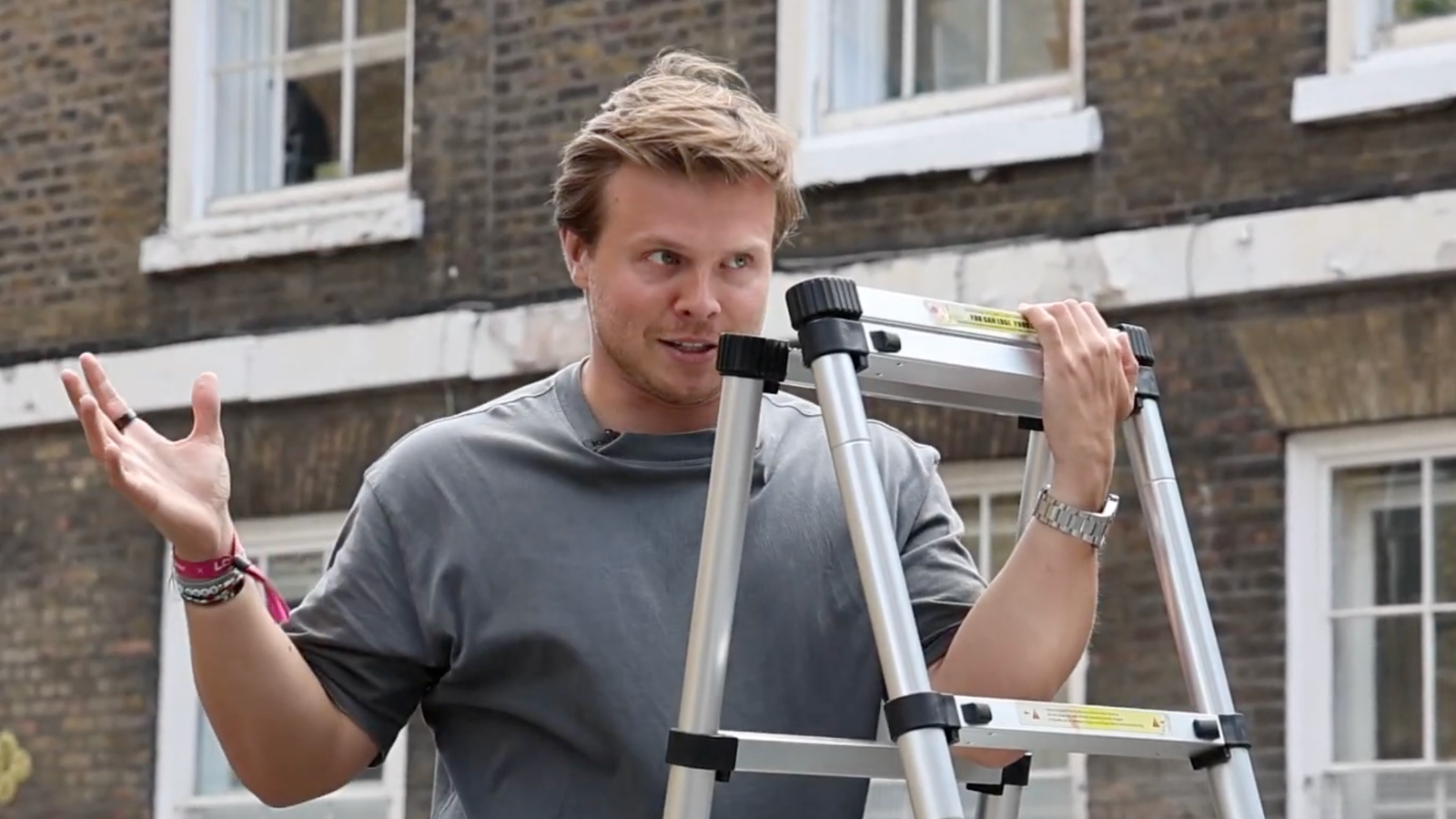
Max Klyemenko, famous for his Career Ladder videos, wants the government to take creators like himself more seriously. Pic: Youtube
“If you look at the viewership, our channel is not too different from a big media company,” said Max Klymenko, a content creator with more than 10 million subscribers and half a billion monthly views on average.
“If you look at the relevancy, especially among young audiences, I will say that we are more relevant. That said, we don’t really get the same treatment,” he told Sky News.
Fifty-six per cent of the more than 10,000 creators surveyed said they do not think UK creators have a “voice in shaping government policies” that affect them.
Only 7% think they get enough support to access finance, while just 17% think there is enough training and skills development here in the UK.
Nearly half think their value is not recognised by the broader creative industry.
The creative industries minister, Sir Chris Bryant, said the government “firmly recognises the integral role that creators play” in the UK’s creative industries and the fact that they help “to drive billions into the economy” and support more than 45,000 jobs.
“We understand more can be done to help creators reach their full potential, which is why we are backing them through our new Creative Industries Sector Plan,” he said.
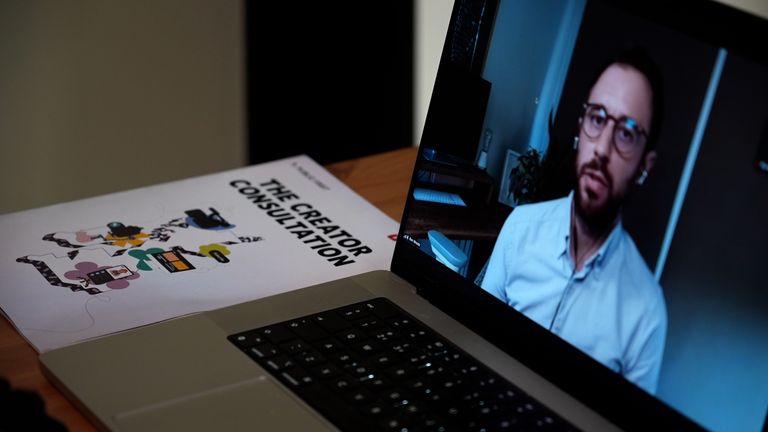
Ben Woods said the government needs to “broaden its lens” to include creators
“The UK has got a fantastic history of supporting the creative industries,” said Ben Woods, a creator economy analyst, Midia Research who was not involved in the report.
“Whether you look at the film side, lots of blockbuster films are being shot here, or television, which is making waves on the global stage.
“But perhaps the government needs to broaden that lens a little bit to look at just what’s going on within the creator economy as well, because it is highly valuable, it’s where younger audiences are spending a lot of their time and [the UK is] really good at it.”
Read more from Sky News:
Trump says ‘very wealthy group’ has agreed to buy TikTok in US
Major porn sites to introduce ‘robust’ age verification in UK
According to YouTube, formal recognition would mean creators are factored into official economic impact data reporting, are represented on government creative bodies, and receive creator-specific guidance from HMRC on taxes and finances.
For some, financial guidance and clarity would be invaluable; the ‘creator’ job title seems to cause problems when applying for mortgages or bank loans.
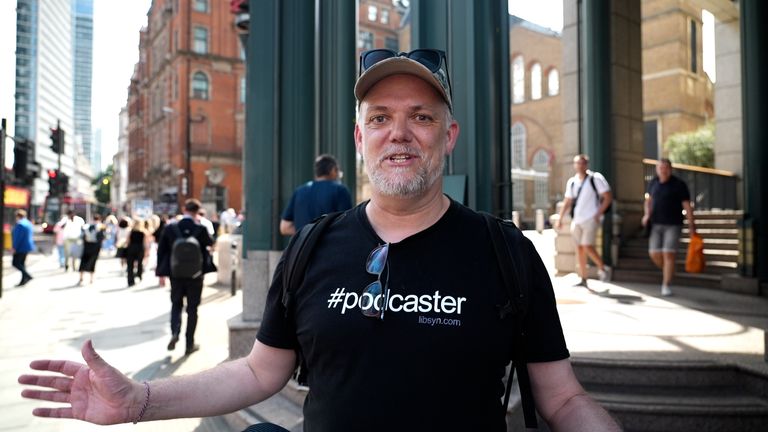
Podcaster David Brown owns a recording studio for creators
“It’s really difficult as a freelancer to get things like mortgages and bank accounts and credit and those types of things,” said podcaster David Brown, who owns a recording studio for creators.
“A lot of people make very good money doing it,” he told Sky News.
“They’re very well supported. They have a lot of cash flow, and they are successful at doing that job. It’s just the way society and banking and everything is set up. It makes it really difficult.”
The creative industries minister said he is committed to appointing a creative freelance champion and increasing support from the British Business Bank in order to “help creators thrive and drive even more growth in the sector”.
The government has already pledged to boost the UK’s creative industries, launching a plan to make the UK the number one destination for creative investment and promising an extra £14bn to the sector by 2035.
These influencers want to make sure they are recognised as part of that.
-
 Sports3 years ago
‘Storybook stuff’: Inside the night Bryce Harper sent the Phillies to the World Series
-
 Sports1 year ago
Story injured on diving stop, exits Red Sox game
-
 Sports2 years ago
Game 1 of WS least-watched in recorded history
-
 Sports2 years ago
MLB Rank 2023: Ranking baseball’s top 100 players
-
Sports4 years ago
Team Europe easily wins 4th straight Laver Cup
-
 Environment2 years ago
Japan and South Korea have a lot at stake in a free and open South China Sea
-
 Sports2 years ago
Button battles heat exhaustion in NASCAR debut
-
 Environment2 years ago
Game-changing Lectric XPedition launched as affordable electric cargo bike