
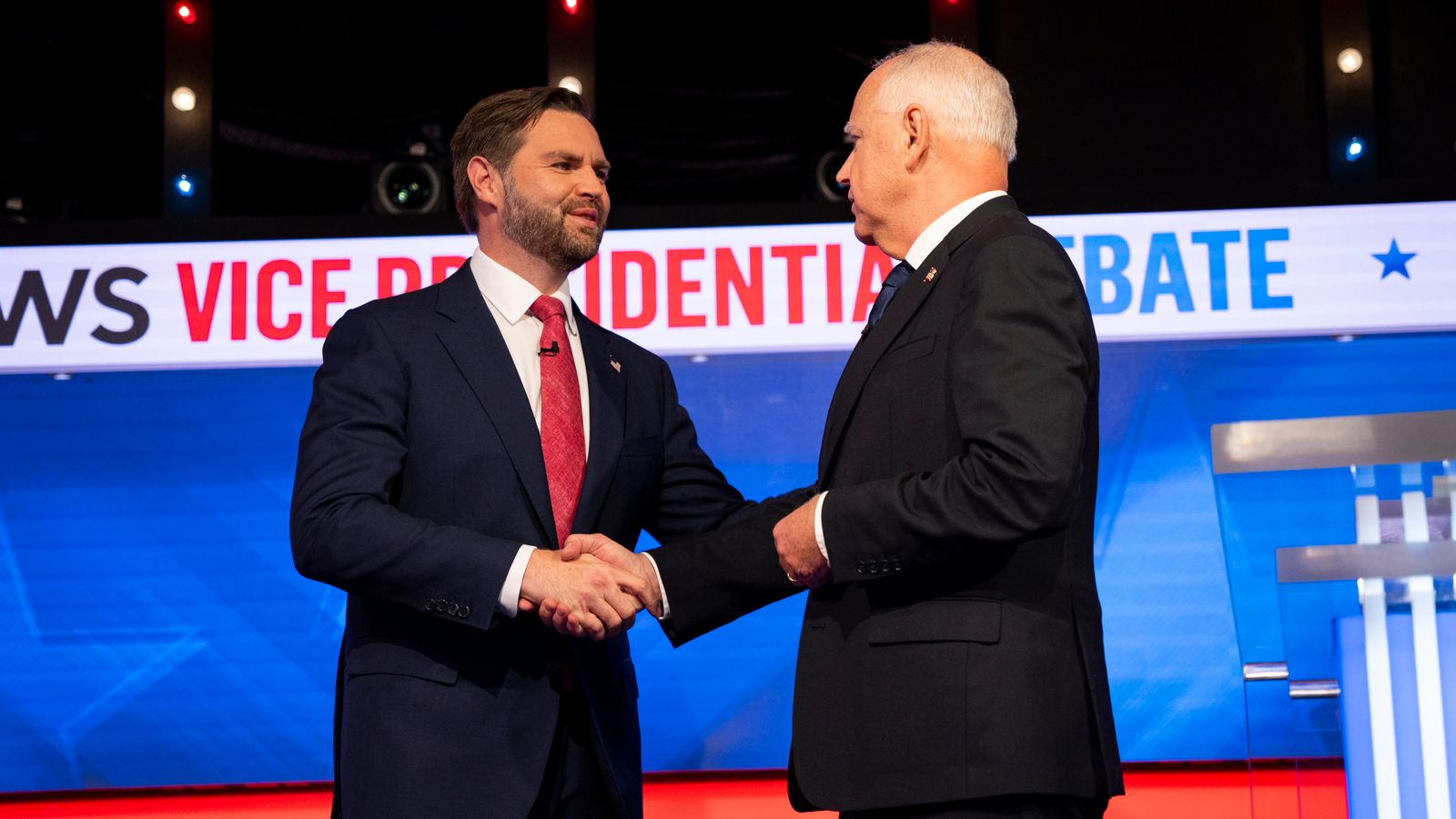
With no knockout blows and even agreement, Tim Walz v JD Vance felt like a flashback to a pre-Trump era

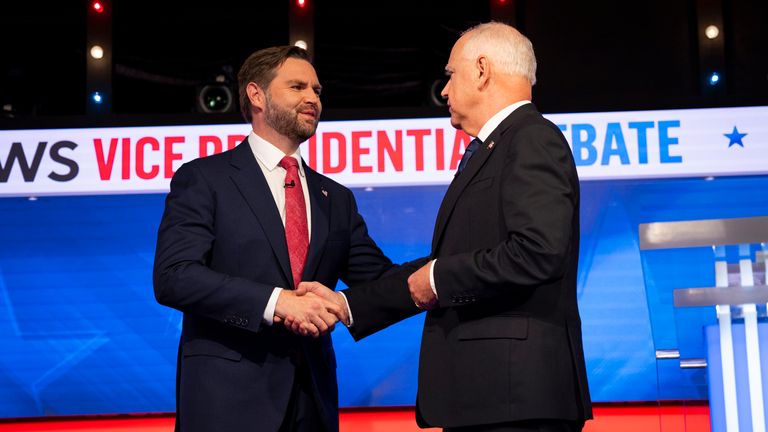
The primary aim for candidates in a vice-presidential debate is to do no harm to the name at the top of the ticket. Both JD Vance and Tim Walz passed that test with flying colours.
In fact, this debate was more substantive, policy-focused and certainly more cordial than anything we heard from the Donald Trump and Kamala Harris head to head last month.
The running mates largely listened to, and answered, questions from the moderators, rather than serving warmed-up, pre-packaged talking points.
Read more:
US election latest: Vance and Walz face off in VP debate
It felt like a flashback to a pre-Trump debate era when candidates were allowed to be civil and, shock-horror, even briefly agree with those at the opposite lectern.
The debate between Vance (L) and Waltz was much friendlier than that between Trump and Harris.
Pic: AP
Vance is the most interviewed of any of the four presidential candidates or running mates this year, regularly appearing on cable television in the US, and in the early exchanges it was telling.
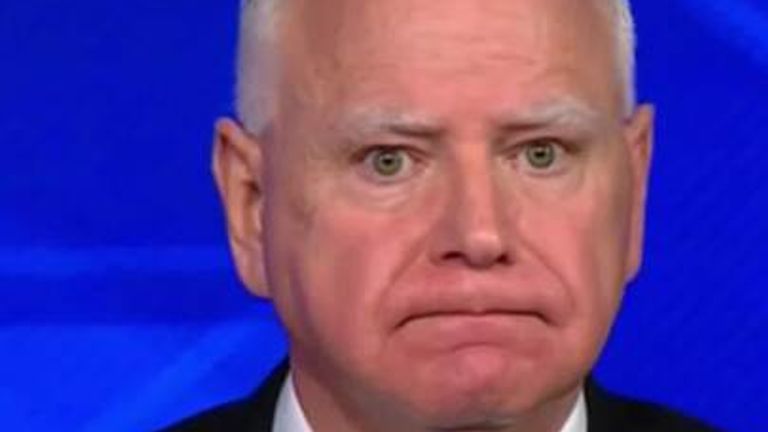
He was slick and commanding, in contrast with Walz who betrayed early signs of nerves, stumbling over his words.
In Walz’s first answer about the Middle East crisis, he appeared to confuse Israel and Iran twice, at one point referring to “Israel and its proxies”.
But the man from Minnesota – as he so often reminded the viewer – soon found his way, peppering his answers with appeals to “folks” at home. He stared down the camera while delivering the everyman schtick which was the main reason Kamala Harris picked him as a running mate.
“I misspoke,” Walz said when challenged on his inaccurate statement about being in Hong Kong teaching when the Tiananmen Square massacre happened (newspaper records indicate he was, in fact, in Nebraska).
“I’m a knucklehead at times,” he added as if to say – you and I are just the same, you forget your keys in the car, and I forget that I was in the Midwest and not in the midst of one of the most notorious events in recent memory.
Read more:
Tim Walz: The arrest that changed his life
How Vance used ‘hillbilly’ background to get to the top
‘Still saying he didn’t lose election’
Team Walz may have been expecting Vance to assume his “attack dog” persona but this was a more mellow, balanced, and even likeable performance from Trump’s understudy, specifically designed to appeal to the independent voter.
He began with a thank you to the broadcaster CBS for hosting the debate and to the viewers “caring enough about this country” to tune in.
He expressed concern for the 17-year-old son of Tim Walz, who had witnessed a shooting while playing volleyball. “I didn’t realise your son had witnessed a shooting,” he said, “that’s awful.”
Even on abortion – one of the thorniest issues for Republicans – he made a decent stab at appearing moderate.
“This is about health care,” he said. I just want to “make it easier for mums to afford to have babies,” he insisted while stating he has never called for a federal abortion ban.
Vance and Walz debate abortion
In fact, Vance has in the past expressed his support for a bill which would ban abortion nationwide after 15 weeks of pregnancy.
Walz spotted his moment to seize upon the reproductive rights debate, one of the loudest rallying cries for the Democratic Party.
He retold the tragic story of Amber Thurman, a woman who died because she could not access legal abortions and timely medical care owing to Georgia’s abortion ban.
It is an incredibly powerful, distressing story and one the Democrats are using on the campaign trail to shine a light on Donald Trump’s role in overturning Roe v Wade, which gave women the constitutional right to choose.
Read more from Sky News:
Residents try to put lives back together after hurricane
Naked Trump statue branded ‘deplorable’
Keep up with all the latest news from the UK and around the world by following Sky News
There were no knockout blows for either candidate and as with all vice-presidential debates, it is unlikely to shift the dial on polling or alter the momentum of the election race.
But the fact that JD Vance did so well on the undercard may just entice Donald Trump to accept the offer of another bout against Kamala Harris because – as we well know – he does not like being outshone.
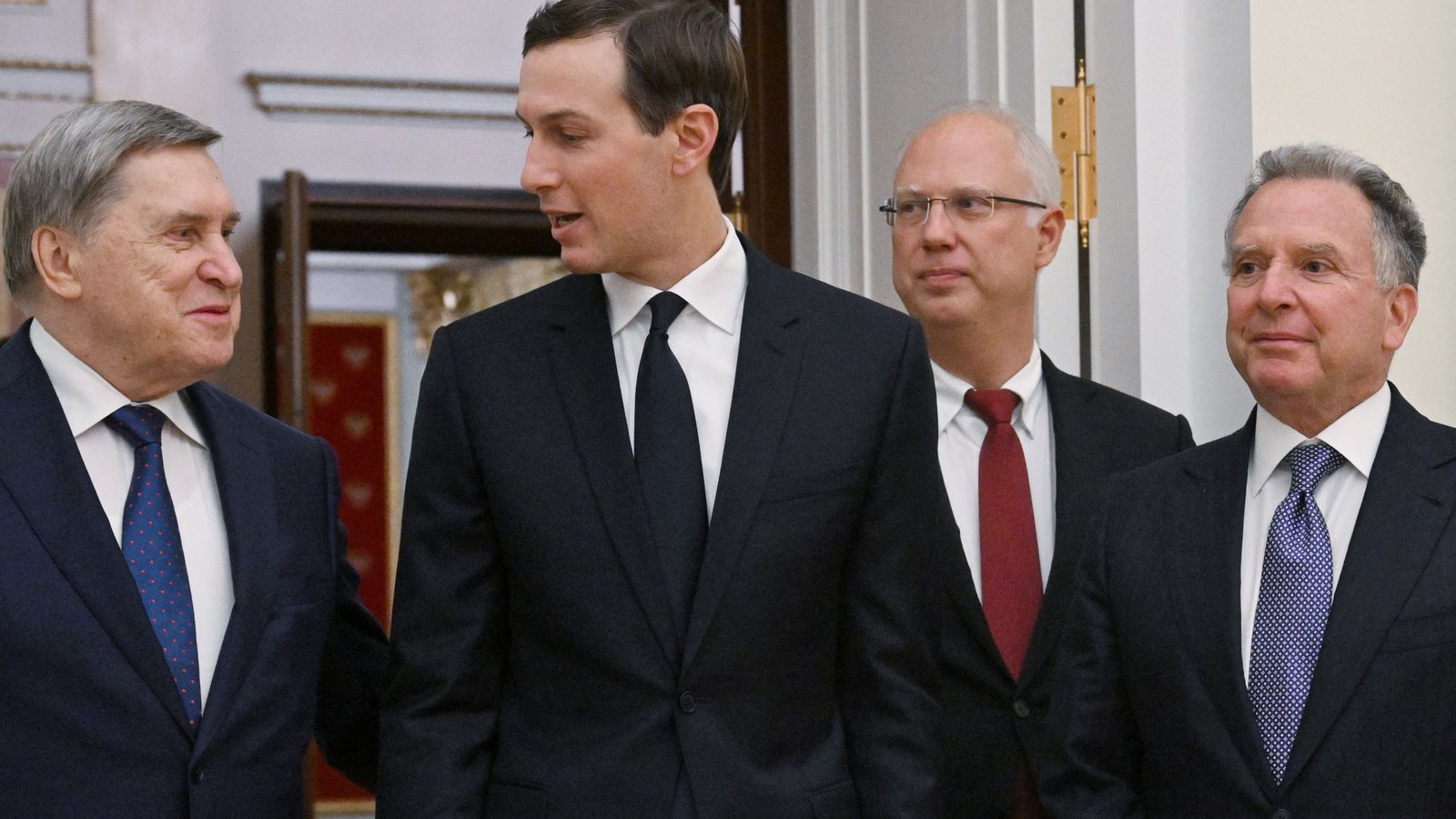
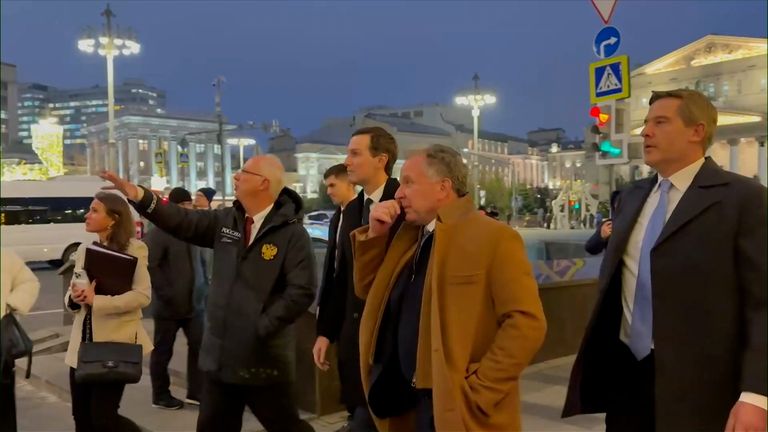
The Americans were given the full VIP treatment on their visit to Moscow.
There was a motorcade from the airport, lunch at a Michelin-starred restaurant, and even a stroll around Red Square.
It felt like Steve Witkoff and Jared Kushner were on more of a tourist trail than the path to peace.
Trump’s envoys walk around Moscow
They finally got down to business in the Kremlin more than six hours after arriving in Russia. And by that point, it was already clear that the one thing they had come to Moscow for wasn’t on offer: Russia’s agreement to their latest peace plan.
According to Vladimir Putin, it’s all Europe’s fault. While his guests were having lunch, he was busy accusing Ukraine’s allies of blocking the peace process by imposing demands that are unacceptable to Russia.
The Europeans, of course, would say it’s the other way round.
But where there was hostility to Europe, only hospitality to the Americans – part of Russia’s strategy to distance the US from its NATO allies, and bring them back to Moscow’s side.
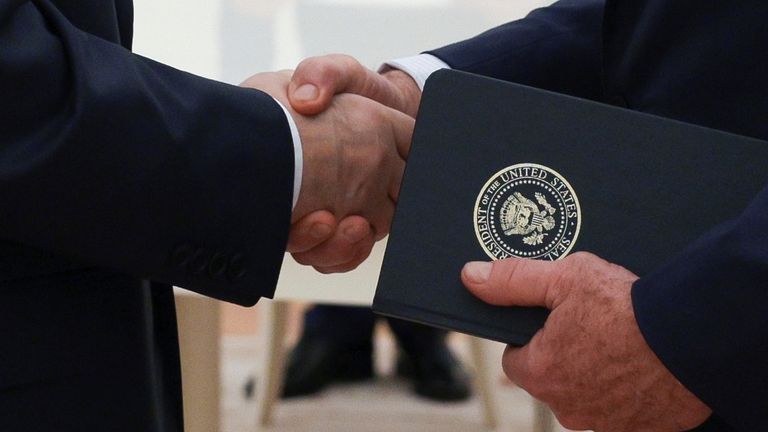
Vladimir Putin and Steve Witkoff shaking hands in August. AP file pic
Putin thinks he’s winning…
Russia wants to return to the 28-point plan that caved in to its demands. And it believes it has the right to because of what’s happening on the battlefield.
It’s no coincidence that on the eve of the US delegation’s visit to Moscow, Russia announced the apparent capture of Pokrovsk, a key strategic target in the Donetsk region.
It was a message designed to assert Russian dominance, and by extension, reinforce its demands rather than dilute them.
Read more:
Michael Clarke answers your Ukraine war questions
‘Thousands’ of Westerners applying to live in Russia

‘Everyone must be on this side of peace’
…and believes US-Russian interests are aligned
The other reason I think Vladimir Putin doesn’t feel the need to compromise is because he believes Moscow and Washington want the same thing: closer US-Russia relations, which can only come after the war is over.
It’s easy to see why. Time and again in this process, the US has defaulted to a position that favours Moscow. The way these negotiations are being conducted is merely the latest example.
With Kyiv, the Americans force the Ukrainians to come to them – first in Geneva, then Florida.
As for Moscow, it’s the other way around. Witkoff is happy to make the long overnight journey, and then endure the long wait ahead of any audience with Putin.
It all gives the impression that when it comes to Russia, the US prefers to placate rather than pressure.
According to the Kremlin, both Russia and the US have agreed not to disclose the details of yesterday’s talks in Moscow.
I doubt Volodymyr Zelenskyy is filled with hope.
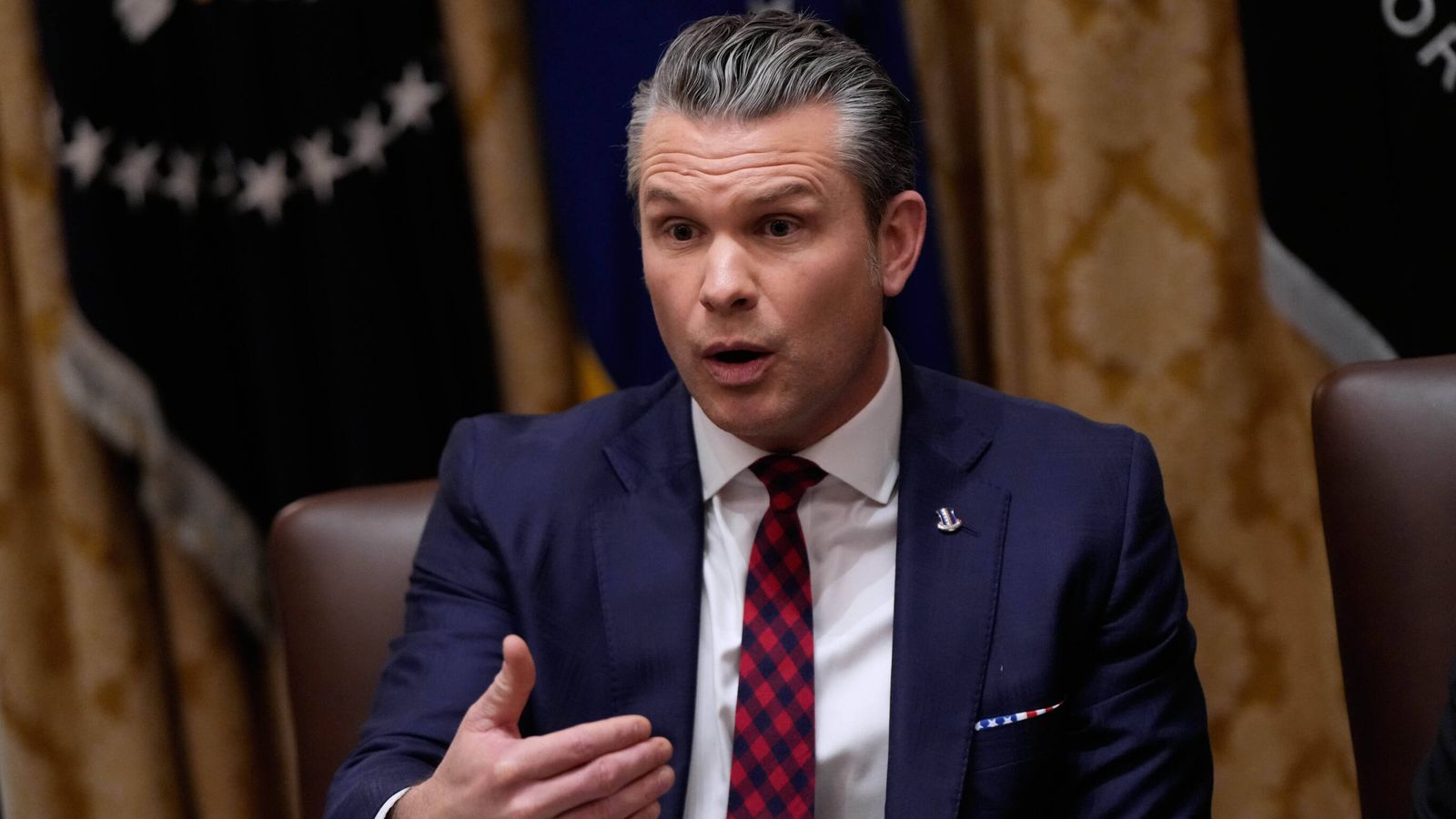
US defence secretary Pete Hegseth has cited the “fog of war” in defence of a follow-up strike earlier this year on a boat alleged to be carrying drugs in the Caribbean Sea.
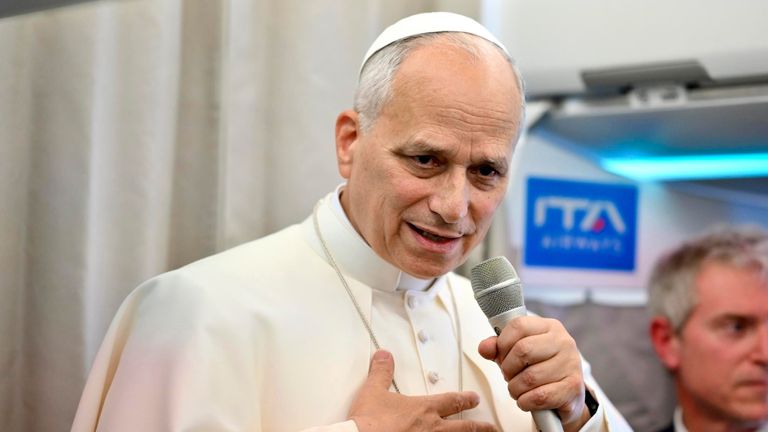
His comments came on the day the Pope urged Donald Trump not to try to oust Venezuelan President Nicolas Maduro using military force.
Speaking at a cabinet meeting on Tuesday alongside Mr Trump, Mr Hegseth said the US had paused strikes because it was hard to find drug boats.
But strikes against drug traffickers would continue, he said.
Pope Leo XIV talks to reporters as he returns from visits to Turkey and Lebanon. Pic: AP
During the cabinet meeting at the White House, Mr Hegseth said that he did not see that there were survivors in the water when the second strike was ordered and launched in early September, saying that “the thing was on fire”.
Mr Hegseth also said he “didn’t stick around” for the rest of the mission following the first strike, adding that the admiral in charge had “made the right call” in ordering it, which he “had complete authority to do”.
The Washington Post first reported that Mr Hegseth issued a verbal order for the second strike that killed survivors on the boat.
On Monday, the White House said that Navy vice admiral Frank “Mitch” Bradley acted “within his authority and the law” when he ordered the second strike.
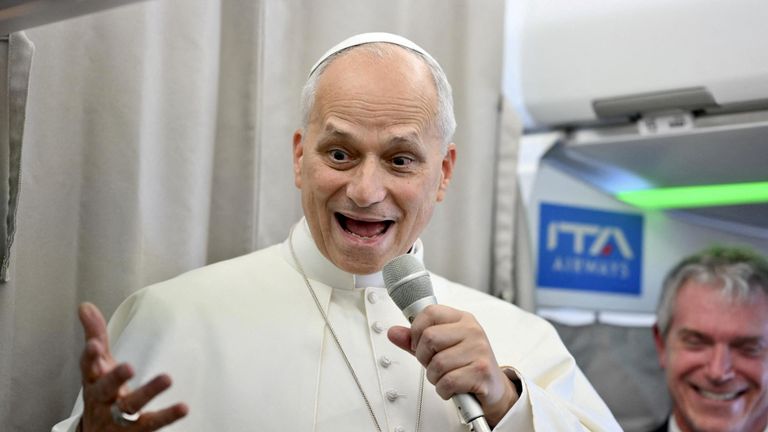
Pope pleads to Trump not to oust Venezuelan president by force
Asked if he supported the second strike on a boat in the Caribbean Sea in September, President Trump said he “didn’t know anything” and “still haven’t gotten a lot of information because I rely on Pete”, referencing Mr Hegseth.
On Tuesday, Pope Leo, the first American pontiff, said it would be better to attempt dialogue or impose economic pressure on Venezuela if Washington wanted to pursue change there.
Read more from Sky News:
Government delays Chinese ‘super embassy’ decision
Imran Khan healthy but isolated in jail, his sister says
The Trump administration has been weighing options to combat what it has portrayed as Mr Maduro’s role in supplying illegal drugs that have killed Americans.
The socialist Venezuelan president has denied having any links to the illegal drug trade.
Asked during a news conference about President Trump’s threats to remove Mr Maduro by force, the Pope said: “It is better to search for ways of dialogue, or perhaps pressure, including economic pressure.”
He added that Washington should search for other ways to achieve change “if that is what they want to do in the United States”.
The Pope was speaking as he flew home from visiting Turkey and Lebanon – his first overseas trip in the role.
Mr Maduro has said Venezuelans are ready to defend their country as the US considers a land attack.
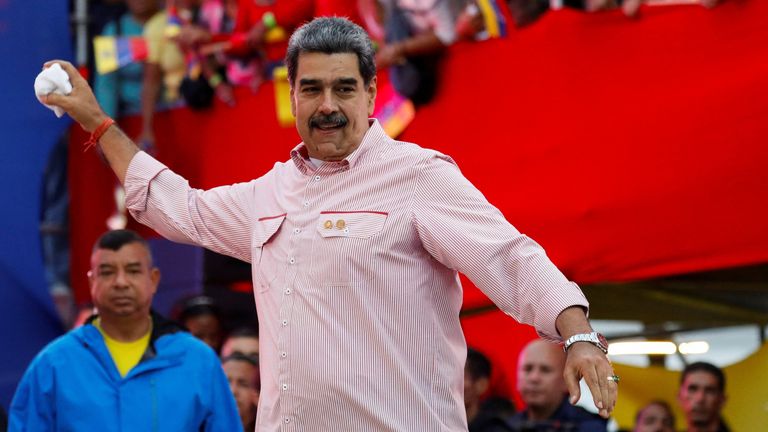
Venezuela’s President Nicolas Maduro in Caracas. Pic: Reuters

A map showing Venezuelan military facilities
The president held a rally in Caracas amid heightened tensions with Mr Trump’s administration, which has been targeting what it says are boats carrying drug smugglers.
Mr Trump met his national security team on Monday evening, having warned last week that land strikes would start “very soon”.
It has not been confirmed what was discussed at the meeting. But White House press secretary Karoline Leavitt told reporters: “There’s many options at the president’s disposal that are on the table – and I’ll let him speak on those.”
US forces have carried out at least 21 strikes on boats it claims were carrying narcotics to its shores over the last few months.
Did Pete Hegseth commit a war crime?
Mr Maduro – considered a dictator by many in the West – said on Monday that Venezuelans were ready “to defend [the country] and lead it to the path of peace”.
“We have lived through 22 weeks of aggression that can only be described as psychological terrorism,” he said.
Venezuela has said the boat attacks, which have killed more than 80 people, amount to murder – and that Mr Trump’s true motivation is to oust Mr Maduro and access its oil.
US
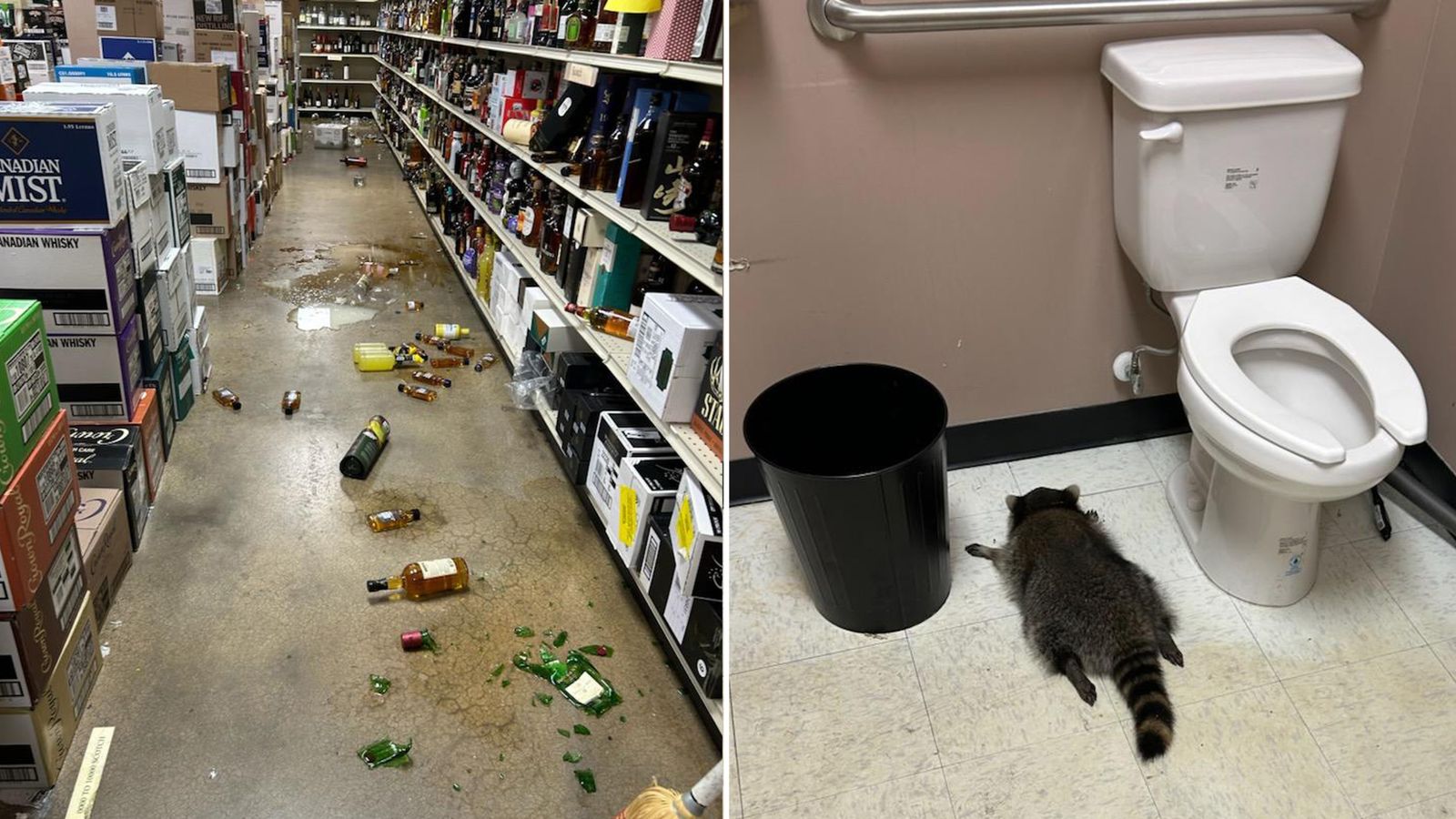
Spirit animal: Raccoon gets drunk as a skunk in a booze store – and sleeps off hangover in the toilet
-
 Sports2 years ago
Story injured on diving stop, exits Red Sox game
-
 Sports3 years ago
‘Storybook stuff’: Inside the night Bryce Harper sent the Phillies to the World Series
-
 Sports2 years ago
Game 1 of WS least-watched in recorded history
-
 Sports3 years ago
Button battles heat exhaustion in NASCAR debut
-
 Sports3 years ago
MLB Rank 2023: Ranking baseball’s top 100 players
-
Sports4 years ago
Team Europe easily wins 4th straight Laver Cup
-
 Environment3 years ago
Japan and South Korea have a lot at stake in a free and open South China Sea
-
 Environment1 year ago
Here are the best electric bikes you can buy at every price level in October 2024