
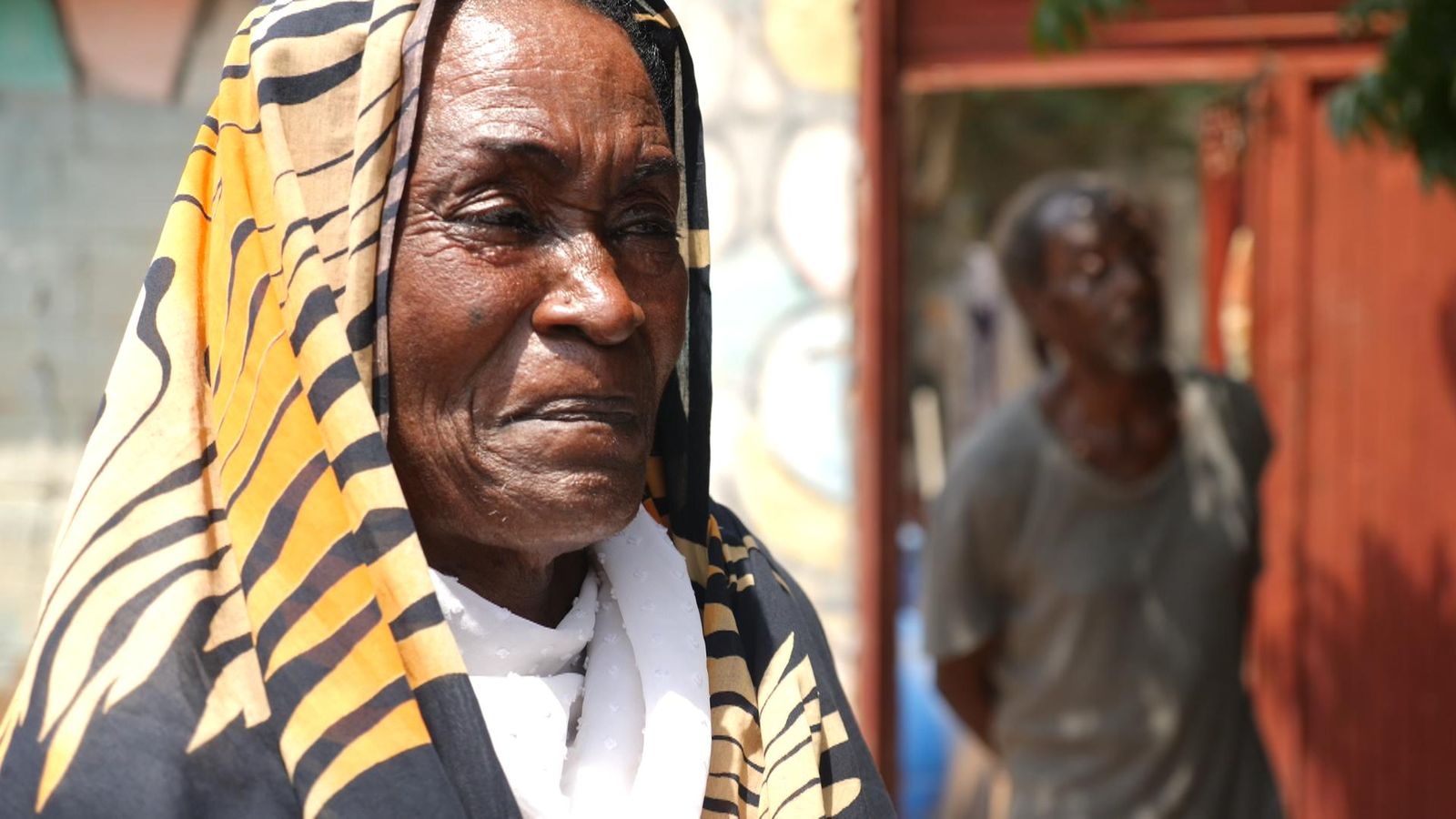
Sudan: For the few who couldn’t flee this neighbourhood in Khartoum North life will never be the same

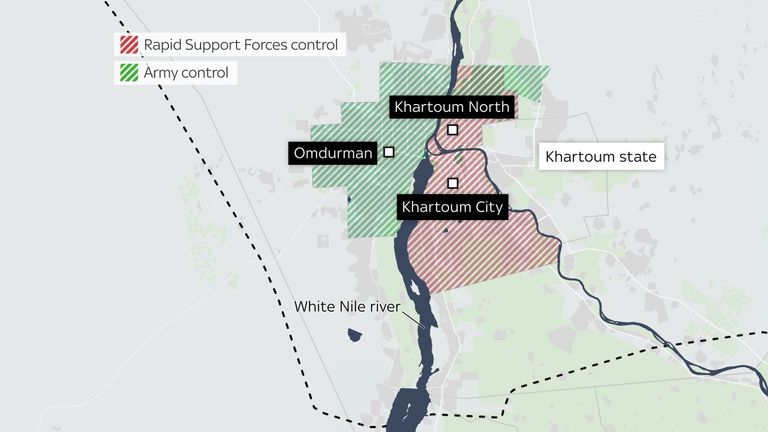
It has only been a week since the army reclaimed pockets of Khartoum North – the once bustling north-eastern wing of Sudan’s tri-city capital, locally known as Khartoum Bahri.
The hum of warplanes and crack of gunfire still punctuate life here. But the gunfire is now outgoing, and the warplanes are searching for enemy targets that have been pushed further back.
A year-and-a-half long siege by the Rapid Support Forces (RSF) is now over for some. But the scars still mark the streets, the homes and the few families still in them.
Hundreds of thousands of civilians have fled Khartoum Bahri to safer states within Sudan, neighbouring countries and beyond.
There was a haunting emptiness when we arrived in Halfaya – an old tight-knit neighbourhood where families live for generations, expanding to only move across the narrow dirt roads.
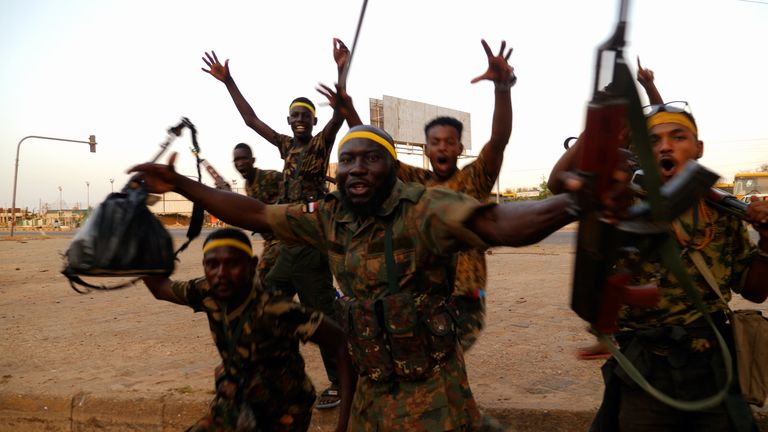
Sudan’s army reclaimed pockets of Khartoum North last week
Today, overgrown vines reach into the shattered windows of cars abandoned in the yards of their owners.
Inside, the homes are overturned, looted and destroyed by bullets and missiles.
👉 Tap here to follow the Sky News Daily podcast 👈
All that was left behind – photo albums, pencil cases, clothes and books – mean everything to a select few. Many left hoping it would only be a short while before they could return.
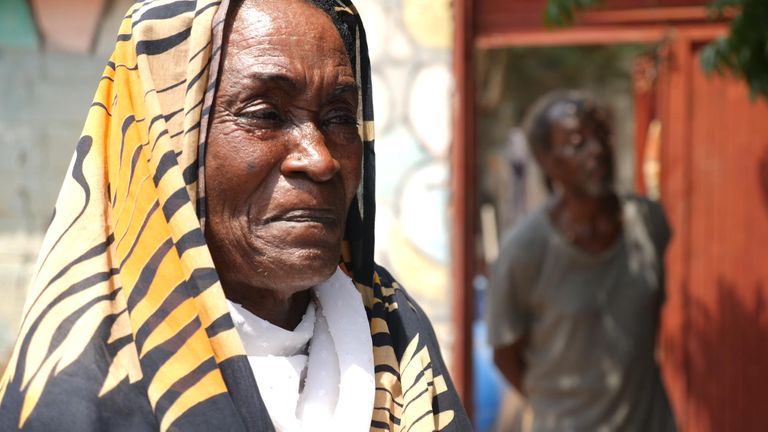
Faiza says she had to hide her daughter to protect her from rape by RSF soldiers
But not everyone could leave.
“We don’t have a single penny to leave with. We didn’t have anything and never expected this,” Faiza Ishaq tells us in front of her home.
“I don’t have any family here – all my people left. I’m just with my two children and husband.”
Other than a handful of remaining neighbours, we are the first civilians Faiza has seen in close to 18 months of war.
Read more:
What has been happening in Sudan?
‘They started killing people in the streets’
She collapsed into sobs on my shoulder soon after we happily hugged each other hello. In a moment, her new sense of relief was overshadowed by months of deep horror and grief.
“Since they came a year and a half ago, I developed a tremor in my whole body. My hands shake so much I can’t eat without spilling food,” says Faiza, visibly trembling.
“We have been living in such terror – they can jump the wall at 2am. They hurl insults at us and threaten to take my 12-year-old daughter.”
She says their neighbours were killed by the RSF while fighting to protect their two sisters from rape. Her utmost fear was that her young daughter would be next in line.
“They would say to me ‘give me your daughter to marry or we’ll take her’. When they would come to the house, I locked her in the bathroom.”
The little food and support they could find under siege came from around the corner. Her neighbour Sumaya has turned her house into a community kitchen.
With the markets emptied, the chicken coup in the corner of her yard and grains bought with donations raised from Sudanese people abroad were used to feed as many remaining families as possible in the harshest of conditions.
“The fear and trauma have made us sick. We were never like this – we are finished,” says Sumaya.
“We have all lost weight and feel weak because they could knock the door at any moment. If someone knocked on the door without saying my name I felt gripped by fear.”
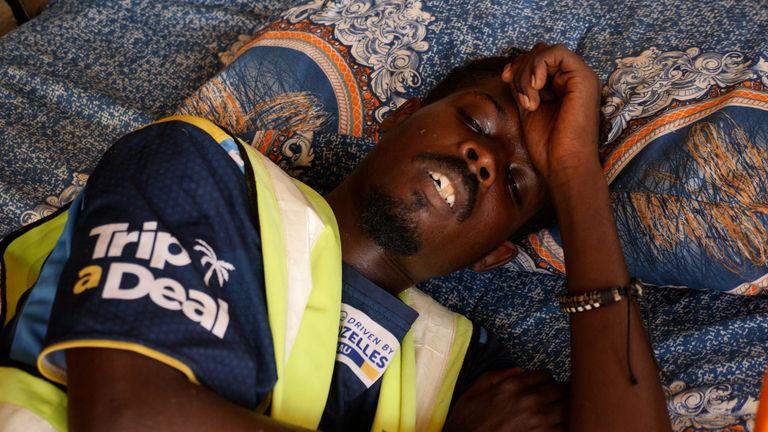
Firas has malaria for the fourth time since the war started
As we stood there and spoke in the heat of the day, one of the community volunteers, Firas, had to go and lie down.
He has malaria for the fourth time since the war started. Even in the wake of this military gain, movement and medical treatment in the capital is severely limited.
“I faint two to three times in a month from a lack of nutrition,” says Firas.
He has survived army airstrikes, RSF harassment and the dangerous work on electrical cables he has had to risk to keep the power on in the neighbourhood.
“It really was kill or be killed. We told our families that if we die, just forgive us.”
Donald Trump has agreed to send “top of the line weapons” to NATO to support Ukraine – and threatened Russia with “severe” tariffs if it doesn’t agree to end the war.
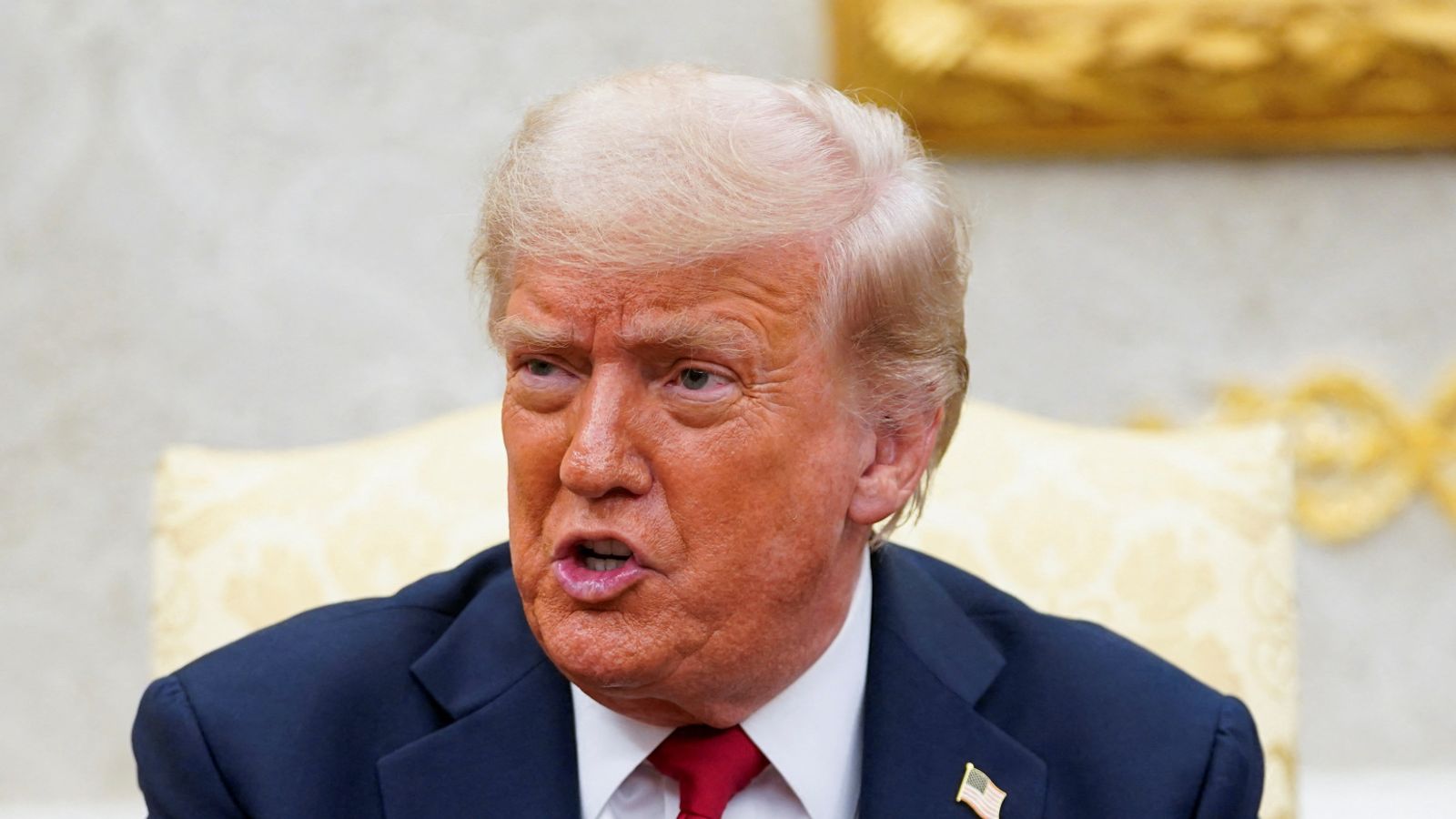
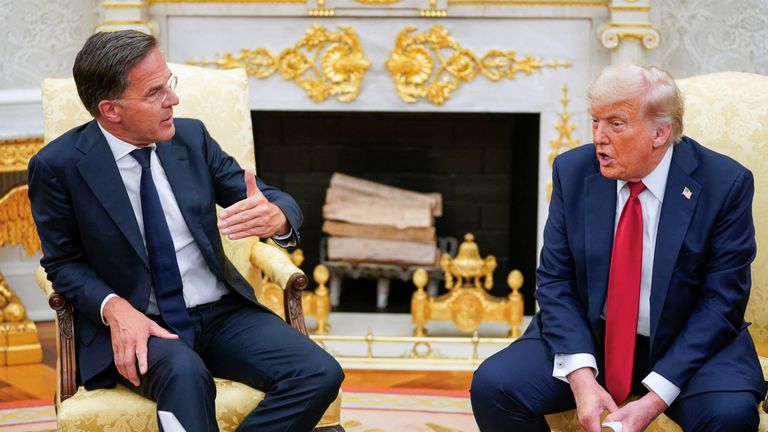
Speaking with NATO secretary general Mark Rutte during a meeting at the White House, the US president said: “We’ve made a deal today where we are going to be sending them weapons, and they’re going to be paying for them.
“This is billions of dollars worth of military equipment which is going to be purchased from the United States,” he added, “going to NATO, and that’s going to be quickly distributed to the battlefield.”
Weapons being sent include surface-to-air Patriot missile systems and batteries, which Ukraine has asked for to defend itself from Russian air strikes.
Pic: Reuters
Mr Trump also said he was “very unhappy” with Russia, and threatened “severe tariffs” of “about 100%” if there isn’t a deal to end the war in Ukraine within 50 days.
The White House added that the US would put “secondary sanctions” on countries that buy oil from Russia if an agreement was not reached.
It comes after weeks of frustration from Mr Trump against Vladimir Putin’s refusal to agree to an end to the conflict, with the Russian leader telling the US president he would “not back down” from Moscow’s goals in Ukraine at the start of the month.
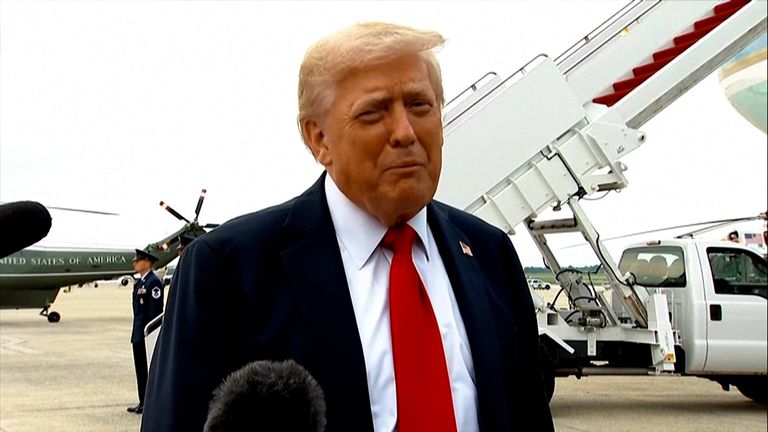
Trump says Putin ‘talks nice and then bombs everybody’
During the briefing on Monday, Mr Trump said he had held calls with Mr Putin where he would think “that was a nice phone call,” but then “missiles are launched into Kyiv or some other city, and that happens three or four times”.
“I don’t want to say he’s an assassin, but he’s a tough guy,” he added.
Earlier this year, Mr Trump told Ukrainian leader Volodymyr Zelenskyy “you’re gambling with World War Three” in a fiery White House meeting, and suggested Ukraine started the war against Russia as he sought to negotiate an end to the conflict.
After Mr Trump’s briefing, Russian senator Konstantin Kosachev said on Telegram: “If this is all that Trump had in mind to say about Ukraine today, then all the steam has gone out.”
Read more:
Trump announces 30% tariff on EU imports
Trump threatens to revoke US comedian’s citizenship
Two women killed after shooting at US church

Listen to The World with Richard Engel and Yalda Hakim every Wednesday
Meanwhile, Mr Zelenskyy met with US special envoy Keith Kellogg in Kyiv, where they “discussed the path to peace” by “strengthening Ukraine’s air defence, joint production, and procurement of defence weapons in collaboration with Europe”.
He thanked both the envoy for the visit and Mr Trump “for the important signals of support and the positive decisions for both our countries”.
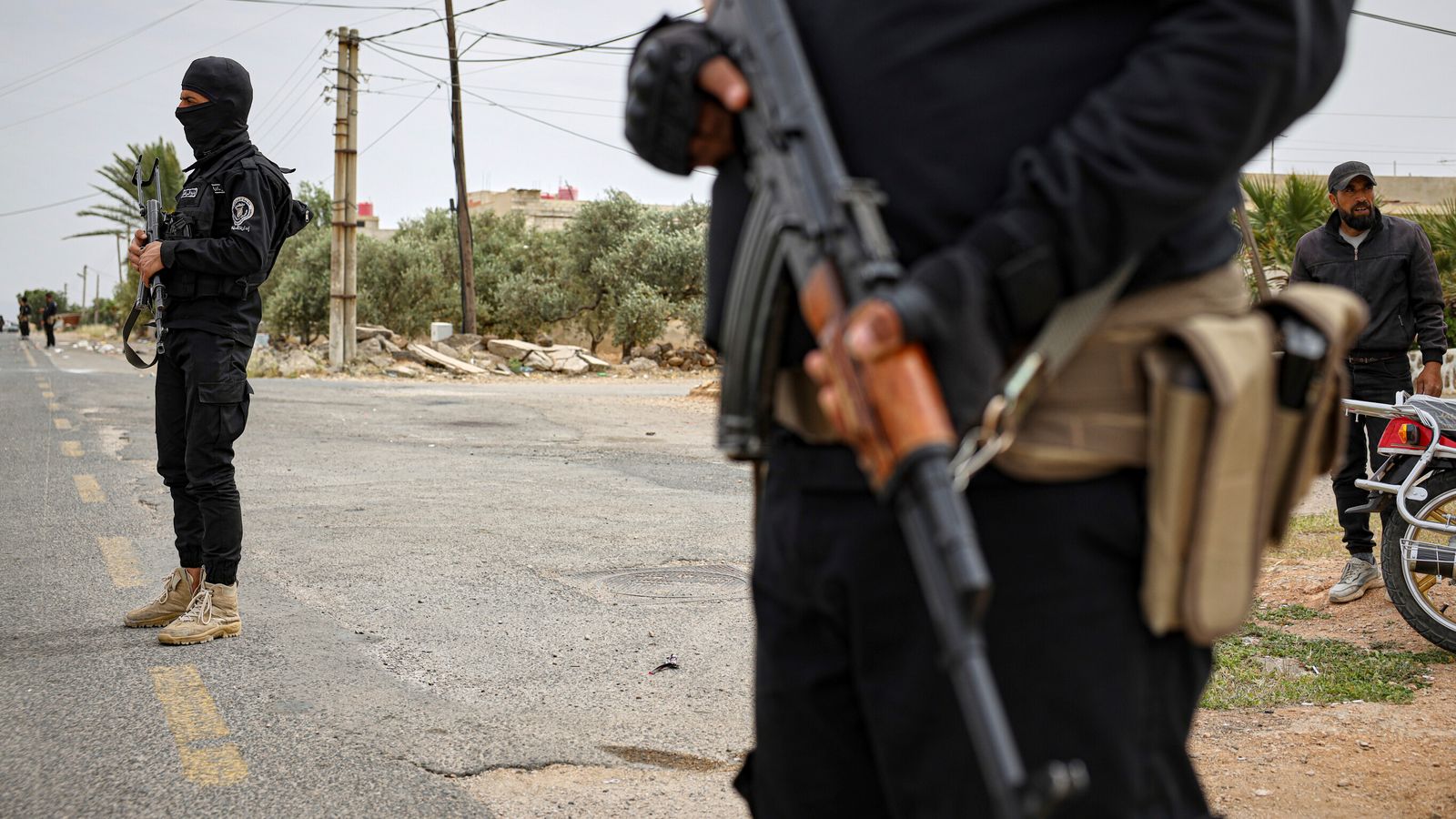
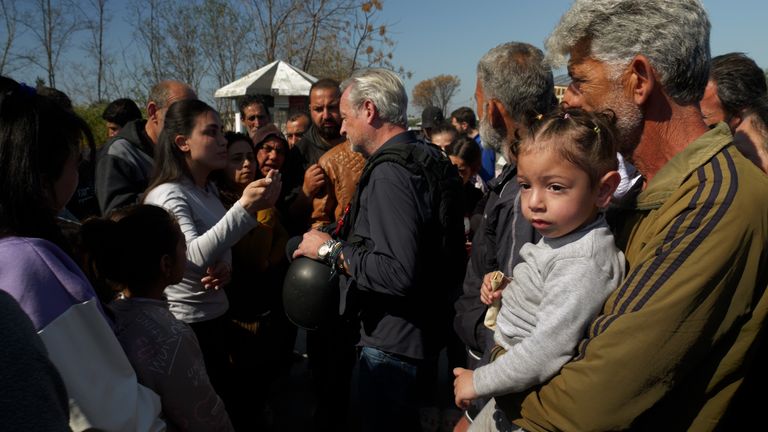
At least 30 people have been killed in the Syrian city of Sweida in clashes between local military groups and tribes, according to Syria’s interior ministry.
Officials say initial figures suggest around 100 people have also been injured in the city, where the Druze faith is one of the major religious groups.
The interior ministry said its forces will directly intervene to resolve the conflict, which the Reuters news agency said involved fighting between Druze gunmen and Bedouin Sunni tribes.
It marks the latest episode of sectarian violence in Syria, where fears among minority groups have increased since Islamist-led rebels toppled President Bashar al Assad in December, installing their own government and security forces.
In March, Sky’s Stuart Ramsay described escalating violence within Syria
The violence reportedly erupted after a wave of kidnappings, including the abduction of a Druze merchant on Friday on the highway linking Damascus to Sweida.
Last April, Sunni militia clashed with armed Druze residents of Jaramana, southeast of Damascus, and fighting later spread to another district near the capital.
But this is the first time the fighting has been reported inside the city of Sweida itself, the provincial capital of the mostly Druze province.
The Syrian Observatory for Human Rights (SOHR) reports the fighting was centred in the Maqwas neighbourhood east of Sweida and villages on the western and northern outskirts of the city.
It adds that Syria’s Ministry of Defence has deployed military convoys to the area.
Western nations, including the US and UK, have been increasingly moving towards normalising relations with Syria.
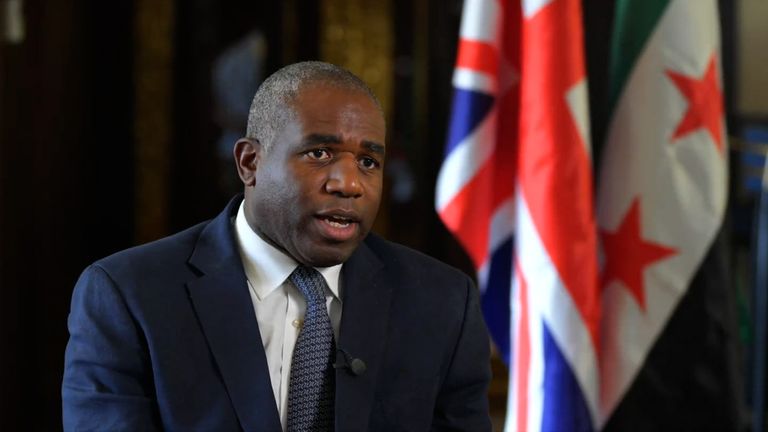
UK aims to build relationship with Syria

Listen to The World with Richard Engel and Yalda Hakim every Wednesday
Read more from Sky News:
UK restores diplomatic ties with Syria
Church in Syria targeted by suicide bomber
Concerns among minority groups have intensified following the killing of hundreds of Alawites in March, in apparent retaliation for an earlier attack carried out by Assad loyalists.
That was the deadliest sectarian flare-up in years in Syria, where a 14-year civil war ended with Assad fleeing to Russia after his government was overthrown by rebel forces.
The city of Sweida is in southern Syria, about 24 miles (38km) north of the border with Jordan.
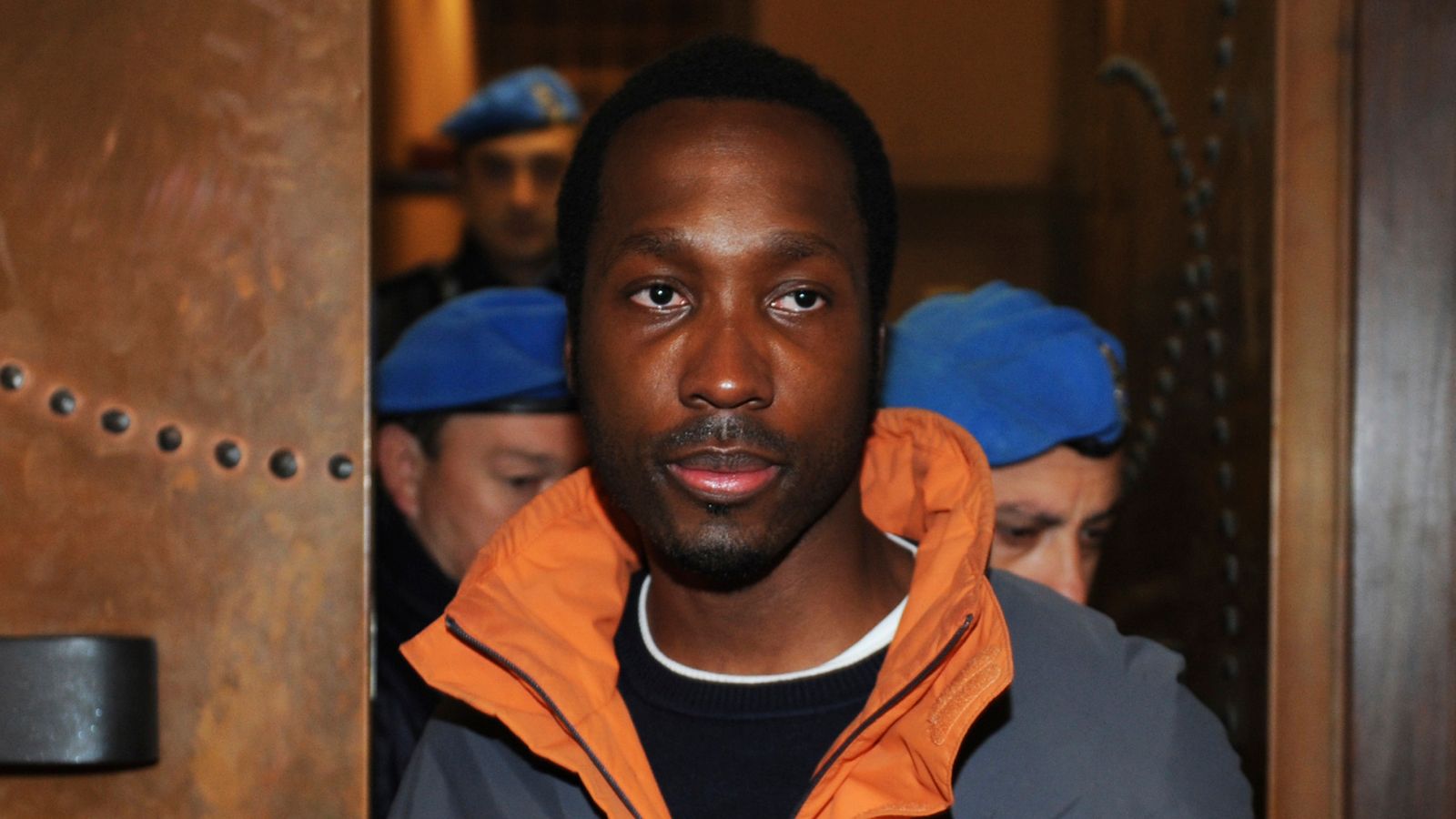
The man convicted of the murder of British student Meredith Kercher has been charged with sexual assault against an ex-girlfriend.
Rudy Guede, 38, was the only person who was definitively convicted of the murder of 21-year-old Ms Kercher in Perugia, Italy, back in 2007.
He will be standing trial again in November after an ex-girlfriend filed a police report in the summer of 2023 accusing Guede of mistreatment, personal injury and sexual violence.
Guede, from the Ivory Coast, was released from prison for the murder of Leeds University student Ms Kercher in 2021, after having served about 13 years of a 16-year sentence.
Listen to The World with Richard Engel and Yalda Hakim every Wednesday
Since last year – when this investigation was still ongoing – Guede has been under a “special surveillance” regime, Sky News understands, meaning he was banned from having any contact with the woman behind the sexual assault allegations, including via social media, and had to inform police any time he left his city of residence, Viterbo, as ruled by a Rome court.
Guede has been serving a restraining order and fitted with an electronic ankle tag.
The Kercher murder case, in the university city of Perugia, was the subject of international attention.
Ms Kercher, a 21-year-old British exchange student, was found murdered in the flat she shared with her American roommate, Amanda Knox.
The Briton’s throat had been cut and she had been stabbed 47 times.
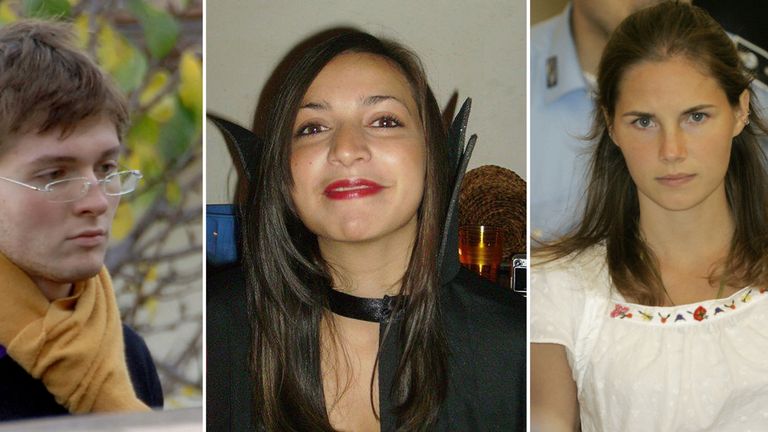
(L-R) Raffaele Sollecito, Meredith Kercher and Amanda Knox. File pic: AP
Ms Knox and her then-boyfriend, Raffaele Sollecito, were placed under suspicion.
Both were initially convicted of murder, but Italy’s highest court overturned their convictions, acquitting them in 2015.
-
 Sports3 years ago
‘Storybook stuff’: Inside the night Bryce Harper sent the Phillies to the World Series
-
 Sports1 year ago
Story injured on diving stop, exits Red Sox game
-
 Sports2 years ago
Game 1 of WS least-watched in recorded history
-
 Sports2 years ago
MLB Rank 2023: Ranking baseball’s top 100 players
-
Sports4 years ago
Team Europe easily wins 4th straight Laver Cup
-
 Sports2 years ago
Button battles heat exhaustion in NASCAR debut
-
 Environment2 years ago
Japan and South Korea have a lot at stake in a free and open South China Sea
-
 Environment2 years ago
Game-changing Lectric XPedition launched as affordable electric cargo bike