

Satellite imagery shows Iranian oil tankers at country’s major terminal disappearing amid fears of Israeli counterattack


A general view of the Port of Kharg Island Oil Terminal in Iran on March 12, 2017.
Fatemeh Bahrami | Anadolu Agency | Getty Images
Satellite imagery revealed a number of oil tankers vacating the waters around Iran’s key Kharg Island oil loading terminal, amid fears of an Israeli counterattack on Tehran’s energy infrastructure.
“The National Iranian Tanker Company (NITC) appears to be fearing an imminent attack by Israel. Their empty VLCC supertankers vacated the country’s largest oil terminal, Kharg Island, yesterday,” tracking firm TankerTrackers.com wrote in a post on the X social media platform on Thursday evening.
Markets have been on edge over the possibility of an Israeli retaliation, after Iran launched a missile attack against the Jewish state earlier this week.
Satellite imagery captured by the European Space Agency’s Copernicus Sentinel-1 mission on Sept. 25 shows a number of VLCC (very large crude carrier) supertankers in the waters around Kharg Island, Iran’s principal oil export terminal. VLCC tankers are specifically designed to transport large volumes of crude oil.
Satellite imagery captured by the European Space Agency’s Copernicus Sentinel-1 mission on Sept. 25 shows a number of VLCC supertankers in the waters around Kharg Island, Iran’s principal oil export terminal.
This image contains modified Copernicus Sentinel data 2024 processed by Sentinel Hub
Imagery of the same location on Oct. 3 — two days after Iran launched a volley of around 180 missiles at Israel for the killing of Hezbollah leader Hassan Nasrallah — shows an empty sea around Kharg Island, with no ships in sight.
Satellite imagery captured by the European Space Agency’s Copernicus Sentinel-1 mission on Oct. 3 shows an empty sea around Kharg Island, with no visible ships.
This image contains modified Copernicus Sentinel data 2024 processed by Sentinel Hub
CNBC could not independently verify the footage.
“Please note that crude oil loadings continue, but all of the extra vacant shipping capacity has been removed from the anchorage of Kharg Island. This is the first time we see anything like this since the 2018 sanctions round,” TankerTrackers.com added in a separate X post.
Iranian tankers are known for frequently switching off their transponders and manipulating their automatic identification system (AIS) in order to conceal their movements to skirt U.S. sanctions on the country’s oil exports. This is a different kind of development, says Samir Madani, co-founder of TankerTrackers.com.
His analysis of the satellite imagery located the Iranian tankers as currently being “in the middle of the Persian Gulf, west of the island,” he told CNBC.
Kharg Island: Iran’s largest oil terminal
Located fifteen miles off Iran’s northwestern coast, the Kharg Island terminal handles more than 90% of the country’s crude exports. Its loading capacity has increased to 7 million barrels per day, according to Vesseltracker.com, although Iran does not currently export such levels.
Several energy analysts predict that oil prices could see an immediate-term spike of as much as 5% in the event of an Israeli attack on the terminal. Around 4% of global oil supply is at risk in the event of strikes on energy infrastructure in Iran, which is one of OPEC’s largest crude producers.
“There are plenty of facilities on [the] Iranian side and also [on the] Israeli side that could all be targeted in terms of critical infrastructure,” Sara Vakhshouri, founder and president at SVB Energy, told CNBC’s Capital Connection on Wednesday.
“That infrastructure is all connected,” she said, stressing that the sheer size of Iran means “it is impossible to somehow secure all of it.”
Crude futures are on track for gains of around 8% week-to-date, as markets await what Israel’s government has promised to be a “severe response” to the Iranian offensive.
Oil prices jumped 5% on Thursday and are headed for their best week in over a year following comments by U.S. President Joe Biden. Asked whether the White House would support retaliatory Israeli strikes on Iranian oil facilities, Biden on Thursday told reporters, “We’re discussing that. I think that would be a little… anyway,” breaking off mid-sentence.
The December delivery contract of global benchmark Brent was trading at $78.49 per barrel on Friday at 9:30 a.m. in London, up 1.1% from the Thursday close. The front-month November U.S. West Texas Intermediate futures were trading at $74.49 per barrel, higher by 1% from the previous day’s settlement.

Environment
Aptera (SEV) shows off assembly line for solar electric ‘car’, updates on battery and testing


Solar electric vehicle startup Aptera Motors released a new update today, giving us a first look at its validation vehicle assembly line, along with progress on battery production and efficiency testing as it moves closer to its goal of low-volume production.
The update comes just weeks after the company began trading on the Nasdaq under the ticker symbol $SEV.
The move, along with a deal to sell some shares, secured access to up to $75 million in financing for Aptera, which was struggling financially.
It enabled Aptera to get busy, and now the company has released an update about its progress over the last few weeks.
You can watch the full update video here:
On the personnel front, highlighting an expanded team across engineering, operations, and manufacturing. In the video, several new hires introduced themselves, including directors of supply chain and various engineers, signaling that the company is trying to staff up for the next phase.
But the meat of the update is on the manufacturing floor.
Aptera’s Validation Assembly Line

Steve Fambro, Aptera’s co-CEO, walked us through the facility, which he says is now “buzzing with activity”, with a few interesting time-lapse videos that showed progress.
The company has begun the buildout of its validation vehicle assembly line.
Unlike the hand-assembled prototypes we’ve seen in the past, Aptera says this new setup is designed to operate as a “normal vehicle manufacturing line” with a multi-step process. This includes receiving, inventory, kitting, and progressive installation of vehicle systems at individual stations.
At the heart of this new line is a large-scale precision assembly fixture. This is a critical piece of equipment for Aptera’s unique two-piece composite body structure.
Fambro explained the importance of this fixture:
“It’s a major step forward from the original hand-assembled approach we used on the BinC (Body in Carbon) for the first three validation vehicles. With this new fixture, we can now assemble BinCs with far greater repeatability and tighter control over final geometry.”
We also got a look at the frames, which Aptera says are robust and optimized for weight and strength.
Battery Production and ‘Gemini’ Testing
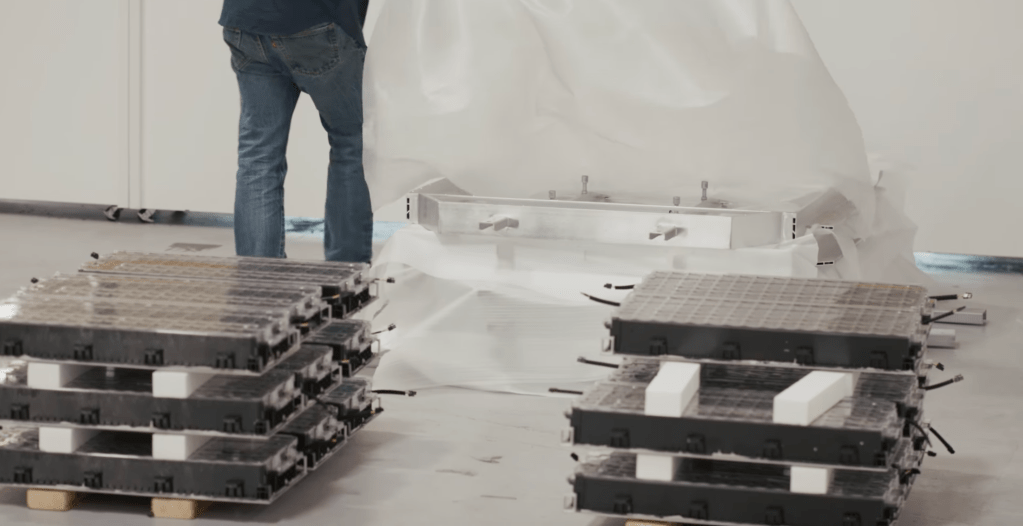
Another significant update is the battery assembly. Aptera’s battery partner, CTNS, is now on-site building battery modules.
This is the first time CTNS has assembled modules directly in Aptera’s facility. The video shows what look to be clean, precise modules ready for integration. This is a good sign for the supply chain, as the battery pack is often a major bottleneck for EV startups.
On the testing front, Aptera has been conducting internal efficiency evaluations with “Gemini,” its third production-intent vehicle.
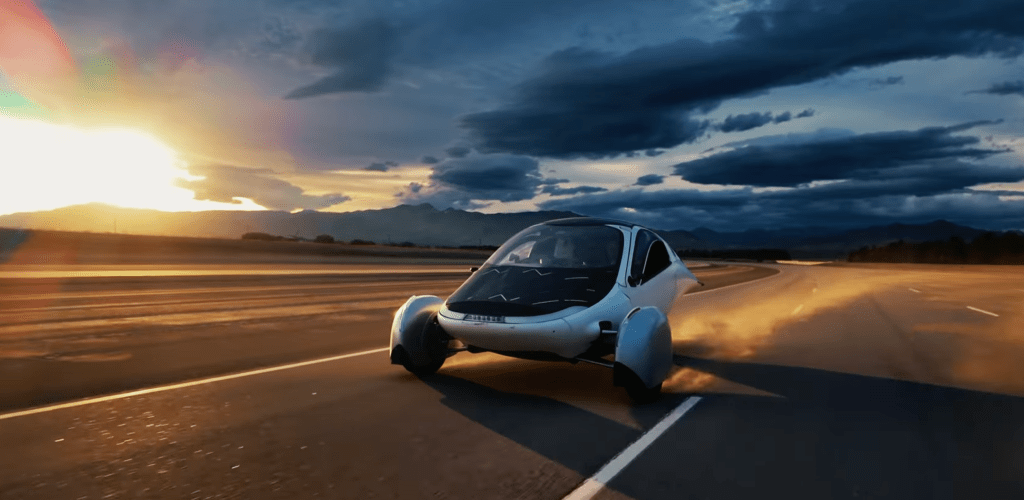
The company claims preliminary results from combined drive cycles (high speed, stop-and-go, urban) are “encouraging.” They plan to move to more formal regulatory testing soon with the new and bigger fleet of validation vehicles.
Electrek’s Take
This is a nice progress update from Aptera. I am cautiously starting to get hope that Aptera might end up delivering a few of these vehicles.
Now, let’s be honest, there’s still a lot of work to do. The assembly line that Aptera showed today is clearly a work in progress.
$75 million might sound like a lot, but it’s nothing in the automotive manufacturing industry.
The question remains whether that capital will be enough to get them through this validation phase and into meaningful low-volume production.
As a disclosure, I have a small amount of Aptera shares from the crowdfunding days. I’ve always said I don’t see a significant chance of success, but I wish it, as I love the company’s ethos of efficiency.


FTC: We use income earning auto affiliate links. More.
![Kia previews the EV2, its most affordable electric vehicle yet [Images]](https://i0.wp.com/electrek.co/wp-content/uploads/sites/3/2025/12/Kia-EV2-teaser-affordable-EV.jpeg?resize=1200,628&quality=82&strip=all&ssl=1)
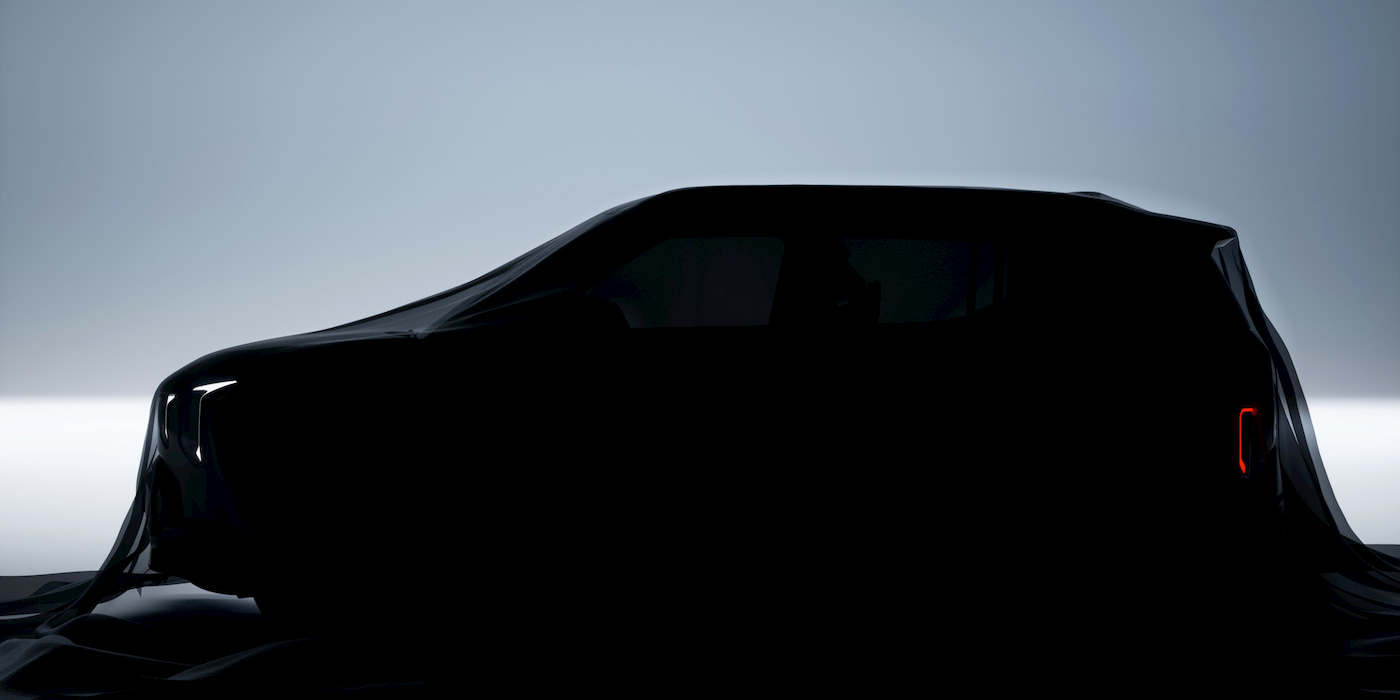
With its official debut just around the corner, Kia offered a closer look at the EV2. The new electric SUV will be Kia’s smallest, most affordable EV to date.
Kia confirms the EV2 will debut as its most affordable EV
Kia confirmed that the EV2, its new electric B-segment SUV, will debut at the Brussels Motor Show next month. The EV2 will sit below the EV3 as Kia’s new entry-level electric car.
“With the EV2, we reaffirm our commitment to make electric mobility truly accessible to a broader audience – without compromise,” Kia Europe president and CEO, Marc Hedrich, said on Tuesday.
The EV2 will be built at Kia’s sole European manufacturing plant in Zilina, Slovakia, to speed up production and deliveries.
Designed, developed, and soon to be made in Europe, Kia is confident that the EV2 will play a “pivotal role” in the shift to cleaner, more sustainable travel.
Although it’s the smallest EV in its lineup, Kia promises it won’t feel like it when you’re inside. The interior design is inspired by “a picnic in the city,” according to Kia, with flexible seating and smart storage options that can open up to create a retreat from the busy city life.


Kia has yet to reveal prices or final specs, but given the EV3 is around 4,300 mm (169.3″) long, the EV2 is expected to be slightly shorter at about 4,000 mm (157″).
That’s about the length of the Hyundai Inster (3,825 mm). However, previous spy shots show the EV2 has a more upright stance than the Inster, closer to Kia’s larger SUVs, like the EV9 and EV5.
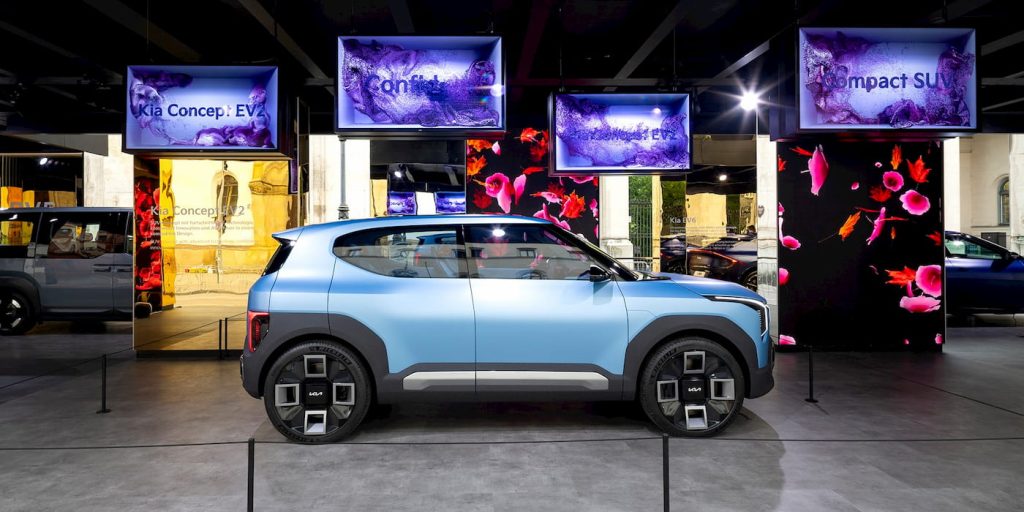
The EV3 is on sale in Europe, starting at about €36,000 ($42,000), so EV2 prices will likely start at closer to €30,000 ($35,000).
Based on Hyundai’s E-GMP platform, the Kia EV3 is available with 58.3 kWh and 81.4 kWh battery options, providing a WLTP range of 410 km (255 miles) and 560 km (348 miles), respectively. The EV2 is likely to be offered with similar battery pack options.
Kia will unveil the EV2 during a press conference on Friday, January 9, 2026, starting at 10:40 am (CET). Check back for more info leading up to the event. We’ll keep you updated with the latest.
FTC: We use income earning auto affiliate links. More.

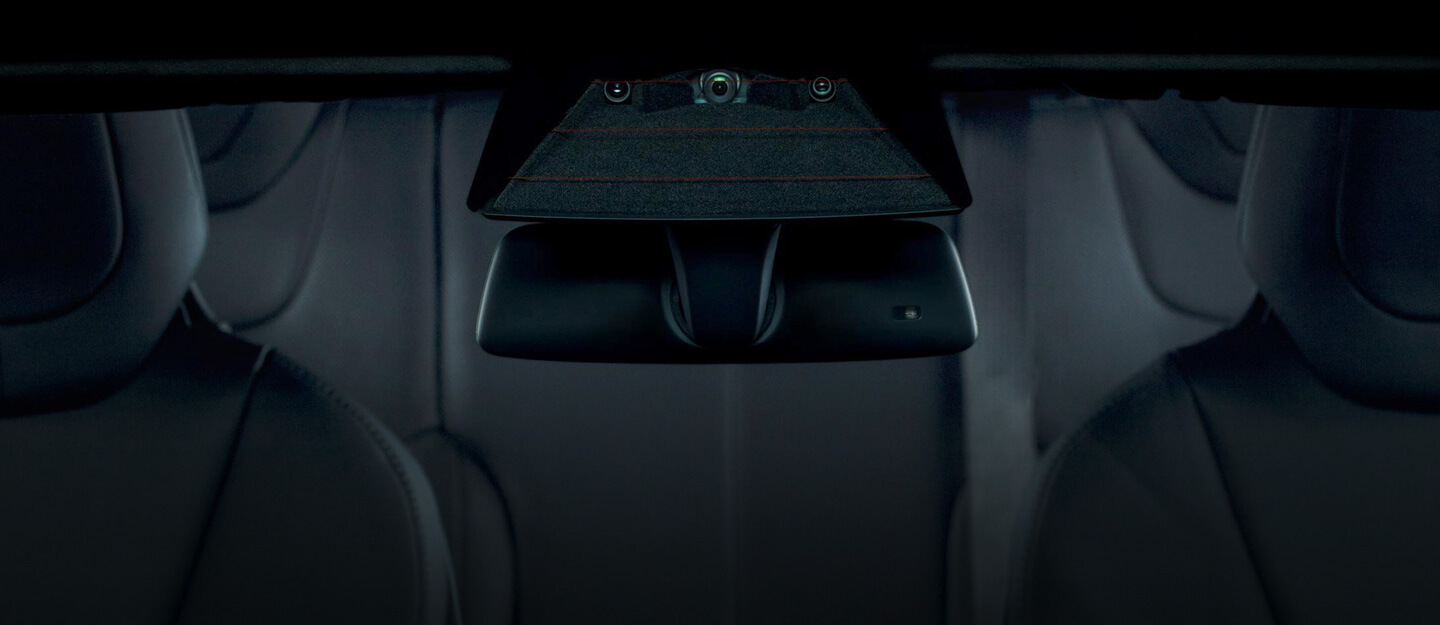
Tesla appears to be preparing to introduce yet another new camera sensor to its hardware suite, according to code found in the automaker’s latest firmware. While hardware improvements are generally good news, this latest discovery adds to the mounting evidence that Tesla is continuously moving the goalposts for self-driving, potentially leaving millions of owners with “older” hardware in the dust… again.
The discovery comes from longtime Tesla hacker and researcher @greentheonly, who frequently digs into Tesla’s software updates to find unannounced features and hardware changes.
According to Green, Tesla’s firmware now references a new sensor model: IMX00N.
Looks like Tesla is changing (upgrading?) cameras in (some?) new cars produced.
Where as HW4 to date used exterior cameras with IMX963, now they (might potentially) have something called IMX00N.
This would ostensibly replace or complement the Sony IMX963 sensors currently used in Hardware 4.0 (AI4) vehicles. The IMX963 is the 5-megapixel sensor that replaced the 1.2-megapixel Aptina sensors found in Hardware 3 cars just two years ago.
We don’t have the specifications for the “IMX00N” yet. It could be a custom Sony SKU for Tesla or a placeholder name for a new image sensor.
Here are the specs comparisons between the camera sensors in HW3 and AI4 Tesla vehicles:
| Specification | Hardware 3.0 (HW3) | Hardware 4.0 (AI4) | Technical Implication |
| Sensor Resolution | 1.2 Megapixels (1280 × 960) | ~5 Megapixels (2896 × 1876) | 4X Data Density. Allows detection of objects at >300m and digital cropping. |
| Sensor Model | Onsemi AR0136AT | Sony IMX490 (Estimated) | Flagship Automotive Sensor. Simultaneous HDR & LFM. |
| Color Filter Array | RCCC (Red-Clear-Clear-Clear) | RGGB (Red-Green-Green-Blue) | Semantic Fidelity. True color perception for signs, lights, and road markings. |
| Dynamic Range | ~110 dB | >120 dB (Single Exposure) | Contrast Mastery. No motion artifacts in tunnel exits or night driving. |
| Data Interface | FPD-Link III (Likely) | GMSL2 or MIPI A-PHY | High Bandwidth. Supports uncompressed 5MP streams at high frame rates. |
| Front Cameras | 3 (Main, Narrow, Wide) | 2 (Main, Wide) | Optical Simplification. Digital zoom replaces the physical telephoto lens. |
| Lens Coating | Standard | Deep Red IR Cut / Anti-Glare | Glare Mitigation. Reduces blinding from headlights and sun. |
| Heaters | Passive (Waste Heat) | Active Heating Elements | All-Weather Resilience. Rapid defogging and de-icing. |
| Retrofit | N/A | Impossible for HW3 cars | Fleet Fragmentation. HW3 cars are permanently hardware-limited. |
Electrek’s Take
Of course, you would expect Tesla to improve its vehicles, including its sensor suite, gradually. It is a good thing in and of itself.
There are three problems with Tesla updating its hardware suite for autonomous driving:
- It promised to all owners since 2016 that their vehicles have all the required hardware to achieve “Full Self-Driving,” and at the time, CEO Elon Musk said that it would mean “unsupervised self-driving.”
- It has yet to achieve that, and it promised to offer free hardware retrofit if needed, but it has yet to offer those.
- When Tesla launches a new autonomous driving hardware suite, it rapidly puts less effort into software that works with its previous hardware suite.
If the current cameras in HW4 (let alone HW3) are sufficient for Level 4 autonomy, why is Tesla spending resources to integrate a new sensor? The most logical answer is that the current sensors have limitations, whether it’s glare handling, low-light performance, or resolution, that limit the system’s reliability.
If that’s the case, can we expect Tesla to update all the vehicles that are supposed to have the hardware to reach level 4? I wouldn’t bet on it.
CEO Elon Musk already admitted that the HW3 computer won’t support it back in January 2025, almost a year ago, and instead of announcing a solution, Tesla owners were only promised a “mini version” of FSD v14, which itself is not the promised unsupervised self-driving.
At this point, it’s hard to put hope on Tesla doing the right thing here.
FTC: We use income earning auto affiliate links. More.
-
 Sports2 years ago
Story injured on diving stop, exits Red Sox game
-
 Sports3 years ago
‘Storybook stuff’: Inside the night Bryce Harper sent the Phillies to the World Series
-
 Sports2 years ago
Game 1 of WS least-watched in recorded history
-
 Sports3 years ago
Button battles heat exhaustion in NASCAR debut
-
 Sports3 years ago
MLB Rank 2023: Ranking baseball’s top 100 players
-
Sports4 years ago
Team Europe easily wins 4th straight Laver Cup
-
 Environment3 years ago
Japan and South Korea have a lot at stake in a free and open South China Sea
-
 Environment1 year ago
Here are the best electric bikes you can buy at every price level in October 2024