

Tesla’s ‘one-time’ FSD transfer scheme is back for the fourth time

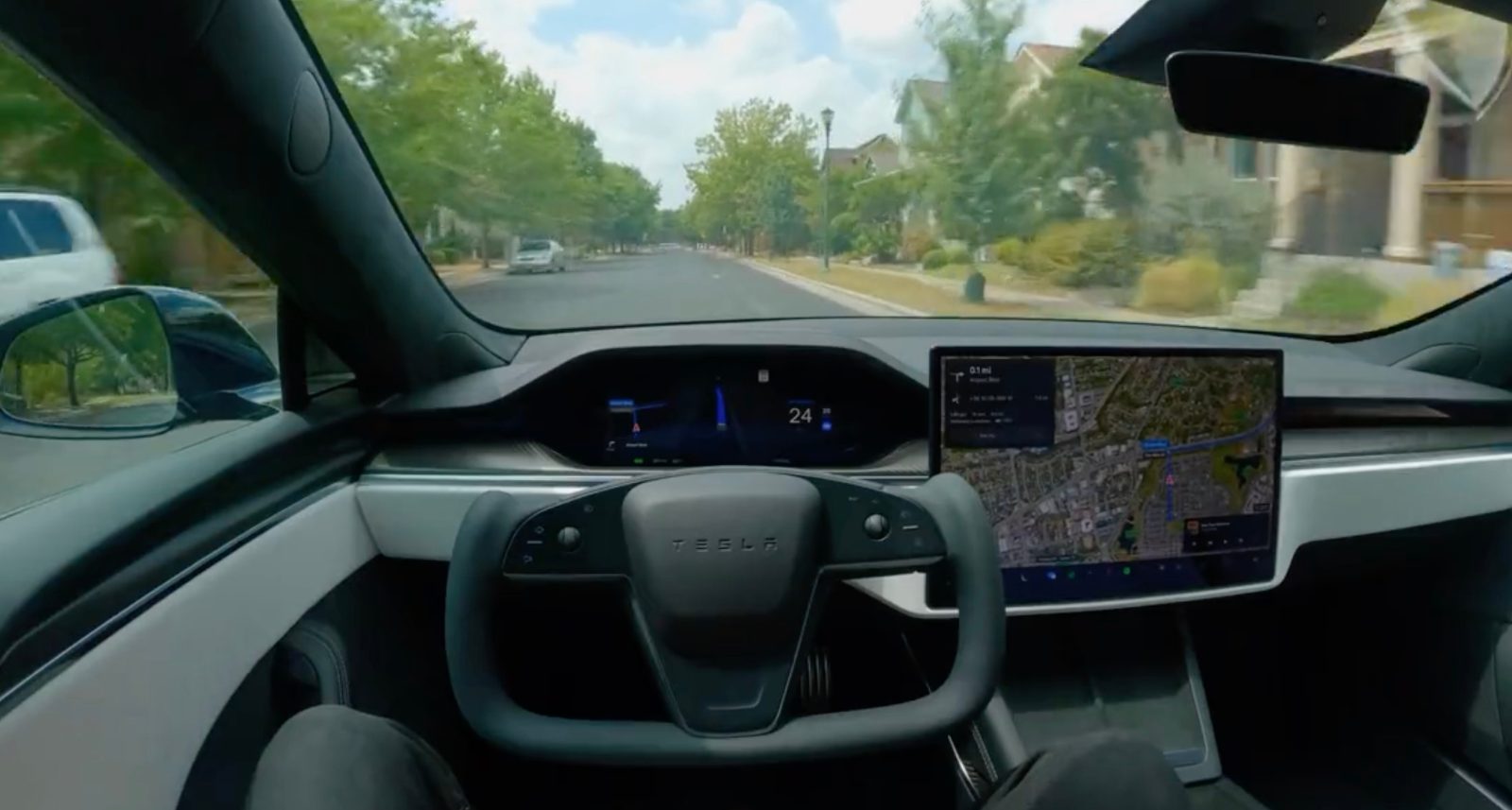
Tesla will once again allow current owners to transfer Full Self-Driving to a new vehicle purchase, even though it previously said that this program would never return after it ended for the third time 11 days ago.
Tesla has been selling its FSD system for many years now, to the point where many early owners have been through multiple vehicles without the software actually being delivered in its full working state.
Those owners are able to use Tesla’s Supervised FSD system, but no Tesla owner has yet been able to use an actual full self-driving system that lets the car drive itself with no human intervention.
And so, there has been a constant drumbeat from many of those owners, wondering why they should have to purchase the same software again, when they get a new car, if the software was never delivered from the previous vehicle.
This is particularly tough given that the price of buying FSD now is higher than it was for many of those early owners – though it has gone back down in price recently.
And so, last year Tesla started allowing FSD transfers – but only for two months, and then it would happen never again.
It was seen at the time as a way to stoke demand, rather than an example of Tesla “doing the right thing” and letting owners retain eventual access to the software they paid for but were never delivered.
Then, after that period lapsed, Tesla eventually brought back the FSD transfer this year, allowing it for new orders until the end of Q1. And then, once again, that “one-time offer” was brought back. After which Tesla was asked whether FSD transfer could be made permanent, and the answer was a flat “No.”
Then, at Tesla’s last shareholder meeting, a questioner asked if we could have FSD transfer for “one more quarter,” rather than permanent. Musk responded after some hesitation, and said “okay, one more quarter.”
Tesla later said that this scheme would only last until August 31, rather than the actual end of the quarter, but then extended it until September 30th, which does match the end of Q3. So, the program ended 11 days ago.
But now the scheme is back, once again, after being cancelled for the last time three times already.

The specifics of the program are available over on Tesla’s website, and we’ve also seen reference to the program in the Tesla app. It technically began yesterday – meaning that if you got a car between October 1 and October 9, I guess you’re out of luck.
The scheme is supposed to remain active until December 31, the last day of the fiscal quarter and year. Just in case anybody wondered whether this is nothing but another ploy to boost end-of-quarter sales (just kidding, nobody wondered about that).
Electrek’s Take
I’ve written almost this exact same article before, and I’m going to say all the same things again, because nothing has changed.
As I’ve said before: we should not have to have this discussion every quarter.
Until FSD is able to follow through on its promise, transfers should be free for anyone who has bought the software.
Any other company that pre-sold software and then refused to deliver it would not be looked kindly upon, particularly if that software was thousands of dollars and many years late, and if customers were required to re-buy it for every piece of hardware they purchase to run it on.
Yes, people can use something that Tesla calls “FSD” right now, and the system is gradually getting better.
But it does not fully drive the car, doesn’t work without intervention, can’t be summoned across country, and can’t be used as a revenue-generating robotaxi. In fact, Tesla just announced a whole new robotaxi product, leaving some to think that past vehicles would never gain autonomous capability – but at that event, Musk reiterated that current Teslas would eventually gain “unsupervised” FSD capability. And that capability will come within about a year, as he’s been saying for roughly a decade now.
It’s time to stop stringing owners along. If the problem is difficult, and more difficult than you thought, that’s one thing. But making people buy additional licenses to software you already sold them and did not yet deliver is not acceptable.
The right thing would be to make transfers permanent until level 5 autonomy is delivered. Even “effective permanence” of continually-rolling offers like this are more about stoking demand. Tesla is acting like a rug store that is perpetually going out of business.
But if Tesla won’t do the right thing, maybe the law will finally force them to follow through on the promises they’ve made. There are currently several cases in court relating to Tesla’s FSD false advertising that could have sweeping effects on how Tesla sells this software and what rights its owners might have. Stay tuned for the results of those.
If you’re looking to take advantage of this “limited time offer” (lol), feel free to use our Tesla referral code for $1000 off a new Tesla.
FTC: We use income earning auto affiliate links. More.

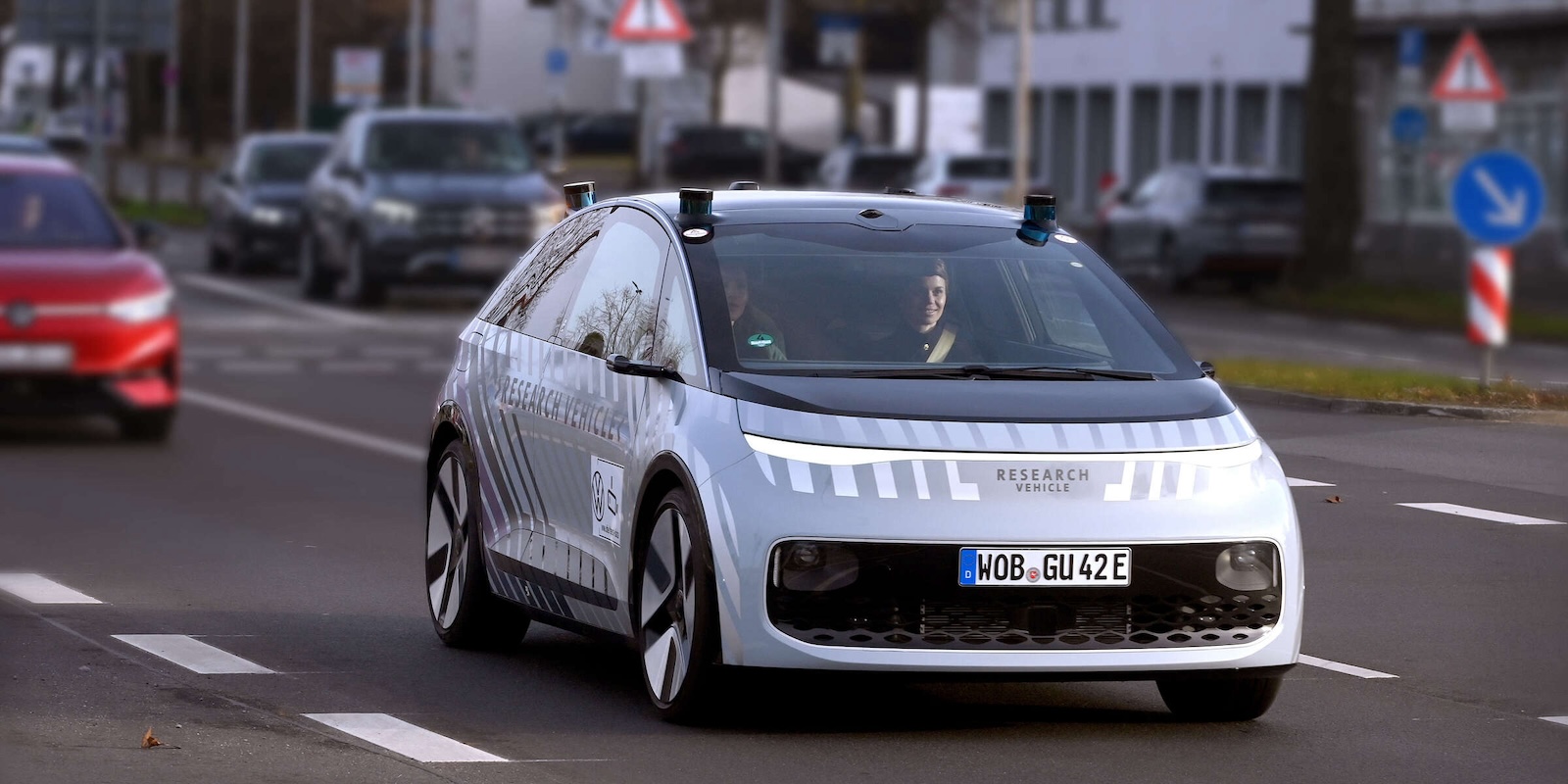
Volkswagen is putting its Tesla Robotaxi rival through its paces in Wolfsburg, Germany, where the self-driving Gen.Urban research vehicle is now driving autonomously in real urban traffic – without a steering wheel or pedals!
VW’s Gen.Urban research project sets out to explore how passengers experience riding in a self-driving vehicle on real roads, among real drivers, and without a traditional steering wheel or pedals, and what those requirements might mean for future vehicle concepts.
Some of the key questions VW is asking include:
- How do people spend their time in a self-driving vehicle?
- Which digital features best support work, entertainment, or relaxation?
- How should interaction between the vehicle and passengers be designed, particularly for older people or children?
- Most importantly: Do people feel comfortable?
“The technology for autonomous driving is making rapid progress,” explains Dr. Nikolai Ardey, Head of Volkswagen Group Innovation. “With our Gen.Urban research vehicle, we want to understand exactly how passengers experience autonomous driving. Because: The key to a positive customer experience is to build trust – through meaningful interaction, a relaxed atmosphere, and intelligent assistance systems that respond precisely to the needs of passengers. Ultimately, technology should fit people, not the other way around. We will benefit from these insights across the entire Group in the long term.”
Not QUITE fully autonomous
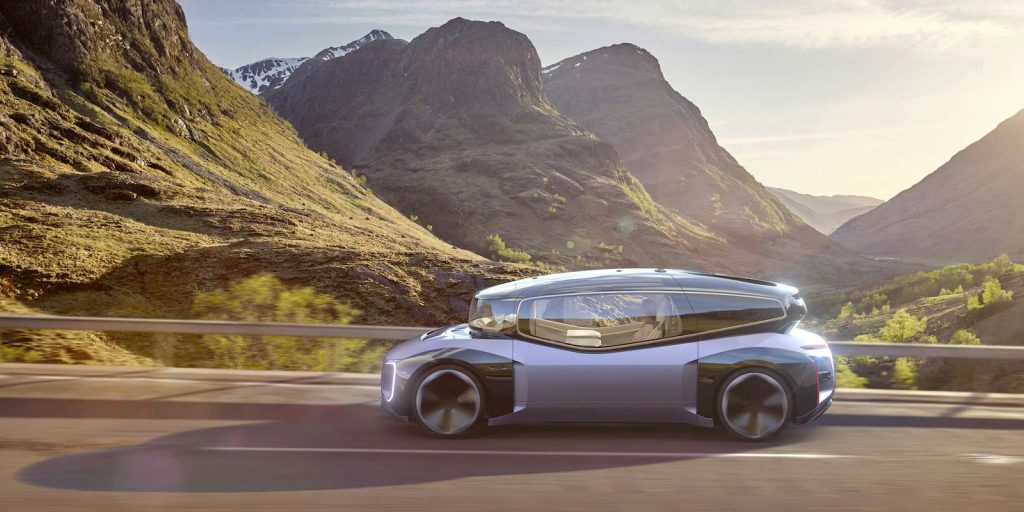
It’s important to note here that, while Volkswagen designed the Gen.Urban without a steering wheel or pedals, the vehicles participating in these test have a trained safety driver monitoring the vehicle from the passenger seat, ready to step in to control the vehicle using a specially developed control panel with a joystick – which means we’re still a long way from the 2022 Volkswagen Gen.Travel concept (above).
Even so, Volkswagen’s autonomous driving efforts have been in public testing phases since at least 2023, when the company unveiled a fleet of ten specially modified VW.Buzz AD electric vans. Tests with those vans have gone well enough, at least, to lead Volkswagen to announce plans for large-scale production.
The current test phase is limited to Volkswagen Group employees as riders, and is planned for a period of several weeks. If results are satisfactory, VW could expand its rider base by the end of Q1.
SOURCE | IMAGES: Volkswagen.
If you’re considering going solar, it’s always a good idea to get quotes from a few installers. To make sure you find a trusted, reliable solar installer near you that offers competitive pricing, check out EnergySage, a free service that makes it easy for you to go solar. It has hundreds of pre-vetted solar installers competing for your business, ensuring you get high-quality solutions and save 20-30% compared to going it alone. Plus, it’s free to use, and you won’t get sales calls until you select an installer and share your phone number with them.
Your personalized solar quotes are easy to compare online and you’ll get access to unbiased Energy Advisors to help you every step of the way. Get started here.


FTC: We use income earning auto affiliate links. More.


Ask anyone who owned or owns one, and they’ll tell you that Honda Element was ahead of its time, delivering a flexible interior, car-like ride, and SUV-levels of visibility – and, if Honda really wanted to, they could roll out an all-new, all-electric Element riding on an Ultium-style electric skateboard tomorrow.
Honda’s first Element made its debut way back in 2003, when it was still a bit strange to think of companies like Cadillac, Volkswagen, and Porsche selling anything as big and clunky as an SUV. It earned plenty of fans, however, and for all the same reasons, they’ll love an electric Element even more.
Consider the following:
Car-like handling
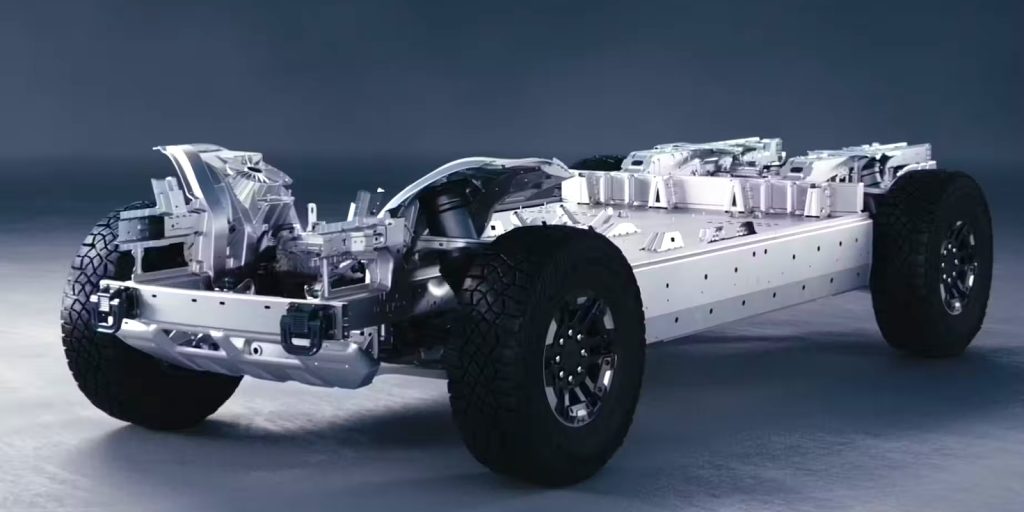
The original Element rolled around on a lot of bits originally developed for the Honda Civic – widely regarded as a fun-to-drive, great-handling little car. That car-based chassis earned it some mockery among automotive journalists who, more than two decades ago, still widely believed that an SUV had to have some off-road chops to it.
Today, we’re a more enlightened bunch. In 2025, an SUV needs to be practical above all else, emphasizing the “Utility” aspect. With a low-slung, low-cg, and low-intrusion electric skateboard underneath its boxy body (more on that in a minute), a modern Element would be than more than capable of delivering a “car-like” ride with plenty of sporty acceleration, as well.
Flexible interior
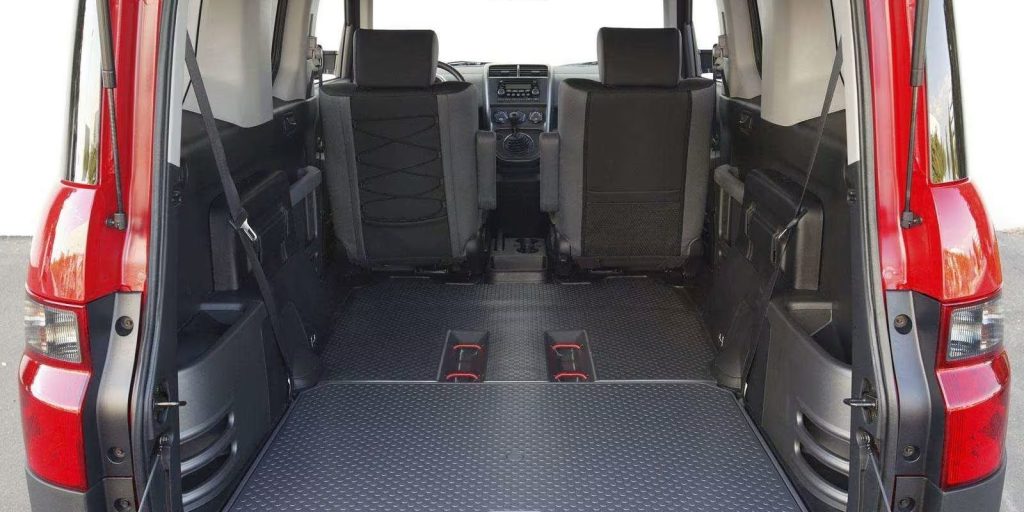
Remember that comment about the low-intrusion nature of the Ultium EV chassis? Without a transmission tunnel to get in the way, Honda was able to offer a massive, flat floor that made the Element ideal for moving, camping, beach days, tailgating, antiquing, and (not to put too fine a point on it) drive-in movies – which we still had those in Florida until at least 2010.
In an EV, all that flat-floor goodness is still there, with the added benefit of being able to offer a flat floor without a transmission tunnel ruining the bedroom cargo bay.
Add a bit of extra width inherited from the Prologue, toss in a friendly ASIMO interface to keep the investment class happy, and offer a full range of inflatable tents, dog beds, and other overlanding, pet, or surf-friendly accessories, and Honda could watch the money roll in. At the very least, if Honda had built a modern Element instead of the Prologue on GM’s skateboard, they might have an easier time moving them in post-rebate America, I think. What do you guys think?
You guys are smart, so I’m sure you’ll be able to find all the problems with this particular take – and I can’t wait to hear them! Should it be FWD only? A plug-in hybrid? Ship with a tent? Scroll on down to the comments and let me know what you think it would take to make a battery-powered Honda Element revival make sense to you.
Original content from Electrek.
If you’re considering going solar, it’s always a good idea to get quotes from a few installers. To make sure you find a trusted, reliable solar installer near you that offers competitive pricing, check out EnergySage, a free service that makes it easy for you to go solar. It has hundreds of pre-vetted solar installers competing for your business, ensuring you get high-quality solutions and save 20-30% compared to going it alone. Plus, it’s free to use, and you won’t get sales calls until you select an installer and share your phone number with them.
Your personalized solar quotes are easy to compare online and you’ll get access to unbiased Energy Advisors to help you every step of the way. Get started here.
FTC: We use income earning auto affiliate links. More.

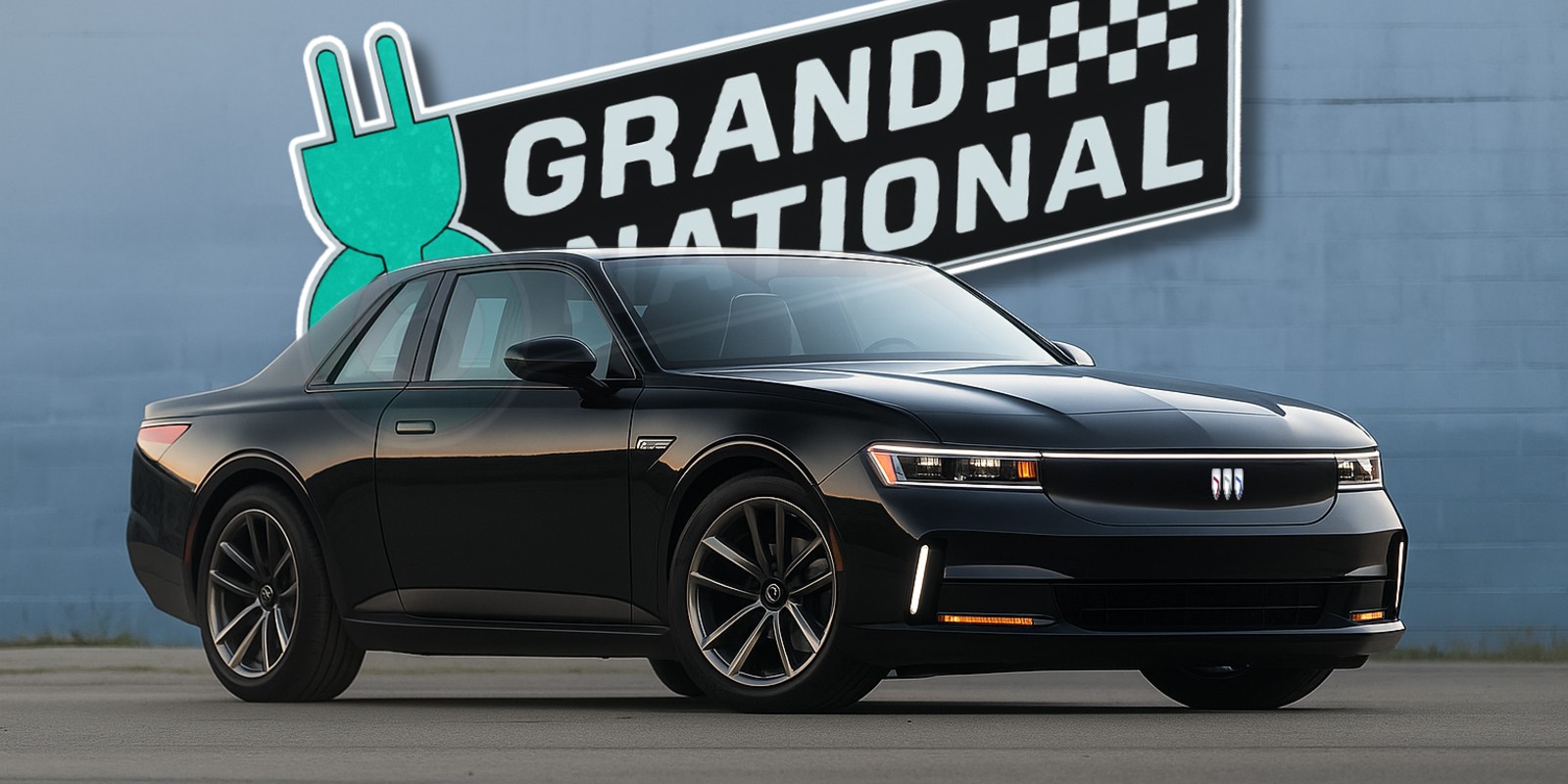
File this under “wishful thinking” if you want, but a fresh trademark filing for the Buick Electra name could mean that the storied nameplate is set for a return to US shores.
GM Authority reports that Buick parent company General Motors has renewed its trademark for the Buick Electra name in the US in a filing from 09DEC2025 with the United States Patent and Trademark Office (USPTO), and received an assigned serial number 99538079. The application carries a Goods and Services of, “Motor land vehicles, namely, automobiles.”
Electra a nameplate that holds a long history with the near-luxe Buick brand and has generally been believed to be one that’s especially relevant to Buick’s electrification strategy in the US. That’s a notion that seems especially true when you consider the following two facts:
- the Buick Electra nameplate is already featured on a number of hugely successful GM products being sold in the ultra-competitive Chinese market
- 2027 is the fortieth anniversary of the Buick Grand National, and GM’s marketers are way too smart to let that moment slide
It’s worth noting, of course, that this most recent renewal for the Buick Electra trademark is a long, long way from a confirmation of a new all-electric Buick for the US market and even further from a confirmation that we’re getting the hot, sexy Electra GM sells in China. If anything, it’s likely just a matter of course legal thing that GM needs to protect its IP in China while, at the same time, preventing some kind of disastrous Sierra Mist scenario from playing out at home (which– yeah, I get that it’s not true, but you got the idea).
That said, I want to believe.
Electrek’s Take


I’m a huge fan of GM, GM’s EVs, and the way Mary Barra has managed the General over the past several years. I also think a big, sexy sedan is sorely missing from GM’s lineup, and the fast, flashy electric sedan formula might play better at the Buick store than at the Cadillac brand.
Combine that with an overwhelming desire to see a new-age Buick Grand National parked in my garage next Christmas and you can see that I’m not to be trusted. So, what say you? Head on down to the comments and let us know what you think of an American Electra revival just in time for the 2027 model year.
SOURCE | IMAGES: GM Authority; GM.
If you’re considering going solar, it’s always a good idea to get quotes from a few installers. To make sure you find a trusted, reliable solar installer near you that offers competitive pricing, check out EnergySage, a free service that makes it easy for you to go solar. It has hundreds of pre-vetted solar installers competing for your business, ensuring you get high-quality solutions and save 20-30% compared to going it alone. Plus, it’s free to use, and you won’t get sales calls until you select an installer and share your phone number with them.
Your personalized solar quotes are easy to compare online and you’ll get access to unbiased Energy Advisors to help you every step of the way. Get started here.
FTC: We use income earning auto affiliate links. More.
-
 Sports2 years ago
Story injured on diving stop, exits Red Sox game
-
 Sports3 years ago
‘Storybook stuff’: Inside the night Bryce Harper sent the Phillies to the World Series
-
 Sports2 years ago
Game 1 of WS least-watched in recorded history
-
 Sports3 years ago
Button battles heat exhaustion in NASCAR debut
-
 Sports3 years ago
MLB Rank 2023: Ranking baseball’s top 100 players
-
Sports4 years ago
Team Europe easily wins 4th straight Laver Cup
-
 Environment3 years ago
Japan and South Korea have a lot at stake in a free and open South China Sea
-
 Environment1 year ago
Here are the best electric bikes you can buy at every price level in October 2024